
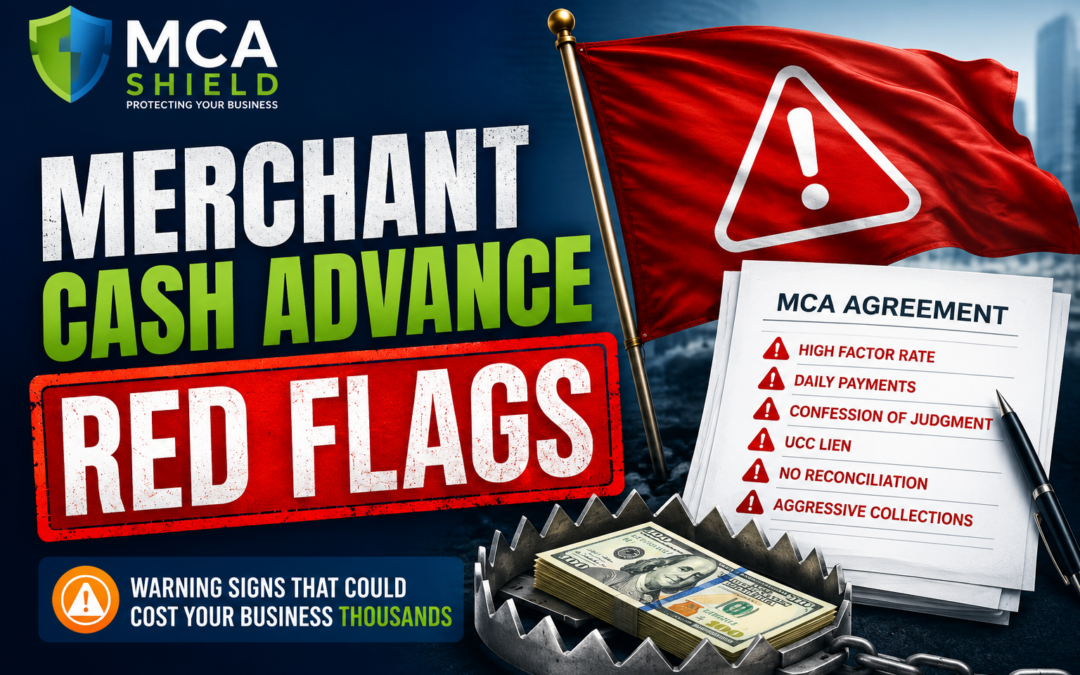
Merchant cash advance red flags are often hidden in the fine print, making them easy to overlook until they begin affecting your business. While merchant cash advances can provide fast access to working capital, some agreements include high costs, confusing repayment terms, and aggressive contract provisions that create long-term financial challenges. Knowing what to look for before signing can help you make informed decisions and protect your business from unnecessary risk.
Recognizing merchant cash advance red flags early gives business owners more control over their finances and more opportunities to choose the right funding solution. From high factor rates and daily ACH withdrawals to confession of judgment clauses and high-pressure sales tactics, understanding these warning signs can prevent expensive mistakes. This guide explains the most common merchant cash advance red flags, how they can impact your cash flow, and the practical steps you can take to safeguard your business before signing an MCA agreement.
Schedule Your Free Consultation
What Are Merchant Cash Advance Red Flags?
Merchant cash advance red flags are warning signs that an MCA agreement may contain costly terms, unfair provisions, or repayment requirements that can place significant strain on your business. While merchant cash advances can provide quick access to capital, not every agreement offers the same level of transparency or flexibility. Understanding these warning signs before you sign can help you avoid expensive mistakes and make more informed financial decisions.
Some red flags are obvious, while others are hidden within lengthy contracts or confusing financial language. Learning how to identify these issues allows business owners to compare funding options more effectively and reduce the risk of future cash flow problems.
Why Red Flags Matter Before You Sign
Before signing any funding agreement, it is important to identify merchant cash advance red flags that could increase your financial obligations. Some contracts include high factor rates, daily or weekly ACH withdrawals, limited reconciliation rights, or aggressive default provisions that may not be fully understood during the application process.
Reviewing every agreement carefully gives you the opportunity to ask questions, compare offers, and calculate the true cost of funding. Taking a little extra time before signing can prevent months or even years of financial stress.
How Warning Signs Can Affect Your Business
Ignoring merchant cash advance red flags can have lasting consequences for your business. High repayment obligations can reduce available cash, making it harder to cover payroll, purchase inventory, pay vendors, or invest in future growth. As cash flow becomes tighter, many businesses feel pressure to seek additional financing, which can create an even greater financial burden.
Common effects include:
- Reduced operating cash flow
- Difficulty paying routine business expenses
- Greater reliance on additional financing
- Higher overall repayment costs
- Limited flexibility for future growth
Recognizing warning signs early allows you to address potential problems before they become serious financial challenges.
Why Some Risks Are Easy to Miss
Many merchant cash advance red flags are not immediately obvious. Funding advertisements often focus on fast approvals, quick funding, and minimal paperwork, while important contract details receive far less attention. As a result, business owners may overlook provisions that significantly affect repayment costs and long-term financial stability.
Technical financial terms, lengthy contracts, and time-sensitive offers can also make it difficult to evaluate an agreement objectively. By slowing down, reviewing every document carefully, and seeking professional guidance when necessary, you can identify potential risks before they become costly problems for your business.
The Biggest Merchant Cash Advance Red Flags to Watch For

Not every merchant cash advance agreement is designed the same way. Some contracts contain merchant cash advance red flags that can increase repayment costs, reduce cash flow, and make it more difficult for your business to remain financially stable. Recognizing these warning signs before signing gives you the opportunity to compare offers, ask important questions, and avoid agreements that may create unnecessary financial pressure.
The following are some of the most common merchant cash advance red flags every business owner should understand.
High Costs and Confusing Repayment Terms
One of the biggest merchant cash advance red flags is a repayment structure that is difficult to understand. While an MCA may advertise fast funding, the total amount you repay can be much higher than the amount you receive. Factor rates, daily or weekly withdrawals, and additional fees can quickly increase the overall cost of financing.
Pay close attention to details such as:
- The factor rate
- The total repayment amount
- Daily or weekly ACH withdrawals
- Additional fees or charges
- The estimated payoff timeline
Before signing, calculate the total repayment amount instead of focusing only on the amount being advanced. Understanding the true cost of funding helps you determine whether the agreement fits your business’s financial goals.
Aggressive Contract Language and Collection Provisions
Another important merchant cash advance red flag is contract language that gives the funding company broad collection rights if your business falls behind. Some agreements contain provisions that can significantly affect your financial flexibility if repayment problems arise.
Examples may include:
- Confession of judgment clauses
- UCC liens
- Personal guarantees
- Limited reconciliation rights
- Broad default provisions
These terms can have serious financial consequences if your revenue declines unexpectedly. Carefully reviewing every contract allows you to understand your obligations before committing to the agreement.
Pressure Tactics and Promises That Sound Too Good to Be True
Some funding companies rely on high-pressure sales tactics to encourage business owners to sign quickly without fully reviewing the agreement. Claims such as “Guaranteed approval,” “No questions asked,” or “Lowest cost available” should encourage you to slow down and examine the offer more carefully.
Warning signs may include:
- Pressure to sign immediately
- Discouraging you from reading the contract
- Unclear explanations of repayment terms
- Promises that seem unrealistic
- Reluctance to answer detailed questions
A trustworthy funding provider should be willing to explain every part of the agreement and give you enough time to make an informed decision. If you feel rushed or uncertain, it may be wise to seek professional guidance before signing any merchant cash advance agreement.
How Merchant Cash Advance Red Flags Impact Cash Flow
One of the greatest dangers of merchant cash advance red flags is their impact on your business’s cash flow. Even if an MCA provides immediate funding, the repayment structure can quickly reduce the money available for everyday operations. As payments continue, many businesses find it more difficult to cover essential expenses, respond to unexpected costs, or invest in future growth.
Understanding how these warning signs affect your finances can help you make better funding decisions and avoid long-term financial strain.
Daily Payments That Strain Operations
Many merchant cash advances require daily or weekly ACH withdrawals directly from your business bank account. While these payments may seem manageable at first, they can become challenging during slower sales periods or seasonal fluctuations.
As cash leaves your account each day, it may become harder to:
- Meet payroll obligations
- Pay vendors on time
- Purchase inventory
- Cover operating expenses
- Maintain a healthy cash reserve
When too much revenue is committed to repayment, your business has less flexibility to respond to changing financial conditions. This is one of the most common merchant cash advance red flags business owners experience after accepting funding.
The Risk of Taking Multiple Merchant Cash Advances
When one merchant cash advance creates cash flow challenges, some businesses seek another advance to cover existing payments. This practice, often called MCA stacking, can significantly increase financial pressure.
Multiple repayment obligations can lead to:
- Higher daily withdrawal amounts
- Reduced working capital
- Increasing overall repayment costs
- Greater difficulty managing monthly expenses
- Limited access to future financing options
Although additional funding may provide temporary relief, taking on multiple merchant cash advances often creates a cycle that becomes increasingly difficult to manage. Carefully evaluating all available options before accepting another advance can help prevent further financial stress.
Why Financial Pressure Can Escalate Quickly
Small cash flow challenges can become major financial problems when several merchant cash advance red flags exist within the same agreement. High repayment costs, frequent withdrawals, and restrictive contract terms often work together to reduce financial flexibility over time.
As financial pressure increases, businesses may experience:
- Missed vendor payments
- Difficulty maintaining payroll
- Growing debt obligations
- Reduced opportunities for business growth
- Increased collection activity
Recognizing merchant cash advance red flags early gives business owners more time to evaluate their options and take action before financial challenges become more difficult to resolve. Acting sooner often creates more opportunities to improve cash flow and protect the long-term health of the business.
Practical Steps to Avoid Merchant Cash Advance Problems
The best way to avoid costly financial mistakes is to identify merchant cash advance red flags before signing an agreement. Taking a proactive approach gives you time to compare offers, understand your obligations, and determine whether the funding aligns with your business’s financial goals. Even a small amount of research can help you avoid repayment terms that place unnecessary pressure on your cash flow.
These practical steps can help you make a more informed decision and reduce the risk of future financial challenges.
Review Every Agreement Carefully
Never sign a merchant cash advance agreement without reading every section of the contract. Important details are often found in the fine print, including repayment terms, collection provisions, and default clauses. Taking the time to review the agreement carefully can help you identify merchant cash advance red flags before they become expensive problems.
Pay close attention to:
- Factor rates
- Total repayment amount
- Daily or weekly ACH withdrawals
- Default and collection provisions
- Reconciliation rights
- UCC lien language
- Personal guarantee requirements
If any part of the agreement is unclear, ask questions before signing. A reputable funding provider should be willing to explain every term in plain language.
Calculate the True Cost of Funding
Fast funding can make an offer appear attractive, but the amount you receive is only part of the equation. Always calculate the total repayment amount to understand the actual cost of the merchant cash advance. Looking beyond the advertised funding amount helps you compare offers more accurately and avoid unexpected financial obligations.
When evaluating an MCA, consider:
- The total amount you will repay
- The factor rate
- Any additional fees or charges
- The frequency of repayments
- The effect on your monthly cash flow
Understanding the complete financial picture allows you to determine whether the agreement is affordable for your business over the long term.
Seek Professional Guidance Before Signing
If you are unsure about any part of an agreement, seek professional guidance before committing to the funding. An experienced professional can review the contract, explain complex terms, identify merchant cash advance red flags, and help you understand how the agreement may affect your business.
Professional guidance can help you:
- Identify hidden risks
- Compare multiple funding offers
- Understand your repayment obligations
- Evaluate the impact on cash flow
- Make a more informed financial decision
Taking the time to review an agreement with a knowledgeable professional may help you avoid costly mistakes and choose a funding solution that better supports your business’s long-term financial stability.
How MCA Shield Helps Businesses Identify Merchant Cash Advance Red Flags
Recognizing merchant cash advance red flags is not always easy. Many agreements contain complex financial terms, lengthy contracts, and repayment provisions that can be difficult for business owners to evaluate on their own. At MCA Shield, we help businesses understand their merchant cash advance agreements, identify potential risks, and develop practical solutions that support long-term financial stability.
Whether you have a single merchant cash advance or multiple MCA agreements, our goal is to provide the information and guidance you need to make confident financial decisions.
Reviewing Existing MCA Agreements
Every merchant cash advance agreement is different. Our team begins by conducting a thorough review of your existing contracts to identify important details that may affect your financial situation. This review provides a clear picture of your current obligations and helps uncover merchant cash advance red flags that may not have been obvious when the agreement was signed.
During the review, we examine:
- Outstanding balances
- Factor rates
- Repayment schedules
- Daily or weekly ACH withdrawals
- Collection provisions
- UCC liens and other contract terms
- Multiple active merchant cash advances
A detailed contract review establishes the foundation for developing an effective strategy to reduce financial pressure and improve cash flow.
Explaining Complex Contract Terms
Merchant cash advance agreements often contain financial and legal language that can be confusing for business owners. Our team explains these provisions in clear, straightforward terms so you understand exactly how they may affect your business.
We help explain topics such as:
- Factor rates
- Reconciliation provisions
- Default clauses
- Personal guarantees
- Confession of judgment provisions
- Collection procedures
Understanding these terms allows you to make informed decisions instead of relying on assumptions or sales presentations.
Developing a Customized Resolution Strategy
Every business faces unique financial challenges, which is why there is no one-size-fits-all solution. After reviewing your agreements and evaluating your financial situation, MCA Shield develops a customized resolution strategy based on your business’s specific needs and goals.
Depending on your circumstances, your strategy may focus on:
- Reducing financial pressure
- Improving cash flow
- Evaluating available debt relief options
- Exploring restructuring opportunities
- Creating a path toward long-term financial stability
By identifying merchant cash advance red flags early and developing a personalized strategy, MCA Shield helps business owners regain confidence, protect their operations, and work toward a stronger financial future.
Frequently Asked Questions About Merchant Cash Advance Red Flags
Understanding merchant cash advance red flags can help business owners avoid costly financial mistakes. Below are answers to some of the most common questions about identifying risky MCA agreements and protecting your business before financial problems grow.
What Is the Biggest Red Flag in an MCA Agreement?
There is no single warning sign that applies to every agreement, but one of the biggest merchant cash advance red flags is a contract that lacks transparency. If the repayment terms are confusing, the total repayment amount is unclear, or the provider pressures you to sign quickly without answering questions, you should proceed with caution.
Other major warning signs include:
- High factor rates
- Large daily or weekly ACH withdrawals
- Aggressive default provisions
- Confession of judgment clauses
- Limited reconciliation rights
- High-pressure sales tactics
Before signing any agreement, make sure you fully understand every term and calculate the true cost of the funding.
Can Merchant Cash Advance Contracts Be Negotiated?
In some situations, merchant cash advance contracts can be negotiated. While not every funding company is willing to modify its standard agreement, some providers may discuss repayment terms or explore alternatives, especially if financial challenges arise after the advance has been funded.
If you are concerned about merchant cash advance red flags, review the agreement carefully and seek professional guidance before signing. Understanding your options early may help you avoid terms that create unnecessary financial pressure.
What Should I Do If I’ve Already Signed an Unfair MCA Agreement?
If you believe your agreement contains merchant cash advance red flags, do not ignore the situation. The sooner you review your contract and evaluate your options, the more opportunities you may have to improve your financial position.
A good first step is to gather all of your merchant cash advance documents, including contracts, payment records, and correspondence with the funding company. Then, have the agreement reviewed by a knowledgeable professional who can explain your obligations and discuss potential solutions.
Taking action early may help you:
- Reduce financial pressure
- Protect your business cash flow
- Understand your available options
- Avoid additional financial complications
- Develop a plan for long-term financial stability
Addressing potential problems as soon as possible often creates more flexibility than waiting until repayment challenges become severe.
Protect Your Business Before Merchant Cash Advance Red Flags Become Costly
The sooner you recognize merchant cash advance red flags, the more opportunities you have to protect your business. Waiting until cash flow problems become severe or collection activity increases can make finding a workable solution more difficult. By acting early, you can evaluate your options, make informed financial decisions, and reduce the risk of long-term financial stress.
Whether you are reviewing a new merchant cash advance agreement or struggling with an existing one, taking action now can help you maintain greater control over your business’s financial future.
Why Acting Early Creates More Financial Options
Identifying merchant cash advance red flags before they become major problems gives you more flexibility to choose the best path forward. Early action allows you to review contracts carefully, understand your repayment obligations, and explore potential solutions before financial pressure begins affecting daily operations.
Acting early can help you:
- Protect your business cash flow
- Avoid unnecessary financial stress
- Reduce the risk of taking additional merchant cash advances
- Evaluate available debt relief or restructuring options
- Create a stronger foundation for long-term financial stability
The earlier you address potential concerns, the more opportunities you may have to improve your financial position and keep your business moving forward.
Schedule a Free Consultation With MCA Shield
If you have concerns about merchant cash advance red flags, you do not have to navigate them alone. MCA Shield works with business owners to review merchant cash advance agreements, explain complex contract terms, identify potential risks, and develop customized strategies based on each business’s unique financial situation.
Schedule your free consultation with MCA Shield today to gain a clearer understanding of your options. Taking action now could help you protect your cash flow, reduce financial pressure, and move toward a stronger, more stable future for your business.