
ClickCease
Explore options for your business’s MCA payments.Call (918) 608-0117

MCA debt relief can provide a path forward when Merchant Cash Advance payments begin putting serious pressure on your business. Daily or weekly withdrawals can quickly reduce working capital, especially when multiple MCAs are involved.

This Ultimate Guide to MCA Debt Relief explains how relief works, what options may be available, and when it may be time to take action. You’ll also learn how to recognize warning signs, avoid common mistakes, and choose the right MCA debt relief company.

If MCA payments are making it harder to cover payroll, inventory, rent, or other operating expenses, understanding your options early can make a difference. The goal of this guide is simple: help you make informed decisions and identify a more sustainable path forward for your business.

Schedule Your Free Consultation

What Is MCA Debt Relief?

MCA debt relief is a process designed to help businesses address financial pressure caused by Merchant Cash Advance obligations. When frequent payments begin consuming too much working capital, relief strategies may provide a more manageable path forward.

Unlike a traditional business loan, a Merchant Cash Advance generally provides funding in exchange for a portion of a business’s future receivables or revenue. Repayments may occur through daily or weekly ACH withdrawals or other payment arrangements. While this structure can provide quick access to capital, frequent withdrawals can become difficult to manage when revenue slows or operating expenses increase.

The purpose of MCA debt relief is to evaluate the business’s current obligations, cash flow, and financial circumstances before determining which options may be appropriate. There is no single solution that works for every business.

How MCA Debt Relief Works

The MCA debt relief process typically begins with a detailed review of the business’s Merchant Cash Advance agreements. This review identifies the number of active MCAs, current payment amounts, outstanding balances, and the impact on daily business operations.

Next, the business’s overall financial situation is evaluated. Revenue, available working capital, essential expenses, and existing obligations can all influence which strategies may be realistic.

Depending on the circumstances, MCA debt relief may involve communicating with MCA providers, exploring modified payment arrangements, negotiating obligations, or developing a broader resolution strategy.

The goal is not simply to move debt around. The process instead focuses on creating a more sustainable approach to improve cash flow and regain financial stability.

MCA Debt Relief vs. Traditional Business Debt Relief

MCA debt relief differs from traditional business debt relief because Merchant Cash Advances are structured differently from conventional business loans.

Traditional business loans typically have a defined principal amount, interest rate, repayment term, and monthly payment. Merchant Cash Advances often provide upfront funding in exchange for future receivables, with repayment typically occurring through frequent withdrawals.

Those differences matter when a business begins experiencing financial difficulty.

A traditional debt strategy may not fully account for the impact of daily ACH withdrawals, multiple MCA positions, or stacked advances. MCA debt relief focuses specifically on these challenges and the agreements creating them.

For that reason, businesses exploring relief should work with professionals who understand how Merchant Cash Advances are structured and how they can affect business cash flow.

What MCA Debt Relief May Help Address

MCA problems rarely affect only one part of a business. When frequent withdrawals consume too much revenue, the effects can spread throughout daily operations.

MCA debt relief may help businesses address issues such as:

  • Daily or weekly MCA payments that are reducing available working capital
  • Multiple active Merchant Cash Advances with overlapping payments
  • MCA stacking that has increased overall financial pressure
  • Difficulty covering payroll, rent, inventory, utilities, or vendor expenses
  • Cash-flow shortages caused by frequent ACH withdrawals
  • The temptation to take another MCA to cover existing obligations
  • Growing concern about the business’s ability to maintain normal operations

Seeking MCA debt relief does not guarantee a specific outcome. However, understanding the problem early can help a business evaluate its options before financial pressure becomes more severe.

Ultimately, MCA debt relief is about more than addressing individual payments. It is about understanding the complete financial picture and developing a strategy that gives the business a better opportunity to protect cash flow, maintain operations, and work toward long-term stability.

Why Merchant Cash Advances Can Become Difficult to Manage

Merchant Cash Advances can provide businesses with fast access to capital. However, the repayment structure can create challenges when revenue changes or expenses rise.

Unlike many traditional business loans with monthly payments, MCAs often require daily or weekly payments. That frequency can leave businesses with less cash available between withdrawals.

The situation can become even more difficult when a business has multiple advances. Understanding these pressures can help a business determine whether MCA debt relief is worth exploring.

Daily and Weekly ACH Withdrawals

Many Merchant Cash Advance agreements collect payments through daily or weekly ACH withdrawals from a business bank account. Frequent payments can make managing everyday expenses more difficult, even when the business continues generating revenue.

For example, money may enter the business account from sales and quickly leave through an MCA withdrawal. The business must still cover payroll, rent, inventory, utilities, taxes, insurance, and other expenses.

A payment that initially seemed manageable can become a problem when sales decline, costs increase, or an unexpected expense occurs. With withdrawals occurring several times each month, there may be little time for available cash to recover.

This is one reason business owners should look beyond the individual MCA payment. The frequency of the withdrawals can be just as important as the payment amount.

The Impact on Business Cash Flow

Healthy cash flow gives a business the flexibility to handle both expected expenses and unexpected costs. Frequent MCA payments can reduce that flexibility.

When a significant portion of incoming revenue goes toward MCA obligations, the business may have less working capital available for normal operations. Payroll, inventory, vendor payments, equipment repairs, marketing, and other essential costs can become harder to manage.

Cash-flow pressure can also create a cycle. A business short on working capital may delay bills, reduce inventory, postpone needed investments, or search for additional financing.

Over time, these decisions can make it harder for the business to regain financial stability.

Evaluating MCA payments alongside the company’s complete cash-flow picture can reveal whether the current payment structure remains sustainable.

How MCA Stacking Can Increase Financial Pressure

MCA stacking occurs when a business takes on another Merchant Cash Advance while one or more existing advances remain active.

For example, a business struggling with its first MCA may obtain another advance to cover payroll, inventory, or other immediate expenses. The new funding may provide temporary breathing room. However, the business now has another obligation competing for the same incoming revenue.

With multiple MCAs, several daily or weekly payments can quickly drain the business account. Working capital can shrink quickly as each provider collects its payment.

This can create a difficult cycle:

Cash-flow shortage → New MCA → Additional payments → Greater cash-flow pressure

As the cycle continues, businesses may use new funding to manage older obligations rather than support operations and growth.

Recognizing this pattern early is important. If MCA payments are consuming too much working capital, exploring MCA debt relief before adding another advance may provide a better opportunity to address the underlying financial pressure.

Signs Your Business May Need MCA Debt Relief
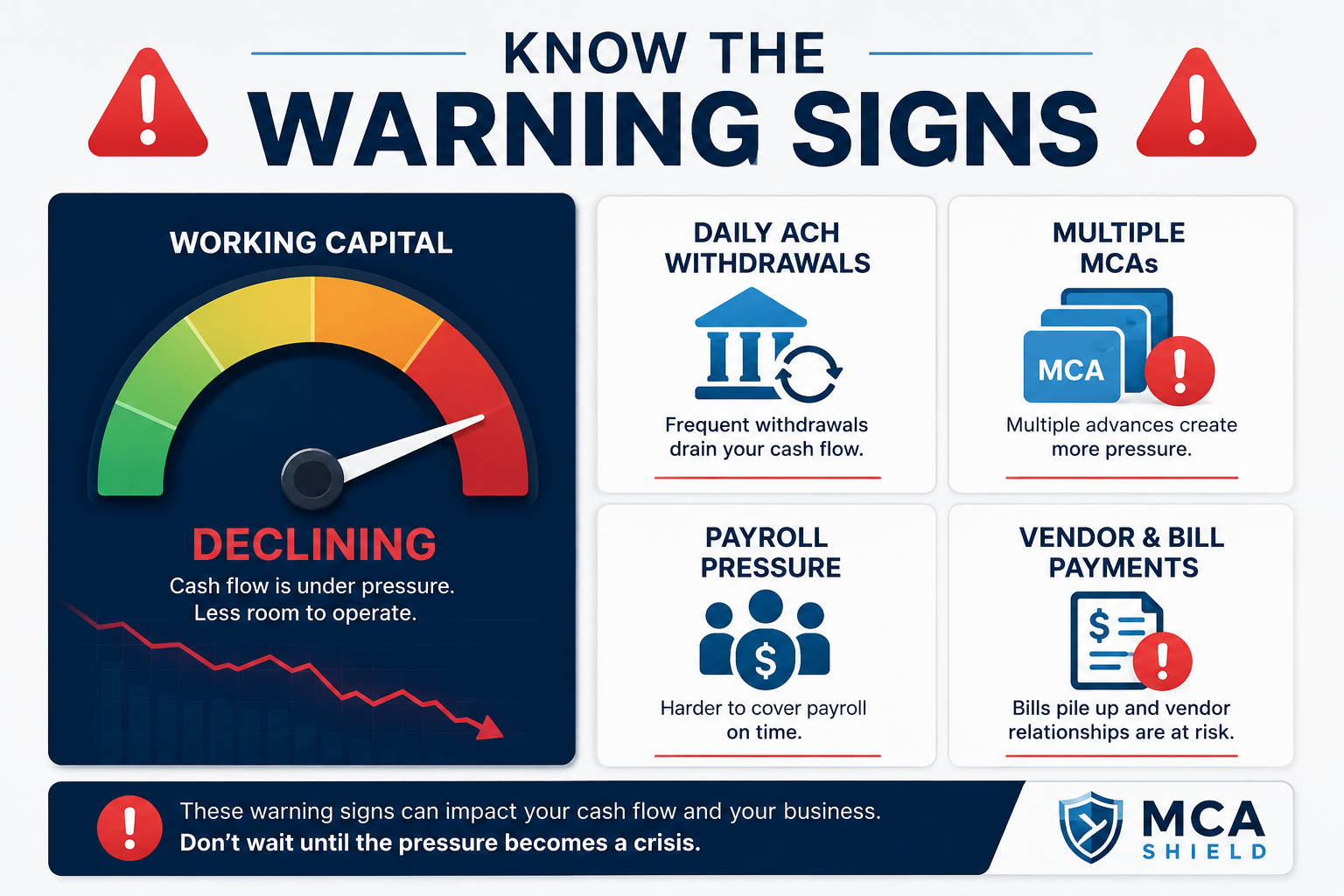
MCA debt relief warning signs including declining working capital, daily ACH withdrawals, multiple MCAs, payroll pressure, and vendor bills

Merchant Cash Advance problems do not always begin with a missed payment or a financial crisis. In many cases, the first warning signs appear in the business’s cash flow and everyday financial decisions.

You may notice less money available after MCA withdrawals. You might delay certain expenses or consider additional financing to fill the gap. These patterns can signal that your current obligations are becoming difficult to sustain.

Recognizing the warning signs early can help you determine whether MCA debt relief is a suitable option for your business.

MCA Payments Are Draining Working Capital

Working capital keeps your business moving. It helps cover payroll, inventory, rent, utilities, supplies, repairs, and other everyday expenses.

Frequent MCA payments can reduce those available funds. As a result, a business may generate steady revenue yet still struggle to maintain enough cash for normal operations.

One useful question to ask is simple: How much money remains after your MCA payments clear?

If the answer keeps shrinking, take a closer look at your finances. Other warning signs can include a consistently low bank balance, delayed purchases, difficulty maintaining inventory, or limited funds for unexpected expenses.

An MCA payment should not be viewed in isolation. Consider the payment alongside revenue, operating expenses, and available working capital to understand its true financial impact.

You’re Using New Funding to Cover Existing MCAs

Taking another Merchant Cash Advance can seem like a quick solution to a cash shortage. The new funds might help cover an upcoming expense or provide temporary relief from financial pressure.

However, a serious warning sign appears when new financing becomes necessary to manage existing MCA obligations.

The business may receive additional capital, but it also takes on another payment. This can reduce future cash flow and make the original financial problem harder to resolve.

Over time, the cycle can look like this:

Existing MCA payments → Cash shortage → New funding → More payments → Greater cash-flow pressure

If your business regularly needs new financing to keep up with existing obligations, the problem may no longer be access to capital. The underlying issue could be the amount of revenue already committed to debt payments.

Exploring MCA debt relief can help you evaluate the existing obligations before adding another payment to the business.

Operating Expenses Are Becoming Harder to Pay

Another important warning sign appears when routine business expenses become difficult to cover.

Payroll, rent, inventory, utilities, insurance, taxes, and vendor payments are essential to keeping a business running. If MCA withdrawals regularly leave too little cash for these expenses, the current payment structure may be putting operations under pressure.

Watch for patterns such as delaying vendor payments, postponing purchases, moving bills between pay periods, or struggling to make payroll.

An occasional tight week does not necessarily indicate a larger problem. However, repeated cash shortages deserve attention.

The key question is whether your business can meet its MCA obligations and continue paying essential operating expenses without relying on additional financing.

If that balance becomes difficult to maintain, exploring MCA debt relief early can help you understand your available options and develop a strategy for greater financial stability.

What MCA Debt Relief Options Are Available?

There is no single MCA debt relief option that works for every business. The right approach depends on active MCA obligations, repayment requirements, available revenue, financial health, and the conditions of each agreement.

Some businesses need relief from frequent withdrawals. Others may have several MCAs competing for the same revenue. In more serious situations, the business may already struggle to cover essential operating expenses.

For these reasons, a relief strategy should begin with a complete review of the business’s MCA obligations and financial condition. From there, potential options can be evaluated based on the business’s circumstances.

Restructuring MCA Payment Obligations

One possible approach involves seeking changes to the existing payment structure.

Daily or weekly withdrawals can place significant pressure on working capital. If the current payment schedule has become difficult to maintain, a modified arrangement could provide more room for everyday business expenses.

Depending on the agreement and MCA provider, restructuring efforts might focus on adjusting payment amounts, changing payment frequency, or creating a more manageable repayment arrangement.

Any potential modification depends on the individual circumstances and the provider’s willingness to make changes. Therefore, businesses should avoid assuming that a specific payment reduction or arrangement is guaranteed.

The objective is to create a payment structure that better reflects the business’s current financial capacity while addressing its existing obligations.

Negotiating With MCA Providers

Negotiation may also play a role in an MCA debt relief strategy.

This process typically involves communication with MCA providers about the business’s financial circumstances and current payment challenges. Financial records and other documentation may help explain why the existing arrangement has become difficult to maintain.

Depending on the situation, discussions could address payment terms, outstanding obligations, or other possible resolution options.

Successful negotiations require a clear understanding of the MCA agreements and the business’s finances. Promising a payment the business cannot realistically maintain could create additional problems.

For that reason, the goal should be a realistic resolution that considers both the MCA obligations and the business’s ability to continue operating.

Developing a Business Debt Resolution Strategy

For businesses with several MCAs or significant cash-flow pressure, changing one payment may not address the entire problem. A broader business debt resolution strategy may be necessary.

This approach looks at the complete financial picture. Active MCA agreements, payment schedules, revenue, working capital, operating expenses, and other business obligations should all be considered.

A strategy may include several steps, such as:

  • Reviewing every active MCA agreement
  • Identifying the obligations creating the greatest cash-flow pressure
  • Evaluating possible payment modifications or negotiations
  • Prioritizing essential operating expenses
  • Creating a realistic plan for available business cash
  • Avoiding additional debt that could increase financial pressure

The goal is not simply to reduce today’s financial stress. A strong MCA debt relief strategy should help the business address existing obligations while creating a more sustainable financial structure for the future.

Every business has different circumstances. Understanding the available options—and selecting a strategy based on the actual financial picture—can provide a clearer path toward improved cash flow and long-term business stability.

How the MCA Debt Relief Process Works
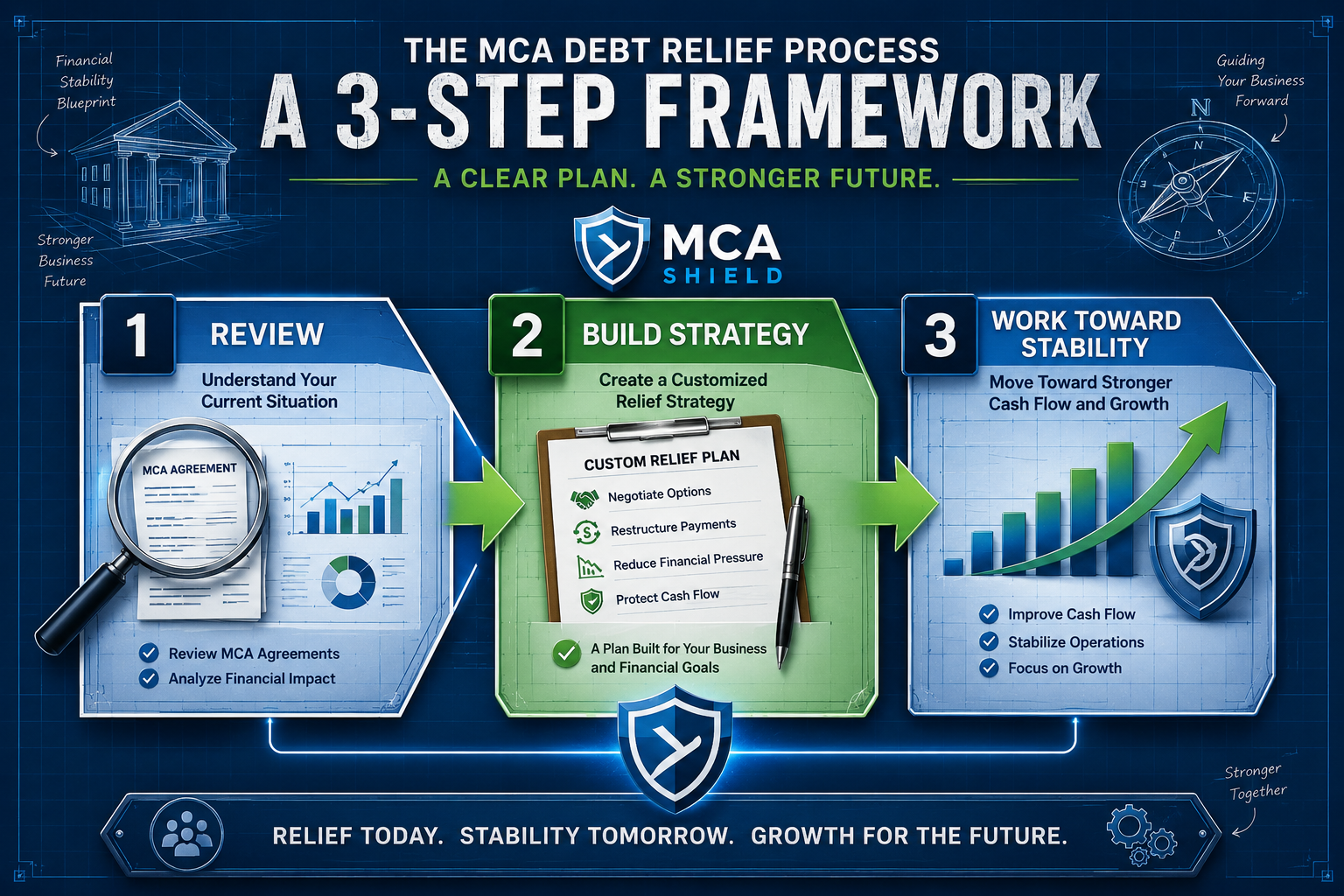
MCA debt relief process showing three steps to review MCA agreements, build a customized strategy, and work toward financial stability

MCA debt relief starts with understanding current obligations and overall financial health. From there, a strategy can be developed to address the specific challenges creating pressure on your cash flow.

Although every situation is different, the process generally follows three stages: review the problem, develop a strategy, and work toward greater financial stability.

Step 1: Review Your MCA Agreements and Finances

The first step is gathering information about each active Merchant Cash Advance.

A thorough review should examine MCA agreements, current balances, payment schedules, withdrawal amounts, and other important terms. If several advances are active, each one should be considered as part of the overall financial picture.

The financial review should also look beyond the MCA agreements. Business revenue, bank activity, payroll, rent, inventory, vendor costs, and other operating expenses can help show the amount of working capital available.

This information provides a clearer picture of the financial pressure facing the business. It can also identify which obligations are creating the greatest strain.

The purpose of this first step is simple: understand the complete financial situation before making decisions about MCA debt relief.

Step 2: Build a Customized Relief Strategy

Once the financial review is complete, the next step is developing a strategy based on the business’s circumstances.

There is no universal solution for MCA debt. A company with one active advance may require a different approach than a business managing several stacked MCAs.

Depending on the situation, a customized strategy could include payment modifications, communication with MCA providers, negotiations, or a broader financial recovery plan.

The strategy should also consider the money needed to keep the business operating. Payroll, rent, inventory, utilities, taxes, and other essential expenses cannot simply disappear while MCA obligations are addressed.

A strong plan balances these competing financial demands and establishes realistic priorities based on available cash flow.

Most importantly, the strategy should address the underlying financial pressure rather than simply shifting the problem to another funding source.

Step 3: Work Toward Greater Financial Stability

After a strategy is established, the focus shifts toward improving the business’s overall financial position.

This stage may involve implementing agreed-upon payment arrangements, continuing communication with MCA providers, monitoring cash flow, and adjusting financial priorities as necessary.

Progress may take time. However, gaining greater control over outgoing payments can help a business focus more attention on payroll, vendors, inventory, operations, and other essential needs.

Businesses should also monitor their finances throughout the MCA debt relief process. Revenue and expenses can change, so a strategy that works today may require adjustments later.

The broader objective is not simply to address individual MCA payments. It is to help create a financial structure that provides the business a stronger foundation for the future.

By moving through the process carefully—from review to strategy to financial stability—business owners can make more informed decisions about their MCA obligations and the future of their operations.

MCA Debt Relief vs. Taking Out Another MCA
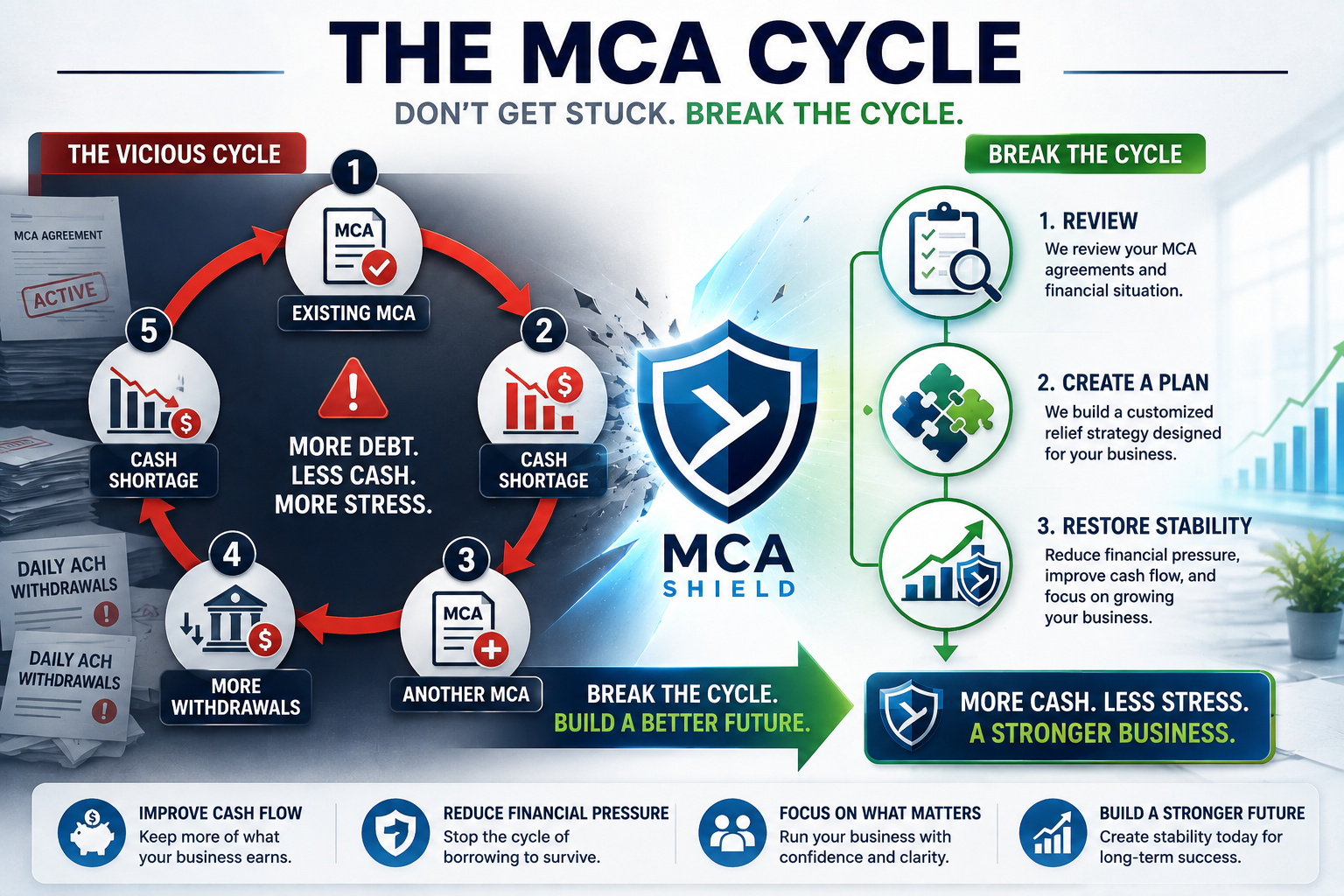
MCA debt relief breaking the cycle of cash shortages, multiple MCAs, daily ACH withdrawals, and growing financial pressure

When cash flow becomes tight, taking out another Merchant Cash Advance can seem like the fastest solution. New funding may provide immediate cash for payroll, inventory, rent, or other pressing expenses.

However, another MCA also creates another financial obligation. If existing MCA payments already strain working capital, adding more withdrawals can make the underlying problem harder to manage.

Before accepting additional funding, it is worth comparing the short-term benefit of new capital with the potential advantages of MCA debt relief.

Why Additional Funding May Only Delay the Problem

New funding can provide temporary breathing room. A business might use the money to cover overdue bills, purchase inventory, make payroll, or handle an unexpected expense.

The problem can grow when the business needs new financing because existing MCA payments consume too much available cash.

In that situation, additional funding may address the immediate shortage without correcting the underlying cash-flow problem. Once the new funds are spent, the business still has its previous obligations plus another payment.

This can create a repeating pattern:

Cash shortage → New MCA → Temporary relief → Additional payments → Another cash shortage

Before taking another advance, businesses should identify the reason behind the cash shortage. If frequent MCA withdrawals are the primary cause, addressing those existing obligations may offer a more sustainable path forward.

The Risks of MCA Stacking

MCA stacking occurs when a business takes on additional Merchant Cash Advances while existing advances remain active.

Each new advance provides capital, but each one can also add another daily or weekly payment. Multiple withdrawals can quickly reduce the money available for essential business expenses.

As the number of active MCAs increases, businesses may experience:

  • Reduced working capital
  • More frequent withdrawals from the business account
  • Difficulty covering payroll and operating expenses
  • Greater dependence on additional financing
  • Less flexibility during slower sales periods
  • Increased financial pressure across daily operations

The biggest concern is the cycle MCA stacking can create. A business may use one advance to solve a short-term problem created partly by payments from previous advances.

Over time, more revenue becomes committed to MCA obligations. This leaves less money available to operate the business and generate future growth.

Why Addressing Existing Debt Can Be the Better Strategy

Taking another MCA adds capital. MCA debt relief focuses on addressing existing financial pressure.

For a business struggling with frequent withdrawals, reviewing existing MCA agreements can help identify the source of the cash-flow problem. From there, the business can evaluate possible relief strategies before adding another obligation.

Depending on the circumstances, this could include exploring payment modifications, communicating with MCA providers, negotiating obligations, or developing a broader financial recovery strategy.

Addressing existing MCA debt can also help a business focus on protecting working capital and maintaining essential operations. The objective is to create a financial structure that is easier to manage over time.

Another MCA is not automatically the wrong decision for every business. However, repeatedly borrowing to cover existing obligations can signal a deeper financial problem.

If your business is considering another advance because current MCA payments have become difficult to manage, exploring MCA debt relief first may help you understand your options before taking on additional financial pressure.

How to Choose an MCA Debt Relief Company

Choosing the right MCA debt relief company is an important decision. You may be trusting that company with sensitive financial information and relying on its guidance during a difficult period for your business.

Not every company uses the same approach. Before making a decision, take time to understand its experience, services, fees, and communication style.

A reputable company should clearly explain your situation without pressuring you to make a quick decision.

Look for Experience With Merchant Cash Advances

Merchant Cash Advances differ from traditional business loans. Their agreements, payment structures, and frequent withdrawals can create unique financial challenges.

For that reason, look for a company with specific experience handling Merchant Cash Advance debt.

Ask about the types of MCA situations the company regularly handles. Does it work with businesses carrying multiple advances? Does the team understand daily and weekly ACH payments? Can it review MCA agreements and clearly explain potential strategies?

Experience does not guarantee a particular result. However, familiarity with MCA obligations can help a company identify important issues and develop a strategy suited to your financial situation.

The company should also take time to learn about your business. A recommendation made without reviewing your MCA agreements, revenue, expenses, and cash flow may overlook important details.

Ask About the Process, Costs, and Expectations

Before hiring an MCA debt relief company, make sure you understand what happens after you sign up.

Ask the company to explain its process in straightforward terms. You should know which documents are required, who will communicate with you, what services are included, and what role your business will have throughout the process.

Costs should also be clear.

Ask about fees, payment requirements, and any additional charges that could apply. Request this information in writing so you can review it before signing an agreement.

You should also discuss expectations. Ask what the company can realistically attempt to accomplish and which factors could influence the outcome.

A trustworthy MCA debt relief company should be comfortable answering questions. Clear communication and transparency can help you make a more informed decision.

Watch for Unrealistic Promises and High-Pressure Sales

Be cautious of any company that promises a guaranteed result before thoroughly reviewing your financial situation.

Every business has different MCA agreements, providers, revenue, expenses, and financial challenges. Therefore, a responsible company should evaluate those details before recommending a strategy.

Watch for warning signs such as:

  • Guaranteed debt reductions or specific outcomes
  • Pressure to sign an agreement immediately
  • Vague or confusing explanations about fees
  • Limited information about the actual relief process
  • Promises made before reviewing your MCA agreements
  • Reluctance to answer questions or provide information in writing

High-pressure sales tactics should also raise concerns. Financial stress can make business owners feel urgency, but that does not mean you should rush into an agreement you do not fully understand.

The right MCA debt relief company should focus on education, transparency, and a strategy tailored to your circumstances.

Take time to compare your options, ask questions, and understand what you are agreeing to. Choosing carefully can help you find professional guidance that supports both your immediate financial needs and your business’s long-term stability.

What Results Can Businesses Expect From MCA Debt Relief?

Businesses often explore MCA debt relief because current payments have become difficult to manage. While every situation is different, the overall goal is usually similar: reduce financial pressure and create a more sustainable path forward.

Results can depend on several factors. These include the number of active MCAs, agreement terms, available revenue, operating expenses, and whether MCA providers will consider alternative arrangements.

No reputable company should guarantee a specific outcome. However, an effective MCA debt relief strategy can focus on improving cash flow, creating a more manageable financial structure, and supporting long-term business stability.

Reducing Pressure on Business Cash Flow

Cash-flow pressure is often one of the biggest reasons businesses seek MCA debt relief.

Daily or weekly withdrawals can consume a significant portion of incoming revenue. This can leave limited funds for payroll, inventory, rent, utilities, vendors, and other essential expenses.

A relief strategy may seek to reduce this pressure through payment modifications, negotiations, or other possible arrangements. The specific approach will depend on the business and its MCA agreements.

Greater control over outgoing payments can help a business better plan for its financial needs. It may also create more room to cover essential operating expenses without constantly searching for additional financing.

The objective is not simply to have more cash in the bank. It is to create a healthier balance between MCA obligations and the money needed to operate the business.

Creating a More Manageable Financial Structure

Financial stability becomes difficult when several obligations compete for the same revenue.

A business may have multiple MCA withdrawals, payroll, rent, taxes, vendor bills, and other expenses due within a short period. Without enough working capital, managing those obligations can become increasingly difficult.

MCA debt relief can help bring greater structure to this situation.

A strategy may focus on organizing existing obligations, establishing realistic financial priorities, and creating a clearer plan for available cash. This can help business owners understand where their money needs to go and which expenses require immediate attention.

A more manageable financial structure can also make cash-flow planning easier. Instead of constantly reacting to the next withdrawal or bill, the business can work from a clearer financial plan.

That increased visibility can support better decisions about spending, inventory, staffing, and future financing.

Building a Path Toward Long-Term Recovery

MCA debt relief should not focus only on today’s payment problem. A strong strategy also considers long-term financial health and stability.

Long-term recovery may require changes beyond the MCA obligations. Businesses may need to improve cash-flow management, control expenses, rebuild working capital, or reconsider future financing decisions.

One important goal is to break the cycle of using new funding to manage existing financial pressure.

As the business gains greater control over its finances, it can begin directing more attention toward operations, customers, employees, and growth.

Recovery does not happen overnight, and MCA debt relief cannot guarantee that every business will overcome its financial challenges. However, addressing the problem early can provide more time to evaluate available options and make informed decisions.

Ultimately, the goal is to move from reacting to financial pressure toward managing the business with greater stability, visibility, and confidence.

Common MCA Debt Relief Mistakes to Avoid
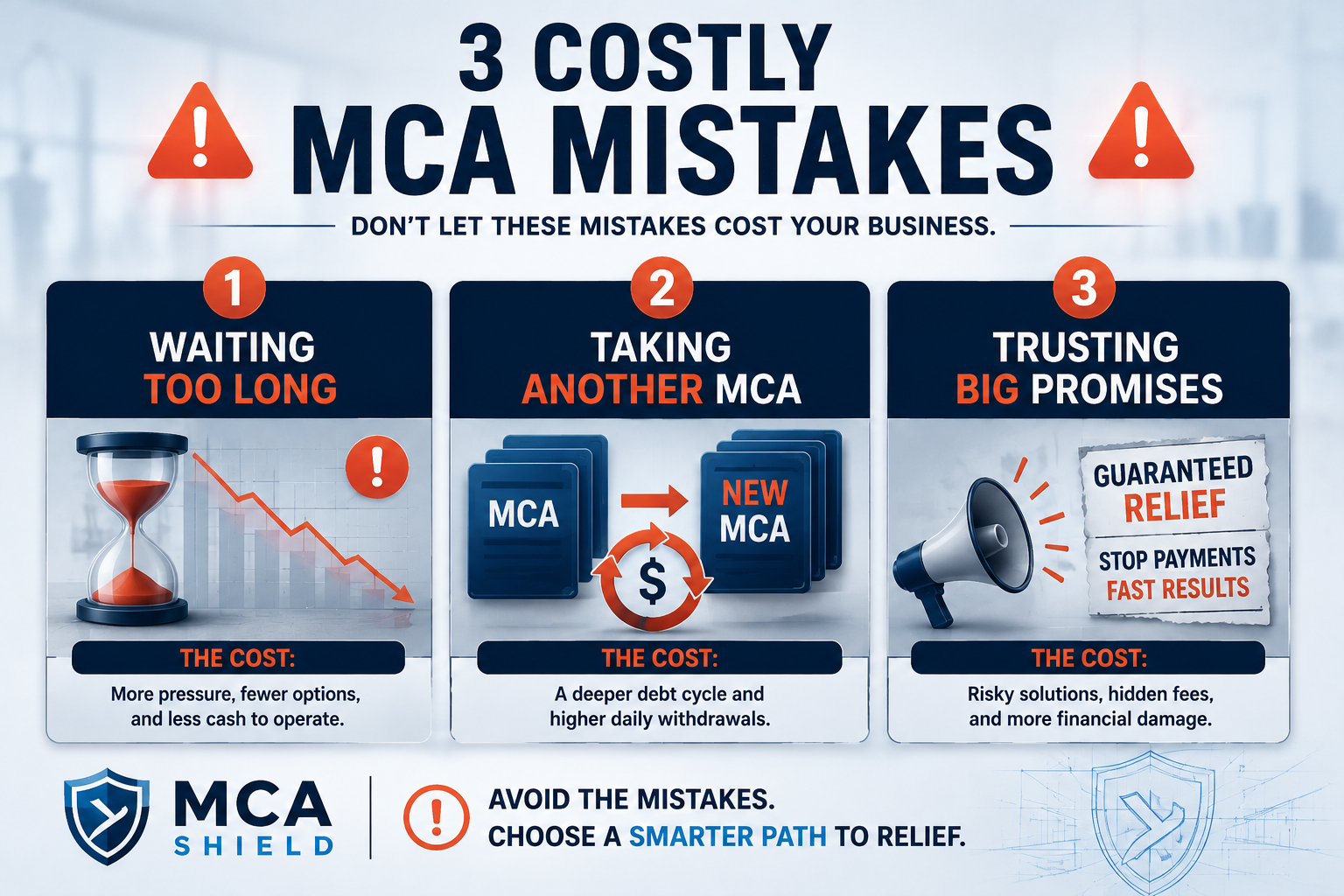
MCA debt relief mistakes to avoid including waiting too long, taking another MCA, and trusting unrealistic promises

Exploring MCA debt relief can be an important step toward addressing financial pressure. However, the decisions made before and during the process can influence the options available to a business.

Some business owners wait too long to seek help. Others take additional financing to solve an immediate cash shortage. Another common mistake is choosing a relief company because its promises sound appealing.

Understanding these mistakes can help you make more informed decisions and avoid adding unnecessary financial pressure.

Waiting Until the Business Is in Crisis

One of the biggest mistakes is waiting for the financial situation to become severe before exploring MCA debt relief.

Business owners often hope revenue will increase or a busy season will solve the problem. Sometimes conditions do improve. However, waiting can become risky when MCA payments continue reducing working capital each day or week.

Early warning signs may include low bank balances, delayed vendor payments, difficulty making payroll, or constant cash shortages.

Ignoring those signals can leave fewer resources available to address the problem later.

Taking action early does not mean committing to a specific relief program. It simply means reviewing your MCA obligations, understanding your cash flow, and learning which options may be available.

The earlier you understand the financial picture, the more time you have to evaluate possible solutions before the situation becomes more difficult.

Taking Another MCA Without Addressing the Problem

Another Merchant Cash Advance can provide fast access to capital. However, additional funding does not automatically solve the reason your business is short on cash.

If existing MCA withdrawals are creating the shortage, another advance can add a new payment to an already strained financial structure.

The business may experience temporary relief after receiving the funds. Once that money is used, multiple MCA payments can begin consuming an even larger portion of revenue.

Before accepting another advance, identify the reason your business needs additional capital.

If the primary problem is existing MCA payments draining working capital, exploring MCA debt relief first may help you understand other possible strategies.

New financing can serve a legitimate business purpose. The concern arises when borrowing becomes a repeated solution for obligations the business can no longer comfortably manage.

Choosing a Relief Company Based on Promises Alone

Financial pressure can make bold promises especially appealing.

A company may claim it can dramatically reduce payments, eliminate a specific amount of debt, or produce results within a certain period. Be cautious when those claims appear before anyone has reviewed your MCA agreements or financial records.

No MCA debt relief company can responsibly guarantee a specific result for every business.

Instead, evaluate the company based on its experience, transparency, communication, and approach to your situation.

Ask questions about fees, services, timelines, potential strategies, and realistic expectations. Make sure you understand the agreement before signing.

You should also pay attention to the way the company communicates. A professional team should explain the process clearly and allow you enough time to evaluate your options.

Choosing an MCA debt relief company should be based on experience and transparency—not the biggest promise.

Avoiding these common mistakes can help you approach MCA debt relief with a clearer understanding of your financial situation and the decisions ahead.

How MCA Shield Helps Businesses Navigate MCA Debt Relief

Dealing with multiple payments, complicated agreements, and limited working capital can make it difficult to know what to do next. MCA Shield helps businesses understand their MCA obligations and explore potential relief strategies based on their financial circumstances.

The process starts with understanding the problem before recommending a solution. Rather than applying the same approach to every business, MCA Shield evaluates each company’s overall financial situation.

From the initial review through the relief process, the goal is to provide clear information, a customized strategy, and ongoing guidance.

Reviewing Your Current MCA Situation

The first step is understanding your current Merchant Cash Advance obligations.

MCA Shield reviews your active MCA agreements, payment requirements, outstanding obligations, and overall financial situation. This review can reveal which payments create the greatest pressure on working capital.

Your business finances are also an important part of the evaluation. Revenue, operating expenses, available cash, and other financial obligations can help determine which options deserve further consideration.

This process creates a clearer picture of your current position. It also helps identify the financial challenges that should receive immediate attention.

Before discussing possible MCA debt relief strategies, MCA Shield works to understand the circumstances surrounding your business.

Creating a Strategy Based on Your Business

Every business arrives at MCA debt relief from a different starting point.

One company may have a single advance with payments that recently became difficult to manage. Another may have several stacked MCAs and little working capital remaining after daily withdrawals.

Because the circumstances differ, the strategy should differ too.

After reviewing your MCA obligations and finances, MCA Shield can help identify potential strategies suited to your situation. Depending on the circumstances, these could include payment modifications, communication with MCA providers, negotiations, or a broader financial recovery plan.

The strategy also considers the cash your business needs for payroll, rent, inventory, vendors, utilities, and other essential operating expenses.

The objective is to develop a realistic approach that addresses MCA pressure while supporting essential business operations.

Providing Guidance Throughout the Process

MCA debt relief can involve several steps, and questions often arise along the way.

MCA Shield provides guidance throughout the process so you can better understand what is happening, what comes next, and what information may be needed.

That guidance can include reviewing developments, helping you understand potential options, and adjusting the strategy as circumstances change.

Communication is especially important because business finances rarely remain static. Revenue can rise or fall, unexpected expenses can occur, and new challenges may require attention.

Having ongoing support can help you stay focused on the larger goal: addressing MCA obligations while working toward greater financial stability.

MCA Shield’s approach centers on understanding your business, developing a customized strategy, and providing guidance throughout the MCA debt relief process. If MCA payments are putting pressure on your cash flow, taking the time to understand your options can be an important first step.

Frequently Asked Questions About MCA Debt Relief

Straight answers to common questions about MCA payments, timelines, multiple advances, and your options.

Every business has a different financial situation. However, many business owners have similar questions when exploring MCA debt relief. Here are answers to six of the most common.


💳 Can MCA Debt Relief Reduce Daily ACH Payments?

THE SHORT ANSWER: Potentially.

In some situations, reducing pressure from daily ACH payments may be part of an MCA debt relief strategy.

Possible options depend on your MCA agreements, providers, financial circumstances, and other factors. A strategy could include seeking modified payment arrangements or negotiating existing obligations.

However, a reduction in daily ACH payments cannot be guaranteed.

Why it matters: If frequent withdrawals make payroll, rent, inventory, or other expenses difficult to cover, reviewing your MCA obligations can help identify potential options.


⏱️ How Long Does MCA Debt Relief Take?

THE SHORT ANSWER: There is no standard timeline.

The length of the MCA debt relief process can vary from one business to another.

Several factors can influence the timeline, including the number of active MCAs, agreement complexity, financial circumstances, provider communication, and the relief strategy.

For example, a business with one MCA may have a very different situation from a company managing several stacked advances.

Why it matters: Focus on finding a realistic strategy for your financial situation rather than expecting results within a specific number of days or months.


🚦 When Should a Business Seek MCA Debt Relief?

THE SHORT ANSWER: Before financial pressure becomes a crisis.

You do not necessarily need to miss payments before exploring MCA debt relief.

Warning signs can include shrinking working capital, difficulty covering essential expenses, low bank balances, delayed vendor payments, or reliance on additional financing.

Multiple active MCAs can also signal that it is time to review the bigger financial picture.

Why it matters:By acting early, you have more time to understand your situation, evaluate options, and make informed financial decisions.


⚖️ Is MCA Debt Relief the Same as Bankruptcy?

THE SHORT ANSWER: No.

MCA debt relief and bankruptcy are different.

MCA debt relief generally focuses on strategies for addressing Merchant Cash Advance obligations. Depending on the circumstances, this could include payment modifications, negotiations, or other possible arrangements.

Bankruptcy is a formal legal process governed by federal law and can involve many different types of business debt.

Why it matters: Businesses considering bankruptcy should speak with a qualified bankruptcy attorney to understand their legal options and potential consequences.


📚 Can MCA Debt Relief Help With Multiple MCAs?

THE SHORT ANSWER: Yes, multiple MCAs can be reviewed as part of a relief strategy.

Several active Merchant Cash Advances can create significant financial pressure because multiple withdrawals compete for the same business revenue.

An MCA debt relief review can examine each active advance, payment requirements, and the overall impact on working capital.

From there, potential strategies can address the broader financial situation rather than focusing on a single advance.

Why it matters: If your business has entered an MCA stacking cycle, addressing the overall financial structure may be more effective than continuing to add new financing.


🛡️ Do I Have to Be in Default to Seek MCA Debt Relief?

THE SHORT ANSWER: No.

You do not necessarily need to wait for a default before exploring your options.

Businesses can learn about MCA debt relief while payments are still current. In fact, warning signs often appear much earlier through declining working capital, difficulty covering expenses, or growing dependence on additional financing.

Waiting until financial pressure becomes severe can make the situation more difficult.

Why it matters: Learning about your options early can help you make informed decisions before financial pressure increases.


Still Have Questions About MCA Debt Relief?

Every business has a different combination of MCA agreements, payments, revenue, expenses, and cash-flow challenges. There is rarely a one-size-fits-all answer.

Understanding your current MCA situation is the first step toward identifying potential options.

Have your MCA agreements reviewed. Understand your options. Build a strategy for what comes next.

Take the First Step Toward MCA Debt Relief
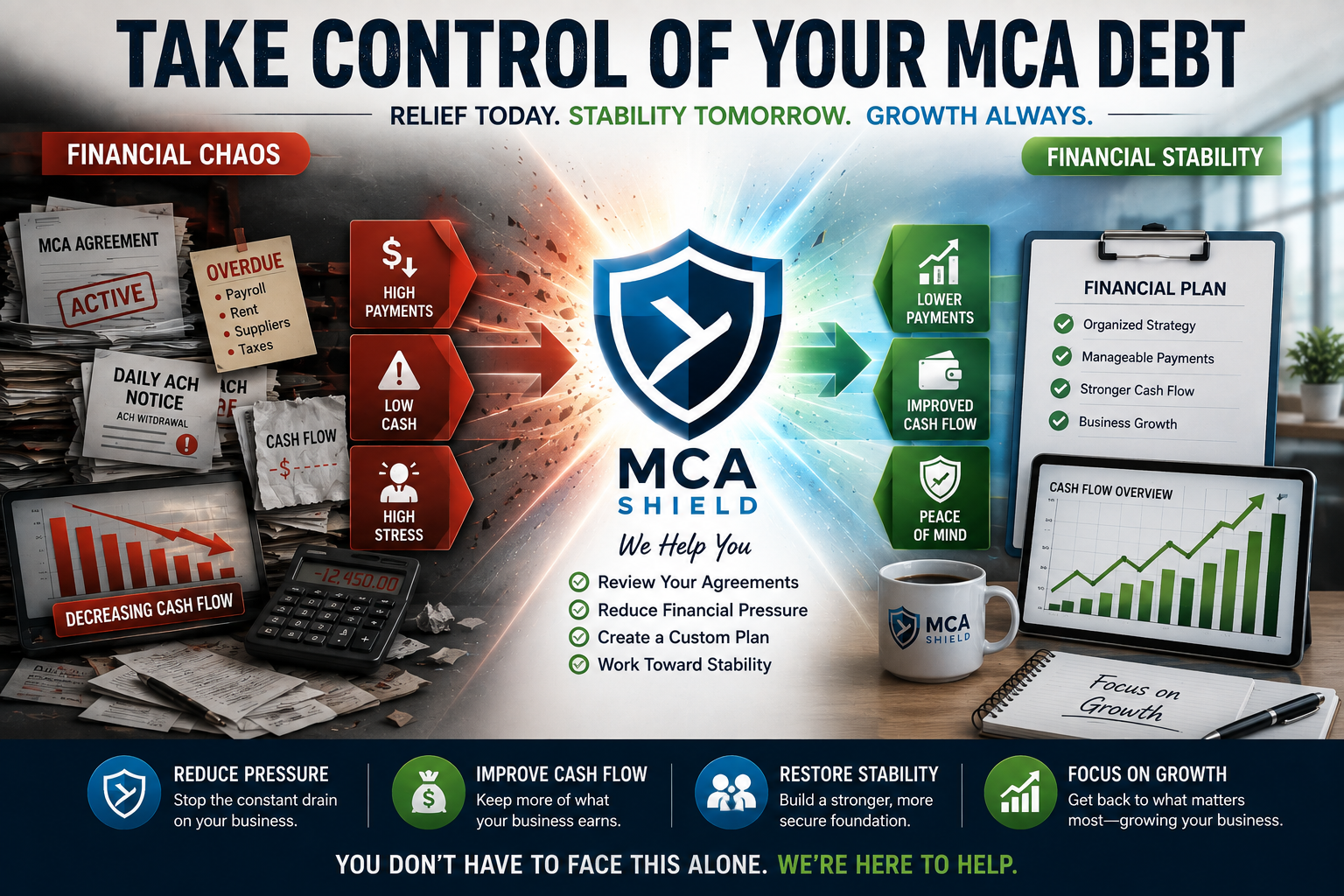
Financial pressure from Merchant Cash Advances can grow quickly. Daily or weekly withdrawals continue even as your business manages payroll, inventory, rent, vendors, and other operating expenses.

You do not have to wait until those pressures reach a crisis point to understand your options.

If MCA payments are consuming too much working capital, MCA debt relief may offer strategies worth exploring. The first step is understanding your current obligations, cash flow, and overall financial position.

Why Acting Early Can Create More Options

Waiting rarely makes MCA obligations easier to manage.

As working capital declines, businesses may begin delaying expenses, falling behind with vendors, or considering another advance to cover short-term needs. Each of these challenges can add more pressure to an already difficult financial situation.

Early action gives you time to understand the problem before it becomes more severe.

Reviewing your MCA agreements and finances can help identify which obligations place the greatest strain on cash flow. You can then explore potential strategies and make decisions with a clearer understanding of your financial position.

Taking action does not mean committing to a specific solution. It means learning what options may be available before financial pressure limits your choices.

Schedule a Free Consultation With MCA Shield

If Merchant Cash Advance payments are making it difficult to manage your business, you do not have to figure out the next step alone.

MCA Shield can review your current MCA situation, discuss your business’s financial challenges, and help you understand potential MCA debt relief options.

Your consultation is an opportunity to ask questions and gain a clearer understanding of possible next steps.

The sooner you understand your MCA obligations, the sooner you can begin making informed decisions about your business’s financial future.

Schedule a Free Consultation With MCA Shield and take the first step toward greater financial stability.

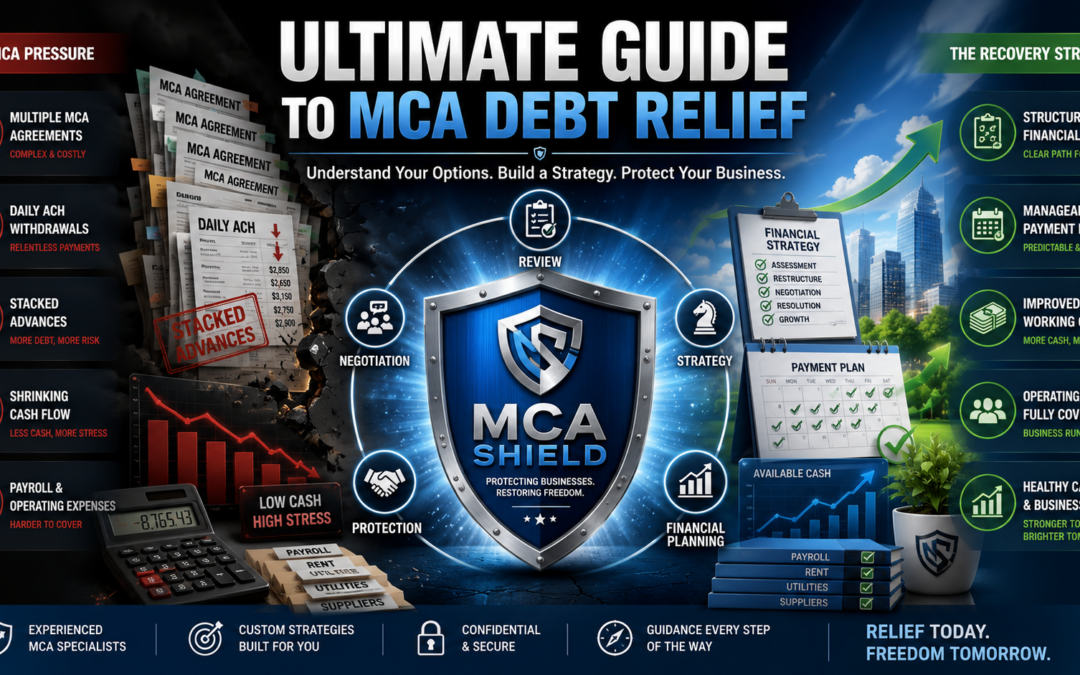
MCA debt relief transformation from financial pressure and daily ACH withdrawals to improved cash flow, organized finances, and business stability