
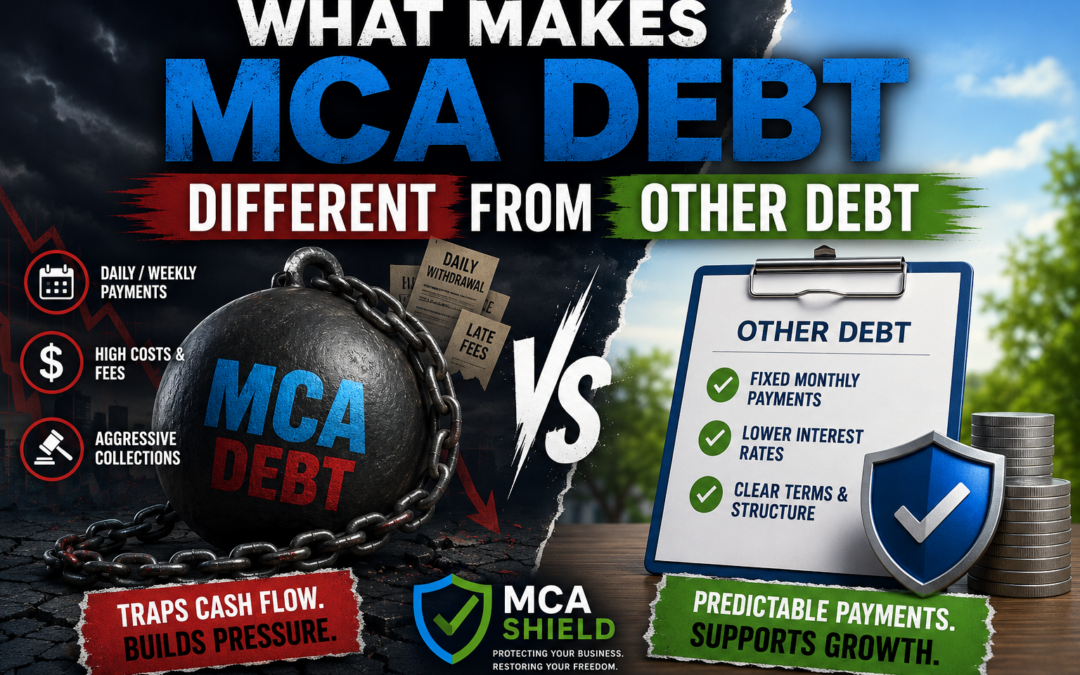
Many business owners discover that MCA debt is unlike any other type of financing. While a merchant cash advance can provide fast access to working capital, the repayment structure often creates financial pressure much sooner than expected. Daily or weekly withdrawals, higher repayment costs, and aggressive collection efforts can make MCA debt far more difficult to manage than traditional business debt.
Unlike bank loans or business lines of credit, MCA debt is designed to be repaid quickly through automatic withdrawals tied to your business revenue. This repayment model can reduce cash flow, making it harder to cover payroll, inventory, rent, and other essential operating expenses. As cash flow tightens, many businesses take on additional advances, creating a cycle that becomes increasingly difficult to escape.
Understanding what makes MCA debt different from other debt is the first step toward protecting your business. In this guide, you’ll learn how merchant cash advances compare to traditional financing, why they create unique financial risks, and what practical steps you can take to regain control before the situation becomes more serious.
Schedule Your Free Consultation
Understanding Merchant Cash Advance Debt
Before comparing MCA debt to other forms of financing, it’s important to understand how a merchant cash advance works. Many business owners choose an MCA because funding is often available quickly with fewer approval requirements than traditional financing. However, the repayment structure is very different from a bank loan or business line of credit, and those differences can significantly affect your cash flow.
How Merchant Cash Advances Work
A merchant cash advance (MCA) is not typically structured like a conventional loan. Instead of borrowing a fixed amount with monthly payments and an interest rate, a business receives an upfront advance in exchange for a portion of its future sales or revenue. Repayment usually occurs through automatic daily or weekly withdrawals from your business bank account or credit card receipts.
While this arrangement can provide fast funding, the frequent withdrawals reduce available cash almost immediately. Many businesses find it difficult to keep up with everyday expenses as payments continue, especially during slower sales periods.
Why MCA Funding Is Not a Traditional Business Loan
One of the biggest differences between MCA debt and traditional financing is the repayment structure. A bank loan generally offers fixed monthly payments, longer repayment terms, and regulated lending practices. In contrast, merchant cash advances often require daily or weekly payments, shorter repayment periods, and higher overall repayment costs.
Because of these differences, many businesses experience financial pressure much sooner than they expected. The constant withdrawals can limit cash flow, making it more difficult to invest in growth, purchase inventory, pay employees, or cover operating expenses.
Why Businesses Often Take Multiple MCAs
When cash flow becomes tight, some business owners respond by taking out another merchant cash advance to cover existing payments. This practice, often called MCA stacking, may provide temporary relief, but it frequently creates even greater financial strain.
Each new advance adds another payment obligation, leaving less working capital available each day or week. Over time, businesses can become trapped in a cycle where new funding is used to repay old obligations instead of supporting operations. Understanding this pattern is essential because recognizing the warning signs early often creates more opportunities to resolve MCA debt before it becomes overwhelming.
What Makes MCA Debt Different From Other Types of Debt
Why MCA Debt Becomes So Difficult to Escape

Comparing MCA Debt to Traditional Business Financing
Warning Signs Your MCA Debt Is Becoming Unmanageable
Practical Steps to Break the MCA Debt Cycle
How MCA Shield Helps Businesses Resolve MCA Debt
Frequently Asked Questions About MCA Debt
Stop MCA Debt Before It Costs Your Business More
The longer MCA debt remains unresolved, the greater the impact it can have on your business. Daily or weekly withdrawals can continue to reduce cash flow, making it more difficult to pay employees, purchase inventory, maintain vendor relationships, and invest in future growth. Taking action today can help protect your business before financial pressure becomes even more difficult to overcome.
Why Acting Early Creates More Financial Options
When businesses address MCA debt early, they often have more flexibility and more potential solutions available. Waiting until payments become impossible, vendors stop supplying products, or legal action begins can limit your options and increase financial stress.
By acting sooner, you may be able to improve cash flow, reduce financial pressure, preserve working capital, and avoid the cycle of taking on additional merchant cash advances. Early action gives your business the best opportunity to regain stability and focus on long-term success instead of daily financial challenges.
Schedule a Free Consultation With MCA Shield
If MCA debt is affecting your business, you don’t have to face it alone. MCA Shield helps business owners understand their options and develop personalized strategies based on their unique financial situation.
Schedule a free consultation to review your merchant cash advance agreements, discuss potential solutions, and learn how you can begin working toward lasting financial stability. The sooner you take action, the sooner you can start protecting your cash flow, reducing financial stress, and moving your business forward.