
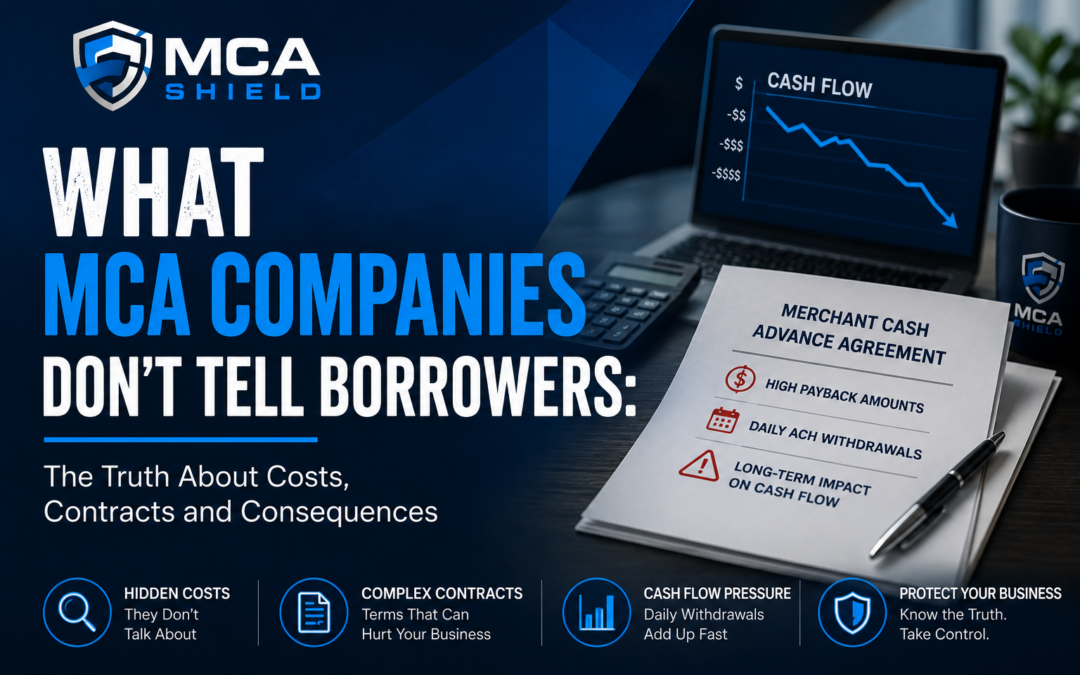
Many business owners discover what MCA companies don’t tell borrowers only after daily payments begin affecting cash flow. While merchant cash advances can provide fast access to funding, the full cost, contract terms, and long-term impact are not always fully understood before an agreement is signed.
In this guide, you’ll learn the hidden details many borrowers overlook, how MCA debt can affect your business, and what options are available if payments become difficult to manage. We’ll also explain when MCA consolidation or MCA debt consolidation may be worth exploring to help reduce financial pressure and regain control of your business finances.
Schedule Your Free Consultation
Why Many Business Owners Feel Surprised After Accepting an MCA
Many business owners researching what MCA companies don’t tell borrowers are already experiencing the consequences of an advance. Although the funding process is often quick and straightforward, the long-term impact can be very different from what they expected. As a result, daily withdrawals, higher repayment amounts, and cash flow challenges can create financial pressure that continues to grow over time.
Fast Funding Often Comes With Hidden Tradeoffs
One of the biggest advantages of a merchant cash advance is speed. In many cases, businesses receive funding within a day or two. However, that convenience often comes with tradeoffs that are not fully appreciated until repayment begins.
For example, many MCA agreements require daily or weekly ACH withdrawals. While each payment may seem manageable on its own, the ongoing deductions can reduce available working capital. Consequently, it may become more difficult to cover payroll, inventory, rent, or other operating expenses.
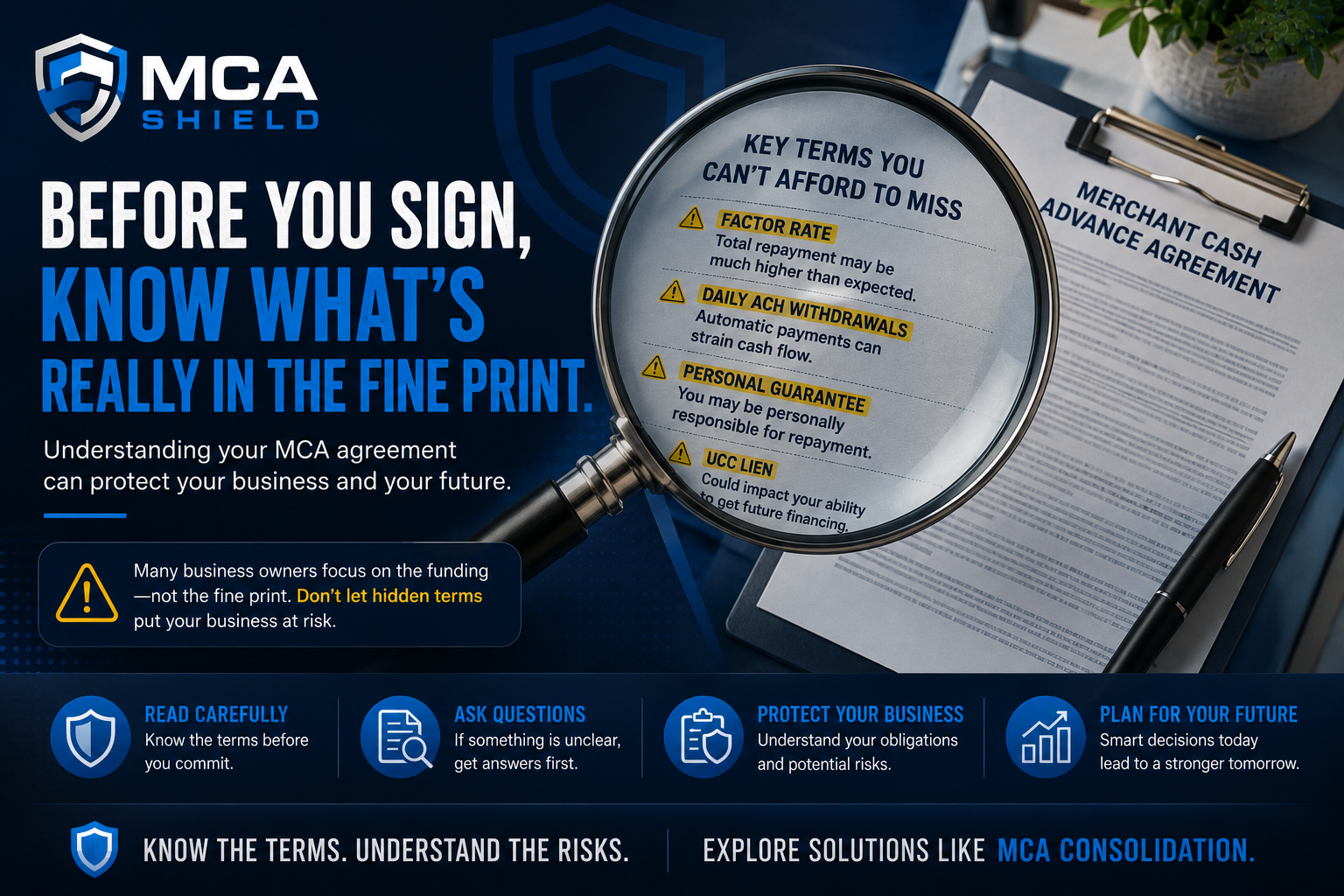
Business owners should also understand that a merchant cash advance is not structured like a traditional business loan. Repayment is typically based on a factor rate rather than an interest rate, which can significantly increase the total amount repaid.
Why the Sales Pitch Can Sound Better Than Reality
Sales representatives often emphasize fast approvals, minimal paperwork, and immediate access to capital. While these benefits are real, they may not fully explain how the repayment structure will affect your business over the coming months.
In addition, some borrowers focus on how much funding they will receive instead of the total repayment obligation. This can lead to unexpected financial strain, especially if revenue declines or additional financing becomes necessary.
If cash flow becomes difficult to manage, some businesses begin exploring MCA consolidation or MCA debt consolidation as alternatives to taking on additional advances. Understanding your repayment obligations before signing an agreement can help you avoid reaching that point and make more informed financial decisions.
MCA Companies Don't Always Explain the True Cost of Funding
Understanding what MCA companies don’t tell borrowers starts with understanding the true cost of a merchant cash advance. While fast funding can help solve an immediate cash-flow problem, the repayment structure often costs far more than many business owners expect. Before accepting an offer, it is important to know how factor rates, repayment amounts, and daily ACH withdrawals can affect your business.
Understanding Factor Rates vs. Interest Rates
One of the most misunderstood parts of a merchant cash advance is the factor rate. Unlike a traditional business loan, an MCA does not typically use an annual interest rate. Instead, the financing company applies a factor rate to determine the total amount you must repay.
For example, if you receive a $100,000 advance with a factor rate of 1.40, you will repay $140,000 regardless of how quickly the balance is paid. Many borrowers focus on the funding amount and overlook the total repayment obligation until after the agreement is signed.
Understanding this difference can help you compare financing options more accurately and avoid unexpected costs.
How Repayment Can Be Much Higher Than Expected
The total repayment amount is one of the biggest surprises for many business owners. Although the funding process may seem straightforward, the overall cost can be substantially higher than anticipated.
This often becomes even more challenging when revenue slows or unexpected expenses arise. Consequently, businesses may struggle to maintain healthy cash flow while still meeting daily operating expenses.
Some owners respond by taking another merchant cash advance to cover existing payments. Unfortunately, this can create a cycle of increasing debt. In many cases, businesses begin exploring MCA debt consolidation to simplify repayment and reduce the financial strain caused by multiple obligations.
Why Daily ACH Withdrawals Add Up Quickly
Many merchant cash advance companies collect payments through automatic daily ACH withdrawals. At first, each withdrawal may appear relatively small. However, the cumulative effect can significantly reduce the cash available to operate your business.
Daily deductions can make it harder to pay employees, purchase inventory, cover rent, or respond to unexpected expenses. As a result, even profitable businesses may experience cash flow shortages because money leaves the account before other obligations are paid.
This repayment structure is another example of what MCA companies don’t tell borrowers in enough detail before funding. Understanding how daily withdrawals affect your operating cash can help you make better financing decisions and recognize when professional assistance or MCA debt consolidation may be appropriate before financial pressure becomes overwhelming.
What MCA Companies Don't Tell Borrowers About Cash Flow
One of the most important aspects of what MCA companies don’t tell borrowers is how quickly a merchant cash advance can affect cash flow. Although the funding provides immediate working capital, the repayment structure can place ongoing pressure on your business. Understanding this impact before signing an agreement can help you make a more informed financial decision.
Daily Withdrawals Can Create Constant Pressure
Most merchant cash advance companies collect payments through automatic daily ACH withdrawals. Because payments are deducted directly from your business bank account, your available cash decreases every business day.
Even if sales remain steady, these daily deductions can make it difficult to manage normal operating expenses. Payroll, inventory purchases, rent, utilities, and vendor invoices still need to be paid. Consequently, many businesses find themselves operating with very little financial flexibility.
As cash flow tightens, some owners consider taking another advance to stay current. Unfortunately, this often increases financial pressure instead of solving the underlying problem.
Seasonal Revenue Can Make Payments Difficult
Many businesses experience predictable fluctuations in revenue throughout the year. Retail stores, contractors, restaurants, and tourism-related businesses often have busy seasons followed by slower periods.
However, MCA payments generally remain the same regardless of how much revenue your business generates. During slower months, fixed daily withdrawals can consume a much larger percentage of your available income.
This is one reason many borrowers later investigate MCA consolidation. Consolidating existing obligations may provide opportunities to create a more manageable repayment strategy based on the business’s current financial situation.
Working Capital Can Disappear Faster Than Expected
Working capital allows a business to cover everyday expenses while continuing to grow. Unfortunately, many business owners underestimate how quickly daily MCA payments can reduce those available funds.
As working capital declines, businesses may postpone equipment purchases, delay hiring employees, reduce inventory levels, or struggle to respond to unexpected expenses. Over time, these decisions can affect customer service, business growth, and overall financial stability.
Knowing what MCA companies don’t tell borrowers about cash flow can help business owners recognize warning signs early. If daily payments are limiting your ability to operate effectively, exploring options such as MCA debt consolidation, settlement, or other debt relief solutions may help restore healthier cash flow before the situation becomes more difficult to manage.
Many Borrowers Don't Fully Understand Their MCA Agreement
Another important part of what MCA companies don’t tell borrowers is found in the contract itself. Merchant cash advance agreements often contain legal and financial terms that many business owners have never encountered before. As a result, borrowers may focus on the funding amount while overlooking provisions that could affect their business long after the money has been received.
Important Contract Terms to Review
Before signing any MCA agreement, take time to review the entire contract carefully. While every agreement is different, certain provisions deserve special attention.
Look for details about the total repayment amount, factor rate, daily or weekly ACH withdrawals, default provisions, reconciliation clauses, fees, and any events that could trigger additional collection activity. Understanding these terms before accepting funding can help prevent costly surprises later.
If any part of the agreement is unclear, ask questions before signing. A few extra minutes spent reviewing the contract can save months of financial stress.
Personal Guarantees and Other Obligations
Some merchant cash advance agreements include personal guarantees or other provisions that increase a business owner’s responsibilities if repayment problems occur. Although not every MCA contains the same language, it is important to understand exactly what obligations you are accepting.
In addition, some agreements contain confession of judgment provisions where permitted by law, restrictions on taking additional financing, or requirements to maintain specific business bank accounts. These terms may not receive much attention during the sales process, but they can become very important if financial difficulties develop.
Business owners who already have multiple advances often begin evaluating MCA debt consolidation options after realizing how these obligations interact across several agreements.
Understanding UCC Liens and Their Impact
Many merchant cash advance companies file a UCC financing statement after providing funding. A UCC filing is intended to publicly notify other creditors of the funder’s interest in certain business assets. Although it does not automatically mean the lender owns those assets, it can affect your ability to obtain additional financing.
For example, another lender may hesitate to approve new funding while an existing UCC filing remains active. This can limit financing options when your business needs additional working capital.
Understanding UCC filings is another example of what MCA companies don’t tell borrowers in enough detail before funding. Reviewing your agreements carefully and seeking professional guidance when necessary can help you understand your rights, evaluate your obligations, and determine whether solutions such as MCA debt consolidation may be appropriate for your business.
Why Taking a Second MCA Can Make the Situation Worse
Many business owners believe another merchant cash advance will solve a short-term cash flow problem. However, what MCA companies don’t tell borrowers is that a second advance often creates even greater financial pressure. Instead of improving cash flow, multiple advances can increase repayment obligations, reduce working capital, and make it more difficult to keep the business operating smoothly.
How MCA Stacking Happens
MCA stacking occurs when a business takes out a new merchant cash advance before the previous one has been repaid. In many cases, the additional funding is used to cover payroll, pay vendors, or keep up with existing MCA payments.
Although this may provide temporary relief, it also creates another repayment obligation. As a result, businesses often face multiple daily ACH withdrawals, higher total repayment costs, and less cash available for normal operations.
Before accepting another advance, it is important to evaluate whether the new funding will actually improve your financial position or simply delay a larger problem.
Why Multiple Daily Payments Become Difficult to Manage
Each merchant cash advance typically comes with its own repayment schedule. When several advances are active at the same time, multiple ACH withdrawals may occur every business day.
Over time, these automatic deductions can consume a significant portion of your incoming revenue. Consequently, business owners may struggle to pay employees, purchase inventory, or cover other essential operating expenses. Even businesses with healthy sales can experience cash flow shortages because so much revenue is immediately committed to repayment.
In many situations, businesses begin exploring MCA consolidation or MCA debt consolidation to simplify repayment and reduce the pressure created by multiple advances.
The Cycle of Borrowing to Cover Previous Advances
One of the biggest risks of MCA stacking is becoming trapped in a borrowing cycle. A business accepts one advance to solve an immediate problem, then takes another to manage the first. Before long, each new advance is being used to repay previous obligations rather than support business growth.
This cycle can become increasingly difficult to escape because every new MCA adds another repayment obligation and further reduces available cash flow. Eventually, collection activity, missed payments, or default may become more likely if the underlying financial challenges are not addressed.
Understanding what MCA companies don’t tell borrowers about stacking can help business owners recognize the warning signs early. Instead of adding more debt, reviewing alternatives such as MCA debt consolidation, settlement, or other debt relief solutions may provide a more sustainable path toward restoring financial stability.
What Happens If You Fall Behind on Payments
One of the most important aspects of what MCA companies don’t tell borrowers is what can happen if payments become difficult to make. Missing or returning ACH withdrawals can trigger collection efforts and create additional financial stress. While every merchant cash advance agreement is different, understanding the potential consequences can help you take action before the situation becomes more serious.
Collection Activity May Begin Quickly
Many merchant cash advance companies begin contacting borrowers soon after a scheduled payment is missed or an ACH withdrawal is returned. Collection efforts may include phone calls, emails, and requests for updated payment information.
As collection activity increases, business owners often spend valuable time responding to lenders instead of focusing on customers and daily operations. The added stress can make it even harder to stabilize cash flow and develop a long-term financial plan.
Seeking professional guidance early may provide more options than waiting until collection efforts have intensified. In some cases, MCA debt consolidation may be explored as part of a broader debt relief strategy.
Potential Legal Action
If payment issues continue, some MCA companies may pursue legal remedies available under the terms of the agreement and applicable law. The specific options depend on the contract language, state laws, and the facts of each situation.
Because every agreement is unique, it is important to review your contract carefully and understand your rights and obligations. Taking action early may help you avoid additional legal complications and create more opportunities to resolve the debt.
Business owners who receive legal notices or experience escalating collection activity should consider seeking professional guidance as soon as possible.
Effects on Business Operations
Financial pressure from an unpaid merchant cash advance often extends well beyond the payments themselves. Limited cash flow can make it difficult to purchase inventory, pay vendors on time, meet payroll, or invest in business growth.
As a result, customer service, employee morale, and supplier relationships may begin to suffer. If the business has multiple active advances, these challenges can become even more severe as daily ACH withdrawals continue to reduce available working capital.
Understanding what MCA companies don’t tell borrowers about the consequences of missed payments allows business owners to act before the situation reaches a crisis point. Whether the solution involves negotiating with funders, pursuing MCA debt consolidation, or exploring other debt relief options, addressing the problem early often creates more opportunities to protect both your business and its future.
Questions Every Business Owner Should Ask Before Accepting an MCA
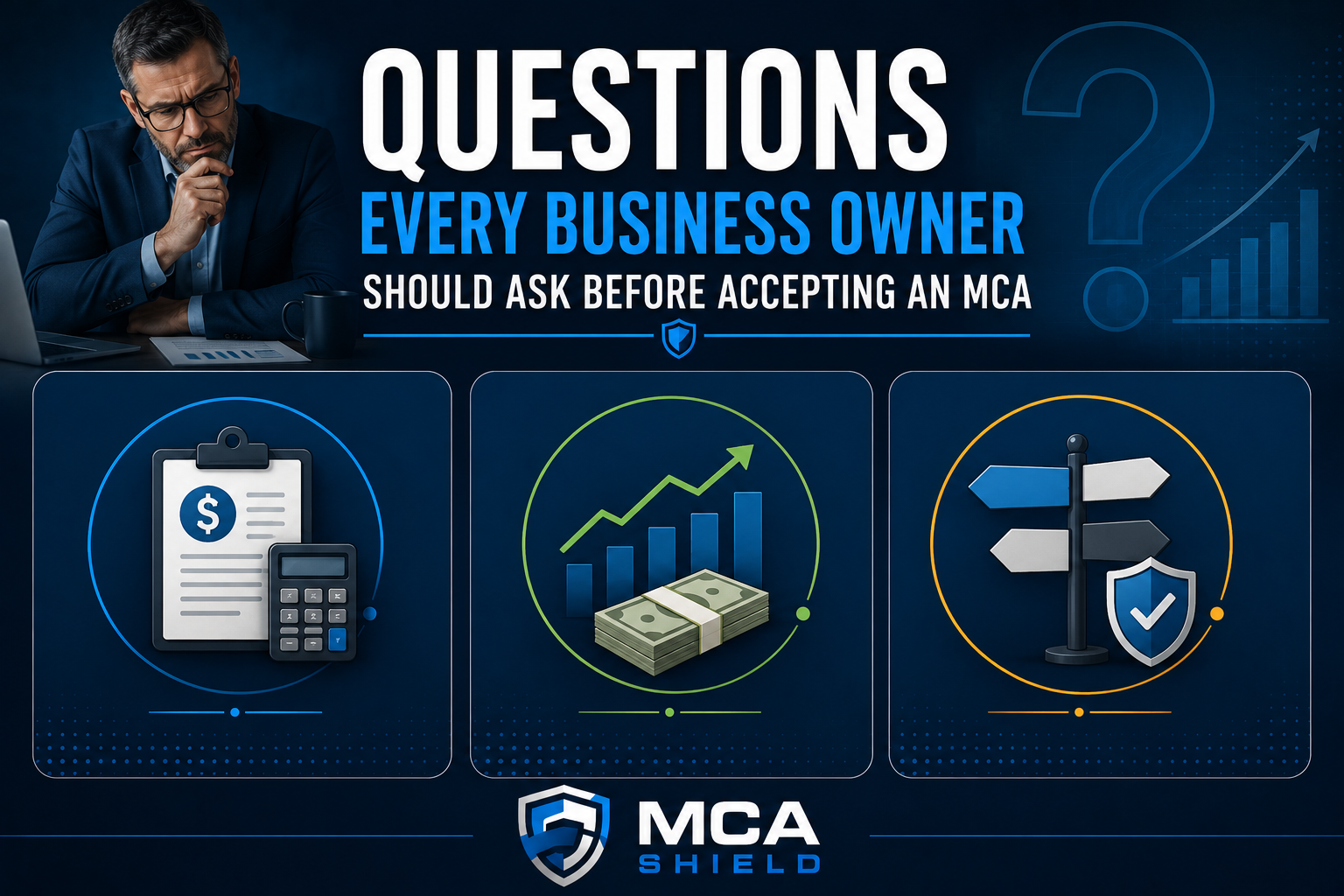
Understanding what MCA companies don’t tell borrowers begins with asking the right questions before signing an agreement. While fast funding may seem appealing, taking a few extra minutes to review the terms can help you avoid unexpected costs and financial challenges later. The answers to these questions can make the difference between a funding solution that supports your business and one that creates long-term cash flow problems.
What Is the Total Repayment Amount?
Many business owners focus on how much money they will receive rather than how much they must repay. However, the total repayment amount is one of the most important factors to understand before accepting a merchant cash advance.
Ask the funding company to clearly explain the total amount you will repay, how that amount was calculated, and whether any additional fees or charges may apply. Knowing the full cost of the advance allows you to compare financing options and make a more informed decision.
How Will Daily Payments Affect Cash Flow?
Daily ACH withdrawals can significantly impact your business’s operating cash. Before accepting an MCA, consider how those payments will affect payroll, inventory purchases, rent, vendor payments, and other essential expenses.
It is also important to evaluate how your business would handle a temporary decline in revenue. If sales slow unexpectedly, will your business still have enough cash available to meet both operating expenses and daily MCA payments?
Taking time to answer these questions can help prevent future financial strain and reduce the likelihood of needing additional financing.
Are There Other Financing Options Available?
Before committing to a merchant cash advance, explore whether other financing solutions may better fit your business’s needs. Depending on your financial situation, options such as a traditional business loan, business line of credit, or equipment financing may offer lower overall borrowing costs.
If your business already has one or more merchant cash advances, taking on additional funding may not be the best solution. Instead, it may be worthwhile to explore MCA consolidation or other debt relief strategies designed to simplify repayment and improve cash flow.
By asking these questions before signing an agreement, business owners can better understand what MCA companies don’t tell borrowers and make financing decisions that support long-term business success rather than short-term relief.
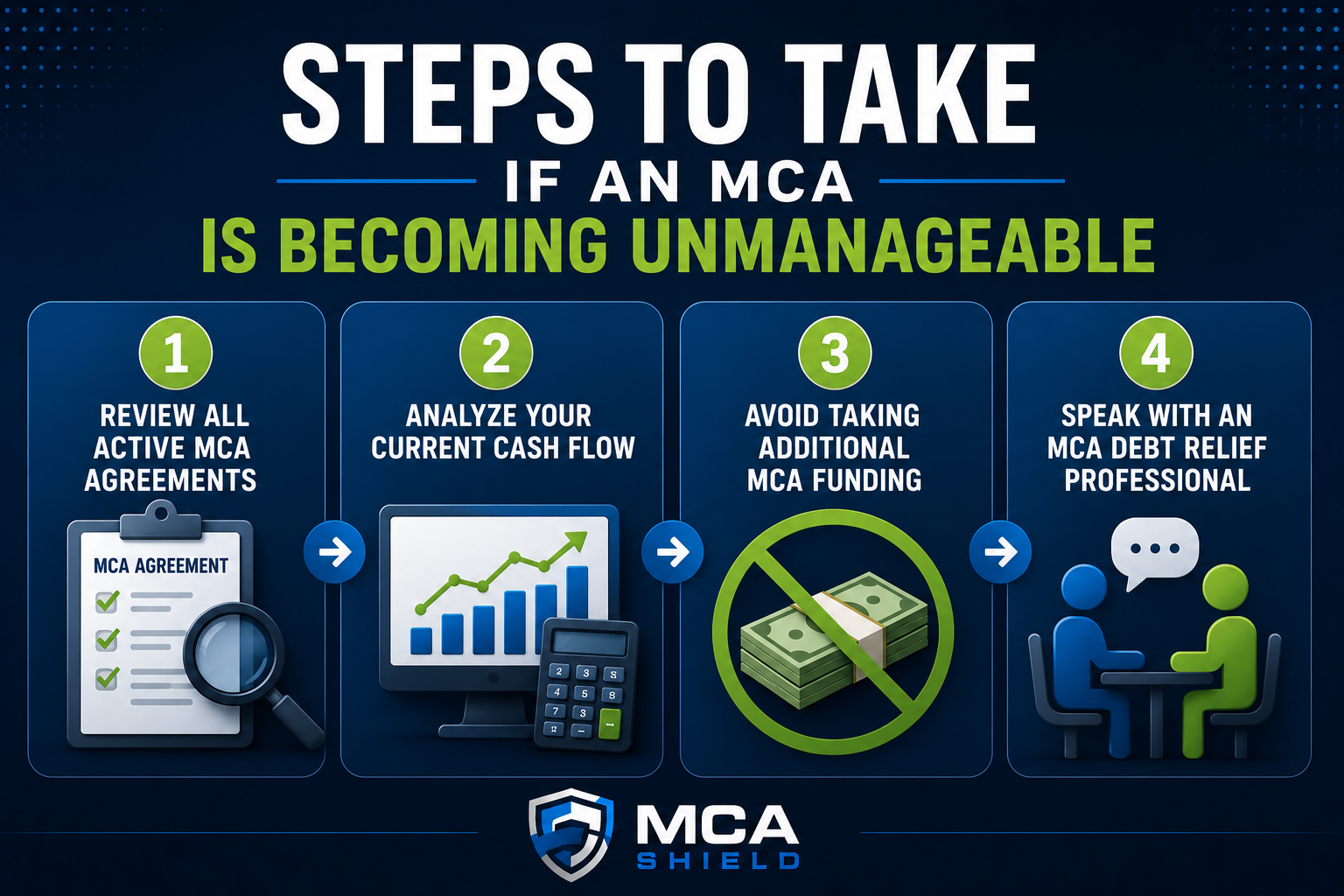
Steps to Take If an MCA Is Becoming Unmanageable
If your merchant cash advance payments are becoming difficult to manage, acting early can make a significant difference. Many business owners wait until collection activity begins before seeking help. However, taking proactive steps while you still have options often leads to better outcomes and greater financial flexibility.
Review All Active MCA Agreements
Start by gathering every active merchant cash advance agreement. Review each contract carefully, including the total repayment amount, factor rate, payment schedule, ACH authorization, and any default provisions.
Having a complete understanding of your obligations makes it easier to evaluate your financial position and identify potential solutions.
Analyze Your Current Cash Flow
Next, take a close look at your business’s current cash flow. Compare your monthly revenue with your operating expenses and all MCA payment obligations.
This analysis will help you determine whether your business can realistically continue making payments or whether changes are needed. It also provides valuable information when discussing relief options with a financial professional.
Avoid Taking Additional MCA Funding
When cash flow becomes tight, accepting another merchant cash advance may seem like the fastest solution. In reality, another advance often increases daily payment obligations and creates additional financial pressure.
Instead of adding more debt, consider whether other options may better fit your situation. Businesses struggling with multiple advances may benefit from exploring MCA consolidation, settlement, or other debt relief strategies designed to simplify repayment and improve cash flow.
Speak With an MCA Debt Relief Professional
One of the most effective steps you can take is speaking with a professional who understands merchant cash advances. An experienced MCA debt relief specialist can review your agreements, evaluate your financial situation, and explain the options available for your business.
Understanding what MCA companies don’t tell borrowers is only the first step. Taking action before the situation becomes more serious can help protect your business, preserve cash flow, and put you on a path toward long-term financial stability.
Protect Your Business Before MCA Debt Becomes More Difficult to Manage
Merchant cash advance debt rarely improves on its own. The longer financial challenges continue, the fewer options many business owners have available. Taking action early can help preserve cash flow, reduce financial pressure, and create more opportunities to resolve your MCA obligations before they become even more difficult to manage.
Why Early Action Creates More Options
If daily ACH withdrawals are limiting your ability to operate your business, don’t wait until collections or legal action begin. Reviewing your situation early allows you to evaluate potential solutions before the financial strain becomes overwhelming.
Whether your business may benefit from MCA consolidation, MCA debt consolidation, settlement negotiations, or another debt relief strategy, acting sooner often provides greater flexibility and more potential paths toward financial stability.
Schedule a Free Consultation With MCA Shield
If you’re struggling with one or more merchant cash advances, the team at MCA Shield is here to help. We’ll review your current MCA agreements, evaluate your cash flow, and discuss potential solutions based on your business’s unique financial situation.
Don’t let merchant cash advance debt control your business’s future. Contact MCA Shield today to schedule your free consultation and take the first step toward restoring your cash flow and protecting your business.