

Many business owners turn to a Merchant Cash Advance (MCA) to solve a short-term cash flow problem. The funding arrives quickly, and the approval process often feels easier than traditional financing. However, what starts as a temporary solution can quickly become an MCA debt cycle. Daily or weekly withdrawals reduce available cash, making it harder to cover payroll, inventory, rent, and other operating expenses.
As cash flow tightens, many businesses seek additional funding to stay afloat. This often leads to MCA renewals, loan stacking, and increasing payment obligations. Each new advance creates more pressure on future revenue and makes it harder to break free from the cycle. Understanding why businesses get caught in MCA debt cycles is the first step toward protecting cash flow, avoiding deeper financial stress, and exploring more sustainable solutions.
Schedule Your Free Consultation
How MCA Debt Cycles Begin
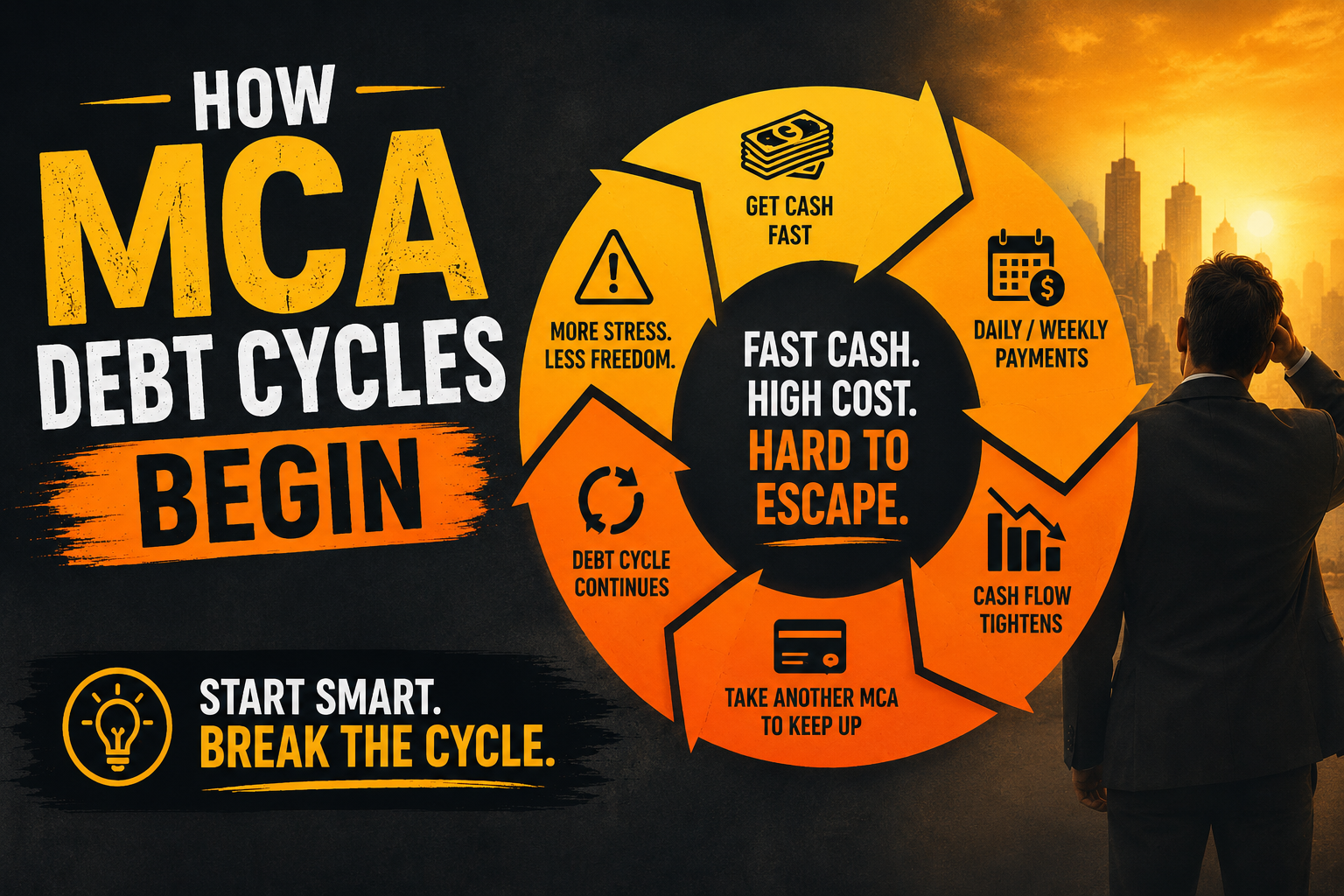
Many businesses enter an MCA debt cycle with good intentions. A merchant cash advance can provide fast access to capital when cash flow is tight, equipment needs replacement, or unexpected expenses arise. The problem begins when the daily or weekly withdrawals place more pressure on cash flow than the business expected.
As revenue becomes harder to manage, some business owners turn to additional funding to cover existing obligations. This often creates a cycle that becomes increasingly difficult to escape. Common factors that contribute to MCA debt cycles include:
- High repayment costs and factor rates
- Daily or weekly ACH withdrawals
- Seasonal or inconsistent revenue
- Taking a new MCA to pay off an existing advance
- Stacking multiple MCA obligations at the same time
What starts as a short-term funding solution can quickly become a long-term financial burden. As payments consume more of a company’s revenue, business owners may find themselves relying on additional financing just to maintain normal operations. Without a clear strategy, the cycle can continue to grow and place even greater strain on cash flow.
Why One Merchant Cash Advance Often Leads to Another
A single Merchant Cash Advance (MCA) often creates new cash flow challenges that many business owners do not anticipate. Daily or weekly withdrawals can reduce the funds available for payroll, inventory, marketing, and other operating expenses. When revenue slows or unexpected costs arise, businesses may feel pressured to seek additional funding just to keep up with existing obligations.
This is where the cycle often begins. Instead of solving the underlying cash flow problem, a second MCA may simply add another layer of repayment pressure. What starts as one advance can quickly turn into multiple MCA obligations, larger payment burdens, and less financial flexibility. As repayments consume more revenue, many businesses find themselves borrowing again to cover shortfalls, making it increasingly difficult to break free from the debt cycle.
The Impact of Daily MCA Payments on Cash Flow
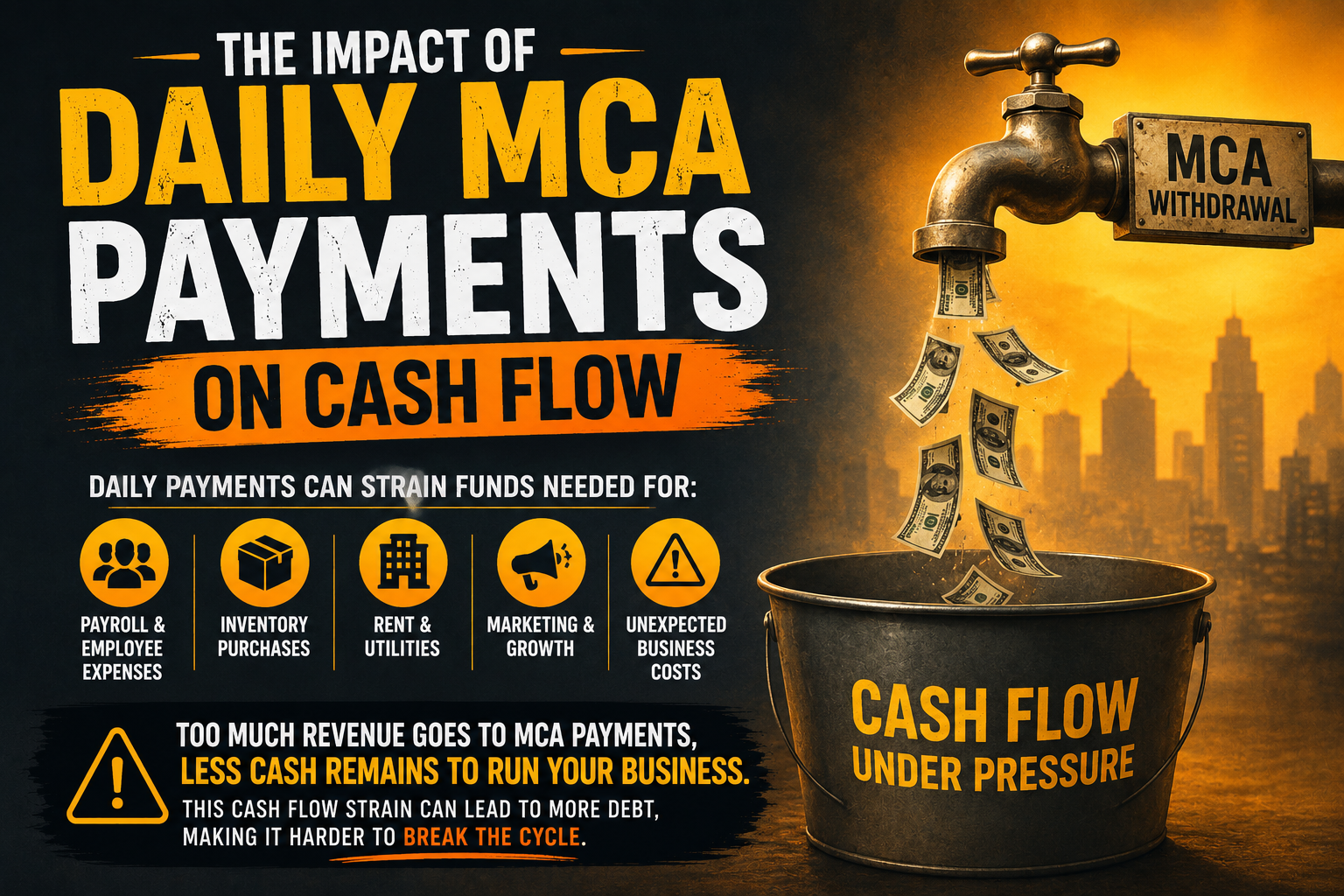
Daily MCA payments can place significant pressure on a business’s cash flow. Unlike traditional financing with monthly payments, many merchant cash advances withdraw funds every business day. Even when sales fluctuate, the withdrawals continue, leaving less money available for essential operating expenses.
As cash reserves shrink, business owners may struggle to cover:
- Payroll and employee expenses
- Inventory purchases
- Rent and utilities
- Marketing and growth initiatives
- Unexpected business costs
Over time, these constant withdrawals can create a cycle of financial stress. When too much revenue goes toward MCA payments, businesses often have fewer options and less flexibility to manage normal operations. This cash flow strain is one of the primary reasons many companies seek additional funding, which can deepen the debt cycle and make recovery more difficult.
How MCA Loan Stacking Creates More Debt
MCA loan stacking occurs when a business takes out a new merchant cash advance while still repaying one or more existing advances. Although this may provide temporary relief, it often increases financial pressure rather than solving the underlying cash flow problem. Each new MCA adds another set of payments, reducing the amount of revenue available for daily operations.
As multiple MCA obligations accumulate, cash flow can become increasingly difficult to manage. More advances often mean more withdrawals, higher repayment costs, and greater financial stress. Many businesses enter a cycle where they rely on additional funding to cover existing payments, causing debt to grow faster than revenue. Without a plan to address the problem, MCA loan stacking can quickly turn a manageable challenge into a serious financial burden.
Warning Signs Your Business Is Entering an MCA Debt Cycle
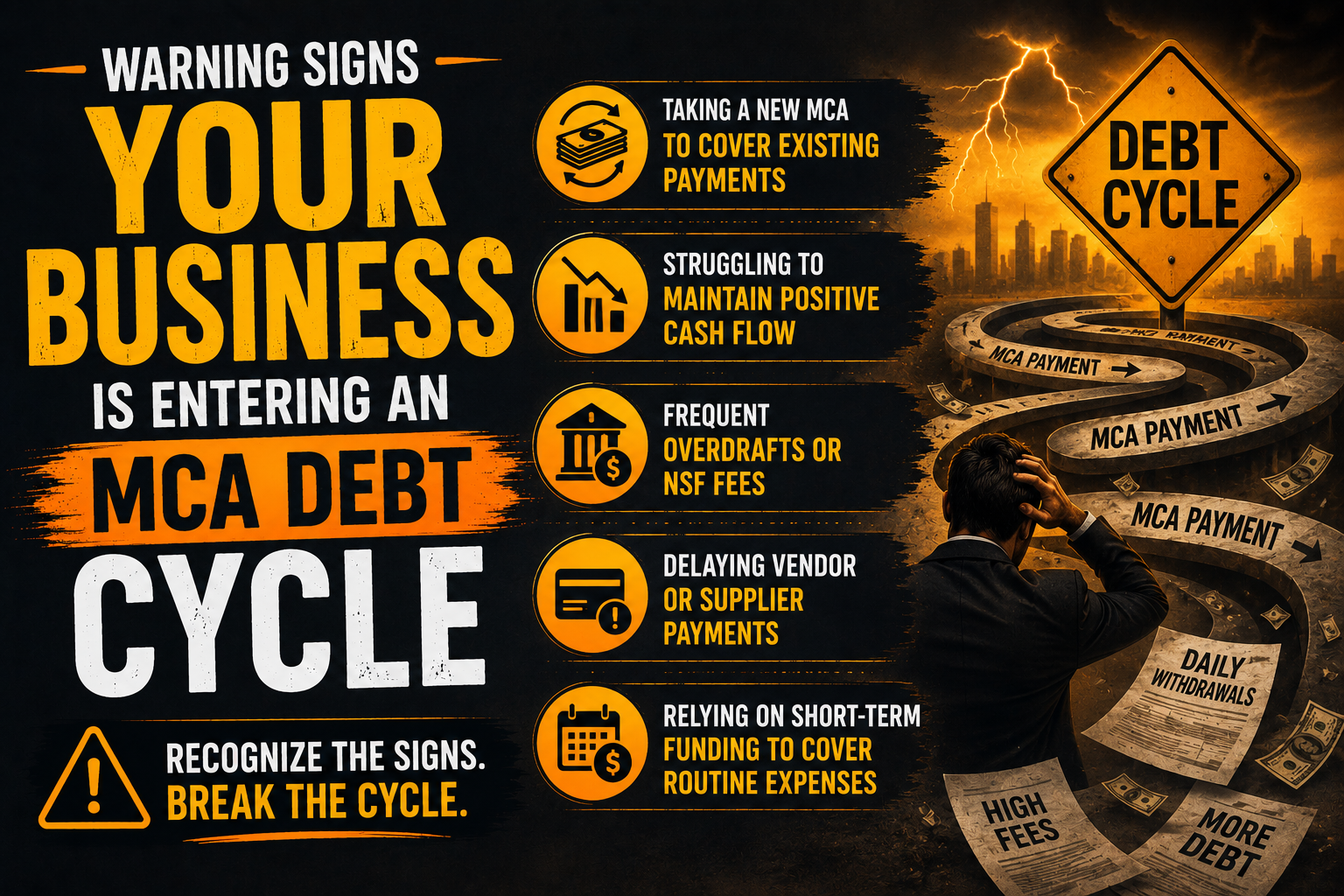
Businesses rarely fall into an MCA debt cycle overnight. The warning signs often appear gradually as cash flow becomes tighter and existing obligations become harder to manage. Many business owners first notice that they have less money available for payroll, inventory, rent, or other operating expenses after MCA withdrawals occur.
Common warning signs include:
- Taking a new MCA to cover existing payments
- Struggling to maintain positive cash flow
- Frequent overdrafts or NSF fees
- Delaying vendor or supplier payments
- Relying on short-term funding to cover routine expenses
The earlier these signs are recognized, the more options a business may have to address the problem. When MCA payments begin driving financial decisions, the debt cycle often gains momentum. Taking action before additional funding, defaults, or collection efforts occur can help prevent a challenging situation from becoming even more difficult.
Why MCA Renewals Can Make Financial Problems Worse
An MCA renewal may seem like a quick solution when cash flow becomes tight, but it often creates bigger challenges over time. Many businesses use renewal funds to pay off part of an existing advance or cover current operating expenses. While this can provide temporary relief, it rarely addresses the underlying financial pressure.
Each renewal typically adds new repayment obligations, fees, and withdrawals. As more revenue goes toward MCA payments, less cash remains available for payroll, inventory, rent, and growth. What feels like short-term relief can quickly become long-term financial strain.
The risk grows when renewals become a recurring strategy. Business owners may find themselves relying on new funding to manage existing debt rather than improving cash flow. This cycle can lead to higher overall repayment costs, increased stress, and fewer options for recovery.
Before accepting another renewal, it is important to evaluate the full impact on your business. In many cases, addressing the debt directly may create a more sustainable path forward than taking on additional MCA obligations.
The Long-Term Consequences of Staying in an MCA Debt Cycle
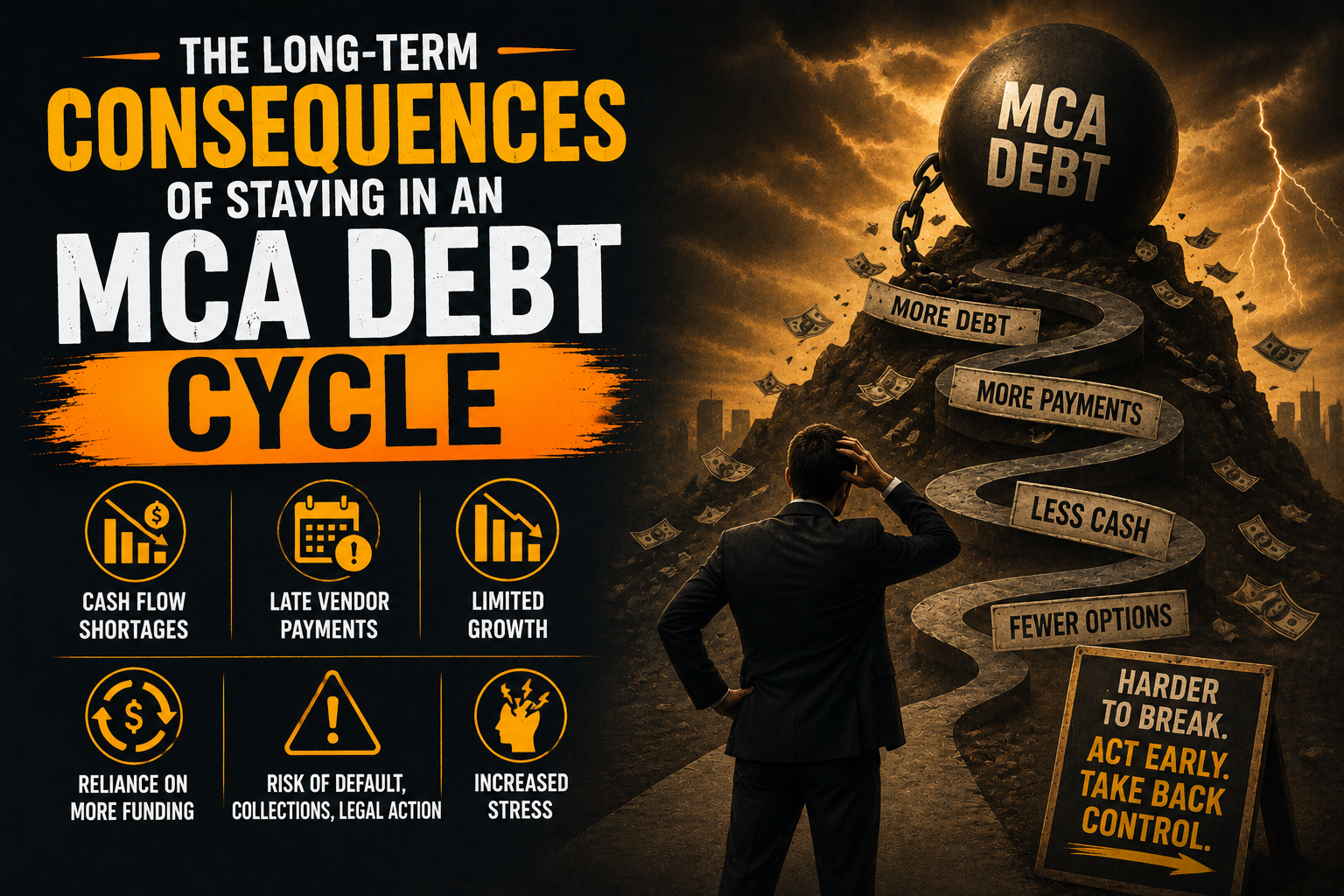
Staying in an MCA debt cycle for an extended period can create serious financial challenges for a business. What begins as a short-term funding solution can gradually reduce cash flow, limit growth opportunities, and make day-to-day operations more difficult. As payments continue, many businesses find themselves spending more time managing debt than focusing on growth.
Some of the most common long-term consequences include:
- Ongoing cash flow shortages
- Difficulty paying vendors and suppliers on time
- Reduced ability to invest in growth
- Increased reliance on additional financing
- Higher risk of default, collections, or legal action
- Greater stress for owners and management teams
The longer the cycle continues, the harder it often becomes to break. Multiple advances, renewals, and stacked MCA obligations can consume a significant portion of revenue. Taking action early may help preserve financial flexibility and create more options for long-term business stability.
How MCA Debt Cycles Affect Business Growth
An MCA debt cycle can do more than strain cash flow—it can limit a company’s ability to grow. When a large portion of daily revenue goes toward MCA payments, businesses often have fewer resources available for expansion, hiring, equipment purchases, and marketing efforts. Instead of investing in growth, many owners focus on keeping up with existing financial obligations.
Over time, this pressure can slow progress and reduce opportunities. Businesses may postpone important decisions because cash reserves remain tight. Growth becomes difficult when debt consumes the funds needed to move the company forward.
The longer an MCA debt cycle continues, the greater the impact on long-term success. Companies that once focused on growth can find themselves focused on survival. Breaking the cycle may help restore financial flexibility and create opportunities to reinvest in the future of the business.
Strategies for Breaking Free From MCA Debt Cycles
more difficult. Many business owners feel trapped by daily withdrawals, stacked advances, or ongoing renewals, but solutions may be available. The key is to address the problem directly rather than relying on additional funding to cover existing obligations.
Effective strategies may include:
- Reviewing all current MCA obligations
- Analyzing cash flow and operating expenses
- Avoiding new MCA funding whenever possible
- Exploring debt restructuring or settlement options
- Seeking professional guidance early
The sooner a business addresses MCA debt, the more options it may have. Early action can help improve cash flow, reduce financial pressure, and create a path toward long-term stability. Instead of allowing debt to dictate business decisions, owners can focus on rebuilding financial flexibility and positioning their companies for future growth.
When to Seek Professional Help for MCA Debt
Many business owners wait too long before seeking help with MCA debt, hoping cash flow will improve or that another advance will solve the problem. Unfortunately, MCA debt cycles often become harder to manage over time. The earlier you address the issue, the more options you may have available.
It may be time to seek professional guidance if you are struggling to keep up with MCA payments, considering another MCA to cover existing obligations, experiencing frequent cash flow shortages, or falling behind on vendor payments. These warning signs often indicate that financial pressure is increasing rather than improving.
Professional help can provide clarity, structure, and potential solutions before the situation worsens. Whether the goal is debt restructuring, settlement, or improving cash flow management, taking action early may help protect your business, reduce financial stress, and create a path toward long-term stability.