
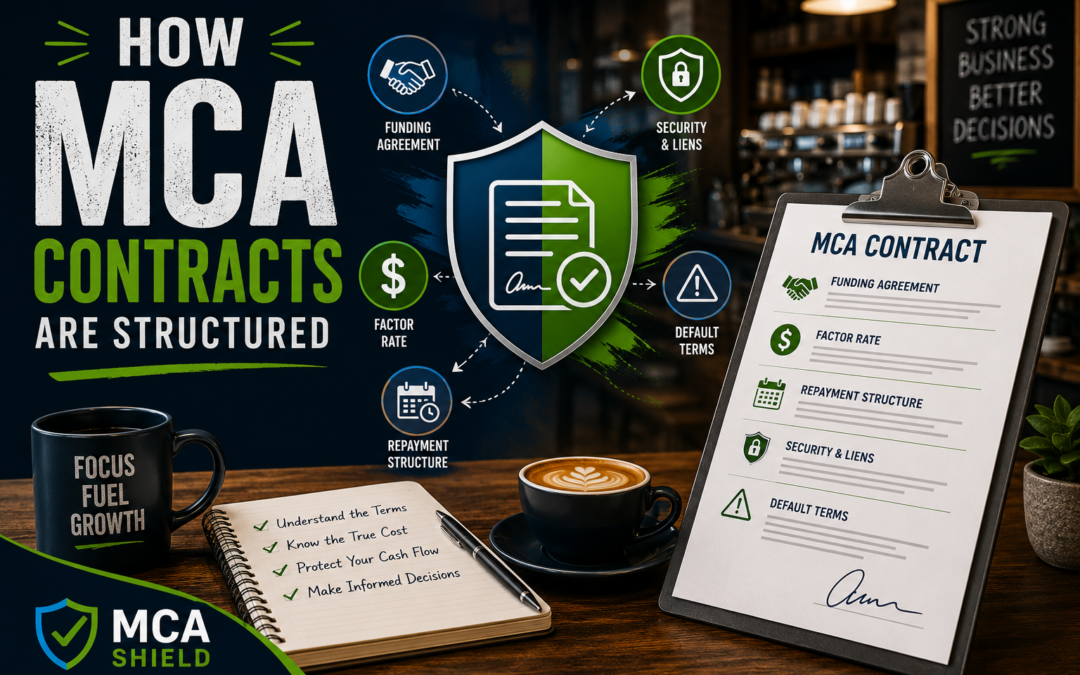
Many business owners accept Merchant Cash Advance (MCA) funding without fully understanding how the contract works. The approval process often moves quickly, and the focus usually centers on immediate access to capital. However, the structure of an MCA agreement can have a significant impact on future cash flow, repayment obligations, and overall business finances. Understanding how MCA contracts are structured is one of the most important steps in evaluating the true cost and risks of this type of funding.
Unlike traditional loans, MCA agreements typically rely on unique contract provisions, repayment methods, and collection mechanisms. Terms such as factor rates, holdback percentages, ACH authorizations, personal guarantees, and reconciliation clauses can affect how much a business ultimately repays and how payments are collected. By understanding these key components, business owners can make more informed decisions and better recognize potential challenges before signing an agreement.
Many MCA contracts contain language that may seem straightforward at first glance but can create unexpected financial pressure over time. The more you understand the structure of an MCA contract, the better prepared you will be to protect your cash flow and avoid costly surprises.
Schedule Your Free Consultation
What Is Included in a Merchant Cash Advance Contract?
A Merchant Cash Advance contract outlines the terms that govern how funding is provided and how repayment occurs. While every agreement differs, most MCA contracts contain several core provisions that directly affect a business’s cash flow and financial obligations. Understanding these terms before signing can help business owners avoid surprises and make more informed decisions.
Most MCA agreements include details such as the funding amount, factor rate, purchased receivables amount, holdback percentage, repayment method, and default provisions. Many contracts also contain ACH authorization language that allows automatic withdrawals from a business bank account. Additional provisions may address reconciliation rights, personal guarantees, legal remedies, and collection procedures. Each of these terms can influence the total cost of funding and the amount of control a business retains over its cash flow.
The contract is more than a funding agreement. It is the roadmap for how the MCA relationship will operate. Taking the time to review and understand each section can help business owners better evaluate the risks, responsibilities, and long-term impact of the agreement.
Understanding Factor Rates and Total Repayment Amounts
One of the most important parts of an MCA contract is the factor rate, because it determines how much a business must repay. Unlike a traditional interest rate, a factor rate represents a fixed multiplier applied to the funding amount. For example, a $50,000 advance with a 1.40 factor rate results in a total repayment obligation of $70,000. The higher the factor rate, the greater the total cost of the funding.
Many business owners focus on the amount they receive and overlook the total repayment obligation. However, understanding the full repayment amount is critical when evaluating the impact on future cash flow. A seemingly small difference in factor rates can significantly increase the total amount repaid over time. Reviewing both the funding amount and the total repayment obligation can help businesses better understand the true cost of an MCA before signing the agreement.

How ACH Payment Authorizations Are Structured
Most Merchant Cash Advance contracts include an ACH payment authorization, which allows the MCA company to withdraw payments directly from a business bank account. This authorization typically appears as a separate section within the agreement and outlines how and when payments will occur. In many cases, the business grants permission for daily or weekly ACH withdrawals based on the repayment terms outlined in the contract. These automatic withdrawals are one of the primary ways MCA companies collect payments.
ACH authorization provisions often include details about the designated bank account, withdrawal frequency, payment amounts, and the business owner’s responsibilities for maintaining sufficient funds. Some agreements also contain language addressing account changes, failed withdrawals, and the consequences of disrupting authorized payments. Because ACH withdrawals directly impact cash flow, business owners should carefully review these provisions before signing an MCA contract.
Understanding how ACH payment authorizations are structured can help businesses better evaluate the potential impact on their operations. What appears to be a simple payment mechanism can become a significant cash flow consideration when withdrawals occur every business day.
What Is a Reconciliation Clause and Why Does It Matter?
A reconciliation clause is a provision found in some MCA contracts that allows payment amounts to adjust when a business’s revenue changes. Because a merchant cash advance is often structured as a purchase of future receivables, the repayment amount should generally reflect actual business performance. When revenue declines, a reconciliation clause may provide an opportunity to request lower payments and reduce immediate cash flow pressure.
Not all reconciliation clauses offer the same level of flexibility, and some require specific documentation or formal requests from the business owner. For that reason, it is important to understand exactly how the clause works before signing an agreement. A well-structured reconciliation clause can help protect cash flow during slower periods, while a limited or difficult-to-use clause may provide little practical relief when it is needed most.
Understanding Personal Guarantees and Owner Obligations
Many Merchant Cash Advance contracts include provisions that create obligations for the business owner in addition to the business itself. One of the most important provisions is the personal guarantee, which can increase an owner’s financial exposure if certain events occur. While the exact language varies by contract, these provisions often outline the owner’s responsibilities, representations, and actions required throughout the life of the agreement. Business owners should understand these obligations before signing any MCA contract.
Personal guarantees and owner obligations can become especially important when a business experiences financial difficulties or defaults on its agreement. Some contracts also contain provisions related to cooperation requirements, financial reporting, and restrictions on certain business activities. Carefully reviewing these terms helps business owners better understand their responsibilities and the potential risks associated with the agreement. A clear understanding of these provisions can prevent costly surprises and support more informed financial decisions.
How UCC Liens Are Used in MCA Agreements
Many Merchant Cash Advance companies file a UCC-1 financing statement, commonly called a UCC lien, after funding a business. The filing serves as a public notice that the MCA company claims an interest in certain business assets or receivables. While a UCC lien does not necessarily mean the MCA company owns those assets, it can affect a business’s ability to obtain additional financing. Many lenders review existing UCC filings before approving new funding.
UCC liens often become an important consideration when a business seeks working capital, equipment financing, or other forms of credit. An existing lien may raise concerns for future lenders and can complicate the approval process. For that reason, business owners should understand whether an MCA agreement allows a UCC filing and how that filing could impact future financing opportunities.
A UCC lien may seem like a routine contract provision, but its effects can extend well beyond the initial funding transaction. Understanding how UCC liens work can help businesses make more informed decisions and avoid unexpected financing challenges later.
Common Contract Terms That Create Financial Pressure
Several MCA contract terms can create significant financial pressure if business owners do not fully understand them before signing. High factor rates, daily ACH withdrawals, personal guarantees, and restrictive default provisions often have the greatest impact on cash flow. While each term may appear manageable on its own, the combined effect can make it difficult for a business to maintain healthy working capital and cover normal operating expenses.
Some agreements also include provisions related to UCC liens, reconciliation requirements, and fees that increase the overall cost of funding. As revenue fluctuates, these obligations can place additional strain on payroll, vendor payments, and business growth plans. Understanding these contract terms before accepting funding can help business owners identify potential risks and avoid financial challenges that become more difficult to manage over time.
Warning Signs You Should Review an MCA Contract Carefully
Some MCA contract terms deserve extra attention before you sign. High factor rates, daily ACH withdrawals, broad personal guarantees, and unclear default provisions can create significant financial pressure over time. If important terms seem confusing or difficult to understand, take the time to review them carefully.
UCC liens, restrictive reconciliation clauses, and additional fees can also affect future financing and cash flow flexibility. A few minutes spent reviewing the contract today can help prevent costly surprises later.
Options for Businesses Struggling With MCA Contract Obligations
When MCA contract obligations begin creating cash flow problems, business owners often have more options than they realize. The key is taking action before missed payments, defaults, or additional funding create larger challenges. Addressing the problem early can improve flexibility and increase the number of available solutions.
Depending on the situation, businesses may consider:
- MCA debt restructuring to pursue more manageable payment arrangements
- MCA debt settlement to resolve obligations for less than the full balance when appropriate
- Cash flow analysis and budgeting adjustments to identify immediate financial improvements
- Professional negotiation assistance to communicate with MCA companies and explore relief options
Every business faces different financial circumstances, which is why no single solution fits every situation. The most effective approach starts with a thorough review of the MCA agreements, current cash flow, and overall financial position. With a clear understanding of the challenges, business owners can make informed decisions and work toward reducing financial pressure while protecting the future of their business.