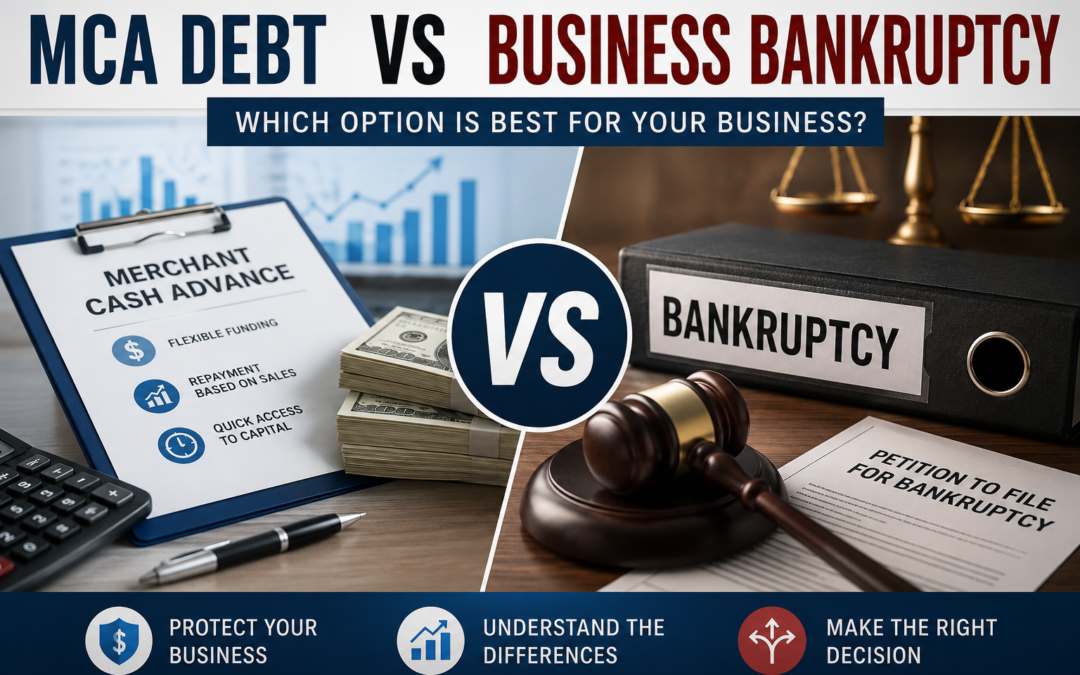
Many business owners struggling with MCA debt vs business bankruptcy wonder which option offers the best path forward. While bankruptcy may be appropriate in some situations, it is not the only solution. Understanding the differences between merchant cash advance debt relief and bankruptcy can help you evaluate the potential impact on your business, finances, and future operations.
This guide explains how MCA debt and business bankruptcy compare, when each option may be appropriate, and what alternatives may be available. By understanding your options early, you may be able to reduce financial pressure and make a more informed decision for your business.
Schedule Your Free Consultation
Understanding MCA Debt and Business Bankruptcy
Before deciding how to address serious financial challenges, it is important to understand the differences between merchant cash advance debt and business bankruptcy. Although both involve businesses experiencing financial distress, they are very different solutions with unique legal, financial, and operational consequences.
What Is Merchant Cash Advance Debt?
Merchant cash advance (MCA) debt results from a financing agreement in which a business receives an upfront lump sum in exchange for a portion of its future receivables. Rather than making traditional monthly loan payments, businesses typically repay the advance through daily or weekly ACH withdrawals based on the terms of the agreement. While MCAs can provide fast access to working capital, multiple advances or declining revenue can quickly create significant cash flow challenges.
What Is Business Bankruptcy?
Business bankruptcy is a legal process designed to help businesses address overwhelming debt when financial obligations can no longer be met. Depending on the type of bankruptcy filed, a business may reorganize its debts while continuing operations or liquidate assets to satisfy creditors. Bankruptcy is governed by federal law and can have long-term effects on business operations, financing opportunities, and ownership.
Why Business Owners Compare These Options
Business owners often compare MCA debt vs business bankruptcy when daily withdrawals become difficult to sustain, and financial pressure continues to increase. Many business owners want to determine whether bankruptcy is truly necessary or whether alternatives such as debt restructuring or settlement can reduce payment pressure while allowing the business to remain operational. Evaluating all available options early often provides greater flexibility before financial challenges become more severe.
When MCA Debt Becomes Difficult to Manage
Merchant cash advance payments can become increasingly difficult to manage as financial pressure builds. What may begin as a manageable funding solution can quickly strain cash flow, especially when revenue declines or multiple MCA obligations are active. Recognizing the warning signs early can help business owners explore available options before the situation becomes more difficult to resolve.
Warning Signs of Serious Cash Flow Problems
Persistent cash flow shortages are often one of the first indicators that MCA debt is becoming unmanageable. Businesses may struggle to cover payroll, rent, inventory, taxes, or vendor payments after daily or weekly withdrawals are deducted. When a business must rely on credit cards or postpone essential expenses to keep pace with MCA payments, it is often a clear sign of increasing financial strain.
The Impact of Multiple MCA Obligations
Taking additional merchant cash advances to cover existing payments can create a cycle of growing debt. Each new MCA adds another repayment obligation, reducing the amount of cash available to cover everyday business expenses. As payment obligations accumulate, businesses often have less working capital available to support daily operations, making it increasingly difficult to maintain financial stability.
Risks of Waiting Too Long to Act
Delaying action can reduce the number of available solutions and allow financial problems to escalate. Missed payments may lead to collection activity, default notices, legal disputes, or additional financial strain that further impacts business operations. Evaluating debt relief options early may provide greater flexibility and improve the likelihood of reaching a manageable resolution before the situation becomes more serious.
Comparing MCA Debt Relief vs Business Bankruptcy

When evaluating MCA debt vs business bankruptcy, it is important to consider how each option may affect your business’s future. While bankruptcy may be appropriate in certain situations, debt relief strategies such as restructuring or settlement may provide an opportunity to reduce financial pressure without ending business operations. Understanding the potential impact of each option can help business owners make a more informed decision.
Impact on Business Operations
MCA debt relief is generally designed to help businesses continue operating while addressing outstanding obligations. Depending on the circumstances, restructuring or settlement may reduce payment pressure and improve cash flow. By comparison, the impact of business bankruptcy varies depending on the type of bankruptcy filed and the financial condition of the business. Some businesses may continue operating through reorganization, while others may ultimately cease operations.
Effects on Credit and Future Financing
Both MCA debt relief and business bankruptcy can influence a business’s ability to obtain financing in the future. Lenders often evaluate a company’s overall financial history, current obligations, and repayment performance when making financing decisions. Because every situation is different, the long-term impact will depend on the specific relief option pursued and the business’s financial recovery.
Costs and Long-Term Financial Consequences
Every debt resolution strategy involves financial considerations that extend beyond immediate payment obligations. Business bankruptcy may involve court proceedings, legal expenses, and other associated costs, while debt restructuring or settlement may require negotiated repayment agreements. Carefully comparing the short-term costs and long-term financial consequences of each option can help business owners choose the approach that best aligns with their business goals and financial situation.
Alternatives to Business Bankruptcy
Business bankruptcy is not the only option for companies facing overwhelming MCA debt. Depending on the financial situation, business owners may be able to explore alternatives that reduce payment pressure while allowing the company to continue operating. Evaluating these options before financial problems escalate may provide greater flexibility and improve the likelihood of achieving a sustainable outcome.
MCA Debt Restructuring
MCA debt restructuring focuses on modifying existing repayment obligations to better align with a business’s current cash flow. Depending on the circumstances, restructuring may involve negotiating adjusted MCA payment terms or developing a more manageable repayment strategy. The goal is to reduce financial strain while supporting the continued operation of the business.
MCA Settlement Programs
In some situations, settlement may provide an opportunity to resolve MCA debt for less than the total outstanding balance through negotiated agreements. Settlement options vary based on the business’s financial condition, the status of the MCA obligations, and the willingness of the funding companies to negotiate. Every settlement is unique and depends on the specific facts of the case.
Professional Negotiation and Debt Relief Assistance
Managing multiple MCA obligations can be complex, particularly when collection activity or default concerns are involved. Professional debt relief assistance can help business owners evaluate their MCA agreements, assess available options, communicate with funding companies, and develop a strategy based on their financial situation. Seeking guidance early may create more opportunities to resolve MCA debt before business bankruptcy becomes necessary.
Situations Where Business Bankruptcy May Be Considered
While many businesses can explore alternatives such as MCA debt restructuring or settlement, there are situations where business bankruptcy may be considered. Every financial situation is unique, and the most appropriate course of action depends on the company’s overall financial condition, debt obligations, and long-term goals. Understanding when bankruptcy may be appropriate can help business owners make informed decisions.
When Debt Cannot Be Repaid
If a business can no longer generate enough revenue to meet its financial obligations and no realistic repayment strategy exists, bankruptcy may become an option worth evaluating. Businesses experiencing severe financial distress, significant creditor pressure, or overwhelming debt may benefit from discussing their situation with qualified professionals before making a final decision.
Understanding Chapter 7 and Chapter 11 Options
The two most common forms of business bankruptcy are Chapter 7 and Chapter 11. Chapter 7 generally involves liquidating business assets to satisfy creditors before closing the business, while Chapter 11 focuses on reorganizing debts to allow eligible businesses to continue operating under a court-approved plan. The appropriate option depends on the specific financial circumstances and objectives of the business.
The Importance of Professional Legal Advice
Business bankruptcy is a complex legal process with significant financial and operational implications. Consulting a qualified bankruptcy attorney can help business owners understand their legal rights, evaluate available options, and determine whether bankruptcy is the most appropriate solution. In many cases, seeking legal and financial guidance early allows business owners to fully explore alternatives before proceeding with bankruptcy.
Steps to Take Before Choosing Business Bankruptcy
Before pursuing business bankruptcy, carefully evaluate your business’s financial condition and determine whether alternative debt relief solutions may better support your long-term goals. Taking a proactive approach may reveal opportunities to reduce financial pressure, improve cash flow, or resolve MCA debt without pursuing bankruptcy. The following steps can help you make a more informed decision.
Review All MCA Agreements
Gather and review every active merchant cash advance agreement to understand your outstanding balances, repayment terms, payment schedules, and any default provisions. Having a complete picture of your obligations is an important first step in evaluating potential debt relief options.
Analyze Cash Flow and Business Finances
Review your current cash flow, monthly expenses, outstanding debts, and overall financial performance. Identifying where financial pressure exists can help determine whether your business may benefit from restructuring, settlement, or other relief strategies before considering bankruptcy.
Explore Available Debt Relief Options
Before filing for bankruptcy, consider whether alternatives such as MCA debt restructuring or settlement may help reduce payment obligations and improve financial stability. Exploring these options early may provide additional flexibility and allow your business to continue operating while addressing outstanding debt.
Seek Professional Guidance Early
Financial and legal professionals can help evaluate your business’s financial condition, explain available options, and develop a strategy based on your specific circumstances. Seeking guidance before financial challenges become severe often creates more opportunities to resolve MCA debt and make informed decisions about the future of your business.
Frequently Asked Questions About MCA Debt vs Business Bankruptcy
Take Action Before MCA Debt Forces Bankruptcy
Financial challenges caused by MCA debt can escalate quickly, but business bankruptcy is not always the only path forward. Taking action early may provide more opportunities to reduce payment pressure, improve cash flow, and explore alternatives before financial problems become more difficult to resolve.
Why Early Action Creates More Options
The earlier you evaluate your financial situation, the more flexibility you may have to pursue solutions such as MCA debt restructuring or settlement. Waiting until collection activity or legal action begins can limit available options and increase the complexity of resolving outstanding obligations. Addressing financial challenges proactively may help protect your business and support long-term stability.
Schedule a Free Consultation With MCA Shield
If your business is struggling with MCA debt, the team at MCA Shield can help you evaluate your financial situation and discuss potential debt relief options. Our experienced professionals work with business owners to develop practical strategies that reduce financial pressure and support long-term business success. Schedule your free consultation today to learn what solutions may be available for your business.
Success Stories from Our Clients
“Thanks to mcashield.com, we reduced our daily payments significantly and saved our business from financial distress.”
John D., Restaurant Owner
“The consolidation process was seamless, and now we can focus on growing our business instead of worrying about multiple payments.”
Emily R., Retail Store Manager
“I was skeptical at first, but mcashield.com delivered on their promise. Our cash flow has improved dramatically.”
Michael T., Small Business Owner