
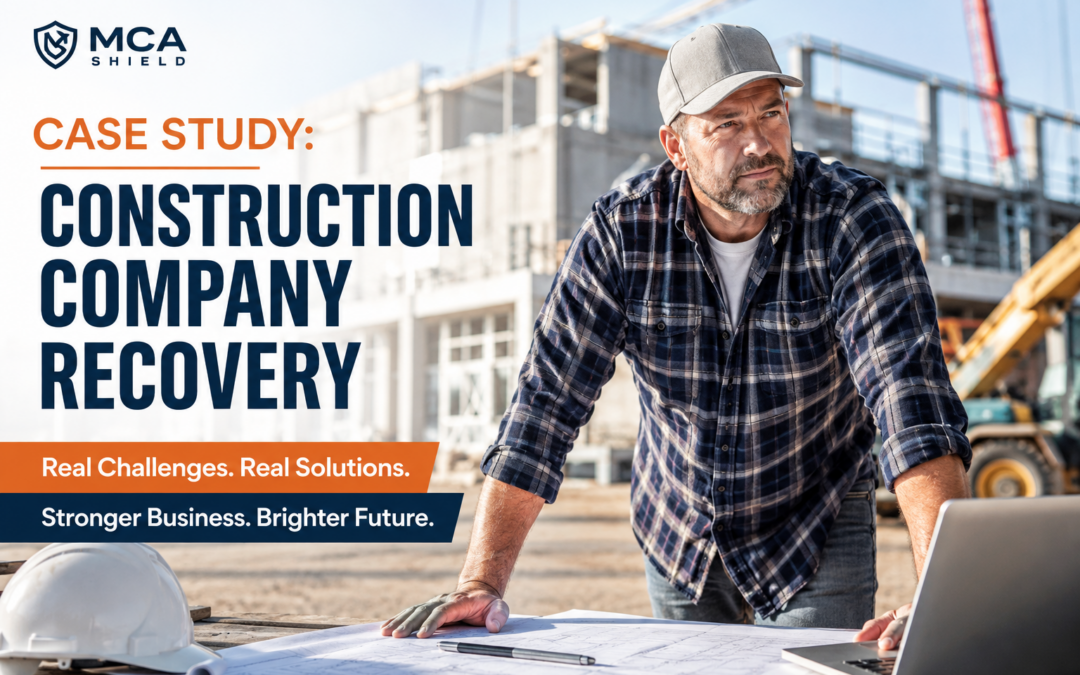
Construction Company Recovery is possible when business owners take the right steps to address financial challenges before they become overwhelming. In this case study, a construction company struggling with cash flow problems and increasing MCA payments needed a better solution to protect daily operations.
By reviewing existing obligations, reducing payment pressure, and creating a more manageable recovery strategy, the business regained control. This story highlights how the right approach can help construction companies move beyond MCA debt and build a stronger financial foundation.
Schedule Your Free Consultation
How MCA Debt Began Affecting the Construction Company's Cash Flow
Many construction businesses experience financial pressure because of unpredictable project schedules, delayed payments, and rising operating costs. Before this construction company’s recovery began, the business was experiencing limited cash flow while trying to keep daily operations moving.
Although the company continued securing new projects, growing debt obligations made it harder to plan, maintain cash flow, and support long-term growth.
Increasing Cash Flow Pressure
Cash flow is one of the biggest challenges construction companies face. Expenses for materials, equipment, subcontractors, and employees often occur before project payments are received.
For this business, the timing gap between expenses and incoming revenue became difficult to manage. Money needed for upcoming jobs was being used to cover existing financial obligations, leaving fewer resources available for growth.
Rising MCA Payments and Business Debt
Merchant cash advances initially provided quick access to working capital. However, as MCA payments increased, the company felt additional pressure from frequent withdrawals.
Daily and weekly payments reduced available cash and made it harder to handle normal business expenses. Instead of creating financial flexibility, the debt began limiting the company’s ability to operate efficiently.
Difficulty Managing Payroll, Materials, and Projects
As payment pressure continued, the company faced challenges balancing important responsibilities. Payroll, material purchases, vendor relationships, and project timelines all depended on steady cash flow.
Without a clear recovery plan, these challenges could have continued affecting the company’s ability to complete jobs and accept new opportunities. Addressing the problem early helped create more options for rebuilding financial stability.
How MCA Debt Impacted Daily Construction Operations
MCA debt can affect more than a company’s finances. It can create challenges throughout daily operations, especially in industries like construction, where consistent cash flow is essential.
For this construction company, frequent payments reduced flexibility and made it harder to balance current obligations while preparing for future projects.
Reduced Working Capital for New Projects
Construction companies rely on available working capital to purchase materials, secure equipment, schedule crews, and prepare for upcoming jobs. When too much revenue goes toward MCA payments, fewer resources remain available to support business growth.
The company found it increasingly difficult to invest in new opportunities because a large portion of incoming revenue was already committed to existing debt payments.
Delays With Vendors and Suppliers
Strong vendor relationships are critical in the construction industry. Reliable access to materials and supplies helps keep projects on schedule and customers satisfied.
As MCA debt continued affecting cash flow, managing supplier payments became more challenging. Delayed payments created additional stress and made project planning more difficult.
Stress From Daily and Weekly Payments
Unlike traditional financing with predictable monthly payments, many merchant cash advances require daily or weekly withdrawals. These frequent payments can quickly impact available cash, especially during slower periods or between project payments.
For this construction company, constant payment obligations made it harder to focus on growth and long-term planning. Finding a better solution became an important step toward rebuilding stability and creating a healthier financial future.
Warning Signs the Construction Business Needed Help

Recognizing financial warning signs early was an important part of the construction company’s recovery process. While the business was still operating and completing projects, certain challenges showed that the current situation was becoming difficult to maintain.
Identifying these problems helped the company explore solutions before MCA debt created even greater pressure on daily operations.
Using New Funding to Cover Old Debt
One of the first warning signs appeared when additional funding became necessary to manage existing obligations. Instead of using capital for equipment, materials, employees, or new projects, borrowed funds were being used to cover previous payments.
This cycle can make financial recovery more challenging because each new obligation adds another payment requirement. Over time, stacking additional MCA funding can reduce cash flow and limit future options.
Struggling to Keep Up With ACH Withdrawals
Frequent ACH withdrawals placed ongoing pressure on the company’s bank account. As daily and weekly payments continued, maintaining enough available cash for regular expenses became more difficult.
When a construction company begins adjusting operations around MCA withdrawals instead of business needs, it may be a sign that the debt structure is no longer sustainable.
Losing Control Over Business Cash Flow
Healthy cash flow allows construction companies to plan projects, pay vendors, manage payroll, and prepare for unexpected expenses. As more revenue went toward MCA payments, the business had less control over how money was used.
By addressing these warning signs early, the company was able to explore debt relief options and develop a strategy focused on long-term financial stability.
Creating a Construction Company Recovery Plan
Creating a construction company recovery plan required a clear understanding of the company’s financial situation and the challenges affecting daily operations. Instead of adding more short-term funding, the focus shifted toward finding a realistic path to reduce pressure and improve cash flow.
A customized approach helped the business address existing MCA obligations while creating a stronger foundation for future growth.
Reviewing Existing MCA Agreements
The first step was reviewing each active MCA agreement to understand payment requirements, remaining balances, and overall financial impact. This process helped identify how much revenue was being used toward daily and weekly payments.
By looking closely at each obligation, the company gained a clearer picture of its financial position and the options available for moving forward.
Exploring Debt Settlement and Restructuring Options
After reviewing the agreements, the company explored solutions designed to reduce financial strain. MCA debt settlement and restructuring options provided alternatives to continuing with payments that were limiting cash flow.
The goal was to create a more manageable solution that supported business operations while addressing outstanding obligations.
Building a Sustainable Cash Flow Strategy
Long-term recovery required more than reducing current payment pressure. The company needed a strategy that supported payroll, materials, vendor relationships, and future projects.
By focusing on healthier cash flow management, the business created a plan that helped restore stability and prepare for continued growth.
The MCA Relief Strategy That Helped the Business Recover
The right MCA relief strategy played an important role in helping the construction business regain financial control. Instead of continuing a cycle of short-term solutions, the company focused on creating a plan that addressed current debt while supporting long-term stability.
With a structured approach, the business was able to reduce financial pressure and shift its attention back to completing projects, serving customers, and planning for future growth.
Negotiating More Manageable Terms
A key part of the recovery process involved working toward more manageable terms with MCA companies. By reviewing the company’s financial situation and existing obligations, a strategy was developed to address the debt in a realistic way.
Creating a better repayment structure helped reduce the strain caused by previous agreements and allowed the business to operate with more confidence.
Reducing Daily Payment Pressure
Frequent withdrawals had created challenges for maintaining steady cash flow. Reducing payment pressure gave the construction company more flexibility to manage important expenses, including payroll, materials, equipment, and vendor payments.
With improved access to working capital, the company was better positioned to handle daily operations without relying on additional MCA funding.
Protecting Future Business Growth
Successful recovery required more than solving immediate financial problems. The company also needed a plan designed to prevent similar challenges from happening again.
By improving cash flow management and avoiding unnecessary debt, the business created a stronger foundation for future projects, growth opportunities, and long-term financial stability.
Results After the Construction Company Recovery Process
After completing the construction company recovery process, the business began to experience greater financial stability and more control over daily operations. Reducing MCA pressure allowed the company to focus on running the business vs constantly reacting to cash flow challenges.
With a stronger financial structure in place, the construction company was able to rebuild confidence and create a healthier path forward.
Improved Cash Flow Stability
One of the most important improvements was better cash flow management. With less pressure from frequent MCA payments, the company had more flexibility to cover essential business expenses.
This improved stability made it easier to plan for upcoming projects, manage unexpected costs, and make decisions based on business goals rather than immediate financial stress.
Stronger Vendor and Employee Relationships
Reliable cash flow helped the company strengthen important relationships. Improved financial consistency allowed the business to manage vendor expectations, maintain access to necessary materials, and support employee needs.
These relationships were essential for keeping projects moving and maintaining trust with the people who helped the business operate.
A Better Foundation for Long-Term Growth
The recovery process helped the company move away from short-term financial fixes and focus on sustainable growth. Instead of relying on additional funding to solve cash flow problems, the business created a stronger financial strategy.
With improved stability and better financial control, the construction company was positioned to pursue future opportunities with greater confidence.
Lessons Other Construction Businesses Can Learn
This construction company’s recovery highlights important lessons for other business owners facing similar financial challenges. While every situation is different, recognizing problems early and taking action can create more opportunities to regain control.
Construction companies often deal with changing project schedules, upfront expenses, and unpredictable payment timelines. Having a plan in place can help protect cash flow before financial pressure becomes more difficult to manage.
Address Financial Problems Early
Waiting too long to address financial challenges can limit available solutions. Small cash flow issues become larger problems when businesses rely on additional funding instead of addressing the cause of financial strain.
Taking action early gives construction companies more time to review options, adjust strategies, and create a realistic path toward recovery.
Avoid Adding More MCA Debt
When cash flow becomes tight, another merchant cash advance may seem like a quick solution. However, adding new funding can increase payment obligations and make long-term recovery more challenging.
Before accepting additional MCA funding, business owners should understand how new payments may impact future revenue and daily operations.
Seek Professional Support Before Problems Grow
Managing MCA debt without a clear strategy can be overwhelming for many business owners. Professional support can help identify available options, review current obligations, and develop a plan based on the company’s financial needs.
Seeking guidance before problems escalate can help construction businesses protect operations, improve stability, and work toward a stronger financial future.
Frequently Asked Questions About Construction Company Recovery
Construction business owners dealing with MCA debt often have questions about their options and the steps needed to regain financial control. Understanding the recovery process can help owners make informed decisions before financial challenges become difficult.
Can a Construction Company Recover From MCA Debt?
Yes. Many construction companies can recover from MCA debt with the right strategy.
Recovery often starts by reviewing current agreements, understanding cash flow challenges, and exploring options that reduce financial pressure. The earlier a business addresses the situation, the more opportunities may be available.
Why Do Construction Businesses Struggle With MCA Payments?
Construction companies often have unique cash flow challenges because project expenses usually occur before final payments are received.
Costs like materials, equipment, labor, and subcontractors can create pressure when combined with frequent MCA withdrawals. Daily or weekly payments may reduce the working capital needed to complete current projects and prepare for future jobs.
Can MCA Debt Be Negotiated?
Yes. In many situations, MCA debt can be negotiated.
Depending on the agreement, financial situation, and MCA provider, businesses may have options to pursue more manageable solutions. Negotiation may help reduce payment pressure and create a clearer path toward recovery.
Is Debt Consolidation an Option for Construction Companies?
Debt consolidation may be an option for some construction businesses, but it depends on the company’s financial circumstances.
While consolidation can simplify payments, it is important to review the terms carefully. The best solution should address the cause of cash flow problems, not create another short-term fix.
How Long Does Business Debt Recovery Take?
The timeline for business debt recovery varies based on several factors, including:
✓ Number of MCA agreements
✓ Total debt amount
✓ Current payment status
✓ Cash flow and available resources
✓ Cooperation from MCA companies
Every construction company’s recovery plan is different, which is why reviewing the complete financial picture is important.
When Should a Construction Company Ask for Help?
A construction company should consider asking for help when MCA payments begin to affect daily operations.
Warning signs may include:
✓ Difficulty covering payroll
✓ Delayed vendor payments
✓ Cash shortages between projects
✓ Using new funding to pay old debt
✓ Trouble keeping up with ACH withdrawals
Seeking support early can help business owners explore solutions before financial pressure becomes harder to manage.
Start Your Construction Company Recovery Before Debt Gets Worse
Construction Company Recovery starts with understanding your options and taking action before financial challenges become harder to manage. MCA payments, cash flow shortages, and increasing debt can create pressure that affects every part of your business.
Finding the right solution early can help protect your operations, employees, and future opportunities.
Why Early Action Creates More Financial Options
Waiting until MCA debt becomes overwhelming may limit the choices available to your business. Addressing financial concerns sooner allows more time to review agreements, explore relief options, and create a recovery strategy.
Taking action early can help reduce uncertainty and give your construction company a clearer path toward rebuilding financial stability.
Schedule a Free Consultation With MCA Shield
If MCA payments are making it difficult to manage payroll, materials, vendors, or daily operations, MCA Shield can help you explore your options.
Our team reviews your situation, explains possible solutions, and helps create a customized strategy based on your business needs. Schedule a free consultation with MCA Shield today and take the first step toward regaining control of your company’s financial future.