

ClickCease

Get an Instant Payment Reduction Quote

Dental practice debt relief became a priority for a husband-and-wife dental team facing increased financial pressure, shrinking cash flow, and growing challenges managing daily operations. Although their practice served loyal patients and generated consistent revenue, overwhelming payment obligations made it difficult to maintain healthy cash flow.

Like many business owners, they originally used fast funding as a short-term solution. Over time, multiple payments created ongoing financial strain, making it harder to focus on the future of their practice.

This case study explains how the dental team identified the problem, explored their options, and created a customized strategy to reduce payment pressure and rebuild financial stability.

How a Successful Dental Practice Fell Into a Debt Trap

A thriving dental office can appear successful from the outside while still facing financial challenges behind the scenes. Strong patient volume and steady revenue do not always protect a practice from cash flow problems.

For this husband-and-wife dental team, the practice continued growing, but increased expenses created pressure. Managing equipment costs, payroll, supplies, technology upgrades, and everyday operating needs required consistent access to working capital.

What started as a temporary solution eventually created a cycle that became harder to manage.

Growing Expenses Behind the Scenes

As the dental practice expanded, so did the financial responsibilities required to keep the business running. Additional team members, rising supply costs, equipment investments, and facility expenses increased the amount of cash needed each month.

Although revenue remained steady, timing became a challenge. Money coming into the practice did not always align with outgoing expenses, creating gaps that made financial planning more difficult.

Like many business owners, the dentists looked for a way to maintain operations without disrupting patient care.

Using Fast Funding to Cover Short-Term Needs

The dental team turned to fast business funding to handle immediate expenses and protect the momentum they had built. At first, the additional capital helped cover short-term needs and provided temporary relief.

However, the repayment structure created new challenges. Frequent withdrawals reduced available cash flow, leaving less flexibility for normal business expenses.

Instead of solving the original problem, the funding slowly became another financial obligation competing for the practice’s revenue.

How Multiple Payments Started Creating Pressure

Over time, managing multiple payment obligations became increasingly difficult. Each additional payment reduced available working capital and made it harder to stay ahead of monthly expenses.

The dental practice remained successful, but the financial pressure behind the scenes continued building. The owners found themselves spending more time managing payments and less time focusing on growing the practice.

They realized the problem was not their ability to operate a successful dental office. They needed a better strategy to break the debt cycle and restore financial stability.

The Warning Signs the Dentist’s Debt Was Becoming Unmanageable

Husband and wife dental practice owners reviewing warning signs of unmanageable debt, including daily withdrawals, cash flow challenges, and growing payment pressure.

Financial challenges rarely happen all at once. For this dental practice, the warning signs appeared gradually as payment obligations started taking a larger portion of available revenue.

The practice was still treating patients and generating income, but the owners noticed they had less control over their cash flow. Expenses that were once manageable became harder to balance as more money went toward debt payments instead of supporting daily operations.

Recognizing these warning signs helped the dental team understand they needed a different solution.

Daily Withdrawals Reducing Available Cash Flow

One of the biggest challenges came from frequent withdrawals from the practice’s business account. Instead of having predictable cash reserves to manage expenses, the dental team had to plan around payments being removed automatically.

These daily withdrawals made it harder to handle normal business needs, including unexpected expenses, slower revenue periods, and future investments.

Even with consistent patient appointments, the practice felt constant financial pressure.

Difficulty Managing Payroll, Supplies, and Practice Costs

As cash flow became tighter, routine expenses required more careful planning. The owners had to balance debt payments with the ongoing costs of running a dental practice.

Payroll, dental supplies, lab fees, equipment maintenance, insurance, and other operating expenses all competed for available funds. The practice was still successful, but the financial structure made every decision more stressful.

The dentists knew they needed a solution that protected the business they worked so hard to build.

Relying on New Funding to Cover Existing Payments

Another warning sign appeared when additional funding became a way to manage existing obligations instead of supporting growth.

Taking on new financing may provide temporary relief, but it can also increase payment pressure when the original cash flow problem remains unresolved. Over time, this cycle can make it more difficult for business owners to regain control.

For this dental team, recognizing the pattern was the turning point. They began looking for dental practice debt relief options focused on reducing pressure and creating a more sustainable path forward.

How Debt Pressure Impacted the Dental Practice

The effects of overwhelming debt extended beyond the numbers on a financial statement. For this husband-and-wife dental team, the increasing payment pressure began affecting the way they planned, made decisions, and viewed the future of their practice.

They remained committed to providing excellent patient care, but managing financial obligations became a growing distraction. Instead of focusing only on improving the patient experience and expanding their practice, they spent more time worrying about cash flow.

The debt cycle created uncertainty in a business they had worked years to build.

Financial Stress Outside Patient Care

Inside the treatment rooms, patients continued receiving the same quality care they expected. Behind the scenes, however, the owners carried the stress of managing constant payment demands.

Every financial decision required additional consideration. Routine expenses, unexpected repairs, and new opportunities all had to be evaluated against existing debt obligations.

The dentists wanted to focus their energy on helping patients, supporting their team, and strengthening the practice rather than constantly reacting to financial pressure.

Limited Flexibility for Practice Growth

As more revenue went toward payments, the practice had fewer resources available for future growth. Plans for improvements, equipment upgrades, marketing efforts, and additional investments became harder to prioritize.

Even though the dental office continued producing revenue, restricted cash flow limited the owners’ ability to move forward confidently.

They realized growth required more than increasing revenue. The practice needed a healthier financial structure that allowed income to support long-term goals.

Increasing Concern About the Future of the Business

Over time, the uncertainty became one of the biggest challenges. The owners questioned how long they could continue managing high payment obligations while maintaining the level of care and service they wanted to provide.

They knew their practice had strong potential, loyal patients, and a dedicated team. The problem was not the business itself. The problem was a debt structure that no longer supported the future they were building.

Recognizing this difference became the first step toward finding a dental practice debt relief strategy designed to restore stability and control.

Finding a Better Solution to Break the Debt Cycle

After months of managing increasing financial pressure, the dental team realized another short-term funding option would not solve the larger problem. Adding more debt might create temporary breathing room, but it would not address the payment structure affecting their cash flow.

They needed a strategy focused on understanding their current obligations, reducing financial strain, and creating a more stable path forward.

That decision became the turning point in their recovery.

Reviewing Existing Debt Obligations

The first step was gaining a complete understanding of their financial situation. The dentists reviewed their outstanding balances, repayment schedules, payment frequency, and how much revenue was being directed toward debt obligations.

This process helped identify where the greatest pressure was coming from and what changes were needed to improve cash flow.

Instead of reacting to each payment challenge individually, the practice owners could finally evaluate the bigger picture.

Understanding Available Relief Options

Once they understood their current position, the dental team explored solutions designed to address the source of their financial stress.

Depending on a business’s situation, debt relief strategies may include restructuring existing obligations, negotiating more manageable payment terms, or creating a customized plan based on available cash flow.

For these dentists, the goal was not just reducing immediate pressure. They wanted a long-term solution that helped protect the practice they had built.

Creating a Plan Instead of Continuing the Cycle

The most important change came from shifting away from temporary fixes and focusing on a structured recovery plan.

Rather than relying on additional funding to keep up with existing payments, the dentists created a strategy centered around improving cash flow, regaining control, and rebuilding financial stability.

Breaking the cycle allowed them to move from constantly managing debt pressure back toward focusing on their patients, their team, and the future of their dental practice.

The Dentist’s Customized Debt Relief Strategy

Every dental practice has a different financial situation, which means recovery requires more than a generic solution. For this husband-and-wife dental team, the focus was creating a strategy designed around their current obligations, revenue, and long-term goals.

After reviewing the complete financial picture, MCA Shield helped develop a customized debt relief strategy focused on reducing pressure and creating a more manageable path forward.

The goal was simple: help the dentists regain control of their cash flow so they could focus on operating and growing their practice.

Reducing Overwhelming Payment Pressure

The first priority was addressing the payment schedule that created ongoing financial strain. Frequent withdrawals were limiting the practice’s flexibility and making everyday financial decisions more difficult.

By evaluating current obligations and available options, the dental team worked toward a solution that better aligned with the practice’s actual cash flow.

Reducing immediate pressure created more room to manage expenses, support employees, and maintain normal operations.

Negotiating More Manageable Terms

Once the financial challenges were identified, the next step focused on creating a realistic path forward. MCA Shield worked with the dental team to communicate with funding companies and pursue improved terms based on the practice’s situation.

The objective was to move away from a cycle of constant payment stress and toward a structure that supported long-term recovery.

A successful strategy required balancing current obligations with the financial health of the business.

Restoring Predictable Cash Flow

With a more sustainable plan in place, the dentists could begin rebuilding financial confidence. Improved cash flow visibility helped them make decisions based on the future of the practice instead of immediate payment pressure.

Predictability allowed the owners to refocus their attention on patient care, their team, and continued growth.

The right dental practice debt relief strategy did more than address existing obligations. It helped create a stronger foundation for the next stage of their business.

Results After Breaking Free From the Debt Trap

Husband and wife dental practice owners rebuilding financial stability through dental practice debt relief with improved cash flow and renewed business focus.

Creating a structured recovery plan helped the husband-and-wife dental team move away from constant financial pressure and regain control of their business decisions.

Instead of worrying about how to manage overwhelming payment obligations, they could focus on strengthening the practice they had already built. The changes created more stability, better visibility, and a clearer path for the future.

Their journey showed that financial challenges do not define a successful business. With the right strategy, recovery is possible.

Improved Monthly Cash Flow

One of the biggest improvements was creating more manageable cash flow. Reducing payment pressure gave the practice greater flexibility to handle normal operating expenses and prepare for future needs.

The owners could make financial decisions with more confidence instead of constantly adjusting around aggressive payment schedules.

Improved cash flow allowed the dental team to shift from short-term survival decisions toward long-term planning.

Renewed Focus on Patients and Practice Growth

With less time spent managing financial stress, the dentists were able to put their attention back where it belonged: their patients, employees, and practice goals.

The owners could revisit opportunities that had previously been delayed, including improving operations, strengthening patient relationships, and planning for responsible growth.

Regaining financial control helped them reconnect with the reasons they started their practice in the first place.

Stronger Financial Foundation Moving Forward

Breaking the debt cycle was not only about solving an immediate problem. It was about creating a healthier foundation for the future.

By addressing the source of the financial strain, the dental practice moved forward with better structure, clearer planning, and more control over business decisions.

Their experience highlights why dental practice debt relief is not just about reducing debt. It is about helping business owners protect what they have built and create a more sustainable path forward.

Lessons Other Dental Practice Owners Can Learn

This dental practice debt relief case study highlights an important lesson for other dentists and business owners: financial struggles can happen even when a practice appears successful.

A busy schedule, loyal patients, and strong production numbers are positive signs, but they do not always reveal the complete financial picture. Understanding cash flow, payment obligations, and long-term stability is essential for building a healthy practice.

The experience of this husband-and-wife dental team provides several important takeaways for other practice owners facing similar challenges.

Revenue Does Not Always Mean Healthy Cash Flow

A dental practice can generate significant revenue while still experiencing financial pressure. High operating costs, equipment expenses, payroll, supplies, and debt payments can quickly reduce available working capital.

Focusing only on revenue can make it harder to identify problems developing behind the scenes.

Healthy cash flow gives business owners the flexibility to manage daily operations, handle unexpected expenses, and make decisions based on growth rather than financial pressure.

More Funding Is Not Always the Answer

Additional funding can sometimes help a business address a temporary need. However, when new financing is used primarily to keep up with existing payments, it may create a cycle that becomes harder to escape.

Before accepting more funding, dental practice owners should understand how additional obligations will affect future cash flow.

A long-term solution should focus on addressing the source of the financial challenge instead of creating another short-term fix.

Taking Action Early Creates More Options

Many business owners wait until financial pressure becomes overwhelming before exploring solutions. Acting sooner often provides more flexibility and creates opportunities to build a stronger recovery plan.

For this dental team, recognizing the warning signs and reviewing their options helped them move away from constant payment stress and toward greater financial stability.

Dental practice debt relief is not only about solving today’s challenges. It is about creating a healthier foundation that supports the future of the practice.
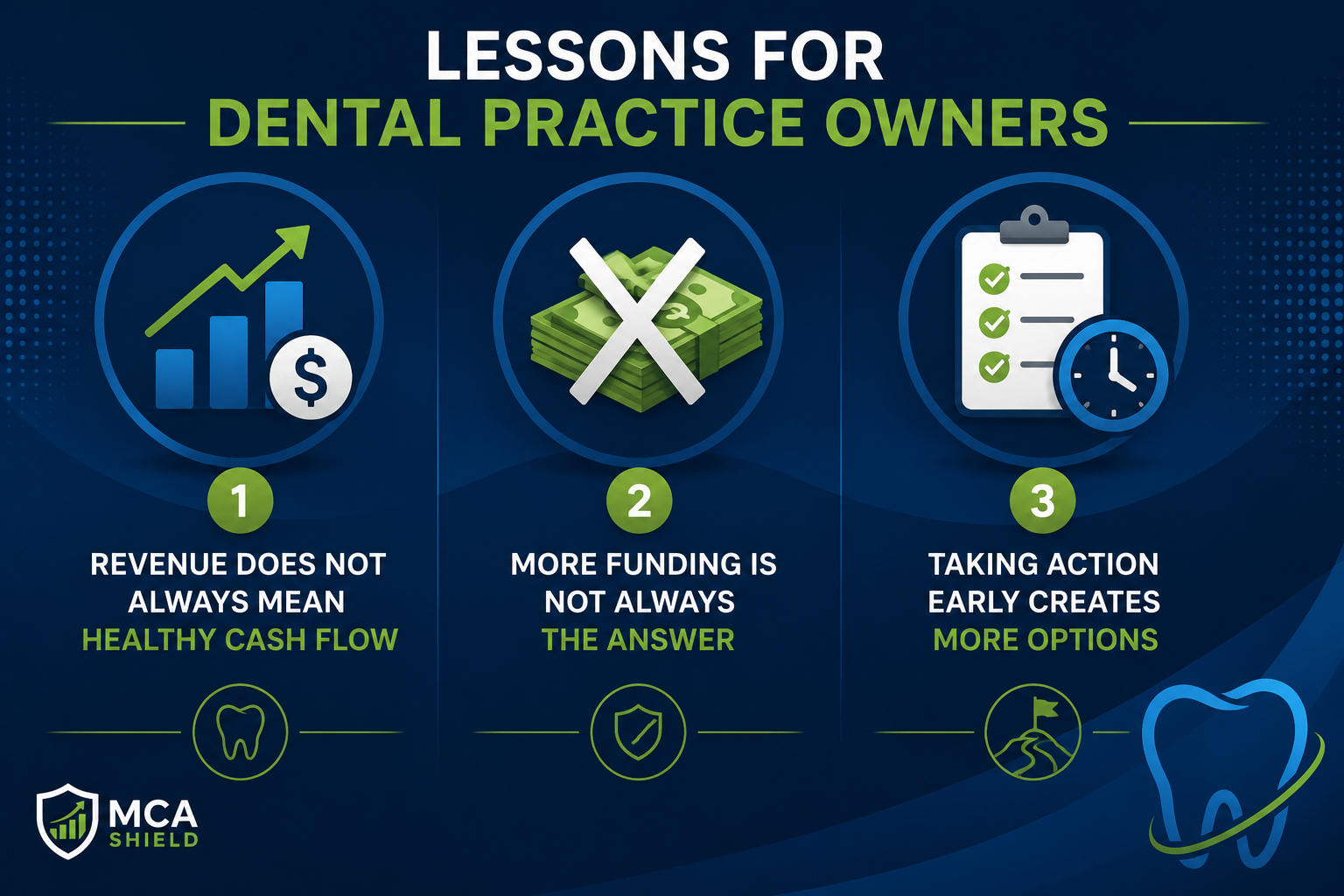
Dental practice debt relief lessons showing the importance of healthy cash flow, avoiding unnecessary funding, and taking early action to restore financial stability.

Frequently Asked Questions About Dental Practice Debt Relief

Many dental practice owners experience financial challenges even when their offices are active and generating revenue. Understanding common debt questions can help dentists recognize problems early and explore solutions before financial pressure grows.

Below are answers to common questions about dental practice debt relief and creating a more stable financial future.


🦷 Why Do Dentists Struggle With Business Debt?

Dental practices often have significant operating expenses. Equipment, technology upgrades, payroll, supplies, lab fees, insurance, and facility costs can require substantial ongoing investment.

When cash flow becomes tight, some dentists turn to fast funding options to cover immediate needs. If repayment obligations become too large, those payments can create additional financial strain even for successful practices.


💰 Can a Dental Practice Recover From MCA Debt?

Yes. Many dental practices can recover from merchant cash advance debt by reviewing their current obligations and creating a structured recovery strategy.

The best approach depends on the practice’s revenue, existing agreements, payment amounts, and overall financial situation. Options may include negotiating terms, restructuring obligations, or developing a customized debt relief plan.

The key is addressing the source of the financial pressure instead of continuing a cycle of short-term solutions.


📉 Can Merchant Cash Advance Payments Be Reduced?

In some situations, MCA payments may be reduced through negotiation or restructuring strategies. This process typically involves reviewing existing agreements, understanding cash flow limitations, and working toward more manageable payment arrangements.

Reducing payment pressure may help dental practices protect daily operations while creating a path toward greater financial stability.


⚠️ What Happens if a Dentist Defaults on an MCA?

Defaulting on a merchant cash advance can create additional challenges for a dental practice. Depending on the agreement, possible consequences may include increased collection activity, legal action, or additional pressure from funding companies.

Dentists facing potential default should review their options early. Waiting until the situation becomes more serious may limit available solutions.


📈 How Can Dentists Improve Cash Flow After Debt Problems?

Improving cash flow often starts with understanding where money is going and creating a realistic recovery plan.

Dental practice owners can work toward better financial stability by focusing on:

✅ Reviewing existing debt obligations
✅ Reducing unnecessary expenses
✅ Addressing high-pressure payments
✅ Avoiding additional short-term debt cycles
✅ Building a plan focused on long-term growth

Recovering from financial challenges takes strategy and consistency. With the right dental practice debt relief approach, owners can create more room to operate, grow, and focus on their patients.

Help Your Dental Practice Move Beyond the Debt Trap

Financial pressure does not have to define the future of your dental practice. Even when debt payments feel overwhelming, understanding your options can be the first step toward creating a more manageable path forward.

The husband-and-wife dental team in this case study realized that continuing the same cycle would not create the stability they wanted. By addressing the problem directly and developing a customized strategy, they were able to move toward stronger cash flow and greater financial control.

Your practice deserves a plan designed around long-term success, not temporary fixes.

Why Creating a Recovery Plan Matters

Every dental practice has unique challenges, expenses, and financial obligations. A successful recovery strategy starts with understanding the complete picture before making decisions.

A strong dental practice debt relief plan focuses on:

✓ Reviewing current payment obligations
✓ Identifying sources of cash flow pressure
✓ Exploring available restructuring or settlement options
✓ Creating a strategy focused on sustainable recovery

Taking action early may create more opportunities to protect your practice, your team, and the business you have worked hard to build.

Schedule a Free Consultation With MCA Shield

If merchant cash advance payments or business debt are making it difficult to manage your dental practice, MCA Shield can help you review your options.

Our team works with business owners to evaluate their current situation, develop customized relief strategies, and create a plan focused on reducing financial pressure.

Schedule a free consultation with MCA Shield today and start building a path toward a stronger financial future for your dental practice.