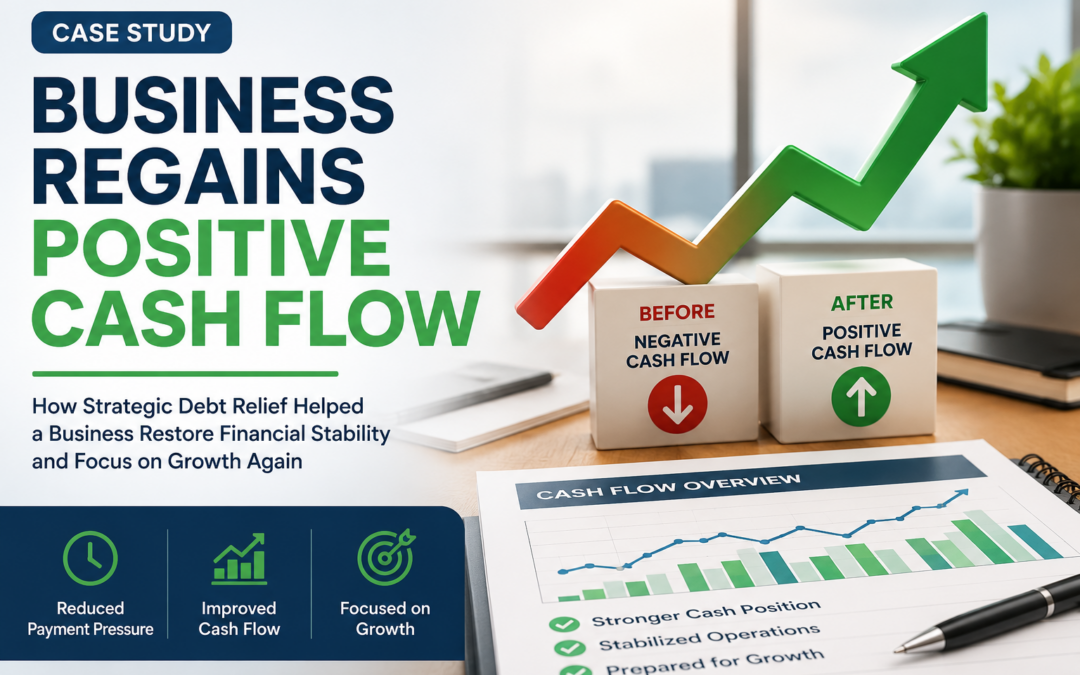
Many business owners assume strong sales automatically lead to financial stability, but that is not always the case. This Business Regains Positive Cash Flow Case Study shows how one company became trapped by Merchant Cash Advance (MCA) payments despite generating steady revenue. As daily payment obligations grew, cash flow tightened, making it increasingly difficult to cover operating expenses and invest in future growth.
By taking a strategic approach to resolving MCA debt, the business reduced financial pressure, restored positive cash flow, and regained the flexibility needed to move forward. While every situation is unique, this case study highlights practical lessons that may help other business owners facing similar cash flow challenges.
Schedule Your Free Consultation
The Business Before Cash Flow Problems
Every business has a story, and this one began with optimism. The company had built a solid reputation, attracted a steady stream of customers, and generated consistent revenue. On paper, the business appeared healthy. However, as many owners discover, strong sales do not always translate into healthy cash flow.
A Growing Business With Strong Revenue
The business had experienced steady growth over several years. Demand for its products and services continued to increase, new customers were coming in regularly, and monthly revenue remained consistent. The owner invested in equipment, inventory, marketing, and employees to support that growth, expecting future sales to cover those expenses.
Like many expanding businesses, occasional cash flow gaps appeared as operating costs increased. To bridge those gaps, the owner turned to Merchant Cash Advances (MCAs), believing they would provide short-term flexibility until revenue continued to grow.
Why Cash Flow Suddenly Became Tight
At first, the MCA payments seemed manageable. However, as additional funding was used to keep operations moving, daily ACH withdrawals began consuming much of the company’s incoming revenue. Instead of improving financial flexibility, the business had less working capital available each day.
Before long, routine expenses such as payroll, inventory purchases, vendor payments, and equipment maintenance became more difficult to manage. Although sales remained strong, the constant payment obligations created ongoing financial pressure, making it increasingly challenging to maintain positive cash flow.
The owner realized the problem was no longer a lack of revenue. The real challenge was that too much of the company’s daily income was being redirected to MCA payments, leaving too little cash available to operate and grow the business.
How Merchant Cash Advances Created Financial Pressure
What began as a short-term funding solution gradually turned into a long-term financial burden. As Merchant Cash Advance obligations increased, daily withdrawals reduced the cash available to operate the business. Although revenue remained steady, the business struggled to keep pace with the growing payment demands.
Multiple Daily ACH Withdrawals
Each business day, ACH withdrawals automatically remove funds from the company’s bank account before many operating expenses can be paid. As additional Merchant Cash Advances were added over time, multiple withdrawals occurred each day, leaving less cash available for payroll, inventory, utilities, marketing, and other essential expenses.
Instead of using incoming revenue to strengthen the business, a significant portion was immediately redirected to debt payments.
Revenue Could Not Keep Up With Payments
The business continued to generate sales, but the daily payment obligations increased faster than available working capital. Seasonal fluctuations, unexpected expenses, and slower customer payments made the situation even more difficult.
To cover shortfalls, the owner occasionally relied on additional financing, hoping future revenue would solve the problem. Unfortunately, each new obligation placed even more pressure on cash flow and reduced the company’s financial flexibility.
The Business Entered a Cash Flow Spiral
As payment pressure intensified, the business became trapped in a cycle that is common among companies carrying multiple Merchant Cash Advances. Daily withdrawals limited available cash, making it harder to cover operating expenses, which increased the temptation to seek additional funding.
Over time, the focus shifted from growing the business to simply managing daily financial demands. Instead of planning for expansion, the owner spent more time worrying about whether enough cash would remain in the account to meet the next round of ACH withdrawals. Without a strategy to address the underlying debt, the cash flow spiral continued to tighten, making long-term recovery increasingly difficult.
Warning Signs the Business Needed Help
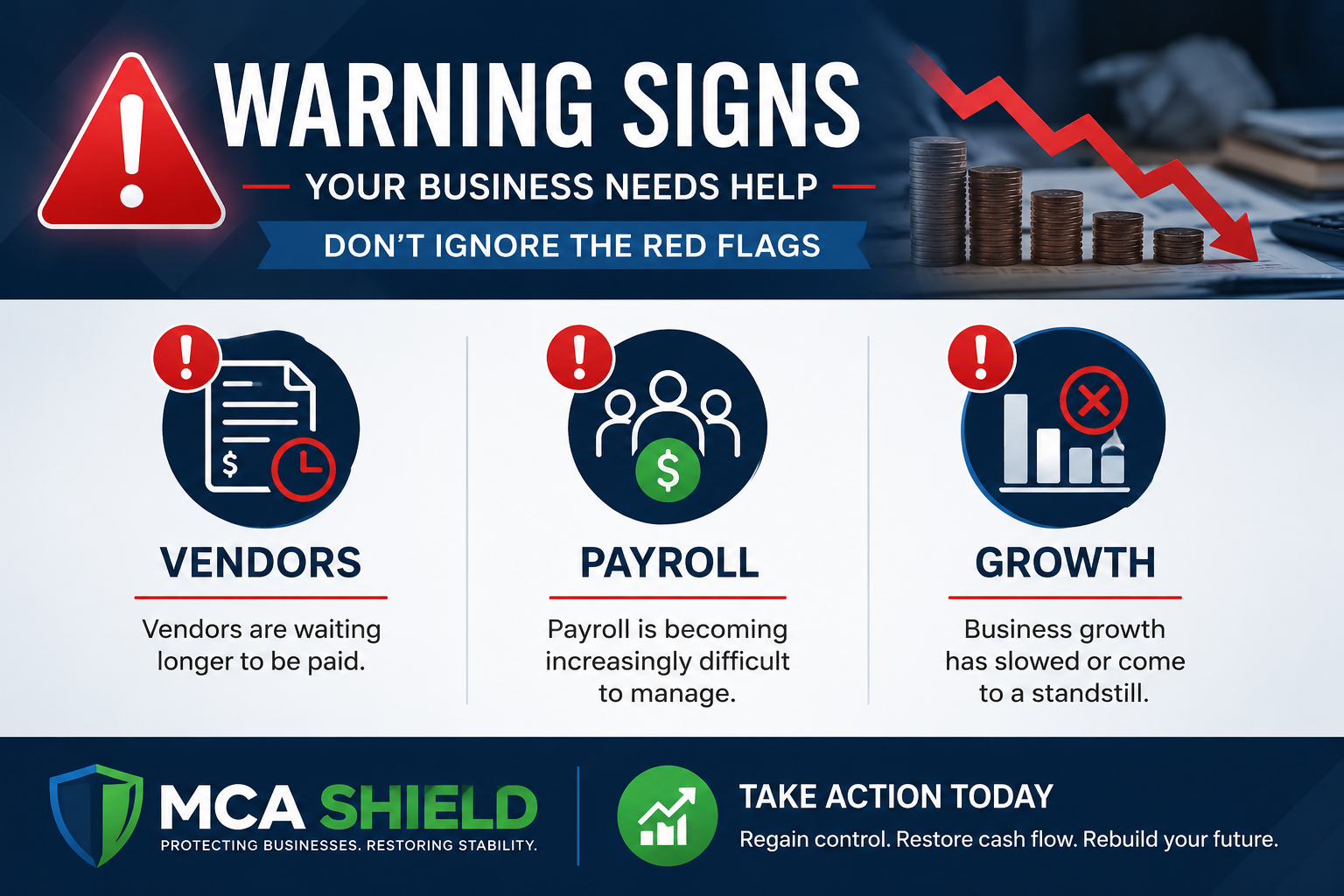
The financial pressure did not happen overnight. It developed gradually, with small challenges becoming larger problems over time. Looking back, several warning signs made it clear that the business needed a different strategy. These are the same indicators many business owners experience when Merchant Cash Advance payments begin to consume too much of their cash flow.
Vendors Were Waiting Longer to Be Paid
Vendor invoices that had once been paid promptly started remaining outstanding for longer periods. The owner found it increasingly difficult to maintain normal payment schedules while daily ACH withdrawals continued reducing available cash.
Although vendor relationships remained strong, delayed payments created additional stress and raised concerns about supply interruptions, late fees, and preserving the trust that had taken years to build.
Payroll Became Increasingly Difficult
Protecting employees became one of the owner’s highest priorities. As cash flow tightened, each payroll cycle brought added pressure. The business worked hard to meet payroll obligations, but there was little financial cushion left after daily MCA payments were pulled from the account.
Instead of focusing on managing and growing the business, the owner spent valuable time monitoring account balances and planning around automatic withdrawals.
Business Growth Came to a Standstill
The company still had opportunities to expand, but there was no working capital available to take advantage of them. Investments in marketing, equipment, inventory, and hiring were delayed because nearly every available dollar was needed to cover existing obligations.
Rather than moving the business forward, the owner’s attention shifted to solving daily cash flow problems. That realization became the turning point. It was clear the business did not need more funding—it needed a strategy to reduce financial pressure, restore positive cash flow, and regain control of its future.
The Recovery Strategy That Changed Everything
Once the business owner recognized that additional funding would only deepen the problem, the focus shifted from short-term survival to long-term recovery. Rather than chasing more capital, the goal became reducing financial pressure, restoring positive cash flow, and building a sustainable path forward.
Reviewing Every MCA Agreement
The first step was conducting a thorough review of every Merchant Cash Advance agreement. Each contract was evaluated to understand payment obligations, funding terms, remaining balances, and how the agreements worked together to affect daily cash flow.
This comprehensive assessment helped identify the biggest sources of financial strain and established a clear starting point for a recovery strategy.
Building a Customized Resolution Plan
No two businesses face the same financial challenges, so a one-size-fits-all approach was never an option. Working closely with the business owner, MCA Shield developed a customized resolution plan based on the company’s cash flow, operating expenses, revenue, and long-term goals.
The objective was not simply to reduce immediate financial pressure but to improve the business’s overall financial stability and position it for sustainable growth.
Negotiating Toward Sustainable Payments
With a clear strategy in place, MCA Shield worked to pursue more manageable payment solutions that aligned with the business’s financial reality. Reducing payment pressure gave the company more working capital to cover essential operating expenses, strengthen vendor relationships, and support payroll without relying on additional financing.
As financial pressure eased, the business began rebuilding healthy cash flow and shifting its focus away from daily financial challenges. Instead of reacting to constant payment demands, the owner could once again make decisions that supported long-term success.
The Results: Business Regains Positive Cash Flow

Implementing a structured debt resolution strategy did not transform the business overnight, but it created meaningful progress that continued to build over time. As payment pressure eased, more revenue remained available to support daily operations. The business regained positive cash flow, restored financial stability, and shifted its focus from surviving to growing.
Monthly Cash Flow Improved
The most significant change was the improvement in monthly cash flow. With more manageable payment obligations, the business retained a larger portion of its revenue rather than watching it disappear through daily ACH withdrawals.
This increased financial flexibility allowed the owner to:
- Improve monthly cash flow
- Reduce overall payment pressure
- Build a healthier operating cushion
- Make decisions based on business needs rather than daily cash shortages
Financial Stress Was Reduced
As cash flow stabilized, the constant pressure surrounding payroll, vendor payments, and operating expenses began to fade. Outstanding vendor balances were brought current, payroll became predictable again, and the business no longer operated amid the daily uncertainty created by overwhelming MCA obligations.
Instead of worrying about whether enough money would remain in the account each morning, the owner gained confidence knowing the business was moving in a healthier financial direction.
The Business Could Focus on Growth Again
With positive cash flow restored, the company was finally able to look beyond immediate financial challenges. Resources that had previously been tied up in debt payments could now be invested in strengthening the business.
The company regained the ability to:
- Reinvest in marketing and business development
- Purchase needed inventory and equipment
- Strengthen relationships with vendors
- Plan for future growth with greater confidence
- Focus on serving customers instead of managing financial emergencies
This case study demonstrates that when the underlying causes of financial pressure are addressed, businesses can regain positive cash flow, rebuild stability, and create new opportunities for long-term success.
Lessons Other Business Owners Can Learn
Every business is different, but the challenges in this case study are far from unique. Many business owners facing Merchant Cash Advance debt experience similar financial pressure. The encouraging news is that recognizing the warning signs early and taking strategic action can significantly improve the path to recovery.
Revenue Alone Does Not Guarantee Healthy Cash Flow
A business can generate strong sales and still struggle financially if too much revenue is committed to debt payments. Positive cash flow depends on more than income—it requires enough working capital to cover payroll, vendors, inventory, operating expenses, and future investments.
Regularly reviewing cash flow, rather than focusing only on revenue, provides a clearer picture of a company’s financial health.
More Borrowing Often Makes the Problem Worse
When cash becomes tight, taking on additional financing may seem like the fastest solution. However, adding another Merchant Cash Advance can increase daily payment obligations and further reduce available working capital.
Before accepting new funding, it is important to evaluate whether the additional debt solves the underlying problem or postpones it while increasing financial pressure.
Early Action Creates More Financial Options
Waiting until cash flow reaches a crisis point can limit the solutions available. Addressing financial challenges early often provides greater flexibility to explore debt resolution strategies, improve cash flow, and protect the long-term health of the business.
The most successful recoveries usually begin with a proactive plan rather than a last-minute reaction. By seeking guidance before financial pressure becomes overwhelming, business owners can regain control, restore positive cash flow, and position their companies for sustainable growth.
How MCA Shield Helps Businesses Restore Positive Cash Flow
Every business faces unique financial challenges, which is why there is no universal solution to Merchant Cash Advance debt. At MCA Shield, we work closely with business owners to understand their financial situation, evaluate available options, and develop a strategy that supports lasting financial stability. Our goal is to help businesses reduce payment pressure, restore positive cash flow, and move forward with confidence.
Reviewing Your Financial Situation
The first step is gaining a complete understanding of your financial picture. Our team reviews your Merchant Cash Advance agreements, payment obligations, cash flow, operating expenses, and overall business goals to identify the factors creating the greatest financial pressure.
This detailed assessment provides the foundation for developing a strategy that reflects your business’s specific needs rather than relying on a one-size-fits-all approach.
Creating a Customized Debt Resolution Strategy
Once we understand your situation, we develop a personalized debt resolution strategy designed to improve cash flow while supporting the continued operation of your business. Depending on your circumstances, this may include reviewing settlement opportunities, restructuring payment obligations, or exploring other practical solutions that align with your financial goals.
Every recommendation is focused on reducing financial strain while helping position your business for long-term success.
Helping Businesses Move Toward Long-Term Stability
Restoring positive cash flow is only the beginning. Our objective is to help business owners regain financial flexibility so they can focus on running and growing their businesses rather than managing daily debt pressure.
With a thoughtful strategy in place, many businesses strengthen cash flow, rebuild vendor relationships, stabilize payroll, and reinvest in future growth. At MCA Shield, we are committed to helping business owners move beyond short-term financial challenges and toward long-term stability and renewed confidence.
Frequently Asked Questions About Regaining Positive Cash Flow
Many business owners facing Merchant Cash Advance debt ask the same questions. Here are straightforward answers to help you better understand your options.
Can a Business Recover From MCA Debt?
Yes. Many businesses successfully recover from MCA debt by addressing the underlying cash flow issues rather than taking on additional financing. A well-planned debt resolution strategy can reduce payment pressure, improve working capital, and help restore positive cash flow. The earlier action is taken, the more options are typically available.
How Long Does It Take to Improve Cash Flow?
The timeline varies based on factors such as the number of MCA agreements, outstanding balances, current revenue, and the resolution strategy being pursued. Some businesses begin seeing cash flow improvements shortly after payment obligations become more manageable, while others experience gradual progress over several months.
Can MCA Payments Be Reduced?
In many situations, yes. Depending on the details of your Merchant Cash Advance agreements and your business’s financial circumstances, there may be opportunities to negotiate payment terms or pursue a debt resolution strategy focused on reducing overall financial pressure. Every situation is unique, so a professional review is an important first step.
Should I Take Another MCA to Cover Existing Payments?
In many cases, taking another Merchant Cash Advance shifts the problem forward while increasing future payment obligations. Although additional funding may provide temporary relief, it often places even greater strain on cash flow. Before accepting another advance, it is wise to explore alternatives that address the root cause of the financial challenge.
What Is the First Step Toward Positive Cash Flow?
The first step is gaining a clear understanding of your financial position. Review your cash flow, operating expenses, outstanding debt, and Merchant Cash Advance agreements to identify the primary sources of financial pressure. From there, you can evaluate solutions that support long-term stability rather than temporary relief.
Key Takeaway
Businesses often regain positive cash flow by acting early, reducing payment pressure, and following a customized debt resolution strategy instead of relying on additional borrowing. Taking the first step today can create more financial options for tomorrow.
Take Action Before Cash Flow Problems Become Business Problems
Cash flow challenges rarely resolve on their own. The longer financial pressure continues, the more difficult it becomes to meet daily obligations, protect vendor relationships, and invest in long-term growth for your business. Taking action early can help preserve more options and put your company on a stronger path toward financial stability.
Why Acting Early Creates More Financial Options
When cash flow begins to tighten, waiting often allows financial pressure to build. Early action gives business owners flexibility to evaluate debt resolution strategies, reduce payment pressure, and regain control before the situation becomes more difficult.
Whether you are managing one Merchant Cash Advance or several, developing a proactive plan can help restore positive cash flow and position your business for long-term success.
Schedule a Free Consultation With MCA Shield
If Merchant Cash Advance payments are affecting your cash flow, MCA Shield is here to help. Our experienced team will review your financial situation, explain your options, and develop a customized strategy that strengthens cash flow and advances your business goals.
Don’t wait until financial challenges limit your options. Contact MCA Shield today to schedule your free, confidential consultation and take the first step toward restoring positive cash flow and rebuilding a stronger financial future.