
MCA Contract Enforcement can become a serious concern when businesses begin struggling to keep up with merchant cash advance payments. While MCA agreements are designed to provide fast access to capital, they often include contractual provisions that lenders may use to protect their interests when payment issues arise.
Understanding how MCA lenders enforce contracts can help business owners recognize potential risks, respond appropriately to collection activity, and explore available solutions before financial challenges become severe. By learning what enforcement actions may occur and what options are available, businesses can make more informed decisions about protecting cash flow and maintaining operations.
Schedule Your Free Consultation
Understanding How MCA Lenders Enforce Contracts
Merchant cash advances are often marketed as a fast and flexible funding solution, but the agreements behind them can contain terms that significantly affect a business when financial challenges arise. Understanding how MCA lenders enforce contracts is important for business owners who want to recognize potential risks and take proactive steps before payment issues escalate.
Why MCA Agreements Are Different From Traditional Loans
Unlike traditional business loans, merchant cash advances are generally structured as purchases of future receivables rather than loans. Instead of fixed monthly payments, MCA providers typically collect payments through daily or weekly ACH withdrawals or a percentage of future sales.
Because MCA agreements are structured differently, they often include provisions not commonly found in conventional lending contracts. These provisions may outline how payments are collected, what constitutes a default, and what actions the MCA company may take if the business fails to meet its obligations.
Understanding these differences can help business owners evaluate their agreements more carefully and avoid surprises if cash flow becomes strained.
Common Contract Terms MCA Companies Rely On
Most MCA agreements contain specific terms that lenders may rely on when enforcing the contract. While every agreement is different, several provisions appear frequently.
Common MCA contract terms may include:
- Daily or weekly ACH payment authorizations
- Default and breach provisions
- Personal guarantee clauses
- UCC lien filings
- Confession of judgment provisions where permitted
- Requirements related to business bank accounts and receivables
These terms can play a significant role in determining what options an MCA company may pursue if payment obligations are not met. Carefully reviewing the agreement can help business owners better understand their rights and responsibilities.
What Happens When a Business Falls Behind on Payments
When a business begins missing MCA payments or experiences returned ACH withdrawals, lenders may increase collection efforts and communication. What starts as a temporary cash flow problem can quickly become a larger financial challenge if multiple MCA obligations are involved.
Depending on the circumstances and the terms of the agreement, a lender may:
- Issue notices regarding payment defaults
- Increase collection activity
- Refer the account to attorneys or legal representatives
- Pursue remedies outlined in the contract
- Seek recovery through available legal channels
The specific actions vary by provider and agreement. However, businesses that address payment difficulties early often have more options available than those that wait until the situation becomes more severe.
Collection Actions MCA Lenders May Take
When MCA payments become difficult to maintain, lenders may take steps to enforce the terms of their agreements and recover outstanding balances. The type and intensity of collection activity often depends on the lender, the contract terms, and the severity of the payment issues. Understanding these actions can help business owners recognize warning signs and respond before the situation becomes more difficult to manage.
Increased Collection Calls and Communication
One of the first signs of MCA contract enforcement is often an increase in communication from the lender or its representatives. Businesses that miss payments or experience returned ACH withdrawals may begin receiving more frequent phone calls, emails, and written correspondence regarding their account status.
These communications typically seek to:
- Confirm the reason for missed payments
- Request updated financial information
- Discuss payment arrangements
- Encourage immediate resolution of past-due balances
While some collection efforts remain routine, repeated communication may indicate that the lender is preparing to pursue additional enforcement actions if the issue remains unresolved.
Notices of Default and Breach Allegations
If payment problems continue, an MCA company may issue a formal notice of default or allege that the business has breached specific provisions of the agreement. These notices generally outline the lender’s position, identify the alleged violation, and explain the actions that may follow if the matter is not addressed.
Common reasons for default allegations may include:
- Missed or returned payments
- Unauthorized changes to business bank accounts
- Failure to maintain required receivables deposits
- Violations of contract provisions
- Taking additional funding that conflicts with the agreement
Receiving a notice of default does not necessarily mean all options have been exhausted, but it often signals that the situation is becoming more serious and may require immediate attention.
Escalation to Attorneys and Legal Representatives
When collection efforts fail to resolve the issue, some MCA companies may transfer the account to attorneys or outside legal representatives. At this stage, communication may become more formal, and businesses may begin receiving correspondence from law firms acting on behalf of the lender.
Legal representatives may:
- Request payment of the outstanding balance
- Send formal demand letters
- Review available contractual remedies
- Pursue legal action when permitted and appropriate
Not every delinquent MCA account advances to this stage. However, businesses that address payment difficulties early often have more opportunities to explore restructuring, settlement, or other relief solutions before legal involvement becomes necessary.
Legal Tools MCA Lenders May Use to Enforce Contracts
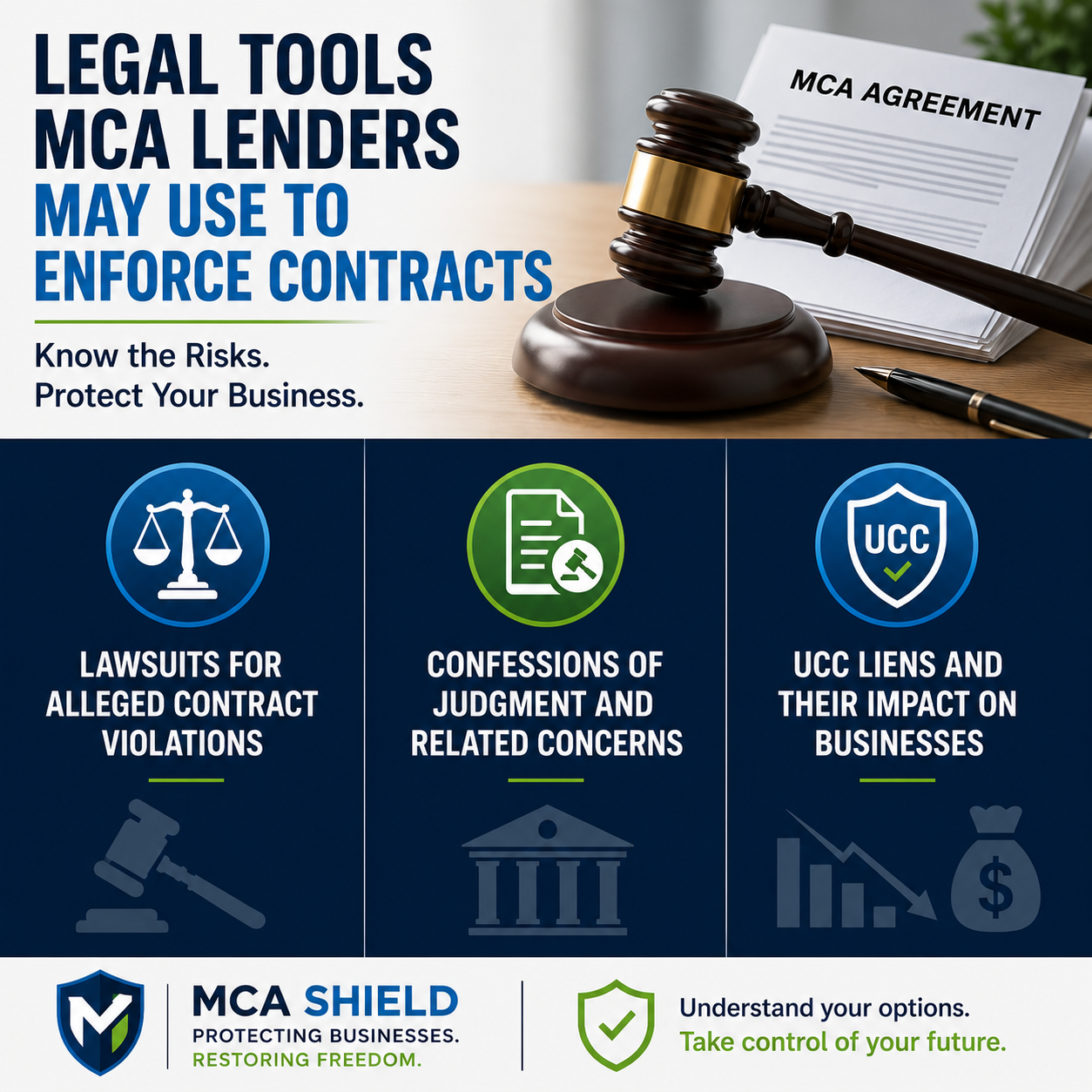
When payment problems persist, some MCA companies may use legal remedies available under the agreement and applicable laws to pursue collection and enforce contractual obligations. The specific enforcement options vary based on the contract, the jurisdiction, and the circumstances of the case. Understanding these legal tools can help business owners recognize potential risks and take action before matters become more complicated.
Lawsuits for Alleged Contract Violations
One legal option available to some MCA lenders is filing a lawsuit alleging that the business violated the terms of the agreement. These claims may arise when payments stop, ACH withdrawals are returned, or the lender believes the business has breached specific contractual provisions.
Depending on the circumstances, a lawsuit may seek:
- Recovery of outstanding balances
- Enforcement of contract terms
- Damages related to alleged breaches
- Legal costs and fees where permitted
The filing of a lawsuit does not automatically mean the lender will prevail. However, responding promptly and seeking professional guidance can help businesses better understand their options and obligations.
Confessions of Judgment and Related Concerns
Some MCA agreements have historically contained confession of judgment (COJ) provisions that may allow a lender to obtain a judgment without a traditional court process under certain circumstances. The use and enforceability of these provisions have become more restricted in many jurisdictions, but they remain a concern for some business owners.
Potential concerns related to confessions of judgment include:
- Accelerated legal action
- Limited opportunity to contest claims before judgment
- Increased financial pressure on struggling businesses
- Potential impacts on business operations and banking relationships
Because laws governing confessions of judgment vary, business owners should carefully review their agreements and seek qualified guidance if questions arise regarding enforceability.
UCC Liens and Their Impact on Businesses
Many MCA providers file a UCC-1 financing statement as part of the funding process. While a UCC lien does not necessarily mean a business is in default, it establishes a public claim related to certain business assets or receivables.
A UCC lien can affect a business in several ways, including:
- Making it more difficult to obtain additional financing
- Creating complications during refinancing efforts
- Limiting access to certain funding options
- Requiring resolution before new lenders provide capital
For businesses already experiencing cash flow pressure, a UCC lien can create additional challenges by limiting financing opportunities and complicating efforts to restructure MCA debt. Understanding how these filings work can help business owners make more informed decisions when evaluating relief and recovery strategies.
How MCA Contract Enforcement Can Affect Business Operations
MCA contract enforcement can create challenges that extend far beyond the outstanding balance itself. As collection efforts increase and contractual remedies are pursued, business owners may experience growing pressure on cash flow, banking relationships, and day-to-day operations. Understanding these potential impacts can help businesses recognize warning signs and seek solutions before the situation becomes more difficult to manage.
Cash Flow Disruptions and Banking Challenges
One of the most immediate effects of MCA contract enforcement is increased pressure on cash flow. Daily or weekly ACH withdrawals can already strain working capital, and enforcement actions may make financial management even more difficult.
Businesses facing enforcement activity may experience:
- Reduced operating cash
- Increased overdraft or NSF fees
- Difficulty covering recurring expenses
- Greater uncertainty in cash flow planning
As financial pressure grows, maintaining normal business operations often becomes increasingly challenging.
Difficulty Obtaining Additional Financing
MCA enforcement actions can also affect a business’s ability to secure additional funding. Lenders and financing providers frequently review existing obligations, payment history, and public filings when evaluating new applications.
Potential financing challenges may include:
- Existing UCC liens
- Multiple MCA obligations
- Recent payment defaults
- Ongoing collection activity
These factors can limit available funding options and make it more difficult to obtain the capital needed to support business growth or recovery.
Vendor, Payroll, and Operational Pressures
When cash flow becomes constrained, essential business expenses often become harder to manage. Vendors, payroll obligations, rent, inventory purchases, and other operating costs may begin competing for limited financial resources.
Common operational pressures include:
- Delayed vendor payments
- Payroll concerns
- Inventory shortages
- Missed growth opportunities
- Increased stress on business owners and management teams
If left unresolved, these challenges can affect customer service, business relationships, and overall operational stability. Taking action early often creates more opportunities to improve cash flow, explore relief options, and avoid further operational disruptions.
Warning Signs That Contract Enforcement May Be Escalating
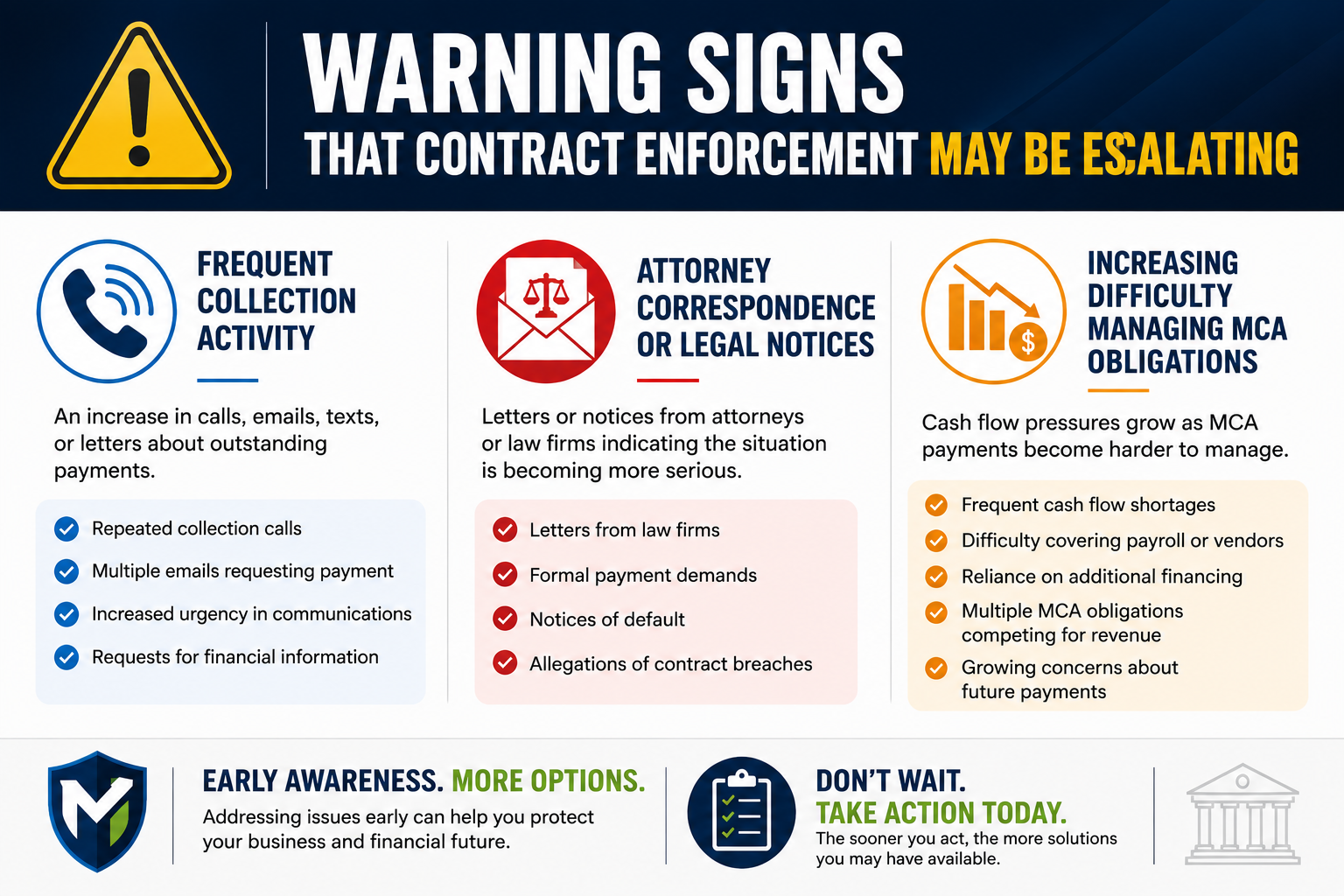
MCA contract enforcement often progresses gradually rather than all at once. What begins as routine collection activity can become more serious if payment issues remain unresolved. Recognizing the warning signs early may help business owners address challenges before additional collection or legal actions occur.
Frequent Collection Activity
An increase in communication from an MCA company is often one of the earliest signs that enforcement efforts are escalating. Businesses may begin receiving more frequent phone calls, emails, text messages, or written correspondence regarding outstanding obligations.
Common indicators include:
- Repeated collection calls
- Multiple emails requesting payment
- Increased urgency in communications
- Requests for financial information
While collection activity does not necessarily indicate legal action is imminent, it often signals growing concern about the account status.
Attorney Correspondence or Legal Notices
The involvement of attorneys or legal representatives can indicate that the situation is becoming more serious. Businesses may receive demand letters, notices of default, or other legal correspondence related to alleged contract violations.
Potential warning signs include:
- Letters from law firms
- Formal payment demands
- Notices of default
- Allegations of contract breaches
These communications should be reviewed carefully, as they may outline important deadlines, obligations, or potential next steps.
Increasing Difficulty Managing MCA Obligations
Financial strain often becomes more noticeable as MCA obligations become harder to manage. Businesses may find themselves dedicating more revenue toward debt payments while struggling to cover normal operating expenses.
Common signs of increasing pressure include:
- Frequent cash flow shortages
- Difficulty covering payroll or vendor payments
- Reliance on additional financing to stay current
- Multiple MCA obligations competing for revenue
- Growing concerns about meeting future payment obligations
When these challenges begin affecting daily operations, businesses often benefit from evaluating available options before the situation becomes more difficult to resolve.
Options for Businesses Facing MCA Contract Enforcement
Businesses dealing with MCA contract enforcement often assume they have few options once collection activity begins. In reality, several potential solutions may be available depending on the number of MCA obligations, the severity of the financial challenges, and the lender’s willingness to negotiate. Exploring available relief strategies early may help reduce financial pressure and create a more manageable path forward.
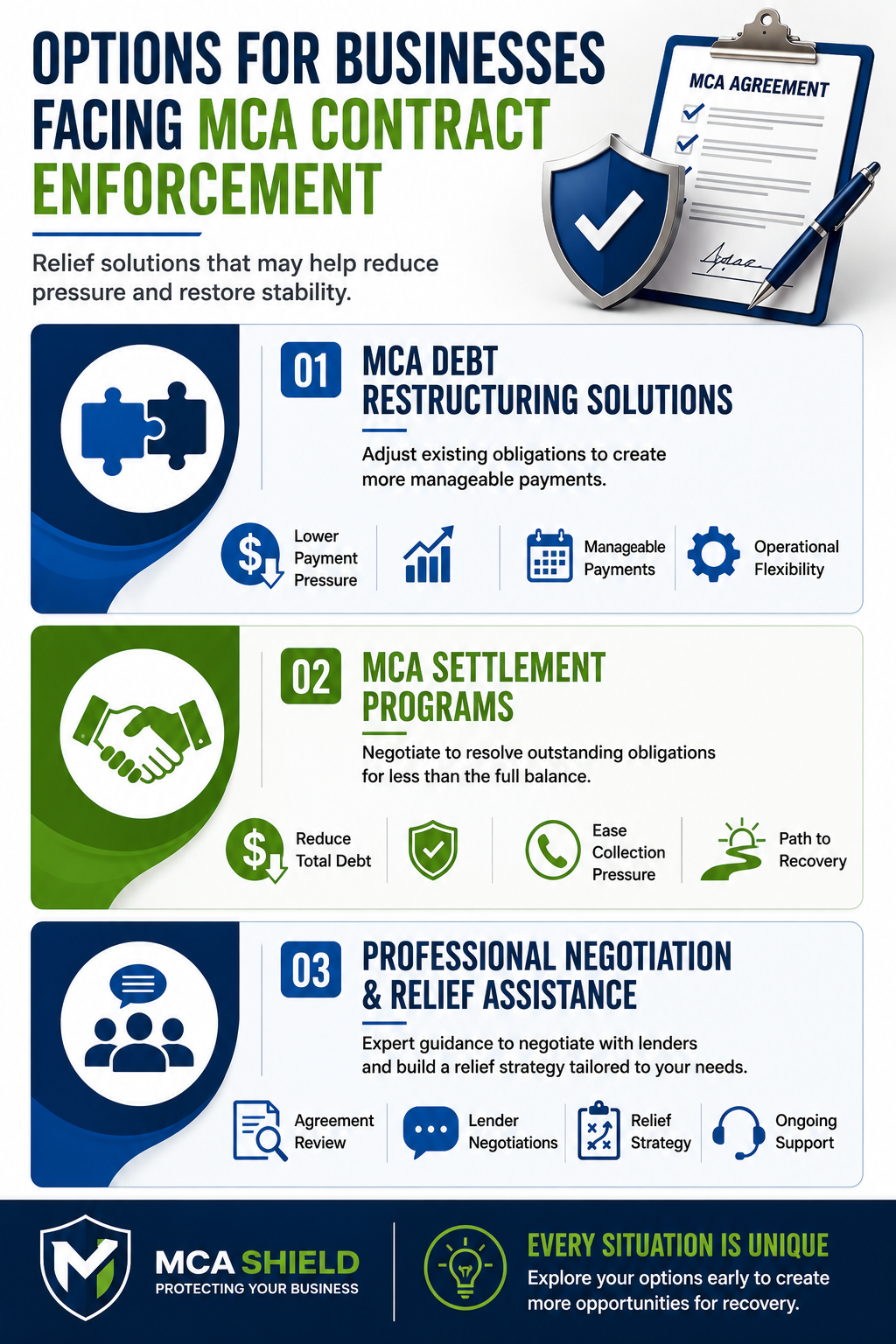
MCA Debt Restructuring Solutions
MCA debt restructuring focuses on improving the affordability of existing obligations without taking on additional MCA funding. The goal is often to create a payment structure that better aligns with the business’s current cash flow and operational needs.
Potential benefits may include:
- Reduced payment pressure
- Improved cash flow stability
- More manageable repayment arrangements
- Greater flexibility for operations
For businesses struggling to keep up with multiple MCA payments, restructuring can provide an opportunity to regain control of finances while continuing normal operations.
MCA Settlement Programs
In some situations, MCA settlement may be an option for businesses experiencing significant financial hardship. Settlement typically involves negotiating with MCA companies to resolve outstanding obligations for less than the full claimed balance.
Potential advantages may include:
- Reduction of total debt obligations
- Resolution of outstanding accounts
- Reduced collection pressure
- A clearer path toward financial recovery
Every business situation is different, and settlement outcomes vary based on factors such as account status, financial condition, and lender participation.
Professional Negotiation and Relief Assistance
Businesses facing multiple MCA obligations or active collection efforts often benefit from professional guidance. Experienced negotiators can help evaluate available options, communicate with lenders, and develop a strategy tailored to the business’s financial situation.
Professional assistance may help with:
- Reviewing MCA agreements
- Evaluating restructuring opportunities
- Coordinating settlement discussions
- Reducing collection-related stress
- Creating a long-term recovery strategy
Seeking assistance early often provides more opportunities to explore solutions before financial challenges become more difficult to manage.
Steps to Take Before MCA Enforcement Actions Intensify
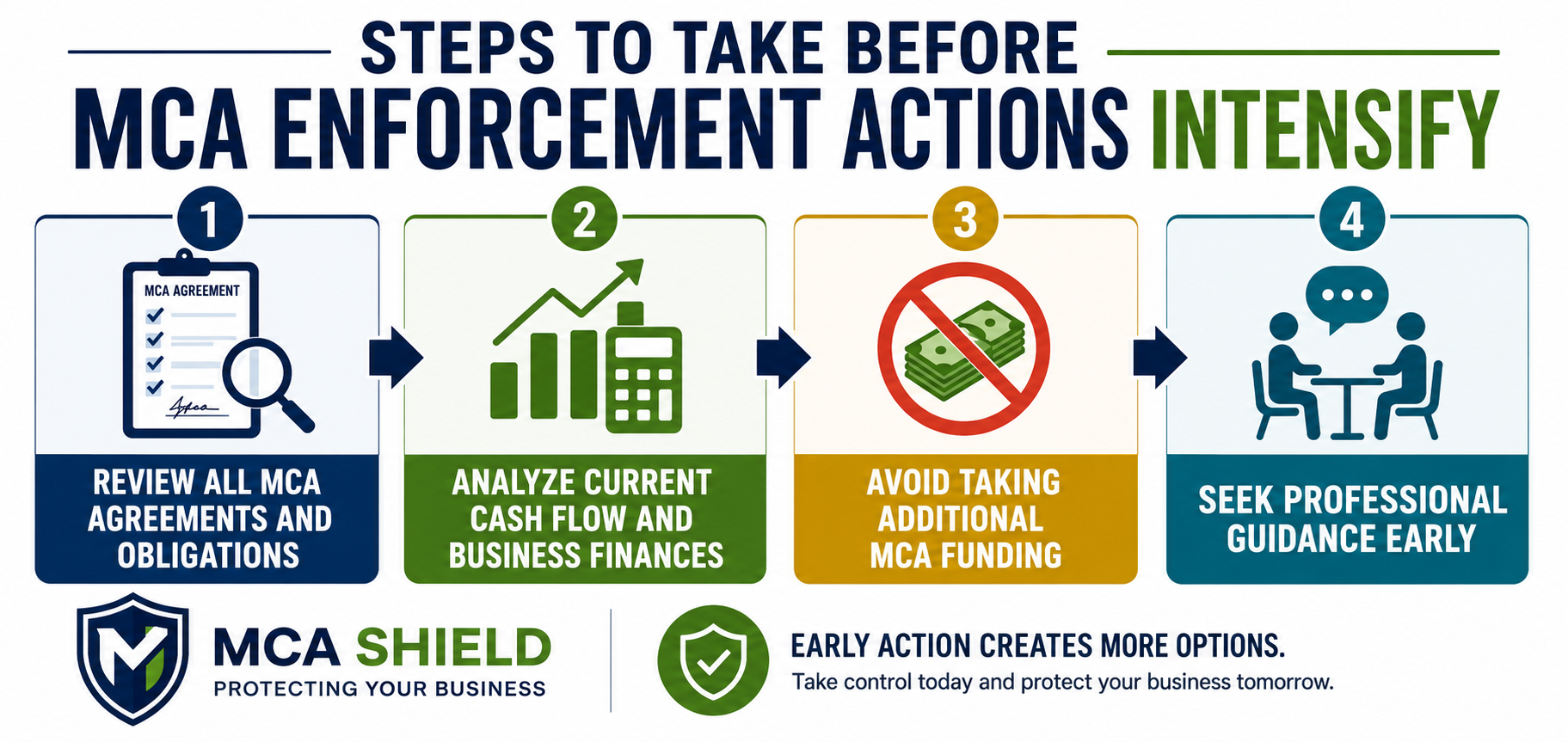
When MCA contract enforcement begins escalating, taking proactive steps can help business owners better understand their financial position and identify potential solutions. Addressing challenges early often creates more opportunities to reduce financial pressure and avoid additional collection or legal actions.
Review All MCA Agreements and Obligations
The first step is to gather and review all MCA agreements currently affecting the business. Understanding the terms, payment requirements, outstanding balances, and contractual obligations can provide a clearer picture of the overall situation.
Key items to review include:
- Current MCA balances
- Payment schedules
- Default provisions
- Personal guarantee clauses
- UCC lien filings
A complete review helps identify potential risks and supports more informed decision-making.
Analyze Current Cash Flow and Business Finances
A detailed assessment of cash flow can help determine how MCA obligations are affecting daily operations. Reviewing income, expenses, and available working capital often reveals where financial pressure is occurring and what adjustments may be necessary.
Areas to evaluate include:
- Monthly revenue trends
- Operating expenses
- Payroll obligations
- Vendor payments
- Available cash reserves
Understanding current financial conditions is essential when evaluating relief or restructuring options.
Avoid Taking Additional MCA Funding
When cash flow becomes tight, obtaining another MCA may seem like a quick solution. However, additional funding can sometimes increase financial pressure by adding new payment obligations on top of existing ones.
Before pursuing new financing, businesses should carefully evaluate:
- The total cost of additional funding
- The impact on cash flow
- Existing debt obligations
- Alternative relief options
Avoiding unnecessary debt can help prevent financial challenges from becoming more difficult to manage.
Seek Professional Guidance Early
Many business owners wait until collection activity or legal pressure becomes severe before exploring assistance. Seeking guidance early often provides more time to evaluate options and develop a strategy tailored to the business’s circumstances.
Professional assistance may help with:
- Agreement reviews
- Cash flow analysis
- Restructuring evaluations
- Settlement discussions
- Long-term recovery planning
The sooner challenges are addressed, the more opportunities a business may have to improve its financial position and regain stability.
Frequently Asked Questions About MCA Contract Enforcement
⚖️ Can an MCA Company Sue My Business?
Yes. Depending on the agreement and circumstances, an MCA company may pursue legal action to recover outstanding obligations or enforce contract terms. The specific remedies available vary by contract and jurisdiction.
🏦 Can MCA Lenders Freeze My Bank Account?
MCA lenders generally cannot freeze a business bank account simply because payments are missed. However, certain legal actions, judgments, or contractual remedies may affect banking relationships under specific circumstances.
📋 What Happens After an MCA Default?
After a default, businesses may experience increased collection activity, notices of default, attorney involvement, or other enforcement actions outlined in the agreement. The exact process varies based on the lender and contract terms.
🤝 Can MCA Debt Be Restructured or Settled?
In many cases, yes. Businesses may be able to pursue restructuring, settlement, or other relief strategies that help reduce payment pressure, improve cash flow, and create a more sustainable financial path forward.
💵 How Can I Reduce MCA Payment Pressure?
The first step is understanding your current obligations and financial position. Reviewing agreements, analyzing cash flow, and exploring restructuring or settlement options may help create a more manageable path forward.
Taking Action Before MCA Contract Enforcement Creates Bigger Problems
Why Early Action Often Creates More Options
MCA contract enforcement can become increasingly difficult to manage when payment issues continue without a clear plan. What may begin as collection calls or payment demands can evolve into more significant financial and operational challenges if left unaddressed.
Taking action early often creates more opportunities to evaluate available solutions, improve cash flow, and reduce financial pressure before the situation becomes more severe. Businesses that address MCA challenges proactively are in a stronger position to explore restructuring, settlement, and other relief strategies designed to support long-term stability.
Schedule a Free Consultation With MCA Shield
If MCA payments, collection activity, or contract enforcement actions are placing pressure on your business, now is the time to explore your options. The sooner you understand your situation, the more opportunities you may have to protect cash flow and regain financial control.
Schedule a free consultation with MCA Shield to review your MCA obligations, discuss potential relief strategies, and learn what solutions may be available for your business.