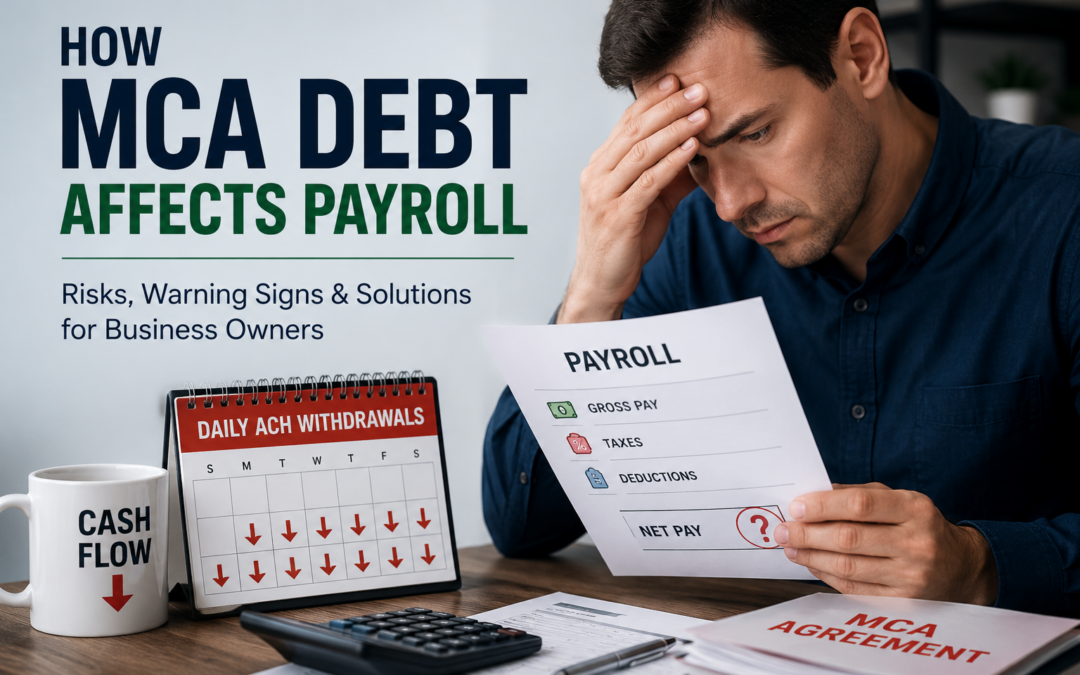
MCA debt affects payroll more often than many business owners realize. What begins as a quick source of working capital can gradually turn into daily or weekly ACH withdrawals that reduce available cash flow. As repayment obligations increase, it may become harder to pay employees on time, cover payroll taxes, purchase inventory, or maintain normal business operations.
Missing payroll—or wondering how you’ll make the next pay period—can place enormous pressure on both you and your employees. Fortunately, recognizing the warning signs early can create more opportunities to address cash flow challenges before they become more serious.
In this guide, you’ll learn how MCA debt affects payroll, why cash flow problems often develop, the risks of waiting too long to act, and practical options that may help your business regain financial stability while protecting the employees who depend on it.
Schedule Your Free Consultation
Why MCA Debt Affects Payroll
Merchant cash advances can provide quick access to capital, but their repayment structure is very different from a traditional business loan. Instead of fixed monthly payments, many MCA providers collect payments through automatic daily or weekly ACH withdrawals. While these payments may appear manageable at first, they can steadily reduce the cash available to operate your business.
Because payroll is one of the largest and most important recurring expenses for many companies, even modest reductions in available cash flow can quickly become a significant financial challenge. Understanding how MCA debt affects payroll helps business owners recognize problems early and take steps to protect both employees and business operations.
How Daily ACH Withdrawals Reduce Available Cash
Most merchant cash advances are repaid through automatic ACH withdrawals directly from your business bank account. These withdrawals occur regardless of whether business sales are strong or slow. As a result, money leaves your account before you have the opportunity to allocate funds for essential operating expenses.
Over time, these frequent withdrawals can make it increasingly difficult to:
- Cover employee wages and salaries
- Pay payroll taxes and employee benefits
- Purchase inventory or supplies
- Pay rent, utilities, and vendors
- Maintain an emergency cash reserve
Businesses carrying multiple merchant cash advances often experience even greater financial pressure. Several daily withdrawals can consume a substantial portion of incoming revenue, leaving less working capital available to meet payroll and other critical obligations.
Why Payroll Is Often the First Financial Pressure Point
Payroll is one of the few business expenses that cannot easily be postponed. Employees expect to receive accurate, timely paychecks regardless of fluctuations in revenue or cash flow. Unlike vendor invoices that may offer payment flexibility, payroll follows a fixed schedule with legal and tax obligations attached.
As MCA payments continue to reduce available cash, many business owners begin making difficult decisions, including:
- Delaying owner compensation
- Using personal savings to cover payroll
- Taking another MCA to bridge a cash shortage
- Postponing equipment purchases
- Falling behind on payroll tax obligations
Although these actions may provide temporary relief, they rarely solve the underlying cash flow problem. In many situations, additional financing only increases repayment obligations and places even greater pressure on future payroll cycles.
The Difference Between Revenue and Available Cash
One of the biggest misconceptions among business owners is that strong revenue automatically means sufficient cash is available for payroll.
Revenue represents the total money generated by your business. Available cash is what remains after payroll taxes, inventory purchases, rent, utilities, vendor payments, and daily MCA withdrawals have been paid.
For example, a business may generate thousands of dollars in sales during a week. Yet after deducting daily ACH withdrawals and other operating expenses, there may not be enough cash remaining to pay employees on time.
This is why many profitable businesses still struggle when MCA debt affects payroll. Improving cash flow—not simply increasing revenue—is often the key to restoring financial stability.
Warning Signs MCA Debt Affects Payroll

Payroll problems rarely appear overnight. In most cases, they develop gradually as daily or weekly MCA payments continue to reduce available cash flow. Many business owners initially find ways to work around the financial pressure, but those short-term solutions often become increasingly difficult to sustain.
Recognizing the warning signs early can help limit the financial impact when MCA debt affects payroll.
Struggling to Cover Payroll Every Pay Period
One of the earliest signs that MCA debt affects payroll is feeling uncertain every time payday approaches. Rather than confidently processing payroll, you may find yourself waiting for customer payments to clear or hoping additional revenue arrives before payroll is due.
If every pay period feels like a race against the clock, your business may be facing a cash flow problem rather than a revenue problem. Daily ACH withdrawals reduce the flexibility needed to manage essential operating expenses, making payroll increasingly difficult to fund.
Delaying Employee Pay or Bonuses
When cash becomes tight, many business owners begin reducing or delaying discretionary payroll expenses first. Bonuses, commissions, overtime, raises, and other employee incentives may be postponed to free up cash for essential business expenses.
While these decisions may provide temporary relief, they can also reduce employee morale, lower job satisfaction, and increase turnover if financial pressure continues.
Using New Financing to Make Payroll
Relying on new financing to cover payroll is often a sign that cash flow has become unsustainable. Some business owners take out another merchant cash advance to meet payroll obligations.
Although this may solve an immediate cash shortage, it often increases future repayment obligations and creates even greater financial pressure. Addressing the underlying cash flow problem is generally a more sustainable solution.
Falling Behind on Payroll Taxes
Payroll taxes are a critical business obligation that should never be overlooked.
As daily ACH withdrawals leave less cash available for operating expenses, some businesses struggle to remit payroll taxes on time or begin delaying tax deposits to cover more immediate financial obligations.
Falling behind on payroll taxes can result in penalties, interest, and additional financial stress. Recognizing these warning signs early can help limit the financial impact when MCA debt affects payroll.
What Happens When MCA Debt Affects Payroll
Missing payroll is more than a temporary financial setback. It can quickly affect employee confidence, disrupt daily operations, and expose your business to additional financial and legal challenges. While many business owners work tirelessly to avoid this situation, ongoing MCA repayment obligations can make payroll increasingly difficult to maintain if cash flow continues to tighten.
Understanding what happens when MCA debt affects payroll highlights why addressing the problem early is often the best way to protect your employees, your business, and your future.
Employee Morale and Retention Challenges
Employees rely on receiving their paychecks accurately and on time. When payroll is delayed or becomes unpredictable, uncertainty can spread throughout the workplace. Even a single missed payroll can cause employees to question the company’s financial stability.
As confidence declines, businesses may experience:
- Lower employee morale
- Reduced productivity
- Increased absenteeism
- Difficulty retaining experienced employees
- Greater challenges in recruiting new talent
Replacing skilled employees is both time-consuming and expensive. Maintaining consistent payroll not only supports your workforce but also helps preserve your company’s reputation and operational stability.
Potential Legal and Tax Consequences
Payroll obligations extend beyond paying employee wages. Businesses are also responsible for withholding and remitting payroll taxes, complying with federal and state wage laws, and meeting established pay schedules.
When MCA debt affects payroll, business owners may unintentionally expose themselves to additional risks, including:
- Payroll tax penalties and interest
- Wage and hour compliance issues
- Increased scrutiny from tax authorities
- Additional collection activity for unpaid tax obligations
The specific consequences vary based on applicable federal and state laws, as well as your business’s circumstances. However, delaying payroll or payroll tax deposits can create financial challenges that extend well beyond the original cash flow problem.
Damage to Business Operations and Growth
When payroll becomes the primary financial concern, other areas of the business often begin to suffer as well. Instead of focusing on serving customers, growing revenue, or improving operations, business owners may spend much of their time managing immediate cash shortages.
As financial pressure continues, businesses may delay investments that support long-term success, including equipment upgrades, inventory purchases, marketing initiatives, and hiring additional staff. Opportunities for growth can be missed simply because cash is being diverted toward daily MCA payments.
The longer MCA debt affects payroll, the greater the potential impact on employees, operations, and business growth. Taking action before payroll disruptions become routine may provide more opportunities to stabilize your finances, protect your employees, and position your business for sustainable success.
How MCA Debt Affects Payroll Across Different Industries
No business is immune to payroll challenges caused by MCA debt, but some industries face a much greater risk than others. Businesses with high payroll costs, delayed customer payments, seasonal revenue, or thin profit margins often have less flexibility when daily or weekly MCA payments reduce available cash flow.
While MCA debt affects payroll across many industries, the following businesses are among the most vulnerable.
Construction Companies
Construction companies frequently manage large payrolls while waiting weeks or even months for customer payments. Project delays, weather conditions, supply chain disruptions, and slow-paying customers can all affect cash flow.
When daily MCA withdrawals continue regardless of incoming payments, contractors may struggle to pay field crews, subcontractors, and office staff on time. Financial pressure can also delay equipment purchases, material orders, and future projects.
Restaurants and Hospitality
Restaurants, hotels, and hospitality businesses often operate with narrow profit margins while carrying significant payroll expenses. Staffing levels must remain consistent even when customer traffic fluctuates because of seasonal trends, weather, or changing economic conditions.
Daily MCA payments can quickly reduce the cash available to cover employee wages, overtime, payroll taxes, and other operating expenses. As financial pressure increases, maintaining a consistent payroll while delivering quality customer service becomes more difficult.
Retail Businesses
Retail businesses depend heavily on inventory, seasonal sales, and consumer spending. Cash flow often fluctuates throughout the year, particularly after the holiday season or during slower economic periods.
When merchant cash advance payments occur every business day, retailers may be forced to choose between purchasing inventory, paying vendors, and maintaining timely payroll. These competing priorities can make it difficult to support both daily operations and future growth.
Medical and Dental Practices
Medical and dental practices often generate steady revenue, but they also carry significant payroll obligations for clinical and administrative staff. Insurance reimbursement delays, rising operating costs, and equipment expenses can place additional pressure on available cash.
When MCA debt is added to these existing obligations, maintaining timely payroll may become more challenging even when patient volume remains strong. Practices may also postpone investments in technology, staffing, or equipment that support long-term patient care.
Options When MCA Debt Affects Payroll
If MCA debt affects payroll, taking action early can often provide greater flexibility and better outcomes. While every business faces unique financial circumstances, the goal remains the same: reduce payment pressure, improve cash flow, and strengthen your business’s financial health.
Rather than relying on short-term fixes that may increase financial strain, consider solutions that address the underlying cash flow challenges contributing to payroll difficulties.
Review Your Current MCA Agreements
The first step is understanding exactly what your business is obligated to repay. Many business owners carry multiple merchant cash advances with different repayment schedules, factor rates, and contract terms. Without a clear picture of these obligations, identifying the best path forward becomes much more difficult.
A comprehensive review may help you:
- Understand your total repayment obligations
- Identify overlapping daily or weekly ACH withdrawals
- Evaluate how repayment terms affect cash flow
- Determine which obligations create the greatest financial pressure
A complete financial review provides the information needed to make informed decisions instead of reacting to one payroll cycle at a time.
Explore MCA Debt Settlement or Restructuring
When repayment obligations have become unsustainable, MCA debt settlement or restructuring may provide an opportunity to reduce financial pressure. Depending on your business’s circumstances, these options may help lower payment obligations, resolve outstanding balances, or establish a more manageable repayment strategy.
Every business is different, and the appropriate solution depends on factors such as the number of MCAs involved, current cash flow, and overall financial condition. Exploring available options early often provides greater flexibility than waiting until payroll disruptions become routine.
Improve Cash Flow Without Taking Another MCA
When payroll becomes difficult, taking another merchant cash advance may seem like the quickest solution. Unfortunately, additional financing often creates even larger repayment obligations and increases long-term financial pressure.
Instead, focus on improving available cash flow by addressing the underlying causes of the problem. This may include reducing repayment pressure, strengthening cash management practices, prioritizing essential operating expenses, and exploring solutions that do not add more debt.
Build a Long-Term Financial Recovery Plan
Addressing an immediate payroll shortage is important, but lasting financial stability requires a broader strategy. A long-term recovery plan focuses on strengthening cash flow, reducing financial risk, and helping your business operate with greater confidence.
An effective recovery plan may include:
- Improving cash flow management
- Reducing reliance on short-term financing
- Prioritizing essential operating expenses
- Rebuilding financial reserves
- Planning for sustainable business growth
Taking proactive steps today may reduce the financial pressure that occurs when MCA debt affects payroll while positioning your business for long-term success.
How MCA Shield Helps Businesses Protect Payroll
When MCA debt affects payroll, every pay period can bring added uncertainty. MCA Shield works with business owners to evaluate their financial situation, reduce payment pressure where possible, and develop customized strategies that help improve cash flow. Our goal is to help businesses regain financial control so they can focus on serving customers instead of constantly worrying about making payroll.
Reviewing MCA Agreements and Cash Flow
Every business has a unique financial picture. That’s why the first step is reviewing your merchant cash advance agreements alongside your overall cash flow.
This review helps identify:
- Current repayment obligations
- Daily or weekly ACH withdrawal amounts
- The impact of multiple MCA agreements
- Areas where payment pressure is affecting business operations
Understanding the complete financial picture provides the foundation for identifying practical solutions that align with your business’s needs.
Developing a Customized Resolution Strategy
No two businesses face the same financial challenges. MCA Shield develops customized strategies based on your company’s financial condition, repayment obligations, and long-term goals.
Depending on your situation, your strategy may include evaluating settlement opportunities, restructuring repayment obligations, or identifying other solutions that improve cash flow. Every recommendation supports informed decision-making and moves your business toward greater financial stability.
Helping Reduce Payment Pressure
For many businesses, reducing payment pressure is an important step toward restoring healthy cash flow. Lower payment obligations may free up working capital that can be directed toward payroll, inventory, rent, vendor payments, and other essential operating expenses.
Improving cash flow gives business owners greater flexibility to make financial decisions based on long-term success rather than short-term survival.
Supporting Business Stability and Employee Retention
Employees are among your business’s most valuable assets. Maintaining consistent payroll helps build trust, improve morale, and encourage long-term employee retention.
By addressing MCA-related financial pressure, businesses may be better positioned to maintain timely payroll, strengthen daily operations, and focus on future growth. Acting before payroll problems become severe creates additional opportunities to protect your workforce and build a stronger financial foundation.
Frequently Asked Questions About How MCA Debt Affects Payroll
If MCA debt affects payroll at your business, you’re not alone. Below are answers to some of the most common questions business owners ask when cash flow becomes tight.
Can an MCA Cause Payroll Problems?
Yes. Daily or weekly ACH withdrawals can reduce the cash available to cover employee wages, payroll taxes, and other essential operating expenses. Even businesses with healthy revenue may face payroll challenges if repayment obligations consume too much working capital.
What Should I Do If I Cannot Make Payroll Because of MCA Debt?
Act quickly. Review your cash flow, evaluate your current MCA agreements, and identify the repayment obligations creating the greatest financial pressure. Exploring options such as MCA debt settlement or restructuring early may provide more flexibility than waiting until payroll problems become more severe.
Can MCA Payments Be Reduced?
In some situations, yes. The available options depend on your MCA agreements, financial condition, and overall business circumstances. A professional review can help determine whether settlement, restructuring, or other strategies may reduce payment pressure and improve cash flow.
Should I Take Another MCA to Cover Payroll?
In many cases, taking another MCA may increase financial pressure rather than solve it. While additional funding can provide temporary relief, it often creates new repayment obligations that further reduce available cash flow. Addressing the underlying financial challenges is typically a more sustainable long-term approach.
Can Payroll Taxes Be Delayed?
Payroll tax obligations should be taken seriously. Delaying payroll tax deposits may result in penalties, interest, and additional financial consequences under applicable federal and state laws. If meeting payroll tax obligations has become difficult, it’s important to evaluate your financial situation and explore solutions before the problem escalates.
How Can Businesses Protect Employees During MCA Financial Stress?
Protecting employees begins with protecting cash flow. Business owners can often reduce financial pressure by reviewing their MCA obligations, prioritizing payroll, improving cash flow management, and exploring solutions before payroll disruptions occur. Taking action early may help maintain employee confidence, strengthen retention, and support the long-term success of the business.
Protect Your Payroll Before MCA Debt Gets Worse
Payroll is more than a business expense—it’s a commitment to the employees who help keep your business running every day. When MCA debt affects payroll, waiting rarely makes the situation easier. Taking action early may create more opportunities to reduce financial pressure, protect your workforce, and strengthen your business’s financial future.
Why Acting Early Creates More Options
The earlier you address payroll challenges, the more flexibility you may have to explore potential solutions. Reviewing your MCA agreements before missed payroll, mounting penalties, or additional financial obligations occur can help you make informed decisions while more options remain available.
Waiting until cash flow reaches a crisis point often limits the strategies available. Acting sooner allows you to protect payroll, maintain business operations, and build a stronger financial foundation for long-term success.
Schedule a Free Consultation With MCA Shield
If MCA debt affects payroll, you don’t have to navigate the situation alone. MCA Shield works with business owners to review merchant cash advance agreements, evaluate cash flow, and develop customized strategies that help reduce payment pressure and improve financial stability.
Whether you’re beginning to notice warning signs or you’re already struggling to make payroll, our team is ready to help you understand your options. Schedule a free consultation today and take the first step toward protecting your employees, restoring healthy cash flow, and building a stronger financial future.