
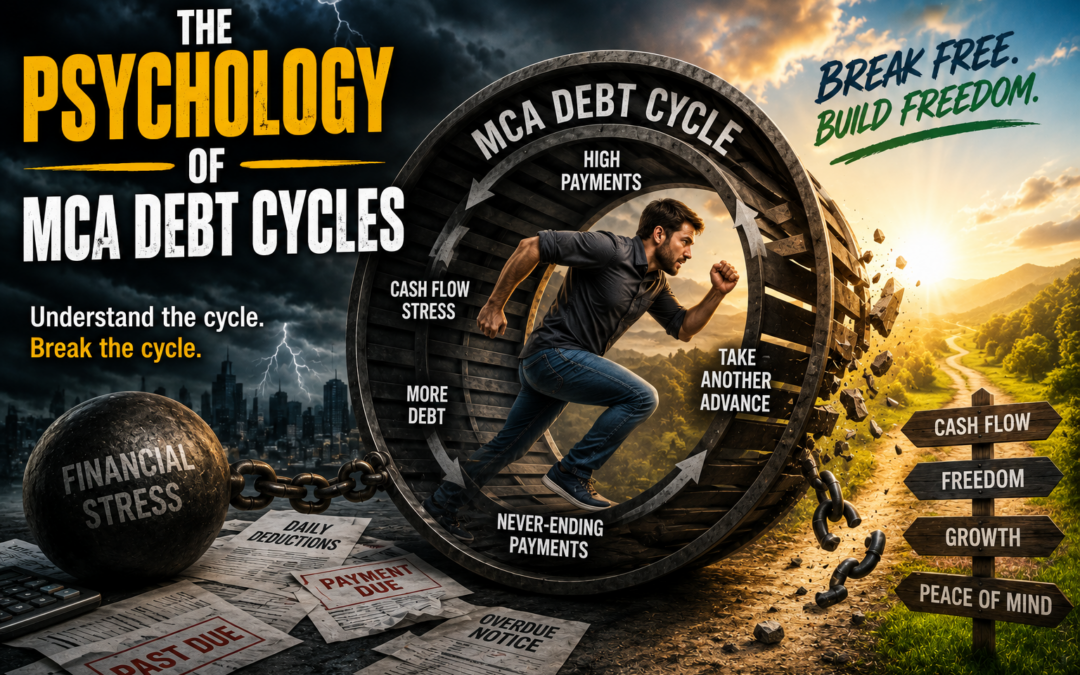
Many business owners enter MCA debt cycles while trying to solve immediate cash flow problems. A merchant cash advance may appear to offer quick relief during a difficult moment, but repeated advances and ongoing payments can create a pattern that becomes increasingly challenging to manage.
The psychology behind MCA debt cycles is about more than numbers. Financial pressure, urgent decisions, and the need to keep a business moving forward can influence choices that may provide short-term solutions but create long-term stress.
Understanding why these cycles happen is the first step toward breaking them. By recognizing the emotional and financial patterns behind MCA dependency, business owners can explore options to reduce payment pressure, rebuild cash flow, and regain control of their company’s future.
What Are MCA Debt Cycles?
MCA debt cycles occur when a business repeatedly relies on merchant cash advances to manage ongoing financial pressure. Instead of solving the original cash flow challenge, each new advance may create additional payment obligations, making it harder for the business to recover.
Unlike traditional loans with fixed monthly payments, many MCAs are repaid through daily or weekly withdrawals structured around the agreement terms. When those payments begin to consume working capital, business owners may look for another advance to replace the cash leaving the company.
Over time, this pattern can create a cycle in which revenue is directed toward managing payments rather than supporting operations, growth, payroll, inventory, and other business needs.
How Merchant Cash Advances Can Create Repeated Borrowing Patterns
A merchant cash advance is often used because a business needs fast access to funding. The initial decision may make sense during a temporary challenge, such as covering expenses, handling a slow season, or managing unexpected costs.
The problem begins when the repayment structure creates ongoing cash flow pressure. As frequent withdrawals reduce available funds, the business may experience another shortage before it has fully recovered.
This can lead to a repeated pattern:
- Cash flow becomes tight
- A new MCA provides temporary relief
- Additional payments reduce available revenue
- Another funding gap appears
Without addressing the underlying financial strain, each advance may make it more difficult to escape the cycle.
Why Short-Term Relief Can Lead to Long-Term Financial Pressure
One of the biggest challenges with MCA debt cycles is that immediate relief can hide future repayment problems.
Receiving new funding can temporarily remove stress because bills are paid, payroll is covered, and operations continue. However, the business may now have higher repayment obligations that affect future cash flow.
What feels like a solution today can become another source of pressure later if the payments are not sustainable.
Over time, businesses may find themselves focused on managing MCA payments instead of making decisions that support long-term stability and growth.
The Difference Between a Cash Flow Problem and a Debt Cycle
A temporary cash flow problem happens when a business experiences a short-term challenge but has a realistic path to recovery. Examples may include delayed customer payments, seasonal slowdowns, or unexpected expenses.
An MCA debt cycle is different because the solution used to fix the problem begins creating additional financial pressure.
Signs a business may have moved from a cash flow issue into a debt cycle include:
- Using new funding to pay existing MCA obligations
- Taking multiple advances within a short period of time
- Struggling to operate after daily or weekly payments
- Depending on future advances to maintain normal expenses
Once a business understands the cycle, it can begin exploring options focused on creating long-term cash flow stability rather than continuing short-term solutions.
Why Business Owners Enter MCA Debt Cycles
Many business owners enter MCA debt cycles while navigating urgent financial pressures that affect daily operations. Running a company requires constant decisions, and unexpected financial pressure can create situations where fast funding seems the best option.
The decision to accept a merchant cash advance is often driven by the need to protect the business, employees, customers, and daily operations. However, when short-term solutions are used repeatedly, they can create financial patterns that become harder to manage over time.
Understanding the psychology behind these decisions helps business owners recognize the cycle and begin moving toward a more sustainable recovery strategy.
The Pressure to Solve Immediate Business Problems
When a business faces a cash shortage, waiting is rarely an option. Payroll deadlines, vendor payments, inventory needs, equipment repairs, and operating expenses can create urgent situations that require quick decisions.
During these moments, business owners naturally focus on solving the problem directly in front of them. Immediate relief becomes the priority because keeping the business operating feels more important than evaluating the long-term impact.
This urgency can make fast funding options appealing. However, if the repayment structure reduces future cash flow, the business may face similar pressure again.
Optimism That Future Revenue Will Fix the Situation
Entrepreneurs are often optimistic by nature. Business owners believe in their company, their customers, and their ability to increase revenue.
This confidence is one of the qualities that helps people build successful companies. However, it can also lead owners to believe that future sales, new contracts, or upcoming busy seasons will quickly resolve financial challenges.
When expected growth does not materialize quickly enough, MCA payments may continue reducing available cash before the business has time to recover.
A plan built solely on future revenue can become stressful if there is limited flexibility for unexpected changes.
The Stress of Making Decisions Under Financial Pressure
Financial stress can affect how decisions are made. When a business owner is dealing with payment deadlines, collection pressure, or limited cash flow, the focus often shifts to solving the immediate problem.
This short-term decision-making is common during high-pressure situations. The goal becomes getting through the current challenge, even if the solution may create additional obstacles later.
Breaking MCA debt cycles often starts with creating space to evaluate options clearly. By reviewing obligations, understanding cash flow, and developing a realistic strategy, business owners can move from reacting to financial pressure toward rebuilding control.
The Emotional Impact of MCA Debt Cycles

The financial challenges created by MCA debt cycles are often easy to measure. Business owners can see payment amounts, account balances, and shifts in cash flow. However, the emotional impact behind these challenges can be much harder to recognize.
Constantly trying to balance MCA payments with normal business expenses can create ongoing stress. Instead of focusing on customers, employees, and future growth, owners may find themselves spending more time worrying about the next withdrawal.
Understanding this emotional pressure is important because financial stress can influence planning, problem-solving, and the ability to make confident business choices.
Constant Stress From Daily or Weekly Payments
Daily or weekly MCA payments can create a constant reminder of financial obligations. Even when revenue is coming in, frequent withdrawals may make it difficult to rebuild working capital.
Many business owners experiencing MCA debt cycles feel like they are always trying to catch up. The pressure of monitoring bank balances, covering expenses, and preparing for upcoming payments can become overwhelming.
Over time, this repeated stress can shift attention away from long-term business goals and toward short-term survival.
Feeling Like Revenue Disappears Before It Arrives
One of the most frustrating parts of an MCA debt cycle is watching income leave almost as quickly as it enters the business.
A successful sales day, a new customer, or an increase in revenue should create momentum. However, when a large portion of incoming cash is directed toward MCA payments, progress can feel limited.
This experience can create a cycle in which the business appears busy but still struggles to build financial stability.
Breaking this pattern often requires looking beyond revenue alone and reviewing how much cash remains available after meeting payment obligations.
The Difficulty of Seeing a Clear Way Forward
When financial pressure continues for an extended period, finding the next step can become difficult. Business owners may feel restricted by existing obligations and uncertain about which options can help them move forward.
This uncertainty is one reason MCA debt cycles continue. Without a clear strategy, many businesses continue using the same solutions even when those solutions no longer support recovery.
Creating a path forward starts with understanding the complete situation. Reviewing current MCA agreements, cash flow, and available options can help business owners replace uncertainty with a plan centered on creating long-term financial stability.
Why MCA Debt Cycles Become Hard to Break
MCA debt cycles become difficult to break because each financial challenge can lead to another short-term solution. What begins as a temporary strategy to improve cash flow may gradually develop into a cycle of using new funding to cover existing obligations.
As payment pressure grows, business owners often have less time and flexibility to evaluate long-term strategies. The immediate need to keep operations moving can make it challenging to step away from the cycle and review other possible solutions.
Breaking the pattern usually requires shifting from reacting to financial pressure toward creating a structured recovery plan.
Using New Advances to Cover Existing Payments
One of the most common signs of an MCA debt cycle is using another advance to manage payments of a previous one.
A new merchant cash advance may temporarily improve available cash, but it can also add another repayment obligation. When multiple payments begin affecting revenue at the same time, the business may experience even greater financial strain.
Over time, this cycle can create a situation in which funding is no longer being used for growth opportunities. Instead, it becomes a way to maintain existing payment demands.
Recognizing this pattern early can help business owners explore alternatives before additional obligations create more pressure.
Focusing on Short-Term Relief Instead of Long-Term Recovery
When financial pressure is high, solving the most urgent problem often becomes the priority. Covering tomorrow’s payment or handling an immediate expense can feel more important than creating a long-term strategy.
While short-term relief can be necessary, repeated temporary solutions may prevent the business from addressing the larger issue.
Long-term recovery starts with understanding the complete financial picture. Reviewing MCA balances, payment schedules, revenue, and expenses can help identify solutions that strengthen financial stability and move the business away from the cycle.
How Collection Pressure Affects Decision-Making
Collection activity can add another layer of stress to an already challenging financial situation. Frequent communication, payment demands, or concerns about potential consequences may cause business owners to feel pressure to act quickly.
When decisions are made under stress, the focus often shifts toward stopping the immediate problem rather than evaluating every available option.
Creating a plan before the collection pressure increases can provide more opportunities to review solutions carefully. With the right strategy, business owners can begin moving away from MCA debt cycles and toward a more stable financial future.
As payment pressure grows, business owners often have less time and flexibility to evaluate long-term strategies. The immediate need to keep operations moving can make it challenging to step away from the cycle and review other possible solutions.
Breaking the pattern usually requires shifting from reacting to financial pressure to creating a structured path toward financial stability.
Using New Advances to Cover Existing Payments
One of the most common signs of an MCA debt cycle is using another advance to manage payments of a previous one.
A new merchant cash advance may temporarily improve available cash, but it can also add another repayment obligation. When multiple payments begin affecting revenue at the same time, the business may experience even greater financial strain.
Over time, this cycle can create a situation in which funding is no longer being used for growth opportunities. Instead, it becomes a way to maintain existing payment demands.
Recognizing this pattern early can help business owners explore alternatives before additional obligations create more pressure.
Focusing on Short-Term Relief Instead of Long-Term Recovery
When financial pressure is high, solving the most urgent problem often becomes the priority. Covering tomorrow’s payment or handling an immediate expense can feel more important than creating a long-term strategy.
While short-term relief can be necessary, repeated temporary solutions may prevent the business from addressing the larger issue.
Long-term recovery starts with understanding the complete financial picture. Reviewing MCA balances, payment schedules, revenue, and expenses can help identify solutions structured to address the underlying financial challenges and support lasting stability.
How Collection Pressure Affects Decision-Making
Collection activity can add another layer of stress to an already challenging financial situation. Frequent communication, payment demands, or concerns about potential consequences may cause business owners to feel pressure to act quickly.
When decisions are made under stress, the focus often shifts toward stopping the immediate problem rather than evaluating every available option.
Creating a plan before the collection pressure increases can provide more opportunities to review solutions carefully. With the right strategy, business owners can begin moving away from MCA debt cycles and toward a more stable financial future.
Warning Signs Your Business Is Stuck in an MCA Debt Cycle
How to Change the Mindset Behind MCA Debt Cycles
Breaking MCA debt cycles often requires more than adjusting payments. It also involves changing the approach used to address financial challenges.
When a business operates under constant pressure, decisions are often centered around immediate problems. Shifting from short-term reactions to a more strategic approach can help business owners identify solutions that support long-term stability.
Changing the mindset behind MCA debt cycles begins with understanding the current situation, evaluating available options, and creating a strategy focused on sustainable financial improvement.
Moving From Emergency Decisions to Strategic Planning
Financial pressure can cause business owners to focus on the most urgent issue in front of them. While solving immediate problems is important, constantly reacting to financial challenges can make it difficult to create lasting progress.
A strategic approach looks beyond the next payment. It focuses on understanding why cash flow problems are occurring and what changes may improve the business’s overall financial position.
Moving away from emergency decision-making allows business owners to evaluate options more clearly and choose solutions that align with their long-term goals.
Understanding Your Complete Financial Picture
One of the most important steps in breaking MCA debt cycles is understanding the full financial picture.
This includes reviewing:
- Current MCA balances and repayment structures
- Daily or weekly payment obligations
- Business revenue and expenses
- Available working capital
- Short-term and long-term financial goals
Having a clear view of these details helps business owners identify what is creating the most pressure and where adjustments may be possible.
Without this understanding, businesses may continue managing symptoms instead of solving the underlying challenges affecting cash flow.
Focusing on Cash Flow Recovery Instead of Temporary Fixes
Long-term improvement begins by focusing on sustainable cash flow recovery rather than temporary solutions.
While additional funding may provide immediate relief, it does not always address the root cause of financial pressure. A stronger approach focuses on creating a healthier balance between incoming revenue, payment obligations, and operational needs.
Breaking MCA debt cycles requires shifting from short-term survival mode toward strategies designed to restore stability. With a clear plan, businesses can begin rebuilding financial control and creating a stronger foundation for future growth.
Options for Breaking Free From MCA Debt Cycles
How MCA Shield Helps Businesses Break MCA Debt Cycles
Breaking MCA debt cycles requires more than temporary solutions. It starts with understanding why the cycle developed and creating a strategy designed around the business’s current financial situation.
MCA Shield helps business owners review their merchant cash advance obligations, identify areas causing financial pressure, and explore solutions built to support cash flow. The goal is to help businesses move away from constant payment stress and toward a more stable financial foundation.
Identifying the Root Cause of Payment Pressure
Every business enters an MCA debt cycle for different reasons. Some businesses struggle due to multiple advances, while others face challenges from payment structures that no longer match their current revenue.
MCA Shield begins by reviewing the full financial picture, including MCA agreements, repayment obligations, cash flow, and business needs. This process helps identify the factors creating the most pressure and provides a clearer understanding of available options.
Rather than focusing on the immediate payment problem, the goal is to customize a strategy that addresses the cause of financial strain.
Creating Customized MCA Relief Strategies
No two businesses experience MCA debt cycles in the same way. A solution that works for one company may not be the right approach for another.
MCA Shield creates customized MCA relief strategies based on each business’s unique circumstances, obligations, and recovery goals. Depending on the situation, this may include exploring options such as MCA debt restructuring, settlement strategies, or payment relief solutions.
The focus is on creating a realistic path that helps reduce financial pressure while supporting long-term business stability.
Helping Business Owners Regain Financial Control
The emotional impact of MCA debt cycles can shift attention toward urgent problems and detract from long-term business planning. Regaining control starts with replacing uncertainty with a clear plan.
By helping businesses understand their options and create a structured recovery strategy, MCA Shield supports owners as they work toward improved cash flow and stronger financial stability.
Breaking the MCA debt cycle is not just about reducing payments. It is about empowering business owners to refocus on operations, growth, and their company’s future.
Frequently Asked Questions About MCA Debt Cycles
Business owners dealing with MCA debt cycles often have questions about why the cycle happens, what options are available, and whether recovery is possible. Understanding the answers can help owners evaluate their situation and take steps toward stronger financial stability.
Why Do Businesses Get Stuck in MCA Debt Cycles?
Businesses often get stuck in MCA debt cycles when short-term funding solutions begin creating long-term cash flow challenges.
A merchant cash advance may provide temporary relief, but frequent payments can reduce available working capital. When cash becomes tight again, some businesses seek another advance to cover expenses, creating a repeated cycle of borrowing and repayment pressure.
Breaking this pattern usually starts with reviewing the underlying financial challenges rather than focusing only on the next payment.
Is Taking Another MCA the Best Way to Fix Cash Flow Problems?
Taking another MCA may provide immediate access to funds, but it does not always address the financial pressure behind the cash flow problem.
Adding another advance can increase payment obligations and create additional pressure on future revenue. Business owners should carefully review their current agreements, cash flow, and available alternatives before accepting additional funding.
A longer-term solution focuses on improving financial stability instead of creating another temporary fix.
Can MCA Payments Be Reduced?
In some situations, businesses may have options to reduce MCA payment pressure through MCA debt restructuring, settlement, or negotiation strategies.
The available options depend on factors such as:
✓ Current MCA agreements
✓ Remaining balances
✓ Business revenue
✓ Existing payment obligations
✓ Overall financial situation
Reviewing these details can help determine which approach may provide a more manageable path forward.
How Do You Break the Cycle of MCA Debt?
Breaking an MCA debt cycle starts with understanding the full financial picture.
Important steps often include:
✓ Reviewing all MCA agreements
✓ Calculating total payment obligations
✓ Understanding cash flow challenges
✓ Avoiding additional advances that increase pressure
✓ Creating a realistic recovery strategy
The goal is to move away from reacting to immediate financial stress and begin making decisions that support long-term business stability.
Can a Business Recover After Multiple MCAs?
Yes, businesses can recover after multiple merchant cash advances, but developing a clear strategy is essential.
Recovery often involves identifying what created the MCA cycle, reviewing available options, and developing a plan to improve cash flow. Even businesses dealing with several advances may have opportunities to restructure obligations and rebuild financial control.
Taking action early can provide more flexibility when exploring possible solutions.
When Should You Get Help With MCA Debt?
Business owners should consider seeking help when MCA payments begin affecting normal operations.
Common signs include:
✓ Struggling to cover payroll or vendor payments
✓ Taking new advances to pay existing obligations
✓ Experiencing constant cash flow shortages
✓ Falling behind on MCA payments
✓ Feeling uncertain about available options
Getting guidance before the situation becomes more difficult can help business owners understand their choices and create a strategy focused on long-term recovery.
Breaking MCA debt cycles is possible when businesses understand the problem, evaluate solutions, and take steps toward a healthier financial future.
Break the MCA Debt Cycle and Rebuild Business Stability
Breaking the MCA debt cycle begins with understanding the patterns that keep financial pressure in place. While merchant cash advances may have started as a short-term solution, ongoing payment challenges can signal that a different approach is needed.
Business owners do not have to stay caught in a cycle of temporary fixes and increasing financial stress. By reviewing current obligations, exploring available options, and creating a realistic strategy, businesses can begin moving toward stronger cash flow and long-term stability.
Why Taking Action Early Creates More Options
The longer MCA debt cycles continue, the more challenging they can become. Multiple payments, reduced working capital, and growing financial pressure may limit the choices available to a business.
Taking action early allows business owners to gain a better understanding of their current position and explore solutions before additional challenges develop.
A proactive approach can help businesses:
✓ Review existing MCA agreements
✓ Understand total repayment obligations
✓ Identify opportunities to reduce payment pressure
✓ Protect daily operations
✓ Create a strategy for financial recovery
The goal is not just getting through the next payment. The goal is to build a stronger foundation that positions the business for future growth.
Schedule a Free Consultation With MCA Shield
If your business feels trapped by MCA debt cycles, MCA Shield can help you understand your options and design a strategy tailored to your unique situation.
Our team reviews your current MCA obligations, evaluates your cash flow challenges, and helps identify possible solutions designed to reduce financial pressure.
You started your business to build something, not to spend every day worrying about MCA payments. Take the first step toward financial control and discover a path focused on improving cash flow, reducing pressure, and rebuilding stability
Schedule a free consultation with MCA Shield today and start breaking the MCA debt cycle.