

MCA Debt Relief Case Study: Merchant cash advance debt can quickly create serious cash flow challenges for retail businesses. Daily or weekly ACH withdrawals often make it difficult to cover inventory purchases, payroll, rent, and other operating expenses. Multiple MCA obligations can quickly compete for limited revenue. As a result, business owners may struggle to keep up with payments.
This MCA Debt Relief Case Study examines how a retail business overcame mounting merchant cash advance debt and regained financial stability. By taking action before the situation became unmanageable, the company was able to reduce payment pressure, improve cash flow, and create a more sustainable path forward.
Schedule Your Free Consultation
The Retail Business Before MCA Debt Problems Began
Company Background
The business featured in this MCA Debt Relief Case Study is a retail company that had built a loyal customer base and maintained steady sales for several years. Like many small businesses, it relied on consistent cash flow to manage inventory purchases, payroll, rent, and other operating expenses. While the company was generating revenue, seasonal fluctuations and rising costs occasionally created short-term financial pressure.
Growth Challenges and Cash Flow Needs
As the business expanded, its need for working capital increased. Additional inventory purchases, staffing costs, and marketing expenses required access to immediate funding. Seeking a fast solution, the business turned to merchant cash advances to bridge temporary cash flow gaps and support growth initiatives. While the funding provided immediate relief, the repayment structure eventually created new financial challenges that became increasingly difficult to manage.
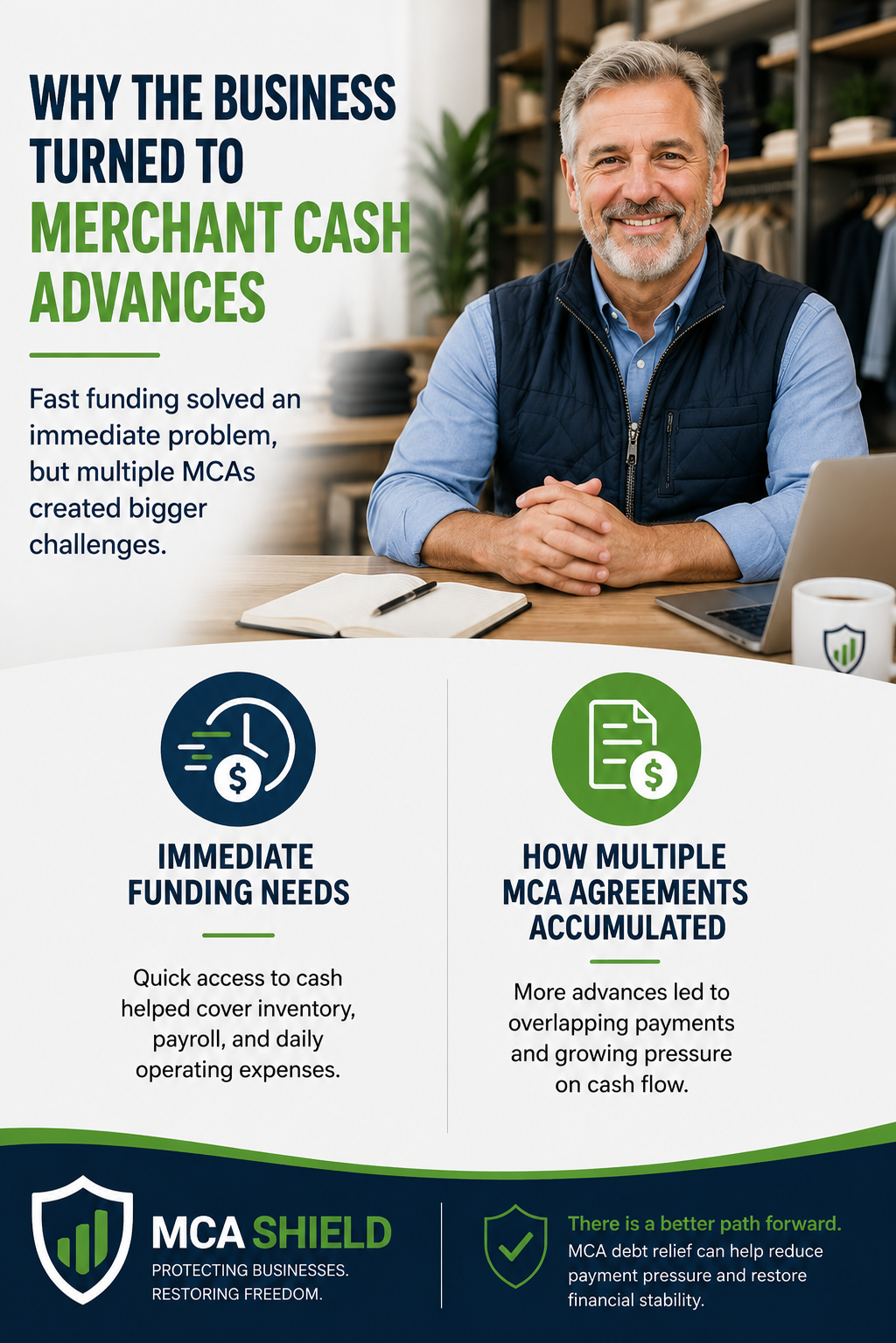
Why the Business Turned to Merchant Cash Advances
Warning Signs That MCA Debt Was Becoming Unmanageable
Daily ACH Withdrawals Straining Cash Flow
As repayment obligations increased, the business began feeling the impact of daily ACH withdrawals. Funds were removed from the bank account each business day. In many cases, the business could not use incoming revenue for inventory, payroll, or other essential expenses. What once seemed like a manageable repayment structure gradually became a constant source of cash flow pressure.
Difficulty Covering Inventory, Payroll, and Operating Expenses
The growing repayment burden made it increasingly difficult to keep up with normal business expenses. Inventory purchases were delayed, payroll became more difficult to manage, and business owners often had to decide which critical expenses could be paid on time. Even during periods of strong sales, the business struggled to maintain adequate working capital because a significant portion of revenue was immediately allocated to MCA payments.
Pressure From Multiple MCA Payments
With several merchant cash advances active at the same time, repayment obligations began stacking on top of one another. Each additional MCA increased the amount being withdrawn from daily revenue, reducing financial flexibility and making it harder to respond to unexpected expenses. The business reached a point where most cash flow decisions revolved around managing MCA payments rather than supporting growth and operations.
This shift served as a clear warning sign that the company needed a long-term solution before the situation became even more difficult to manage.

The Impact of MCA Debt on Business Operations
Cash Flow Volatility
As MCA payments increased, cash flow became increasingly unpredictable. Revenue that would normally be available for inventory purchases, payroll, marketing, and other operating expenses was often redirected toward daily ACH withdrawals. Some weeks were manageable, while others created significant financial pressure. This lack of consistency made budgeting more difficult and limited the business’s ability to plan for future growth.
Vendor Payment Challenges
The growing repayment burden also affected relationships with vendors and suppliers. Inventory purchases were sometimes delayed because available cash had already been allocated to MCA payments. In some cases, the business had to postpone vendor payments or negotiate extended payment terms to maintain adequate inventory levels. These challenges created additional strain and increased the risk of disruptions to normal operations.
Increased Financial Stress for Ownership
Beyond the financial impact, the mounting debt created significant stress for the business owners. Instead of focusing on sales and customer service, ownership spent more time managing cash flow. Keeping up with repayment obligations became a daily priority. The constant pressure of daily withdrawals and multiple MCA payments made it clear that the business needed a long-term solution to regain financial stability.
Exploring Solutions for MCA Debt Relief
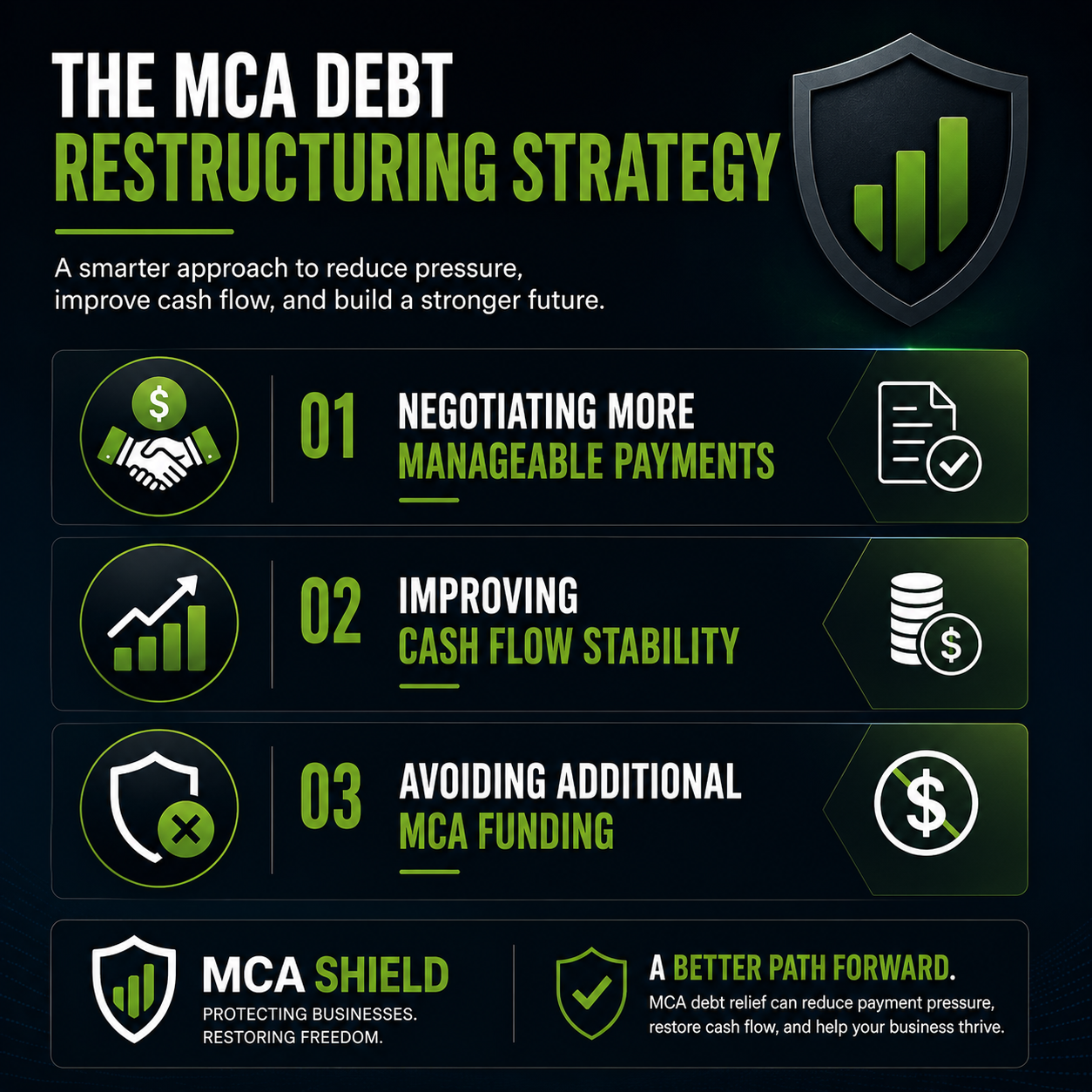
The MCA Debt Restructuring Strategy
Negotiating More Manageable Payments
After evaluating its options, the business implemented an MCA debt restructuring strategy designed to reduce immediate financial pressure. Negotiations focused on creating a repayment structure that better aligned with the company’s revenue and operating needs. By proactively addressing existing obligations, the business was able to move away from the constant strain caused by aggressive repayment schedules and daily withdrawals.
Improving Cash Flow Stability
The restructuring strategy provided much-needed breathing room by allowing the business to retain more working capital. With less revenue being directed toward MCA payments, management gained greater flexibility to cover inventory purchases, payroll obligations, vendor payments, and other essential expenses. Improved cash flow stability also made budgeting and financial planning more predictable, reducing the risk of future disruptions.
Avoiding Additional MCA Funding
A key part of the recovery plan involved avoiding the cycle of taking on new MCA funding to address existing repayment challenges. Instead of adding more debt, the business focused on stabilizing operations and improving its financial position through a structured relief strategy. This approach helped prevent payment obligations from escalating further and allowed the company to concentrate on rebuilding long-term financial health rather than managing short-term funding gaps.
Results After Implementing the Debt Relief Plan
Reduced Payment Pressure
As this MCA Debt Relief Case Study demonstrates, one of the most immediate benefits of the debt relief strategy was a reduction in payment pressure. With a more manageable repayment structure in place, the business no longer faced the same level of strain from aggressive MCA withdrawals. This improvement provided valuable breathing room and allowed the business owner to focus on running the business rather than constantly managing cash flow challenges.
Improved Ability to Manage Inventory and Payroll
As payment pressure decreased, the company regained greater control over its working capital. Inventory purchases could be planned more effectively, helping ensure products remained available for customers. Payroll obligations also became easier to manage, reducing stress for ownership and providing greater confidence that employees and essential business expenses could be paid on time.
Stronger Financial Position for Future Growth
Perhaps most importantly, the business emerged from the restructuring process in a stronger financial position. Improved cash flow stability created new growth opportunities. The business could focus on customer service and long-term planning instead of short-term financial survival. By addressing MCA debt before the situation became severe, the company was able to stabilize operations and establish a healthier foundation for future success.

Key Lessons for Other Retail Businesses
Recognizing Warning Signs Early
One of the most important lessons from this MCA Debt Relief Case Study is the value of taking action early. Warning signs such as declining cash flow, difficulty covering operating expenses, increasing reliance on working capital, and stress caused by daily ACH withdrawals should not be ignored. Addressing these challenges before they escalate often provides businesses with more options and greater flexibility when exploring relief solutions.
Avoiding MCA Loan Stacking
Many businesses fall into the trap of using new merchant cash advances to manage existing MCA payments. While additional funding may provide temporary relief, it often creates larger financial challenges over time. As repayment obligations accumulate, cash flow can become increasingly strained, making it more difficult to support normal business operations. Avoiding MCA loan stacking can help prevent a difficult situation from becoming worse.
Seeking Professional Guidance Before Default
Waiting until payments are missed or collection activity begins can limit available options. Seeking professional guidance early allows business owners to evaluate potential solutions before defaults, legal actions, or severe cash flow disruptions occur. A proactive approach can help identify strategies that reduce payment pressure, improve financial stability, and create a clearer path toward long-term recovery.
Taking Action Before MCA Debt Becomes Unmanageable
Why Early Action Often Creates More Options
This MCA Debt Relief Case Study demonstrates how quickly merchant cash advance obligations can begin affecting a business’s cash flow, operations, and long-term growth plans. While MCA debt challenges can feel overwhelming, businesses often have more options available when they address the situation early. Taking proactive steps before payment pressure escalates may help preserve working capital, improve financial flexibility, and create opportunities for meaningful debt relief.
Schedule a Free Consultation With MCA Shield
If your business is struggling with MCA payments, daily ACH withdrawals, or multiple merchant cash advances, now may be the right time to explore your options. Evaluating solutions early can help stabilize cash flow. It may also help businesses avoid more serious financial challenges.
Schedule a free consultation with MCA Shield today to review your MCA obligations, discuss available relief strategies, and create a plan designed to help your business move forward with confidence.