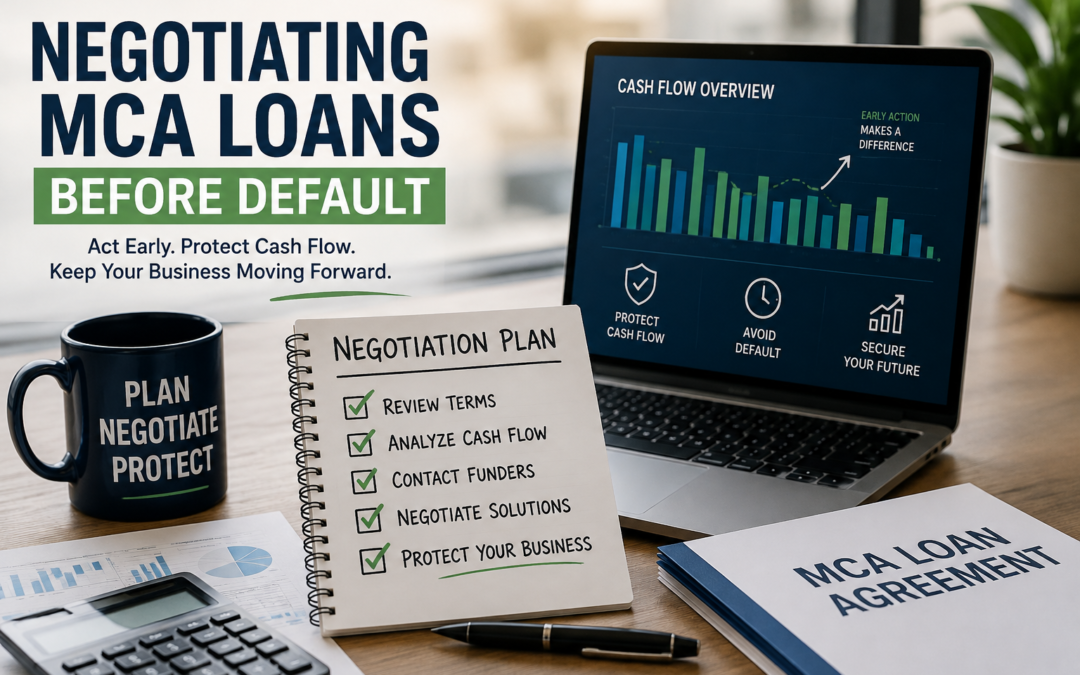
Negotiating MCA loans before default may give business owners an opportunity to address payment pressure before missed payments create additional financial problems. When daily or weekly MCA withdrawals begin squeezing cash flow, acting early can make a significant difference.
Instead of waiting until your business can no longer keep up with payments, you may be able to review your MCA agreements, evaluate your cash flow, and explore negotiation options with funders. The goal is to find a more manageable path while protecting the money needed for payroll, inventory, rent, and other essential expenses.
This guide explains how negotiating MCA loans before default works, when to consider it, what terms may be negotiable, and how MCA Shield can help you explore your options.
Schedule Your Free Consultation
What Does Negotiating MCA Loans Before Default Mean?
Negotiating MCA loans before default means addressing repayment problems with an MCA funder before your business begins to miss required payments. Instead of waiting for cash flow problems to reach a crisis point, you take action while the business is still making its daily or weekly withdrawals.
The goal is to determine whether the existing repayment structure can be changed to create more manageable MCA payments and improve business cash flow. Depending on the funder, agreement, and financial circumstances, negotiations may focus on payment amounts, withdrawal frequency, repayment terms, or another potential resolution.
How MCA Negotiation Works Before a Missed Payment
The process typically begins by reviewing your MCA agreements, current balances, payment schedules, and business finances. This helps identify how much pressure the MCA payments are placing on your available working capital.
From there, communication with the MCA funder may begin before a payment is missed. The business can explain its financial situation and explore whether the funder is willing to modify the current arrangement.
Every MCA situation is different, and a funder is not required to accept new terms. However, starting the conversation early may provide more time to evaluate possible solutions before financial pressure becomes more severe.
Negotiation vs. Waiting Until Default
Waiting until default can change the situation quickly. Missed payments may lead to collection activity, increased pressure from funders, or potential legal action, depending on the agreement and circumstances.
Negotiating earlier takes a more proactive approach. It allows the business to address the problem while it may still have enough cash flow to cover payroll, rent, inventory, utilities, and other essential operating expenses.
If MCA withdrawals are becoming difficult to maintain, you do not necessarily have to wait until you default to explore your options. Acting before payments become unmanageable may give your business more flexibility to pursue a workable resolution.
Why Negotiate MCA Loans Before Default?

Negotiating MCA loans before default can help your business address repayment pressure before missed payments create additional complications. As MCA withdrawals consume a larger share of business revenue, less cash may remain available for essential expenses and day-to-day operations.
Taking action early gives you time to evaluate your MCA obligations, understand your cash flow, and explore possible repayment solutions. While negotiation does not guarantee that a funder will change your terms, starting before default may put your business in a better position to discuss its financial challenges.
Protecting Your Business Cash Flow
Daily or weekly MCA withdrawals can significantly reduce the cash available for normal business expenses. As revenue enters your account, a portion may quickly leave to satisfy MCA payments.
That can make it harder to cover payroll, rent, inventory, utilities, taxes, and other essential operating costs. The pressure intensifies when a business has multiple MCAs withdrawing funds at the same time.
Negotiating before default may help address this imbalance. A more manageable repayment arrangement could allow your business to keep more working capital available for essential expenses while continuing to address its MCA obligations.
The objective is not simply to lower a payment. It is to create enough financial breathing room for the business to continue operating and stabilize its cash flow.
Why Acting Early May Give You More Options
Timing can matter when dealing with MCA debt. If you recognize the warning signs early, you may have more time to review your finances and determine which options make sense before the situation becomes urgent.
Once payments are missed, the business may face collection efforts, account pressure, or potential legal action, depending on the MCA agreement and funder. These developments can make an already difficult cash flow problem more complicated.
Acting early also helps you avoid making rushed decisions, such as taking another merchant cash advance to cover existing MCA payments. That can lead to MCA stacking and even greater repayment pressure.
If MCA payments are becoming difficult but your business has not defaulted, this may be the right time to explore negotiation options rather than waiting for a missed payment to force the issue.
Warning Signs You Should Negotiate Your MCA Early
Businesses often show signs of financial strain before an MCA payment is ever missed. Recognizing those warning signs early can give you time to review your obligations and consider negotiating MCA loans before default.
If MCA payments are consuming too much revenue, interfering with essential expenses, or pushing you toward another advance, your current repayment structure may no longer be sustainable.
Daily or Weekly Withdrawals Are Straining Cash Flow
One of the clearest warning signs is when daily or weekly MCA withdrawals take too much cash from your business account. Your company may still be current on every payment, yet the remaining funds may no longer support normal operations.
You may notice lower account balances between deposits, difficulty maintaining a cash reserve, or constant pressure to move money around before upcoming expenses are due.
When MCA withdrawals consistently reduce your available working capital, it may be time to explore negotiation options before a missed payment occurs.
Operating Expenses Are Becoming Harder to Cover
MCA payments should not leave your business struggling to meet basic operating costs. If you are finding it harder to pay payroll, rent, inventory, utilities, taxes, insurance, or vendors, that may indicate your repayment burden has become too aggressive.
You may also start postponing purchases, delaying vendor payments, reducing inventory, or using funds reserved for other obligations.
These warning signs suggest that MCA payments are beginning to interfere with the financial stability and day-to-day business operations. Addressing the problem early may help you protect the cash needed to keep the company running.
You Are Considering Another MCA to Make Payments
If you are thinking about taking another merchant cash advance to keep existing MCA payments current, that is a significant warning sign.
A new MCA may provide temporary cash, but it also brings another repayment obligation. This can lead to MCA stacking, where several daily or weekly withdrawals compete for the same business revenue.
As the number of withdrawals grows, less cash remains available for essential expenses and future operating needs.
Before adding another advance, consider whether negotiating your existing MCA obligations may provide a more sustainable option. Addressing the current repayment pressure before taking on additional debt can help prevent a difficult cash flow problem from becoming even more serious.
How the MCA Negotiation Process Works Before Default
The MCA negotiation process before default begins with understanding your current obligations and determining how much repayment pressure your business can realistically handle. Taking action before a missed payment gives you time to review the situation and develop a strategy instead of reacting to a financial emergency.
The process generally involves three important steps: reviewing your MCA agreements, evaluating your business finances, and communicating with funders about potential solutions. While no negotiation outcome is guaranteed, being prepared can help you pursue terms that better reflect your current financial position.
Review Your MCA Agreements and Current Payments
Start by gathering and reviewing each merchant cash advance agreement. Identify the current balance, daily or weekly payment, withdrawal method, and other important repayment terms.
If you have multiple MCAs, calculate how much money they collectively withdraw from your business each week or month. This can reveal the true impact of MCA payments on your working capital.
A thorough review also helps you understand which obligations are creating the most pressure and provides the information needed to develop a negotiation strategy.
Evaluate Your Business Finances and Cash Flow
Next, determine how much your business can realistically afford to pay while continuing normal operations. Review recent revenue, bank statements, and essential expenses to understand where your money is going.
Compare your MCA withdrawals with costs such as payroll, rent, inventory, utilities, taxes, insurance, and vendor payments. If MCA payments consistently leave too little cash for these expenses, the existing repayment structure may no longer be sustainable.
This analysis helps establish a realistic payment range based on your actual cash flow, rather than agreeing to terms that could create the same financial pressure again.
Negotiate With MCA Funders for a Workable Resolution
With a clear understanding of your agreements and finances, negotiations can begin with the MCA funder. The objective is to explain the financial strain and explore whether changes could make the obligation more manageable.
Depending on the funder and circumstances, negotiations may address payment amounts, withdrawal frequency, repayment timing, or another modified arrangement. Funders are not required to approve changes, so the available options will vary from case to case.
Most importantly, any proposed arrangement should be something your business can realistically maintain. A workable MCA resolution should address repayment obligations without leaving your business unable to cover essential operating expenses.
What MCA Loan Terms May Be Negotiated Before Default?
When a business begins negotiating MCA loans before default, the discussion may focus on changing parts of the current repayment arrangement that are putting pressure on cash flow. The exact terms available for negotiation depend on the MCA agreement, the funder, and the financial condition of the business.
No funder is required to approve modified terms. However, negotiations may address payment amounts, repayment timing, or the overall structure of the MCA obligation when the existing arrangement has become difficult to maintain.
Daily or Weekly Payment Amounts
One of the most important areas of negotiation is the amount withdrawn from the business each day or week. If current payments are consuming too much revenue, a lower withdrawal may help the business retain more cash for normal operations.
Reducing the payment amount can potentially free up working capital for payroll, rent, inventory, utilities, taxes, and other essential expenses. The goal is to create a payment level the business can realistically maintain.
Any proposed payment amount should be based on actual revenue and expenses. A lower payment only helps if it provides meaningful cash flow relief without resulting in an unsustainable repayment plan.
Repayment Structure and Timing
Negotiations may also involve the frequency or timing of MCA withdrawals. For some businesses, changing how often payments are taken can make cash flow easier to manage.
For example, a business with uneven revenue may struggle with frequent withdrawals even when overall monthly income remains steady. A different repayment structure may better align MCA payments with the way the business actually earns and receives revenue.
The objective is to create a schedule that gives the business more predictable control over its available cash while continuing to address the obligation.
Overall MCA Obligations
In some situations, negotiations may extend beyond individual payment amounts and focus on the overall MCA obligation. This could include discussions about the remaining balance, repayment terms, or another potential resolution.
The available options will depend heavily on the funder and the circumstances surrounding the account. Businesses with multiple MCAs may also need to evaluate their obligations together rather than negotiating each one in isolation.
A coordinated approach can help determine how much the business can reasonably devote to MCA payments while still covering essential expenses. Ultimately, the goal of negotiating before default is to create a more manageable path forward without waiting for the business to reach a financial breaking point.
Can You Negotiate Multiple MCA Loans Before Default?
Yes, it may be possible to negotiate multiple MCA loans before default. When several merchant cash advances are withdrawing money from the same business account, the combined payment burden can place significant pressure on working capital.
Instead of looking at each MCA separately, it can be more effective to review the obligations together. This provides a clearer picture of how much total revenue is going toward MCA payments and what the business can realistically afford while continuing normal operations.
Coordinating Negotiations With Multiple MCA Funders
When a business has more than one MCA, each funder may have different balances, payment schedules, and agreement terms. Coordinating negotiations can help organize these obligations into a more manageable strategy.
The process begins by reviewing each MCA and calculating the total amount being withdrawn daily or weekly. From there, negotiations can focus on whether individual funders are willing to adjust payment amounts, withdrawal schedules, or other repayment terms.
A coordinated strategy can also help prevent one revised agreement from creating problems with another. The goal is to pursue arrangements that work together and support the overall financial stability of the business.
Addressing MCA Stacking Before Cash Flow Gets Worse
MCA stacking occurs when a business carries multiple merchant cash advances simultaneously. Each additional advance brings another withdrawal, which can quickly reduce the cash available for payroll, rent, inventory, and other operating expenses.
If your business is already managing several MCAs, waiting until payments are missed can make the situation more difficult. Addressing stacked MCA debt before default may give you more time to evaluate your options and reduce repayment pressure.
It may also help you avoid taking another advance to keep existing MCAs current. Instead of adding another payment to an already strained cash flow, negotiating existing MCA obligations may provide a more sustainable path forward.
Common Mistakes to Avoid When Negotiating MCA Loans
When negotiating MCA loans before default, certain mistakes can make an already difficult financial situation harder to manage. Acting without a clear understanding of your agreements, cash flow, and realistic payment capacity may lead to decisions that provide only temporary relief.
Avoiding these common mistakes can help your business pursue a more sustainable MCA negotiation strategy and protect the cash needed for daily operations.
Waiting Until Your Business Is Already in Default
One of the biggest mistakes is waiting until your business has already missed payments before exploring negotiation options. By that point, financial pressure may be much more severe.
Default can trigger collection activity, increased funder pressure, and possible legal action, depending on the agreement and circumstances. It can also leave your business with less flexibility to evaluate potential solutions.
If MCA withdrawals are already straining cash flow, consider reviewing your options before a missed payment occurs. Early action may give your business more time to develop a workable strategy.
Taking Another MCA to Cover Existing Payments
Using a new merchant cash advance to keep existing MCAs current can provide short-term cash, but it may also deepen the problem. Another advance usually means another daily or weekly withdrawal from the same revenue stream.
This can lead to MCA stacking, where several funders compete for the cash your business needs to operate. As withdrawals increase, covering payroll, rent, inventory, and other essential expenses may become more difficult.
Before taking on additional MCA debt, evaluate whether negotiating your existing obligations offers a more manageable solution.
Agreeing to Terms Your Business Cannot Maintain
A negotiated agreement only works if your business can realistically follow it. Accepting new terms without carefully reviewing your cash flow can leave you facing the same financial pressure again.
Before agreeing to any revised arrangement, compare the proposed payment with your revenue, operating expenses, and available working capital. Make sure the business can continue covering essential costs after the MCA payment is made.
The goal should be a resolution that your business can sustain. Avoid agreeing to terms that look better on paper but still leave too little cash for normal operations.
Frequently Asked Questions About Negotiating MCA Loans Before Default
Business owners often have questions about when to begin negotiations, what funders may consider, and whether they need to wait until payments are missed. The following answers explain some of the most common concerns about negotiating MCA loans before default.
❓ Can You Negotiate an MCA Before Missing Payments?
Yes. You do not necessarily need to miss a payment before contacting an MCA funder about financial difficulty. If daily or weekly withdrawals are already putting pressure on your cash flow, you may be able to start discussions while the account remains current.
Beginning early gives you time to review your agreement, document your financial situation, and determine what your business can realistically afford. It may also help you avoid reaching the point where MCA payments interfere with payroll, rent, inventory, taxes, or other essential expenses.
Key takeaway: Addressing repayment problems before default may provide more flexibility than waiting until your business can no longer make the required payments.
💵 Will MCA Funders Reduce Daily or Weekly Payments?
Some MCA funders may consider reducing daily or weekly payments when a business can demonstrate genuine financial hardship. Whether a modification is available depends on the funder, MCA agreement, payment history, remaining obligation, and current financial condition of the business.
A reduced payment could help preserve more working capital for normal operations. In other cases, a funder may consider changes to withdrawal frequency, repayment timing, or another modified arrangement.
There is no guarantee that a funder will agree to lower payments. Any proposed modification should also be reviewed carefully to determine whether it provides meaningful cash flow relief and terms the business can maintain.
⏰ Is It Better to Negotiate an MCA Before or After Default?
When possible, exploring negotiation options before default can provide important advantages. Your business may have more time to review its finances, communicate with funders, and consider potential solutions without the immediate pressure created by missed payments.
After default, the situation can become more complicated. Depending on the agreement and circumstances, a business could face collection activity, increased funder pressure, or potential legal action.
Every MCA situation is different, so there is no single approach that works for every business. However, if payments are already becoming difficult, acting before default may help you address the underlying cash flow problem while more options remain available.
Take Action Before MCA Payments Become Unmanageable
When MCA payments begin putting consistent pressure on your cash flow, waiting too long can make the problem harder to resolve. Taking action before default may give your business more time to evaluate its obligations, understand its finances, and explore possible negotiation strategies.
The sooner you recognize that current payments are no longer sustainable, the sooner you can focus on protecting working capital and preserving funds for essential business expenses.
Why Early MCA Negotiation Can Matter
Early negotiation can allow your business to address repayment pressure before missed payments trigger additional complications. Instead of reacting to a crisis, you can take a more organized approach based on your current revenue, expenses, and MCA obligations.
Acting early may also help you avoid decisions that can increase financial strain, such as taking another MCA to cover existing payments or delaying essential operating expenses.
Most importantly, early action gives you time to determine what your business can realistically afford. A negotiation strategy should support both your MCA obligations and the cash flow needed to keep your business operating.
Schedule a Free Consultation With MCA Shield
If daily or weekly MCA withdrawals are becoming difficult to maintain, you do not have to wait until your business defaults to explore your options.
MCA Shield can review your MCA agreements, evaluate your current payment burden, and help you understand potential negotiation strategies based on your financial situation. If you have one MCA or several, addressing the problem early may help you pursue a more manageable path forward.
Schedule a free consultation with MCA Shield today to learn more about negotiating MCA loans before default and take the first step toward protecting your business cash flow.