
When merchant cash advance payments begin draining your working capital, choosing the right relief strategy becomes critical. Understanding MCA restructuring vs. settlement can help you determine which option better fits your business’s finances.
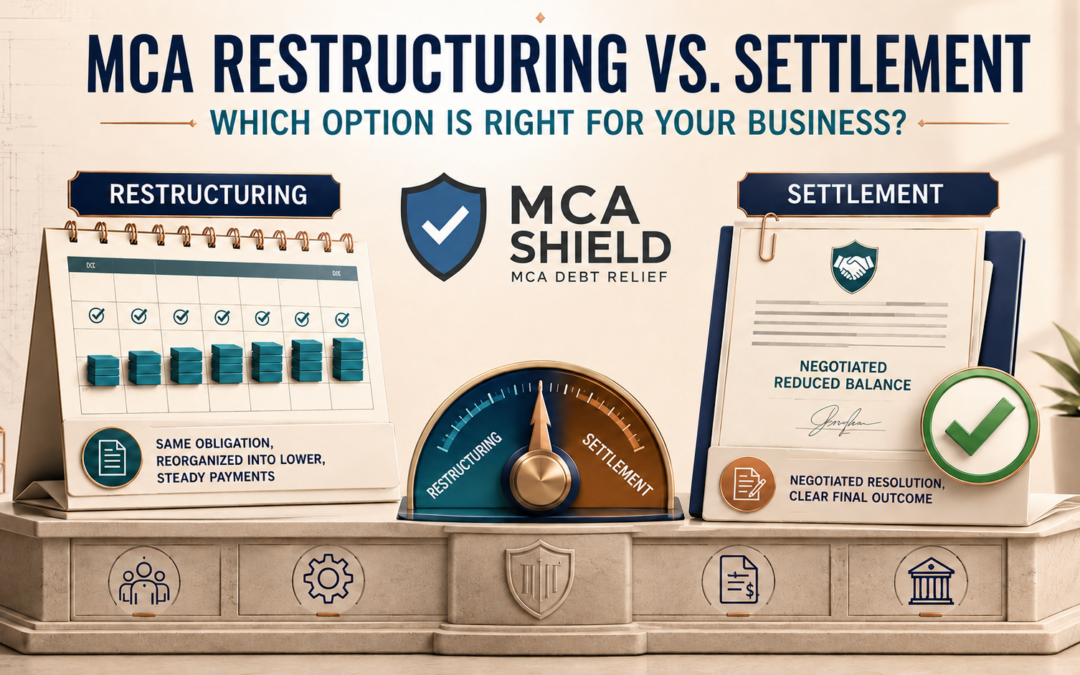
MCA restructuring focuses on adjusting payment terms to create a more manageable payment structure. MCA settlement, however, seeks to resolve an obligation through an agreed-upon reduced payoff or structured settlement arrangement.
The right option depends on your remaining MCA balances, available cash, revenue, payment history, and ability to continue operating. This guide explains the differences so you can make a more informed decision before payment pressure limits your options.
Schedule Your Free Consultation
MCA Restructuring vs. Settlement: Understanding the Core Difference
The main difference between MCA restructuring vs. settlement involves what happens to the existing obligation. Restructuring changes how the business repays the balance. Settlement aims to resolve the obligation through a negotiated payoff agreement.
Both options may reduce immediate payment pressure. However, they use different methods and may require different levels of available cash. Therefore, the right strategy should reflect the business’s revenue, operating expenses, working capital, remaining MCA balance, and ability to make future payments.
How MCA Restructuring Changes the Payment Structure
MCA restructuring changes the payment arrangement without necessarily reducing the full amount owed. The goal is to replace an unaffordable payment schedule with terms that better match the business’s current cash flow.
Depending on the funder and agreement, restructuring may involve:
- Reducing daily or weekly withdrawals
- Changing the payment frequency
- Extending the repayment period
- Temporarily modifying payment requirements
- Creating a more predictable payment schedule
For example, a business may generate enough revenue to continue making payments but struggle with large daily ACH withdrawals. A restructured arrangement could lower those withdrawals and give the business more cash for payroll, inventory, taxes, rent, and essential operating expenses.
However, a lower payment does not automatically make an agreement affordable. Extending the payment schedule could keep the obligation active longer. The business should review the total repayment amount, payment duration, fees, and effective date before accepting new terms.
How MCA Settlement Resolves the Remaining Balance
MCA settlement focuses on resolving the remaining balance through a negotiated agreement. Instead of continuing under the original payment structure, the business and funder agree on a specific amount and schedule that will satisfy the obligation.
A settlement may require:
- One lump-sum payment
- Several scheduled payments
- A reduced negotiated payoff
- Written confirmation that the agreement resolves the balance
Settlement may be worth considering when the business can no longer support payments under either the original agreement or a realistic restructuring plan. However, the company usually needs access to enough cash to fund the negotiated settlement.
Before sending payment, the business should obtain a clear written settlement agreement. That document should identify the agreed amount, payment deadlines, and what happens after the final payment. It should also confirm whether the funder will treat the obligation as resolved.
Ultimately, restructuring seeks to make ongoing payments more manageable, while settlement seeks to bring the obligation to a negotiated conclusion. Understanding that distinction provides the foundation for choosing the strategy that best protects the business.
When MCA Restructuring May Be the Better Option

MCA restructuring may be the better option when a business still generates enough revenue to make payments but cannot maintain the current withdrawal amount. In this situation, the business may not need to resolve the obligation through a settlement. Instead, it may need a payment structure that fits its present cash flow.
When comparing MCA restructuring vs. settlement, business owners should determine whether reduced payments allow the business to cover essential expenses. A successful restructuring should provide meaningful relief without creating another payment schedule that the business cannot sustain.
The Business Can Continue Making Reduced Payments
Restructuring may make sense when the business can make consistent, reduced payments while continuing to cover payroll and operating costs. The goal is not simply to lower the withdrawal. The new payment must fit within a realistic operating budget.
Before agreeing to restructured payments, the business should calculate how much cash remains after paying for:
- Payroll and employee expenses
- Rent, utilities, and insurance
- Inventory, supplies, and equipment
- Taxes and other required obligations
- Essential working capital
Revenue can rise and fall from week to week. Therefore, the payment should remain affordable during slower periods—not only during the business’s strongest sales weeks.
A payment that consumes nearly all available cash can quickly recreate the original problem. In contrast, an affordable structure gives the company room to meet its obligations and continue operating.
More Time Could Restore Stable Cash Flow
Some businesses face temporary cash-flow problems caused by seasonal declines, delayed customer payments, unexpected repairs, or a short-term drop in sales. If the business expects revenue to recover, more time and smaller withdrawals may provide the breathing room it needs.
For example, a seasonal company may struggle during its slower months but expect stronger revenue during its peak season. A restructuring arrangement could reduce immediate payment pressure while the company works toward more stable cash flow.
However, projected revenue should remain realistic. The business should base its decision on documented sales patterns, current contracts, accounts receivable, and dependable income rather than uncertain growth.
Restructuring works best when the underlying business remains viable and additional time can allow a genuine opportunity for recovery. If even substantially reduced payments would remain unaffordable, settlement or another relief strategy may deserve closer consideration.
When an MCA Settlement May Be More Appropriate
MCA settlement may be more appropriate when the business cannot realistically repay the current balance with an affordable payment structure. Even a lower daily or weekly payment may not provide enough relief if revenue has fallen significantly or operating expenses continue to exceed available cash.
When comparing MCA restructuring vs. settlement, the business must consider more than the immediate payment amount. It should also review the remaining balance, expected revenue, essential expenses, and total time required to complete the payments.
Settlement may offer a path toward resolving the obligation. However, the funder must agree to the settlement terms, and the business must have a realistic way to complete the agreed payments.
The Current Balance Is No Longer Realistically Affordable
Restructuring works best when the business can continue making reduced payments. However, it may not solve the problem when the remaining MCA balance exceeds what the business can reasonably repay.
Several warning signs may indicate that settlement deserves consideration:
- Reduced payments would still disrupt payroll
- Essential bills regularly go unpaid
- Available working capital continues to shrink
- Revenue cannot support the repayment period
- The business depends on new debt to cover existing payments
- Multiple MCA obligations compete for the same limited cash
Extending the payment period does not always create meaningful relief. If the business remains unable to cover its expenses, a longer repayment schedule may only continue the financial pressure.
A thorough cash-flow review can show whether the company has enough revenue to support restructuring. If the numbers do not support continued repayment, a negotiated settlement may provide a more realistic resolution.
Funds May Be Available for a Lump-Sum Resolution
A funder may consider a settlement when the business can provide a lump-sum payment or a short series of scheduled payments. These funds might come from cash reserves, collected accounts receivable, an asset sale, or another legitimate source that does not create a new unaffordable obligation.
Lump-sum funds can sometimes support a stronger settlement proposal because they allow the funder to receive payment within a shorter period. However, the business should not use money needed for payroll, taxes, rent, inventory, or essential operations.
Before submitting payment, the business should obtain a written agreement that clearly explains:
- The total settlement amount
- The payment deadline or schedule
- How the funder will apply each payment
- What happens after the final payment
- Whether the agreement fully resolves the obligation
Settlement terms and outcomes vary. Therefore, the business should confirm every condition before sending funds. The right arrangement should resolve the MCA obligation without placing the company’s immediate operations at greater risk.
Comparing the Financial Impact of Restructuring and Settlement
The financial difference between MCA restructuring vs. settlement extends beyond the amount of immediate payment relief. A business must also consider the total repayment cost, length of the payment period, available settlement funds, and effect on working capital.
Restructuring may reduce short-term payment pressure but keep the obligation active longer. Settlement may resolve the balance sooner, but it often requires more cash within a shorter period. Therefore, the business should compare both options against a detailed cash-flow budget.
Monthly Payment Relief and Total Repayment Cost
MCA agreements often require daily or weekly withdrawals. However, converting those payments into a monthly amount makes it easier to measure their effect on the business.
For example, a smaller daily withdrawal may appear affordable when viewed alone. Yet the total amount deducted throughout the month could still interfere with payroll, rent, inventory, taxes, or other essential expenses.
When reviewing a restructuring proposal, the business should calculate:
- The new daily or weekly payment
- The total projected monthly payment
- The length of the revised payment period
- The total amount paid under the new structure
- Any additional fees or charges
- The cash remaining for essential operations
A longer repayment period can create lower scheduled payments. However, it may also increase the timeframe the business remains responsible for the obligation. The company should confirm that the reduced payment provides meaningful relief and that the total repayment cost remains reasonable.
Settlement Funding and Cash-Flow Requirements
Settlement uses a different financial structure. Instead of making payments over an extended period, the business may need to provide a lump sum or several larger payments within a shorter timeframe.
Before accepting a settlement, the company should identify exactly where the funds will come from. It should also determine whether using that money would create another cash-flow shortage.
The business should avoid draining funds needed for:
- Employee payroll
- Rent and utilities
- Taxes and insurance
- Inventory and supplies
- Essential operating expenses
- Emergency working capital
A settlement amount may be lower than the remaining MCA balance. However, a reduced amount does not automatically make the settlement affordable. The timing of payments must also take into account the company’s available cash.
Ultimately, restructuring spreads payments over time, while settlement often requires more funds sooner. The better option should reduce MCA pressure while allowing the business to maintain enough cash for daily operations.
How Default Status Can Affect Your Available MCA Relief Options
A business’s payment status can influence the relief options a funder may consider. Seeking help before default often provides more time to review the numbers, communicate with funders, and explore affordable payment changes.
However, missing payments does not always eliminate every option. A business may still pursue restructuring or settlement after an MCA default. The available terms will depend on the agreement, payment history, remaining balance, financial condition, and funder’s willingness to negotiate.
Seeking Help Before Missing Payments
Businesses should not wait until they have completely exhausted their working capital. Early action allows the company to evaluate MCA restructuring vs. settlement before missed withdrawals create additional pressure.
Warning signs that may require immediate attention include:
- Difficulty covering payroll after MCA withdrawals
- Late payments to vendors or service providers
- Declining cash reserves
- Repeated overdrafts or returned ACH withdrawals
- Using new financing to cover existing MCA payments
- Choosing between MCA payments and essential expenses
Before default, the business may have more financial records and available cash to support a realistic restructuring proposal. It can show the funder how current withdrawals affect operations and explain what payment amount the company can consistently afford.
Acting early also gives the business time to review every agreement, especially when it has multiple MCAs. A change to one payment could affect the amount available for every other obligation.
Evaluating Options After an MCA Default
An MCA default may occur when the business misses payments, blocks authorized withdrawals, closes or changes a bank account, or violates another requirement in the agreement. Because default provisions vary, the business should review its contract carefully.
After default, the funder may increase collection efforts or pursue remedies allowed under the agreement and applicable law. Therefore, the business should respond promptly and avoid making promises it cannot keep.
A post-default review should examine:
- The current balance and payment history
- The reason payments stopped
- Present and projected business revenue
- Essential operating expenses
- Available funds for reduced payments or settlement
- Notices or legal documents received from the funder
Restructuring may remain possible if the business can support consistent reduced payments. In contrast, settlement may warrant consideration if continued repayment is no longer realistic and funds are available for a negotiated resolution.
Default can make the situation more urgent, but it does not determine the correct strategy on its own. The business should choose an option based on documented cash flow, realistic affordability, and the terms it can complete.
Restructuring or Settling Multiple Merchant Cash Advances
Managing several merchant cash advances requires a coordinated strategy. Each funder has a separate agreement, balance, withdrawal schedule, and payment status. However, every MCA draws money from the same business cash flow.
Restructuring one agreement without reviewing the others may fail to provide meaningful relief. Likewise, settling one balance could use cash needed to maintain payments on another MCA. The business must evaluate every obligation before committing to a new arrangement.
Why Every MCA Must Be Reviewed Together
When a business has multiple MCAs, separate daily or weekly withdrawals can create a combined payment burden that exceeds available revenue. A payment that appears affordable on its own may become unmanageable when added to the company’s other obligations.
A complete review should identify:
- The current balance for each MCA
- Daily or weekly withdrawal amounts
- Payment frequency and remaining duration
- Current, delinquent, or default status
- Contract requirements and default provisions
- The total amount withdrawn each month
- Cash needed for essential business expenses
The business should then compare its combined MCA payments with its dependable revenue. This review reveals how much money remains for payroll, rent, taxes, inventory, utilities, and working capital.
Each proposed payment must fit within one affordable business budget. Otherwise, relief from one funder may shift the financial pressure to another agreement.
Choosing Different Solutions for Different MCA Agreements
A business does not always need to use the same strategy for every MCA. When comparing MCA restructuring vs. settlement, the company may find that different obligations require different solutions.
For example, the business might restructure an MCA with a manageable remaining balance and a funder willing to reduce withdrawals. At the same time, it might pursue settlement for another agreement that the company can no longer realistically repay under an extended payment schedule.
The appropriate strategy may depend on:
- The size of each remaining balance
- Whether the agreement remains current or is in default
- The funder’s willingness to modify payment terms
- The business’s ability to make reduced payments
- Available funds for a negotiated settlement
- How each arrangement affects the other MCAs
The business must also consider timing. Using most available cash to settle one MCA could leave too little for another restructured payment. In contrast, agreeing to several separate restructuring plans could create a combined payment amount that remains unaffordable.
A coordinated approach treats multiple MCAs as one cash-flow problem with several agreements. The goal is to create a strategy that addresses all of the obligations while protecting the cash the business needs to continue operating.
What Risks Should Your Business Consider Before Choosing?
How to Decide Which MCA Solution Fits Your Business Cash Flow
The right MCA solution should fit the business’s actual financial capacity—not an optimistic revenue forecast. Before choosing MCA restructuring vs. settlement, the company should examine how much cash enters the business, where that money goes, and what remains after essential expenses.
This review can show whether the business can support reduced ongoing payments or needs a strategy focused on resolving the remaining balance.
Review Revenue, Essential Expenses, and Working Capital
Start by reviewing several months of bank statements, merchant processing records, profit-and-loss statements, and current accounts receivable. Looking at multiple months can reveal revenue patterns that a single strong or weak month might hide.
The review should calculate:
- Average monthly revenue
- Revenue during slower operating periods
- Payroll and employee-related costs
- Rent, utilities, insurance, and taxes
- Inventory, supplies, and equipment expenses
- Payments for every MCA agreement
- Cash needed for unexpected expenses
- Available working capital
Revenue alone does not determine affordability. A business may generate substantial sales but still have limited cash after paying its operating costs.
The company should also review the timing of deposits and withdrawals. Even when monthly revenue appears sufficient, large daily or weekly MCA payments can create shortages before payroll, rent, or vendor payments become due.
Determine What the Business Can Realistically Afford
After identifying essential expenses, the business can calculate the amount available for MCA relief. A simple starting point is:
Dependable revenue − essential operating expenses − required cash reserve = amount potentially available for MCA payments
The payment amount should remain manageable during slower revenue periods. It should also leave enough working capital for the business to operate without relying on another merchant cash advance.
If the company can make consistent reduced payments, MCA restructuring may provide a workable solution. Restructuring could lower the immediate withdrawal amount and spread payments across a longer period.
However, if reduced payments would still prevent the company from covering essential expenses, MCA settlement may deserve closer consideration. Settlement may be more appropriate when continued repayment is unrealistic and the business has access to funds for a negotiated resolution.
The business should test any proposed arrangement against several cash-flow scenarios. It should ask:
- Can the business make the payment during a slow month?
- Will enough cash remain for payroll and taxes?
- Can the company maintain inventory and essential services?
- Does the plan protect an appropriate working-capital reserve?
- Can the business make every payment without new debt?
The best solution should address the MCA obligation while preserving the company’s ability to operate. A payment agreement only works when the business can realistically complete it.
Take Action Before MCA Payment Pressure Limits Your Options
Waiting until MCA withdrawals consume nearly all available cash can make restructuring or settlement more difficult. Early action gives your business more time to review its obligations, protect essential operations, and evaluate realistic relief strategies.
Warning signs may include difficulty covering payroll, falling behind on taxes, delaying vendor payments, or using new financing to support existing MCA obligations. If these problems continue, your available working capital may decline quickly.
When comparing MCA restructuring vs. settlement, the right solution depends on your revenue, expenses, remaining balances, payment status, and available cash. Restructuring may create a more manageable payment schedule. Settlement may provide a path toward resolving an unaffordable balance. However, every proposed arrangement must fit one sustainable business budget.
MCA Shield can review your current MCA agreements, payment withdrawals, and business cash flow. This review can help identify which strategy may provide meaningful relief without placing greater pressure on daily operations.
Schedule a Free Consultation With MCA Shield before MCA payment pressure further limits your options. The sooner you review the numbers, the sooner you can begin working toward a more manageable financial structure.