
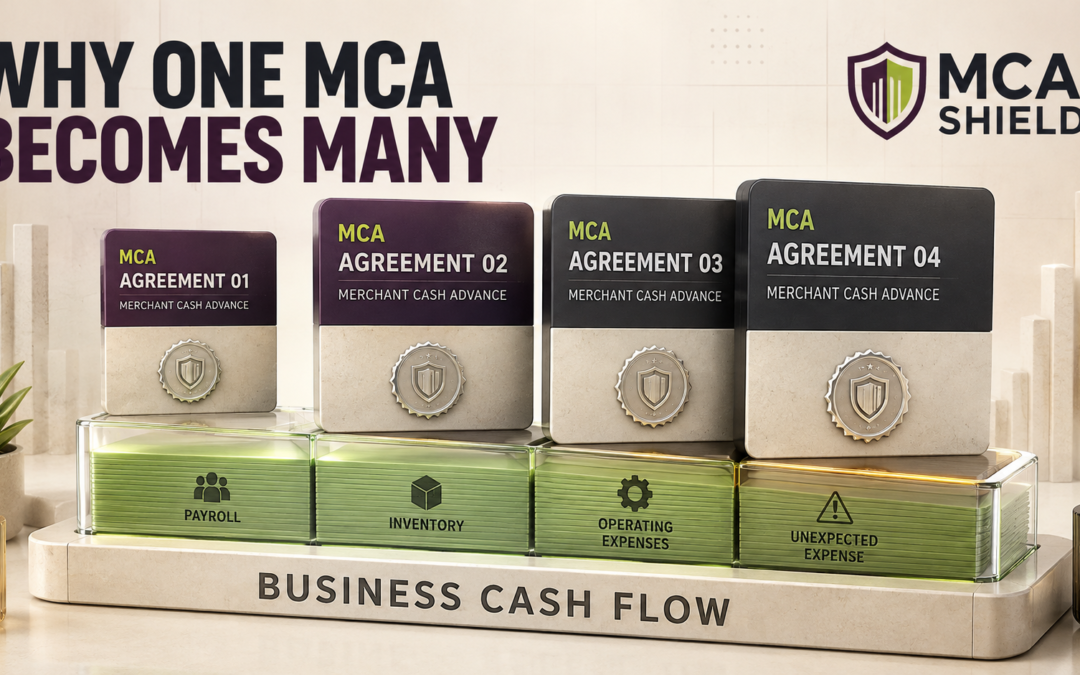
Businesses rarely plan to take on multiple merchant cash advances. In many cases, the first advance covers an urgent need, such as payroll, inventory, equipment repairs, or a temporary revenue shortage.
However, frequent withdrawals can quickly reduce available working capital. When the business still needs money for essential expenses, another MCA may appear to offer fast relief. Instead, the new advance adds another payment and places even more pressure on cash flow.
Understanding why businesses end up with multiple merchant cash advances can help owners recognize the cycle before it becomes unmanageable. It can also reveal when it is time to review every agreement, calculate the total payment burden, and explore options that protect the business.
Schedule Your Free Consultation
What It Means to Have Multiple Merchant Cash Advances
A business has multiple merchant cash advances when two or more active MCA agreements require payments from the same business revenue. The owner may receive each advance at a different time, from a different funder, and under different repayment terms. However, every withdrawal ultimately reduces the cash available to operate the business.
This situation is often called MCA stacking. It may begin when a business takes a second advance before fully satisfying the initial agreement. Additional advances can create third, fourth, or even fifth obligations, each claiming a portion of the company’s incoming revenue.
Each MCA Creates a Separate Payment Obligation
Every merchant cash advance has its own purchased amount, repayment amount, payment schedule, and withdrawal method. One funder may collect a fixed amount each business day, while another may collect weekly or deduct a percentage of receivables.
Although each payment may appear manageable when reviewed separately, the combined MCA payment burden can consume a substantial portion of daily or weekly deposits. A business must continue making these payments while also covering payroll, rent, inventory, taxes, utilities, and other essential operating expenses.
All MCA Payments Draw From the Same Business Cash Flow
Multiple funders do not provide the business with separate sources of operating cash. Their payments come from the same bank account, sales revenue, or receivables that the business relies on to function.
As more MCA withdrawals occur, the company may have less money available between deposits. Even a profitable business can experience serious cash-flow pressure if its required payments leave too little working capital for everyday operations.
Having multiple merchant cash advances does not automatically mean a business cannot recover. However, owners must evaluate the agreements as one combined financial obligation—not as unrelated payments—to understand their true effect on cash flow.
Why the First Merchant Cash Advance Often Seems Manageable
The first merchant cash advance often appears to be a practical solution to an immediate financial need. The business receives funding quickly, the application process may require less documentation than traditional financing, and payments usually begin as automatic withdrawals.
At first, the business may have enough revenue to cover both the MCA payment and its regular operating expenses. However, even a payment that looks affordable on paper can gradually reduce the working capital needed to keep the company running.
Fast Funding Can Make the Initial Payment Look Affordable
MCA providers often emphasize the speed and convenience of obtaining funds. A business may gain access to capital within days and use it to cover payroll, purchase inventory, repair equipment, or handle another urgent expense.
The initial payment can also seem manageable when viewed as a single daily or weekly withdrawal. For example, a smaller daily payment may feel less burdensome than one large monthly payment. Yet those frequent withdrawals add up quickly and reduce the amount of cash available after each deposit.
Business owners may focus on whether the company can make the next payment rather than whether it can comfortably support the entire repayment schedule. If revenue decreases or expenses increase, the same withdrawal that initially seemed reasonable can begin creating serious cash-flow pressure.
Short-Term Cash Needs Can Hide the Long-Term Cost
An urgent need for funding can make immediate access to cash feel more important than the advance’s total financial impact. When payroll is due or critical equipment needs repair, an owner may concentrate on solving today’s problem without fully calculating how the payments will affect the business over the following weeks or months.
The original MCA can also become more difficult to manage when unexpected expenses arise, customer payments arrive late, or seasonal sales decline. Because the withdrawals continue, the business may begin falling short on rent, inventory, taxes, or other essential expenses.
At that point, another advance may appear to replace the working capital lost to the first one. This is one of the most common ways a business moves from a single obligation to multiple merchant cash advances. The first MCA may solve an immediate problem, but the ongoing withdrawals can create the next cash shortage if the business has limited revenue and financial flexibility to support the payments.
How Daily MCA Payments Create New Cash-Flow Shortfalls
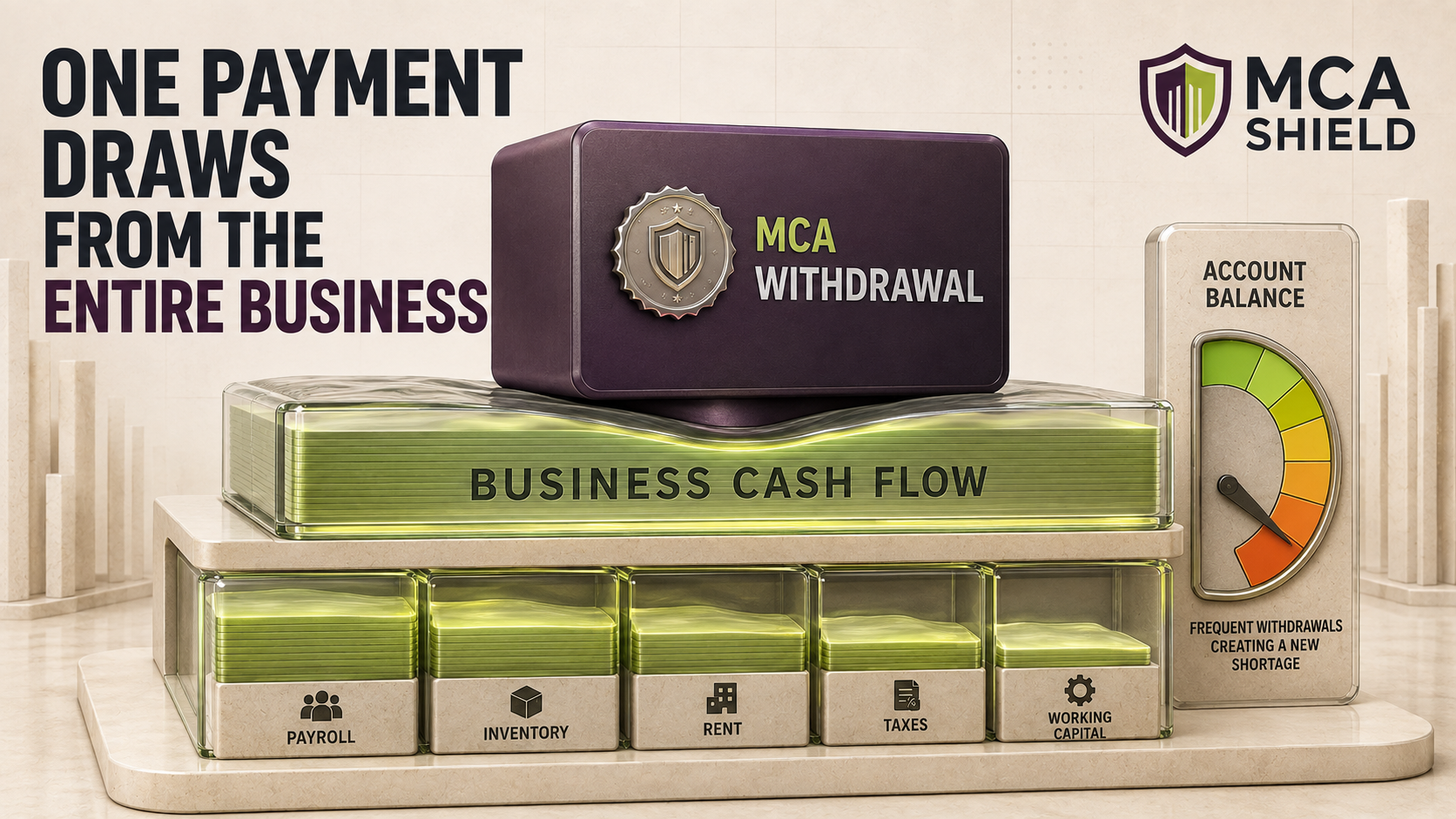
Daily MCA payments can turn a temporary funding need into an ongoing cash-flow problem. Although the business receives a lump sum upfront, repayment begins quickly and continues through frequent withdrawals from future revenue.
The business must make each withdrawal regardless of when its major expenses come due. As a result, even a company with steady sales may struggle to maintain enough available cash between deposits.
Frequent Withdrawals Reduce Available Working Capital
Working capital pays for the everyday costs of running a business. It allows the company to purchase inventory, pay employees, maintain equipment, complete customer orders, and respond to unexpected expenses.
Daily MCA withdrawals reduce that working capital before the owner can decide where the money is needed most. A single withdrawal may not appear significant, but five withdrawals each week can remove a substantial amount of cash from the business account.
For example, a business may generate enough monthly revenue to appear financially stable. However, daily withdrawals can create low account balances throughout the month. This timing difference becomes especially difficult when sales fluctuate or customers pay invoices later than expected.
Once available cash falls below the amount needed for daily operations, the business faces a new shortfall. The owner may then use credit cards, delay important payments, or consider an additional merchant cash advance to fill the gap.
Payroll and Operating Expenses Begin Competing for Cash
MCA payments do not adjust automatically when payroll, rent, taxes, utilities, insurance, or inventory purchases are due. Instead, all these obligations compete for the same limited cash.
The owner may have to choose which expenses to pay first. Covering payroll could leave too little money for inventory. Paying suppliers could make it difficult to cover rent or taxes. Meanwhile, the MCA withdrawals continue reducing the company’s account balance.
This pressure can interrupt normal operations and make future revenue harder to generate. Without enough inventory, materials, staff, or equipment, the business may struggle to serve customers and complete profitable work.
Eventually, the company may take another advance to restore the cash removed by the first one. However, the additional payment can deepen the shortfall. This cycle helps explain why businesses sometimes jump from one obligation to multiple merchant cash advances, even when the original advance seemed manageable.
Why Businesses Take a Second Merchant Cash Advance
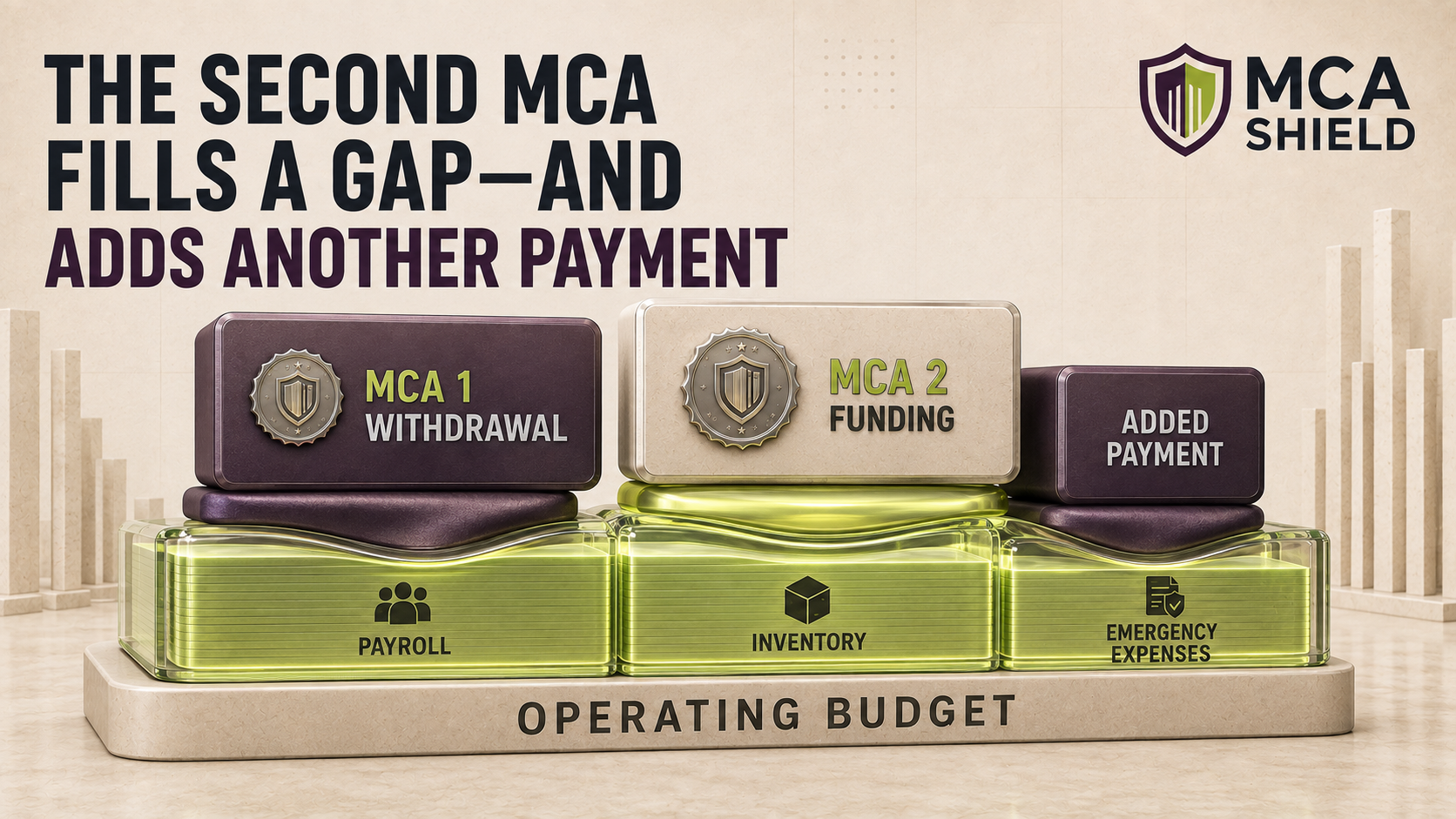
Businesses often take a second merchant cash advance because the first MCA has already reduced the working capital available for daily operations. The new funding may provide immediate cash, but it also creates another payment obligation.
At this stage, the owner may not view the second advance as unnecessary spending. Instead, it can feel like the fastest way to keep the business operating, protect important relationships, and prevent an immediate financial disruption.
Using New Funding to Cover Existing MCA Payments
A business may take a second advance when revenue no longer covers the first MCA payment and essential operating expenses. The owner might use the new funds to keep enough money in the bank account for upcoming withdrawals or replace cash that the first MCA has already removed.
Initially, this can create temporary breathing room. The business receives another lump sum, catches up on overdue expenses, and may even restore its account balance. However, the relief is often short-lived because the company must now support two repayment schedules.
The second advance does not eliminate the original obligation. Instead, both payments draw from the same revenue. Therefore, the business may lose working capital even faster and face another cash shortage sooner than expected.
Borrowing to Handle Payroll, Inventory, or Emergencies
Not every second MCA directly pays the first funder. In many cases, the business needs cash for an expense it could have covered if the first MCA withdrawals had not reduced its available funds.
Payroll is one of the most common pressures. Owners may pursue fast funding to ensure employees receive their wages on time. Other businesses need money to purchase inventory, order materials, repair essential equipment, pay taxes, or handle an emergency.
A second MCA can seem especially attractive when the business cannot qualify for traditional financing or cannot wait through a lengthy approval process. However, solving an urgent expense with another advance adds a new withdrawal to the company’s cash flow.
Once both MCA payments begin, the business has less money available for its next payroll cycle, inventory order, or emergency. This pattern can quickly lead to multiple merchant cash advances, with each new advance addressing a shortage partly created by the payments already in place.
How MCA Stacking Turns a Temporary Problem Into a Debt Cycle
MCA stacking occurs when a business obtains another merchant cash advance before satisfying its existing agreement. Although each new advance may address an immediate cash shortage, it also increases the amount of revenue committed to frequent payments.
What begins as temporary funding can become a repeating cycle: MCA payments reduce working capital, the business experiences another shortage, and the owner takes a new advance to restore the missing cash. Without meaningful improvement in revenue or expenses, each round can leave the company under greater financial pressure.
Each New Advance Adds Another Payment Obligation
A new merchant cash advance does not replace agreements already in place unless the transaction specifically pays them off. In a typical stacking situation, the business continues making its existing withdrawals while the new funder begins collecting an additional payment.
For example, a company with one daily withdrawal may take a second advance to cover payroll or purchase inventory. It must then support two daily payments. If the resulting cash shortage leads to a third advance, three funders may begin drawing funds from the same incoming revenue.
The business receives less usable working capital from each new advance because part of that funding must cover the payments already in place. Consequently, the relief may last for a shorter period each time. Eventually, the business may depend on new funding to maintain its current payment structure.
Shrinking Revenue Can Make the Stack Unmanageable
Stacked MCA payments become especially dangerous when business revenue declines. Seasonal slowdowns, lost customers, delayed invoices, economic changes, or unexpected closures can reduce deposits while the withdrawals continue.
A payment structure that seemed manageable during a strong sales period may become unaffordable when revenue falls. Because several MCA funders may collect payments daily or weekly, the business can lose a large portion of each deposit before paying payroll, rent, inventory, taxes, and other essential expenses.
Lower revenue can also limit the owner’s ability to recover. The business may not have enough cash to invest in advertising, replenish inventory, retain employees, or complete new work. These operational problems can weaken revenue further and deepen the financial strain.
At that point, taking another advance may appear to be the only way to keep operating. However, adding another obligation to an already strained cash flow can make the stack even harder to manage. This is how multiple merchant cash advances can turn a short-term funding decision into an ongoing cycle of new advances, shrinking working capital, and increasing payment pressure.
Common Business Conditions That Lead to Multiple MCAs
Businesses do not always take multiple advances because they are failing. In many cases, an otherwise viable company experiences a gap between revenue and the expenses that must be paid immediately.
Merchant cash advances can provide fast access to funding when traditional options remain unavailable or take too long. However, if the underlying cash-flow problem continues, one advance may lead to another.
Seasonal Revenue and Unexpected Expenses
Seasonal businesses often experience significant changes in revenue throughout the year. Restaurants, retailers, contractors, landscapers, and other companies may generate strong sales in one period and face much lower deposits during another.
An MCA may help the business cover expenses during the slower season. However, frequent withdrawals can continue reducing working capital before revenue fully recovers. If sales remain below expectations, the business may need another advance to bridge the next shortfall.
Unexpected expenses can create similar pressure. Equipment failures, vehicle repairs, property damage, higher material costs, or emergency tax obligations may require immediate payment. When the company has limited cash reserves, another MCA can appear to be the fastest way to keep operating.
Slow Customer Payments and Limited Bank Financing
A profitable business can still experience cash-flow problems when customers take 30, 60, or 90 days to pay their invoices. Meanwhile, the company must continue covering payroll, supplies, rent, and other operating costs.
A merchant cash advance may temporarily fill the gap. However, if customer payments remain delayed while MCA withdrawals occur daily or weekly, the business can run short of cash again before collecting its outstanding invoices.
Limited access to traditional financing can make the situation harder. Banks may decline an application because of the owner’s credit, the company’s time in business, inconsistent revenue, existing obligations, or insufficient collateral. When slower financing options are unavailable, a second MCA may feel like the only practical source of immediate funding.
Rapid Growth Without Enough Working Capital
Growth can also lead to multiple merchant cash advances. A company may win a large contract, open another location, hire more employees, or receive more customer orders than its current cash flow can support.
Although increased sales sound positive, growth often requires the business to spend money before receiving the related revenue. The company may need to purchase inventory, order materials, add equipment, or expand payroll weeks before customers pay.
An initial MCA can help fund that opportunity. However, if the business underestimates the full cost of expansion or revenue arrives later than expected, another cash shortage may develop. The owner may then take a second advance to finish the project or maintain operations.
In each of these situations, the immediate need for cash is real. The problem occurs when new MCA payments consume the working capital needed to handle the next slow period, delayed invoice, emergency, or growth expense.
Warning Signs That Multiple MCA Payments Are Becoming Unsustainable
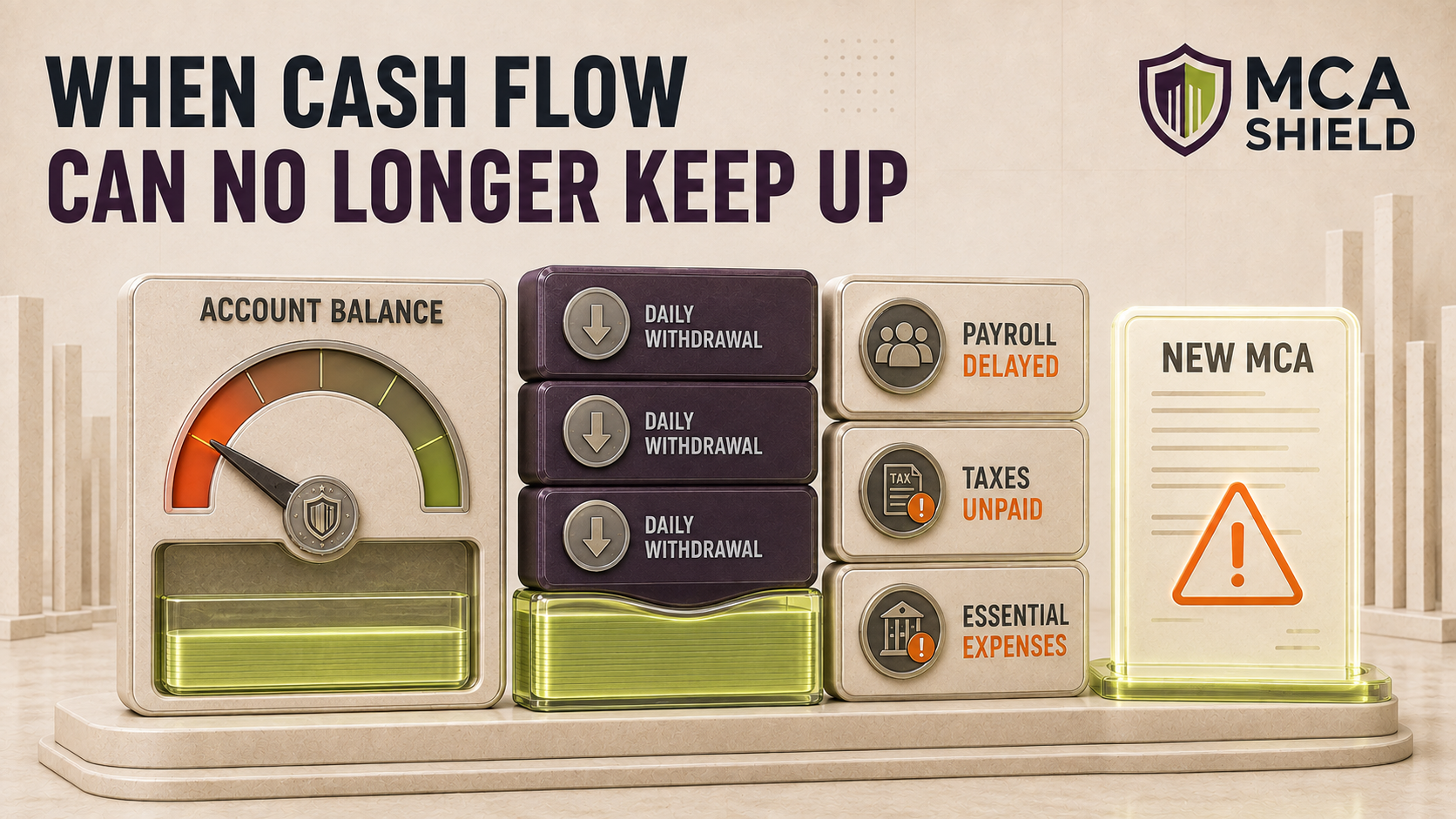
Why Taking Another MCA Usually Does Not Solve the Cash-Flow Problem
Another merchant cash advance can place money in the business account quickly. However, it does not automatically correct the financial conditions that caused the shortage.
If existing withdrawals already consume too much revenue, adding another payment can make the company’s cash flow even harder to manage.
Temporary Funding Only Delays the Shortfall
A new MCA may help the business cover payroll, purchase inventory, pay overdue bills, or prevent an immediate disruption. However, this relief often lasts only until regular expenses and MCA withdrawals begin reducing the new funds. If revenue cannot support the company’s total obligations, the cash shortage will return.
Another Withdrawal Reduces Future Cash Flow
Every additional MCA creates another daily or weekly payment. Therefore, the business commits more of its future revenue before receiving it. Even if the new advance restores the bank balance today, its withdrawals leave less money available for payroll, rent, taxes, supplies, and other essential expenses tomorrow.
The Underlying Financial Pressure Remains
Another advance does not resolve declining sales, delayed customer payments, high operating costs, or an unaffordable payment structure. Without addressing those underlying problems, the business may need new funding again. This repeating pattern can turn one temporary shortage into a cycle of multiple merchant cash advances and increasing payment pressure.
How Businesses Can Break the Multiple-MCA Cycle
Take Action Before Multiple Merchant Cash Advances Limit Your
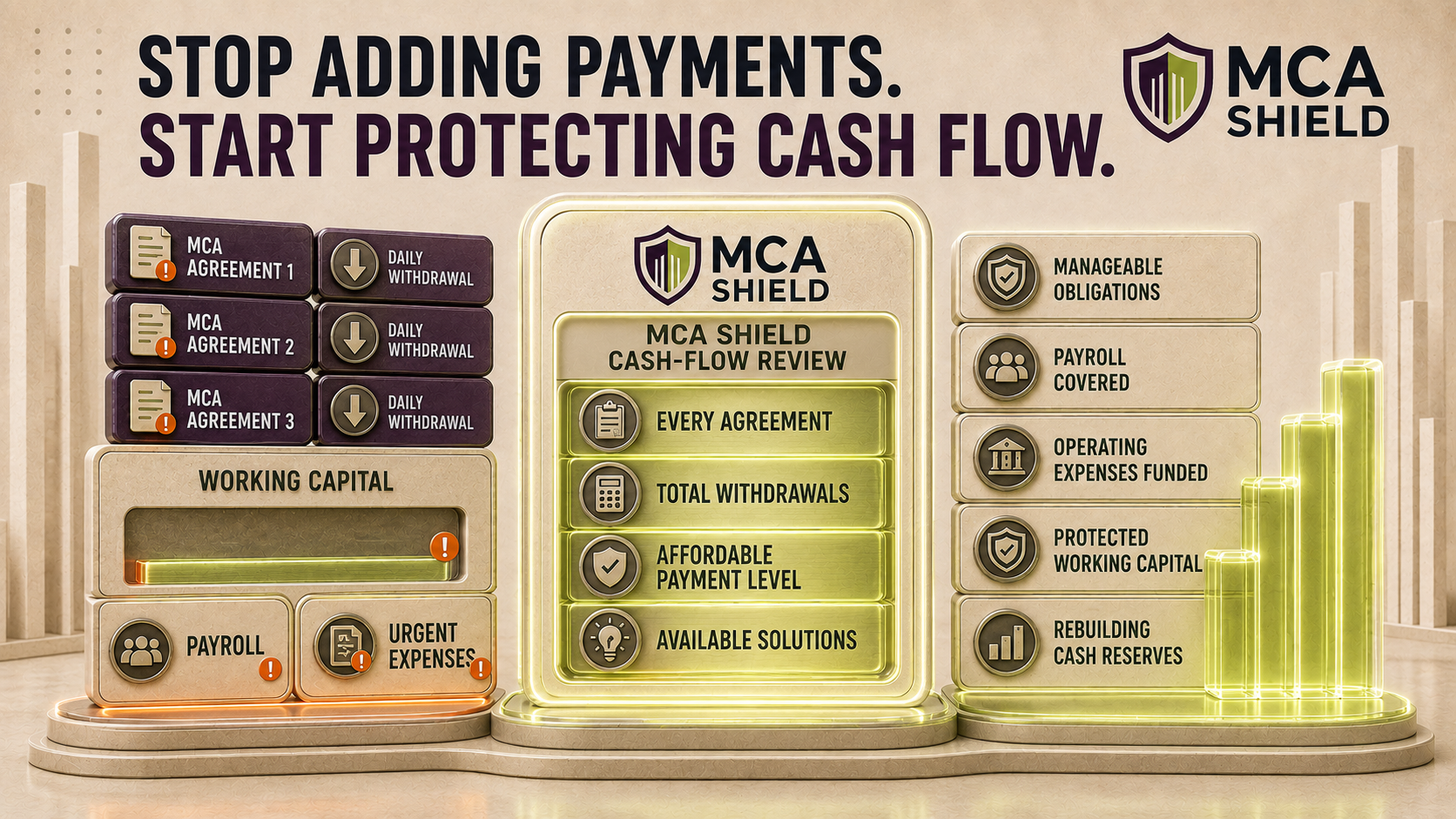
The longer several MCA payments strain the same cash flow, the harder it can become for a business to protect payroll, operating expenses, and working capital. Falling account balances, missed obligations, and failed withdrawals may also reduce the flexibility available when seeking relief.
Taking action does not mean making a rushed decision. It means gathering every agreement, reviewing the total withdrawal burden, and determining how much the business can realistically afford before accepting another advance.
MCA Shield can help evaluate how multiple merchant cash advances affect your company’s cash flow. The review can identify the agreements creating the greatest pressure and help you explore whether restructuring, negotiation, settlement, or another strategy may fit your circumstances.
The right approach should consider the entire business—not just the next payment. The goal is to protect essential operations, reduce payment pressure, and create a path toward stronger working capital.
Schedule a Free Consultation With MCA Shield to review your MCA agreements and understand your options before payment pressure becomes more difficult to manage.