
Schedule Your Free Consultation
Why Timing Matters in MCA Debt Restructuring
Timing can strongly influence the options available to a business facing heavy MCA payments. MCA debt restructuring often works best before withdrawals consume the cash needed for payroll, taxes, inventory, and other essential expenses.
Business owners do not need to wait until they miss payments or receive collection notices. In many cases, the right time to explore restructuring is when payments first become difficult to manage. Acting at that point may provide more room to review the obligations and develop a realistic strategy.
Acting Early Can Preserve More Restructuring Options
Starting early gives the business time to examine its MCA agreements, payment schedules, revenue, and operating expenses. This review helps determine what the business can realistically afford without placing essential operations at risk.
Early action may also help a business:
- Address payment pressure before default
- Protect more working capital
- Avoid taking another MCA to cover existing payments
- Develop a coordinated strategy for multiple advances
- Continue communicating with MCA funders
The goal is not simply to reduce a payment. A successful restructuring strategy should consider affordability, cash flow, total obligations, and the needs of the business.
Waiting Can Increase Financial and Legal Pressure
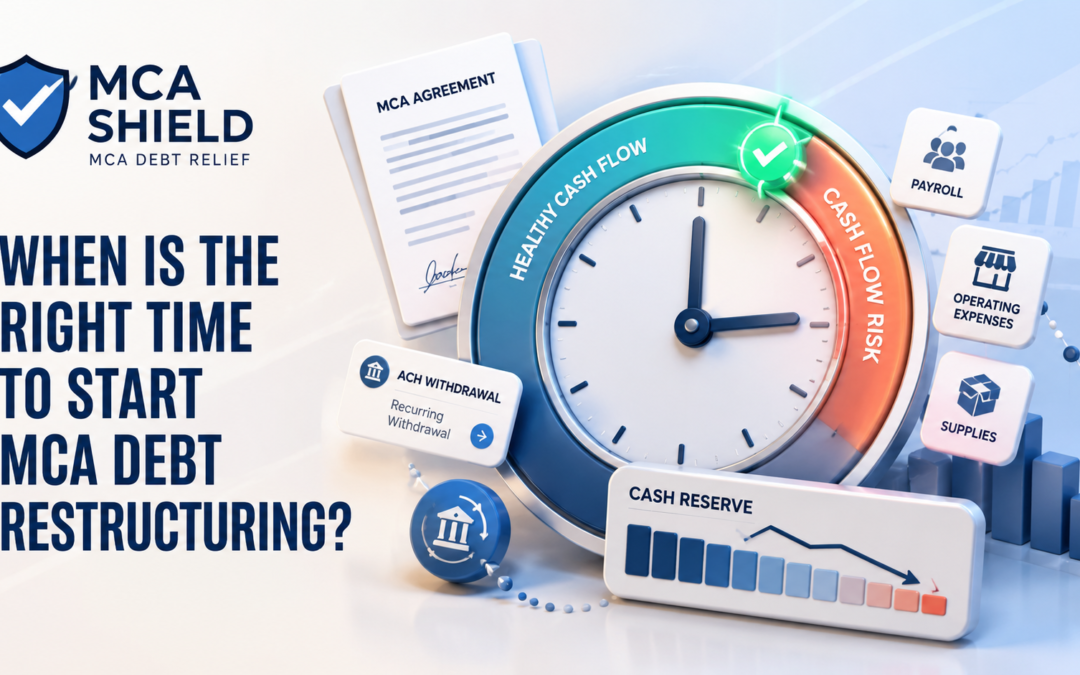
Delaying action can allow MCA withdrawals to continue draining available cash. As reserves decline, the business may struggle to cover payroll, taxes, rent, supplies, and vendor payments.
The situation can become more difficult if the business begins missing payments. Depending on the MCA agreement and circumstances, the funder may increase collection efforts, issue default notices, restrict account access, or pursue legal remedies.
Waiting can also create a dangerous cycle. A business may take another advance to cover existing payments, which adds another withdrawal and adds even more pressure on cash flow.
Therefore, business owners should consider MCA debt restructuring before financial pressure reaches the breaking point. Acting early does not guarantee a specific result. However, it can provide more time to review the situation and identify a strategy built around the business’s actual financial capacity.
Early Warning Signs It May Be Time to Restructure MCA Debt

Should You Start MCA Debt Restructuring Before Missing Payments?
A business does not need to miss payments before exploring MCA debt restructuring. In fact, beginning the review while payments remain current may provide more time to evaluate cash flow, gather financial records, and determine an affordable payment level.
The goal is to address the problem before MCA withdrawals interfere with payroll, taxes, inventory, and other essential expenses. Acting before default can help the business approach restructuring from a more stable financial position.
Why You Do Not Need to Wait Until Default
Default should not be treated as the starting point for restructuring. If the current payments are becoming difficult to maintain, that pressure may already justify a financial review.
Early warning signs may include:
- Cash reserves declining each week
- MCA withdrawals consuming a growing share of revenue
- Payroll or operating expenses becoming difficult to cover
- Frequent overdrafts or low account balances
- Using credit or personal funds to maintain operations
- Considering another MCA to cover existing obligations
Waiting until a payment fails can create additional pressure. The funder may begin making collection calls, sending default notices, or taking other actions permitted by the agreement. At the same time, the business may have less available cash to support a restructuring plan.
Starting early allows the owner to focus on affordability and long-term cash flow, rather than reacting to an immediate crisis.
How Consistent Payment History May Affect Negotiations
A consistent payment history may help show that the business has made a genuine effort to meet its obligations. It can also demonstrate that the current problem stems from declining revenue or an unaffordable payment structure rather than a refusal to pay.
However, payment history is only one part of the review. MCA funders may also consider:
- The remaining purchased amount or balance
- Current daily or weekly payments
- Recent business revenue
- Bank account activity
- The number of active MCA agreements
- The payment amount the business can realistically maintain
Every funder and agreement is different. Therefore, a history of consistent payments does not guarantee approval or specific restructuring terms. Still, beginning discussions before default may create more time to present financial records and explain why the current payment structure is no longer sustainable.
The best time to review MCA debt is often before the business misses payments and before working capital disappears.
When Multiple MCA Payments Make Restructuring More Urgent
One merchant cash advance can place significant pressure on business cash flow. However, that pressure can grow quickly when several MCA payments come from the same bank account. Each funder may collect a separate daily or weekly withdrawal, leaving the business with less money after every deposit.
When multiple payments begin competing with payroll and operating expenses, MCA debt restructuring may become more urgent. The business must evaluate every agreement together instead of treating each obligation as a separate cash-flow problem.
Stacked Withdrawals Can Rapidly Reduce Working Capital
MCA debt stacking occurs when a business takes out another advance before paying off an existing one. The new funding may solve an immediate cash shortage. However, it also creates another withdrawal against future revenue.
Stacked payments can reduce working capital faster because they often hit the same account within a short period. As a result, the business may struggle to maintain enough cash for:
- Payroll and employee benefits
- Taxes and insurance
- Rent, utilities, and equipment
- Inventory and business supplies
- Vendor invoices
- Unexpected operating expenses
The total payment burden matters more than the size of any single withdrawal. Several payments that appear manageable individually may become unaffordable when combined.
Therefore, business owners should calculate the total amount withdrawn each day or week. They should then compare that amount with average revenue and essential expenses. If the numbers no longer support normal operations, waiting may allow working capital to decline even further.
Coordinating Multiple MCA Obligations Under One Strategy
Restructuring multiple MCAs requires a complete view of the business’s obligations. Each agreement may have a different payment amount, remaining balance, funder, and collection schedule. Addressing only one MCA may not provide enough relief if the other withdrawals continue unchanged.
A coordinated strategy should review:
- Every active MCA agreement
- Total daily or weekly withdrawals
- Remaining payment obligations
- Current and projected business revenue
- Essential operating expenses
- The payment level the business can realistically maintain
This approach does not necessarily combine all MCAs into a single new loan. Instead, it evaluates how all existing payments affect the same cash flow. The goal is to pursue a manageable overall payment structure that protects the business’s ability to operate.
When several MCA obligations are active, early coordination becomes especially important. A unified restructuring strategy can help prevent one agreement from being addressed while the remaining payments continue draining the business’s working capital.
Can You Restructure MCA Debt After Default?
Yes, MCA debt restructuring may still be possible after default. Missing payments do not automatically eliminate every option. However, the process may become more urgent because the funder will begin collection activity or take action under the MCA agreement.
The business should respond quickly, gather its financial records, and review every active obligation. Ignoring the situation can allow both financial and legal pressure to increase.
What Changes Once Payments Have Been Missed
Before default, the business may have more time to review cash flow and begin discussions from a stable position. After a missed payment, the funder may focus more heavily on recovering the remaining obligation.
Depending on the agreement and circumstances, the business may experience:
- More frequent calls or emails from the funder
- Default notices or payment demands
- Attempts to collect missed withdrawals
- Additional fees permitted under the agreement
- Contact from a collection agency or attorney
- Possible legal action
The business may also have less working capital available for a new payment structure. Therefore, the restructuring review must examine both the immediate default and the company’s ability to maintain future payments.
A missed payment should not lead the owner to promise an amount the business cannot afford. Any proposed payment structure should reflect actual revenue, essential expenses, and available working capital.
Responding to Collection Activity and Legal Pressure
Collection activity can feel overwhelming, but avoiding communication rarely improves the situation. The business should organize its records and create a clear picture of its financial position.
Important information may include:
- Current bank statements
- Recent revenue reports
- Every MCA agreement
- A list of daily or weekly withdrawals
- Payroll, tax, rent, and operating expenses
- Collection notices or legal documents
This information can help explain why the existing payment structure is no longer sustainable. It can also support a proposal based on what the business can realistically pay.
If the business receives a lawsuit, summons, court notice, or other legal document, it should promptly speak with a qualified attorney. Legal deadlines can be short, and restructuring discussions do not automatically stop a legal case.
Default creates urgency, but it does not always mean the situation is beyond repair. Taking action quickly may help the business respond to collection pressure while exploring a manageable MCA restructuring strategy.
What Happens If You Wait Too Long to Restructure MCA Debt?
Waiting too long to explore MCA debt restructuring can allow payment pressure to grow into a larger financial problem. Daily or weekly withdrawals may continue reducing available cash while unpaid operating expenses accumulate.
As the business loses working capital, it may become harder to maintain payroll, purchase inventory, pay taxes, and keep vendors current. At the same time, missed MCA payments may lead to stronger collection efforts. Acting earlier can give the business more time to review its obligations before the situation becomes a crisis.
Increasing Risk to Business Bank Accounts and Receivables
Many MCA funders collect payments through automatic withdrawals from a business bank account. When funds are limited, repeated withdrawal attempts can contribute to overdrafts, returned payments, and additional banking problems.
After default, a funder may also pursue remedies according to the agreement and applicable law. Depending on the circumstances, these actions may involve:
- Additional attempts to withdraw payments
- Default notices and payment demands
- Contact from collection agencies or attorneys
- Efforts involving business receivables or payment processors
- Enforcement of applicable security interests
- A lawsuit seeking the remaining obligation
These risks depend on the specific MCA agreement, the funder’s actions, and applicable law. Therefore, business owners should not ignore collection notices or legal documents. If the company receives a lawsuit, summons, or court notice, it should promptly contact a qualified attorney.
Restructuring discussions do not automatically stop collection activity or legal deadlines. The business must respond to each issue while exploring a manageable payment strategy.
Fewer Options as Cash Flow Continues to Decline
A restructuring plan must be supported by the company’s ability to make payments. If cash flow continues to fall, the business may have less money available for any proposed arrangement.
Waiting may also lead to:
- Depleted cash reserves
- Delayed payroll or tax payments
- Unpaid vendors and reduced purchasing power
- More overdrafts and returned payments
- Additional borrowing to maintain operations
- Less flexibility when proposing affordable terms
The business may reach a point where even a reduced payment would place operations at risk. That can make it more difficult to develop a sustainable restructuring strategy.
For this reason, the best time to review MCA obligations is often before working capital disappears. Early action does not guarantee specific terms. However, it can provide more time to examine the numbers, communicate with funders, and pursue a solution based on the business’s actual financial capacity.
What to Review Before Starting MCA Debt Restructuring
Start MCA Debt Restructuring Before Cash Flow Reaches the Breaking Point
Business owners should not wait until MCA payments consume every available dollar. When daily or weekly withdrawals begin interfering with payroll, taxes, inventory, or operating expenses, it may be time to explore MCA debt restructuring.
Acting early allows the business to review its obligations before financial pressure becomes more difficult to manage. It can also help prevent the owner from taking another advance to cover existing payments.
How a Professional MCA Restructuring Review Can Help
A professional review examines the entire financial situation rather than focusing on one payment. This process can help identify how much the business currently pays and what payment level it may realistically maintain.
The review may include:
- Every active MCA agreement
- Total daily or weekly withdrawals
- Remaining payment obligations
- Current business revenue
- Payroll, taxes, and operating expenses
- Available working capital
- Existing defaults or collection activity
This information helps create a clearer picture of the company’s financial capacity. It may also reveal whether one MCA or several stacked agreements are creating the greatest cash-flow pressure.
A professional review does not guarantee specific terms or funder approval. However, it can help the business understand its position and pursue a coordinated restructuring strategy based on affordability.
Schedule a Free Consultation With MCA Shield
If MCA payments are reducing the cash your business needs to operate, waiting may allow the problem to grow. MCA Shield can review your current obligations, payment burden, and available cash flow to help determine whether restructuring may be appropriate.
The goal is to identify a strategy that accounts for both the MCA obligations and the business’s financial needs. Starting the review before default, depleted reserves, or escalating collection activity may preserve more options.
Schedule a free consultation with MCA Shield today. Take the first step toward reducing payment pressure, protecting working capital, and creating a more manageable path forward.