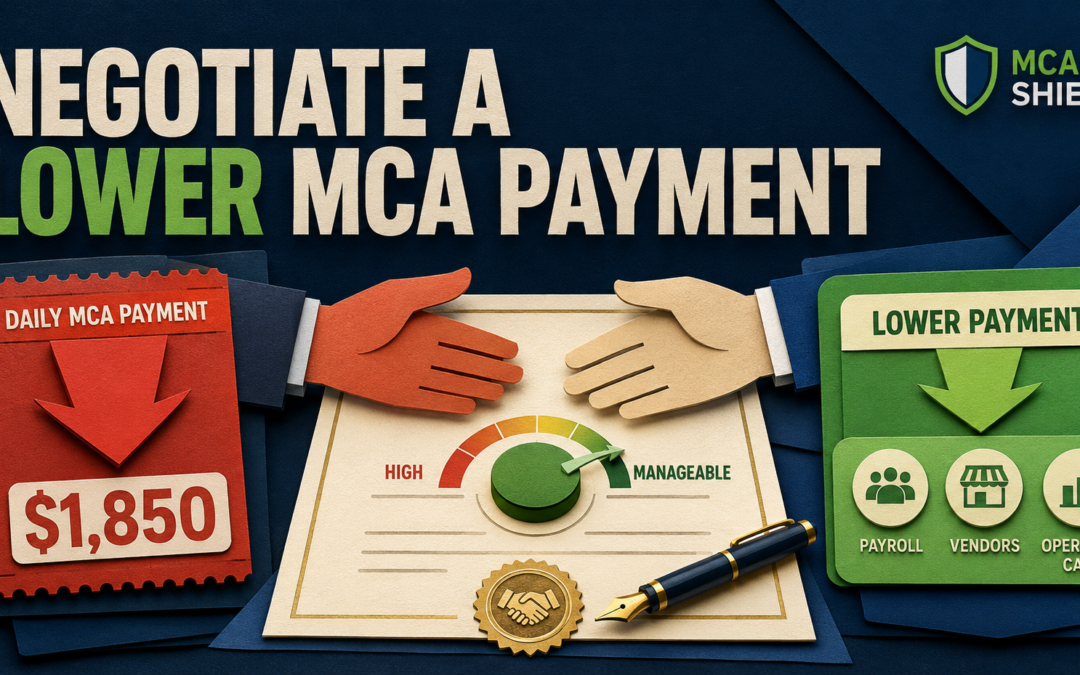
High daily or weekly withdrawals can make it difficult to cover payroll, pay vendors, and protect working capital. Learning how to reduce merchant cash advance payments through negotiation may help your business regain control of its cash flow without taking on another advance.
Successful negotiation usually begins with a careful review of the MCA agreement, remaining balance, revenue, and essential operating costs. This information can help you propose a realistic payment amount that supports continued repayment while leaving enough cash available to operate.
This article explains how to prepare for MCA negotiations, what payment terms may be adjusted, and what to do if a funder rejects your proposal. It also covers common mistakes that could weaken your position or increase financial and legal risk.
Schedule Your Free Consultation
Why MCA Payments May Be Open to Negotiation
Merchant cash advance payments are often based on the business revenue shown when the agreement was approved. However, sales, expenses, and operating conditions can change. When the original withdrawal becomes difficult to maintain, the business may be able to negotiate lower MCA payments with the funder.
Negotiation is not guaranteed. The available options will depend on the agreement, payment history, remaining balance, and current financial condition. Still, a well-supported proposal may allow both parties to avoid a complete payment breakdown.
Revenue Changes Can Make the Original Payment Unsustainable
A business may accept an MCA when revenue is strong and cash flow appears stable. Later, seasonal slowdowns, lost customers, higher operating costs, or unexpected expenses can reduce the cash available for daily operations.
The original payment may then consume too much of the business’s current revenue. Even if the company is still generating sales, the withdrawals can make it difficult to cover payroll, inventory, rent, vendors, and taxes.
This is where accurate financial records become important. Recent bank statements, sales reports, and expense records can help explain why the existing payment is no longer affordable. They can also support a request to reduce merchant cash advance payments to an amount that better reflects current cash flow.
The proposed payment should be realistic. Requesting an amount the business can consistently maintain may create a stronger negotiating position than making a vague request for temporary relief.
Funders May Prefer Modified Payments Over Default
A funder may have an incentive to consider modified terms when the alternative is missed payments or default. A lower payment that continues consistently may be more practical than pursuing an uncertain and potentially expensive collection process.
Possible modifications may include a reduced daily withdrawal, lower weekly payment, temporary payment adjustment, or extended repayment schedule. The exact options depend on the funder and the terms of the MCA agreement.
Business owners should avoid assuming that a funder will automatically approve a reduction. A negotiation is more likely to be taken seriously when the business presents clear financial evidence, explains the reason for the hardship, and proposes a specific payment.
Any approved change should be provided in writing before the business relies on it. The written agreement should clearly identify the new payment amount, withdrawal frequency, effective date, duration, and any added fees or conditions.
Review Your MCA Agreement Before Contacting the Funder
Before asking a funder to reduce merchant cash advance payments, review the entire MCA agreement. Understanding the contract can help you identify possible payment adjustments, prepare a stronger proposal, and avoid actions that may trigger default.
Do not rely only on the payment amount shown in your bank account. Review the written agreement, payment history, bank statements, and any amendments or renewal documents. If the terms are unclear, consider having a qualified professional review them before you contact the funder.
Identify Reconciliation and Adjustment Provisions
Many MCA agreements connect payments to a percentage of the business’s receivables. However, the funder may collect a fixed daily or weekly amount as an estimate of that percentage.
A reconciliation provision may allow the business to request an adjustment when actual revenue is lower than expected. The funder may require recent bank statements, processing reports, or other financial records before reviewing the request.
Pay close attention to:
- How and when a reconciliation can be requested
- Which financial records must be submitted
- Whether the request must follow a specific format
- How quickly the funder must review the information
- Whether the payment changes temporarily or permanently
A reconciliation request is not the same as simply stopping or blocking withdrawals. Following the agreement’s stated procedure may help the business pursue a payment adjustment without creating an avoidable dispute.
Confirm the Purchased Amount, Remaining Balance, and Payment Terms
Next, confirm the basic financial terms of the transaction. An MCA agreement may list a purchase price, which is the amount provided to the business, and a purchased amount, which is the total amount of receivables the funder expects to collect.
Review the agreement and payment history to identify:
- The original amount received by the business
- The total purchased amount
- The agreed percentage of receivables
- The current daily or weekly withdrawal
- The amount already collected
- The estimated remaining balance
These numbers help determine whether a proposed payment is reasonable. They also allow you to compare the funder’s records with your own before negotiations begin.
Review any renewal, modification, or stacking activity as well. A newer agreement may have changed the balance, payment schedule, or collection terms.
Review Default, Personal Guarantee, and UCC Provisions
Before changing payments or contacting the funder, understand what the agreement defines as a default. Default provisions may address missed payments, blocked ACH withdrawals, changes to bank accounts, inaccurate financial information, or interference with receivables.
You should also review any personal guarantee. Depending on its language, the guarantee may expose the business owner to additional risk if certain promises or obligations are breached.
A UCC filing may give notice of the funder’s claimed security interest in specified business assets or receivables. However, a UCC filing does not automatically allow a funder to freeze a bank account. Enforcement rights depend on the agreement, applicable law, and the legal steps taken.
Understanding these provisions can help you negotiate carefully and avoid making promises or taking actions that increase risk. Any modified payment terms should be clearly documented in writing before the business changes its payment schedule.
Gather Financial Evidence to Support Your Negotiation

A request to lower MCA payments is more persuasive when it is supported by clear financial evidence. Funders need to understand why the existing withdrawal is no longer sustainable and what the business can continue paying.
Gather accurate, current records before beginning the negotiation. Organized documentation can show that your proposal is based on the company’s actual cash flow rather than a general request for relief.
Organize Recent Bank Statements and Revenue Records
Start with recent business bank statements. These records show deposits, withdrawals, account balances, overdrafts, returned payments, and existing MCA debits.
You should also organize revenue records that reflect the company’s current performance. Depending on the business, these may include:
- Merchant-processing statements
- Profit-and-loss statements
- Sales reports
- Accounts receivable reports
- Customer invoices
- Tax returns or financial statements
- Seasonal revenue comparisons
Compare current revenue with revenue at the time the MCA was approved. A noticeable decline may help explain why the original payment is no longer workable. If revenue fluctuates from month to month, show the pattern rather than relying on one unusually slow period.
Make sure all records are complete and consistent. Missing pages, unexplained transfers, or conflicting numbers may delay the review or weaken the proposal.
Document Payroll, Vendor Costs, and Essential Expenses
Revenue alone does not show what the business can afford. You also need to document the expenses required to keep the company operating.
Create a clear list of essential costs, including:
- Payroll and payroll taxes
- Rent or commercial mortgage payments
- Inventory and materials
- Vendor obligations
- Insurance premiums
- Utilities and transportation costs
- Equipment payments
- Taxes and licensing fees
- Other necessary operating expenses
Separate essential costs from optional spending. This helps show how much working capital the company must retain to continue generating revenue.
For example, reducing payroll, inventory, or essential vendor payments too far may prevent the business from completing jobs or serving customers. Showing these connections can help explain why a lower MCA withdrawal may support continued operations and consistent repayment.
Calculate the Payment Your Business Can Realistically Afford
After reviewing revenue and expenses, calculate the amount the business can pay without immediately creating another cash-flow shortage.
Begin with the company’s average available revenue. Subtract payroll, vendor costs, taxes, rent, inventory, and other essential expenses. Then account for a reasonable operating cushion to cover normal changes in deposits and expenses.
The remaining amount can help establish an affordable daily or weekly MCA payment. Use conservative numbers rather than assuming that revenue will suddenly improve.
A strong proposal should include:
- The current withdrawal amount
- The requested payment amount
- The preferred daily or weekly schedule
- The date the new payment should begin
- Financial records supporting the request
- A short explanation of how the proposed amount was calculated
Do not offer more than the business can maintain to secure an agreement. Missing another revised payment may weaken future negotiations and increase the risk of collections. The goal is to propose a realistic payment the business can make consistently while continuing to cover essential operating costs.
How to Request Lower Merchant Cash Advance Payments
Once you have reviewed the agreement and organized your financial records, you can prepare a formal payment-reduction request. The goal is to explain the problem, present a realistic solution, and show why the proposed change benefits both the business and the funder.
A vague request may be difficult to evaluate. Instead, support your proposal with current financial information and a payment amount the company can consistently maintain. Keep all communication professional, accurate, and focused on resolving the problem.
Explain the Cash-Flow Problem Clearly
Begin by describing what changed after the MCA was approved. Explain whether the business experienced lower sales, seasonal fluctuations, lost contracts, higher material costs, unexpected repairs, or another financial setback.
Keep the explanation direct and supported by records. Avoid exaggerating the problem or making statements that conflict with the company’s bank statements.
Your request should identify:
- The original daily or weekly withdrawal
- The change in business revenue or expenses
- The effect on payroll, vendors, and working capital
- The financial records included with the request
- The payment adjustment being requested
For example, you might explain that the current withdrawal consumes too much of the company’s weekly deposits, leaving insufficient cash for payroll and inventory. This gives the funder a clear reason to review the payment.
Propose a Specific Daily or Weekly Payment
Do not ask the funder to simply “lower the payment.” Propose a specific daily or weekly amount based on your cash-flow analysis.
If the business currently pays $1,000 each weekday but can reliably afford $500, include that amount in the proposal. You can also request a different withdrawal frequency if weekly payments would align better with customer deposits.
Clearly state:
- The requested payment amount
- Whether payments should occur daily or weekly
- The proposed start date
- Whether the change should be temporary or ongoing
- When the arrangement may be reviewed again
The requested amount should leave the business with sufficient cash to cover essential expenses. However, it should also represent a reasonable commitment to continued repayment.
Avoid agreeing to a payment merely because the funder offers it during a conversation. Review the numbers first and confirm that the business can maintain the revised schedule.
Show How the New Payment Supports Continued Repayment
A lower payment request should explain how the adjustment may help the business remain operational and continue paying the MCA obligation. The proposal should connect manageable payments with reliable repayment.
For example, reducing the withdrawal may allow the company to purchase inventory, complete customer orders, cover payroll, and generate future revenue. Without that operating cash, the business may struggle to maintain either its operations or its MCA payments.
Include a brief repayment explanation that covers:
- How the lower payment protects daily operations
- Why the proposed amount is sustainable
- How continued operations support future revenue
- When updated financial records can be provided
- Whether the business expects conditions to improve
This approach shows that the request is not an attempt to avoid the obligation. Instead, it presents a structured plan designed to support continued payments and business stability.
If the funder approves the request, obtain the complete modification in writing. Confirm the new payment amount, withdrawal schedule, effective date, duration, fees, and any conditions before relying on the revised terms.
Payment Terms You May Be Able to Negotiate
How to Negotiate With Multiple MCA Funders
Negotiating becomes more complicated when several funders withdraw payments from the same business account. Each MCA may have a different balance, payment schedule, reconciliation process, and default provision.
Lowering one payment may provide little relief if the other withdrawals remain unaffordable. The business should review the complete MCA payment burden and build a coordinated plan before contacting individual funders.
Determine Which MCA Is Creating the Most Pressure
Begin by listing every active MCA agreement. Record the funder, original purchased amount, remaining balance, withdrawal amount, payment frequency, and estimated completion date.
Then identify which obligation creates the greatest strain. This may be the MCA with:
- The largest daily or weekly withdrawal
- The shortest expected collection period
- The most frequent failed payment attempts
- The greatest effect on payroll or vendor payments
- The most restrictive default provisions
- The largest remaining balance
The highest payment is not always the only source of the problem. Several smaller withdrawals may create more pressure when they occur on the same day.
Review all bank activity to understand how the payments interact. A complete payment schedule can reveal which days leave the account most vulnerable to overdrafts, returned payments, or shortages.
Coordinate Proposals Around One Affordable Payment Budget
Calculate the total amount the business can realistically devote to all MCA payments after covering essential operating expenses. This becomes the company’s affordable MCA payment budget.
For example, if the business can afford $5,000 per week across three MCAs, the proposals should remain within that total. Offering each funder an amount individually may cause the combined payments to exceed what the business can maintain.
A coordinated plan should account for:
- Current revenue and expected deposits
- Payroll and payroll taxes
- Vendor and inventory costs
- Rent, utilities, and insurance
- Tax obligations
- Each MCA balance and withdrawal schedule
- A reasonable operating cash cushion
Decide how the available payment budget may be divided before negotiations begin. Use the same accurate financial records to support each proposal. This helps prevent conflicting explanations or commitments.
Avoid Agreements That Shift the Burden to Another Funder
Reducing one MCA payment should not make another obligation impossible to pay. If one funder demands most of the available payment budget, the remaining withdrawals may continue draining the account.
Be careful with modifications that require large upfront payments, accelerated payments to another funder, or promises the business cannot maintain. Also review whether a proposed change affects the rights claimed under other agreements.
Before accepting revised terms, update the full payment schedule and calculate the combined effect. Confirm that the business can cover every modified payment while protecting essential operating costs.
Avoid taking another merchant cash advance to maintain the revised payments. New funding may add another withdrawal, increase the total obligation, and restart the stacking cycle.
When several agreements are involved, professional guidance may help organize balances, evaluate contract risks, and coordinate payment proposals. The goal is to create one workable strategy for the entire MCA burden, not a temporary reduction that shifts the cash-flow problem from one funder to another.
Mistakes to Avoid During MCA Payment Negotiations
What to Do If the MCA Funder Rejects Your Proposal
Negotiate MCA Payments Before Cash Flow Gets Worse