Merchant cash advance payments can put serious strain on a business when daily or weekly ACH withdrawals continue during a negotiation. Many business owners assume that opening negotiations will automatically pause those debits. In many cases, that does not happen unless the payment terms are formally changed.
Understanding how MCA ACH withdrawals during negotiations work can help you avoid unexpected account activity, overdrafts, and added cash-flow problems. Your MCA agreement, ACH authorization, and any written modification can all affect what happens while new payment terms are being discussed.
Before stopping, blocking, or changing ACH payments, it is important to understand the possible consequences. This article explains what business owners should know about ongoing MCA withdrawals, payment negotiations, default risk, and written payment agreements so they can make more informed decisions.
Schedule Your Free Consultation
Why MCA ACH Withdrawals May Continue While You Negotiate
When a business starts negotiating with an MCA company, the existing payment schedule may remain in place. In many cases, MCA ACH withdrawals during negotiations continue until both sides agree to different terms. Simply asking for a lower payment does not necessarily change the amount or timing of scheduled debits.
This can create a difficult situation for a business already dealing with cash-flow pressure. While negotiations are underway, daily or weekly withdrawals may still reduce the money available for payroll, vendors, rent, inventory, and other essential expenses. For that reason, business owners should understand what their current agreement requires and when any proposed payment change will actually take effect.
Negotiations Do Not Automatically Pause Scheduled Withdrawals
Opening a negotiation does not automatically place existing ACH payments on hold. Unless the MCA company agrees to pause or modify the withdrawals, scheduled ACH debits may continue while both sides discuss new payment terms.
For example, a business may request a reduction from a daily withdrawal to a smaller weekly payment. However, the original withdrawal schedule may remain active until the MCA company approves the change. A phone call, email exchange, or pending proposal may not be enough to stop the existing debit schedule.
That is why written confirmation is important. Before assuming that an ACH withdrawal has been reduced, delayed, or suspended, the business should confirm exactly what was agreed to, when the change begins, and what amount will be withdrawn.
Existing MCA Terms May Still Control ACH Debits
The MCA agreement usually contains provisions that explain the payment amount, withdrawal frequency, ACH authorization, reconciliation rights, and default terms. Those existing provisions may continue to govern payments while negotiations are taking place.
Business owners should carefully review these terms before making changes to their bank account or payment arrangements. Depending on the agreement and applicable law, stopping an ACH debit does not necessarily eliminate the underlying payment obligation. It may also create additional issues if the MCA company believes the business has violated the agreement.
Before changing how MCA payments are handled, it is important to understand both the ACH authorization and the MCA contract itself. A clear review of the agreement can help the business negotiate from a stronger position and avoid unexpected consequences.
What Your MCA Agreement Says About ACH Authorization
Your merchant cash advance agreement can play a major role in determining how ACH withdrawals are handled during negotiations. Before making changes to your bank account or payment schedule, review the agreement carefully. The contract may explain how payments are collected, when withdrawals can change, and what actions may be considered a default.
This review is especially important when MCA ACH withdrawals during negotiations are creating cash-flow problems. The goal is to understand what the agreement allows, what the MCA company expects, and whether there are provisions that could support a payment adjustment.
Review the ACH Authorization and Payment Terms
Start by locating the section that explains the ACH authorization. This provision may give the MCA company permission to withdraw payments directly from your business bank account.
Pay close attention to the withdrawal amount, payment frequency, designated bank account, and authorization language. Some agreements call for daily withdrawals, while others use weekly payments. The contract may also explain whether the amount is fixed or connected to a percentage of receivables.
You should also determine whether the agreement gives the MCA company the ability to change the withdrawal amount under certain conditions. Understanding these terms can help you identify what may happen while a new payment arrangement is being discussed.
Look for Default, Reconciliation, and Modification Provisions
Several sections of the agreement may become important during negotiations. One is the default provision, which explains what actions the MCA company may consider a violation of the agreement.
You should also look for any reconciliation provision. Depending on the agreement, reconciliation may allow the payment amount to be reviewed when actual business revenue changes. The requirements and process can vary, so the exact contract language matters.
Finally, review any section dealing with payment modifications or amendments. A negotiated payment change may need to be documented in writing before it replaces the original terms. This is one reason a verbal agreement alone may not provide enough certainty.
Understand When Payment Changes Become Effective
A payment reduction is most useful when everyone understands exactly when the new terms begin. Until a modification takes effect, the original ACH schedule may continue.
Written confirmation should clearly state the new withdrawal amount, payment frequency, effective date, and any other revised terms. If a temporary payment arrangement is being offered, it should also explain how long that arrangement will remain in place.
Do not assume that submitting a proposal means the existing withdrawals have changed. Knowing the effective date can help prevent unexpected ACH debits, overdrafts, and additional cash-flow strain while negotiations are still underway.
Can You Revoke or Block MCA ACH Withdrawals During Negotiations?
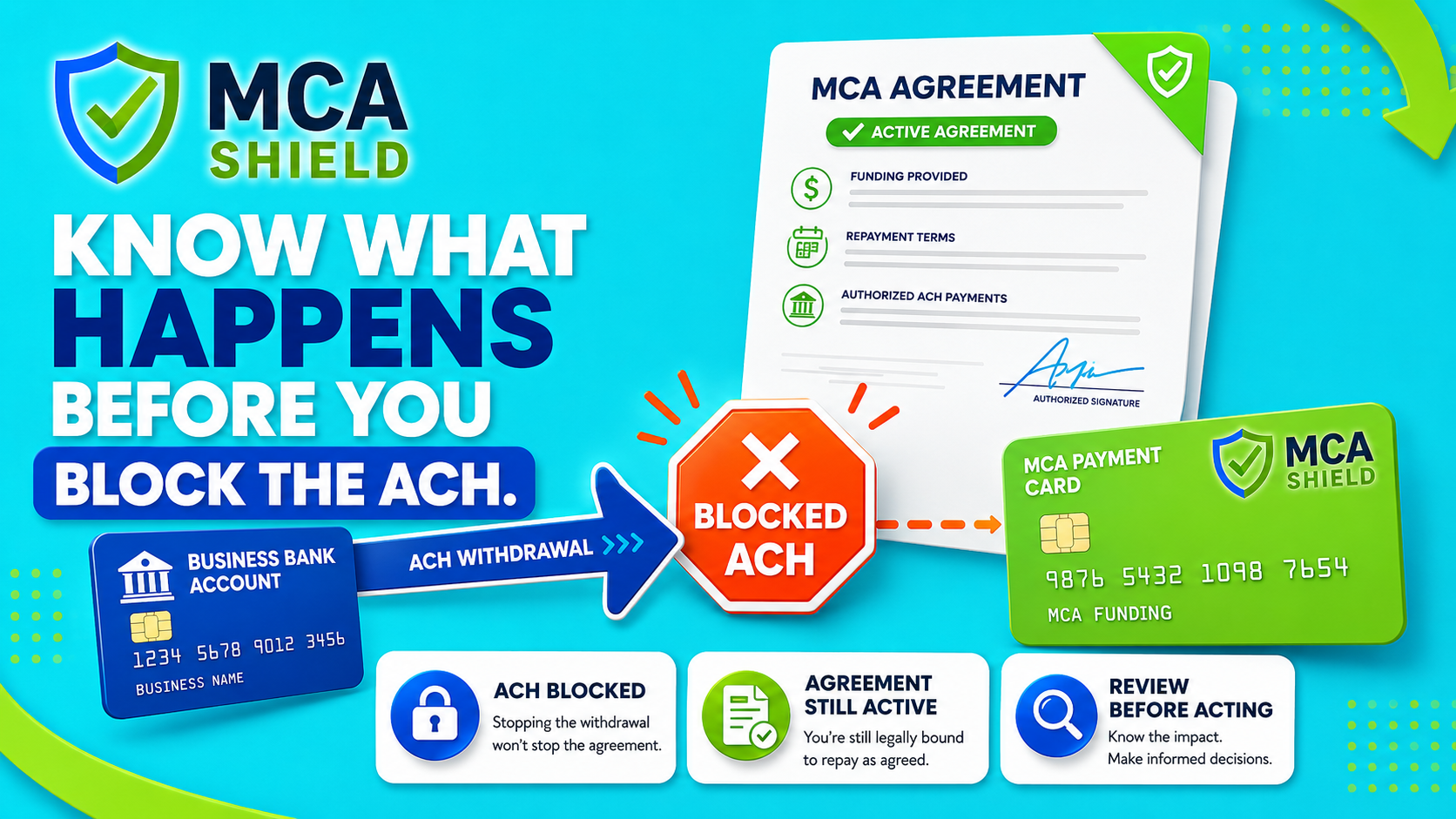
Business owners under severe cash-flow strain sometimes consider stopping automatic withdrawals while negotiating with an MCA company. However, revoking ACH authorization and changing your contractual payment obligations are not necessarily the same thing.
Even if a bank stops processing a particular debit, the MCA agreement may still require payment under its existing terms. Before blocking or revoking MCA ACH withdrawals during negotiations, it is important to understand the agreement, the possible consequences, and whether a new payment arrangement has been confirmed.
What Happens When You Revoke ACH Authorization
Revoking ACH authorization generally means withdrawing permission for a company to debit funds electronically from a bank account. However, doing so does not automatically cancel the MCA agreement or eliminate the amount that may still be owed.
The effect of revoking authorization can depend on the language in the MCA agreement, the ACH authorization, bank procedures, and applicable law. The MCA company may also have other contractual remedies if scheduled payments are no longer received.
For this reason, a business should not assume that stopping an ACH debit also stops its underlying payment obligation. If negotiations are already underway, it may be better to seek a written payment modification that clearly explains how future payments will be handled.
Risks of Blocking Withdrawals Without a New Payment Agreement
Blocking withdrawals before new terms are finalized can create additional problems. Depending on the agreement, missed payments may lead the MCA company to claim that the business is in default.
Possible consequences may include:
- Collection activity
- Default notices
- Additional fees or charges permitted by the agreement
- Enforcement of UCC-related rights
- Claims involving a personal guarantee
- Potential legal action
The exact consequences depend on the contract and the circumstances. That is why businesses should be cautious about making sudden payment changes without first understanding the potential impact.
A pending negotiation does not necessarily protect the business from these risks. Until new terms are accepted, the original payment requirements may remain in effect.
Why the Contract Should Be Reviewed Before Taking Action
Before stopping or changing ACH withdrawals, review the MCA agreement in detail. Pay particular attention to provisions covering ACH authorization, default, reconciliation, payment modifications, UCC filings, and personal guarantees.
You should also determine whether the agreement includes a process for requesting a payment adjustment when revenue falls. If a reconciliation or modification provision exists, following that procedure may provide a more structured way to address an unaffordable withdrawal.
Most importantly, do not rely only on verbal discussions. Any negotiated change should clearly state the new payment amount, frequency, effective date, and duration in writing.
Understanding the contract before taking action can help a business avoid unnecessary surprises and make more informed decisions while working toward lower, more manageable MCA payments.
What Happens If MCA Withdrawals Overdraw Your Business Account?
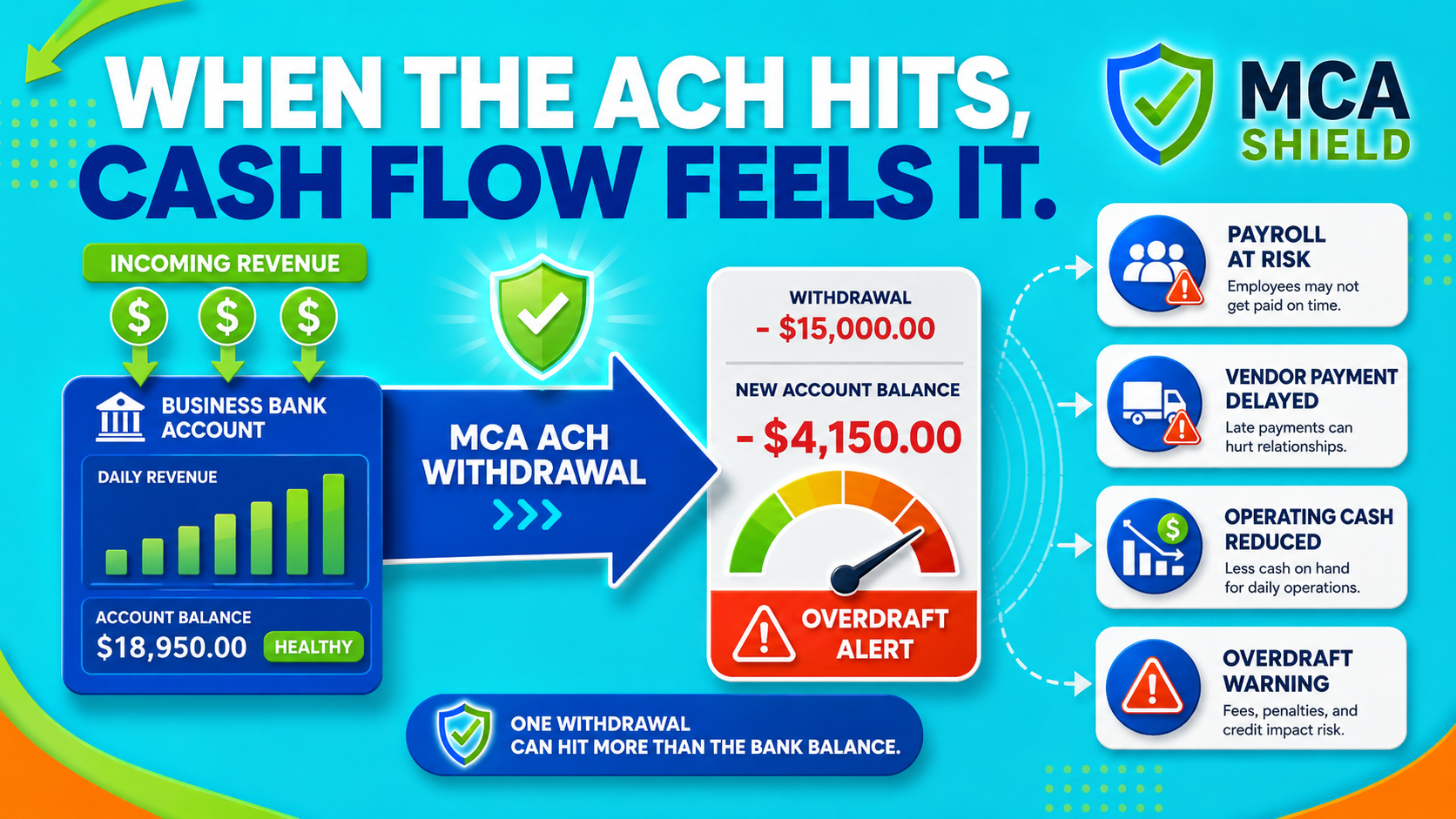
When an MCA withdrawal hits an account with limited available funds, the result can be more than a simple overdraft fee. Repeated ACH withdrawals can quickly disrupt business cash flow and leave less money available for essential operating expenses.
This can become especially difficult when MCA ACH withdrawals during negotiations continue before new payment terms are approved. If the withdrawal amount is already too high for current revenue, one debit can create problems that affect several other payments.
Overdrafts Can Threaten Payroll and Vendor Payments
A large MCA withdrawal can reduce the funds available for payroll, vendors, rent, utilities, inventory, and other operating costs. If the account becomes overdrawn, scheduled payments may be delayed or returned.
That can create a chain reaction. Employees still need to be paid. Vendors may place accounts on hold. Automatic payments for insurance, equipment, or utilities may also fail.
When MCA payments begin competing with essential expenses, the business may be dealing with a payment structure that no longer fits its current cash flow. This is one reason it is important to calculate what the business can realistically afford before negotiating new terms.
Repeated Withdrawals Can Increase Cash-Flow Problems
One overdraft can be difficult. Repeated ACH attempts can make the situation worse. Depending on the bank and the payment activity, unsuccessful debits may lead to returned-payment fees, overdraft charges, and additional strain on the account.
The business may then begin using incoming revenue simply to cover previous shortages. That leaves even less working capital for normal operations and can make it harder to stabilize the company.
If withdrawals are repeatedly pushing the account below zero, it may be time to review the MCA balance, withdrawal amount, revenue, and essential expenses together. A successful negotiation should focus on creating a payment that the business can manage without sacrificing the cash needed to keep operating.
Can Stopping ACH Payments Trigger an MCA Default?
Stopping ACH payments may create serious consequences if the merchant cash advance agreement requires scheduled withdrawals. In some cases, an MCA company may treat missed or blocked payments as a default under the agreement.
That does not mean every stopped ACH payment automatically results in default. The outcome depends on the specific contract language, payment history, circumstances, and applicable law. Before changing how payments are made, a business should understand what the agreement says and how the MCA company may respond.
How MCA Agreements Define Default
Most MCA agreements contain a section that explains what may constitute an event of default. This language can vary significantly from one agreement to another.
A default provision may address issues such as missed payments, blocked ACH withdrawals, changes to the designated bank account, inaccurate financial information, or violations of other contract terms. Some agreements may also include requirements related to maintaining access to the business bank account used for withdrawals.
This is why stopping an ACH payment should not be viewed as simply turning off an automatic debit. Depending on the agreement, the MCA company may consider the action a breach of the payment terms.
During MCA ACH withdrawals during negotiations, business owners should determine whether the existing agreement remains active until a new payment arrangement is formally approved.
UCC Filings, Personal Guarantees, and Collection Risk
If an MCA company believes a business has defaulted, it may attempt to enforce rights available under the agreement and applicable law. The potential consequences can depend heavily on the structure of the transaction.
A UCC filing may give the MCA company a security interest in certain business assets, depending on the agreement and filing. A personal guarantee may also create additional exposure for an owner or guarantor if the conditions for enforcement are met.
Default may also lead to collection efforts, demands for payment, increased communication from the funder, or possible legal action. These possibilities make it important to understand the agreement before intentionally stopping withdrawals.
The existence of a UCC filing or personal guarantee does not mean every MCA company will respond in the same way. However, these provisions should be reviewed as part of the overall risk analysis.
Why Default Provisions Matter During Negotiations
Negotiations can become more difficult if the business accidentally triggers a default while trying to lower its payments. A company may be discussing reduced withdrawals while the original contract still requires the existing payment schedule.
That is why the default section should be reviewed before ACH payments are changed. Business owners should understand what actions the contract prohibits, what notice may be required, and whether reconciliation or modification provisions offer another way to address payment problems.
Whenever possible, a negotiated arrangement should be confirmed in writing before the payment schedule changes. The written terms should identify the new payment amount, frequency, effective date, and any temporary or permanent changes to the original agreement.
Understanding these provisions can help a business negotiate more carefully while working toward manageable MCA payments and improved cash flow.
How to Negotiate Lower MCA Withdrawals
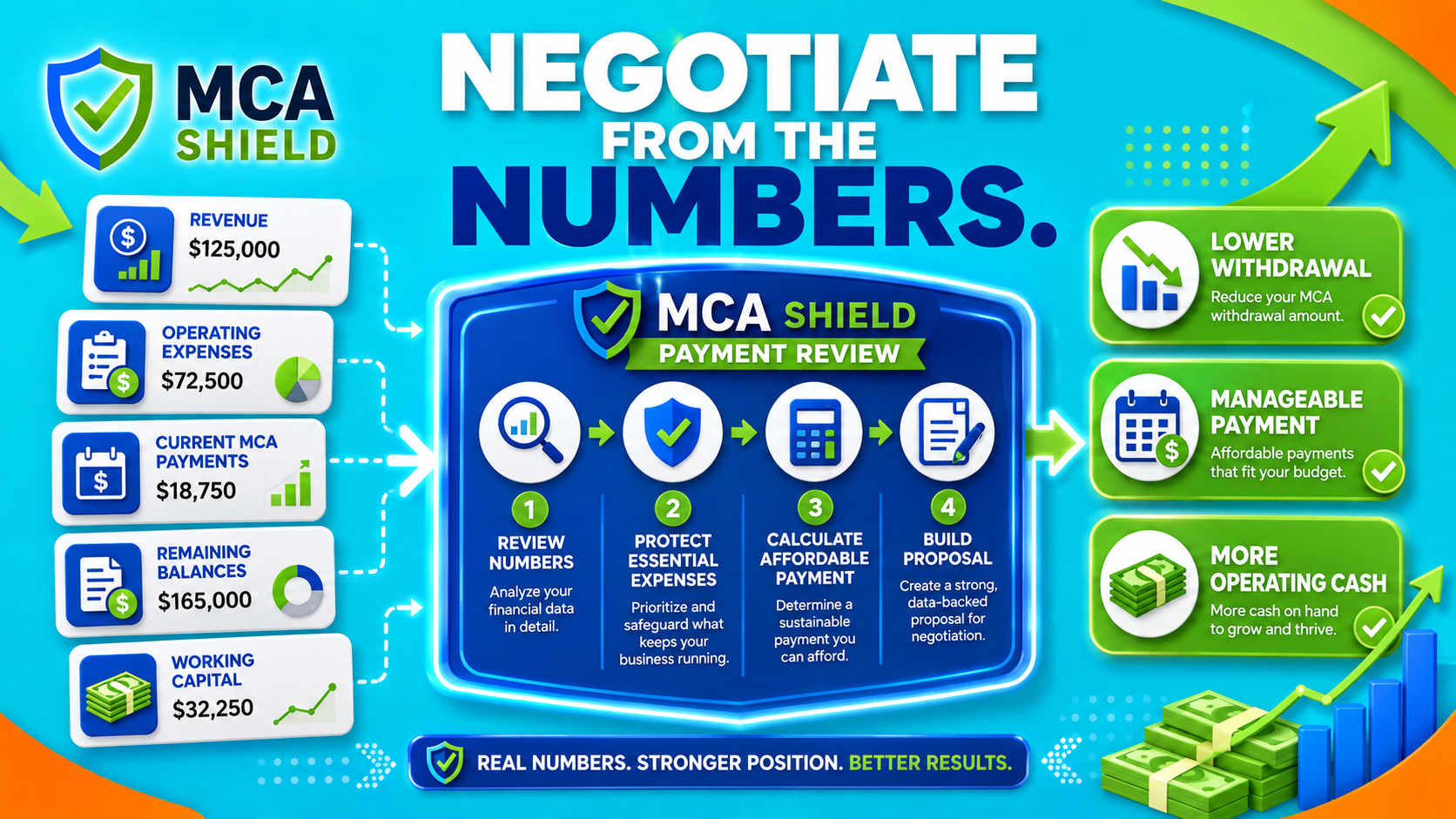
When daily or weekly MCA payments become difficult to manage, negotiation may help create a more sustainable payment structure. The goal should be to show why the current withdrawals are putting strain on the business and what payment amount can realistically be maintained.
A strong negotiation is based on real financial numbers, not guesswork. Clear documentation can help support a request for lower withdrawals and make it easier to explain why the existing payment schedule is no longer workable.
Document Revenue, Expenses, and Current MCA Payments
Start by gathering a clear picture of the business finances. This should include monthly revenue, operating expenses, current MCA balances, and daily or weekly withdrawal amounts.
It is also helpful to review major expenses such as:
- Payroll
- Rent or lease payments
- Vendor obligations
- Inventory
- Insurance
- Utilities
- Taxes
- Other essential operating costs
This information helps show how much cash is actually available after the business covers its core expenses. It can also demonstrate why the current MCA payment may be creating excessive cash-flow pressure.
If the business has multiple advances, include every active MCA. Looking at the full payment burden is important when deciding what kind of reduction is needed.
Calculate a Payment the Business Can Realistically Afford
The next step is to determine what the business can pay without putting normal operations at risk. A lower payment should still leave enough cash available to cover payroll, vendors, operating expenses, and working capital needs.
For example, simply asking for a 50 percent reduction may not solve the problem if the new payment is still too high. The payment should be based on the company’s actual revenue and expenses.
A practical calculation should consider:
Monthly Revenue – Essential Operating Expenses = Available Cash Flow
From there, the business can determine how much of that available cash flow can reasonably go toward MCA payments.
The objective is to create a manageable MCA payment that the business has a realistic chance of maintaining over time.
Present a Clear Payment Proposal
Once the numbers are organized, the business can present a specific proposal to the MCA company. Avoid making a vague request to “lower the payment.” Instead, explain what the business can afford and why.
A clear proposal may include the requested payment amount, payment frequency, current revenue, major expenses, and reason for the requested change.
For example, a business currently paying $1,500 per day may determine that a $750 daily payment or a structured weekly payment is more realistic based on current cash flow.
Supporting the request with financial information can make the proposal easier to evaluate. It also keeps the negotiation focused on creating a payment structure that the business can actually maintain.
Before relying on any new arrangement, make sure the revised payment terms are confirmed in writing. The written agreement should clearly identify the new amount, frequency, effective date, and duration of the modification.
Why Written Confirmation Matters Before ACH Payments Change
When an MCA company agrees to reduce or modify a payment, the change should be clearly documented before the business relies on it. Written confirmation can help prevent confusion about ACH withdrawals, payment amounts, and due dates.
This is especially important when MCA ACH withdrawals during negotiations are still being processed. A verbal discussion may not be enough to stop the original payment schedule. Clear written terms help both sides understand exactly what has changed.
Confirm the New Withdrawal Amount and Frequency
Any payment modification should clearly state the new ACH withdrawal amount and how often payments will be taken.
For example, the agreement should confirm whether payments will be:
- Daily
- Weekly
- Biweekly
- Based on another agreed schedule
The document should also identify the exact dollar amount or payment calculation being used.
This helps avoid a situation where the business expects a reduced withdrawal but the original amount is still debited from the account. If several MCAs are involved, each payment arrangement should be documented separately.
A clear payment schedule also makes it easier for the business to plan for payroll, vendors, inventory, rent, and other essential expenses.
Verify the Effective Date of the New Payment Terms
One of the most important details is the effective date of the new payment arrangement.
A business may reach an agreement on Monday, but that does not necessarily mean a previously scheduled withdrawal will immediately change. The written modification should explain when the new amount begins and whether any upcoming ACH debit will still be processed under the original terms.
Before assuming a payment has changed, confirm:
- The first date the new payment will be withdrawn
- The amount of that withdrawal
- The new payment frequency
- Whether the arrangement is temporary or permanent
Knowing the effective date can help prevent unexpected debits and make it easier to manage business cash flow during MCA negotiations.
Keep Records of Every Payment Modification
Keep copies of all documents related to the negotiation. This may include emails, written agreements, payment schedules, account statements, and notices from the MCA company.
If the payment terms change more than once, maintain a clear record of each modification. This can help establish which payment schedule was in effect at a particular time.
Business owners should also monitor their bank accounts after new terms begin. Compare each ACH debit with the agreed withdrawal amount and frequency. If something does not match the written agreement, address the issue quickly.
Strong documentation can reduce misunderstandings and give the business a clearer record of what was negotiated. Before relying on any payment change, make sure the new MCA payment terms are clearly confirmed in writing.
How to Protect Cash Flow While MCA Negotiations Are Pending
Negotiating lower MCA payments can take time. During that period, daily or weekly ACH withdrawals may continue, which can make it harder to manage normal business expenses.
While MCA ACH withdrawals during negotiations are still active, the business should focus on protecting the cash needed to operate. That means knowing what must be paid, avoiding new debt that could increase the payment burden, and watching the business bank account carefully.
Prioritize Payroll, Vendors, and Essential Operating Expenses
Start by identifying the expenses that are necessary to keep the business running. These may include payroll, rent, utilities, insurance, inventory, taxes, equipment costs, and critical vendor payments.
Create a simple cash-flow budget that shows:
- Expected incoming revenue
- Current MCA withdrawals
- Payroll obligations
- Vendor payments
- Essential operating expenses
- Available working capital
This can help show exactly how much money remains after required expenses are paid.
If MCA withdrawals are taking so much revenue that the business is struggling to cover essential costs, those numbers can also support a request for lower MCA payments. Rather than simply telling the MCA company that the payment is too high, the business can provide financial information that explains why a different payment amount may be necessary.
Protecting essential expenses is especially important because missing payroll or falling behind with key vendors can create problems beyond the MCA itself.
Avoid Taking Another MCA to Cover Existing Withdrawals
When cash becomes tight, taking another merchant cash advance may seem like a quick way to cover existing payments. However, using a new MCA to pay an existing MCA can make the financial situation more difficult.
A new advance usually creates another daily or weekly withdrawal. Instead of reducing the existing payment burden, the business may end up with several withdrawals coming from the same bank account.
This is commonly known as stacking MCAs.
For example, a business struggling with two withdrawals may take a third advance to cover payroll and operating expenses. The additional funding may provide temporary cash, but the new withdrawal can reduce future cash flow even further.
Before taking another MCA, look at the total financial picture. Consider the remaining balances, current withdrawals, revenue, expenses, and working capital needs.
The goal during negotiations should be to create a payment structure the business can maintain, not add another obligation that increases the pressure.
Monitor Your Business Account Closely
Business owners should monitor their bank accounts carefully while MCA negotiations are underway. Do not assume that a requested payment reduction has already been processed.
Track each ACH withdrawal amount, withdrawal date, account balance, and scheduled operating expense. Compare the actual debits with the payment terms currently in effect.
This is especially important after a new payment arrangement has been approved. Confirm that the MCA company is withdrawing the correct amount at the agreed frequency.
Regular account monitoring can also help identify potential cash-flow shortages before they become larger problems. If a major withdrawal is scheduled before payroll or another essential expense, the business may need to address the issue quickly.
Keep copies of bank statements, payment records, emails, and written modifications throughout the negotiation process. Good records make it easier to understand where the money is going and whether the negotiated terms are being followed.
Until new terms are confirmed, protecting cash flow requires careful planning. The business should know its numbers, preserve money for essential operations, and work toward an MCA payment that fits the company’s actual cash flow.
Lower MCA Payment Pressure Before It Gets Worse
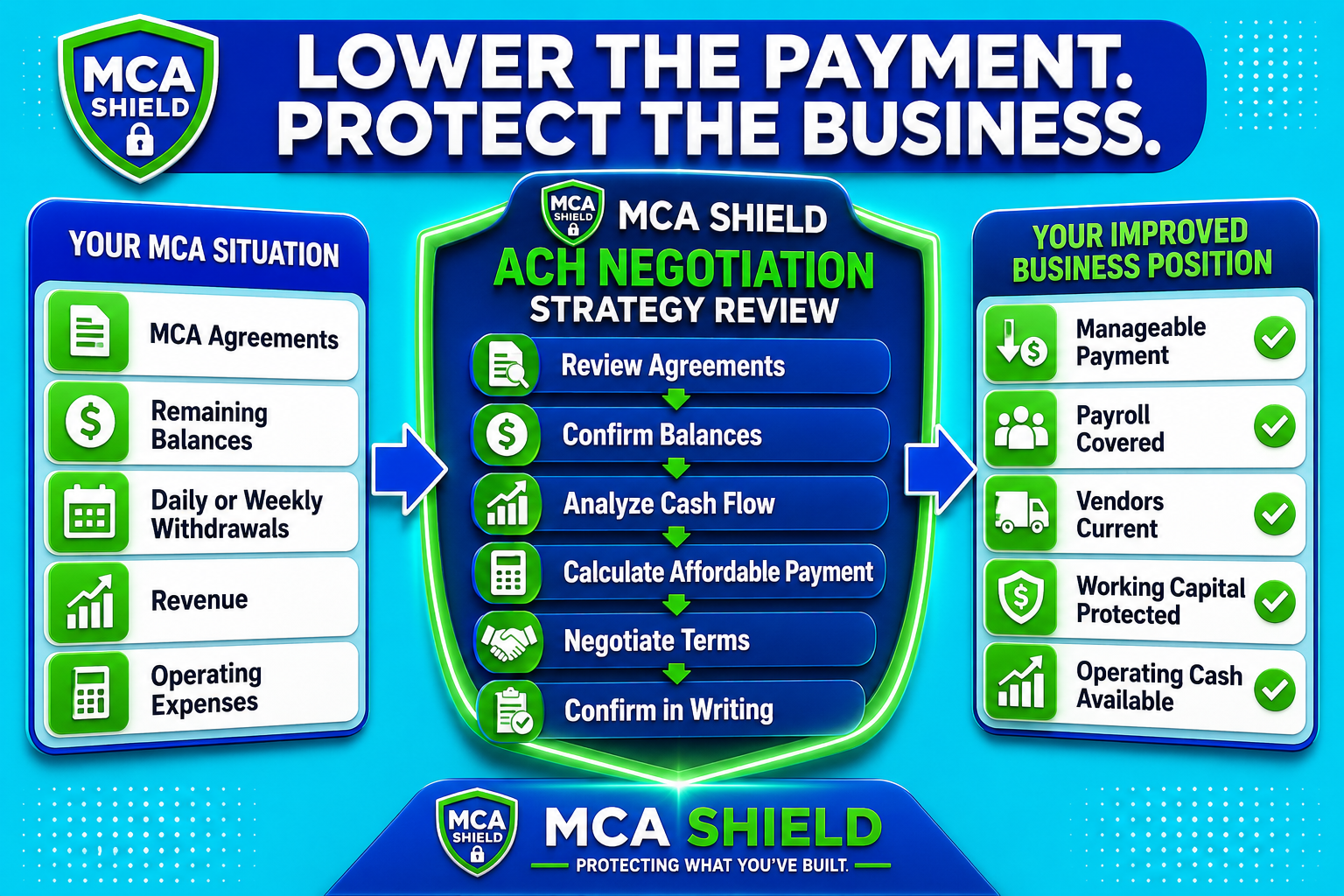
When MCA payments begin taking too much from daily or weekly revenue, waiting can make the situation harder to manage. High ACH withdrawals can quickly reduce working capital and leave less money available for payroll, vendors, rent, inventory, and other essential expenses.
If MCA ACH withdrawals during negotiations are still creating financial strain, the next step should be to understand the complete payment burden. A clear review of the agreements, balances, withdrawals, and business cash flow can help identify what needs to change.
Review Every MCA Agreement, Balance, and Withdrawal
Start by organizing every active MCA obligation. Do not evaluate only the agreement causing the most immediate problem. If the business has multiple advances, the total payment burden matters.
Review the following information for each MCA:
- Original advance amount
- Remaining balance
- Daily or weekly withdrawal
- Estimated payoff amount
- ACH authorization
- Reconciliation provisions
- Default terms
- UCC filings or personal guarantees
Then compare those obligations with the company’s current revenue.
This makes it easier to see how much money is leaving the business each day or week and whether the combined withdrawals are still sustainable. It can also help identify agreements that may have reconciliation, restructuring, or other payment adjustment options.
A complete review gives the business a stronger starting point for negotiations because decisions are based on the full financial picture rather than one payment at a time.
Determine What Your Business Can Realistically Afford
The goal of negotiating lower MCA payments should not be to obtain the smallest payment possible. It should be to establish a payment the business can realistically maintain while continuing to operate.
Calculate current revenue and subtract the essential expenses required to keep the business running. That includes payroll, vendors, rent, taxes, insurance, inventory, utilities, and other necessary operating costs.
The money remaining after those expenses helps show how much cash may be available for MCA payments.
A payment that repeatedly forces the business to choose between the MCA withdrawal and payroll is unlikely to provide long-term stability. The new structure should leave enough room for working capital and normal business operations.
Using actual numbers can also make the negotiation more effective. Instead of simply asking for relief, the business can explain what payment amount fits its current cash flow and why.
Schedule a Free Consultation With MCA Shield
If MCA withdrawals are becoming difficult to manage, MCA Shield can review your current payment situation and help you understand your available options.
The review can include your MCA agreements, remaining balances, current withdrawals, revenue, operating expenses, and overall cash-flow needs. From there, the goal is to identify a strategy designed around what the business can realistically afford.
Depending on the situation, that may involve MCA restructuring, consolidation, negotiation, or another payment relief strategy.
Do not wait until repeated withdrawals begin threatening payroll, vendors, or the money needed to operate. Schedule a free consultation with MCA Shield to review your MCA obligations and explore ways to reduce payment pressure before the situation becomes more difficult.