

ClickCease
Explore options for your business’s MCA payments.Call (918) 608-0117

For many business owners, making daily MCA payments can put significant pressure on their cash flow. When automatic withdrawals drain money from the account every business day, it can become harder to cover payroll, vendors, inventory, taxes, and other essential expenses. In this case study, a butcher shop owner needed a way to reduce MCA payments before the payment schedule created even more financial strain.

After reviewing the business’s MCA agreements, remaining balances, daily withdrawals, revenue, and operating expenses, a more manageable repayment strategy was developed. The result was a 50% reduction in daily MCA payments, giving the business more breathing room to meet its regular obligations and protect working capital.

This case study shows how the right financial review can help a business understand its options before taking on another advance or allowing cash-flow problems to get worse. We will look at what created the payment pressure, how the new payment was calculated, and what changed after the business was able to cut its daily MCA payments in half.

Schedule Your Free Consultation

How Daily MCA Payments Created a Cash-Flow Crisis

The business was generating revenue, but too much money was leaving the bank account every day. Daily MCA payments were consuming cash before it could be used for normal operating expenses. What first seemed manageable gradually turned into a serious cash-flow problem.

As the payment pressure increased, the butcher shop owner had less flexibility to manage weekly expenses. More revenue was not necessarily lacking. It needed a way to reduce MCA payments and keep more cash available for operations.

Multiple MCA Withdrawals Were Draining Working Capital

The business had more than one MCA obligation, which meant multiple withdrawals were hitting the account on a regular basis. Each payment reduced the cash available for inventory, utilities, payroll, vendors, and other essential expenses.

This created a difficult cycle. Revenue would enter the business account, but a large portion of it was quickly removed through MCA withdrawals. The owner had less working capital available to purchase inventory and handle unexpected expenses.

Over time, the payment structure became harder to sustain. The problem was not simply the total MCA balance. The larger issue was how much cash was being withdrawn each day compared with the amount the business needed to operate.

Payroll and Vendor Payments Became Harder to Manage

As daily withdrawals continued, payroll and vendor payments became increasingly difficult to manage. The owner had to make difficult decisions about which expenses could be paid immediately and which ones had to wait.

For a butcher shop, reliable cash flow is especially important. The business needs money available for employees, meat suppliers, inventory, utilities, equipment, and other operating costs. When MCA payments take too much from the account, even a profitable business can experience serious financial pressure.

The goal was not simply to stop making payments. The owner needed a repayment structure that better matched its actual cash flow. That made it important to review the MCA agreements, calculate an affordable payment, and reduce MCA payments before the situation became worse.

The Business’s MCA Debt Before the Payment Reduction

Butcher shop owner facing cash-flow pressure as daily MCA withdrawals drain money needed for payroll inventory vendors and utilities

Before changing the payment structure, the first step was to understand the full financial picture. The business owner needed to know how much MCA debt remained, how much was being withdrawn each day, and how those payments compared with normal business expenses.

This review helped separate the real problem from the symptoms. The issue was not only the amount owed. It was the fact that daily MCA withdrawals were taking too much cash out of the business before essential expenses could be paid.

Reviewing MCA Agreements, Balances, and Daily Withdrawals

Each MCA agreement was reviewed to confirm the remaining balance, current payment amount, withdrawal frequency, and important repayment terms. This was important because the business needed accurate numbers before any payment reduction strategy could be considered.

The review also looked at the combined impact of the MCA obligations. One payment may have seemed manageable on its own. However, when multiple withdrawals were added together, the total daily amount placed significant pressure on the business account.

By reviewing every agreement and withdrawal, the owner could see exactly how much money was leaving the business each week. That created a clear starting point for determining whether the business could reduce MCA payments to a more sustainable level.

Comparing Revenue With Essential Operating Expenses

The next step was to compare the business’s actual revenue with its essential expenses. That included costs such as payroll, meat and inventory purchases, utilities, rent, taxes, insurance, and vendor payments.

This comparison showed how much cash the business truly had available after covering the expenses required to keep operating. It also revealed that the existing MCA payment schedule was using money the business needed for day-to-day operations.

Instead of looking only at the MCA balance, the review focused on what the business could realistically afford to pay while staying open and financially stable. That cash-flow analysis became the foundation for pursuing a lower daily payment and a more manageable repayment structure.

Why the Business Needed to Lower Its Daily MCA Payments

The business was still operating and generating sales, but the existing MCA payment structure was putting too much pressure on cash flow. Too much money was leaving the account each day, leaving less available for the expenses required to keep the butcher shop running.

At that point, the goal was not simply to make the next payment. The owner needed to lower daily MCA payments to a level the business could realistically sustain without creating new financial problems.

The Existing Payment Schedule Was No Longer Sustainable

The original payment schedule may have worked when revenue was stronger, or expenses were lower. However, as business conditions changed, the daily withdrawals became harder to manage.

The problem was the timing and size of the payments. MCA withdrawals were being taken before the business could fully cover payroll, inventory, vendors, utilities, and other essential expenses.

That created constant pressure on the operating account. Even when sales were coming in, the owner had less control over how that revenue could be used.

A more sustainable payment needed to reflect the business’s actual cash flow, current revenue, and essential operating costs. Lowering the payment would give the business more room to operate while continuing to address the MCA obligation.

Taking Another MCA Would Have Added More Payment Pressure

One possible short-term solution would have been to take another merchant cash advance. However, adding new financing could have created another withdrawal on top of the existing payments.

That could have made the situation worse. Using a new MCA to cover payments on older MCAs can increase total payment pressure and reduce working capital even further.

Instead, the business focused on reducing the burden of its existing obligations. The goal was to reduce MCA payments without automatically adding another layer of debt.

By addressing the current payment structure first, the owner had a better opportunity to protect cash flow, keep the business operating, and move toward a repayment plan that was more manageable.

How the Business Qualified for a 50% MCA Payment Reduction

Butcher shop owner reviews cash flow and MCA agreements to reduce daily MCA payments from $1,000 to $500

A 50% reduction was not based on guesswork. The business first had to show that the existing payment structure was creating real cash-flow pressure and that a lower payment would better match its current financial position.

The review focused on three areas: what the business could afford, how revenue and cash flow had changed, and what the MCA agreements allowed or required. Together, those numbers supported the request to reduce MCA payments by 50%.

Calculating the Payment the Business Could Actually Afford

The first step was determining how much the business could reasonably pay without putting normal operations at risk.

Revenue was compared with essential expenses such as payroll, inventory, rent, utilities, taxes, insurance, and vendor obligations. The goal was to identify how much cash remained after the business covered the costs required to stay open.

That analysis showed that the existing daily withdrawal was too aggressive. A lower payment would give the butcher shop more room to operate while still addressing its MCA balance.

Instead of choosing an arbitrary number, the new target payment was based on actual business cash flow. This helped create a stronger case for reducing the daily MCA payment by 50%.

Documenting Revenue and Cash-Flow Changes

The business also needed to support its request with current financial information. That meant documenting changes in revenue, bank balances, operating expenses, and available working capital.

Bank statements and other financial records helped show how the existing MCA withdrawals were affecting the business account. They also demonstrated why the original payment schedule was no longer sustainable.

Clear documentation can make a major difference during MCA negotiations. It gives the funder or servicer a more complete picture of the business and provides a financial basis for requesting a lower payment.

In this case, the records supported the argument that reducing the MCA payments could improve the business’s ability to continue operating and make consistent payments.

Reviewing the MCA Agreements Before Negotiating

Before requesting any payment change, the MCA agreements were reviewed carefully. The business needed to understand the payment terms, remaining balances, reconciliation provisions, default language, ACH authorization, UCC filings, and personal guarantee provisions that could affect the strategy.

This step was important because MCA agreements can differ significantly. A payment reduction should not be pursued without first understanding the obligations already in place.

Once the agreements and financial records were reviewed together, the business had a clearer negotiating position. The goal was to request a payment that reflected current cash flow while also obtaining clear written terms for any approved change.

That preparation ultimately supported a 50% reduction in the daily MCA payment, giving the business more cash to cover essential expenses and stabilize operations.

How the MCA Payment Reduction Strategy Worked

Once the financial review was complete, the next step was to turn the numbers into a workable repayment strategy. The goal was to reduce MCA payments without creating another cash-flow problem.

The strategy focused on negotiating a lower payment, documenting the new terms, and avoiding additional debt while the business regained stability. This gave the owner a clearer path forward and helped protect the cash needed for daily operations.

Negotiating a More Manageable Payment Structure

The business used its financial records to support a request for a lower payment. The negotiation focused on what the butcher shop could realistically afford based on current revenue, essential expenses, and available cash flow.

Rather than asking for temporary relief without a plan, the business presented a payment amount that could be sustained over time. This helped shift the conversation from the original withdrawal amount to a more manageable MCA payment structure.

The result was a significant reduction in the daily payment. By cutting the withdrawal by 50%, the business could keep more money available for payroll, inventory, vendors, and other operating costs.

Confirming the New Payment Terms in Writing

A verbal agreement was not enough. Before relying on the reduced payment, the business needed the updated terms clearly documented.

The written confirmation included the new payment amount, withdrawal frequency, effective date, and any other changes to the repayment arrangement. This helped prevent confusion and gave the owner a clear record of what had been agreed to.

Written terms are especially important when trying to reduce MCA payments. They allow the business to verify the new structure before making financial decisions based on the lower withdrawal.

Avoiding Additional MCA Debt During the Process

The business also avoided taking another MCA while the payment reduction was being negotiated. Adding a new advance could have created another daily or weekly withdrawal and weakened the progress already being made.

Instead, the owner focused on stabilizing the business with the cash flow that was already available. That meant using the payment reduction to protect working capital, payroll, inventory, and vendor relationships.

By reducing the existing payment instead of stacking another MCA on top of it, the business had a better chance to regain control of its finances. The strategy was not just about lowering one payment. It was about creating a more sustainable path forward for the business.

What Changed After Daily MCA Payments Were Cut by 50%

Butcher shop owner benefits from a 50 percent MCA payment reduction with more cash available for payroll vendors inventory and working capital

Reducing the daily MCA payment changed more than one line item in the business account. It improved the timing of cash flow and gave the owner more room to manage normal operating expenses.

With less money leaving the account each day, the butcher shop could keep more revenue available for the expenses that mattered most. The payment reduction helped create a more stable financial position without adding another MCA.

More Cash Became Available for Payroll and Vendors

The biggest immediate change was the amount of cash available for daily operations. With the MCA payment reduced by 50%, more money remained in the business account after each day’s sales.

That gave the owner more flexibility to cover payroll, meat and inventory purchases, supplier invoices, utilities, and other essential expenses.

Instead of constantly deciding which obligation had to wait, the business could manage its expenses with more consistency. The lower payment created room for the company to operate without as much pressure from daily withdrawals.

Overdraft and Cash-Flow Pressure Declined

Before the payment reduction, frequent MCA withdrawals were pushing the business account closer to its limits. That increased the risk of overdrafts, returned payments, and short-term cash shortages.

Once the daily withdrawal was reduced, the account had more breathing room. Cash stayed in the business longer, which made it easier to handle normal fluctuations in sales and expenses.

The result was a noticeable decline in cash-flow pressure. The owner could plan around expected expenses instead of reacting to the next withdrawal.

The Business Regained Control of Working Capital

The most important improvement was greater control over working capital. The business could once again decide how more of its revenue would be used.

That meant more flexibility to purchase inventory, pay employees, maintain vendor relationships, and handle unexpected costs. It also reduced the need to look for another advance just to cover short-term expenses.

By cutting daily MCA payments by 50%, the business created a more manageable repayment structure and kept more cash available for operations. That gave the owner a stronger foundation for improving financial stability and moving the business forward.

What Other Businesses Can Learn From This MCA Case Study

This case study shows that lowering MCA payments can create meaningful cash-flow relief, but the right strategy depends on the financial condition of the business. A payment reduction should be based on real numbers, not simply on the desire to lower the withdrawal.

Business owners should review their MCA agreements, balances, revenue, expenses, and available working capital before deciding what type of relief makes sense. The goal is to create a payment structure the business can actually maintain.

Lower Payments Must Fit the Business’s Actual Cash Flow

A lower payment is only helpful if it matches what the business can realistically afford.

That means looking beyond gross revenue. The business must also account for payroll, inventory, rent, utilities, taxes, vendors, insurance, and other essential expenses.

In this case, the payment reduction worked because the new amount was based on the butcher shop’s actual cash flow. The business could continue addressing its MCA obligation while keeping enough money available to operate.

For other business owners, the same principle applies. The goal should be to reduce MCA payments to a sustainable level, not simply negotiate the lowest possible number.

Acting Before Default Can Create More Options

Waiting until the business is completely out of cash can make an already difficult situation harder to manage.

Business owners who recognize the warning signs early may have more time to review their agreements, gather financial records, and compare possible solutions. Warning signs can include overdrafts, delayed payroll, unpaid vendors, shrinking working capital, and difficulty keeping up with daily withdrawals.

Taking action before the situation becomes more serious can also help the business avoid making rushed decisions, such as taking another MCA simply to cover existing payments.

The earlier the financial problem is identified, the more time the owner has to develop a thoughtful strategy.

Payment Reduction Is Not the Right Strategy for Every MCA

A 50% MCA payment reduction worked for this business, but that does not mean every business will receive the same result.

Each situation is different. The appropriate strategy may depend on the MCA agreement, remaining balance, number of advances, current payment amount, revenue, cash flow, default status, and overall financial condition of the business.

For some businesses, restructuring or reconciliation may provide the right path. Others may need to consider MCA consolidation, negotiation, or settlement.

The most important lesson from this case study is to review the entire financial picture before choosing a solution. The best MCA relief strategy is the one the business can realistically complete while continuing to operate.

Find Out Whether Your MCA Payments Can Be Reduced
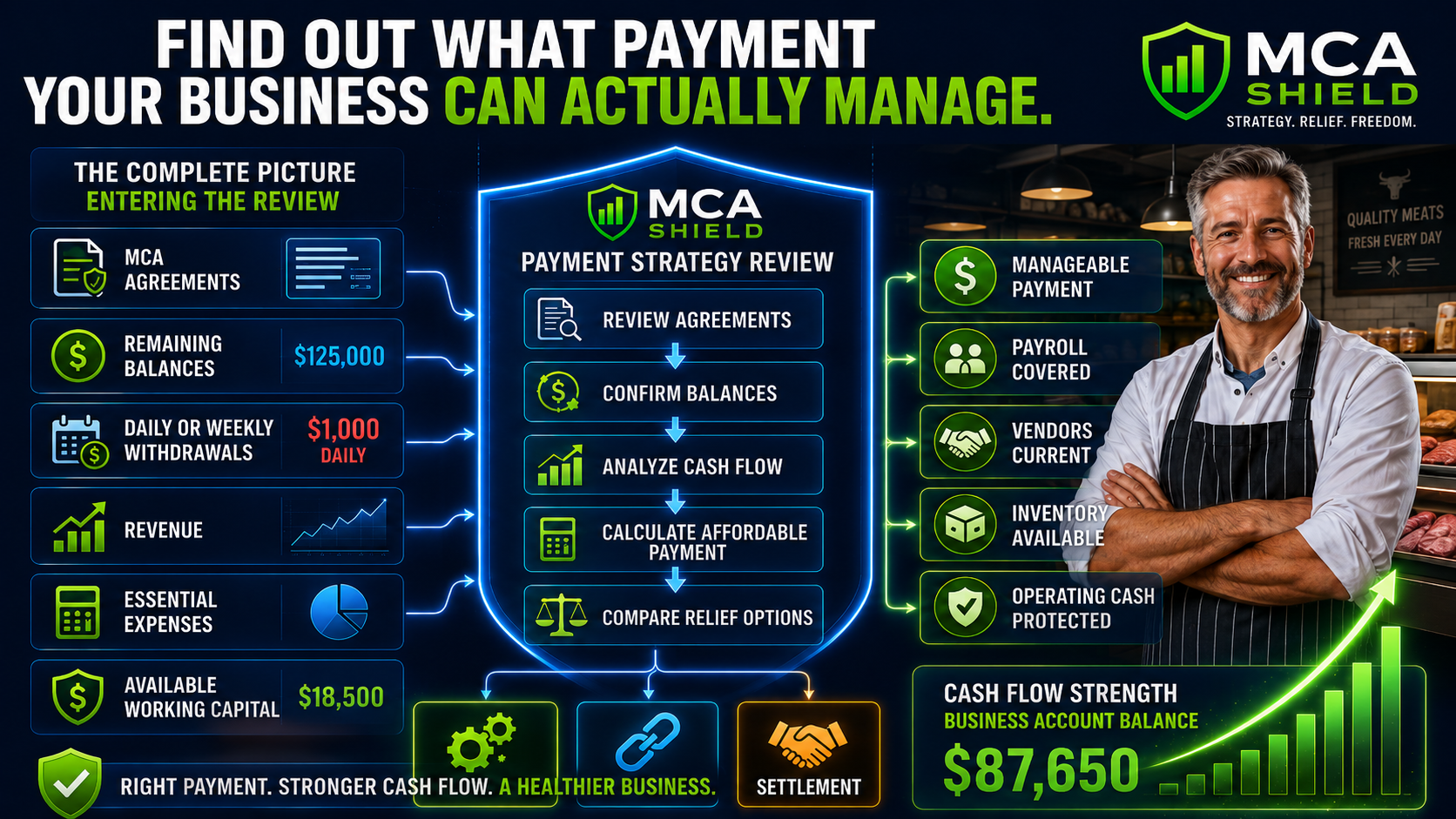
Butcher shop owner reviews MCA payment options to reduce daily withdrawals and protect payroll vendors inventory and operating cash

If daily or weekly MCA withdrawals are putting pressure on your business, it may be time to review your options. You do not have to wait until the business is in default or struggling to cover basic expenses.

A complete financial review can help determine whether it may be possible to reduce MCA payments, restructure existing obligations, or choose another form of MCA debt relief. The right strategy should be based on what your business can realistically afford.

Review Every MCA Agreement, Balance, and Withdrawal

Start by gathering the complete picture of your MCA debt. That includes every agreement, remaining balance, payment amount, and withdrawal schedule.

The review should also look at current revenue, payroll, operating expenses, vendor costs, taxes, and available working capital. These numbers help show how much cash the business needs to continue operating.

When all of the information is reviewed together, it becomes easier to identify whether the current payment structure is sustainable. It also creates a stronger foundation for determining whether the business may be able to lower daily MCA payments.

Compare Restructuring, Consolidation, and Settlement Options

Reducing the payment is one possible solution, but it is not the only one. Depending on the business’s financial situation, other strategies may be worth considering.

MCA restructuring may help adjust the repayment schedule or payment amount. Consolidation may be appropriate when several obligations can be combined into a more manageable structure. Settlement may be considered when the business cannot realistically repay the full balance under the existing terms.

Each option has different costs, risks, and requirements. That is why it is important to compare the total payment, repayment period, fees, and written terms before deciding which strategy fits the business.

Schedule a Free Consultation With MCA Shield

If MCA withdrawals are taking too much cash from your business, MCA Shield can review your current financial situation and help you understand the available options.

The review can include your MCA agreements, remaining balances, daily or weekly withdrawals, revenue, essential expenses, and available cash flow. From there, you can determine what payment your business may realistically be able to manage and compare potential relief strategies.

Schedule a free consultation with MCA Shield to find out whether your MCA payments may be reduced and what steps could help protect payroll, vendors, working capital, and the cash your business needs to keep operating.