
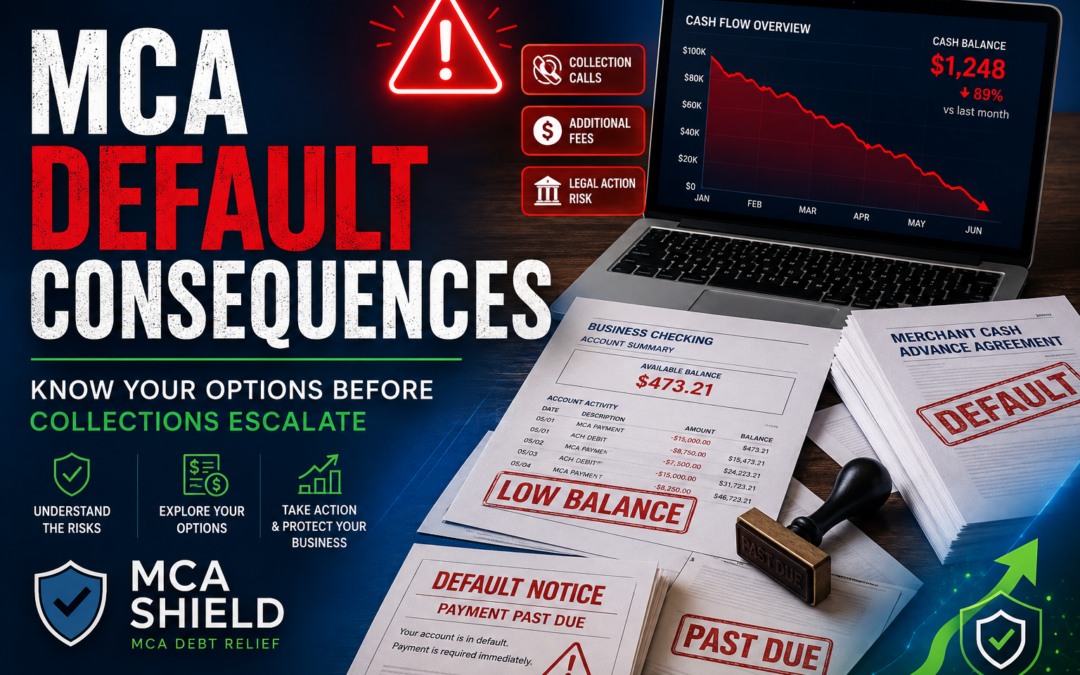
Merchant Cash Advance Default Consequences can create significant financial pressure for a business. Missed payments may trigger collection activity, additional fees, legal action, and cash flow disruptions, making it harder to maintain daily operations. Understanding the potential consequences of default can help business owners take action early and explore available solutions before the situation becomes more difficult to manage.
Schedule Your Free Consultation
What Is a Merchant Cash Advance Default?
A merchant cash advance default occurs when a business fails to meet its repayment obligations under its MCA agreement. While each contract is different, default generally means the business is no longer making the required payments or has violated specific terms of the funding agreement.
When an MCA Is Considered in Default
An MCA may be considered in default after missed payments, returned ACH withdrawals, failure to maintain the designated business bank account, or other contract violations. Some agreements contain broad default provisions that allow funders to declare a default even before payments have stopped completely.
Common Reasons Businesses Fall Behind on MCA Payments
Businesses often default on MCA payments when cash flow becomes strained. Common causes include:
- Declining sales or revenue
- Seasonal business slowdowns
- Rising operating expenses
- Multiple stacked MCA obligations
- Payroll and vendor payment challenges
- Unexpected emergencies or economic disruptions
As payment pressure increases, many businesses find it difficult to keep up with daily or weekly withdrawals, creating a cycle that can quickly lead to default.
Merchant Cash Advance Default Consequences: What Happens First?
The consequences of a merchant cash advance default often begin quickly. Once a payment is missed or a default is declared, the funder may take immediate steps to recover the remaining balance. The exact response depends on the agreement, but collection efforts typically become more aggressive as the default continues.
Increased Collection Activity
One of the first consequences of a merchant cash advance default is increased collection activity. Business owners may receive more frequent calls, emails, and payment demands from the funder or its representatives. The goal is usually to bring the account current or collect the outstanding balance as quickly as possible.
Additional Fees and Penalties
Some MCA agreements allow funders to impose additional fees after a default occurs. Depending on the contract, businesses may face default charges, collection costs, legal expenses, or other penalties that increase the total amount owed.
More Frequent Communication From the Funder
Businesses in default often experience a significant increase in communication from the funder. Requests for financial information, payment updates, and settlement discussions may become more frequent. In some cases, funders may escalate collection efforts if they believe the business is unable or unwilling to resolve the obligation.
How Merchant Cash Advance Default Consequences Can Affect Your Business
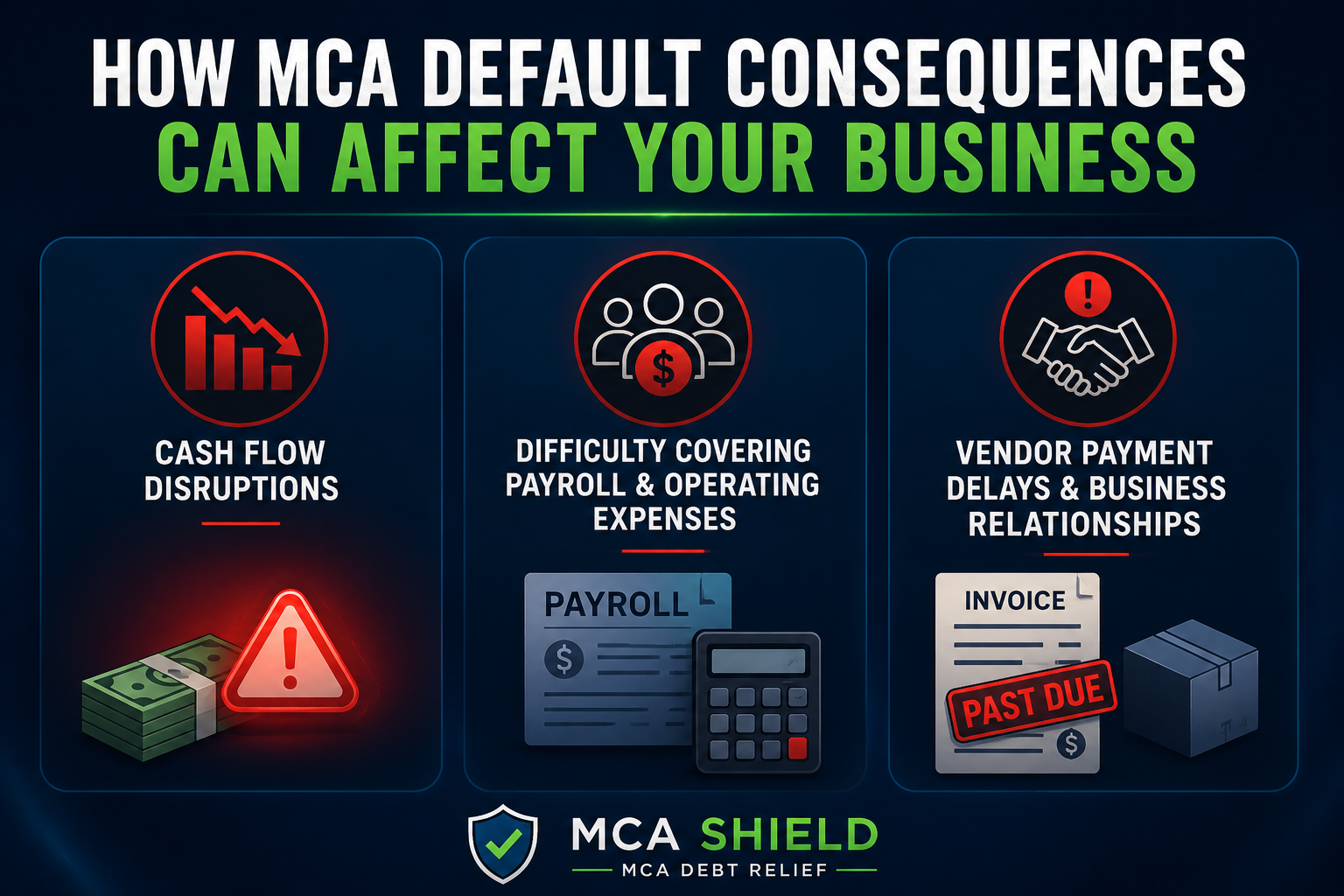
Consequences of a merchant cash advance default often extend beyond missed payments. As collection efforts increase, businesses may experience growing financial pressure that affects day-to-day operations, employee obligations, and relationships with vendors.
Cash Flow Disruptions
Defaulting on an MCA can create serious cash flow challenges. Collection activity, additional fees, and ongoing repayment demands may reduce the funds available for normal business expenses, making it more difficult to maintain stable operations.
Difficulty Covering Payroll and Operating Expenses
As cash flow tightens, many businesses struggle to cover essential expenses. Payroll, rent, utilities, inventory purchases, and other operating costs may become harder to manage, increasing financial stress and operational risk.
Vendor Payment Delays and Business Relationships
Merchant cash advance default can also affect vendor relationships. Delayed payments may lead to tighter payment terms, reduced credit availability, or supply chain disruption. Over time, these issues can make it more difficult for a business to operate efficiently and maintain important partnerships.
Legal Consequences of Merchant Cash Advance Default
In some cases, merchant cash advance default consequences can extend beyond collection calls and payment demands. Depending on the terms of the agreement, funders may pursue various legal remedies to recover the outstanding balance. Understanding these potential risks can help business owners make informed decisions before the situation escalates.
Contract Enforcement Actions
Most MCA agreements contain provisions that allow the funder to enforce the terms of the contract after a default occurs. These actions may include accelerated repayment demands, collection efforts, or other remedies outlined in the funding agreement.
Personal Guarantee Exposure
Some merchant cash advance agreements include a personal guarantee. If a business defaults, the funder may attempt to hold the guarantor personally responsible for certain obligations under the contract. The scope and enforceability of these provisions can vary based on the agreement and applicable law.
UCC Liens and Their Impact on Future Financing
Many MCA providers file a UCC lien when funding is issued. While a UCC lien does not automatically prevent a business from obtaining financing, it can make it more difficult to qualify for future loans, lines of credit, or other funding options until the lien is addressed.
Potential Lawsuits and Judgments
If collection efforts are unsuccessful, some funders may pursue legal action. Lawsuits can lead to additional expenses, legal proceedings, and court judgments depending on the circumstances. Businesses that receive legal notices related to an MCA default should consider reviewing their options as early as possible.
Can a Merchant Cash Advance Company Freeze Your Bank Account?
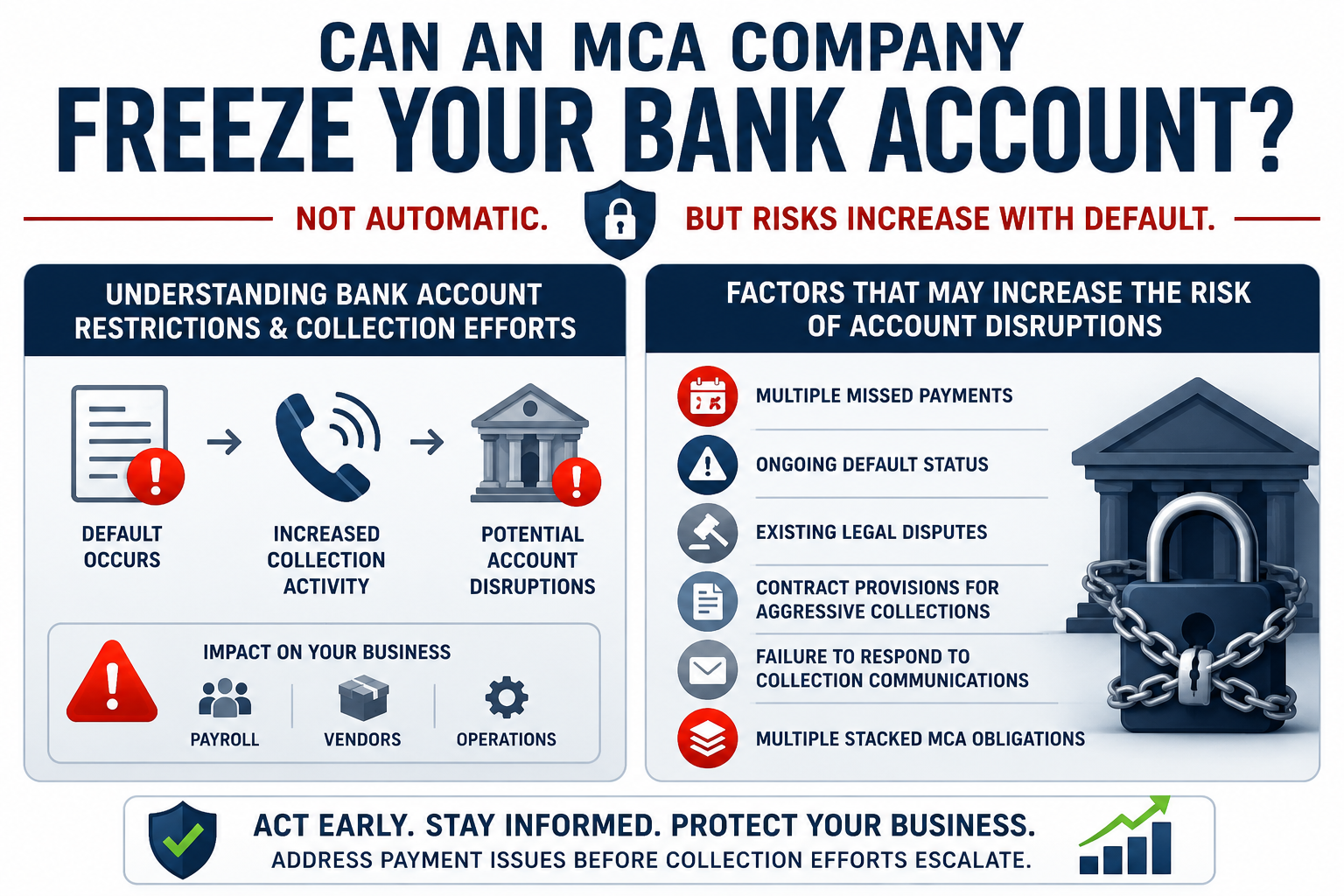
Many business owners worry about whether a merchant cash advance company can freeze their bank account after a default. The answer depends on the specific facts of the situation, the terms of the agreement, and any legal actions that may occur. While a default does not automatically result in a bank account freeze, collection efforts can become more aggressive if the debt remains unresolved.
Understanding Bank Account Restrictions and Collection Efforts
After a default, MCA funders often focus on collecting the outstanding balance through contract enforcement and other collection activities. Depending on the circumstances, businesses may experience increased payment demands, legal notices, or actions that affect access to business funds. The process varies based on the agreement, applicable laws, and whether legal proceedings are involved.
Factors That May Increase the Risk of Account Disruptions
Several factors may increase the likelihood of account-related issues following an MCA default, including:
- Multiple missed payments
- Ongoing default status
- Existing legal disputes
- Contract provisions that favor aggressive collection efforts
- Failure to respond to collection communications
- Multiple stacked MCA obligations
Because account disruptions can severely impact payroll, vendor payments, and daily operations, businesses often benefit from addressing MCA payment problems before collection efforts escalate.
The most important lesson is to focus on the total repayment amount, not just the amount being advanced. Comparing the true cost of funding can help business owners make more informed decisions and avoid unexpectedly expensive financing.
Key Takeaway: Before accepting a Merchant Cash Advance, calculate exactly how much you will repay and consider how those payments will impact your cash flow over time.
Warning Signs Merchant Cash Advance Default Consequences Are Escalating
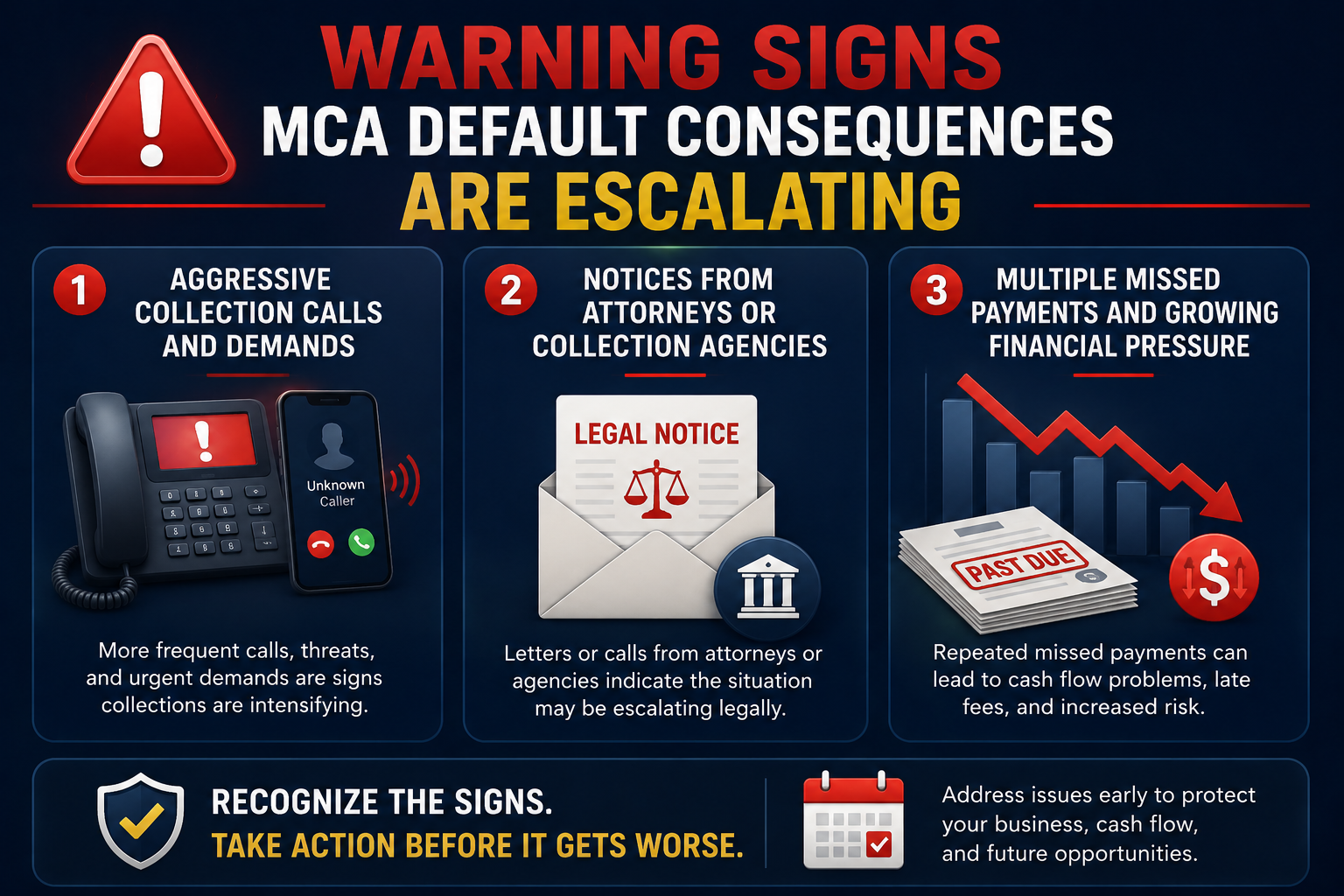
Merchant cash advance default consequences often become more serious over time. Recognizing the warning signs early may help businesses address the situation before collections, legal actions, or cash flow problems become more difficult to manage.
Aggressive Collection Calls and Demands
As a default continues, collection efforts often increase. Businesses may receive more frequent phone calls, emails, payment demands, and requests for immediate action. Persistent collection activity can be a sign that the funder is preparing to pursue stronger enforcement measures.
Notices From Attorneys or Collection Agencies
Receiving communication from an attorney, law firm, or collection agency may indicate that the matter is moving beyond standard collection efforts. While not every notice results in legal action, these communications should be taken seriously and reviewed promptly.
Multiple Missed Payments and Growing Financial Pressure
Repeated missed payments often signal that the underlying cash flow problem is getting worse. Businesses may begin experiencing overdrafts, vendor payment delays, payroll challenges, or the need to seek additional financing to stay current. These warning signs often indicate that merchant cash advance default consequences are escalating and that it may be time to explore available relief options.
Options for Businesses Facing Merchant Cash Advance Default
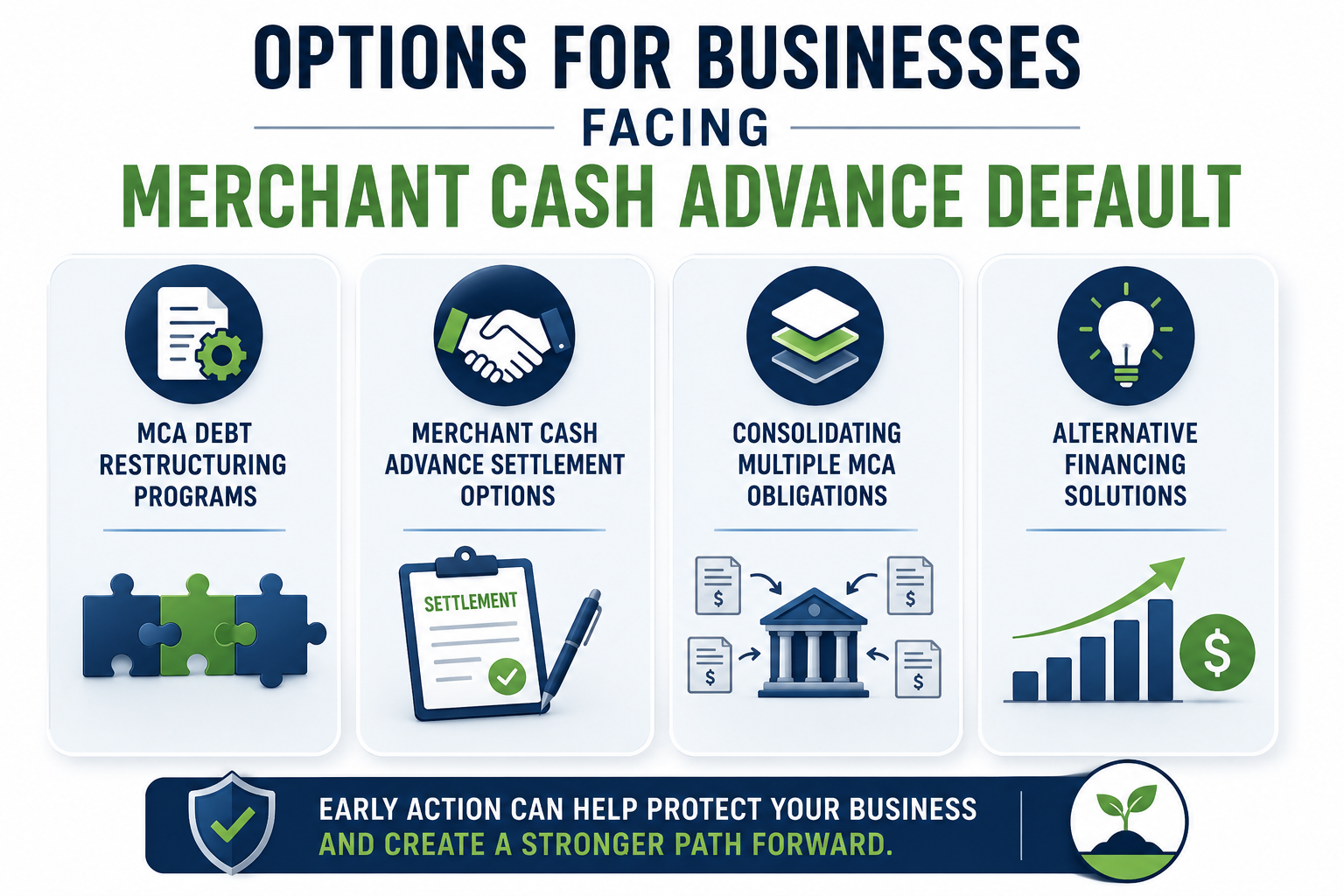
A merchant cash advance default does not always mean a business has run out of options. Depending on the circumstances, several solutions may be available to help reduce financial pressure, improve cash flow, and create a more manageable path forward.
MCA Debt Restructuring Programs
MCA debt restructuring programs are designed to modify existing repayment arrangements and create a more sustainable payment structure. In some cases, restructuring may reduce payment frequency or improve cash flow, allowing the business to continue operating while addressing outstanding obligations.
Merchant Cash Advance Settlement Options
MCA debt settlement programs involve negotiating with funders to resolve MCA debt for an agreed amount. While results vary, settlements may provide an opportunity to eliminate existing obligations and avoid prolonged collection activity when repayment has become difficult.
Consolidating Multiple MCA Obligations
Businesses with several MCA advances may benefit from consolidating multiple obligations into a more manageable repayment arrangement. Consolidation can simplify payments and help reduce the operational challenges that often accompany stacked MCA debt.
Alternative Financing Solutions
Depending on the business’s financial situation, alternative financing options may also be available. Traditional loans, lines of credit, or other funding sources may provide additional flexibility and help replace high-frequency MCA payments with a more predictable repayment structure.
Exploring how to get out of MCA loans early often provides more flexibility and may help businesses address merchant cash advance default consequences before collection efforts become more severe.
Why Taking Action Early Matters
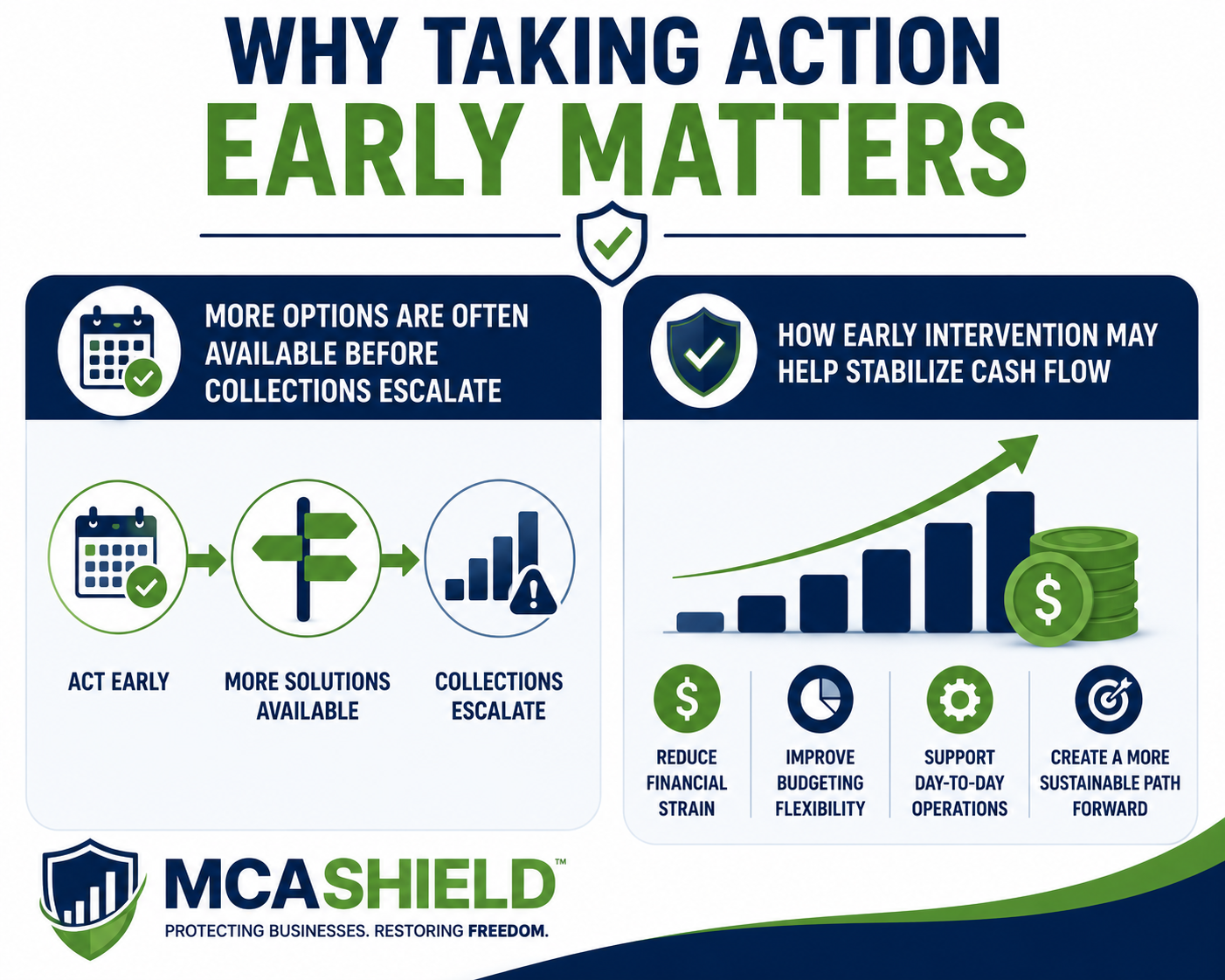
When merchant cash advance default consequences begin to develop, time is often one of the most important factors. Businesses that address payment challenges early typically have more flexibility and a wider range of potential solutions than those that wait until collection efforts have intensified.
More Options Are Often Available Before Collections Escalate
The earlier a business responds to MCA payment difficulties, the more options may be available. Restructuring programs, settlement opportunities, and other MCA relief strategies are often easier to explore before legal actions, aggressive collections, or additional financial pressure complicate the situation.
How Early Intervention May Help Stabilize Cash Flow
Early intervention can help businesses regain control of cash flow before operational challenges become severe. Addressing MCA obligations proactively may reduce financial strain, improve budgeting flexibility, and create a more sustainable path forward while allowing the business to continue focusing on day-to-day operations.
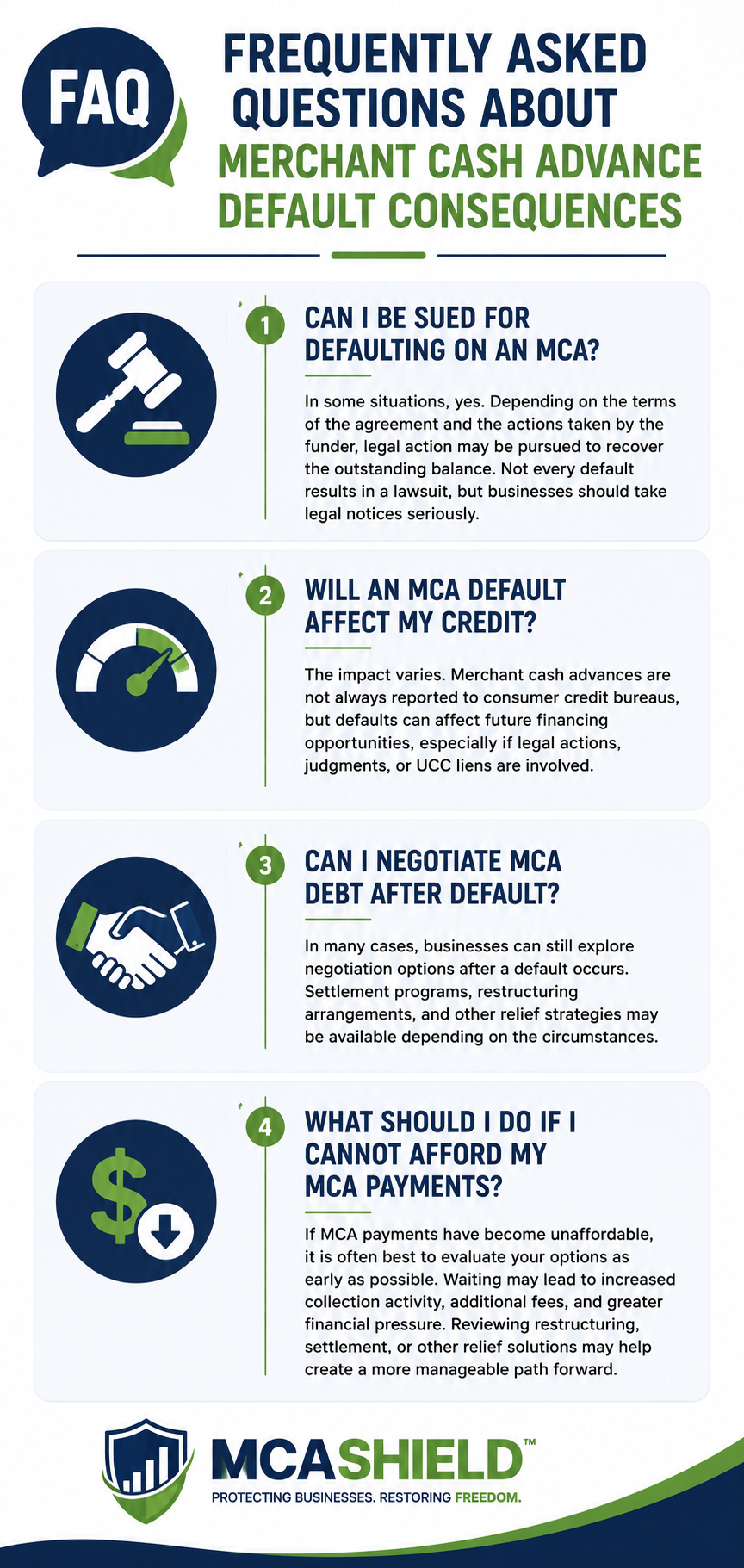
Frequently Asked Questions About Merchant Cash Advance Default Consequences
Taking Action Before Merchant Cash Advance Default Consequences Get Worse
Merchant cash advance default consequences rarely improve on their own. As missed payments continue, collection activity, legal risks, and cash flow challenges often become more difficult to manage. Taking action early may provide access to more options and help prevent additional financial pressure from disrupting your business.
Schedule a Free Consultation to Review Your Options
If MCA payments have become difficult to manage, now may be the time to explore available solutions. Whether you are facing a recent default, struggling with multiple MCA obligations, or experiencing ongoing cash flow challenges, understanding your options is the first step toward finding a path forward.
Schedule a free consultation with MCA Shield today to review your situation and explore potential solutions before merchant cash advance default consequences become more severe.