
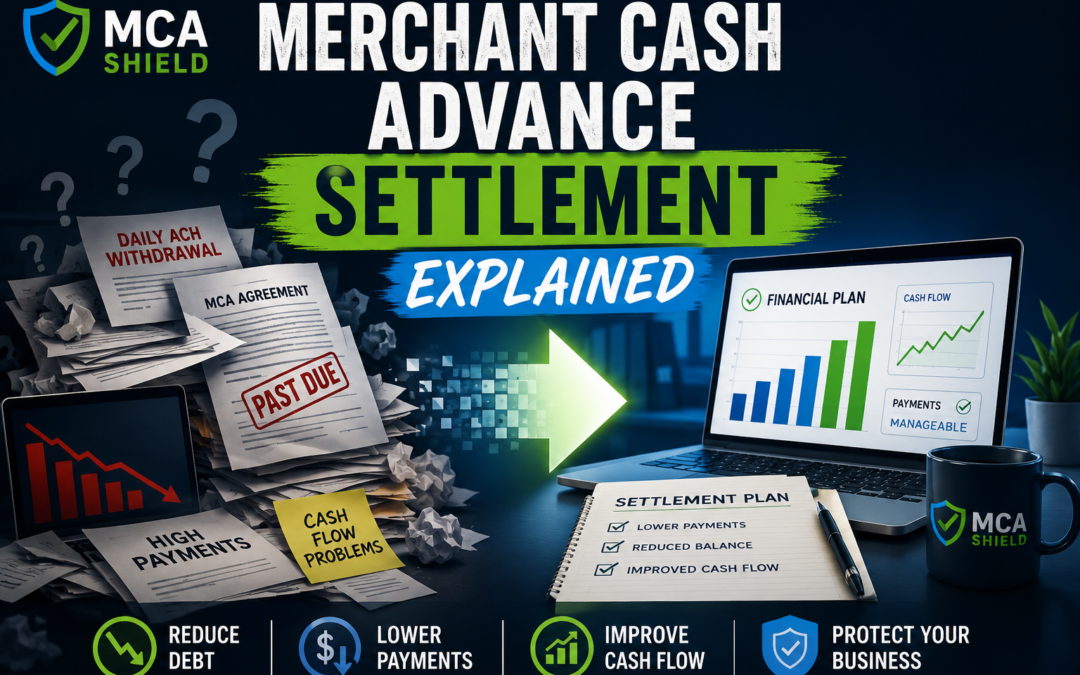
If your business is struggling with daily or weekly MCA payments, merchant cash advance settlement may be an option worth exploring. High-frequency withdrawals can quickly reduce working capital and make everyday business expenses harder to manage.
Merchant cash advance settlement may provide a way to address existing MCA obligations under different terms. However, settlement is not guaranteed, and the available options depend on your agreements, funders, and financial situation.
In this guide, we’ll explain how MCA settlement works, why businesses consider it, potential benefits and risks, and when it may make sense to seek help. You’ll also learn how settlement compares with taking out another merchant cash advance.
Schedule Your Free Consultation
What Is Merchant Cash Advance Settlement?
Merchant cash advance settlement is a potential option for businesses struggling to manage their MCA obligations. It generally involves working with an MCA funder to seek different terms for resolving an outstanding balance.
A settlement may become an option when daily or weekly payments are putting too much pressure on business cash flow. Instead of ignoring the problem or taking another advance, the business can explore ways to address its existing MCA debt.
However, every situation is different. MCA settlement is not guaranteed, and the terms available will depend on the agreement, the funder, and the business’s financial circumstances.
How MCA Settlement Works
The process usually begins with a review of the business’s MCA agreements, outstanding balances, payment schedules, and current cash flow. This helps provide a clearer picture of the financial pressure the business is facing.
From there, communication with the MCA funder may focus on finding a possible resolution. Depending on the circumstances, discussions could involve changes to the payment structure, balance, timing, or other terms.
The goal of merchant cash advance settlement is to find a resolution that addresses the MCA obligation while considering the business’s current financial position.
MCA Settlement vs. Paying the Original Agreement
Under the original MCA agreement, the business continues making payments according to the existing terms. For a healthy business, those payments may remain manageable.
Problems can develop when revenue falls or operating expenses increase. Frequent MCA withdrawals can reduce the cash available for payroll, inventory, rent, and other essential expenses.
Merchant cash advance settlement takes a different approach. Rather than simply continuing with a payment structure that has become difficult to maintain, the business explores whether different terms may be available to resolve the obligation.
This does not mean settlement is always the better choice. Businesses that can comfortably maintain their original payment structure may have little reason to pursue it.
What MCA Settlement May Change
A successful MCA settlement may change certain parts of the existing obligation. The exact terms will depend on the funder and the individual situation.
Depending on the circumstances, a resolution could potentially address the outstanding amount, payment schedule, payment frequency, or overall structure of repayment.
For a business experiencing serious cash flow pressure, these changes may help create a more manageable financial situation. However, no specific reduction, payment amount, or settlement outcome should be assumed in advance.
Understanding what merchant cash advance settlement can—and cannot—do helps business owners make a more informed decision before moving forward.
Why Do Businesses Consider MCA Settlement?
Businesses often consider MCA settlement when existing payments begin to interfere with normal operations. Merchant cash advances can provide quick access to capital. However, frequent withdrawals may become difficult to manage when revenue slows or expenses increase.
The pressure can become even greater when a business has more than one advance. At that point, merchant cash advance settlement may provide another option for addressing existing obligations rather than continuing with an unsustainable payment structure.
Daily ACH Withdrawals Are Hurting Cash Flow
Many MCA agreements involve daily or weekly ACH withdrawals from the business bank account. When revenue is strong, a business may be able to handle these payments. However, circumstances can change quickly.
A decline in sales or an unexpected expense can leave less money available after each withdrawal. As a result, the business may struggle to cover payroll, rent, inventory, utilities, taxes, and other operating costs.
When MCA payments consistently leave too little working capital, it may be time to review the situation. Protecting enough cash to operate the business is essential to long-term stability.
Multiple MCAs Are Creating Financial Pressure
Some businesses take out another merchant cash advance while they are still paying an existing one. This is often called MCA stacking.
Each additional advance can add another payment obligation. As those withdrawals accumulate, more of the business’s incoming revenue may be committed before other expenses are paid.
The business may then take another advance to cover a cash shortage. However, the additional payment can put even more pressure on available working capital.
For businesses with multiple advances, MCA settlement may offer an opportunity to address existing obligations instead of adding more debt.
The Business Can No Longer Maintain the Original Payment Structure
An MCA payment that was manageable when the agreement began may become difficult later. Sales can decline, expenses can rise, or unexpected costs can disrupt cash flow.
When this happens, the business may start falling behind on operating expenses, delaying important purchases, or struggling to maintain enough cash in its account.
Continuing the original payment structure may place additional pressure on the business. Exploring merchant cash advance settlement can help determine whether different terms may be available based on the business’s current financial circumstances.
Acting before the situation becomes more severe may also give the business more time to understand its options and develop a plan for addressing its MCA obligations.
How Does the Merchant Cash Advance Settlement Process Work?

The merchant cash advance settlement process starts with understanding the business’s current obligations and financial position. From there, the goal is to identify a realistic strategy for addressing the outstanding MCA debt.
Although every situation is different, the process generally involves reviewing the agreements, evaluating potential options, and communicating with MCA funders. No specific settlement result is guaranteed.
Step 1: Review Your MCA Agreements and Finances
The first step is to gather and review your MCA agreements, current balances, payment amounts, and withdrawal schedules. If you have multiple advances, each agreement should be included in the review.
Your business finances are also important. Revenue, operating expenses, available cash, and other obligations can help show how MCA payments are affecting your cash flow.
This review provides a clearer picture of the problem. It also helps determine what type of payment structure the business may realistically be able to maintain.
Step 2: Determine a Potential Settlement Strategy
Once the financial situation is clear, the next step is to consider a potential MCA settlement strategy. The approach should reflect the business’s current finances rather than rely on a one-size-fits-all solution.
Depending on the circumstances, a strategy may focus on seeking changes to the balance, payment amount, payment frequency, or other terms. The options available can vary by funder and agreement.
A realistic strategy should also account for essential operating expenses. The objective is to address the MCA obligations while leaving the business enough working capital to continue operating.
Step 3: Work Toward a Resolution With MCA Funders
The next step involves communicating with the MCA funders and working toward a potential resolution. Financial information may be used to explain why the existing payment structure has become difficult for the business to maintain.
The funder may accept a proposed resolution, reject it, or offer different terms. For that reason, MCA settlement is a negotiation rather than a guaranteed outcome.
If an agreement is reached, the business should understand the new terms before moving forward. That includes reviewing payment amounts, deadlines, settlement conditions, and any other requirements.
A well-planned merchant cash advance settlement process can give a business a structured way to address its MCA obligations while focusing on its financial stability.
What Are the Potential Benefits of MCA Settlement?
The potential benefits of MCA settlement often center on one important goal: making the business’s financial obligations easier to manage. When MCA payments consume too much working capital, even a profitable business can struggle with everyday expenses.
A successful merchant cash advance settlement may provide financial relief by changing certain terms of the existing obligation. However, the exact benefits will depend on the funder, agreement, and financial circumstances of the business.
Reduce the Overall Financial Burden
One potential benefit of MCA settlement is the opportunity to reduce the financial pressure created by existing MCA obligations. Depending on the settlement terms, a funder may agree to changes that make the obligation more manageable.
This could include adjustments to the outstanding balance or payment structure. However, a reduction is not guaranteed, and every settlement will depend on the individual situation.
Reducing MCA pressure can allow a business to focus more of its resources on operations rather than struggling to keep up with payments.
Improve Business Cash Flow
Cash flow is often one of the main reasons businesses explore MCA settlement. Frequent withdrawals can leave less money available for payroll, inventory, rent, utilities, marketing, and other operating expenses.
If a settlement results in a more manageable payment arrangement, the business may retain more working capital for essential expenses. This can provide greater flexibility when managing day-to-day cash flow.
Improved cash flow can also reduce the temptation to take another merchant cash advance simply to cover a temporary shortage.
Create a More Manageable Path Forward
Financial pressure can make it difficult for business owners to plan beyond the next MCA withdrawal. A potential settlement can provide a clearer structure for addressing the obligation.
With more manageable terms, the business may be better positioned to plan expenses, maintain operations, and focus on long-term financial stability.
Merchant cash advance settlement does not eliminate every financial challenge. Still, it may give some businesses a more realistic way to address MCA debt while continuing to operate.
What Are the Risks of Merchant Cash Advance Settlement?
While merchant cash advance settlement may provide financial relief, it also comes with potential risks. Business owners should understand these risks before deciding whether settlement is appropriate for their situation.
The outcome can depend on several factors, including the MCA agreement, the funder, and the financial condition of the business. Therefore, it is important to consider both the potential benefits and possible consequences of MCA settlement.
Settlement Is Not Guaranteed
One of the most important things to understand is that MCA settlement is not guaranteed. A funder does not have to accept a proposed settlement or agree to different payment terms.
The funder may reject an offer, request additional financial information, or propose different terms. In some cases, negotiations may take time and require several discussions.
For this reason, businesses should be cautious of any company that promises a specific settlement amount or guaranteed result before reviewing the situation.
Funders May Take Collection or Legal Action
If a business stops making payments or falls behind, the MCA funder may pursue collection efforts. Depending on the agreement and circumstances, legal action may also be possible.
The specific risks can vary based on the contract and applicable law. Therefore, business owners should understand their agreements before making major changes to their payments.
Ignoring communication from a funder can also make the situation more difficult. Addressing MCA problems early may provide more time to evaluate available options before financial pressure increases.
Fees and Other Costs Should Be Considered
Merchant cash advance settlement can also involve additional costs. For example, a settlement company may charge service, negotiation, or program fees.
Businesses should understand these costs before enrolling in any MCA settlement program. Ask how fees are calculated, when they are charged, and what services are included.
It is also important to consider the complete financial picture. A settlement strategy should make financial sense after all fees and potential costs are considered.
Understanding the risks of merchant cash advance settlement can help business owners make a more informed decision and avoid unrealistic expectations.
MCA Settlement vs. Taking Out Another Merchant Cash Advance
When MCA payments become difficult to manage, taking out another advance can seem like a quick solution. The additional funding may cover an immediate cash shortage. However, another MCA can add a new payment obligation to an already strained cash flow.
In some situations, exploring MCA settlement may make more sense than adding another advance. The goal is to address existing MCA debt instead of creating another financial obligation.
Why Another MCA Can Increase Financial Pressure
A new merchant cash advance provides additional capital, but it also comes with another repayment obligation. That can mean more frequent withdrawals from the same business revenue.
For example, a business may use the new funds to cover payroll, inventory, or an existing MCA payment. Once the new payment begins, however, less cash may remain for everyday expenses.
As a result, the business may solve a short-term cash shortage while creating greater financial pressure in the weeks or months ahead.
How Stacking MCAs Can Create a Debt Cycle
Taking out multiple merchant cash advances at the same time is often known as MCA stacking. Each advance can add another withdrawal to the business’s payment schedule.
Over time, a growing share of incoming revenue may go toward MCA payments. This can leave less working capital available for normal operations.
The business may then seek another advance to cover the next cash shortage. New funding creates another payment, which can lead to another shortage later. This pattern can become difficult to break.
For businesses already struggling with multiple advances, adding another MCA may increase the problem rather than solve it.
Why Addressing Existing MCA Debt May Be the Better Strategy
Instead of taking on another obligation, a business can consider ways to address the MCA debt it already has. Merchant cash advance settlement may provide an opportunity to seek more manageable terms for existing obligations.
This approach focuses on the source of the financial pressure rather than adding another payment. Depending on the circumstances, it may also help the business preserve more working capital for essential expenses.
Settlement is not the right solution for every business, and results are not guaranteed. However, addressing existing MCA debt before taking on another advance may help prevent financial pressure from becoming more difficult to manage.
When Should You Consider Merchant Cash Advance Settlement?
Knowing when to consider merchant cash advance settlement can help a business address financial pressure before it becomes more difficult to manage. One challenging week may not mean settlement is necessary. However, ongoing cash flow problems can signal that the current MCA payment structure is no longer sustainable.
Business owners should pay attention when MCA payments begin interfering with normal operations. Waiting too long may leave fewer resources available to address the problem.
You Are Struggling to Cover Operating Expenses
One warning sign is difficulty paying normal business expenses after MCA withdrawals are made. These expenses may include payroll, rent, inventory, utilities, taxes, and vendor payments.
A business may still generate revenue but struggle to keep enough cash available between withdrawals. Over time, this can affect the company’s ability to operate normally.
If MCA payments regularly force you to delay essential expenses, it may be time to explore your options. Merchant cash advance settlement may provide an opportunity to address the underlying payment pressure.
MCA Payments Are Consuming Too Much Cash Flow
Frequent MCA withdrawals can become a serious problem when they consume a large share of incoming revenue. The business may have sales coming in, yet still have very little working capital available.
Watch for patterns such as low bank balances, delayed bills, difficulty making payroll, or constant cash shortages. These signs can indicate that MCA obligations are placing too much pressure on the business.
At that point, continuing the same payment structure may become increasingly difficult. Exploring MCA settlement can help determine whether more manageable terms may be possible.
You Are Considering Another MCA to Make Existing Payments
Another important warning sign occurs when a business considers taking out a new advance to keep up with an existing one. The additional funding may provide temporary relief, but it also creates another payment obligation.
This can lead to multiple withdrawals competing for the same business revenue. As a result, the next cash shortage may arrive even faster.
Before taking another advance to make existing MCA payments, consider whether addressing the current debt may be a better option. Exploring merchant cash advance settlement early may help prevent additional MCA debt from increasing the financial pressure.
Can You Negotiate an MCA Settlement on Your Own?
A business owner may attempt to negotiate an MCA settlement directly with a funder. However, the process can involve more than simply asking for a lower payment or reduced balance.
Before starting negotiations, it is important to understand your agreements and current financial position. You should also have a realistic idea of what your business can afford without creating another cash flow problem.
Understanding Your MCA Agreements
Start by reviewing each merchant cash advance agreement carefully. Pay attention to the outstanding balance, payment schedule, ACH withdrawals, reconciliation provisions, and other important terms.
If you have multiple MCAs, review each agreement separately. Different funders may have different terms and procedures for addressing payment problems.
Understanding these details can help you identify your current obligations. It can also help you determine which issues need to be addressed during settlement discussions.
Communicating With MCA Funders
Clear communication is an important part of the MCA settlement process. A funder may want information about your revenue, expenses, bank activity, or other financial circumstances before considering different terms.
When discussing a possible settlement, focus on what your business can realistically manage. Agreeing to new terms that are still unaffordable may simply create another financial problem.
It is also important to keep records of settlement discussions and review any proposed agreement carefully. Make sure you understand the terms before accepting a resolution.
When Professional MCA Settlement Help May Make Sense
Negotiating directly may become difficult when a business has multiple MCAs, significant cash flow problems, collection activity, or complicated agreements. In these situations, professional help may be worth considering.
An experienced MCA settlement company can review the financial situation and help develop a strategy. It may also communicate with funders as the business works toward a potential resolution.
Before choosing a company, review its experience, fees, process, and expectations. Avoid companies that promise guaranteed settlements or specific results before reviewing your situation.
Professional MCA settlement help does not guarantee a successful outcome. However, it may provide additional guidance and structure when resolving MCA debt has become difficult to manage alone.
How MCA Shield Helps Businesses Explore MCA Settlement
Dealing with MCA debt can become overwhelming, especially when frequent withdrawals are affecting everyday operations. MCA Shield helps businesses explore merchant cash advance settlement options based on their specific financial situation.
Rather than applying the same approach to every business, the process begins by understanding the MCA obligations and the pressure they are creating. From there, MCA Shield can help develop a strategy focused on addressing existing debt while protecting the ability to operate the business.
Review Your MCA Debt and Financial Situation
The first step is understanding where your business stands today. MCA Shield reviews your active MCA agreements, outstanding balances, payment schedules, and current financial situation.
This review can also examine how MCA withdrawals affect available working capital. If you have multiple advances, each obligation can be considered as part of the overall financial picture.
A detailed review helps identify the areas creating the most pressure. It also provides a foundation for determining which MCA settlement options may be worth exploring.
Develop a Strategy Based on Your Business
Every business has different revenue, expenses, and financial challenges. Therefore, an effective MCA settlement strategy should reflect what your business can realistically manage.
MCA Shield uses the financial review to help develop an approach based on your current circumstances. The strategy may consider payment obligations, cash flow needs, and the terms of your existing MCA agreements.
The goal is not to make unrealistic promises. Instead, the focus is on creating a practical strategy that addresses your MCA debt without ignoring the needs of your business.
Work Toward a Sustainable Resolution
Once a strategy is established, MCA Shield can help businesses work toward a potential resolution with their MCA funders. The available terms and outcome will depend on the individual situation.
A successful resolution should do more than provide temporary relief. Ideally, it should help create a financial structure the business has a better chance of maintaining.
MCA settlement is not guaranteed, and every situation is different. However, having a clear strategy and experienced guidance can help business owners take a more organized approach to resolving MCA debt and working toward greater financial stability.
Frequently Asked Questions About Merchant Cash Advance Settlement
Business owners often have questions about merchant cash advance settlement, especially when MCA payments are putting pressure on cash flow. Understanding what settlement may involve can help you decide whether it is worth exploring.
Keep in mind that every MCA settlement is different. The funder, outstanding balance, agreement terms, and financial condition of the business can all affect the process.
How Much Can a Merchant Cash Advance Settlement Reduce?
There is no standard amount or percentage that a merchant cash advance settlement will reduce. The potential outcome depends on the funder, MCA agreement, outstanding balance, and circumstances of the business.
In some cases, a funder may consider changes to the balance or payment structure. However, businesses should be cautious of anyone who guarantees a specific reduction before reviewing the MCA debt and financial situation.
The goal should be to seek a realistic resolution that addresses the MCA obligation while considering the business’s ability to continue operating.
How Long Does MCA Settlement Take?
There is no fixed timeline for MCA settlement. Some situations may move faster than others, depending on the number of funders involved and the complexity of the agreements.
Communication between the parties can also affect the timeline. In addition, a funder may request financial information or propose different terms before reaching a resolution.
For these reasons, business owners should focus on finding a sustainable solution rather than simply the fastest settlement.
Can You Settle Multiple Merchant Cash Advances?
Businesses with more than one MCA may be able to explore settlement options for multiple obligations. However, each merchant cash advance may need to be addressed separately because every funder and agreement can have different terms.
Multiple MCAs can also make the financial situation more complex. Several daily or weekly withdrawals may consume a significant portion of available cash flow.
A complete review can help identify how each MCA affects the business and which obligations may require the most immediate attention. From there, the business can develop a strategy for addressing multiple merchant cash advances without adding another MCA to the financial burden.
Take the First Step Toward Resolving Your MCA Debt
MCA debt can become harder to manage when frequent withdrawals continue to reduce working capital. If payments are affecting payroll, inventory, rent, or other expenses, waiting may increase the financial pressure on your business.
You do not have to wait until the situation becomes a crisis to explore your options. Understanding your MCA obligations now can help you determine whether merchant cash advance settlement may provide a more manageable way forward.
Why Acting Early May Give Your Business More Options
Financial problems are often easier to address before cash flow becomes severely limited. Acting early gives you time to review your MCA agreements, understand your finances, and consider potential settlement strategies.
It may also help you avoid taking another merchant cash advance simply to cover existing payments. Adding another MCA can create additional withdrawals and place even more pressure on available cash.
There is no guarantee that a funder will agree to a settlement. However, exploring your options early can give you more time to make informed decisions about your MCA debt.
Schedule a Free Consultation With MCA Shield
If MCA payments are making it difficult to operate your business, MCA Shield can help you evaluate your situation and explore potential settlement options.
During your free consultation, you can discuss your MCA agreements, current payments, and financial challenges. From there, MCA Shield can help determine which options may make sense based on your business’s circumstances.
Take the first step before MCA pressure becomes more difficult to manage. Schedule a free consultation with MCA Shield today and learn what options may be available for addressing your merchant cash advance debt.