
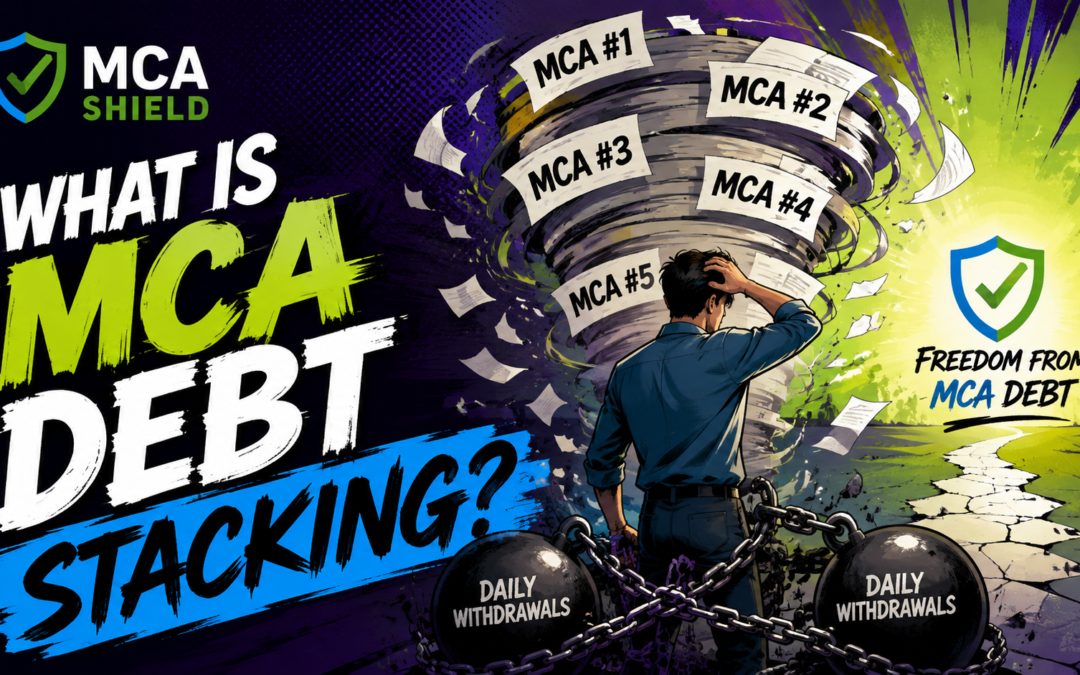
MCA debt stacking happens when a business takes on multiple merchant cash advances before existing advances are fully paid off. As payments begin to overlap, daily or weekly withdrawals can quickly put pressure on business cash flow.
For many business owners, stacking starts as a way to access additional working capital. However, each new MCA can add another payment obligation. Over time, multiple MCA payments may leave less money available for payroll, rent, inventory, taxes, and other essential expenses.
Understanding MCA debt stacking can help you recognize the risks before the financial pressure becomes worse. In this guide, we explain how MCA stacking works, why it can create a debt cycle, and what options may be available to help your business regain control of its cash flow.
Schedule Your Free Consultation
What Is MCA Debt Stacking and How Does It Work?
MCA debt stacking occurs when a business takes out a new merchant cash advance while one or more existing MCAs are still active. Instead of replacing the original obligation, the new advance adds another payment to the business’s existing financial commitments.
As more advances are added, the business may have several daily or weekly MCA payments coming out of its revenue at the same time. This can reduce available working capital and make everyday operating expenses harder to manage.
How Multiple Merchant Cash Advances Become Stacked
A stack can begin with a single merchant cash advance. While that MCA is still being repaid, the business accepts another advance from the same or a different funder. If this happens again, multiple MCAs can become stacked on top of one another.
For example, a business may have three active MCAs, each with its own payment schedule. Rather than making one payment, the business must manage multiple withdrawals from the same cash flow.
The more MCAs a business adds, the greater the combined payment burden may become. This is why MCA stacking can quickly turn a short-term funding solution into a serious cash flow challenge.
Why Businesses Take Out More Than One MCA
Businesses may take out additional MCAs because they need fast access to working capital. Unexpected expenses, seasonal slowdowns, inventory purchases, payroll, repairs, or other operating costs can create an immediate need for cash.
In some cases, however, a business may seek another advance because existing MCA payments are already reducing available cash. The new funding may provide temporary relief, but it also creates another repayment obligation.
This can become especially problematic when new MCA funding is used to cover expenses that existing MCA payments have made difficult to afford. Instead of solving the underlying cash flow problem, another advance may increase the financial pressure.
What Happens When MCA Payments Overlap
When MCA payments overlap, multiple withdrawals may hit the business bank account each day or week. Even a profitable business can struggle when too much of its incoming revenue is committed to MCA payments.
As available cash declines, the business may have less money for payroll, rent, inventory, taxes, utilities, and vendors. Maintaining normal operations can become increasingly difficult.
If the business responds by taking out yet another MCA, the cycle can continue. Over time, stacked MCA debt can consume a significant portion of business cash flow, making it harder to keep up with both MCA payments and essential operating expenses.
Why Is MCA Debt Stacking So Risky?
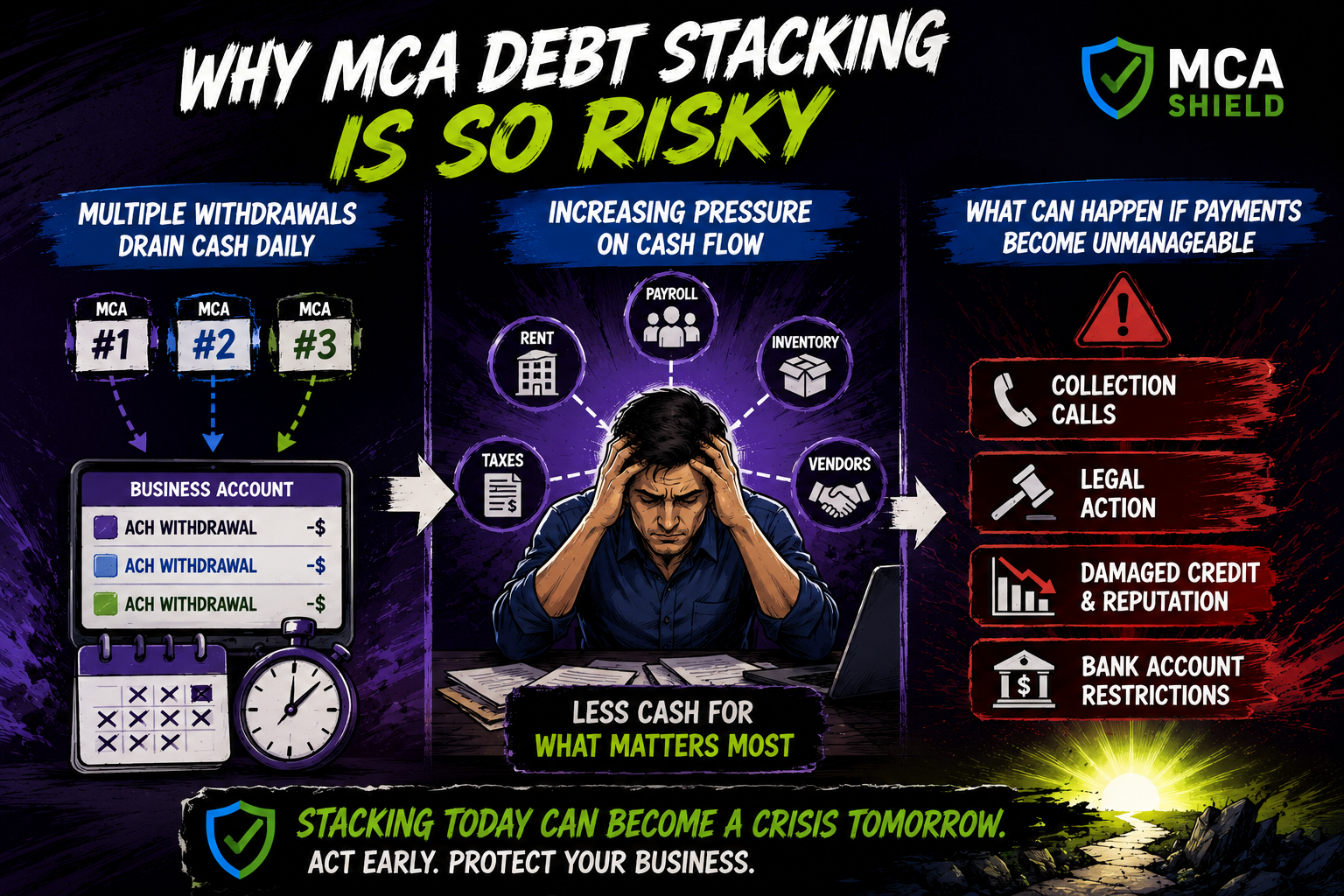
MCA debt stacking can create serious financial pressure because each additional merchant cash advance adds another payment obligation. While the extra funding may provide short-term cash, the combined withdrawals can make it harder to maintain healthy business cash flow.
The risk often increases as more MCAs are added. Eventually, a business may find that too much of its incoming revenue is going toward MCA payments instead of essential operating expenses.
Multiple Daily or Weekly ACH Withdrawals
Many merchant cash advances involve daily or weekly ACH withdrawals from a business bank account. With MCA debt stacking, several funders may be withdrawing payments during the same period.
Individually, each payment may appear manageable. Together, however, the withdrawals can consume a much larger share of available revenue.
For example, a business with three active MCAs may face three separate withdrawals before it can use that revenue for normal operations. This can leave the business with less flexibility when unexpected expenses arise.
Increasing Pressure on Business Cash Flow
Healthy cash flow gives a business the ability to cover expenses and respond to changing conditions. Stacked MCA payments can reduce that flexibility by directing a significant portion of incoming cash toward multiple obligations.
As a result, there may be less money available for payroll, rent, inventory, taxes, utilities, and vendor payments. Even if sales remain steady, the timing and size of MCA withdrawals can create cash shortages.
The situation can become even more difficult if the business takes out another MCA to fill those gaps. Adding more debt may provide temporary cash while increasing the overall payment pressure.
What Can Happen If MCA Payments Become Unmanageable
When MCA payments become difficult to maintain, a business may begin falling behind on other financial obligations. It may delay purchases, reduce inventory, postpone vendor payments, or struggle to meet payroll.
If MCA payments themselves are missed or interrupted, funders may increase collection efforts or pursue remedies available under the MCA agreements and applicable law. The specific consequences depend on the agreements and circumstances involved.
Waiting too long can also reduce the business’s flexibility. Recognizing MCA debt stacking early gives business owners more time to review their obligations, evaluate their cash flow, and explore potential solutions before the situation becomes more difficult to manage.
How MCA Debt Stacking Can Create a Debt Cycle
MCA debt stacking can create a cycle in which new funding is used to manage the pressure caused by existing advances. At first, another merchant cash advance may seem like a quick way to improve working capital. However, the new MCA also adds another payment obligation.
As more payments are added, less revenue may remain available for normal business expenses. This can create another cash shortage and increase the temptation to seek additional funding. Over time, a short-term cash flow problem can turn into a repeating MCA debt cycle.
Using a New MCA to Cover Existing MCA Payments
One of the biggest warning signs of MCA debt stacking is using new funding because existing MCA payments are consuming too much cash flow. A new advance may provide immediate capital for payroll, rent, inventory, or other expenses.
However, using a new MCA to compensate for existing MCA payments does not eliminate the original obligations. Instead, the business now has another advance that must also be repaid.
This can create a pattern: existing MCA payments reduce available cash, another MCA fills the gap, and the additional payment creates even more pressure. Each new advance can make the underlying cash flow problem harder to solve.
Warning Signs Your Business Is Becoming Overleveraged
A business may be becoming overleveraged when its financial obligations consume too much of the cash needed for daily operations. With stacked MCAs, this can happen quickly because several withdrawals may occur each day or week.
Common warning signs include struggling to cover payroll, delaying vendor payments, falling behind on taxes, reducing inventory purchases, or needing new financing to meet routine expenses.
Another major warning sign is relying on new funding simply to maintain existing obligations. If your business cannot comfortably operate after its MCA withdrawals, the current payment structure may no longer be sustainable.
Why the MCA Stacking Cycle Can Be Difficult to Escape
The MCA stacking cycle can become difficult to escape because every new advance may increase the amount of revenue committed to payments. As available cash decreases, the business has fewer resources to absorb unexpected expenses or slower sales periods.
At the same time, taking on additional funding can continue the cycle rather than resolve it. More MCAs can mean more withdrawals, tighter cash flow, and a greater need for additional capital.
Breaking the cycle often starts with understanding the full financial picture. Reviewing each MCA, its payment schedule, and the effect on cash flow can help identify the source of the pressure. Addressing stacked MCA debt early may provide more options than continuing to add new advances.
Can You Settle Multiple Stacked MCAs?
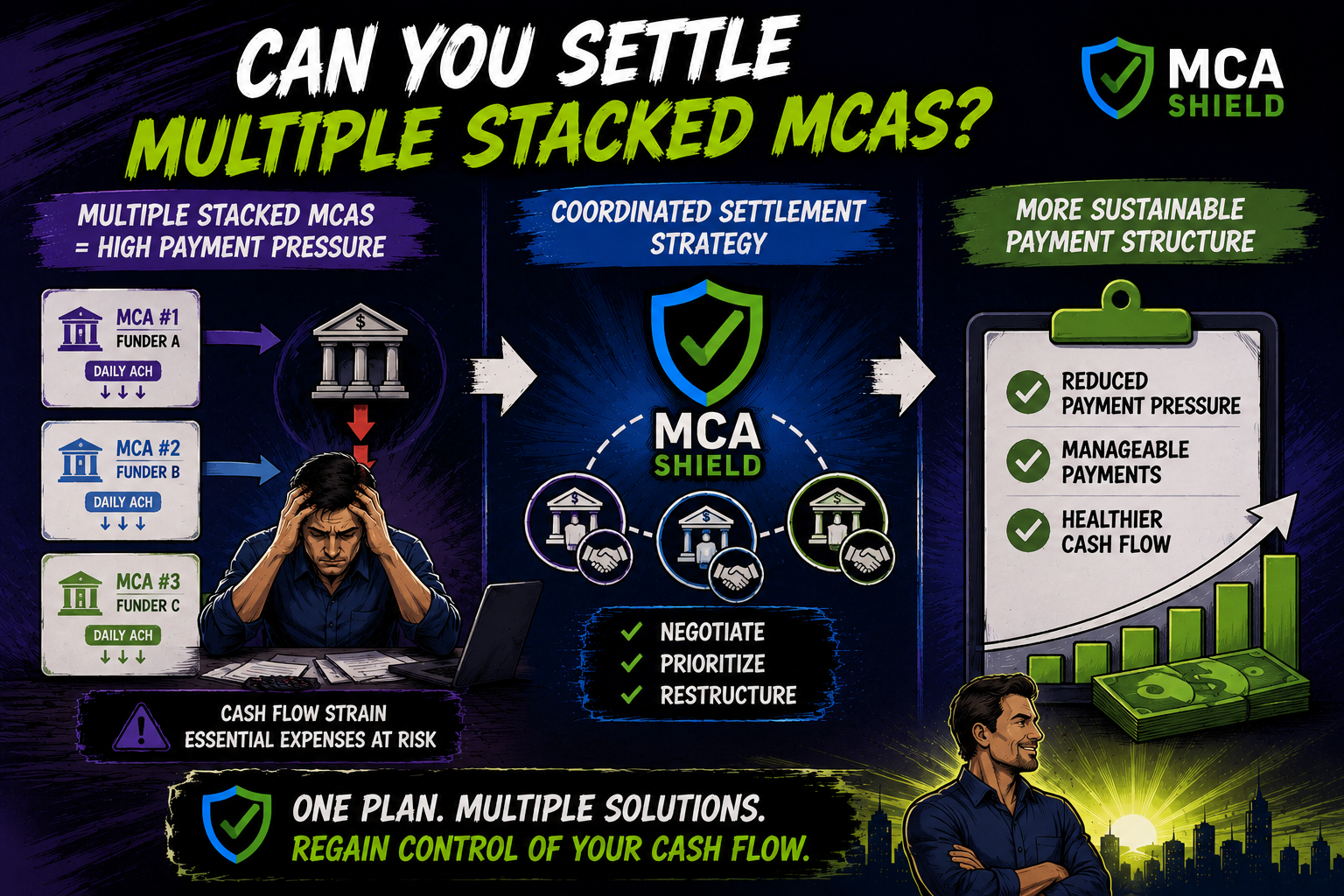
In some situations, multiple stacked MCAs may be addressed through settlement negotiations. Instead of continuing to manage several overlapping payment obligations, a business may explore ways to negotiate with its MCA funders.
The outcome depends on several factors. These may include the outstanding balances, business cash flow, financial hardship, account status, and the willingness of each funder to negotiate. MCA settlement is not guaranteed, but it may provide an alternative to taking out another advance.
Negotiating With Multiple MCA Funders
When a business has stacked MCAs, each advance typically has its own agreement, balance, payment schedule, and funder. Therefore, multiple MCA settlements may require separate negotiations with each funder.
A business’s financial situation can play an important role in these discussions. Funders may review current revenue, operating expenses, payment history, and the ability to continue making payments.
The goal is to determine whether different terms can be reached. Depending on the circumstances, negotiations may focus on reducing payment pressure, modifying the payment structure, or resolving an outstanding MCA obligation.
Prioritizing the Most Difficult MCA Obligations
Not every stacked MCA creates the same level of financial pressure. Some may have larger withdrawals, higher outstanding balances, or more urgent collection activity.
For this reason, a settlement strategy may begin by identifying which MCA obligations are creating the greatest strain on business cash flow. This can help determine which accounts may need attention first.
Prioritization can be especially important when several funders are involved. Rather than approaching each obligation without a plan, the business can evaluate the entire MCA debt stack and develop a coordinated strategy.
Creating a More Sustainable Payment Structure
The purpose of addressing stacked MCA debt is not simply to move payments around. The larger goal is to create a financial structure that gives the business more room to cover essential operating expenses.
If successful, settlement negotiations may help reduce the pressure created by multiple overlapping withdrawals. This can leave more cash available for payroll, rent, inventory, taxes, utilities, and vendors.
A more sustainable approach should consider the business as a whole, not just one MCA at a time. Addressing multiple stacked MCAs through a coordinated settlement strategy may help a business regain greater control over its cash flow and avoid adding another advance to the stack.
MCA Debt Stacking vs. MCA Settlement
MCA debt stacking and MCA settlement take very different approaches to financial pressure. Stacking adds another merchant cash advance to existing obligations. Settlement focuses on addressing the MCA debt a business already has.
For a business struggling with multiple withdrawals, taking another MCA may provide short-term working capital. However, it also adds another payment. MCA settlement may offer a way to address existing obligations without continuing to add new advances to the stack.
Adding More Debt vs. Addressing Existing MCA Obligations
When cash flow becomes tight, another merchant cash advance can seem like a quick solution. The new funding may help cover payroll, inventory, rent, or other immediate expenses.
However, a new MCA does not eliminate existing MCA obligations. It adds another balance and another payment to the business’s financial commitments. If the business already has stacked MCAs, this can increase the pressure on cash flow.
Settlement takes a different approach. Instead of adding another advance, MCA settlement focuses on negotiating existing obligations. The goal is to find a potential resolution that better reflects the business’s current financial situation.
How Settlement May Reduce Payment Pressure
When several MCA payments are coming out of the same revenue stream, even a successful business can experience cash flow problems. Settlement negotiations may seek to change how those existing obligations are resolved.
Depending on the funder and circumstances, a settlement may involve modified payment terms, reduced payment pressure, or a negotiated amount to resolve an MCA obligation. Results vary, and no specific settlement outcome is guaranteed.
If successful, reducing the pressure from stacked MCA payments may leave more money available for payroll, rent, inventory, taxes, vendors, and other essential business expenses. This can help the business focus more of its revenue on operations.
Choosing a Strategy Based on Your Business Situation
There is no single solution that is right for every business. The best approach depends on factors such as cash flow, outstanding MCA balances, the number of active advances, payment status, and overall financial hardship.
Before taking another MCA, it is important to understand how the additional payment could affect your existing obligations. If current MCA payments are already difficult to maintain, adding another advance could make the situation worse.
For businesses dealing with MCA debt stacking, reviewing settlement options may provide an alternative to continuing the borrowing cycle. The goal should be to address the underlying financial pressure and work toward a more sustainable path for the business.
How Can a Business Get Out of Stacked MCA Debt?
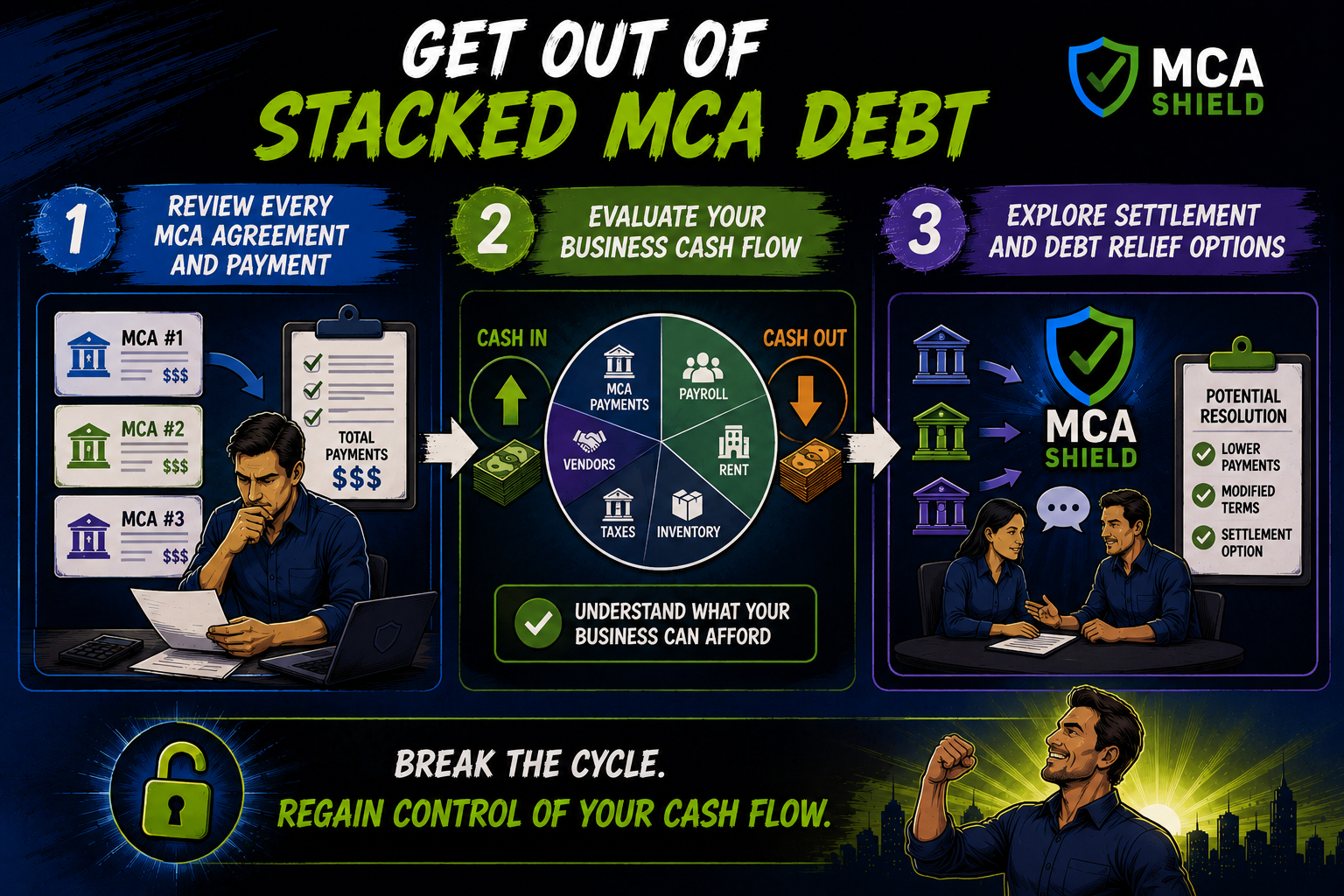
Getting out of stacked MCA debt often starts with understanding the full scope of the problem. When several merchant cash advances are active at once, focusing on only one payment may not provide a complete picture.
Instead, business owners should review every MCA, understand how much revenue is going toward payments, and determine what the business can realistically afford. From there, it may be possible to explore MCA settlement or other debt relief options that address the existing obligations.
Review Every MCA Agreement and Payment
Start by gathering every active MCA agreement. Identify the remaining balance, daily or weekly payment, payment frequency, and funder associated with each advance.
Next, calculate how much money is leaving the business each day, week, and month for MCA payments. Seeing the combined amount can make it easier to understand how MCA debt stacking is affecting your working capital.
It is also important to review the terms of each agreement carefully. Knowing your obligations can help you make more informed decisions about what to do next.
Evaluate Your Current Business Cash Flow
Once you understand your MCA obligations, look closely at your current cash flow. Compare business revenue with MCA payments and essential operating expenses such as payroll, rent, inventory, taxes, utilities, and vendors.
The goal is to determine how much cash the business needs to operate successfully. If stacked MCA payments are consuming money needed for essential expenses, the current payment structure may be difficult to sustain.
A clear cash flow analysis can also help identify how much the business can realistically afford to pay toward its MCA obligations without creating another financial shortage.
Explore MCA Settlement and Debt Relief Options
If existing MCA payments have become unmanageable, taking out another advance may continue the stacking cycle. Instead, it may be time to explore options for addressing the debt already in place.
MCA settlement may involve negotiating with funders to seek a more manageable resolution of existing obligations. Depending on the circumstances, negotiations may focus on payment terms, payment amounts, or a potential settlement of the outstanding balance. Results vary, and settlement is not guaranteed.
The right approach depends on your business’s financial situation and MCA agreements. However, addressing stacked MCA debt instead of adding another advance may help break the cycle and create a more sustainable path forward.
Frequently Asked Questions About MCA Settlement Mistakes
Business owners dealing with MCA debt stacking often have questions about how multiple merchant cash advances work and what options may be available. The answers below address several common concerns about stacked MCA debt.
Is MCA Stacking Legal?
MCA stacking is not automatically illegal. A business may have more than one merchant cash advance at the same time. However, whether additional funding is permitted can depend on the terms of each MCA agreement.
Some agreements may include restrictions related to taking on additional advances or changing the business’s financial obligations. Before accepting another MCA, review your existing agreements carefully and understand how new funding could affect your current obligations.
How Many MCAs Can a Business Have at Once?
There is no universal number of MCAs that every business can have at one time. The number may depend on the business, its revenue, existing obligations, funder requirements, and the terms of individual agreements.
However, having access to another MCA does not necessarily mean taking it is financially sustainable. Each additional MCA can add another daily or weekly payment, leaving less cash available for normal operations.
Rather than focusing only on the number of advances, consider the combined effect of all payments. If multiple MCA withdrawals are consuming too much business cash flow, adding another advance may increase the problem.
Can Stacked MCA Debt Be Settled?
In some situations, stacked MCA debt may be addressed through settlement negotiations. When several MCAs are involved, each funder and agreement may need to be evaluated separately.
Potential settlement terms depend on factors such as outstanding balances, cash flow, financial hardship, account status, and funder willingness to negotiate. Settlement results are not guaranteed, and every situation is different.
For businesses struggling with multiple MCA payments, exploring settlement may provide an alternative to taking on another advance. A coordinated strategy can focus on addressing existing MCA obligations and reducing overall payment pressure.
Take Action Before Stacked MCA Debt Becomes Unmanageable
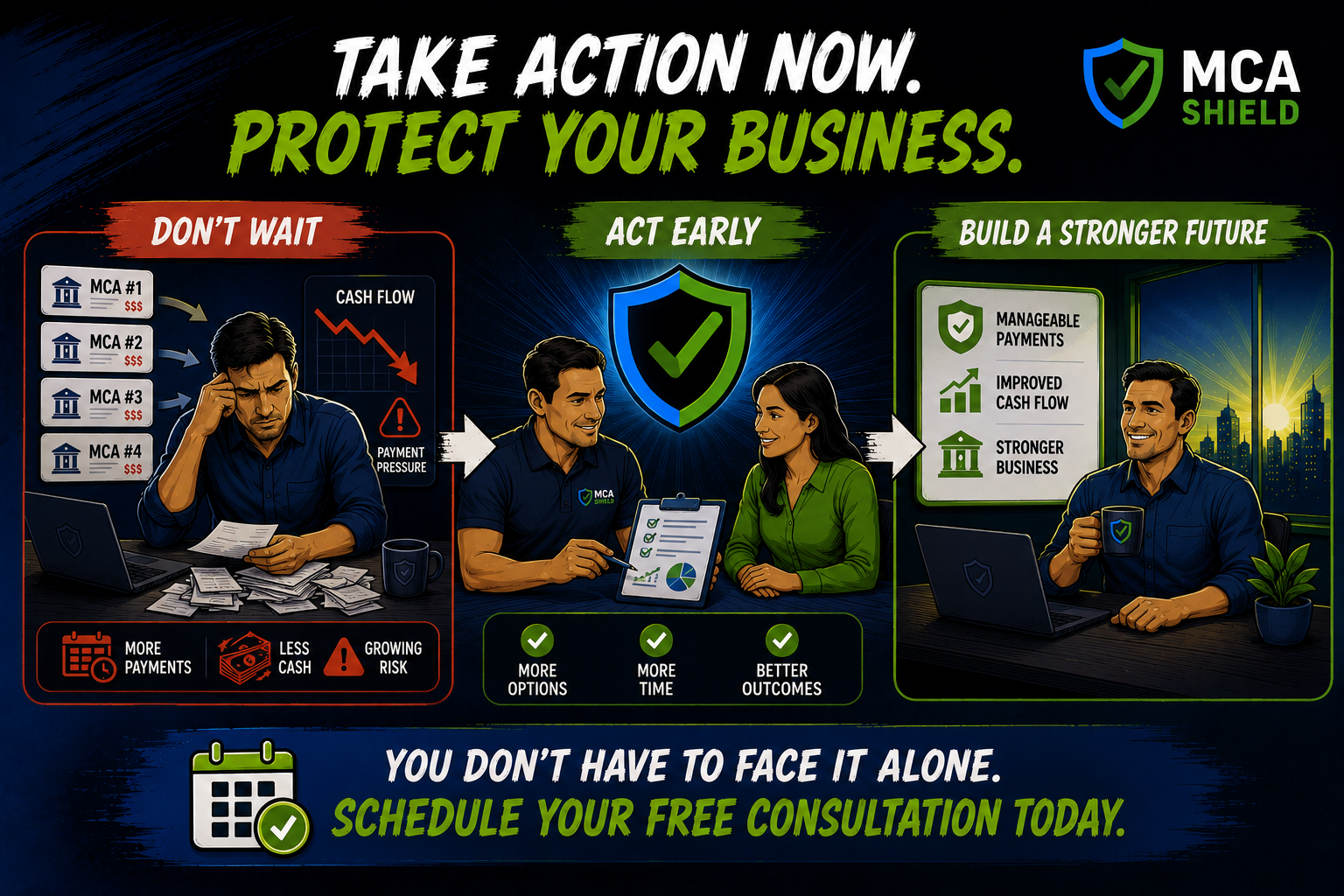
Stacked MCA debt can become harder to manage as additional payments consume more of your business cash flow. What begins as a temporary funding solution may eventually leave less money available for payroll, rent, inventory, taxes, and other essential expenses.
If multiple MCA withdrawals are putting pressure on your business, waiting may allow the problem to grow. Taking action before MCA payments become unmanageable may give you more time to evaluate your options and determine the best path forward.
Why Acting Early May Give Your Business More Options
You do not necessarily have to wait until you miss payments to address MCA debt stacking. In fact, reviewing your situation early can help you understand your obligations before cash flow pressure becomes more severe.
Start by looking at your outstanding MCA balances, payment schedules, business revenue, and essential operating expenses. This can help identify how much of your cash flow is being consumed by stacked MCA payments.
Acting early may also provide more time to explore potential solutions. Instead of taking out another merchant cash advance, you can consider whether MCA settlement or another debt relief strategy may better address your existing obligations.
Schedule a Free Consultation With MCA Shield
If your business is struggling with multiple merchant cash advances, you do not have to keep adding new funding to the stack. MCA Shield can review your current MCA obligations and help you understand potential options based on your financial situation.
The goal is to identify a strategy that addresses the existing payment pressure while considering the cash your business needs to operate. Every MCA situation is different, and settlement results are not guaranteed.
Schedule a free consultation with MCA Shield today to discuss your stacked MCA debt, review your options, and take the first step toward regaining control of your business cash flow.