ClickCease
Explore options for your business’s MCA payments.Call (918) 608-0117

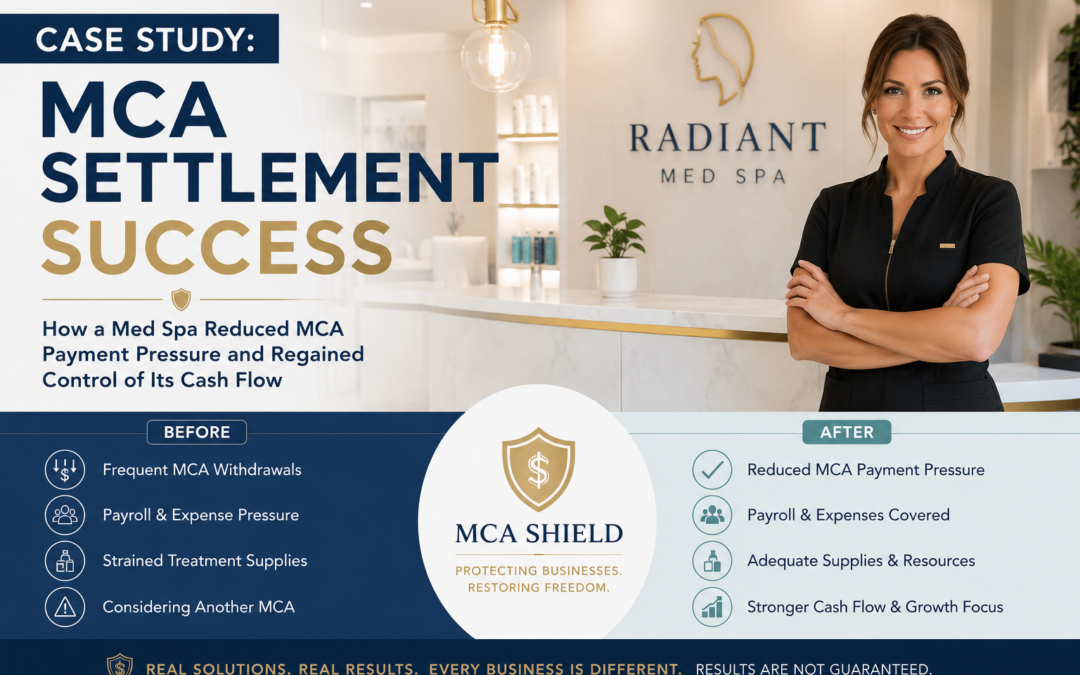
Merchant cash advances can provide fast funding, but frequent withdrawals may eventually put serious pressure on a business’s cash flow. This MCA settlement success case study follows a med spa that was generating revenue but struggling to maintain enough working capital for payroll, rent, treatment supplies, and other essential expenses.

As MCA payments became harder to manage, taking out another advance could have added even more financial pressure. Instead, the med spa explored MCA settlement to address its existing obligations and work toward a more manageable financial structure.

This case study shows how the settlement process can work, the challenges the med spa faced, and the potential impact of reducing MCA payment pressure and improving operating cash flow. Every business situation is different, and settlement results are not guaranteed.

Schedule Your Free Consultation

The Med Spa’s MCA Debt Situation

The med spa had built a steady client base and was generating consistent revenue. However, like many growing businesses, it also faced significant operating costs. Payroll, rent, treatment supplies, equipment, marketing, and other expenses required a reliable amount of working capital.

When unexpected expenses and growth costs created a temporary cash shortage, the owner turned to merchant cash advance (MCA) funding. What initially provided quick access to capital eventually created a much different financial challenge.

Why the Med Spa Initially Used MCA Funding

The first MCA helped the med spa cover immediate business expenses without waiting through a lengthy traditional financing process. The funds allowed the owner to purchase treatment supplies, cover operating expenses, and maintain day-to-day operations during a period of tighter cash flow.

At first, the repayment structure appeared manageable. However, the frequent withdrawals began to reduce the revenue remaining in the business account.

When additional expenses arose, the owner obtained another MCA rather than waiting for cash flow to recover. This created multiple MCA obligations with withdrawals competing for the same business revenue.

How Multiple MCA Payments Began Straining Cash Flow

As the MCAs accumulated, a larger portion of the med spa’s incoming revenue went toward payments. Even during busy weeks with a full appointment schedule, multiple MCA withdrawals reduced the working capital available to operate the business.

The med spa still needed to cover payroll, rent, utilities, treatment products, equipment expenses, marketing, and other essential costs. With less money remaining after MCA payments, managing those expenses became increasingly difficult.

The problem was no longer simply the amount of revenue the med spa generated. Too much of that revenue was leaving the business before it could be used for normal operating expenses.

When the Owner Realized the Debt Was Becoming Unsustainable

The warning signs became difficult to ignore. The owner was regularly deciding which expenses to pay first, delaying some purchases, and closely watching the business account before every MCA withdrawal.

Most importantly, the owner began considering another merchant cash advance to help make existing payments and cover operating expenses. That was a clear indication that the current debt structure was creating a cycle rather than solving the original cash flow problem.

Instead of adding another MCA, the owner decided to explore whether MCA settlement could provide a more sustainable way to address the existing obligations.

How MCA Payments Affected the Med Spa’s Daily Operations

Med spa MCA withdrawals reducing working capital available for payroll rent treatment supplies and utilities

As the med spa’s MCA obligations increased, the impact extended beyond the business account. Frequent MCA payments began affecting everyday operating decisions, even though clients were still booking appointments and revenue was coming in.

Instead of using incoming revenue to support normal operations, the owner had to account for multiple withdrawals throughout the week. This left less financial flexibility to manage the expenses required to keep the med spa running smoothly.

Less Cash Available for Payroll and Rent

Payroll and rent were two of the med spa’s largest recurring expenses. However, MCA withdrawals reduced the working capital available when these important payments came due.

The owner often had to carefully time expenses around incoming revenue and scheduled withdrawals. A strong sales week did not always translate into financial breathing room because a portion of those funds quickly went toward MCA payments.

This made it harder to maintain the predictable cash flow needed to pay employees, rent, utilities, and other essential obligations.

Difficulty Covering Treatment Supplies and Operating Expenses

A med spa depends on a consistent supply of products and materials to serve its clients. Skincare products, disposable treatment supplies, equipment expenses, cleaning products, and other necessities all require ongoing spending.

As MCA payments consumed a greater share of the med spa’s revenue, restocking supplies and covering routine operating costs became increasingly difficult. The owner sometimes delayed purchases or limited spending to preserve enough cash for upcoming obligations.

These decisions created additional pressure because cutting essential expenses could eventually affect the med spa’s ability to provide services and maintain normal operations.

Growing Pressure to Take Out Another MCA

With less working capital available, another merchant cash advance began to look like a quick way to create temporary breathing room. New funding could help cover payroll, purchase supplies, or bridge the gap between incoming revenue and upcoming expenses.

However, another advance would also mean another repayment obligation competing for the same revenue. Instead of resolving the underlying cash flow problem, additional funding could increase the med spa’s overall payment pressure.

The owner recognized that using new MCA funding to manage existing MCA debt could deepen the cycle. That realization became an important reason to explore settlement rather than adding another advance.

Why the Med Spa Considered MCA Settlement

Med spa MCA debt cycle showing frequent withdrawals reduced working capital and MCA settlement breaking the cycle

The med spa was still attracting clients and generating revenue, but its MCA payment structure was putting increasing pressure on cash flow. The owner realized that improving sales alone might not solve the problem if frequent withdrawals continued consuming working capital.

Rather than allowing the situation to become harder to manage, the owner began exploring MCA settlement as a possible way to address the existing debt and create a healthier financial structure.

The Existing Payment Structure Was No Longer Sustainable

Multiple MCA withdrawals made it increasingly difficult to balance debt payments with normal business expenses. Money coming into the med spa was quickly divided among MCA payments, payroll, rent, supplies, utilities, and other obligations.

Even during busy periods, the owner had limited flexibility because a significant portion of incoming revenue was committed to MCA payments. This made it difficult to build cash reserves or prepare for unexpected expenses.

The owner needed a solution that addressed the existing obligations rather than simply finding another temporary source of cash.

Another MCA Could Have Increased the Financial Pressure

Taking out another merchant cash advance could have provided immediate funding. However, it would also have added another payment obligation to an already strained cash flow.

The owner recognized that using new funding to cover existing payments or operating expenses could make the situation increasingly difficult to manage. Each additional advance could mean another withdrawal competing with payroll, rent, supplies, and other essential expenses.

Instead of continuing the cycle, the med spa decided to investigate whether an MCA settlement could help relieve the cash flow pressure caused by its existing MCA debt.

The Owner Wanted to Address the Existing MCA Debt

The owner’s goal was not simply to get through the next payroll or upcoming withdrawal. The priority was to address the underlying MCA debt and regain greater control over the med spa’s cash flow.

That meant reviewing the existing agreements, understanding the business’s financial position, and determining whether settlement could provide a realistic path forward.

By focusing on the debt already in place, the owner could begin working toward a more manageable payment structure while protecting the cash needed for essential business operations.

How the MCA Settlement Process Began

Negotiating the Med Spa’s MCA Debt

Med spa multiple MCA settlement strategy showing coordinated negotiations and more manageable payment obligations

The Med Spa’s MCA Settlement Results

Before and After MCA Settlement

Med spa before and after MCA settlement showing reduced payment pressure and healthier working capital

What Business Owners Can Learn From This MCA Settlement Case Study

Find Out Whether MCA Settlement Could Help Your Business

Med spa MCA settlement options showing organized payments covered payroll stocked treatment supplies and healthier cash flow