
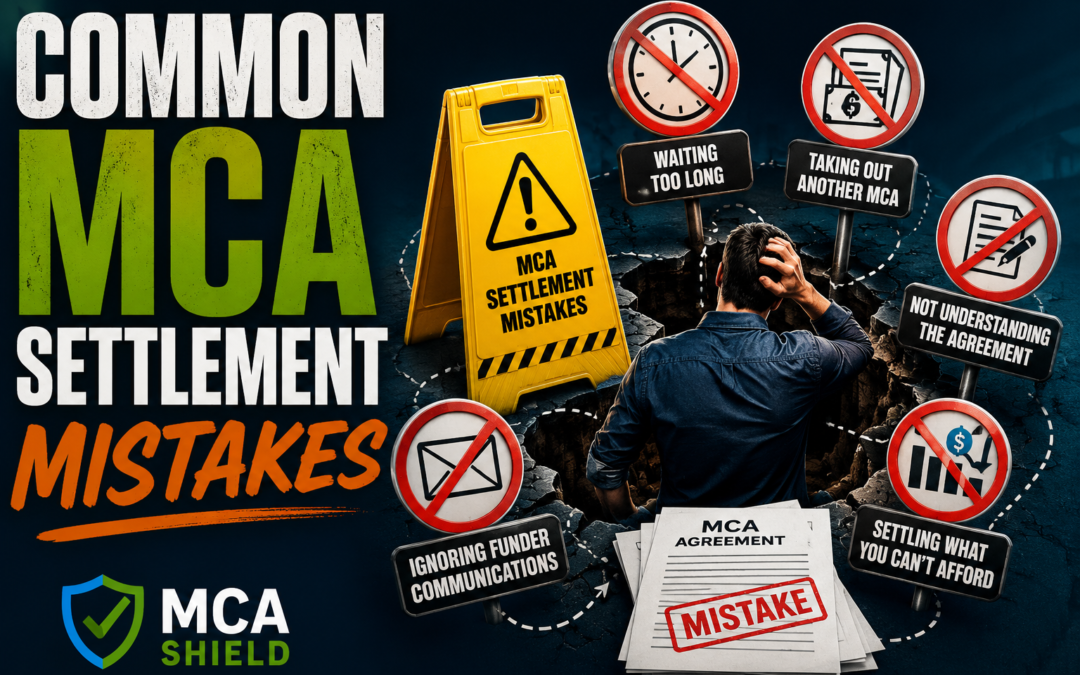
MCA settlement can provide struggling businesses with an opportunity to address merchant cash advance debt, but the way you approach the process matters. Certain MCA settlement mistakes can increase financial pressure, complicate negotiations, or lead to an agreement your business cannot realistically maintain.
Business owners often make mistakes because they wait too long, take out another MCA, ignore funder communications, or agree to payments without fully considering their cash flow. Understanding these risks early can help you make more informed decisions about your MCA debt.
Below, we’ll cover the most common MCA settlement mistakes, why they can create problems, and what you can do to avoid them while working toward a more manageable financial situation.
Schedule Your Free Consultation
What Are the Most Common MCA Settlement Mistakes?
The most common MCA settlement mistakes often happen when financial pressure causes a business owner to make decisions too quickly—or wait too long to make them at all. While every situation is different, recognizing potential mistakes early may help protect your cash flow and ability to operate the business.
Three mistakes are especially important to avoid: waiting too long to address payment problems, taking out another MCA to cover existing obligations, and failing to adjust when business cash flow changes.
Waiting Too Long to Address MCA Payment Problems
One of the biggest MCA settlement mistakes is waiting until payments become extremely difficult to manage. Daily or weekly withdrawals can gradually consume more working capital, leaving less money available for essential expenses.
As payment pressure grows, a business may struggle to cover payroll, rent, inventory, taxes, utilities, and vendor expenses. Missed payments may also lead to increased collection activity or other complications.
Addressing MCA problems earlier may provide more time to evaluate potential settlement options before the financial situation becomes more difficult.
Taking Out Another MCA to Cover Existing Payments
When cash flow gets tight, another merchant cash advance can look like a quick solution. However, using new MCA funding to make existing MCA payments can create an even greater financial burden.
This practice is often called MCA stacking. Multiple advances can mean multiple daily or weekly withdrawals from the same business revenue. As a result, the business may have even less working capital available for normal operations.
Instead of continually adding new obligations, it may be worth exploring whether existing MCA debt can be addressed through settlement or another resolution strategy.
Ignoring Changes in Business Cash Flow
An MCA payment structure that was manageable when revenue was strong may become difficult after sales decline or expenses increase. Ignoring these changes can be a costly mistake.
Business owners should regularly compare incoming revenue with MCA withdrawals and essential operating expenses. If the numbers no longer work, continuing under the same payment structure may put additional pressure on the business.
Recognizing cash flow problems early can help you determine whether it is time to review your MCA obligations and explore more manageable options.
Mistake #1: Waiting Until MCA Payments Become Unmanageable
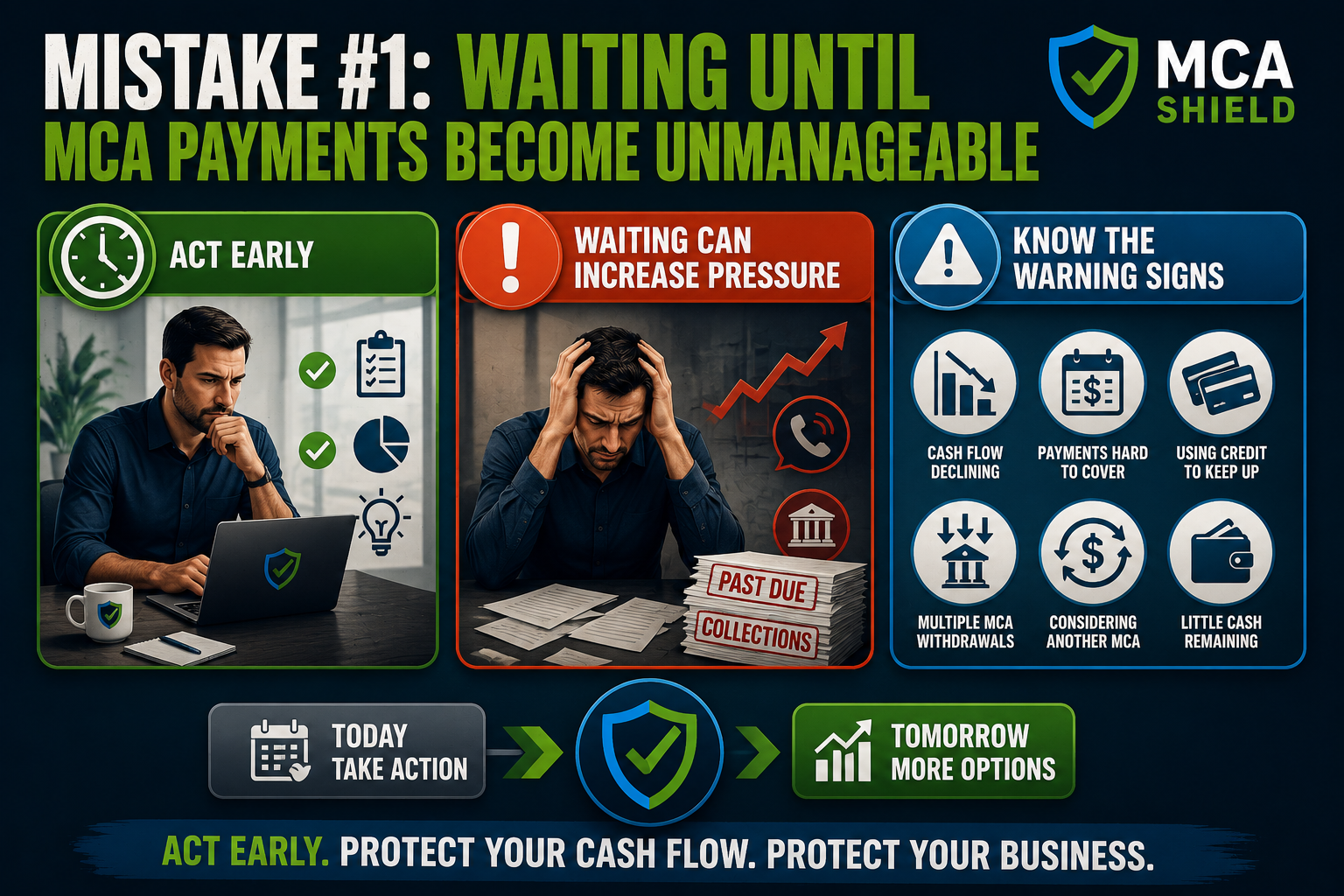
One of the most damaging MCA settlement mistakes is waiting until daily or weekly payments become nearly impossible to maintain. As MCA withdrawals consume more revenue, a business may have less cash available for normal operations.
Waiting can also limit the time available to evaluate potential solutions. Addressing the problem earlier may give a business owner more opportunity to review the situation, understand the MCA obligations, and explore possible settlement options.
Why Acting Early May Create More Options
You do not necessarily have to wait until your business misses payments to evaluate MCA settlement. In fact, recognizing financial pressure early can provide valuable time to understand what is happening.
Start by reviewing your MCA balances, payment amounts, withdrawal frequency, revenue, and essential expenses. This can reveal whether the current payment structure is sustainable.
Acting early may also allow more time to develop an MCA settlement strategy based on the business’s actual financial condition. While settlement results are never guaranteed, waiting until cash flow reaches a crisis point can make an already difficult situation harder to manage.
How Missed Payments Can Increase Collection Pressure
Once MCA payments are missed or interrupted, the funder may begin taking additional steps to collect the outstanding amount. Depending on the MCA agreement and circumstances, this could include increased calls or communications, collection efforts, demands for payment, or potential legal action.
This added pressure can make it more difficult for a business owner to focus on everyday operations. It may also create urgency at a time when careful financial decisions are especially important.
If payments are becoming difficult, do not simply ignore the situation. Review your agreement, understand your financial position, and consider your options before the problem grows.
Warning Signs That It May Be Time to Seek Help
MCA payment problems often develop gradually. Recognizing the warning signs can help a business owner respond before the situation becomes more severe.
Warning signs may include:
- Daily or weekly MCA withdrawals are consuming too much revenue
- Payroll, rent, taxes, inventory, or vendor payments are becoming difficult to cover
- You are using credit or other financing to make MCA payments
- Multiple MCA withdrawals are hitting the business account
- You are considering another MCA simply to create short-term cash flow
- Your business account regularly has little cash remaining after MCA withdrawals
If several of these warning signs sound familiar, it may be time to review your MCA settlement options. Taking action before payments become completely unmanageable may give your business more time to pursue a sustainable resolution.
Mistake #2: Taking Out Another MCA Instead of Addressing Existing Debt
When MCA payments strain cash flow, another merchant cash advance may seem like an immediate solution. New funding can provide temporary cash, but it can also add another payment obligation to an already difficult situation.
One of the most common MCA settlement mistakes is using a new advance to keep up with existing MCA payments. Instead of solving the underlying cash flow problem, this approach may create more withdrawals, more payment pressure, and less available working capital.
How MCA Stacking Can Increase Payment Pressure
MCA stacking occurs when a business has multiple merchant cash advances at the same time. Each MCA may require its own daily or weekly withdrawals.
For example, a business struggling with one MCA payment may take another advance to create additional cash. However, the new MCA brings another repayment obligation. Soon, multiple withdrawals may be competing for the same business revenue.
As the number of payments increases, less money may be available for payroll, rent, inventory, taxes, utilities, and vendors. This can make an existing cash flow problem even more difficult to manage.
Why New Funding May Not Solve the Underlying Problem
Additional funding can provide short-term breathing room. However, it does not necessarily address why the business is struggling with its existing MCA payments.
If current withdrawals are already consuming too much revenue, adding another MCA may simply shift the financial pressure into the future while increasing overall payment obligations.
The business can then enter a difficult cycle:
MCA payments → cash flow shortage → another MCA → additional withdrawals → greater cash flow pressure.
Before accepting another advance, consider whether the business can realistically support the new payment along with its existing obligations.
Addressing Existing MCA Obligations First
Instead of immediately adding another MCA, it may make sense to review the obligations the business already has. Start by examining outstanding MCA balances, payment amounts, withdrawal schedules, business revenue, and essential operating expenses.
This review can help determine how much MCA payments are affecting working capital and whether the current structure is sustainable.
Depending on the circumstances, MCA settlement may provide an opportunity to address existing debt rather than adding another advance. Settlement outcomes vary, and no specific result is guaranteed. However, focusing on the existing problem may help a business pursue a more sustainable financial path instead of continuing the MCA stacking cycle.
Mistake #3: Trying to Settle MCA Debt Without Understanding the Agreement
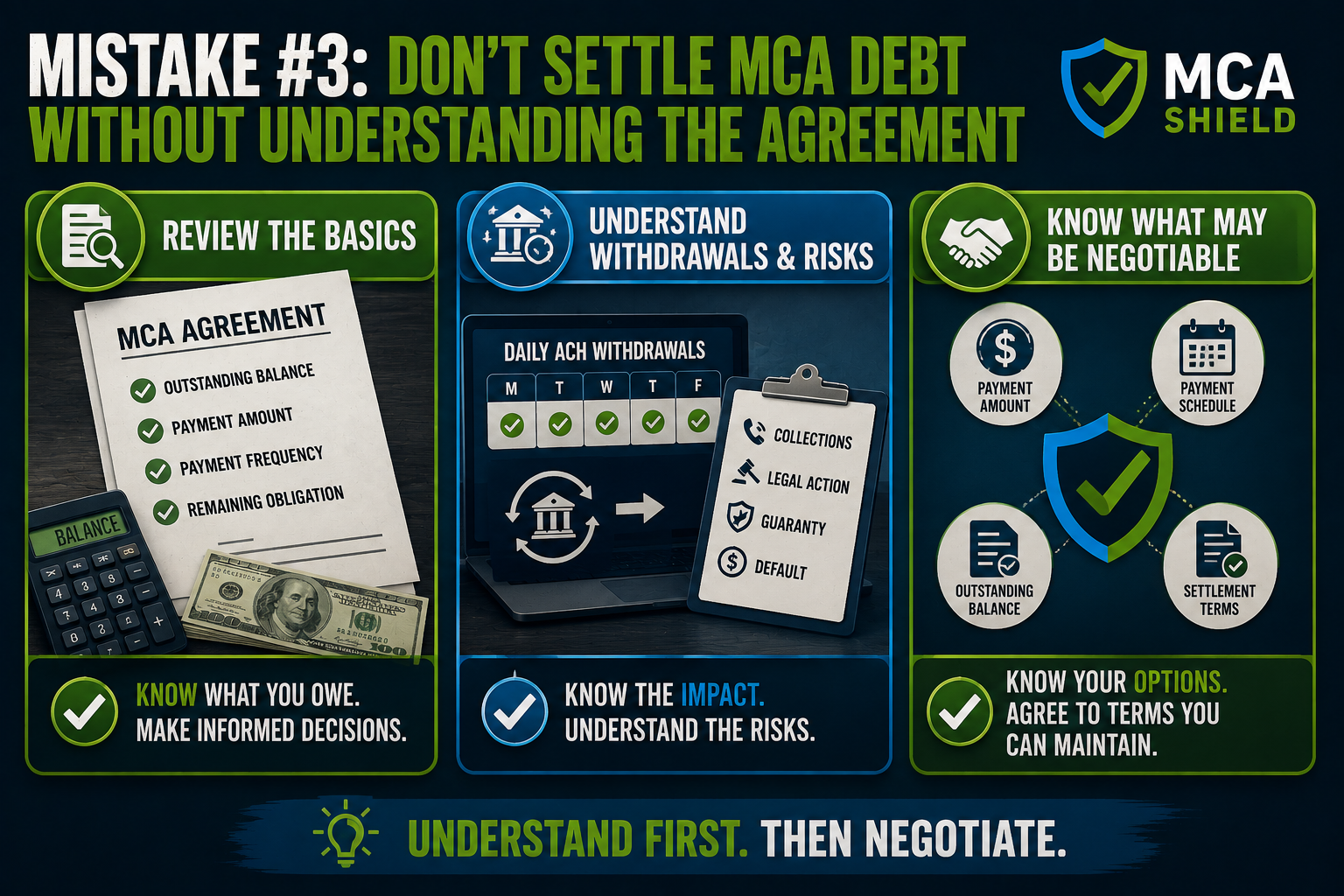
Trying to negotiate a settlement without first understanding the MCA agreement can be a costly mistake. Before discussing a potential resolution, business owners should know what they owe, how payments are structured, and what the agreement says about missed or interrupted payments.
Merchant cash advance agreements can contain important terms that affect the settlement process. Taking time to review these details can help you make informed decisions and avoid agreeing to terms that may not fit your financial situation.
Reviewing the MCA Balance and Payment Terms
Start by identifying the current MCA balance, payment amount, payment frequency, and remaining obligation. If your business has multiple MCAs, review each agreement separately.
It is also important to understand how much money is being withdrawn from the business each day or week. Compare those payments with current revenue and essential operating expenses.
Having a clear picture of your MCA obligations can help you determine which payments are creating the greatest cash flow pressure and what your business may realistically be able to afford.
Understanding ACH Withdrawals and Collection Provisions
Many MCA agreements authorize daily or weekly ACH withdrawals from a business bank account. These withdrawals can significantly affect working capital when revenue declines or operating expenses increase.
The agreement may also contain provisions addressing payment interruptions, reconciliation procedures, default, collection activity, personal guarantees, or potential legal remedies. The specific terms vary by agreement and funder.
Do not assume all MCA contracts work the same way. Carefully reviewing the agreement before taking action can help you understand the potential consequences of changing or stopping payments.
Knowing What May Be Negotiable
MCA settlement does not automatically mean every term can be changed. However, depending on the funder and circumstances, certain aspects of the existing obligation may be open to negotiation.
Potential discussions could involve the payment amount, payment schedule, outstanding balance, or terms of a settlement arrangement. What a funder is willing to consider can depend on the account status, financial hardship, payment history, and other factors.
Before accepting any settlement, make sure you understand how much will be paid, when payments are due, and what happens after the agreed amount is completed. A settlement should address the existing MCA obligation while creating terms the business has a realistic ability to maintain.
Mistake #4: Agreeing to an MCA Settlement You Cannot Afford
Reaching an MCA settlement is only helpful if your business can realistically maintain the new payment arrangement. One of the most important MCA settlement mistakes to avoid is agreeing to terms that still place too much pressure on your cash flow.
A settlement may look attractive because it changes the original obligation. However, the payment amount and schedule still need to work with your business finances. Before accepting an agreement, determine what your business can consistently afford without sacrificing essential operating expenses.
Evaluating Your Business Cash Flow Before Agreeing
Before accepting an MCA settlement, take a close look at your current and expected business cash flow. Review revenue, bank balances, seasonal changes, and other financial obligations.
Do not base your decision only on your best sales weeks or months. Instead, consider what the business can reasonably maintain when revenue is lower.
A realistic cash flow review can help determine whether the proposed settlement payments leave enough working capital to continue operating the business while meeting the new obligation.
Accounting for Payroll, Rent, Taxes, and Other Expenses
MCA payments are only one part of your financial picture. Your business still needs enough cash to cover the expenses that keep it operating.
Before agreeing to settlement terms, account for essential expenses such as payroll, rent, taxes, inventory, utilities, insurance, and vendor payments. You should also consider upcoming or seasonal expenses that could affect available cash.
If a settlement payment leaves too little money for these obligations, the arrangement may simply replace one cash flow problem with another.
The goal should be to find a payment structure that allows the business to address its MCA debt while continuing to meet essential operating expenses.
Creating a Sustainable Payment Arrangement
A successful MCA settlement should focus on more than obtaining different terms. The new arrangement should also be realistic and sustainable for the business.
Consider the proposed payment amount, frequency, settlement period, and total amount required. Then compare those terms with the cash the business can reasonably generate after necessary expenses.
Avoid agreeing to payments simply because you feel pressured to reach a resolution quickly. An affordable settlement is more valuable than an agreement your business may struggle to complete.
Careful planning can help you pursue an MCA settlement that reduces payment pressure while giving your business room to operate and recover.
Mistake #5: Ignoring MCA Funder Communications or Collection Activity
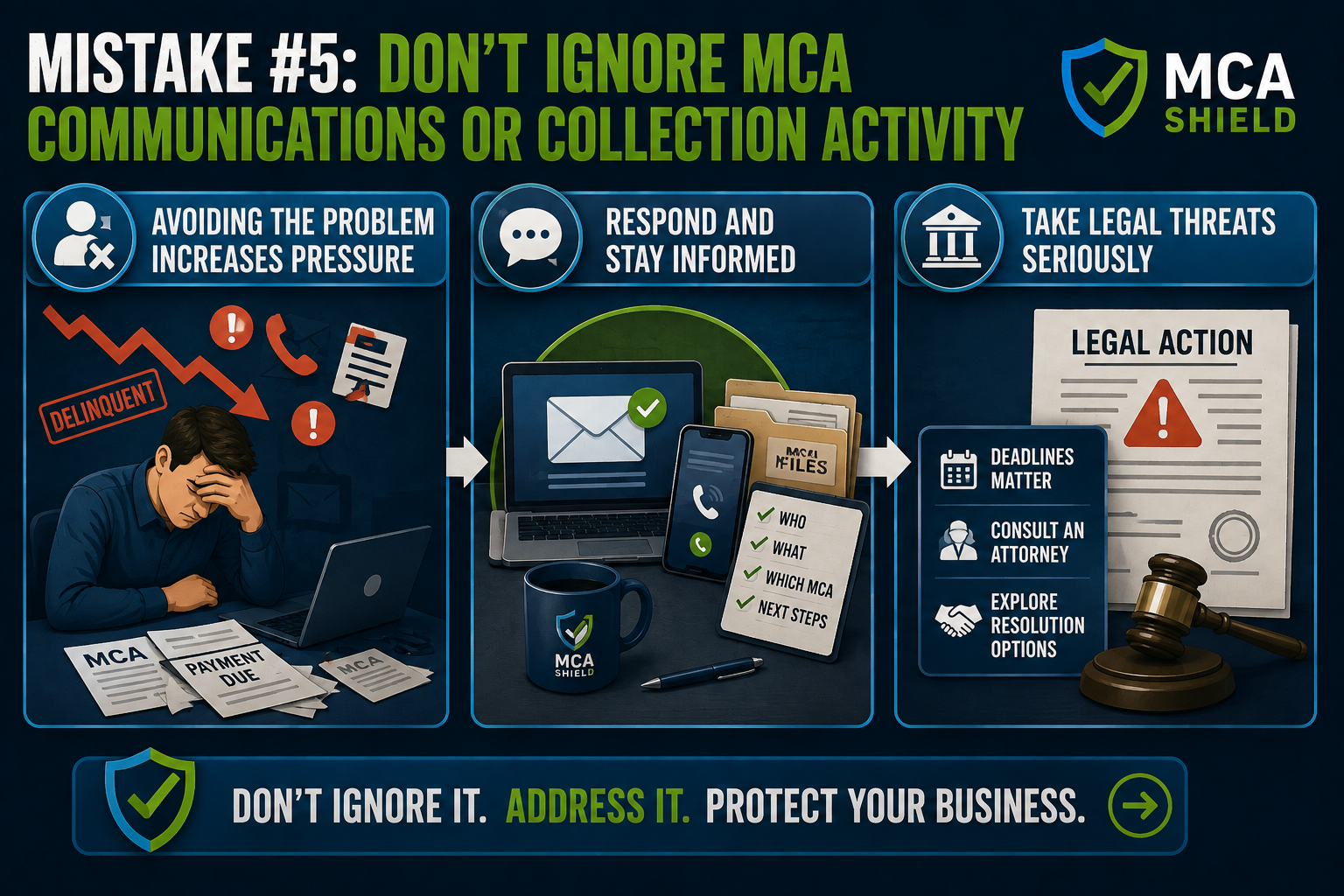
When MCA payments become difficult to maintain, it can be tempting to avoid calls, emails, or other communications from the funder. However, ignoring MCA funder communications is a mistake that may make the situation more difficult.
Communication can become especially important after payments are missed or interrupted. Understanding what the funder is requesting and responding appropriately may help you evaluate your options before collection pressure increases.
Why Avoiding the Problem May Increase Financial Pressure
An MCA problem rarely disappears because communications are ignored. Depending on the agreement and account status, missed payments may lead to additional collection efforts, demands for payment, or potential legal action.
Meanwhile, the business may still be dealing with the same cash flow problems that caused the payment difficulty in the first place.
Ignoring the situation can also mean missing important notices or opportunities to discuss the account. Instead, business owners should stay informed about the status of their MCA obligations and keep records of relevant communications.
Responding to Funder and Collection Communications
If a funder or collection representative contacts you, avoid making rushed decisions simply to end the immediate pressure. First, determine who is contacting you, which MCA the communication concerns, and what they are requesting.
Keep copies of emails, letters, payment notices, and other documents. If your business has multiple MCAs, organize communications by funder so you can clearly track each account.
Before agreeing to new terms or making promises about payments, consider whether the proposed arrangement is realistic based on your current business cash flow. Any resolution should account for both the MCA obligation and your essential operating expenses.
What to Do If Legal Action Is Threatened
Threatened or actual legal action should be taken seriously. Depending on the MCA agreement and circumstances, a funder may pursue legal remedies to collect an alleged outstanding obligation.
Do not ignore a demand letter, summons, complaint, court notice, or other legal document. Legal documents can contain strict deadlines, and failing to respond may affect your rights or available options.
If your business receives legal documents or a lawsuit has been filed, consider speaking with a qualified attorney familiar with merchant cash advance disputes as soon as possible. Legal advice can help you understand the documents, applicable deadlines, and how potential settlement discussions may interact with the case.
Even when collection activity has started, it may still be possible to explore a resolution. However, acting promptly becomes especially important when legal deadlines are involved.
Frequently Asked Questions About MCA Settlement Mistakes
Understanding the most common MCA settlement mistakes can help business owners make more informed decisions when financial pressure is growing. However, questions often arise about payments, negotiations, and handling multiple merchant cash advances.
Here are answers to several common questions about avoiding mistakes during the MCA settlement process.
What Is the Biggest Mistake to Avoid During MCA Settlement?
One of the biggest mistakes is waiting until the financial situation becomes a crisis before exploring your options. As MCA withdrawals continue, a business may have less cash available for payroll, rent, taxes, inventory, and other essential expenses.
Another major mistake is agreeing to settlement terms without first determining whether the business can afford them. A proposed settlement should be evaluated against current revenue, operating expenses, existing MCA obligations, and expected cash flow.
The goal is not simply to reach an agreement. It is to pursue a resolution that the business has a realistic ability to complete.
Should You Stop MCA Payments Before Negotiating a Settlement?
Business owners should be cautious about stopping or blocking MCA payments without first understanding their agreement and the potential consequences.
Depending on the MCA contract and circumstances, interrupting authorized payments could trigger collection activity, default provisions, additional communications, or potential legal action. Every MCA agreement and situation is different.
Before changing payments, review the agreement and consider obtaining appropriate professional guidance. If legal issues are involved, consulting a qualified attorney may help you understand your rights, obligations, and potential risks.
MCA settlement should be approached strategically rather than assuming that stopping payments automatically creates a better settlement opportunity.
Can You Settle Multiple MCAs at the Same Time?
Potentially. Businesses with several merchant cash advances may be able to pursue settlement discussions with multiple MCA funders. However, each MCA generally needs to be evaluated based on its own agreement, balance, payment history, funder, and account status.
When multiple MCAs are involved, it is especially important to understand the business’s total payment burden. Coordinating potential resolutions may help prevent one settlement payment from making another obligation impossible to maintain.
A well-planned approach should consider all active MCA obligations together with the cash needed to keep the business operating. This can help create a more sustainable overall strategy rather than addressing each MCA in isolation.
Avoid Costly MCA Settlement Mistakes by Acting Early

MCA payment problems can become more difficult as financial pressure grows. Acting early may give your business more time to understand its obligations, evaluate its cash flow, and explore potential settlement options before the situation becomes more serious.
Avoiding common MCA settlement mistakes starts with understanding your financial position. Instead of waiting for payments to become unmanageable, consider addressing the problem when you first recognize that MCA withdrawals are affecting normal business operations.
Why the Right Settlement Strategy Matters
Every business and MCA situation is different. The right strategy should consider your outstanding MCA balances, current payments, business cash flow, financial hardship, number of active MCAs, and essential operating expenses.
A settlement strategy should also focus on more than reducing immediate payment pressure. Any proposed arrangement should be evaluated to determine whether your business can realistically afford the payments while continuing to operate.
Taking a thoughtful approach can also help you avoid costly mistakes, such as taking out another MCA, ignoring funder communications, or agreeing to settlement terms you cannot maintain.
While no settlement outcome can be guaranteed, developing a strategy based on your actual financial situation may provide a clearer path toward addressing your MCA debt.
Schedule a Free Consultation With MCA Shield
If MCA payments are consuming too much of your cash flow, you do not have to wait until the situation becomes a crisis. MCA Shield can review your existing MCA obligations and help you understand potential settlement options.
During a free consultation, the MCA Shield team can discuss your current MCA payments, outstanding obligations, financial hardship, and the challenges facing your business. From there, you can better understand what options may be available based on your specific situation.
Take action before MCA payment pressure grows. Schedule a free consultation with MCA Shield today and start exploring a more manageable path forward.