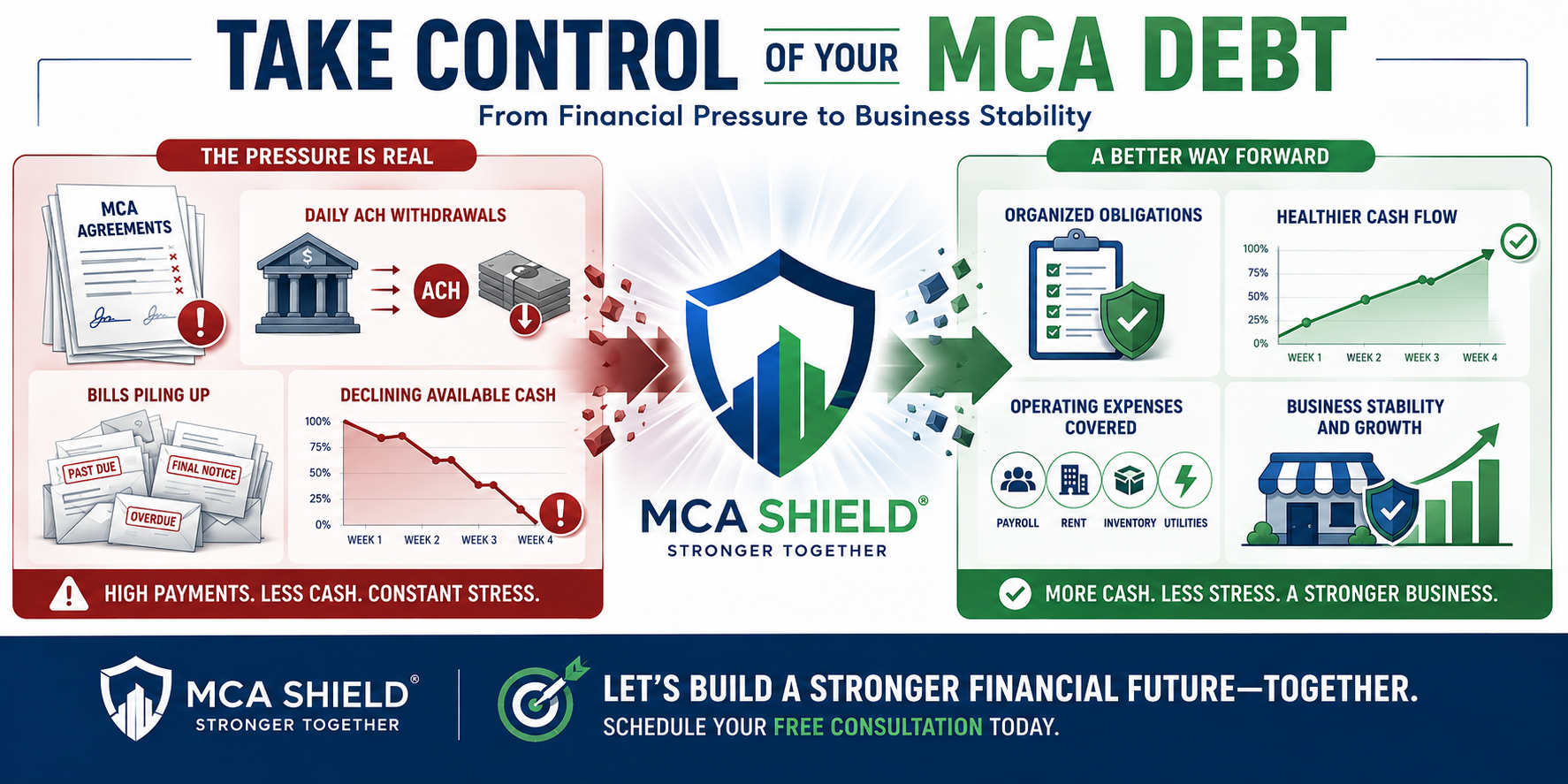
Understanding how MCA settlements work can be an important first step when Merchant Cash Advance payments begin putting serious pressure on your business. Daily or weekly withdrawals can quickly reduce the cash available for payroll, inventory, rent, and other essential expenses.
An MCA settlement may provide a path toward resolving Merchant Cash Advance debt by addressing the outstanding obligation and working toward more manageable terms. However, every business and MCA agreement is different.
In this guide, we’ll explain the MCA settlement process, what can affect the outcome, and what business owners should know before deciding whether settlement may be the right option.
Schedule Your Free Consultation
What Is an MCA Settlement?
How Does the MCA Settlement Process Work?
What Happens to Daily ACH Payments During an MCA Settlement?
How Much Can an MCA Settlement Reduce What You Owe?
One of the first questions business owners ask is, “How much can an MCA settlement reduce what I owe?” Unfortunately, there is no standard percentage or settlement amount that applies to every Merchant Cash Advance.
An MCA settlement may reduce the amount required to resolve an outstanding obligation, but the outcome varies from case to case. Some situations may result in different payment terms rather than a significant reduction to the balance.
For this reason, business owners should be cautious of any company that guarantees a specific settlement amount before reviewing the MCA agreements and financial situation.
Understanding how MCA settlements work means recognizing that the final result depends on several factors.
Factors That May Affect an MCA Settlement
MCA providers do not necessarily approach every settlement the same way. The circumstances surrounding the business and its Merchant Cash Advance can influence the options available.
Important factors may include:
- Outstanding MCA balance — The remaining obligation can influence settlement discussions.
- Number of active MCAs — Multiple advances can place additional pressure on the business’s finances.
- Current business revenue — Revenue provides insight into the company’s ability to meet its obligations.
- Business cash flow — Available working capital can help show whether the existing payment structure is sustainable.
- Payment history — Previous payments and the account’s payment history may influence discussions.
- Terms of the MCA agreement — Each agreement can contain different repayment provisions and requirements.
- Overall financial hardship — Payroll, rent, inventory, taxes, and other expenses help provide a fuller picture of the company’s finances.
- The MCA provider — Providers may have different policies and approaches when addressing settlement requests.
These factors help explain why MCA settlement results cannot be predicted with a single percentage or formula.
A proper review should look beyond the outstanding balance. It should examine the entire financial picture and determine what type of resolution may be realistic.
Why Every MCA Settlement Is Different
No two businesses have the same finances, and no two MCA settlement situations are identical.
One company may have a single Merchant Cash Advance and steady revenue but struggle with daily withdrawals. Another may have several stacked MCAs, declining cash flow, and overdue operating expenses. Those businesses may require very different strategies.
The MCA providers themselves can also differ. Settlement terms, negotiation approaches, timelines, and available options may vary from one provider to another.
That is why a personalized review matters.
Instead of focusing on a promised percentage, business owners should focus on whether a proposed resolution is realistic, clearly explained, and manageable for the company.
The objective of an MCA settlement is not simply to obtain the largest possible reduction. The goal is to resolve the MCA obligation on terms the business can realistically meet while preserving sufficient working capital to continue operating.
When evaluating an MCA settlement, the most important question may not be, “How much can I save?” A better question is, “What resolution gives my business the strongest opportunity to move forward?”
Can You Settle Multiple Merchant Cash Advances?
How Long Does the MCA Settlement Process Take?
What Are the Potential Benefits of MCA Settlement?
When Merchant Cash Advance payments become difficult to manage, an MCA settlement may provide an opportunity to regain financial control. Instead of continuing with a payment structure that strains working capital, the business can explore options to resolve its existing MCA obligations.
The potential benefits extend beyond the debt itself. A workable settlement may help a business protect cash flow, organize its financial obligations, and establish a clearer plan for moving forward.
However, settlement results vary. Any benefits will depend on the MCA agreements, providers, financial circumstances, and final terms reached.
Reducing Pressure on Business Cash Flow
For many businesses, cash flow pressure is the immediate concern.
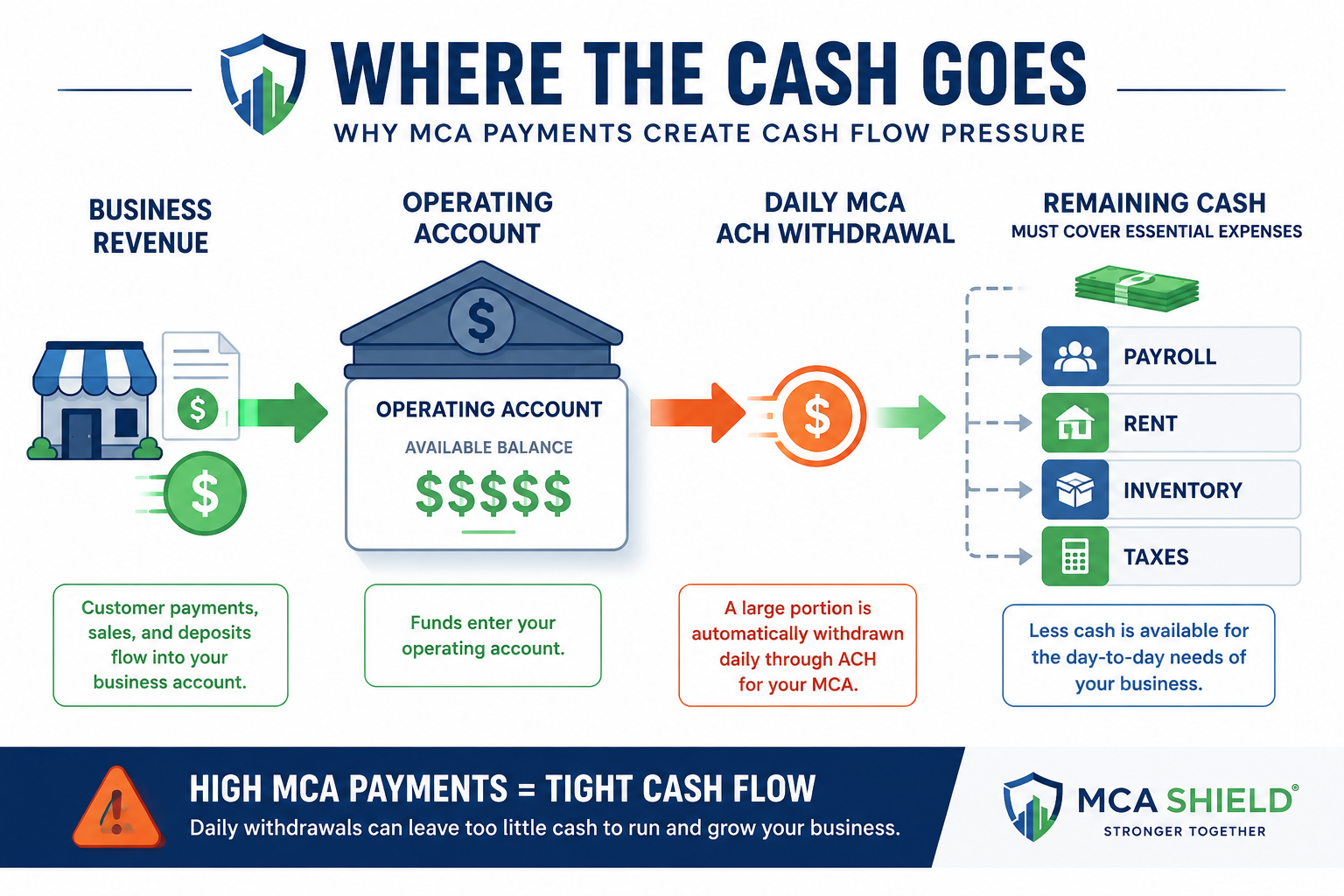
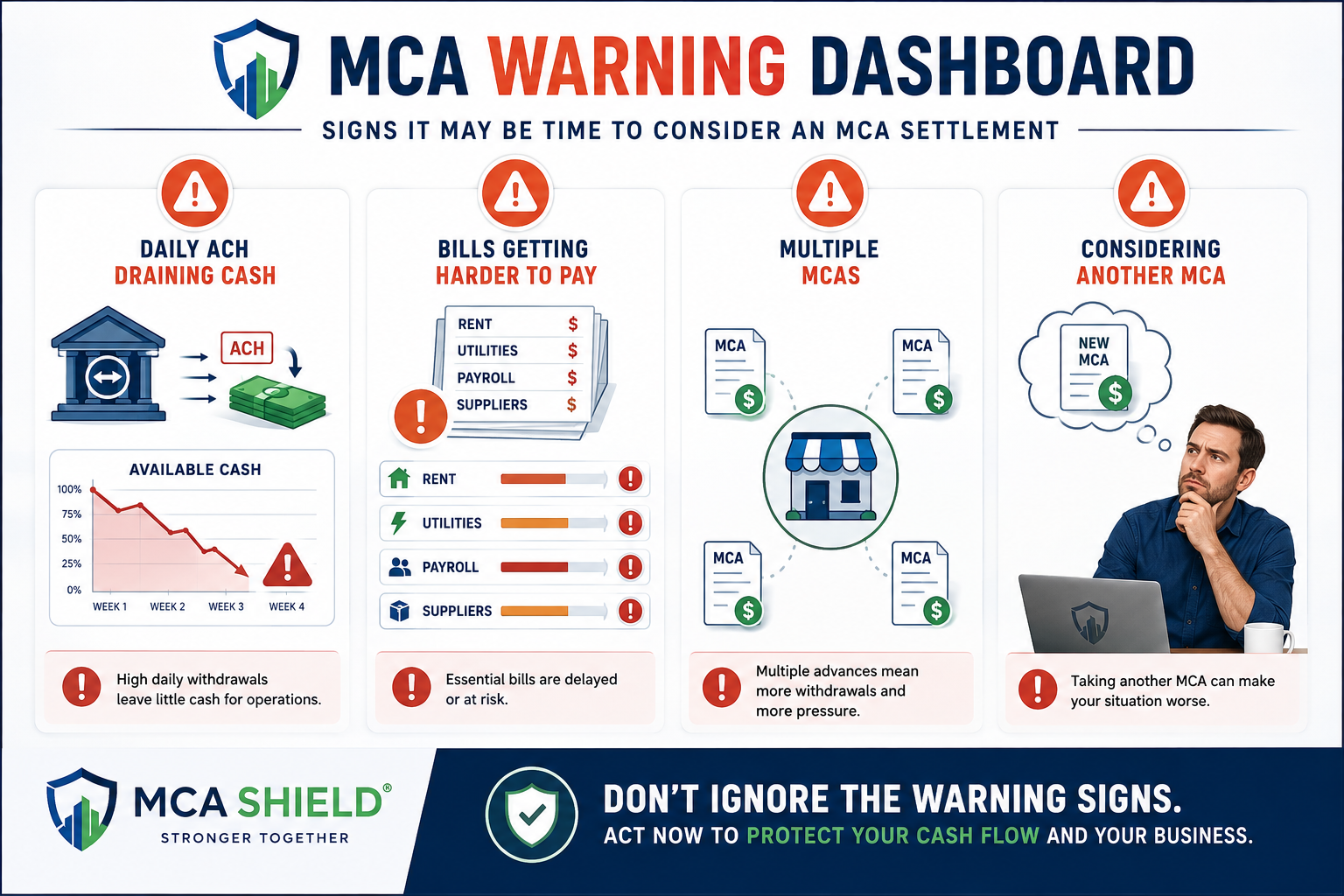
Daily or weekly MCA withdrawals can leave less money available for essential operating expenses. Even a company with steady revenue may struggle when too much cash leaves the operating account each week.
An MCA settlement may help address this problem by changing how an outstanding obligation is resolved. Depending on the agreement reached, the business may gain more flexibility and greater control over its available working capital.
Improved cash flow flexibility can help a company stay focused on essential expenses, including:
- Payroll
- Inventory and supplies
- Rent and utilities
- Taxes and insurance
- Vendor payments
- Other operating costs
The objective is not simply to reduce financial pressure for a few days or weeks. A stronger resolution should support the company’s ability to manage its obligations while continuing normal operations.
Creating a More Manageable Path Forward
Another potential benefit of MCA settlement is having a clearer strategy for resolving existing debt.
Without a plan, business owners may find themselves reacting to each withdrawal, overdue bill, or cash shortage as it occurs. That can make long-term financial decisions difficult.
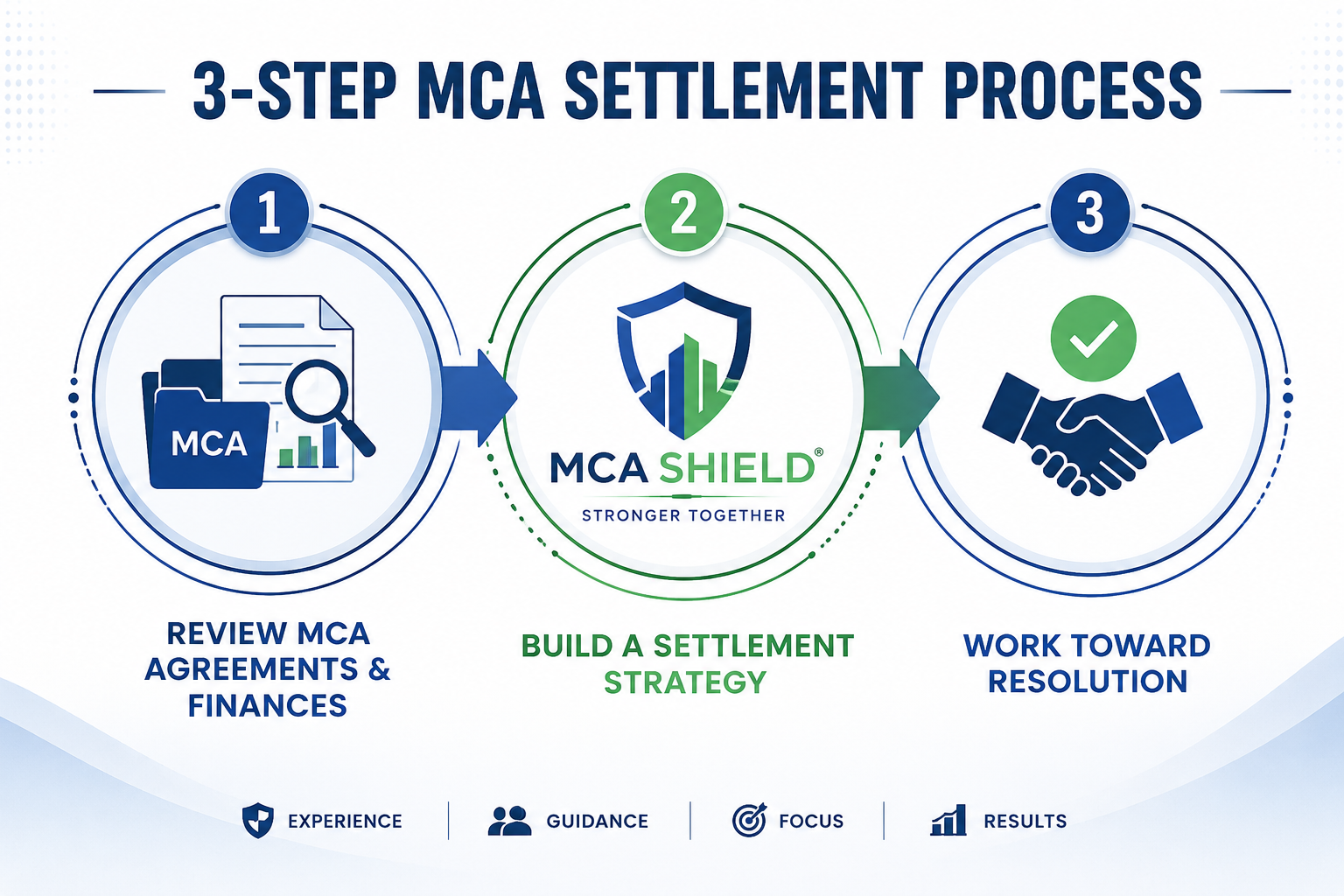
A structured MCA settlement strategy changes the focus. The business can review what it owes, understand its available cash flow, and address its MCA obligations with a defined plan.
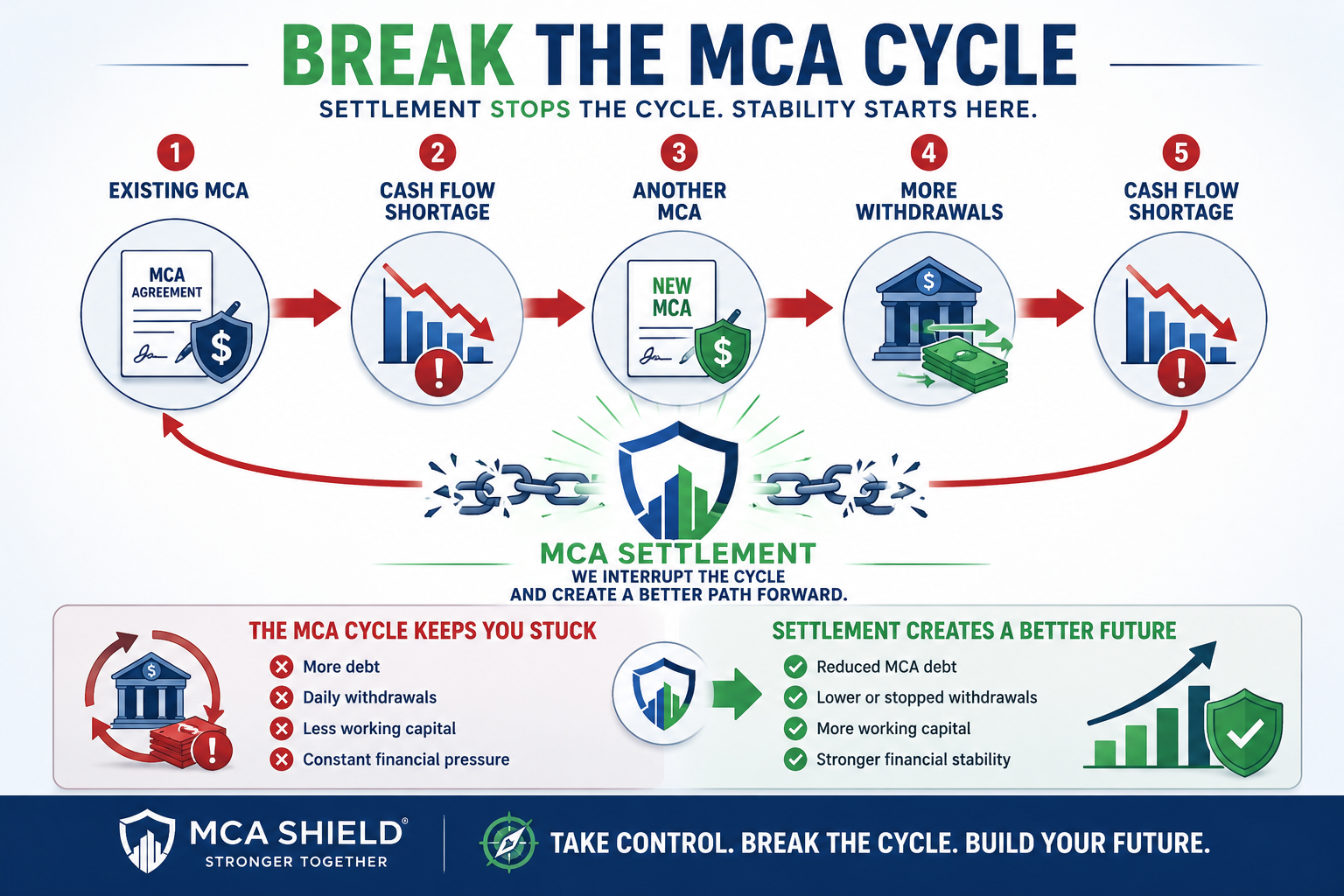
This approach may also help a business avoid relying on another Merchant Cash Advance to cover existing payments. Breaking that cycle can be an important step toward financial stability.
Once MCA obligations become more manageable, business owners can redirect their attention to the company itself. That may include rebuilding working capital, paying essential expenses, serving customers, and planning for future growth.
Ultimately, understanding how MCA settlements work is about more than reducing debt. It is about determining whether settlement can provide a realistic path to resolve MCA obligations while helping the business move forward on stronger financial footing.
Are There Risks With MCA Settlements?
MCA Settlement vs. Taking Out Another MCA
When Should You Consider an MCA Settlement?
How MCA Shield Helps With the MCA Settlement Process
Frequently Asked Questions About How MCA Settlements Work
Take the First Step Toward Resolving Your MCA Debt