
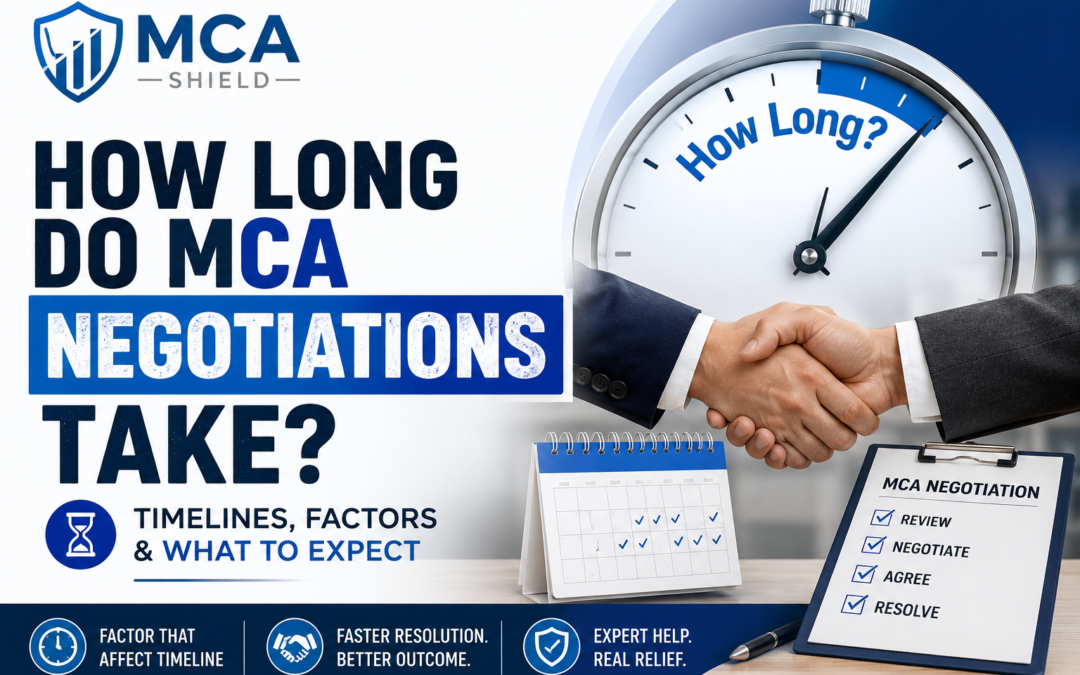
If merchant cash advance payments are putting pressure on your business, you may be wondering, how long do MCA negotiations take? The answer depends on several factors, including the number of MCA agreements involved, the funders, the amount owed, and your current financial situation.
Some MCA negotiations can move relatively quickly, while others require more time to reach workable terms. Multiple funders, missed payments, collection activity, or incomplete financial information can also affect the timeline.
Understanding the MCA negotiation process can help you know what to expect and avoid delays. In this guide, we explain the typical timeline, the factors that can speed up or slow down negotiations, and when it may make sense to start negotiating before cash flow becomes even tighter.
Schedule Your Free Consultation
How Long Do MCA Negotiations Take?
There is no single timeline that applies to every merchant cash advance situation. MCA negotiations may take anywhere from several days to several weeks, depending on the funder, the business’s financial condition, and the complexity of the agreements involved.
If a business has one MCA and clear financial records, negotiations may move faster. However, multiple funders, missed payments, collection activity, or disputes over repayment terms can extend the process.
The key is to begin with a clear picture of what the business can realistically afford. A well-prepared negotiation strategy may help reduce delays and improve the chances of reaching workable terms.
The Typical MCA Negotiation Timeline
Most MCA negotiations begin with a review of the existing agreement and the business’s current cash flow. This helps determine how much pressure the current payment structure is placing on operations.
From there, the process may include:
- Reviewing the MCA balance, payment history, and withdrawal schedule
- Evaluating available cash flow and essential operating expenses
- Determining a realistic payment proposal
- Communicating with the MCA funder or its representatives
- Negotiating possible changes to the repayment structure
- Reviewing and finalizing any new agreement
Some funders may respond quickly to a proposal. Others may require several rounds of communication before terms can be discussed.
Because every case is different, businesses should avoid assuming that an agreement will be reached within a specific number of days. The goal is not simply to negotiate quickly. The goal is to reach terms the business can realistically maintain.
Why Some MCA Negotiations Move Faster Than Others
Several factors can affect how long MCA negotiations take.
First, the number of MCA agreements matters. Negotiating one account is usually less complicated than coordinating several funders at the same time.
The business’s financial records also play an important role. Accurate bank statements, payment histories, and operating expense information can make it easier to explain the business’s financial position and develop a realistic proposal.
Funder responsiveness is another major factor. Some MCA companies may be willing to discuss revised terms early. Others may take longer to respond or may require additional documentation.
The timing of the negotiation can matter as well. A business that begins discussions before its cash flow reaches a crisis point may have more flexibility than one already facing severe default pressure.
Preparation, communication, and a coordinated strategy can all influence the negotiation timeline. Acting early may also give a business more room to evaluate its options before financial pressure becomes harder to manage.
What Happens During the MCA Negotiation Process?
The MCA negotiation process usually begins with a detailed review of the business’s current obligations and cash flow. The goal is to understand what the business owes, how much is being withdrawn, and what payment structure may be realistic going forward.
A successful negotiation should focus on more than simply lowering a payment. It should also consider payroll, rent, inventory, taxes, utilities, and other essential operating expenses.
Reviewing Your MCA Agreements and Payment Obligations
The first step is reviewing every merchant cash advance agreement involved. This includes the remaining balance, payment frequency, withdrawal amount, payment history, and current account status.
If a business has multiple MCAs, each agreement should be reviewed together. Looking at only one obligation may not show the full amount of pressure being placed on cash flow.
This review can help identify which MCA payments are creating the greatest strain. It can also reveal whether missed payments, default notices, or collection activity may affect the negotiation strategy.
Understanding the complete MCA debt picture is critical before proposing new payment terms.
Determining What the Business Can Realistically Afford
Next, the business needs to determine how much it can realistically pay without putting normal operations at risk.
This requires looking closely at current revenue and essential expenses. Payroll, rent, inventory, taxes, insurance, and other necessary costs should remain part of the calculation.
A payment proposal that looks manageable on paper may still fail if it leaves too little cash for daily operations. That is why realistic cash-flow planning should guide the negotiation process.
The objective is to identify a payment level the business can maintain while continuing to operate. Promising more than the business can afford may only create another payment problem later.
Presenting a Payment Proposal to the MCA Funder
Once the financial review is complete, a payment proposal can be presented to the MCA funder.
The proposal may request changes to the existing payment structure based on the business’s current financial condition. Depending on the situation, discussions may involve payment amounts, payment frequency, repayment terms, or other possible modifications.
Clear financial information can help support the proposal. It can show why the current withdrawals are difficult to maintain and why a revised arrangement may be more realistic.
The funder may accept the proposal, reject it, or make a counteroffer. Several rounds of communication may be necessary before both sides reach acceptable terms.
A strong MCA negotiation strategy balances urgency with affordability. The goal is to work toward terms that address the obligation without creating a payment structure the business cannot sustain.
What Factors Can Affect How Long MCA Negotiations Take?
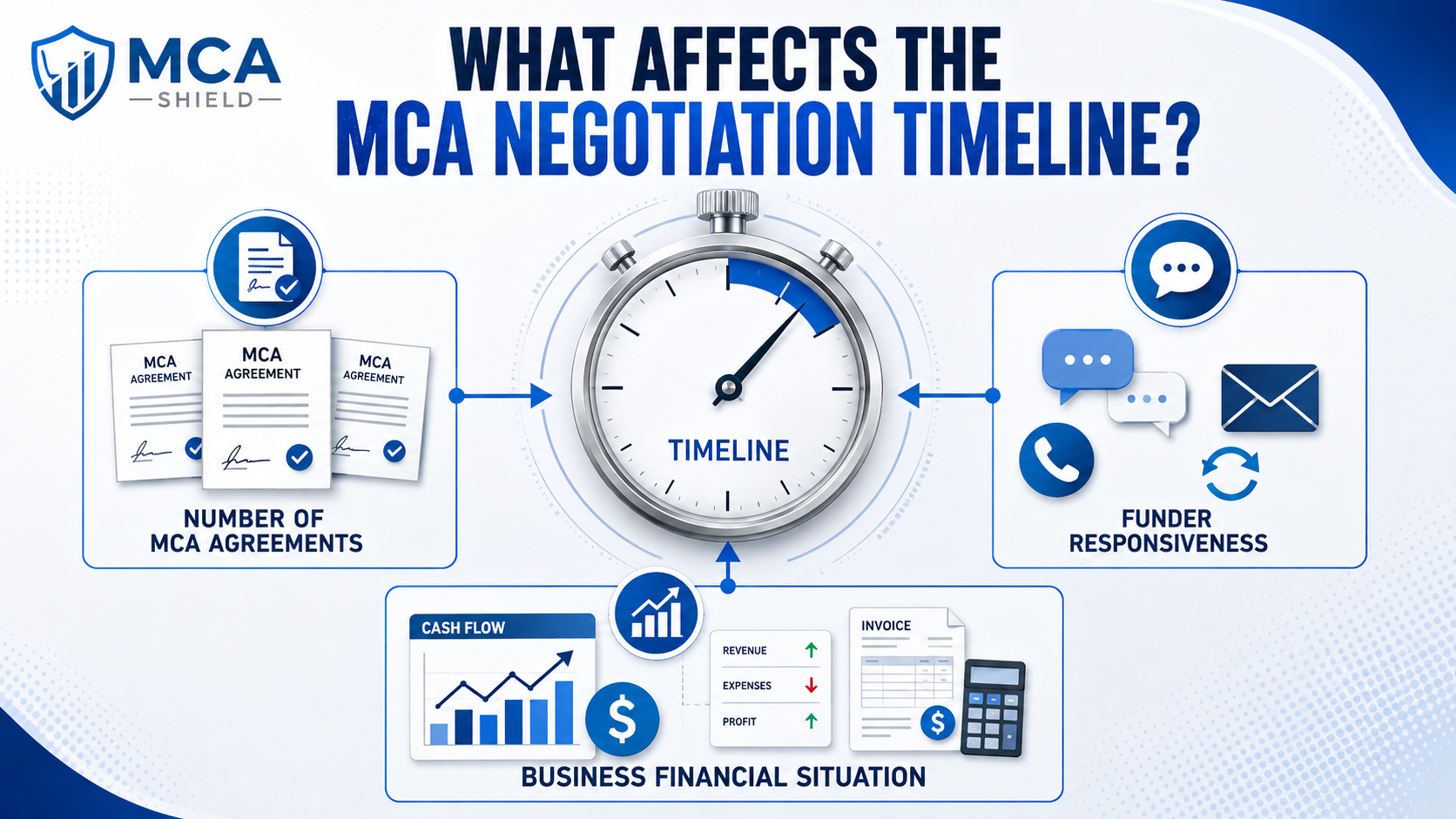
Several factors can influence how long MCA negotiations take. Some situations are relatively straightforward, while others require more communication, financial review, and coordination before progress can be made.
The timeline often depends on how many MCA agreements are involved, how responsive the funders are, and the financial condition of the business. Understanding these factors can help a business prepare for the negotiation process and avoid unnecessary delays.
The Number of MCA Agreements Involved
A business with one merchant cash advance may have a simpler negotiation process than a business dealing with several MCA funders.
When multiple agreements are involved, each MCA may have a different balance, withdrawal amount, payment schedule, and account status. One funder may be willing to discuss new terms quickly, while another may require additional documentation or several rounds of communication.
Multiple daily or weekly withdrawals can also make it harder to determine what the business can realistically afford.
For that reason, multiple MCA agreements should be evaluated as part of one coordinated financial strategy. Negotiating each account without considering the others could create a payment arrangement that still leaves the business short on working capital.
The Funder’s Willingness to Negotiate
The MCA funder can have a major impact on the negotiation timeline.
Some funders may respond quickly and be willing to discuss alternative payment arrangements. Others may take longer to review a proposal, request additional financial information, or make counteroffers.
The stage of the account can also matter. A funder may approach negotiations differently depending on whether the account is current, behind on payments, in default, or already involved in collection activity.
Because every funder handles negotiations differently, there is no guaranteed timeframe for reaching an agreement.
Clear communication and a realistic proposal can help keep discussions moving. However, businesses should be prepared for the possibility that several conversations may be necessary before acceptable terms are reached.
The Business’s Current Financial Situation
The financial health of the business is another important factor in determining how long MCA negotiations take.
A business should be prepared to explain its revenue, operating expenses, existing MCA withdrawals, and available working capital. The clearer this information is, the easier it may be to determine what payment amount is sustainable.
Severe cash-flow problems can make negotiations more urgent. However, they can also make it harder to develop a payment proposal that the business can maintain.
That is why waiting until the business is nearly out of operating cash can limit available options.
Starting the process earlier may provide more time to review the numbers, develop a realistic strategy, and communicate with funders before financial pressure becomes critical. The stronger the financial preparation, the easier it may be to keep MCA negotiations focused and productive.
Do MCA Negotiations Take Longer With Multiple Funders?
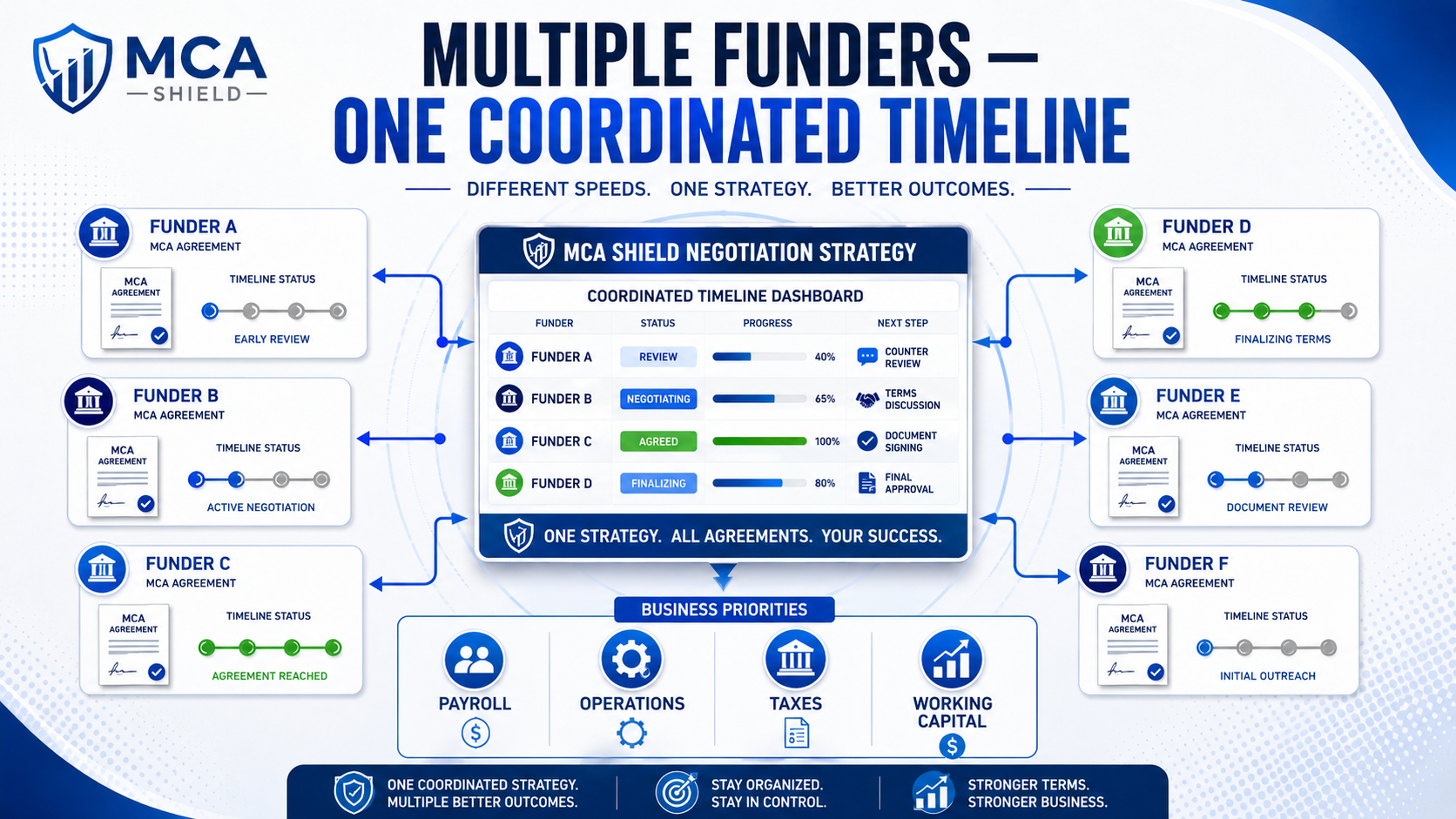
In many cases, MCA negotiations can take longer when multiple funders are involved. Each agreement may have different payment terms, balances, withdrawal schedules, and collection pressures.
A business may also be dealing with several daily or weekly withdrawals at the same time. That makes it harder to evaluate what payment structure is truly affordable.
The goal should be to look at all MCA obligations together. A coordinated negotiation strategy can help protect working capital while addressing each funder in a more organized way.
Why Multiple MCA Payments Require a Coordinated Strategy
Multiple MCA payments can create serious pressure on cash flow. One funder may withdraw in the morning, another later in the day, and others on different schedules throughout the week.
When negotiations begin, each obligation should be reviewed as part of the larger financial picture. This includes the remaining balances, payment amounts, withdrawal frequency, account status, and available operating cash.
Without coordination, a business could agree to new terms with one funder that leave too little money for the others. That may also make it harder to cover payroll, inventory, rent, taxes, and other essential expenses.
The objective is not simply to reduce one MCA payment. It is to create a payment structure that works across all obligations.
How Negotiating With One Funder Can Affect the Others
A change to one MCA payment can directly affect how much cash remains available for every other funder.
For example, if one funder agrees to a lower payment, that may free up working capital. However, if another funder increases collection pressure or requires a larger payment, the business may still face serious cash-flow strain.
This is why each proposed agreement should be considered alongside the others. One negotiation decision can affect the entire MCA repayment strategy.
The timing of each negotiation can also matter. Some funders may respond quickly, while others may take longer or make counteroffers. As a result, the business may need to adjust its strategy as negotiations progress.
When several MCA agreements are involved, coordinating the negotiations can help prevent one payment arrangement from creating problems elsewhere. It can also help the business maintain a clearer view of what it can realistically afford.
Can MCA Negotiations Move Faster After Default?
In some situations, MCA negotiations may move faster after default because the account has become more urgent for both the business and the funder. However, default does not guarantee a faster resolution.
Once payments are missed, the funder may increase communication, begin collection efforts, or demand immediate action. This can accelerate discussions, but it may also create additional pressure on the business.
The best approach is usually to address the problem before it reaches that stage. Waiting for default can reduce flexibility and make MCA negotiations more stressful.
How Default Can Change the Urgency of Negotiations
Default can quickly change the tone and pace of an MCA negotiation.
Before default, a business may have more time to review its finances and develop a realistic payment proposal. After default, the focus may shift toward resolving missed payments and preventing the situation from becoming more serious.
The funder may also want faster answers about the business’s ability to continue making payments. This can create an opportunity for more immediate discussions about revised terms.
However, urgency does not always mean a better outcome. Rushed negotiations can lead to payment promises that the business cannot realistically maintain.
Even after default, the business should carefully review its cash flow before agreeing to new terms. Payroll, rent, inventory, taxes, and other essential expenses still need to be protected.
The goal should be a sustainable resolution, not simply the fastest possible agreement.
Why Collection Activity Can Affect the Timeline
Collection activity can also influence how long MCA negotiations take after default.
Once an account enters collections, the business may begin receiving more frequent calls, emails, notices, or payment demands. Different representatives may also become involved in the account.
This can sometimes speed up communication because the funder wants to address the unpaid obligation. In other situations, it may make negotiations more complicated because additional parties or approval steps are involved.
The business should keep clear records of all communication and avoid making payment commitments without reviewing whether they are affordable.
Collection pressure should not replace careful financial planning. A payment arrangement that cannot be maintained may only create another default later.
When default or collection activity has already begun, acting promptly can become even more important. A clear financial picture and coordinated MCA negotiation strategy can help keep discussions focused on realistic terms and the business’s ability to continue operating.
What Can Delay an MCA Negotiation?
Several issues can slow down the MCA negotiation process. Delays often happen when communication breaks down, financial information is incomplete, or a proposed payment plan does not match the business’s actual cash flow.
Preparation can make a major difference. Clear records, realistic expectations, and timely communication can help keep negotiations moving and reduce unnecessary back-and-forth.
Waiting Too Long to Respond to the Funder
Ignoring calls, emails, or payment notices can make an already difficult situation more complicated.
A delayed response may lead to additional collection activity or reduce the amount of time available to discuss possible alternatives. It can also make it harder to present the business as organized and prepared to work toward a solution.
Businesses should respond promptly while still taking time to review their financial position.
Early communication can help keep the negotiation focused on possible solutions instead of escalating payment pressure.
Providing Incomplete Financial Information
Funders may need financial information before they will seriously consider a revised payment arrangement.
Missing bank statements, unclear revenue figures, or incomplete expense information can slow the review process. The funder may request additional documents before responding to a proposal.
Businesses should be ready to provide an accurate picture of revenue, operating expenses, MCA withdrawals, available cash, and other financial obligations.
Well-organized information can also make it easier to determine what the business can realistically afford.
Complete financial records can help reduce delays and support a stronger MCA negotiation proposal.
Proposing Payments the Business Cannot Sustain
A business may feel pressure to offer a higher payment simply to reach an agreement quickly. However, that approach can create another problem.
If the proposed payment is too aggressive, the business may struggle to cover payroll, inventory, rent, taxes, or other essential expenses. That could lead to another missed payment and another round of negotiations.
A sustainable proposal should reflect the business’s actual cash flow.
The fastest agreement is not always the best agreement. A realistic payment structure is more important than promising an amount the business cannot maintain.
Taking the time to build an affordable proposal can help prevent repeated defaults and keep the business focused on long-term stability.
When Should You Start MCA Negotiations?
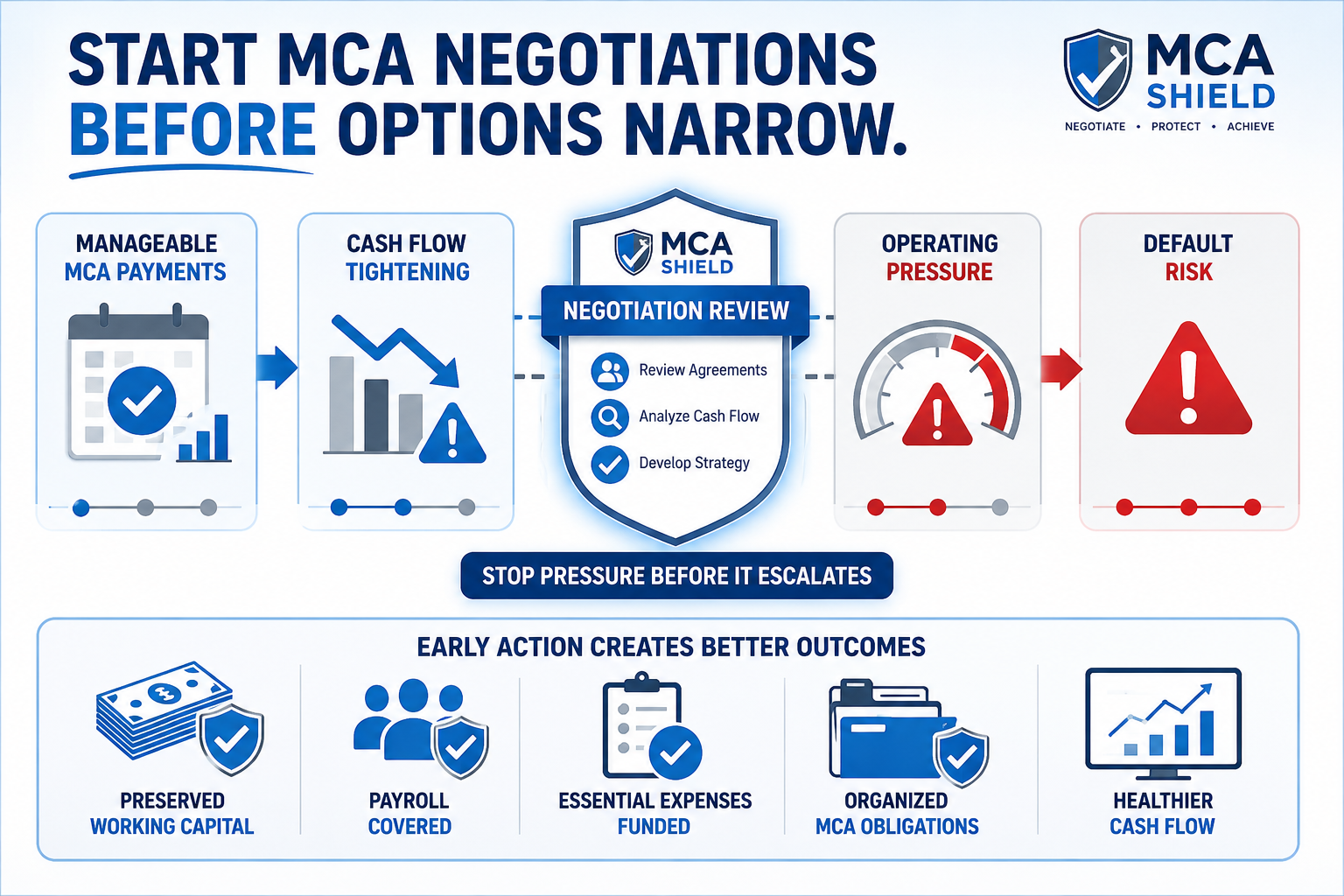
The best time to start MCA negotiations is usually before payments create a serious cash-flow crisis. Waiting until the business misses payroll, falls behind on major expenses, or faces aggressive collection activity can make the situation harder to manage.
If daily or weekly MCA withdrawals are becoming difficult to maintain, it may be time to review your options. Starting early can provide more time to evaluate your finances, develop a realistic payment strategy, and communicate with funders.
You do not necessarily have to wait for an MCA default before exploring negotiation.
Why Starting Before Cash Flow Becomes Critical Can Help
A business usually has more flexibility while it still has enough working capital to operate.
Starting negotiations early provides time to review revenue, expenses, MCA balances, and withdrawal schedules. It can also help the business determine what payment amount it can realistically maintain.
Waiting until cash reserves are nearly exhausted can increase pressure. Payroll, rent, taxes, inventory, and vendor payments may already be competing for limited funds.
Early action can provide more room to develop a sustainable negotiation strategy.
It may also reduce the pressure to accept payment terms simply because the business needs an immediate solution. The objective should be to address MCA obligations while preserving enough cash to continue operating.
Signs It May Be Time to Begin Negotiating
Businesses do not need to wait for a missed payment before reviewing their MCA obligations. Several warning signs may indicate that the existing payment structure is becoming difficult to sustain.
These signs can include:
- MCA withdrawals consuming a growing share of daily or weekly revenue
- Difficulty covering payroll, rent, inventory, taxes, or vendor expenses
- Using credit or personal funds to cover normal operating costs
- Falling behind on other business obligations
- Carrying several MCA payments at the same time
- Considering another merchant cash advance to make existing payments
- Concern that an upcoming withdrawal could create a cash shortage
If these problems are becoming common, the current MCA payment structure may no longer match the business’s cash flow.
Recognizing the warning signs early can give the business more time to evaluate its options before the financial pressure becomes more severe.
Schedule a Free Consultation With MCA Shield
If MCA payments are putting increasing pressure on your business, you do not have to wait until the situation reaches default.
MCA Shield can review your merchant cash advance agreements, current payments, and overall financial situation to help determine what options may be available. If multiple funders are involved, the review can also consider how each obligation affects your total cash flow.
Every business situation is different, so the negotiation timeline and potential outcome will vary.
Schedule a Free Consultation With MCA Shield to discuss your MCA obligations, understand your options, and determine whether a more manageable payment strategy may be possible.