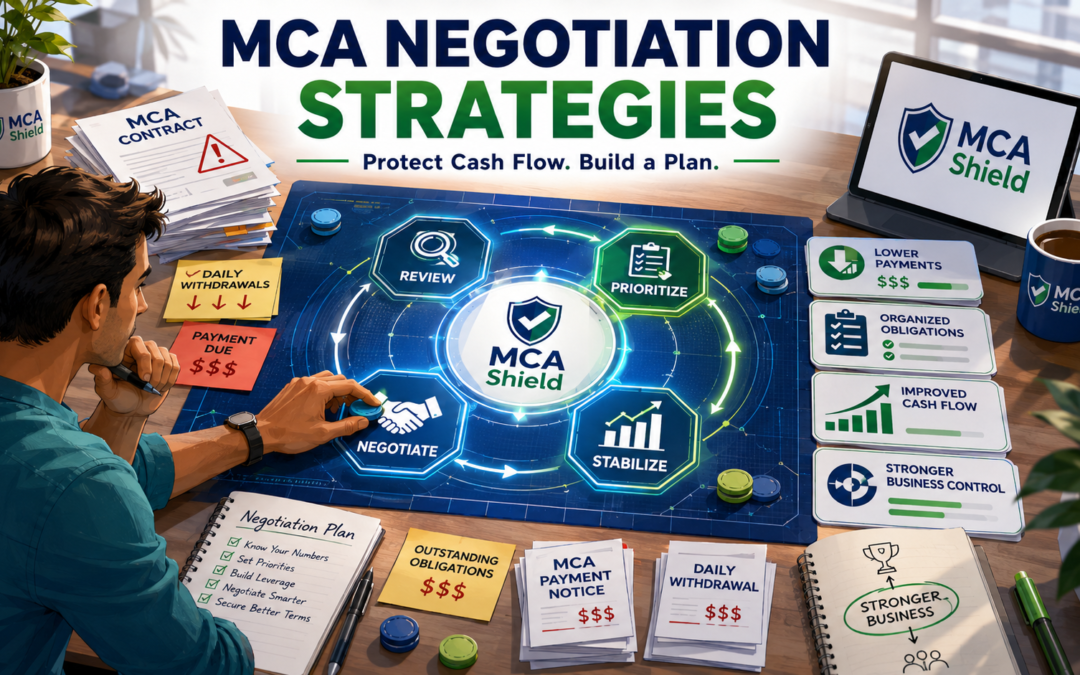
When merchant cash advance payments begin putting pressure on your business, the right MCA negotiation strategies can help you evaluate your options before cash flow becomes even tighter. A strong strategy starts with understanding what you owe, how current payments affect operations, and what changes your business may realistically need.
Effective MCA negotiation strategies are not simply about asking for lower payments. They involve reviewing your agreements, analyzing business finances, setting clear goals, and approaching MCA funders with a realistic plan. The more prepared you are, the stronger your position may be during negotiations.
In this guide, we will break down practical ways to prepare for MCA negotiations, protect working capital, and pursue more manageable payment terms. You will also learn how to handle multiple MCA obligations and avoid common mistakes that can weaken your negotiating position.
Schedule Your Free Consultation
What Does Negotiating MCA Loans Before Default Mean?
Before you begin negotiating with an MCA funder, you need a clear picture of your entire debt situation. Effective MCA negotiation strategies start with accurate information. Without it, you may agree to payment terms that still place too much pressure on your business.
Gather all MCA agreements, payment schedules, bank statements, and recent funding notices. Then review how each obligation affects your available cash. This process can help you identify which debts require the most attention and what type of payment structure your business may realistically support.
List Every MCA Balance, Payment, and Funder
Create a complete list of every merchant cash advance your business currently owes. Include the remaining balance, the current payment amount, the payment frequency, and the name of each MCA funder.
If your business has multiple MCAs, do not evaluate them separately. Look at the total amount being withdrawn from your account each day or week. Several manageable payments can quickly become a serious cash-flow problem when combined.
You should also note any past-due amounts, modified payment arrangements, or recent communications from funders. Having all of this information in one place can make it easier to determine which MCA obligations should be addressed first.
Review Daily and Weekly Withdrawal Obligations
Next, calculate how much money is leaving your business through daily or weekly MCA withdrawals. Compare that amount with your average revenue and essential operating expenses.
For example, consider how much cash remains after deducting MCA payments. Can your business still comfortably cover payroll, rent, inventory, utilities, taxes, and other necessary expenses?
This review can reveal whether your current payment structure is sustainable. It can also help you determine the reduced or adjusted payment arrangement that may be more realistic during negotiations.
Look beyond a single withdrawal and consider the combined impact of all MCA payments on your cash flow. The combined effect of several withdrawals often creates the greatest strain on working capital.
Look for Terms That May Affect Your Negotiation Strategy
Your MCA agreements may contain provisions that affect how you approach negotiations. Review each contract carefully for information about payment amounts, reconciliation provisions, default terms, fees, ACH withdrawals, and other repayment requirements.
You should also look for any language that explains how payments may change when business revenue rises or falls. These provisions can be important when determining whether your current withdrawals accurately reflect your business performance.
Understanding the agreement before contacting a funder can help you enter negotiations with clearer goals and fewer surprises. A thorough review gives you the information needed to build an MCA negotiation strategy based on your actual obligations and cash flow, rather than assumptions.
Identify the Biggest Pressure Points on Your Business Cash Flow
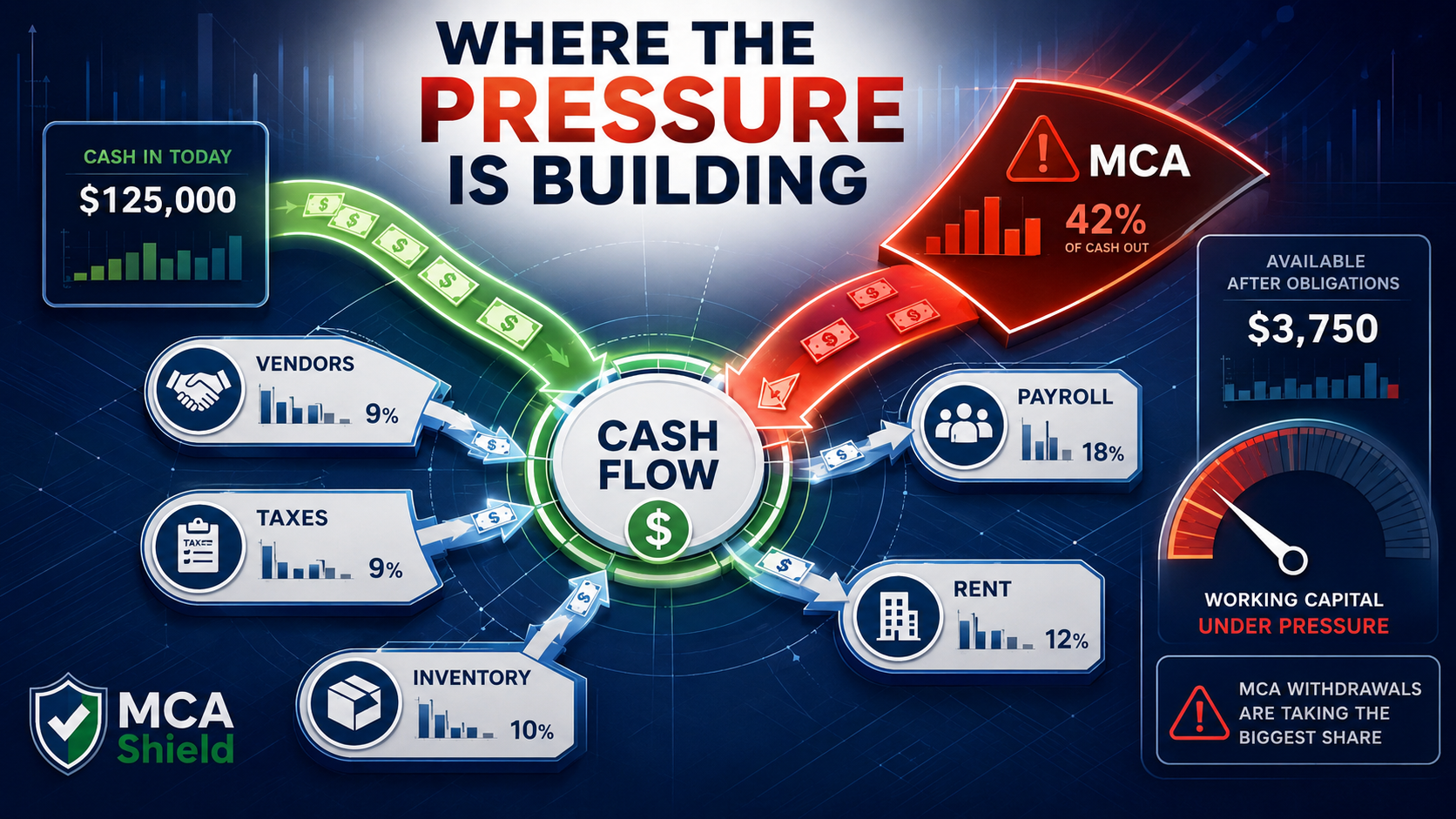
Once you understand your MCA obligations, the next step is to see exactly where those payments are creating the most financial pressure. Strong MCA negotiation strategies should be based on how the withdrawals affect your day-to-day business operations.
Review your recent revenue, bank activity, and essential expenses together. This can help you determine whether MCA payments are simply reducing profits or beginning to interfere with the cash your business needs to operate.
Determine How Much Revenue MCA Payments Are Consuming
Start by calculating how much of your weekly or monthly revenue is going toward MCA payments. If you have more than one advance, combine all daily and weekly withdrawals to get the full picture.
Then compare that total with your average business revenue. A high percentage does not always mean negotiation is necessary, but it can show how much working capital MCA payments are taking from normal business operations.
Pay particular attention to periods when revenue slows. Fixed or aggressive withdrawals can become much harder to manage when sales decline, even if the payments seemed affordable when the MCA was first obtained.
Understanding this ratio can help you develop a more realistic negotiating position based on what your business can currently support.
Identify Essential Business Expenses That Are Being Squeezed
MCA payments become especially concerning when they begin competing with expenses your business needs to stay open.
Look closely at whether withdrawals are making it harder to cover payroll, rent, inventory, utilities, taxes, insurance, equipment, or vendor payments. You should also consider whether you are delaying necessary purchases or using other forms of financing to cover basic expenses.
These pressure points can provide important context during an MCA negotiation. Instead of simply stating that payments are difficult, you can show how the current structure is affecting the financial stability of the business.
The goal is to identify where cash-flow pressure is interfering with normal operations and determine what changes could create a more manageable balance.
Recognize When Current Payments Are No Longer Sustainable
One difficult week does not always mean an MCA payment structure is unsustainable. However, repeated cash shortages can be a warning sign that the current arrangement no longer fits your business finances.
Common signs may include falling account balances, delayed payroll, overdue vendor invoices, missed operating expenses, or relying on new financing to cover existing MCA payments.
If these problems continue from week to week, waiting may allow the financial pressure to grow. Recognizing the issue early can give you more time to review your options and build an MCA negotiation strategy before working capital becomes severely limited.
A realistic negotiation should focus on payment terms your business can maintain while continuing to meet its essential operating expenses.
Decide What You Need to Achieve Before Negotiations Begin
Before contacting an MCA funder, decide what a successful outcome would look like for your business. Clear goals can make your MCA negotiation strategy more focused and help you avoid agreeing to terms that do not solve the underlying cash-flow problem.
Your goal should be based on your current finances, not simply on the lowest payment you would like to make. Review your revenue, operating expenses, and available working capital to identify a payment structure that gives your business room to operate.
Define a Payment Your Business Can Realistically Afford
Start by determining how much your business can reasonably pay toward MCA debt without falling behind on essential expenses. This amount should leave enough cash available for payroll, rent, inventory, utilities, taxes, and other operating costs.
Use recent revenue and bank activity to estimate what your business can consistently support. Avoid basing your proposal on an unusually strong sales week or optimistic future projections.
A payment that looks manageable on paper may still create problems if it leaves your business with little cash for unexpected expenses. Your target should be a payment amount your business can maintain over time, not one that provides only temporary relief.
Prioritize Short-Term Cash Flow and Long-Term Stability
Reducing immediate payment pressure may be important, but your negotiation goals should also support the future health of the business.
Consider whether a proposed arrangement would give you enough room to rebuild cash reserves, stay current with vendors, and meet upcoming expenses. A lower payment may help today, but the overall agreement still needs to make sense over the months ahead.
Strong MCA negotiation strategies balance immediate cash-flow needs with a payment structure that does not create another financial problem later. The objective is to improve stability while continuing to make progress toward resolving the obligation.
Know Which Outcomes Matter Most to Your Business
Every business enters MCA negotiations with different priorities. For one company, the main goal may be lower daily or weekly payments. Another may need more predictable withdrawals, additional time, or a broader resolution of multiple MCA obligations.
Before negotiations begin, rank the outcomes that matter most to you. Consider questions such as:
- Do you need to reduce the amount leaving your account each day or week?
- Would a different payment schedule make cash flow easier to manage?
- Are several MCA obligations competing for the same revenue?
- Does your business need more working capital to cover essential expenses?
Knowing your priorities can help you evaluate proposals more carefully. It also makes it easier to focus negotiations on changes that could have the greatest positive impact on your business cash flow and financial stability.
Build Your Negotiating Position With the Right Financial Information
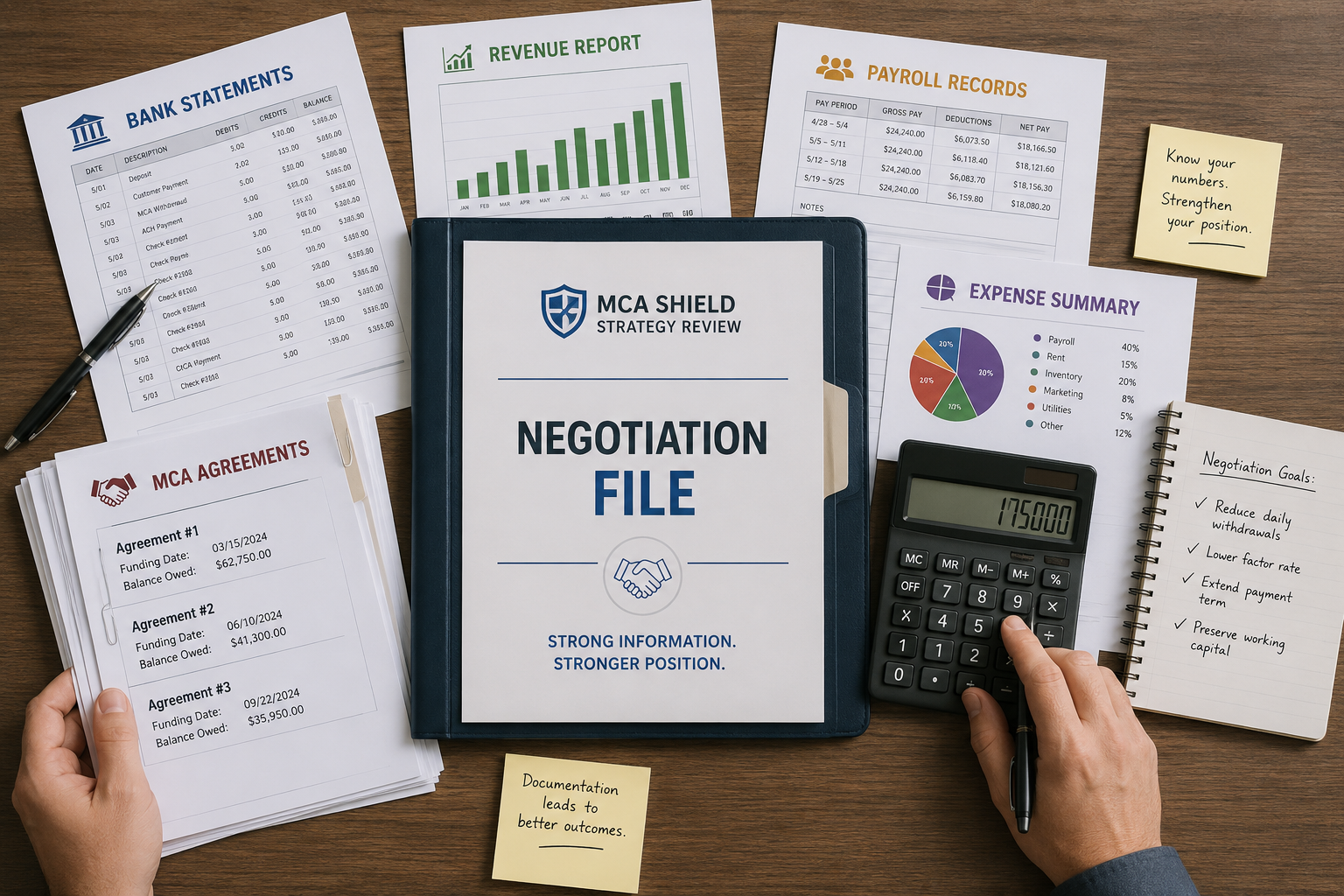
A strong MCA negotiation strategy depends on more than asking a funder to lower your payments. You should be prepared to show why the current payment structure is creating financial pressure and what your business can reasonably afford.
Clear financial records can make your position easier to understand. They can also help support a proposal that reflects your actual revenue, operating expenses, and available cash flow.
Prepare Recent Bank Statements and Revenue Records
Start by gathering recent business bank statements, sales reports, and other records that show the revenue your company is generating.
Look for patterns in your cash flow. Revenue may fluctuate from week to week or month to month, especially if your business is seasonal or experiencing a slowdown. These records can help show whether current MCA withdrawals still align with the financial condition of the business.
You should also identify any major changes in revenue since the MCA agreement began. A significant decline in sales can provide important context when discussing more manageable payment terms with a funder.
Accurate financial records allow you to base negotiations on facts rather than estimates.
Document Payroll, Rent, Inventory, and Other Essential Expenses
Revenue alone does not show the full financial picture. Your business must also cover the expenses required to keep operating.
Create a clear breakdown of essential costs, including payroll, rent, utilities, inventory, insurance, taxes, equipment, and vendor payments. Depending on your industry, you may also need to include fuel, supplies, marketing, maintenance, or other recurring expenses.
Then compare these costs with the amount being withdrawn for MCA payments.
This comparison can help demonstrate how much working capital remains after both operating expenses and MCA obligations are paid. It can also help you determine what type of payment adjustment your business could realistically maintain.
Show Why the Current MCA Payment Structure Creates Financial Strain
When discussing your situation with a funder, be specific about how the current withdrawals are affecting the business.
For example, you may be struggling to keep enough cash available for payroll, delaying inventory purchases, falling behind with vendors, or carrying very low account balances between deposits.
Use your financial records to connect the problem directly to the payment structure. Instead of simply saying the payments are too high, show how the withdrawals are affecting day-to-day operations and available working capital.
This information can help create a clearer negotiating position. The goal is to show that a more sustainable payment arrangement could help your business continue operating while still addressing the MCA obligation.
Present MCA Funders With a Realistic Repayment Proposal
Once you understand your finances and negotiation goals, the next step is to develop a repayment proposal your business can realistically support. A strong MCA negotiation strategy should focus on terms that reduce financial pressure without creating another payment problem a few weeks later.
Your proposal should be clear, reasonable, and supported by current financial information. The goal is to show the funder what your business can afford while still covering essential operating expenses.
Base Your Proposal on Actual Business Cash Flow
Use recent revenue, bank activity, and operating expenses to determine what your business can consistently pay.
Avoid choosing a payment amount simply because it sounds manageable. Instead, calculate how much cash remains after covering payroll, rent, inventory, utilities, taxes, and other essential expenses.
If revenue changes throughout the year, take those fluctuations into account. A payment that works during a strong sales period may create problems during slower weeks or months.
Building your proposal around actual cash flow can help you request repayment terms that better reflect your business’s financial condition.
Explain Why a Modified Payment Structure May Benefit Both Sides
A negotiation proposal becomes stronger when it explains why a modified payment arrangement may help both your business and the MCA funder.
If the current withdrawal amount is putting severe pressure on working capital, continuing under the same structure may become increasingly difficult. A more manageable arrangement may give your business additional room to operate while continuing to make payments toward the obligation.
Present the situation clearly. Show how an adjusted payment could help your business maintain steady operations, stronger cash flow, and more consistent payments.
The purpose is not simply to ask for relief. It is to present a practical repayment structure that your business can realistically sustain over time.
Avoid Promising Payments Your Business Cannot Maintain
One of the biggest mistakes you can make during MCA negotiations is agreeing to a payment that is still too high.
A temporary reduction may sound helpful, but it will not solve the problem if your business cannot keep up with the new amount. Before accepting any proposal, review how the payment will affect your cash flow over several weeks or months.
Leave enough room for normal operating costs and unexpected expenses. Do not base your commitment on best-case revenue projections or assume sales will quickly improve.
A successful MCA negotiation should lead to terms your business can realistically follow. Sustainable payments are more valuable than an agreement that only provides short-term breathing room.
Know Which MCA Payment Terms May Be Open to Negotiation
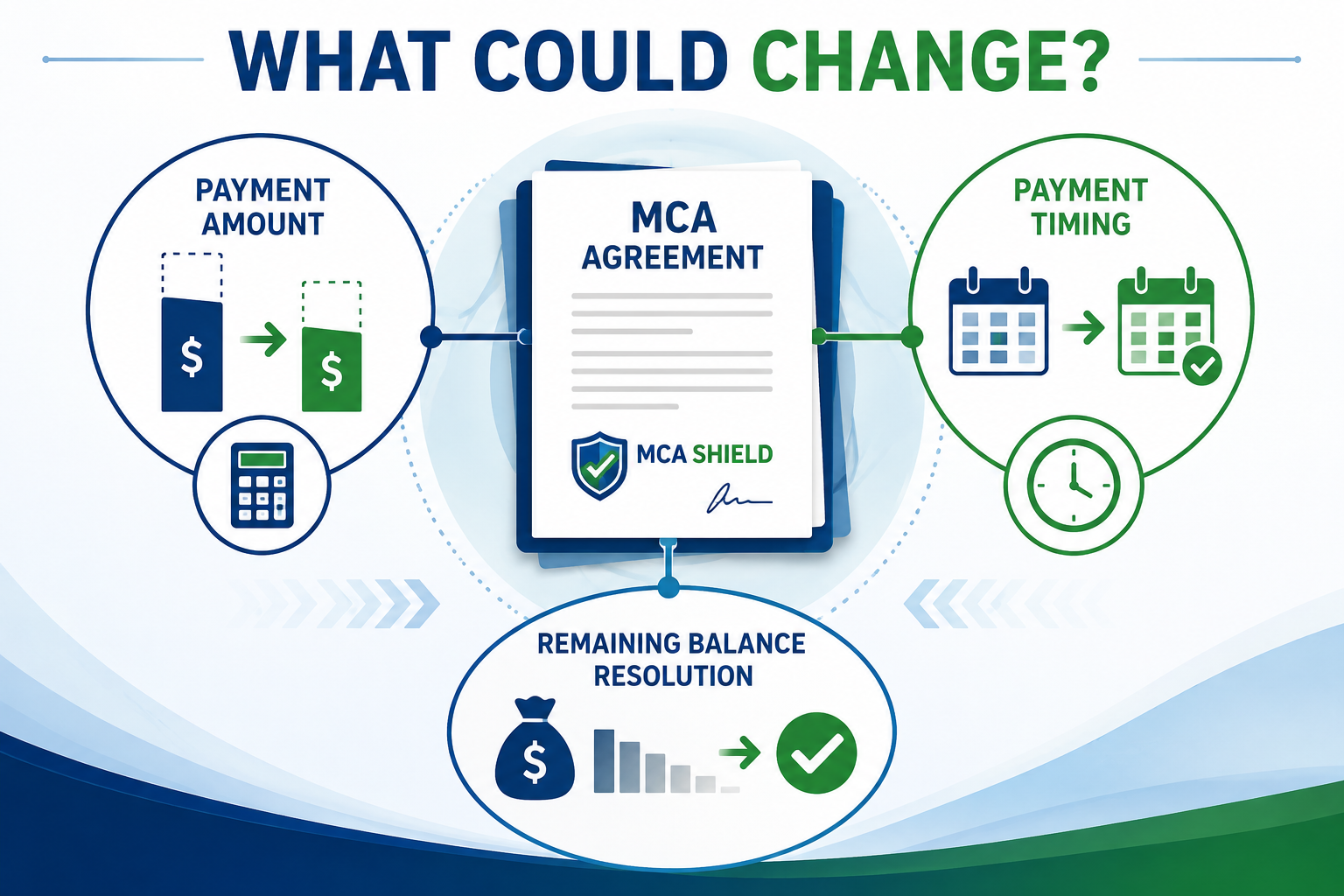
Not every merchant cash advance agreement can be changed, and the options available will depend on the funder, the agreement, and your business finances. However, certain payment terms may be discussed as part of an MCA negotiation strategy.
Before proposing, identify which parts of the current arrangement are creating the greatest strain. This can help you focus negotiations on changes that would make the biggest difference to your cash flow.
Changes to Daily or Weekly Payment Amounts
For many businesses, the most immediate concern is the amount being withdrawn each day or week.
If current payments are consuming too much working capital, you may seek a lower daily or weekly payment amount. Reducing the size of each withdrawal can provide more cash to cover payroll, inventory, rent, and other essential expenses.
Any requested payment should be based on current revenue and operating costs. The goal is to propose an amount that provides meaningful relief while remaining realistic for your business.
A lower withdrawal can be especially valuable when several MCA payments are hitting the same account and creating ongoing cash-flow pressure.
Adjustments to Repayment Timing or Structure
The amount of each payment is not the only term that may affect your business. The timing and structure of withdrawals can also influence cash flow.
Depending on the circumstances, negotiations may involve requesting a different payment frequency, revising the withdrawal schedule, or restructuring payments to better align with your business revenue cycle.
For example, a company with uneven weekly sales may struggle with frequent withdrawals even when its overall revenue remains steady. A payment structure that better reflects the business’s cash-flow cycle may be easier to manage.
The right approach will depend on your agreement and financial situation, so review any proposed changes carefully before accepting new terms.
Potential Resolution of the Remaining MCA Balance
In some situations, negotiations may also involve discussing how the remaining MCA balance will be resolved.
Depending on the funder and circumstances, this could involve a negotiated payoff, modified repayment arrangement, or another agreement designed to address the outstanding obligation. These outcomes are not guaranteed, and the terms can vary significantly from one case to another.
Before agreeing to any resolution, make sure you understand the total amount required, payment deadlines, fees, and any conditions attached to the agreement.
The strongest MCA negotiation strategy focuses on more than immediate payment relief. It should also consider whether the proposed resolution provides your business a clear and manageable path to address the remaining debt.
Coordinate Your Strategy When Dealing With Multiple MCA Funders
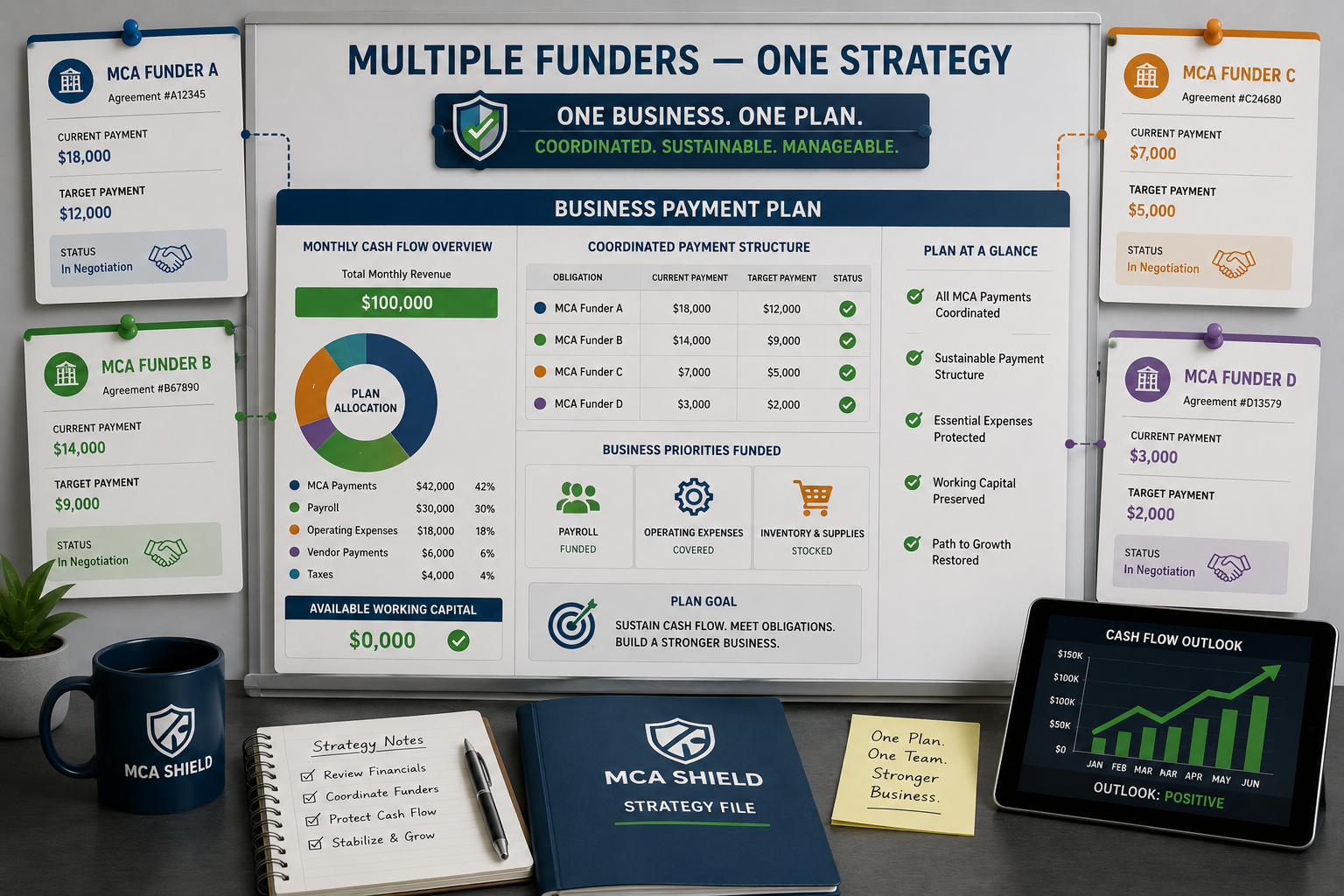
Negotiating one merchant cash advance can be challenging. Managing several at the same time requires a more coordinated approach. When multiple funders withdraw money from the same business account, each decision can affect your overall cash flow.
Strong MCA negotiation strategies should consider every obligation together. The goal is to avoid solving one payment problem while creating another.
Evaluate the Combined Impact of Stacked MCA Payments
Start by calculating the total amount being withdrawn across all of your MCA agreements.
Several individual payments may appear manageable on their own. However, the combined withdrawals can place significant pressure on working capital, payroll, inventory, rent, and other essential expenses.
Review how much revenue remains after every daily or weekly MCA payment is deducted. This can help you determine whether stacked obligations are creating a larger cash-flow problem than any single advance.
Understanding the full impact also gives you a clearer foundation for building a coordinated MCA negotiation strategy.
Decide Which MCA Obligations Need Attention First
Not every MCA may require the same level of attention.
Some obligations may have larger payments, higher balances, more aggressive withdrawal schedules, or terms that create greater pressure on your business. Others may be easier to manage under the current structure.
Rank each MCA based on factors such as payment size, payment frequency, remaining balance, cash-flow impact, and current funder activity.
This can help you determine where negotiations may have the greatest immediate benefit. It can also prevent you from using limited cash to address a lower-priority obligation while a more serious problem continues to grow.
Avoid Negotiating Each MCA Without Considering the Others
When multiple MCAs are involved, negotiating them one at a time without a broader plan can create new problems.
For example, reducing one payment may provide temporary relief. However, that benefit can disappear if another funder still takes a large withdrawal from the same account.
Every proposed change should be reviewed against the total amount your business must pay across all MCA obligations. Consider how one agreement may affect your ability to keep up with the others.
A coordinated strategy can help you pursue payment arrangements that work together rather than compete for the same cash. This approach gives your business a clearer path to reducing financial pressure and improving overall cash-flow stability.
Avoid Actions That Can Weaken Your Negotiating Position
The steps you take before and during negotiations can affect the options available to your business. Certain decisions may increase financial pressure, reduce flexibility, or make it harder to build a practical MCA negotiation strategy.
Avoiding common mistakes can help you protect working capital and approach funders with a clearer financial plan.
Waiting Until Business Cash Flow Is Completely Exhausted
Waiting too long to address MCA payment pressure can make negotiations more difficult.
As available cash declines, your business may begin falling behind on payroll, rent, taxes, inventory, vendor payments, or other essential expenses. At that point, you may have fewer resources available to support a realistic repayment proposal.
Acting earlier can give you more time to review your agreements, organize financial records, and determine what your business can reasonably afford.
If MCA withdrawals are already contributing to recurring cash shortages, it may be time to evaluate your options before the problem becomes severe. Early action can give you more flexibility when developing a negotiation strategy.
Taking Another MCA to Cover Existing MCA Payments
Using a new merchant cash advance to pay on an existing MCA may provide temporary cash, but it can also create a greater financial burden.
The new advance adds another payment obligation to your business. This can result in multiple daily or weekly withdrawals competing for the same revenue.
Instead of reducing the original problem, additional borrowing may increase the amount of working capital withdrawn from your account, making future negotiations more difficult to manage.
Before taking another MCA, consider whether the new payment will actually improve your financial position or delay the pressure. A stronger strategy often focuses on addressing existing obligations rather than adding another layer of MCA debt.
Entering New Agreements Without Understanding the Terms
Do not agree to a new payment arrangement simply because it provides immediate relief.
Review the entire proposal, including the payment amount, payment frequency, repayment period, fees, remaining balance, and any conditions attached to the agreement. A lower payment may sound attractive, but other terms could increase the total cost or create new restrictions.
Make sure you understand how the revised agreement will affect your cash flow over time.
A successful MCA negotiation should improve your financial position, not replace one difficult payment structure with another. Carefully reviewing every term can help you protect your business and make more informed decisions.
When Professional Help Can Strengthen an MCA Negotiation Strategy
Negotiating merchant cash advance debt can become more complicated when multiple agreements, large withdrawals, or several funders are involved. Professional guidance can help you evaluate the situation more clearly and design an MCA negotiation strategy based on the financial realities of your business.
The right support can also help you avoid rushed decisions, organize your financial information, and approach negotiations with a more coordinated plan.
Get an Independent Review of Your MCA Agreements
Before negotiations begin, it can be helpful to have each MCA agreement reviewed carefully.
An independent review can identify important details related to payment requirements, reconciliation provisions, fees, default terms, withdrawal schedules, and other contractual obligations. It can also help uncover differences between agreements that may affect how each funder should be approached.
This is especially important when your business has several MCAs. What works for one agreement may not make sense for another.
A thorough review gives you a clearer understanding of your obligations and helps you enter negotiations with better information and more defined priorities.
Develop a Negotiation Strategy Based on Your Business Finances
A strong negotiation strategy should reflect what your business can actually afford.
Professional guidance can help you review revenue, bank activity, operating expenses, outstanding balances, and current withdrawals. From there, you can determine which payment changes may provide meaningful relief without placing additional strain on the business.
This approach can help you avoid proposing terms that are either unrealistic or too aggressive for your current financial position.
The objective is to build a practical MCA negotiation strategy that protects working capital while addressing existing obligations.
Communicate With Multiple Funders Through a Coordinated Approach
When several MCA funders are involved, communication can quickly become difficult to manage.
Each funder may have different payment terms, priorities, and expectations. Negotiating with one without considering the others can create conflicts and place additional pressure on cash flow.
A coordinated approach considers all MCA obligations as part of one financial picture. This can help you prioritize negotiations, evaluate proposed changes, and avoid agreements that interfere with your ability to manage other payments.
Professional help can also bring greater organization to communication with multiple funders. Instead of reacting to each issue separately, your business can follow a clear strategy focused on reducing payment pressure and improving overall financial stability.
Take Action Before MCA Payments Limit Your Options
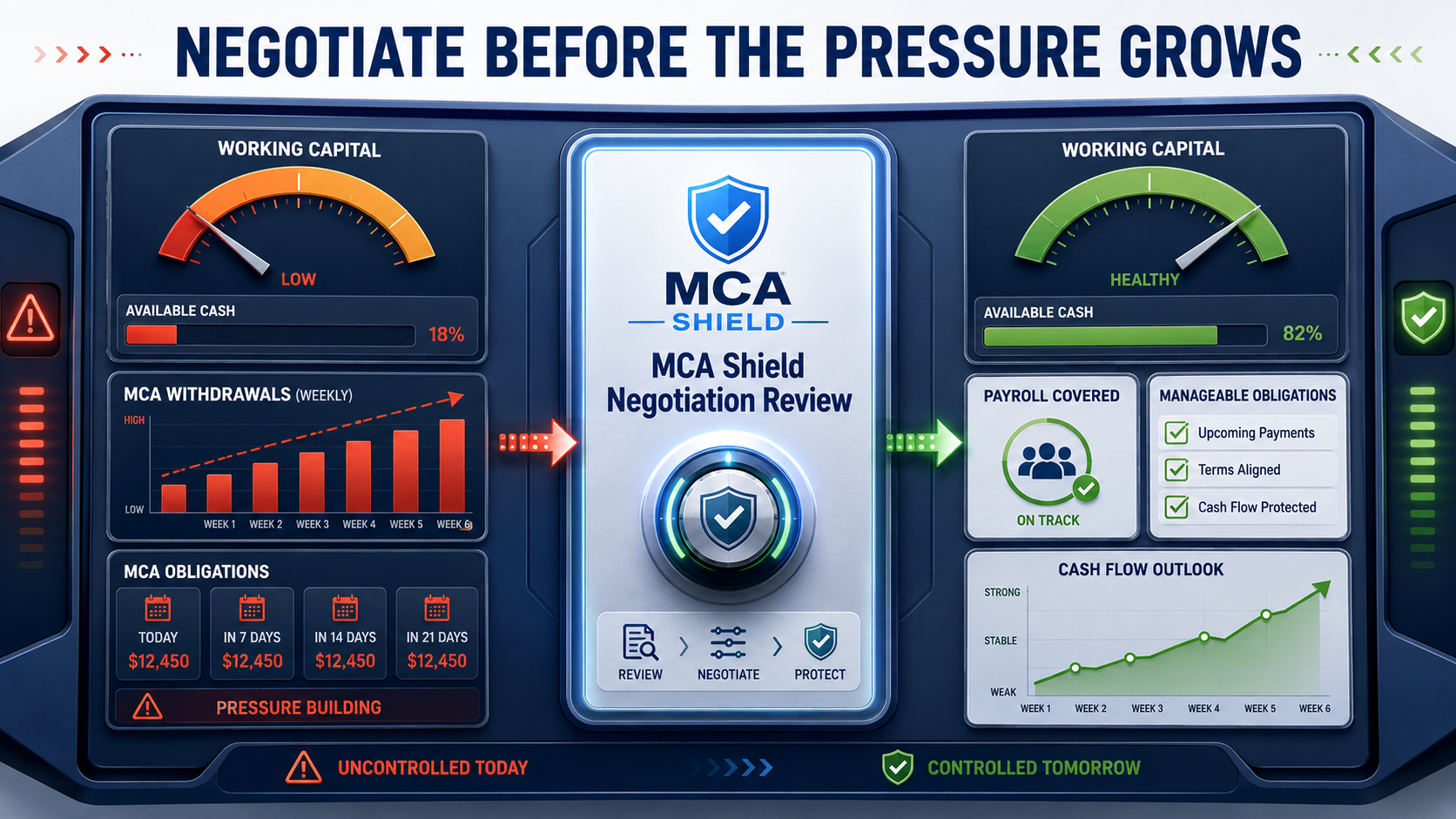
MCA payment pressure rarely improves on its own. When daily or weekly withdrawals continue to reduce available cash, your business may have less flexibility to respond to unexpected expenses or changing revenue.
Taking action before the situation becomes critical can give you more time to evaluate your agreements, organize financial records, and consider MCA negotiation strategies that better support your business cash flow.
Why Earlier Negotiation May Create More Flexibility
The sooner you recognize that MCA payments are becoming difficult to manage, the more time you may have to explore possible solutions.
Waiting until your bank balance is nearly depleted, payroll is at risk, or several obligations are past due can increase financial pressure. It may also make it harder to develop a repayment proposal your business can realistically maintain.
Earlier negotiation allows you to review your finances while your business still has operating cash available. You can identify problem areas, establish realistic payment goals, and approach funders with a clearer picture of what your business can afford.
Acting early does not guarantee a specific outcome, but it can put you in a stronger position to evaluate your options before the situation becomes more difficult.
Protect Working Capital While Exploring Possible Solutions
Working capital keeps your business moving. It helps cover payroll, rent, inventory, utilities, taxes, vendors, and other essential operating expenses.
If MCA withdrawals are consuming too much of that cash, protecting available working capital should become an important part of your negotiation strategy.
Review how much money your business needs each week to operate effectively. Then compare that amount with your current MCA obligations. This can help you determine whether payment adjustments, restructuring, settlement, or another strategy may deserve consideration.
The goal is not simply to lower payments. It is to pursue a solution that allows your business to address MCA debt while maintaining the cash needed for daily operations.
Schedule a Free Consultation With MCA Shield
If MCA payments are putting growing pressure on your business, you do not have to wait until the situation reaches a breaking point.
MCA Shield can review your merchant cash advance agreements, evaluate your current payment obligations, and help you understand potential negotiation strategies based on your business finances. If multiple MCA funders are involved, we can also help you evaluate the obligations together as part of a coordinated approach.
Taking the first step now can help you better understand your options and determine what strategy may make sense for your business.
Schedule a Free Consultation With MCA Shield today to discuss your MCA debt, current cash-flow challenges, and possible paths to more manageable payment obligations.