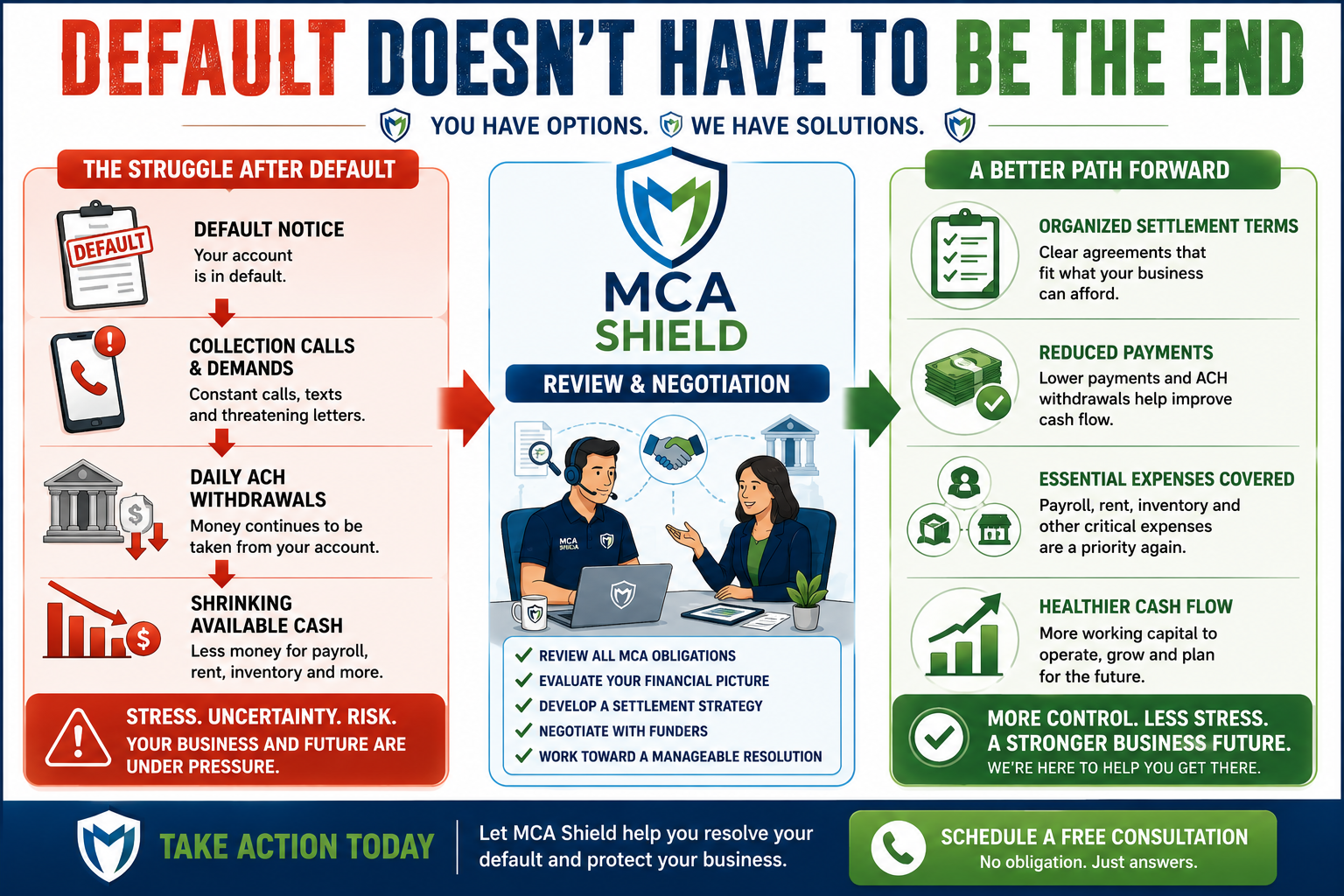
Defaulting on a merchant cash advance can put significant pressure on your business. Daily or weekly withdrawals, collection efforts, and possible legal action may make an already difficult cash flow situation even harder to manage.
However, default does not necessarily mean you are out of options. MCA settlement after default may provide an opportunity to negotiate with the funder and pursue a more manageable resolution.
Understanding what happens after an MCA default and how the settlement process works can help you determine the right next step for your business.
Schedule Your Free Consultation
What Does MCA Settlement After Default Mean?
MCA settlement after default is the process of seeking a resolution with a merchant cash advance funder after the business has fallen behind or violated the terms of its agreement. Although default can make the situation more urgent, it does not necessarily eliminate the possibility of settling.
Depending on the circumstances, a settlement may involve reducing payments, modifying the payment structure, or negotiating the remaining MCA balance. The available options depend on the agreement, funder, financial hardship, and status of the account.
What Happens When an MCA Goes Into Default?
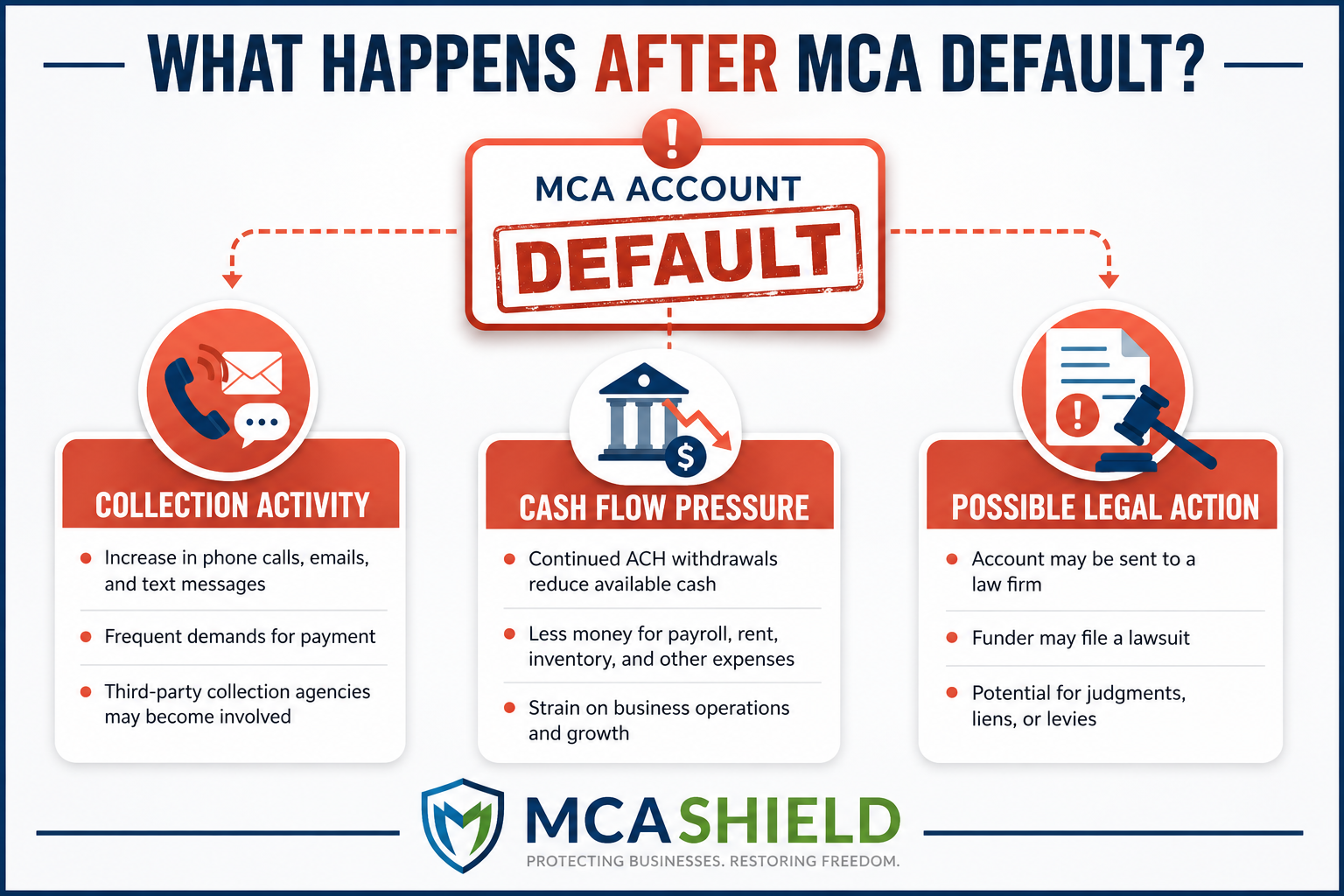
An MCA default generally occurs when a business fails to meet obligations outlined in its merchant cash advance agreement. This could include missed payments, blocked ACH withdrawals, insufficient funds, or another event defined as a default in the contract.
After default, the funder may increase collection efforts or pursue other remedies permitted under the agreement. This can place additional pressure on a business that is already struggling with cash flow.
Because MCA agreements vary, business owners should carefully review their contracts to understand what constitutes default and what actions the funder may take.
Can You Still Settle an MCA After Default?
Yes, an MCA may still be settled after default. In some situations, a funder may be willing to discuss a modified repayment arrangement or negotiated settlement rather than pursue the original payment terms.
However, settlement is not guaranteed. The outcome can depend on the amount owed, the business’s finances, documented financial hardship, payment history, and the funder’s willingness to negotiate.
The goal is to pursue a resolution that addresses the existing MCA obligation while giving the business a more realistic way to manage its cash flow.
How Default May Change the Settlement Process
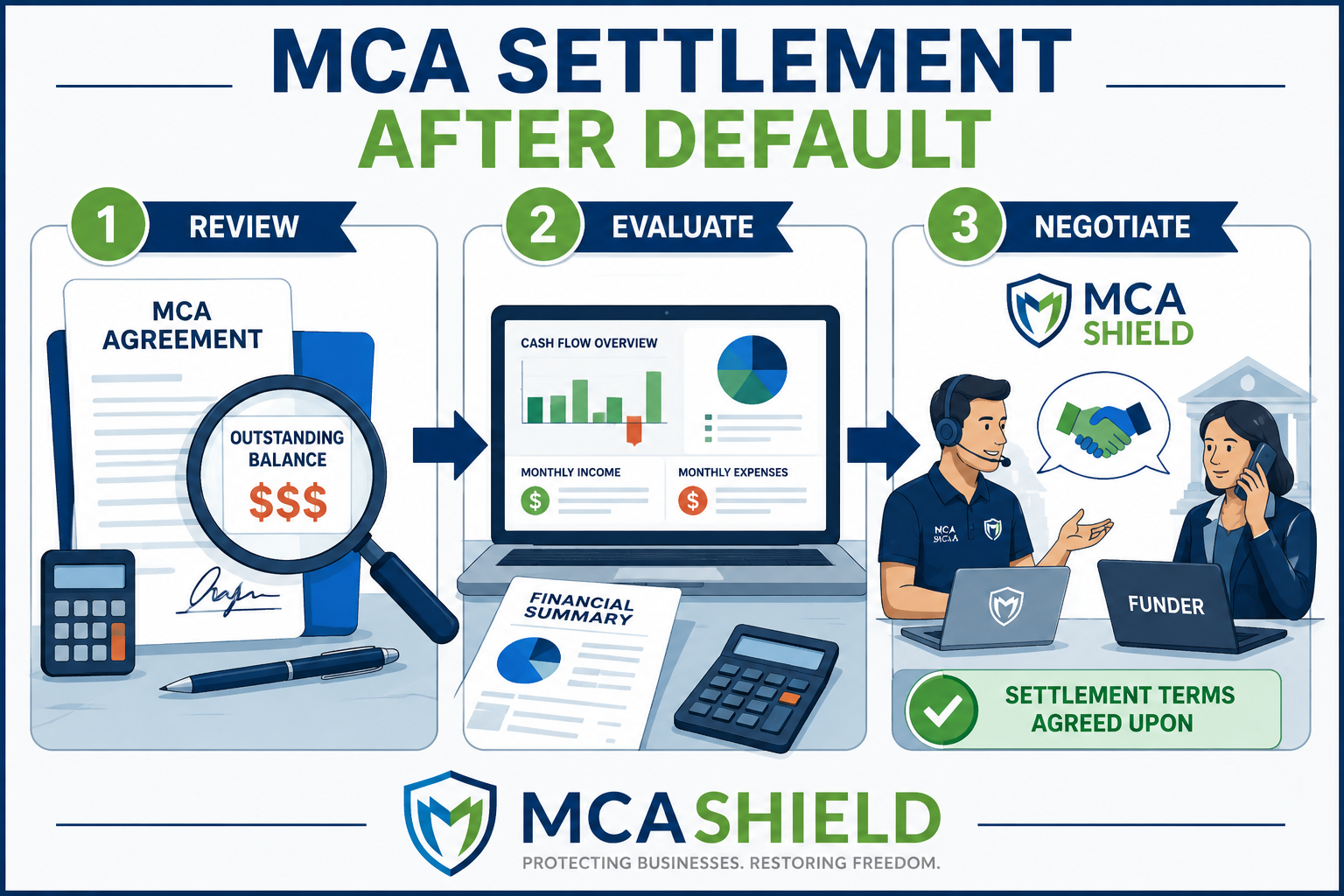
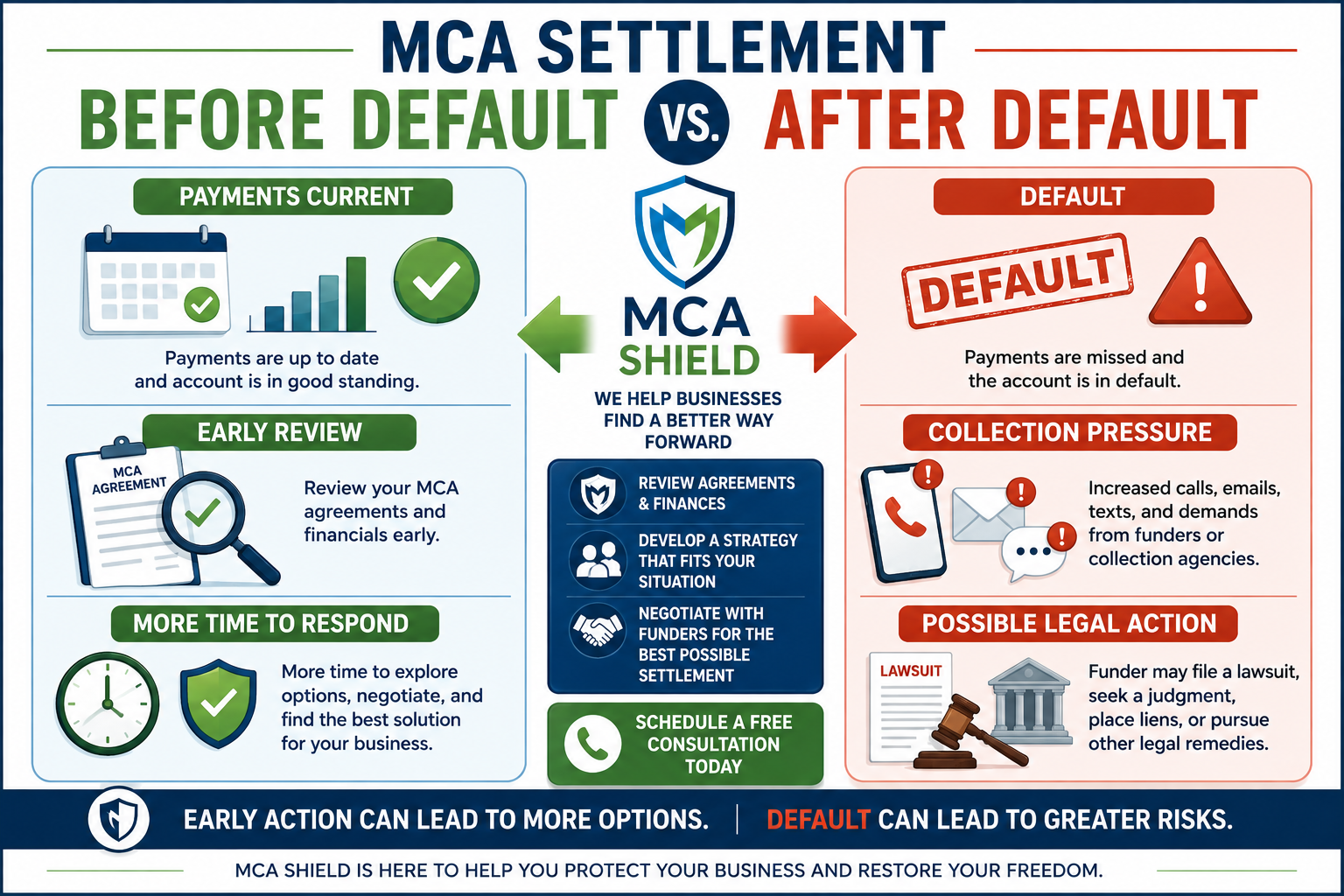
Default can make the MCA settlement process complicated because the account may already be in collections or subject to legal action. As a result, there may be greater urgency to review the agreement, understand the business’s financial position, and determine what settlement options may still be available.
The funder’s response may also depend on how long the account has been in default and what collection steps have already occurred.
For this reason, waiting after an MCA default can create additional challenges. Addressing the situation early may provide more time to evaluate options and pursue a negotiated resolution before financial or legal pressure increases.
What Happens After You Default on an MCA?
How Does MCA Settlement Work After Default?
Can MCA Payments and Balances Be Reduced After Default?
MCA Settlement Before Default vs. After Default
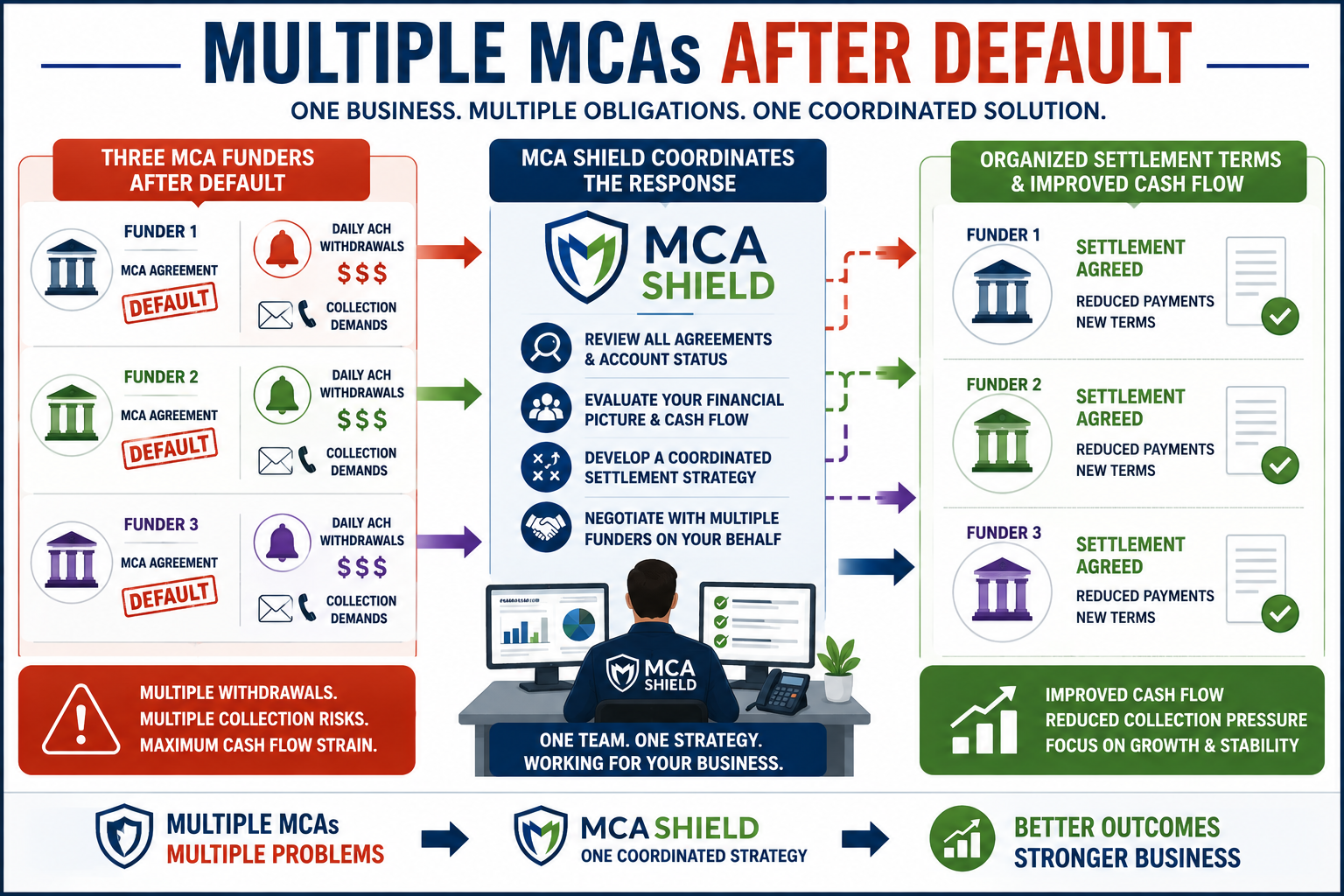
Can You Settle Multiple MCAs After Default?
What If an MCA Funder Has Already Filed a Lawsuit?
Common Mistakes to Avoid After an MCA Default
Frequently Asked Questions About MCA Settlement After Default
Take Action After an MCA Default