
ClickCease
Explore options for your business’s MCA payments.Call (918) 608-0117

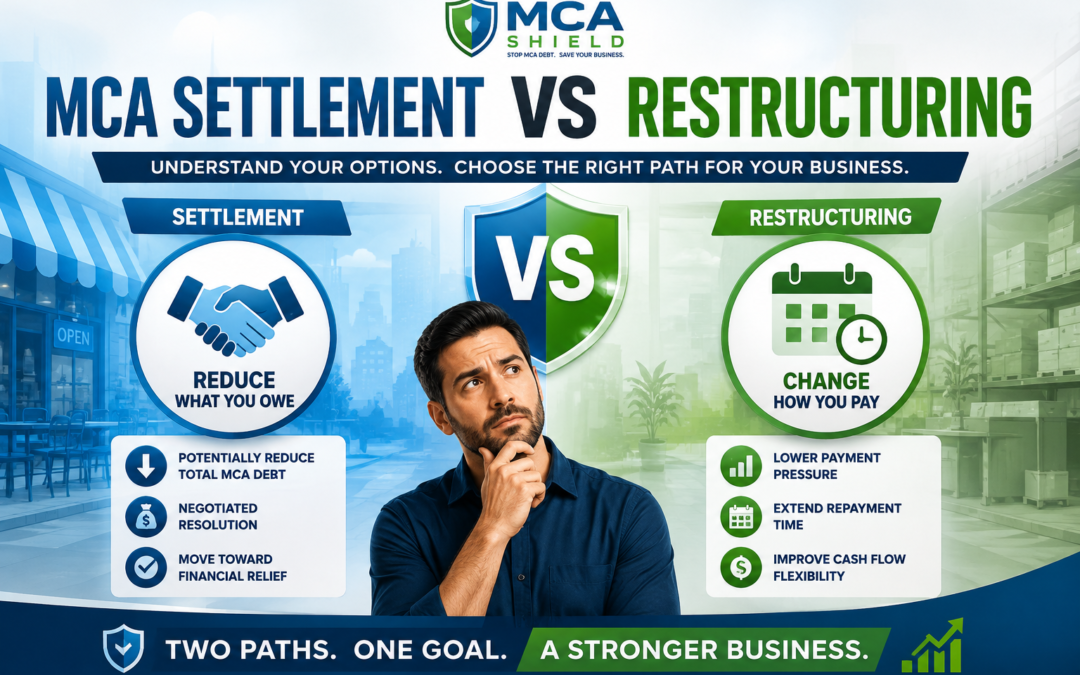
Businesses struggling with merchant cash advance payments may have more than one way to address the financial pressure. MCA settlement vs restructuring are two potential strategies, but they work differently and may lead to different outcomes.

An MCA settlement generally focuses on negotiating the existing obligation toward a resolution, which may include reducing the amount required to satisfy the debt. MCA restructuring typically focuses on changing the payment arrangement to make payments more manageable over time.

Understanding the differences can help you determine which approach may better fit your cash flow, outstanding MCA obligations, and overall financial situation. Below, we compare MCA settlement and restructuring, including how each works, their potential benefits, and when each option may make sense.

Schedule Your Free Consultation

What Is MCA Settlement?

MCA settlement is a process used to address merchant cash advance debt when the original payment structure has become difficult for a business to maintain. Instead of continuing under the existing agreement, the business or its representative may work with the MCA funder to negotiate a different resolution.

The goal is to create a more manageable path for resolving the MCA obligation. Depending on the circumstances and the funder, a settlement may change the amount required for resolution, the payment arrangement, or both. However, settlement terms are negotiated individually, which means results can vary.

How MCA Settlement Works

The process typically begins with a review of the business’s MCA agreements, outstanding balances, current payments, and cash flow. This helps determine how much financial pressure the MCA is creating and what type of resolution may be realistic.

From there, negotiations may begin with the MCA funder. The objective is to reach an agreement that addresses the outstanding obligation while considering the business’s current financial situation. If an agreement is reached, the business follows the new settlement terms until the obligation is resolved.

What May Change Through a Settlement

One of the biggest differences between the original MCA agreement and a settlement is that the terms of the obligation may change. Depending on the negotiation, this could involve a different payment amount, a modified payment schedule, or a reduction in the amount required to resolve the MCA.

Settlement does not guarantee that every MCA balance will be reduced. The outcome depends on factors such as the outstanding balance, financial hardship, account status, cash flow, and the individual funder. Understanding these factors is important when comparing MCA settlement vs restructuring.

How Settlement Can Reduce MCA Payment Pressure

Frequent MCA withdrawals can consume a significant portion of a business’s available cash. That can make it harder to cover payroll, rent, inventory, utilities, taxes, and other essential operating expenses.

A successful MCA settlement may reduce this pressure by creating a more manageable resolution for the existing obligation. If payments or the amount required for resolution are reduced, the business may be able to keep more working capital available for daily operations.

Rather than taking out another advance to keep up with existing MCA payments, settlement focuses on addressing the debt driving the pressure. For a business struggling with cash flow, that can be an important step toward regaining greater financial stability.

What Is MCA Restructuring?

MCA restructuring involves modifying the payment terms of an existing merchant cash advance to make the obligation more manageable for the business. Unlike settlement, which may involve negotiating the amount required to resolve the MCA, restructuring generally focuses on changing how the existing obligation is repaid.

For businesses experiencing temporary cash flow problems, restructuring may provide relief from an aggressive payment schedule. The goal is to reduce immediate payment pressure while allowing the business to continue operating and meeting its MCA obligation.

How MCA Restructuring Works

MCA restructuring typically begins with a review of the business’s current payment amount, remaining obligation, revenue, expenses, and available cash flow. This information can help determine whether the existing payment structure is placing too much pressure on daily operations.

The business or its representative may then work with the MCA funder to negotiate modified payment terms. Depending on the circumstances, this could involve lower daily or weekly payments, a different payment frequency, or a longer repayment period.

Any changes depend on the funder and the specific MCA agreement. Restructuring is not automatic, and modified terms must generally be negotiated and agreed upon by the parties involved.

What May Change in the Existing Payment Structure

The primary purpose of restructuring is to change how and when MCA payments are made. For example, a business making large daily ACH withdrawals may seek a lower payment amount or a different withdrawal schedule.

A restructuring arrangement may potentially change the payment amount, payment frequency, or expected repayment timeline. These adjustments can help a business keep more cash available between payments and make essential operating expenses easier to manage.

However, restructuring does not necessarily reduce the total MCA obligation. Extending the repayment period may spread the existing obligation across a longer period, which is an important distinction when comparing MCA settlement vs restructuring.

Restructuring the Obligation Without Settling It

A key difference between MCA settlement and restructuring is what happens to the underlying obligation. With restructuring, the focus is generally on modifying the payment arrangement rather than negotiating a reduced amount to resolve the MCA.

This approach may make sense when a business can continue to meet its obligation but cannot comfortably maintain the current payment schedule. Lower or less frequent payments may provide additional breathing room for payroll, inventory, rent, and other operating costs.

For businesses facing more serious financial hardship, restructuring alone may not provide enough relief. Understanding whether the primary problem is the payment structure, the overall MCA obligation, or both can help determine whether restructuring or settlement may be the more appropriate strategy.

MCA Settlement vs Restructuring: What’s the Difference?
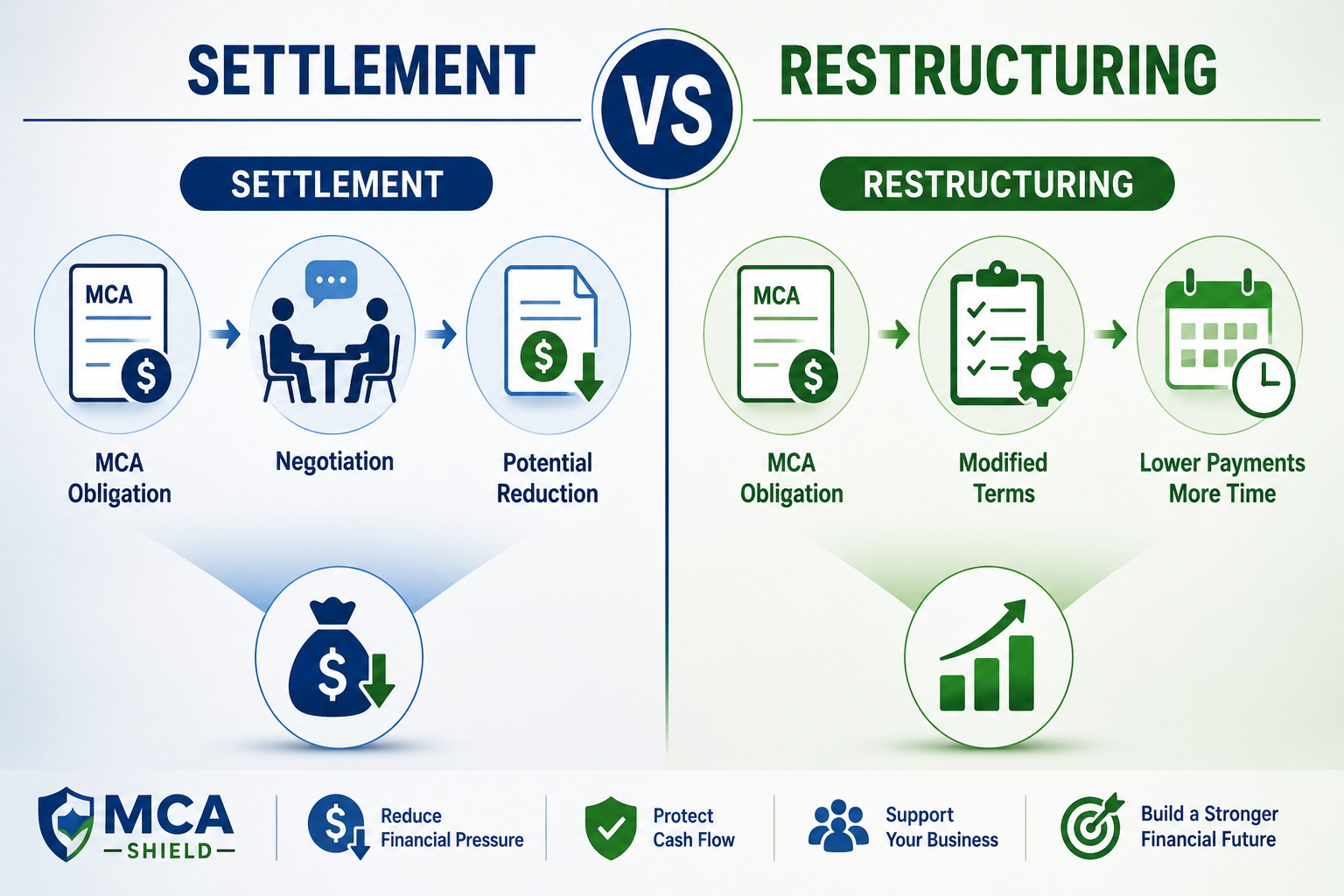
MCA settlement vs restructuring comparison showing potential debt reduction versus modified payments and repayment terms

The primary difference between MCA settlement vs restructuring is what each strategy attempts to change. Settlement may focus on negotiating the amount required to resolve the MCA, while restructuring generally focuses on modifying the payment terms of the existing obligation.

Both strategies may help relieve financial pressure, but they address the problem differently. Settlement may be appropriate when the overall MCA obligation has become difficult to resolve under the original terms. Restructuring may be more suitable when the business can continue making payments but needs a more manageable payment schedule.

Understanding this distinction is important because the right approach depends on the business’s cash flow, outstanding MCA obligations, financial hardship, and ability to maintain future payments.

Reducing the Total MCA Obligation vs. Changing Payment Terms

An MCA settlement may involve negotiating with the funder to accept a different amount to resolve the outstanding obligation. If successful, this could reduce the total amount the business must pay to satisfy the MCA. However, reductions are not guaranteed, and settlement results depend on the funder and the circumstances surrounding the account.

MCA restructuring takes a different approach. Instead of focusing primarily on reducing the amount required for resolution, restructuring typically changes how the existing obligation is repaid. This may include lowering individual payments, changing their frequency, or extending the repayment period.

This distinction can significantly affect the outcome. Settlement focuses more directly on resolving the underlying MCA debt, while restructuring focuses on making the payment structure more manageable.

Differences in Payment Amounts and Repayment Time

Both settlement and restructuring may result in different payment amounts, but the reason for those changes can differ. A settlement arrangement may establish new payments based on the negotiated resolution amount and settlement terms.

With restructuring, lower payments may be achieved by spreading the obligation across a longer period or modifying the payment schedule. This can provide immediate relief, but lower payments do not necessarily mean a lower total obligation.

Repayment time can also vary. Depending on the negotiated terms, settlement may provide a defined path toward resolving the MCA. Restructuring may extend the repayment timeline to reduce the amount leaving the business each day or week.

How Each Option May Affect Business Cash Flow

For many businesses, cash flow is one of the most important factors when comparing MCA settlement vs restructuring. Large daily or weekly withdrawals can reduce the money available for payroll, inventory, rent, utilities, taxes, and other essential expenses.

Restructuring may improve short-term cash flow by reducing the size or frequency of MCA payments. This can leave more working capital available for everyday operations, although the obligation may continue for a longer period.

Settlement may provide a different type of relief. If negotiations reduce the amount required to resolve the MCA or establish more manageable settlement payments, the business may be able to reduce payment pressure while working toward resolving the obligation.

Ultimately, the better strategy depends on whether the business primarily needs lower payments, a reduction in the overall obligation, or the combination of both.

How MCA Settlement Can Change Your MCA Debt

When an MCA becomes difficult to maintain, continuing under the original agreement may put increasing pressure on business finances. MCA settlement can change how the existing obligation is resolved by negotiating terms that reflect the business’s current financial circumstances.

Unlike restructuring, which generally focuses on modifying payment terms, settlement may address both the amount required for resolution and how that amount is paid. The specific outcome depends on the MCA funder, account status, outstanding obligation, and the business’s financial condition.

Negotiating the Existing MCA Obligation

The settlement process typically involves communicating with the MCA funder about the business’s financial hardship and ability to continue making payments. Before negotiations begin, it is important to understand the remaining MCA obligation, withdrawal schedule, available cash flow, and overall financial position.

Negotiations may focus on reaching terms that both sides are willing to accept. This could include a different resolution amount, modified payments, or another arrangement designed to address the outstanding MCA.

Every situation is different. MCA settlement terms are negotiated rather than guaranteed, and funders may respond differently based on the condition of the account.

Potentially Reducing the Amount Required for Resolution

One potential advantage of MCA settlement is the possibility of reducing the amount required to resolve the obligation. If a funder agrees to accept a lower negotiated amount, the business may be able to satisfy the MCA for less than what would otherwise be required under the existing agreement.

Several factors can influence whether a reduction is possible. These may include the outstanding balance, financial hardship, payment history, account status, available cash flow, and the MCA funder itself.

A reduction should never be assumed. However, when successful, settlement can address more than the size of individual payments. It may reduce the overall financial burden associated with resolving the MCA.

Creating a Path Toward Resolving the MCA

For a business under significant MCA pressure, the goal is not simply to make the next withdrawal easier to manage. The larger objective is to move toward resolving the underlying obligation while protecting enough working capital to continue operating.

A negotiated settlement can establish clearer terms for addressing the MCA and give the business a defined resolution strategy. This may make it easier to plan for payroll, inventory, rent, utilities, taxes, and other essential operating expenses throughout the settlement process.

Instead of repeatedly using new financing to keep up with existing MCA payments, MCA Settlement focuses on addressing the obligation already driving the financial pressure. That can help the business move toward greater cash flow stability without adding another MCA to the problem.

How MCA Restructuring Can Change Your Payments

When daily or weekly MCA withdrawals consume too much working capital, MCA restructuring may change the payment structure without settling the underlying obligation. The primary goal is to adjust the existing terms so payments better align with the business’s current cash flow.

Depending on the funder and agreement, restructuring may involve lower payments, a different payment frequency, or a longer repayment period. These changes can ease immediate payment pressure and preserve more working capital for essential business expenses.

However, restructuring does not necessarily reduce the total MCA obligation. Businesses should consider both the short-term payment relief and the long-term cost of the modified arrangement before agreeing to new terms.

Lowering Daily or Weekly Payment Pressure

Frequent ACH withdrawals can quickly reduce the cash a business has available for operations. When revenue slows or expenses increase, even a payment that was once manageable can become difficult to maintain.

Restructuring may lower the amount withdrawn each day or week. Smaller MCA payments can preserve more working capital available for payroll, inventory, rent, utilities, taxes, and other operating needs.

Reducing the payment amount can provide valuable breathing room. However, businesses should understand how lower payments affect the remaining obligation and repayment timeline before accepting a restructured agreement.

Extending the Repayment Period

One way to reduce individual MCA payments is to spread the obligation across a longer repayment period. Instead of requiring larger withdrawals over a shorter timeframe, restructuring may extend the schedule and reduce the amount due with each payment.

This approach can ease immediate cash flow pressure, but there is an important trade-off. A longer repayment period means the MCA obligation may take longer to resolve, even if each payment becomes easier to manage.

Businesses should review the entire restructured arrangement, not just the new payment amount. Understanding the payment schedule and total obligation can help determine whether the new terms provide meaningful financial relief.

Making Payments More Manageable for the Business

The value of MCA restructuring depends on whether the modified payments fit within the business’s actual operating budget. A lower payment can help, but it should leave enough cash available to cover essential expenses and maintain normal business operations.

A sustainable payment structure should account for revenue, recurring expenses, seasonal changes, and other financial obligations. The goal is to prevent MCA payments from repeatedly competing with the expenses necessary to keep the business running.

When restructuring provides enough relief, the business may gain greater control over its working capital and monthly financial planning. If modified payments still consume too much cash flow, however, MCA settlement or another resolution strategy may need to be considered.

MCA Settlement vs Restructuring for Business Cash Flow
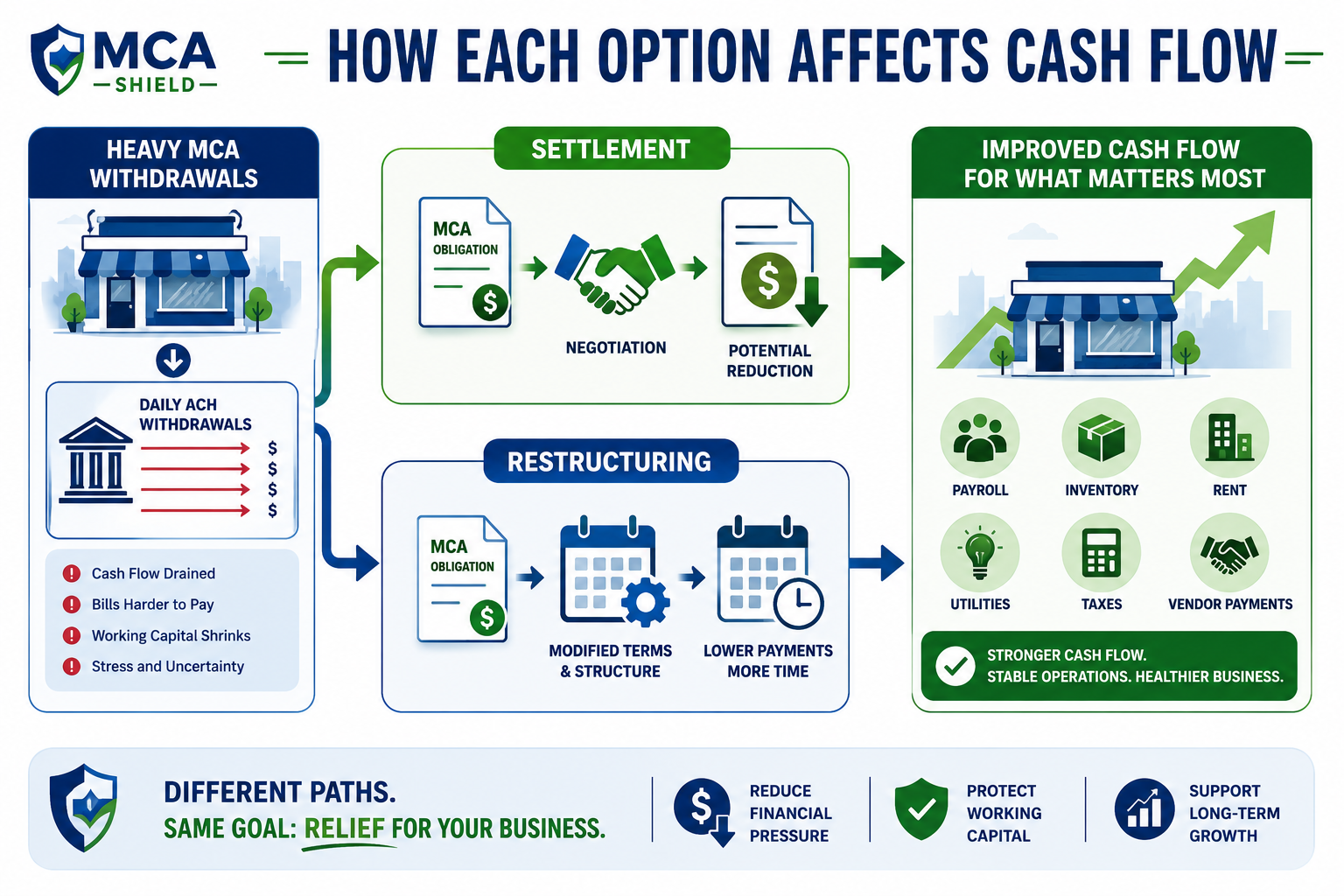
MCA settlement vs restructuring showing how each option may reduce payment pressure and improve business cash flow

For many businesses, the decision between MCA settlement vs restructuring comes down to cash flow. Daily or weekly MCA withdrawals can consume revenue before the business has a chance to use that money for operations.

Both strategies may provide financial relief, but they work differently. Restructuring generally focuses on modifying the payment schedule, while settlement may address the amount required to resolve the MCA as well as the payment arrangement.

The right strategy should help the business address its MCA obligations without sacrificing the cash needed to operate. That means considering working capital, essential expenses, revenue, and other financial commitments before deciding how to proceed.

Keeping More Working Capital Available

Working capital helps a business manage its everyday financial needs. When MCA withdrawals take a large share of incoming revenue, the business may have less money to purchase inventory, meet payroll, pay vendors, or respond to unexpected expenses.

Restructuring may reduce the amount withdrawn each day or week. Settlement may also result in more manageable payments as part of a negotiated resolution. In either case, reducing payment pressure can preserve more working capital for business operations.

Maintaining adequate working capital can also reduce the temptation to seek another merchant cash advance to cover short-term expenses. Addressing the existing MCA burden may help the business break the cycle of relying on new financing to meet current obligations.

Making Essential Operating Expenses Easier to Cover

A business still needs to operate regardless of its MCA obligations. Payroll, rent, inventory, utilities, taxes, insurance, and vendor payments must often be paid on predictable schedules.

Heavy MCA withdrawals can force business owners to choose which expenses are a priority. When payment pressure decreases, more revenue may remain in the business to meet these essential obligations.

Both settlement and restructuring may help improve this balance. The key is finding an arrangement that allows the business to address its MCA debt without continually disrupting normal operations.

Reducing Immediate Cash Flow Pressure

Cash flow problems can escalate quickly when frequent MCA withdrawals coincide with reduced revenue or rising expenses. The less cash the business retains, the harder it may become to meet upcoming financial obligations.

Restructuring may provide more immediate breathing room by lowering or modifying payments. Settlement may offer broader relief if negotiations change both the payment requirements and the amount needed to resolve the MCA.

Reducing immediate cash flow pressure can give the business flexibility to manage expenses and stabilize operations. Ultimately, the better option depends on whether the business needs temporary payment relief, a more significant resolution of its MCA debt, or a combination of both.

Which Option Is Better for Multiple MCAs?
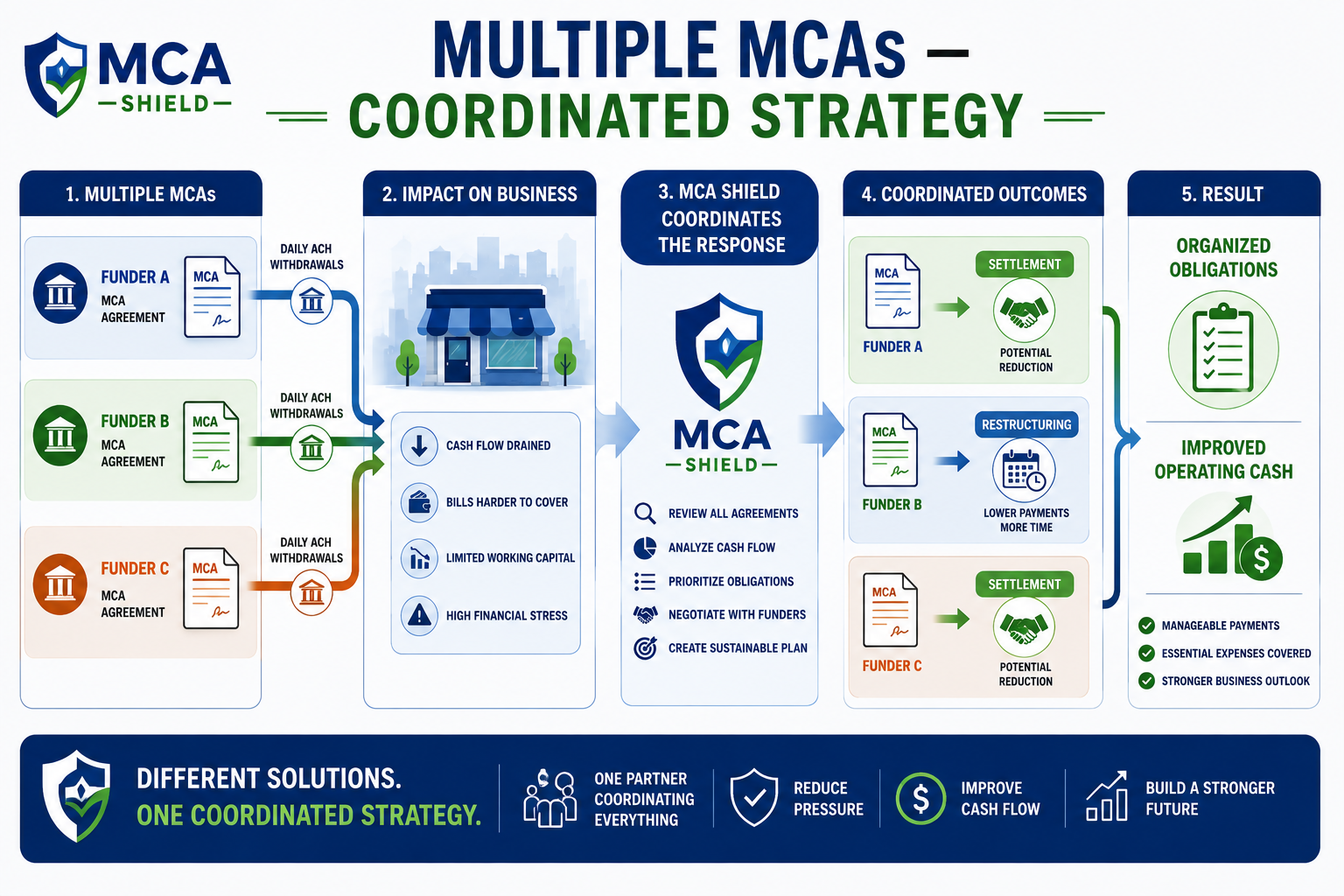
Multiple MCAs coordinated through settlement and restructuring to reduce payment pressure and improve business cash flow

When a business has two or more merchant cash advances, choosing between MCA settlement vs restructuring can become more complicated. Each MCA may have a different balance, payment schedule, funder, and account status. As a result, one strategy may not be appropriate for every obligation.

Settlement may make sense when the overall MCA burden has become difficult to resolve under the existing agreements. Restructuring may be appropriate when the business can continue paying its obligations but needs lower or less frequent payments to protect cash flow.

In some cases, a business may benefit from a combination of strategies. The goal is to evaluate the entire MCA burden and determine which approach can reduce financial pressure while moving the business toward resolution.

Managing Obligations With Multiple MCA Funders

Multiple MCAs can place significant pressure on working capital because each funder may withdraw payments independently. Several daily or weekly withdrawals can quickly consume revenue needed for payroll, inventory, rent, utilities, taxes, and other operating expenses.

Each MCA should be reviewed individually. Important factors include the outstanding obligation, payments, withdrawal frequency, account status, and the funder involved.

Looking at each agreement separately is important, but businesses should also consider their combined impact. The total amount leaving the business each day or week may matter more than any single MCA payment.

Coordinating Settlement or Restructuring Strategies

Addressing multiple MCAs often requires a coordinated strategy rather than negotiating each obligation in isolation. Reducing one payment may provide little relief if several other withdrawals still consume a large portion of the business’s revenue.

Depending on the financial situation, some MCAs may be candidates for settlement while others may be better suited for restructuring. A coordinated approach can help prioritize the obligations causing the greatest cash flow pressure and determine how each negotiation affects the overall plan.

The objective is not simply to secure better terms from one funder. It is to develop a strategy that addresses the combined effect of all MCA obligations on the business.

Creating a More Sustainable Overall Payment Structure

When multiple MCA payments compete for the same revenue, the existing payment structure may become difficult to maintain. Simply lowering one withdrawal may not solve the underlying cash flow problem.

A more sustainable strategy considers the business’s revenue, essential operating expenses, available working capital, and total MCA obligations. Settlement, restructuring, or a combination of both may help bring payments closer to what the business can realistically support.

The ultimate goal is to reduce the pressure of stacked MCA payments without adding another advance. By addressing multiple obligations as part of a broader strategy, a business may gain greater control over cash flow and a clearer path toward resolving its MCA debt.

When Should You Consider MCA Settlement or Restructuring?
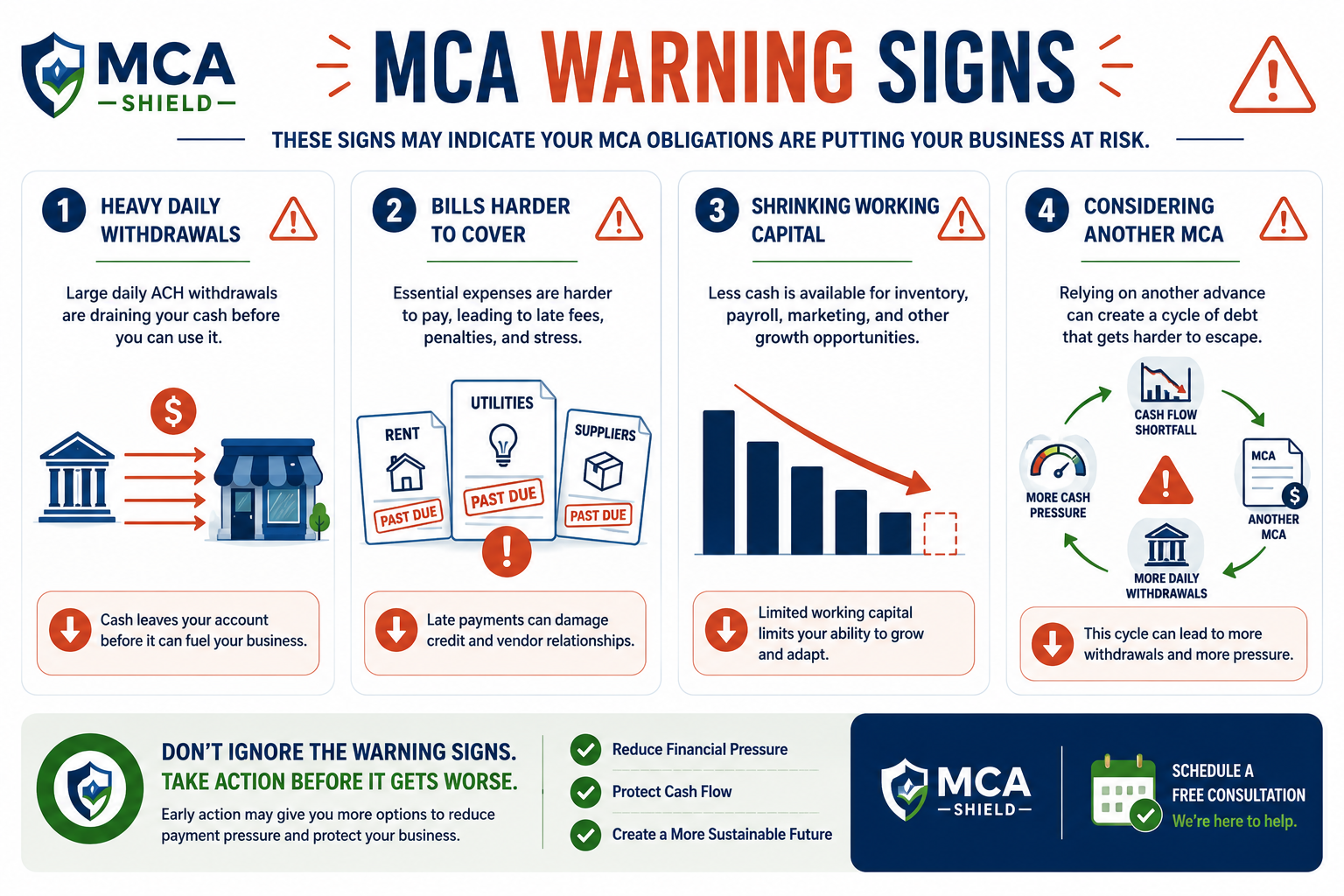
MCA warning signs including heavy daily withdrawals shrinking working capital unpaid bills and considering another merchant cash advance

Businesses do not have to wait until MCA payments become completely unmanageable before exploring their options. MCA settlement or restructuring may be worth considering when payments begin interfering with normal business operations, working capital, or essential expenses.

The earlier a business recognizes the warning signs, the more time it may have to evaluate its financial position. Settlement may be appropriate when the overall MCA obligation has become difficult to resolve. Restructuring may make more sense when the primary problem is the existing payment schedule.

The right approach depends on the business’s cash flow, MCA obligations, operating expenses, and ability to maintain future payments.

MCA Payments Are Consuming Too Much Cash Flow

Daily or weekly MCA withdrawals can become a serious problem when they consume a large portion of incoming revenue. Even a profitable business can experience financial pressure if too much cash is withdrawn before essential expenses are paid.

A warning sign is when MCA payments consistently limit the working capital available for everyday operations. The business may begin to delay purchases, reduce inventory, postpone vendor payments, or struggle to maintain adequate cash reserves.

Settlement or restructuring may help address this pressure before the situation becomes more difficult. The goal is to establish an approach that better reflects what the business can realistically afford.

Operating Expenses Are Becoming Difficult to Cover

MCA payments should not repeatedly force a business to choose between satisfying an advance and paying essential operating expenses. Payroll, rent, inventory, utilities, taxes, insurance, and vendor payments are necessary to keep the business functioning.

If these expenses become increasingly difficult to cover because of MCA withdrawals, the current payment structure may no longer be sustainable. Falling behind on essential obligations can create additional financial problems and make recovery more challenging.

Addressing the MCA burden may help the business preserve working capital and regain greater control over its operating budget. Depending on the severity of the financial pressure, that could involve restructuring payments, pursuing settlement, or evaluating both options.

You Are Considering Another MCA to Make Payments

One of the clearest warning signs is considering another merchant cash advance to make payments on an existing MCA. Although additional funding may provide temporary cash, it can also introduce another repayment obligation and additional withdrawals from future revenue.

This pattern can lead to MCA stacking, where multiple advances compete for the same business income. As the number of withdrawals increases, the business may have even less cash to cover normal operating expenses.

Before taking another advance primarily to keep up with existing MCA payments, it may be better to evaluate the debt already causing the financial strain. MCA settlement or restructuring can focus on addressing existing obligations rather than adding another layer of payment pressure.

Frequently Asked Questions About MCA Settlement vs Restructuring

Business owners comparing MCA settlement vs restructuring often want to know which option provides greater relief, how each strategy affects payments, and whether multiple merchant cash advances can be addressed at the same time. The answers depend on the MCA agreements, funders, account status, and the business’s financial position.


⚖️ Is MCA Settlement Better Than Restructuring?

Neither option is automatically better for every business. MCA settlement and restructuring address different financial problems.

Settlement may be more appropriate when the business needs to resolve an MCA obligation that has become difficult to maintain under the existing terms. Restructuring may be a better fit when the business can continue making payments but needs lower payments or a modified payment schedule.

The better option depends on the amount owed, available cash flow, financial hardship, and the terms a funder is willing to negotiate.


💰 Can MCA Restructuring Reduce the Total Amount Owed?

MCA restructuring generally focuses on changing the payment terms rather than reducing the total obligation. A funder may agree to lower individual payments, change the payment frequency, or extend the repayment timeline.

Businesses should review the complete terms of any restructuring agreement. A lower daily or weekly payment can improve short-term cash flow, but it does not necessarily mean the business will pay less overall.


📑 Can Multiple MCAs Be Settled or Restructured?

Potentially. Businesses with multiple MCAs may be able to pursue settlement, restructuring, or a combination of both strategies. Each obligation should be evaluated based on its balance, payment terms, account status, and funder.

A coordinated strategy is especially important with stacked MCAs. Changing one obligation may provide limited relief if several other withdrawals continue placing significant pressure on business cash flow.


📉 Does MCA Settlement Reduce the Total Amount Owed?

It can. One potential outcome of MCA settlement is negotiating a reduced amount to resolve the outstanding obligation. However, reductions are not guaranteed.

The result depends on several factors, including the funder, outstanding obligation, account status, financial hardship, and the business’s ability to meet negotiated settlement terms.


🏦 Can MCA Restructuring Lower Daily ACH Payments?

Depending on the funder and agreement, restructuring may reduce daily or weekly payment amounts or modify the withdrawal schedule. This can help preserve working capital for payroll, inventory, rent, utilities, and other operating expenses.

Any modified payment arrangement should be reviewed carefully to understand how it affects both the repayment timeline and the overall obligation.


🔍 How Do I Know Whether Settlement or Restructuring Is Right for My Business?

Start by identifying the primary source of the financial pressure. If the business can manage the overall MCA obligation but cannot maintain the current withdrawal schedule, restructuring may provide the payment relief it needs.

If the total MCA burden has become difficult to resolve, settlement may provide a more appropriate strategy. Businesses with multiple advances or significant cash flow problems may need to evaluate both approaches before deciding how to proceed.

Find the Right MCA Debt Resolution Strategy for Your Business
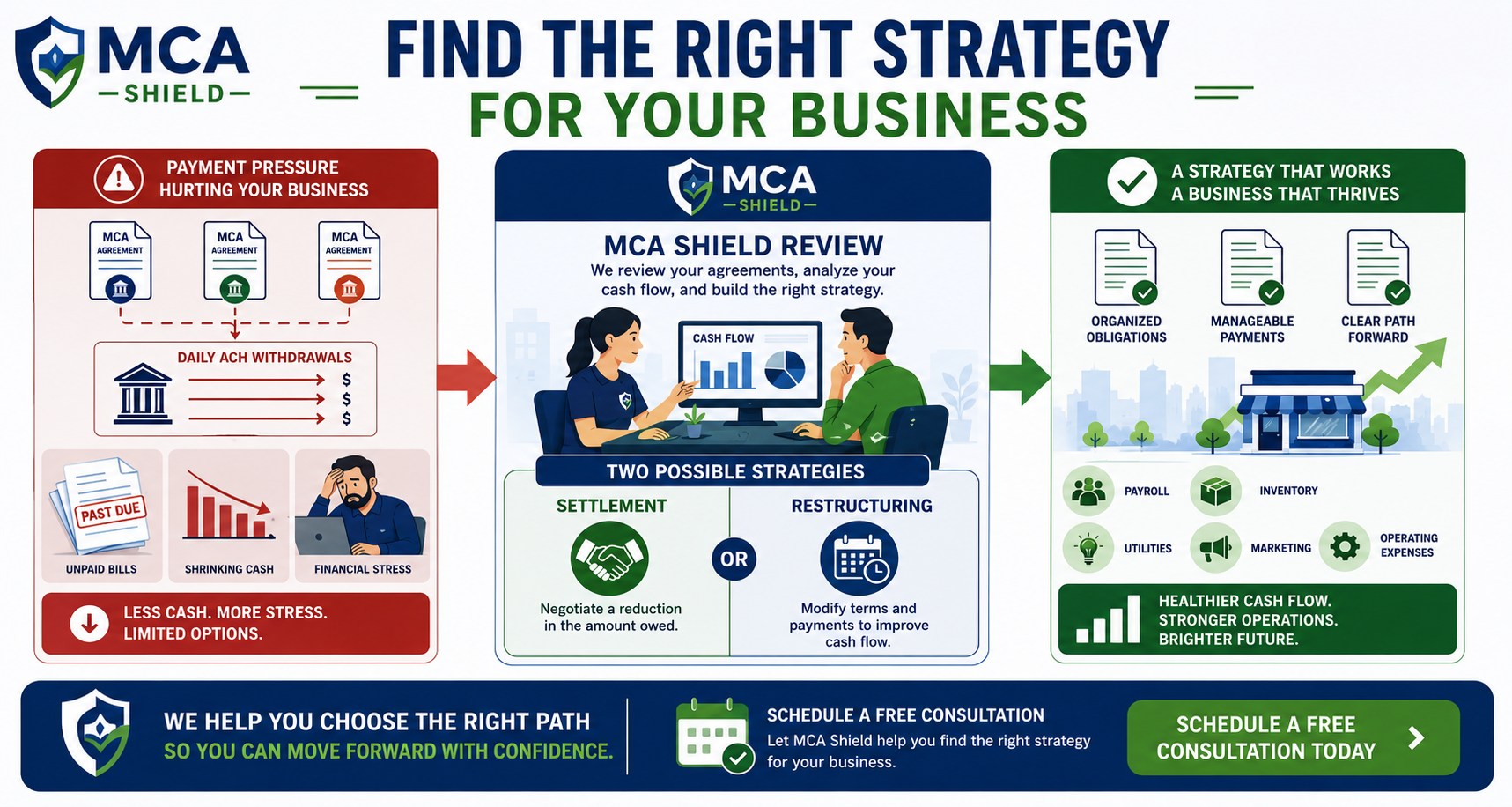
MCA settlement and restructuring strategies helping businesses manage MCA debt improve cash flow and cover essential operating expenses

Choosing between MCA settlement vs restructuring depends on the financial challenges affecting your business. Some businesses need lower payments to protect working capital. Others may need a strategy designed to resolve an MCA obligation that has become difficult to manage.

The right approach should consider the total MCA burden, current payment structure, available cash flow, and essential operating expenses. Understanding these factors can help you determine which strategy may provide meaningful relief without adding another advance.


⏱️ Why Acting Early May Give Your Business More Options

Waiting for MCA payments to become unmanageable can increase financial pressure. Daily or weekly withdrawals may consume cash needed for payroll, inventory, rent, utilities, taxes, vendor payments, and other essential expenses.

Acting early gives your business more time to review its MCA agreements and understand the available options. You can evaluate whether settlement, restructuring, or a combination of both strategies may provide a more manageable approach.

Early action can also help prevent short-term cash flow problems from becoming serious. Instead of reacting to the next withdrawal, your business can begin addressing the underlying MCA obligations driving the financial pressure.


🔍 Choosing a Strategy Based on Your Business’s Financial Situation

There is no single solution that works for every business. The appropriate strategy depends on factors such as cash flow, outstanding MCA obligations, payment frequency, financial hardship, account status, and the number of MCA funders involved.

If the primary problem is an aggressive daily or weekly payment schedule, restructuring may provide the necessary payment relief. If the overall MCA obligation has become difficult to resolve, settlement may offer a different approach.

Businesses with multiple MCAs may need both strategies. The objective is to develop a solution that addresses the existing debt burden and supports continued business operations.


🛡️ Schedule a Free Consultation With MCA Shield

If MCA payments are putting pressure on your cash flow, MCA Shield can help you understand your settlement and restructuring options. Our team can review your MCA obligations, payment structure, and financial position to identify potential strategies based on your business’s needs.

Whether you have one merchant cash advance or several stacked MCAs, taking action now may give you more options to reduce financial pressure and regain control of your cash flow.

Schedule a free consultation with MCA Shield today to discuss your MCA situation and learn what options are available for your business.