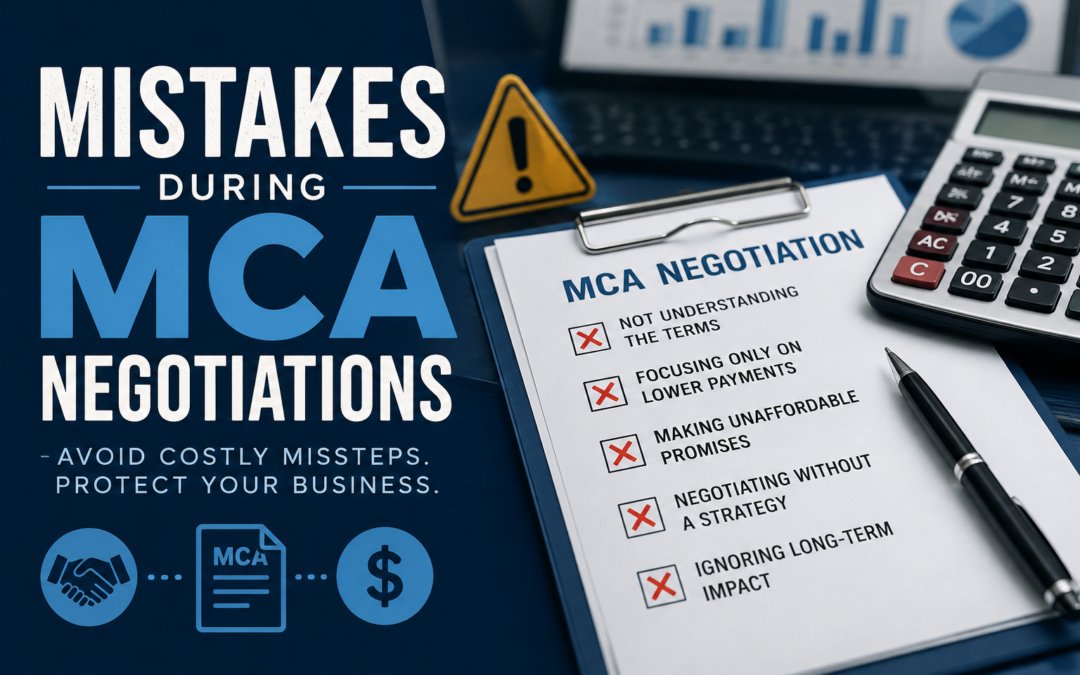
Negotiating merchant cash advance debt requires careful planning because MCA negotiation mistakes can increase financial pressure on a business. Waiting too long, agreeing to payments the business cannot afford, or overlooking important terms can quickly put additional strain on cash flow.
Business owners should approach negotiations with a clear picture of their MCA balances, withdrawal schedules, operating expenses, and available working capital. When multiple advances are involved, each decision can also affect the rest of the business’s obligations.
In this guide, we’ll break down the most common mistakes that occur in MCA negotiations, explain why they matter, and show how a more coordinated strategy may help protect your business and preserve more financial flexibility.
Schedule Your Free Consultation
Why MCA Negotiation Mistakes Can Cost Your Business More
Merchant cash advance negotiations can affect far more than the amount withdrawn from your bank account each day or week. Poor decisions during the process may increase pressure on working capital, payroll, operating expenses, and other business obligations.
Some MCA negotiation mistakes happen because a business owner feels pressure to reach an agreement quickly. Others happen when the owner focuses only on the immediate payment instead of the complete financial impact. Either situation can leave the business with terms that are difficult to maintain.
A successful negotiation strategy should address both the MCA obligation and the company’s ability to continue operating.
How Small Negotiation Errors Can Increase Financial Pressure
Even a small mistake can create larger problems when cash flow is already tight. Agreeing to a payment that looks manageable on paper, for example, may become difficult once payroll, rent, inventory, taxes, and other operating expenses are considered.
Other errors can include accepting terms without reviewing the full agreement, negotiating one MCA without considering other advances, or committing to payments based on an unusually strong sales period.
These decisions can leave too little cash available for daily operations. When that happens, a business may struggle to cover essential expenses or begin considering another advance to fill the gap.
The goal should be to reach terms that fit within the company’s realistic operating cash flow, not simply to secure the fastest possible agreement.
Why Timing Matters When Negotiating Merchant Cash Advance Debt
Timing can play a major role in MCA negotiations. Waiting until cash reserves are nearly exhausted may leave the business with less flexibility to evaluate its options and make informed decisions.
Starting earlier can give the owner more time to review agreements, calculate current obligations, assess available working capital, and develop a clear negotiation strategy.
Early action can be especially important when multiple MCA payments are being withdrawn at the same time. As those withdrawals consume more revenue, the business may have fewer resources available for payroll and essential expenses.
Addressing the problem before the financial pressure becomes severe can help a business approach negotiations from a more organized position and avoid additional MCA negotiation mistakes.
Mistake #1: Waiting Until MCA Payments Become Unmanageable
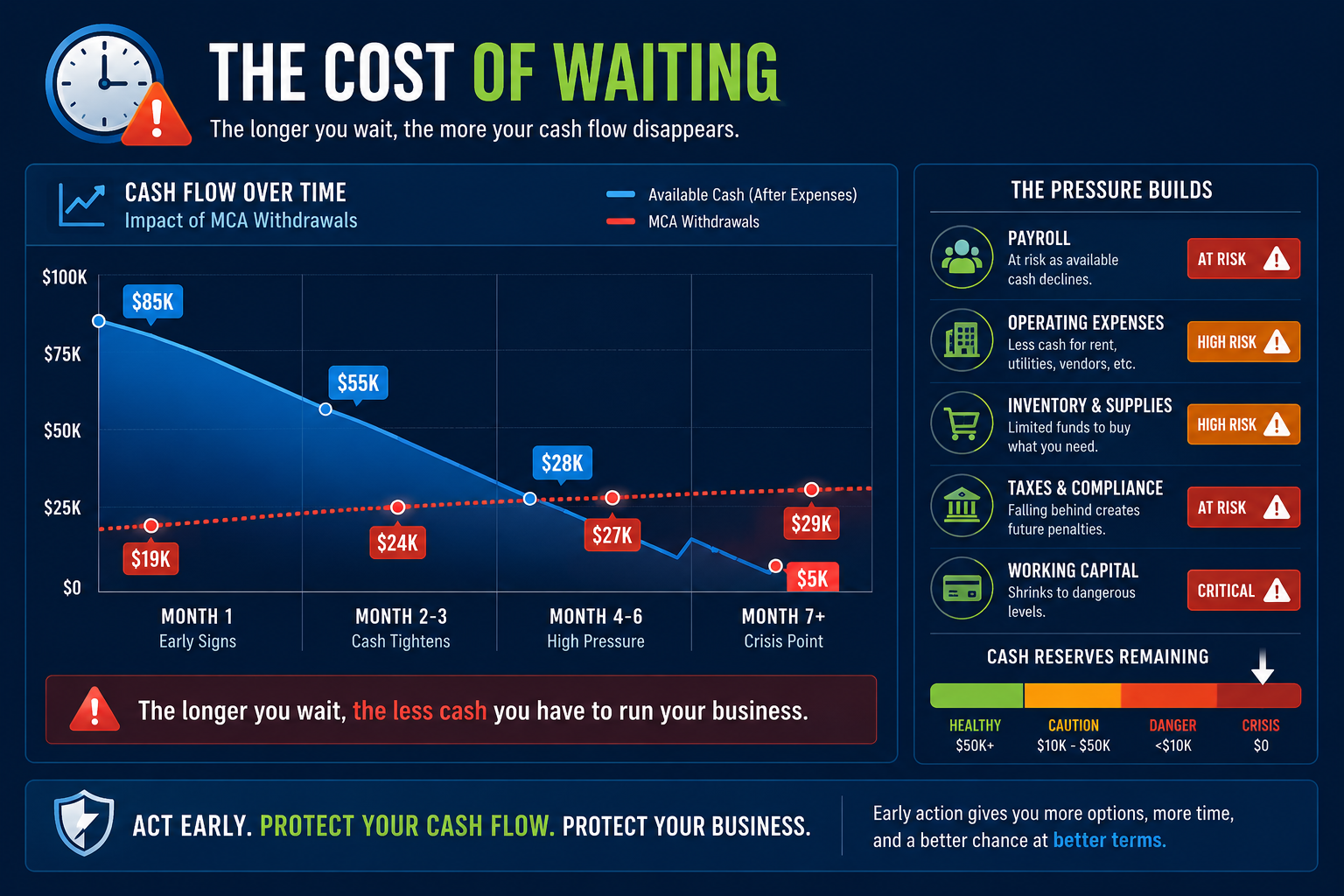
One of the most damaging MCA negotiation mistakes is waiting until daily or weekly withdrawals have already created a serious cash-flow problem. By that point, a business may be struggling to cover payroll, rent, inventory, taxes, or other essential expenses.
Waiting can also make it harder to evaluate options carefully. When every decision feels urgent, business owners may be more likely to accept terms that solve an immediate problem without addressing the larger financial picture.
The earlier a business recognizes that MCA payments are becoming difficult to maintain, the more time it may have to review its obligations and build a realistic strategy.
Why Early Negotiation May Create More Options
Starting negotiations before the situation becomes critical can give a business more room to plan. Owners can review current MCA balances, payment schedules, revenue, operating expenses, and available working capital before discussing possible changes.
Early action may also make it easier to design a strategy for multiple MCA obligations instead of reacting to each funder separately.
Most importantly, the business can focus on what it can realistically afford. A proposed payment structure should leave enough cash available for normal operations rather than pushing the company into another financial emergency.
Acting sooner does not guarantee a specific result. However, it can provide more time to organize financial information, understand the agreements, and avoid rushed decisions.
Warning Signs Your Business Should Act Now
Business owners should pay close attention when MCA withdrawals begin interfering with normal operations.
Common warning signs include struggling to make payroll, delaying vendor payments, falling behind on rent or taxes, using credit to cover basic expenses, or considering another MCA to maintain cash flow.
Another warning sign is a shrinking bank balance even when sales remain steady. This can indicate that too much revenue is being diverted toward MCA payments.
If your business is constantly moving money between accounts, postponing expenses, or worrying about the next withdrawal, it may be time to review your situation. Addressing the problem early can help reduce the risk of additional MCA negotiation mistakes and give your business more time to develop a workable plan.
Mistake #2: Negotiating Without Understanding Your MCA Agreements
Another common MCA negotiation mistake is entering discussions without fully understanding the existing agreements. Merchant cash advance contracts can contain important details about payment amounts, withdrawal methods, balances, fees, and other obligations.
Without a clear picture of those terms, a business owner may agree to changes that do not actually solve the cash-flow problem. The new arrangement may lower one payment while leaving other costly obligations untouched.
Before discussing new terms, business owners should understand exactly what they owe, how payments are collected, and how each MCA affects available cash flow.
Know Your Balances, Payment Terms, and Withdrawal Structure
Start by gathering the most recent information for every merchant cash advance. This should include the remaining balance, daily or weekly payment amount, withdrawal method, payment frequency, and estimated payoff timeline.
It is also important to understand whether payments are being collected through ACH withdrawals, split processing, or another method.
These details can help show how much money is leaving the business and when those withdrawals occur. They also make it easier to compare the MCA obligations with payroll, rent, inventory, utilities, and other operating expenses.
A negotiation strategy should be based on accurate numbers. Guessing at balances or relying on outdated payment information can lead to poor decisions.
Review Every MCA Before Discussing New Terms
Businesses with multiple advances should review every MCA before negotiating with any one funder. Looking at only one agreement can create an incomplete picture of the company’s total financial burden.
For example, lowering one payment may provide little relief if several other withdrawals continue draining the same bank account.
Reviewing all agreements together can help identify which obligations are creating the most pressure, how payments overlap, and how much cash the business realistically needs to operate.
This broader view can support a more coordinated approach and reduce the risk of making another MCA negotiation mistake while trying to fix the first one.
Mistake #3: Focusing Only on Lowering the Daily or Weekly Payment
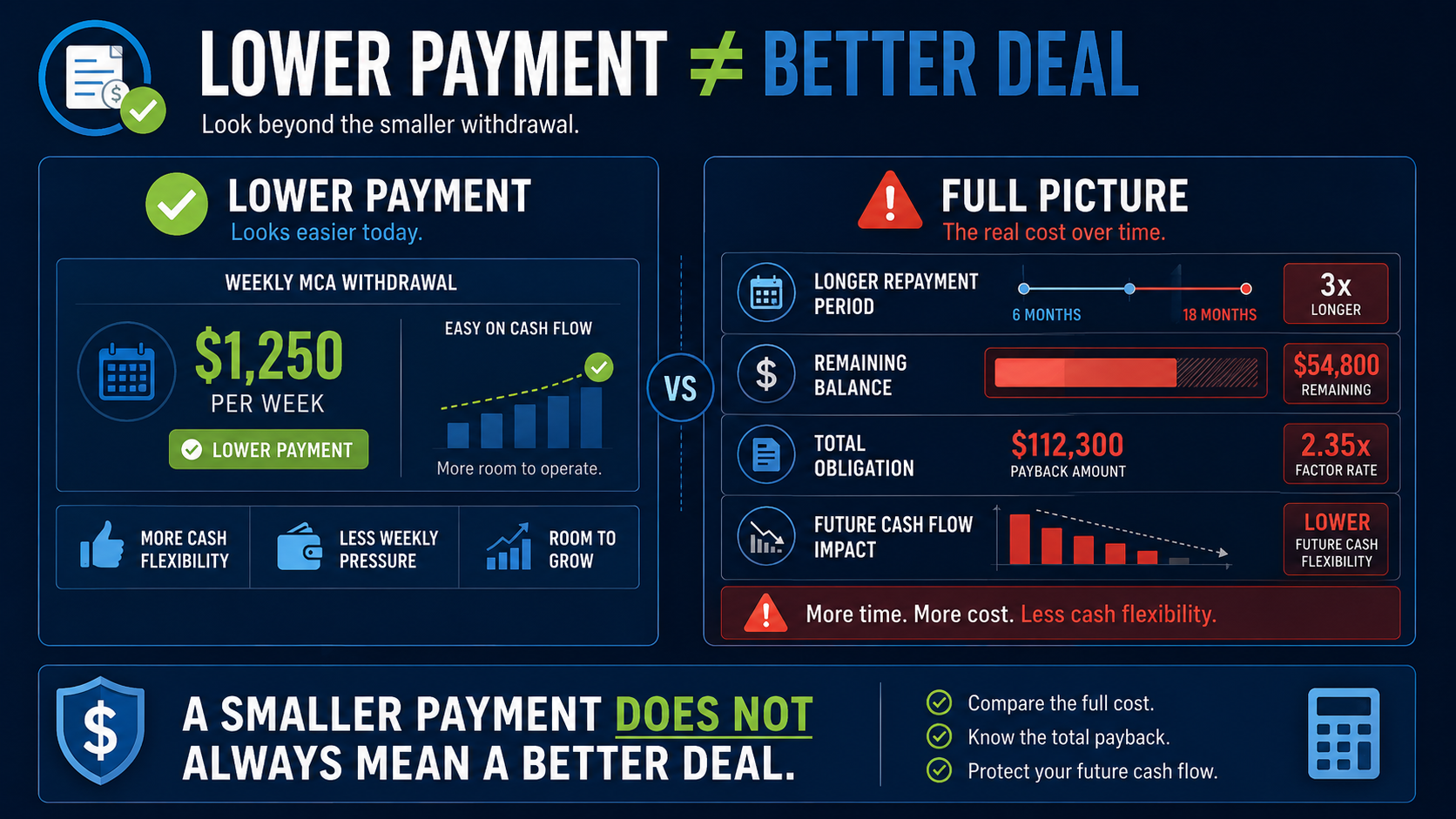
A smaller daily or weekly withdrawal can sound like an immediate solution when cash flow is tight. However, focusing only on the payment amount is one of the more common MCA negotiation mistakes.
A reduced withdrawal may give the business more breathing room each week. Still, owners need to understand what changes come with that reduction. A longer repayment period, additional costs, or other modified terms could affect the overall value of the agreement.
The goal should be to improve the business’s financial position, not simply make the next withdrawal easier to handle.
A Lower Payment Does Not Always Mean a Better MCA Deal
Business owners should look beyond the size of the new payment. A lower withdrawal may be helpful, but it should be evaluated alongside the remaining balance, repayment period, total amount owed, and any other revised terms.
For example, stretching payments over a longer period could reduce immediate pressure while keeping the obligation in place for much longer. That may affect the company’s ability to build cash reserves or invest in future growth.
Before agreeing to new terms, determine whether the proposed arrangement provides meaningful relief for the business as a whole.
Look at the Total Cost and Long-Term Cash-Flow Impact
A strong negotiation strategy considers both short-term cash-flow relief and long-term affordability.
Business owners should calculate how much cash will remain after MCA payments and compare that amount with payroll, rent, inventory, taxes, utilities, and other essential expenses. The business should still have plenty of working capital to operate without constantly relying on additional funding.
It is also important to consider how long the revised obligation will remain in place. A payment that feels manageable today could still become a problem if sales decline or expenses increase.
Looking at the comprehensive financial impact can help a business avoid costly MCA negotiation mistakes and pursue terms that better support stable operations.
Mistake #4: Making Promises Your Business Cannot Afford
Agreeing to a payment to keep negotiations moving can create a bigger problem later. One of the most serious MCA negotiation mistakes is committing to terms that the business cannot realistically maintain.
A payment may seem manageable during a strong sales week. However, revenue can fluctuate while payroll, rent, inventory, taxes, and other expenses continue. If the new commitment leaves too little cash for daily operations, the business may quickly fall behind again.
The goal of negotiation should be to reach terms that the company can actually sustain.
Why Unrealistic Payment Commitments Can Backfire
An unrealistic payment promise can weaken the progress made during negotiations. If the business agrees to an amount it cannot afford, missed payments may follow.
That can lead to renewed collection pressure, additional disputes, or the need to reopen negotiations. It can also place even more strain on working capital and essential operating expenses.
Business owners should avoid making commitments based on best-case sales projections. A stronger approach is to use realistic revenue figures and account for normal fluctuations in cash flow.
Build Negotiations Around Your Actual Operating Cash Flow
Before discussing new terms, calculate how much cash the business needs to operate each week or month. Include payroll, rent, inventory, utilities, taxes, insurance, vendor payments, and other essential costs.
Then compare those expenses with expected revenue and existing debt obligations. This helps determine what payment amount the business can realistically support.
Negotiations should be built around actual operating cash flow, not pressure to accept the first proposal presented. A sustainable payment structure should leave enough money for the business to continue operating without being forced to take on additional debt.
Using real financial data can help reduce the risk of another MCA negotiation mistake and support a more workable long-term solution.
Mistake #5: Negotiating Multiple MCAs Without a Coordinated Strategy
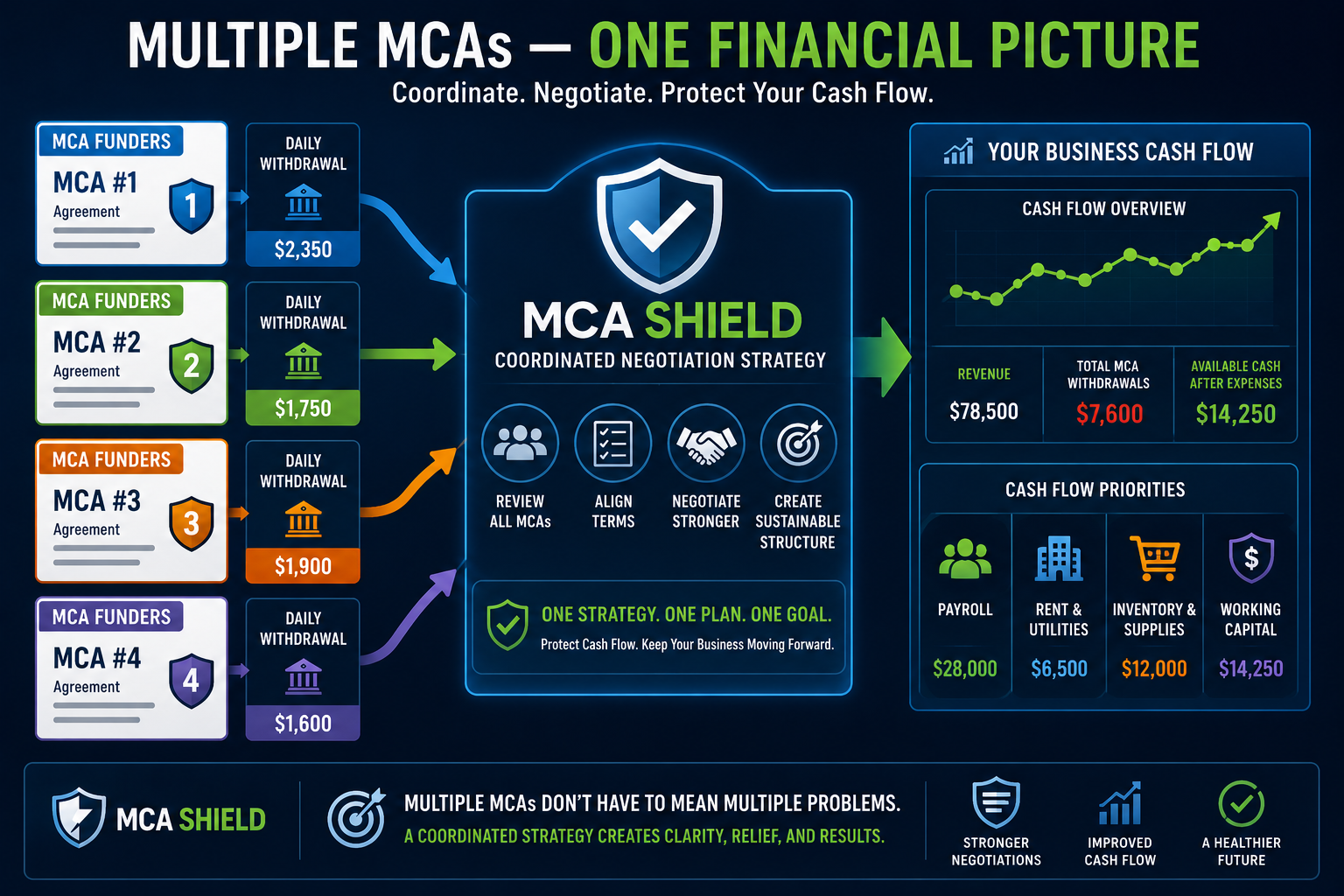
When a business has several merchant cash advances, negotiating them one at a time can create new problems. One of the most important MCA negotiation mistakes to avoid is treating each obligation as if it exists separately.
Every withdrawal affects the same pool of business revenue. A change that helps with one MCA may provide little relief if several other payments continue draining the account.
A better approach is to look at the full debt picture before making commitments to any single funder.
Why Each MCA Cannot Always Be Handled in Isolation
Multiple MCAs often compete for the same cash flow. That means one negotiation can affect how much money remains available for every other obligation.
For example, agreeing to a revised payment with one funder may still leave the business under pressure if the combined withdrawals remain too high. It can also make it harder to negotiate with another funder later if too much cash has already been committed.
Business owners should review all balances, payment amounts, withdrawal schedules, and remaining terms together. This makes it easier to identify which obligations are creating the most pressure and where changes may have the greatest impact.
A coordinated strategy can also help prevent one agreement from undermining progress made with another.
Prioritize Payroll, Operating Expenses, and Working Capital
MCA negotiations should never ignore the basic cash needs of the business. Before committing to new terms, determine how much money must remain available for payroll, rent, inventory, taxes, utilities, vendors, and other essential expenses.
Working capital should also remain part of the equation. A business that uses nearly all available cash to satisfy MCA payments may have little room to handle emergencies, seasonal slowdowns, or unexpected costs.
The objective is not simply to reorganize debt. It is to create a payment structure that gives the business enough room to continue operating.
By managing multiple obligations based on the company’s actual financial needs, owners can avoid another costly MCA negotiation mistake and improve long-term cash flow.
Mistake #6: Taking Another MCA During Negotiations
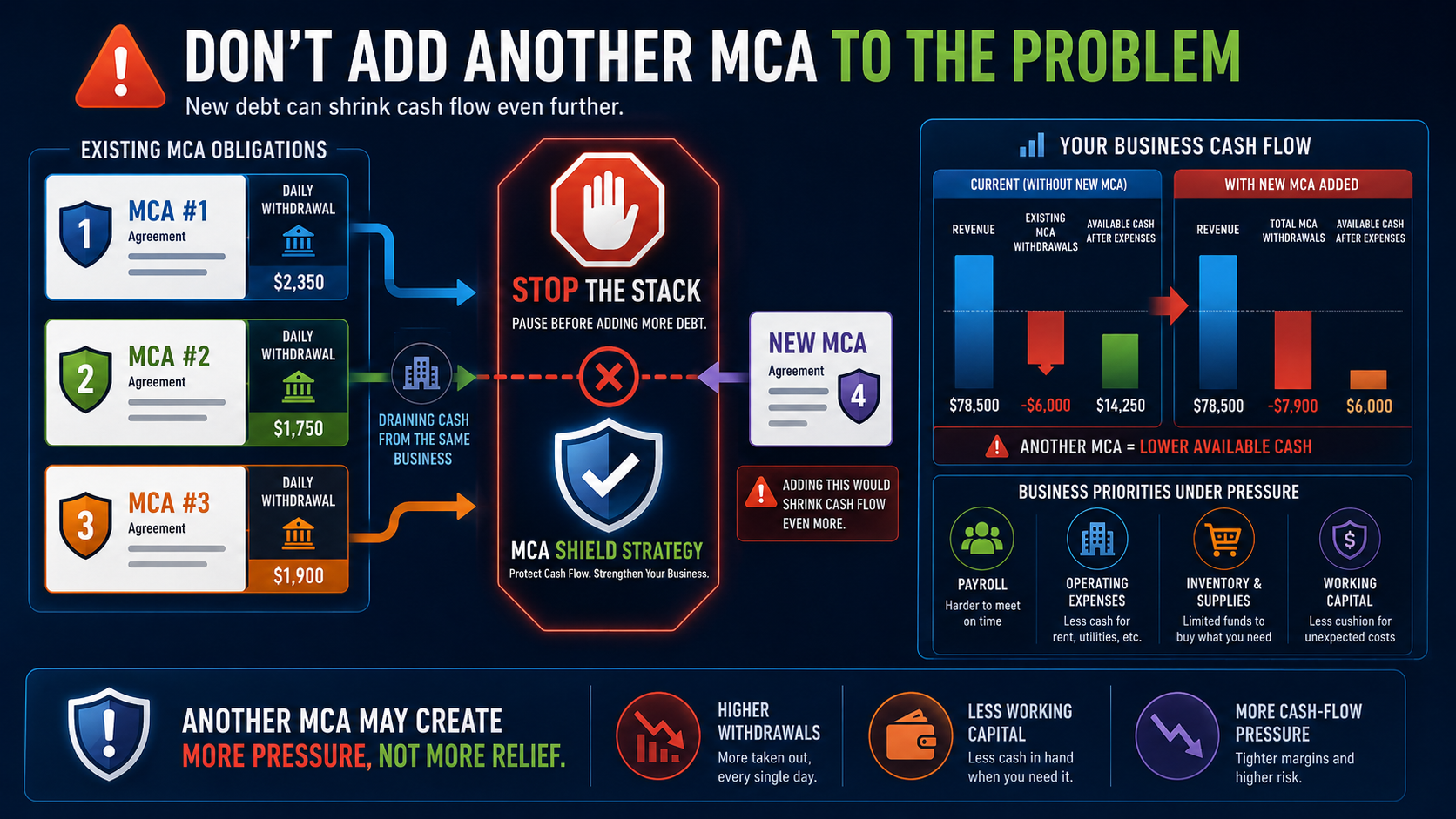
Taking another merchant cash advance while negotiations are already underway can make a difficult situation even harder to manage. One of the biggest MCA negotiation mistakes is adding a new obligation before resolving the existing ones.
A new MCA may provide fast access to cash, but it also introduces another repayment schedule, another withdrawal, and another claim on future revenue. That can reduce the financial flexibility the business is trying to regain through negotiation.
Before accepting new funding, owners should consider how the additional payment will affect the entire debt picture.
How New Funding Can Complicate Existing MCA Negotiations
A new MCA can change the numbers existing negotiations are based on. The business may suddenly have less cash available to support the payment terms already being discussed.
It can also make it harder to present a clear and realistic financial plan. If another advance is added during the process, projected cash flow, available working capital, and repayment capacity may all change.
For businesses with multiple MCAs, this can create even more overlap between withdrawal schedules, balances, and payment commitments.
Instead of solving the original problem, new funding may shift the pressure from one obligation to another.
Why Additional MCA Debt May Increase Cash-Flow Pressure
Every new MCA places another demand on business revenue. If daily or weekly withdrawals are already creating strain, adding another payment can reduce the amount left for payroll, rent, inventory, taxes, vendors, and other essential expenses.
The business may then become dependent on future financing to maintain ordinary operating costs.
This can create a cycle in which new advances are used to cover gaps caused by older advances. Over time, that pattern may leave the business with less working capital and fewer financial options.
Avoiding additional debt during negotiations can help keep the focus on reducing existing pressure and preventing another costly MCA negotiation mistake.
Mistake #7: Ignoring Communication From MCA Funders
Ignoring calls, emails, or notices from MCA funders can make an already difficult situation harder to manage. One of the most avoidable MCA negotiation mistakes is allowing communication to break down when payment issues are developing.
Even when conversations feel stressful, staying informed can help business owners understand what the funder is requesting, what deadlines may apply, and whether any payment changes are being discussed.
Clear communication also gives the business a better chance to respond with accurate financial information instead of reacting after the situation has become more serious.
Why Avoiding Calls and Notices Can Reduce Your Options
When a business stops responding, important information can be missed. A funder may send notices about missed payments, account changes, requested documents, or possible next steps.
Delays can also make negotiations more difficult. If the business waits too long to respond, there may be less time to review the situation and discuss potential solutions.
Business owners should not agree to terms they cannot afford to end a difficult conversation. However, they should remain engaged, ask questions, and make sure they understand any proposal before accepting it.
Consistent communication can help prevent misunderstandings and reduce the risk of additional MCA negotiation mistakes.
Keep Records of Agreements, Conversations, and Payment Changes
Good recordkeeping is just as important as communication. Business owners should save emails, written proposals, payment confirmations, account statements, notices, and copies of any revised agreements.
It can also help to document phone conversations. Record the date, the person involved, the main points discussed, and any follow-up that was promised.
If a payment amount or withdrawal schedule changes, keep written confirmation of the new terms. Do not rely only on a verbal understanding.
Accurate records make it easier to track what has been discussed, compare proposals, and identify any differences between an agreement and the payments actually being withdrawn.
Mistake #8: Accepting New MCA Terms Without Reviewing the Details
Reaching a new agreement can feel like progress, but signing too quickly can create another problem. One of the most serious MCA negotiation mistakes is accepting revised terms without carefully reviewing how they affect the business.
A proposal may reduce the immediate payment while changing other parts of the agreement. Those changes can affect the repayment period, total cost, withdrawal structure, or future cash flow.
Before accepting anything, business owners should understand exactly what is changing and whether the new terms are realistic for the company.
Understand What You Are Agreeing to Before You Sign
Review every part of the proposed agreement before signing. Pay close attention to the payment amount, payment frequency, remaining balance, repayment period, withdrawal method, and any new fees or conditions.
Compare the new terms with the current agreement in order to clearly see what has improved and what has changed.
It is also important to confirm that the payment fits the company’s actual budget. A revised agreement should support business operations, not create another short-term fix that becomes difficult to maintain.
If any term is unclear, get an explanation before agreeing to it.
Watch for Terms That Could Create New Financial Pressure
Not every revised agreement will improve the business’s position. A lower daily or weekly payment may still come with terms that increase pressure over time.
For example, a longer repayment period may keep the obligation in place well beyond what the owner expected. Other changes may reduce the amount of working capital available for payroll, inventory, rent, taxes, and other essential expenses.
Business owners should also consider how revised terms interact with other MCA obligations. A payment that works separately may still be difficult when combined with several other withdrawals.
Careful review can help prevent another MCA negotiation mistake and ensure that any new agreement supports a more stable financial path.
Frequently Asked Questions About Mistakes During MCA Negotiations
Business owners often have questions about what to do—and what to avoid—when discussing new terms with merchant cash advance funders. These answers can help you avoid costly MCA negotiation mistakes and make decisions based on your business’s financial needs.
⚠️ What Should You Avoid During MCA Negotiations?
Avoid making commitments your business cannot realistically afford. You should also avoid negotiating without knowing your current balances, ignoring funder communication, signing revised agreements without reviewing them, or taking another MCA to cover existing payments.
Another common mistake is focusing only on reducing the daily or weekly withdrawal. A smaller payment may help cash flow, but you should also consider the total obligation, repayment period, revised terms, and long-term financial impact.
✅ Bottom line: Make sure any new agreement still leaves enough cash for payroll, operating expenses, and working capital.
🔄 Can You Negotiate Multiple MCAs at the Same Time?
Yes. Businesses with multiple merchant cash advances may need to address several obligations during the same period.
Each MCA can have different balances, payment structures, funders, and contract terms. That makes a coordinated negotiation strategy especially important.
Agreeing to terms with one funder without considering the others could leave too little cash available for remaining MCA payments or normal business expenses.
✅ Bottom line: Review all MCA obligations together before committing to new terms.
🤝 When Should You Get Help With MCA Negotiations?
Consider getting help when MCA payments begin to consume too much working capital, several funders are withdrawing from the same revenue stream, or you are unsure whether proposed terms are affordable.
Professional guidance may also be useful when you are dealing with:
- Multiple MCA agreements
- Missed or reduced payments
- Collection pressure
- Complicated agreement terms
- Several funders at the same time
✅ Bottom line: Getting help earlier can give you more time to review your agreements, organize your financial information, and build a realistic strategy.
💵 Can MCA Payments Be Reduced Through Negotiation?
Potentially. Some MCA funders may be willing to discuss changes to an existing payment arrangement.
The outcome can depend on the agreement, funder, payment history, financial circumstances, and other factors. A reduced withdrawal should still be evaluated alongside the remaining balance, repayment timeline, and total financial impact.
✅ Bottom line: Do not judge a proposal only by the size of the new payment.
➕ Should You Take Another MCA While Negotiating Existing Advances?
In many cases, adding another MCA can make the situation more difficult. A new advance creates another payment obligation and places additional pressure on future revenue.
It may also complicate negotiations with existing funders.
⚠️ Bottom line: Determine whether new funding actually solves the cash-flow problem or simply adds another obligation.
📋 What Information Should You Have Before Starting MCA Negotiations?
Before negotiations begin, gather a complete picture of your current financial situation.
Have the following information available:
- MCA agreements
- Current balances
- Daily or weekly withdrawal amounts
- Bank statements
- Monthly revenue
- Payroll and operating expenses
- Other business debt obligations
- Available working capital
✅ Bottom line: Better information can lead to better decisions and reduce the risk of another costly MCA negotiation mistake.
🎯 What Is the Biggest Mistake Business Owners Make During MCA Negotiations?
One of the biggest mistakes is making decisions based only on immediate financial pressure.
A payment reduction may look attractive today, but the new terms still need to work next month and beyond. Business owners should consider cash flow, operating expenses, other MCA payments, repayment length, and total obligations before agreeing to anything.
✅ Bottom line: The best solution should address both immediate pressure and long-term affordability.
Avoid Costly MCA Negotiation Mistakes Before Your Options Narrow
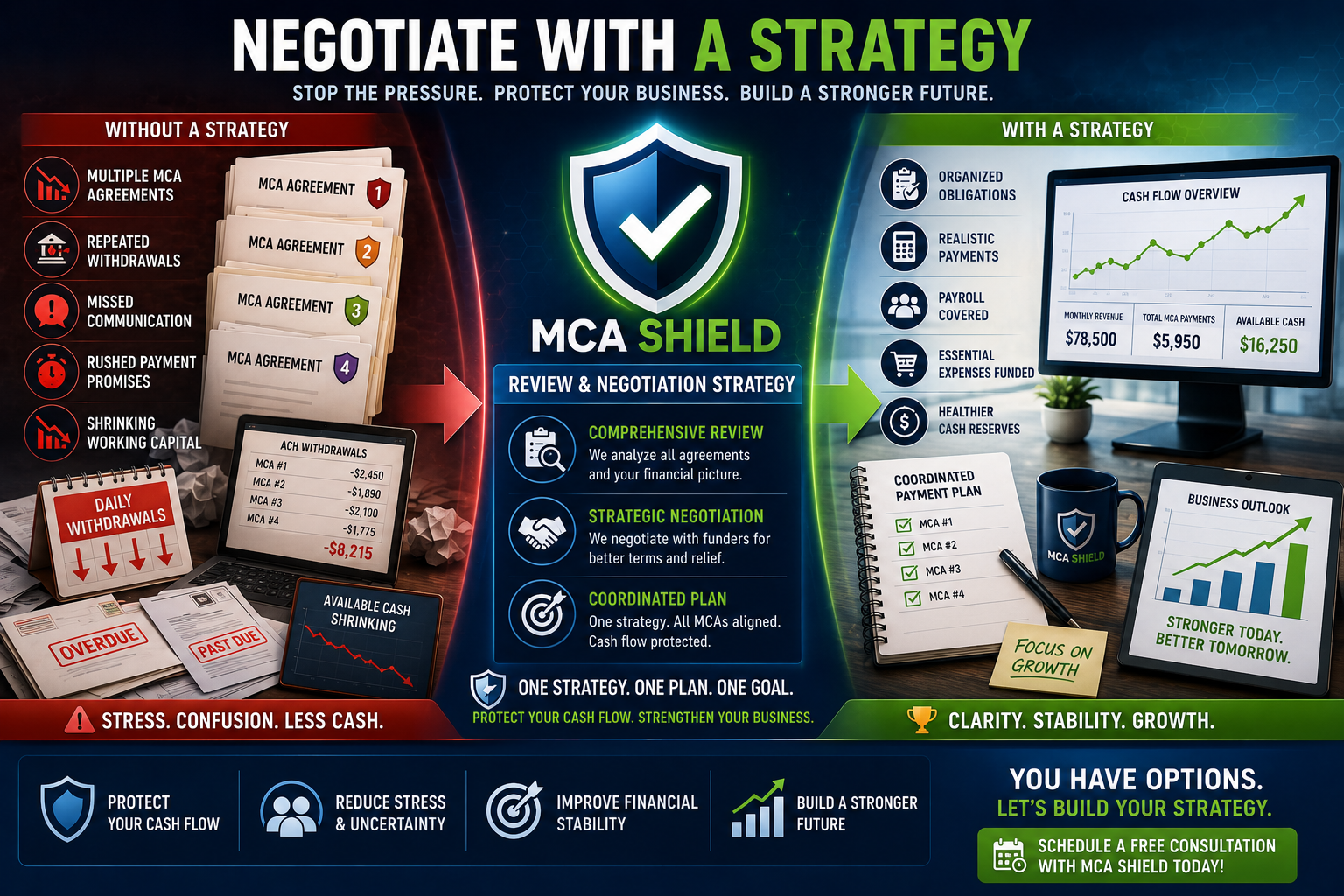
The longer MCA payment pressure continues, the harder it can become to protect working capital and maintain normal business operations. Avoiding common MCA negotiation mistakes can help you make decisions with a clearer understanding of your obligations, cash flow, and available options.
Waiting until the business is under severe financial strain may limit your flexibility. Acting earlier gives you more time to review agreements, organize financial records, evaluate payment proposals, and determine what your business can realistically afford.
The objective should be more than getting through the next withdrawal. Your negotiation strategy should support the continued operation of your business.
Build a Strategy Around Your Business’s Cash Flow
A strong MCA negotiation strategy starts with the numbers that matter most to your business.
Review your revenue, MCA withdrawals, payroll, rent, inventory, taxes, vendor expenses, and available working capital. Then determine how much cash must remain available each week or month to keep the business operating.
If multiple MCAs are involved, evaluate them together instead of treating each agreement as a separate problem. Any revised payment structure should account for the combined effect of all obligations.
Building a strategy based on actual cash flow can help you avoid commitments that create another financial setback and give your business a more sustainable path forward.
Schedule a Free Consultation With MCA Shield
If MCA payments are putting pressure on your business, you do not have to wait until the situation becomes unmanageable.
MCA Shield can review your current MCA obligations, evaluate how the payments affect your cash flow, and help you understand potential negotiation strategies. If several advances are involved, the review can also help identify how those obligations interact and where the greatest financial pressure exists.
Taking action earlier may give your business more time to address existing obligations before cash reserves shrink further.
Schedule a Free Consultation With MCA Shield today and take the first step toward avoiding costly MCA negotiation mistakes and regaining control of your business cash flow.