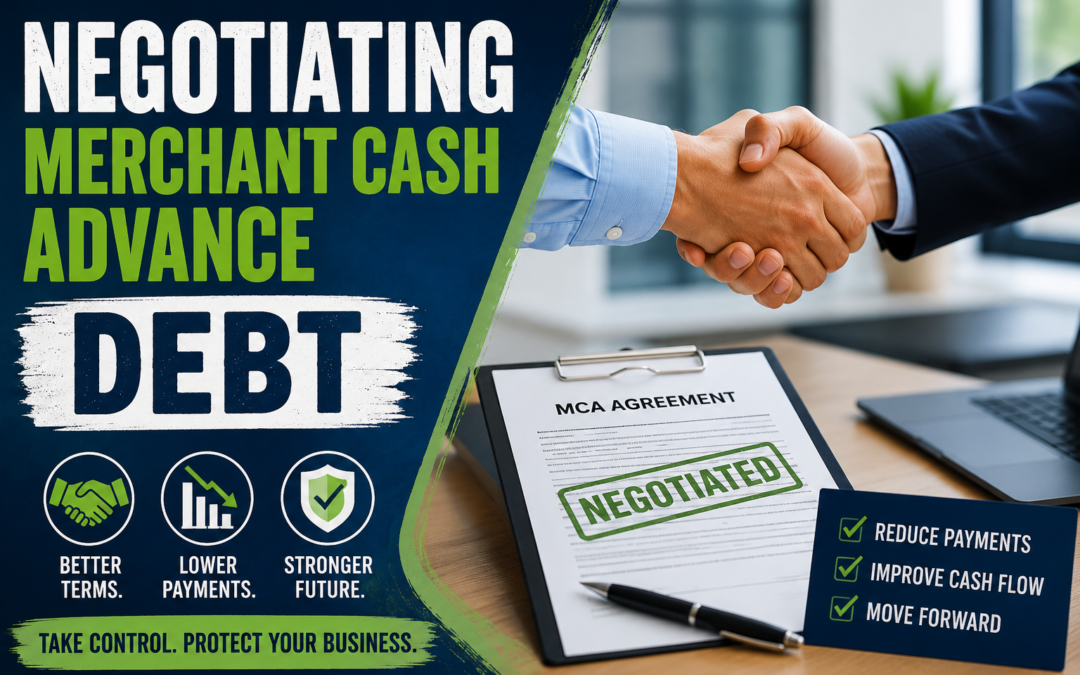
Negotiating merchant cash advance debt may help business owners who are struggling with high daily or weekly payments. When MCA withdrawals begin consuming too much revenue, covering payroll, rent, inventory, and other essential expenses can become difficult.
Instead of taking another advance, businesses may be able to negotiate MCA debt and explore more manageable terms. Depending on the situation, negotiation could involve lower payments, modified repayment terms, or a potential settlement of the existing obligation.
Understanding your options is an important first step. This guide explains how merchant cash advance debt negotiation works, what may be negotiated, common mistakes to avoid, and when it may be time to seek help.
Schedule Your Free Consultation
What Does It Mean to Negotiate Merchant Cash Advance Debt?
Negotiating merchant cash advance debt means working with an MCA funder to explore changes to an existing repayment arrangement. This may become necessary when daily or weekly withdrawals put too much pressure on a business’s cash flow.
The goal is to find a solution that addresses the existing MCA obligation while giving the business a more manageable payment structure. The options available will depend on the MCA agreement, outstanding balance, payment history, financial hardship, and willingness of the funder to negotiate.
How MCA Debt Negotiation Works
The process usually begins with a review of the MCA agreement and the business’s current financial situation. This helps determine how much the business owes, what it is currently paying, and what level of payment it may realistically be able to maintain.
From there, the business or its representative may communicate with the MCA funder about possible changes. Successful MCA debt negotiation requires realistic proposals and clear communication about the business’s financial circumstances.
Negotiation does not guarantee that a funder will accept new terms. However, it may create an opportunity to find a more sustainable way to resolve the MCA debt.
What Terms May Be Negotiated
Depending on the circumstances, several parts of an MCA obligation may be discussed. Potential changes can include lower payment amounts, a modified payment schedule, or settlement terms that differ from the original agreement.
For example, reducing daily or weekly withdrawals may allow the business to keep more revenue available for payroll, rent, inventory, utilities, and other operating expenses.
In some cases, negotiations may also focus on resolving the remaining balance through an agreed settlement. Every MCA negotiation is different, so the outcome depends on the funder and the financial details involved.
Negotiation vs. Continuing the Original MCA Agreement
Continuing under the original MCA agreement may make sense when a business can comfortably handle its required payments. However, problems can develop when withdrawals begin consuming too much working capital.
Simply continuing the same payment structure can leave less money available for essential expenses. It may also lead some business owners to consider taking another MCA to cover existing obligations, which can increase financial pressure.
Negotiating the existing debt takes a different approach. Rather than adding another advance, the goal is to address the current MCA obligation and pursue more manageable terms. For a business experiencing cash flow pressure, acting early may provide more options before the situation becomes harder to manage.
When Should You Consider Negotiating Merchant Cash Advance Debt?
You do not necessarily have to wait until your business defaults before exploring merchant cash advance debt negotiation. In many cases, recognizing financial warning signs early may give you more time to evaluate your options.
If MCA payments are interfering with normal operations, negotiating merchant cash advance debt may be worth considering. The following warning signs can indicate that your current payment structure is becoming difficult to maintain.
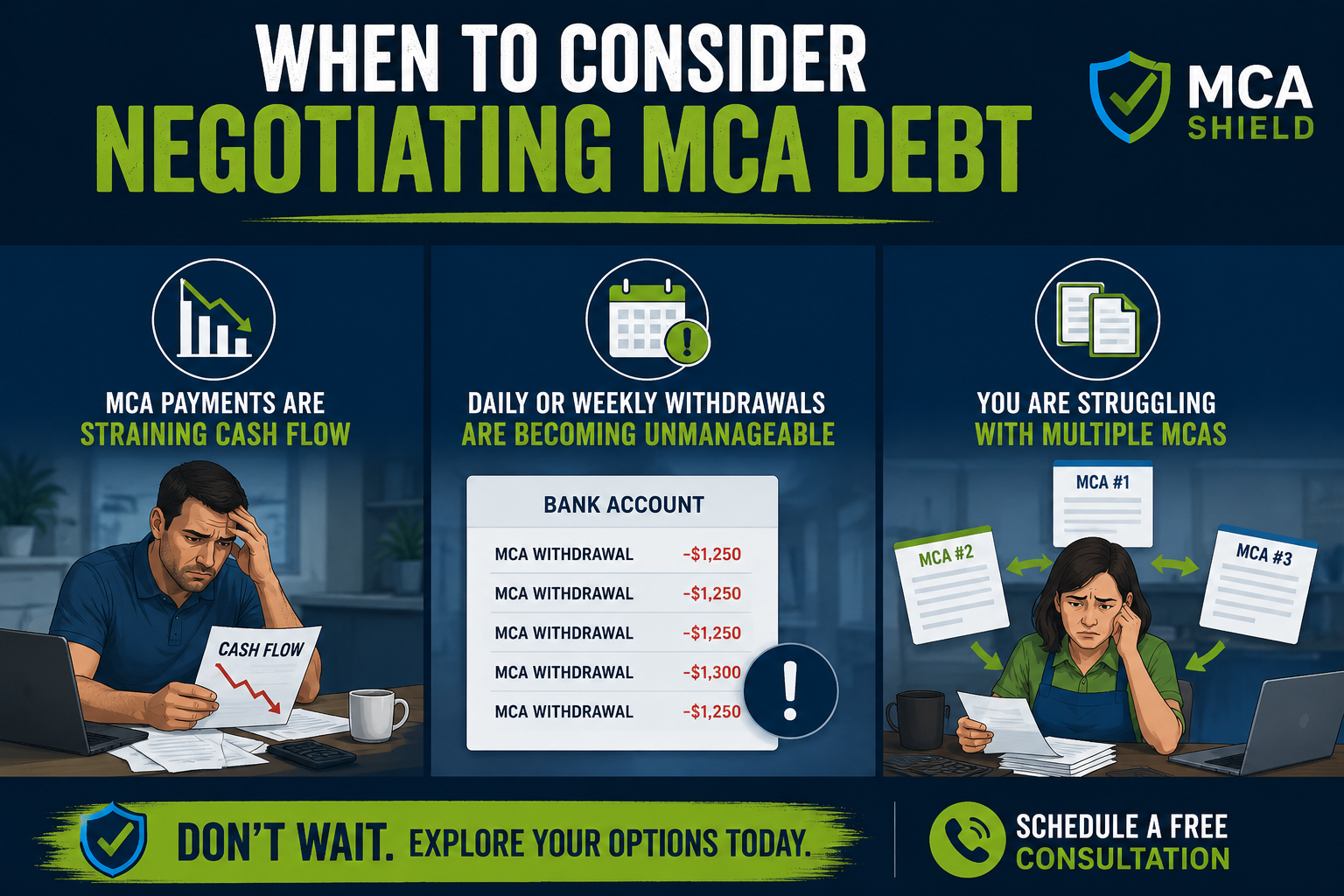
MCA Payments Are Straining Business Cash Flow
MCA payments can create serious pressure when they consume too much of your business revenue. After each withdrawal, you may have less money available for payroll, rent, inventory, taxes, utilities, and vendors.
Cash flow problems can become especially difficult when revenue fluctuates from week to week. Even a profitable business may struggle if too much cash leaves the account before essential expenses are paid.
If MCA payments regularly force you to delay expenses or move money between accounts, it may be time to review your existing MCA obligations.
Daily or Weekly Withdrawals Are Becoming Unmanageable
Frequent withdrawals can make it difficult to maintain enough working capital for everyday operations. A payment that was manageable when revenue was strong may become a problem after a slowdown or unexpected expense.
Warning signs can include difficulty making payroll, falling behind on bills, delaying inventory purchases, or struggling to maintain a sufficient bank balance.
Negotiation may provide an opportunity to discuss a different payment arrangement with the MCA funder. Depending on the circumstances, this could include lower payments or modified repayment terms.
You Are Struggling With Multiple MCAs
Managing several merchant cash advances at once can place even greater pressure on business cash flow. Each MCA may have its own withdrawal schedule, leaving multiple payments coming out of the same revenue stream.
This situation is often called MCA stacking. As more advances are added, less working capital remains available to operate the business.
If you are considering another advance just to keep up with existing MCA payments, that is an important warning sign. Instead of adding another obligation, negotiating multiple MCA debts may help you explore a more sustainable approach to resolving what you already owe.
How to Negotiate Merchant Cash Advance Debt
Learning how to negotiate merchant cash advance debt starts with understanding what your business owes and what it can realistically afford. A successful negotiation should address the current financial pressure without creating another payment arrangement that is difficult to maintain.
Before contacting an MCA funder, gather your agreements and review your business finances. Then, develop a clear strategy based on your cash flow, outstanding MCA balances, and ability to make future payments.
Review Your MCA Agreements and Financial Situation
Start by reviewing every MCA agreement connected to your business. Identify the remaining balance, payment amount, withdrawal frequency, reconciliation provisions, and other important terms.
Next, look closely at your current financial situation. Review recent bank statements, revenue, operating expenses, and available working capital. This can help determine how much your business can reasonably afford to pay.
If you have multiple MCAs, evaluate them together. Understanding the total impact of all MCA withdrawals can give you a clearer picture of the financial pressure on your business.
Develop a Realistic Negotiation Strategy
Once you understand your obligations, determine what type of payment arrangement your business could realistically maintain. The goal should not simply be to get the lowest possible payment. Instead, focus on creating a sustainable solution that fits your current cash flow.
Depending on your circumstances, a negotiation strategy may seek reduced payments, modified repayment terms, or a potential settlement. The appropriate approach will depend on your finances and the willingness of each MCA funder to negotiate.
Avoid making promises your business cannot keep. Agreeing to unaffordable terms may provide temporary relief but create another financial problem later.
Negotiate With MCA Funders
When communicating with MCA funders, clearly explain the financial situation and the changes you are requesting. Supporting financial information may help demonstrate why the current payment structure has become difficult to maintain.
Keep communication organized and document important discussions. If a funder offers new terms, review the proposed agreement carefully before accepting it. Make sure you understand the payment amount, schedule, total obligation, and any other conditions.
Negotiating MCA debt can take time, especially when multiple funders are involved. However, a well-prepared approach can help your business pursue more manageable MCA payments while protecting the cash flow needed for daily operations.
What Can Be Negotiated With an MCA Funder?
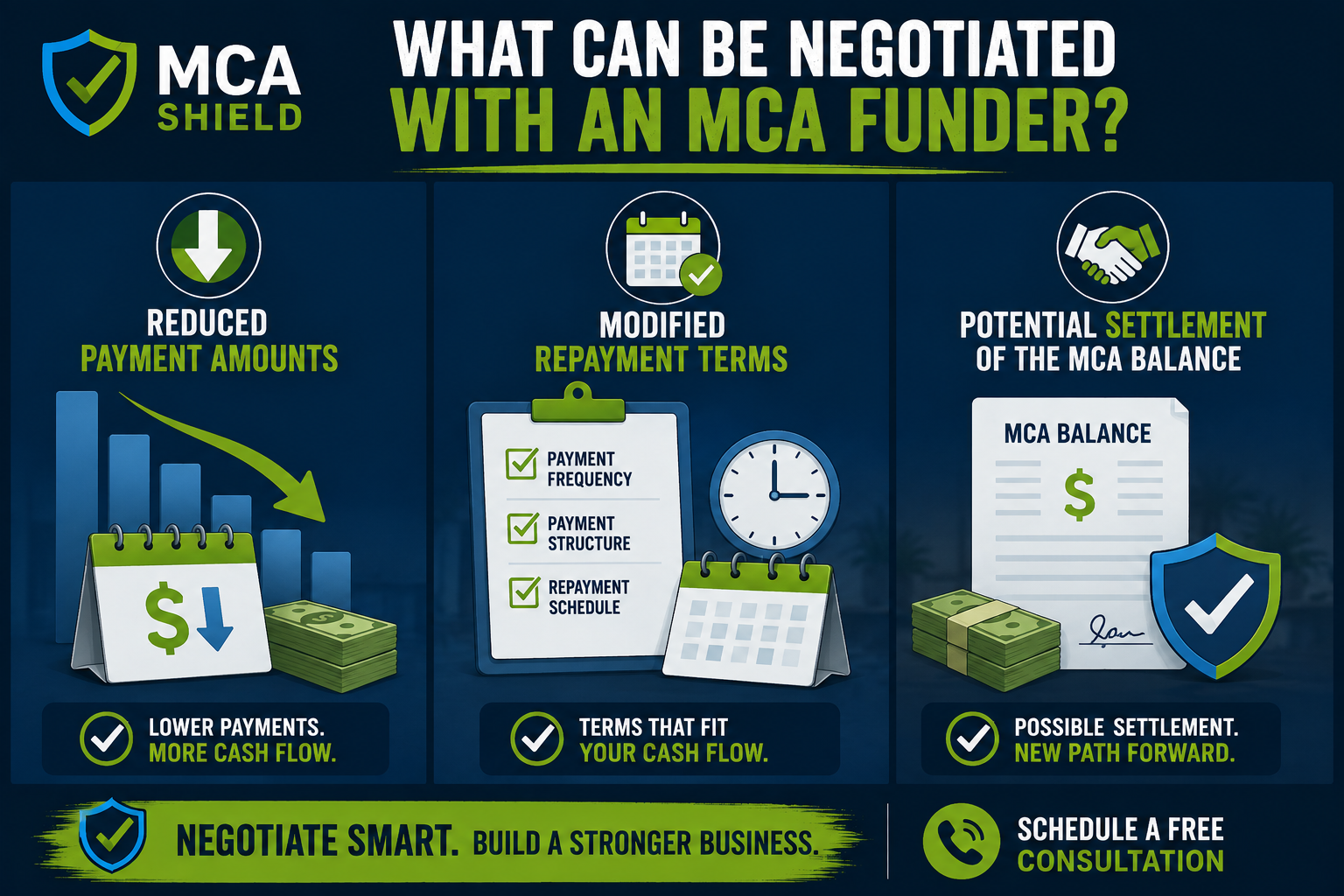
When negotiating merchant cash advance debt, several parts of the existing payment arrangement may be discussed. The exact options depend on the MCA agreement, outstanding balance, business finances, and willingness of the funder to negotiate.
The goal is often to create an arrangement that addresses the MCA obligation while leaving enough cash available for essential business expenses and daily operations.
Reduced Payment Amounts
One possible goal of MCA negotiation is to reduce daily or weekly payment amounts. Lower withdrawals may help relieve immediate cash flow pressure and allow the business to keep more revenue in its account.
For example, reduced payments could make it easier to cover payroll, rent, inventory, taxes, utilities, and vendor expenses. This can be especially important when revenue has declined or the original payment amount is no longer manageable.
A lower payment is not guaranteed. However, showing that the current withdrawals are creating financial hardship may provide a basis for discussing a more affordable amount.
Modified Repayment Terms
An MCA funder may also be willing to discuss modified repayment terms. Depending on the situation, this could involve changing the payment frequency, adjusting the payment structure, or creating a different repayment schedule.
Modified terms can help align payments more closely with the business’s current cash flow. The objective is to create a structure the business can realistically maintain without constantly falling behind on operating expenses.
Before accepting new terms, review the entire arrangement carefully. A lower payment does not always mean a lower total obligation, so it is important to understand the complete agreement.
Potential Settlement of the MCA Balance
In some situations, negotiation may focus on reaching an MCA settlement. A settlement generally involves an agreement to resolve the outstanding obligation under terms that differ from the original MCA contract.
The amount and structure of a potential settlement depend on several factors. These may include the remaining MCA balance, financial hardship, account status, payment history, and funder negotiations.
Not every MCA can be settled, and results can vary. However, when the existing payment structure is no longer sustainable, exploring a potential settlement may provide another way to resolve MCA debt without adding a new merchant cash advance.
Can You Negotiate MCA Debt After Default?
Yes, it may still be possible to negotiate MCA debt after default. In fact, a default can sometimes make the need for negotiation more urgent. However, it can also create additional challenges for the business.
Once an MCA enters default, the funder may increase collection efforts or pursue remedies available under the agreement and applicable law. Understanding your situation and responding quickly can help you evaluate potential options before the financial pressure grows.
How Default Can Change the Negotiation Process
Before default, a business may have more time to discuss payment concerns and explore possible changes. After default, negotiations can become more complicated because the account may already be in collections or subject to increased enforcement efforts.
The funder may want information about the business’s financial hardship, current revenue, and ability to make payments. This information can help determine whether a modified payment arrangement or potential MCA settlement is realistic.
Default does not automatically eliminate the possibility of negotiation. However, the available options will depend on the MCA agreement, the funder, and the circumstances surrounding the account.
Dealing With Collection and Legal Pressure
After an MCA default, a business may experience collection calls, payment demands, increased account activity, or potential legal action. These issues can add pressure to an already difficult cash flow situation.
Do not ignore notices or communications related to the MCA. Keep copies of correspondence and review any proposed payment or settlement terms carefully. If a lawsuit or other legal action has been filed, consider speaking with a qualified attorney about your rights and deadlines.
At the same time, negotiations with the funder may continue. The objective is to pursue a resolution that addresses the outstanding MCA debt without creating another unaffordable payment arrangement.
Why Acting Quickly After Default Matters
Waiting after an MCA default can allow financial and collection pressure to increase. Meanwhile, daily business expenses such as payroll, rent, inventory, taxes, and vendor payments still need to be covered.
Acting quickly gives you an opportunity to review the situation, understand your obligations, and determine whether negotiation may be appropriate. It can also help you avoid making rushed decisions, such as taking another MCA simply to cover existing payments.
If your business has already defaulted, negotiating merchant cash advance debt sooner rather than later may give you more time to pursue a manageable resolution and protect the cash flow needed to continue operating.
How Do You Negotiate Multiple Merchant Cash Advances?
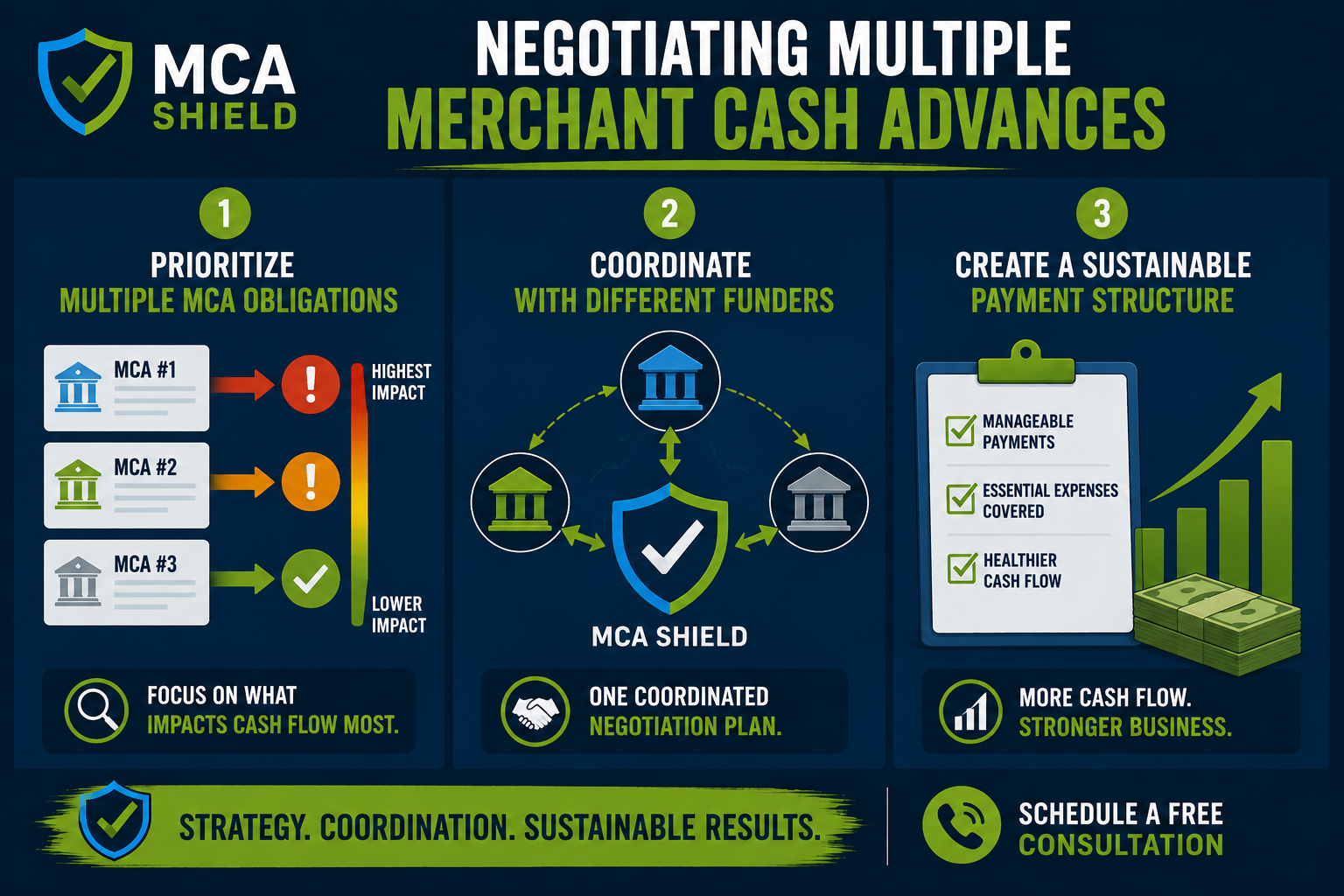
Negotiating one MCA can be challenging. Managing several at the same time can be even more complicated. When a business has multiple merchant cash advances, several daily or weekly withdrawals may compete for the same revenue.
Instead of treating each MCA as a separate cash flow problem, it can help to look at the entire debt picture. A coordinated approach to negotiating multiple merchant cash advances can focus on reducing overall payment pressure and creating a structure the business can realistically maintain.
Prioritizing Multiple MCA Obligations
Start by identifying every MCA obligation and reviewing the terms of each agreement. Look at the remaining balances, payment amounts, withdrawal schedules, account status, and current funder activity.
Next, determine which obligations are creating the greatest financial pressure. An MCA with a large daily withdrawal, for example, may have a greater impact on working capital than one with a smaller payment.
Prioritizing does not mean ignoring other funders. Instead, it helps the business understand where negotiation may have the greatest impact on cash flow.
Coordinating Negotiations With Different Funders
Each MCA funder may have different policies and may respond differently to a negotiation request. One funder might consider reduced payments, while another may be willing to discuss modified terms or a potential settlement.
Because of these differences, negotiations should be coordinated carefully. Agreeing to an unaffordable arrangement with one funder could leave too little cash available for other obligations and essential operating expenses.
A coordinated strategy considers all MCA payments together. This can help prevent one agreement from undermining progress made with another.
Creating a More Sustainable Overall Payment Structure
The ultimate goal is not simply to negotiate each MCA individually. It is to create a more sustainable overall payment structure for the business.
That means considering how much revenue must remain available for payroll, rent, inventory, taxes, utilities, vendors, and other essential expenses. Any proposed MCA payment arrangement should be evaluated against those needs.
For businesses struggling with MCA stacking, negotiation may provide an alternative to taking another advance. Addressing existing obligations through a coordinated strategy can help reduce payment pressure, improve available cash flow, and create a clearer path toward resolving multiple MCA debts.
Common Mistakes to Avoid When Negotiating MCA Debt
Negotiating merchant cash advance debt requires more than asking a funder for lower payments. The decisions you make during the process can affect your cash flow and your ability to keep the business operating.
Avoiding common mistakes can help you pursue a more realistic and sustainable MCA debt resolution. Careful planning is especially important when your business already faces financial pressure.
Waiting Until Cash Flow Becomes Critical
One of the biggest mistakes is waiting until the business has almost no working capital left. As financial pressure increases, it may become harder to cover payroll, rent, inventory, taxes, utilities, and vendor expenses.
You do not necessarily need to wait for an MCA default before reviewing your options. If daily or weekly withdrawals are becoming difficult to maintain, it may be time to evaluate the situation.
Acting early may give you more time to negotiate MCA debt and consider possible solutions before the financial strain becomes more severe.
Agreeing to Terms Your Business Cannot Afford
A lower payment may sound attractive, but it still needs to fit your business’s budget. Before accepting new terms, determine how much your business can realistically pay while continuing to cover essential operating expenses.
Review the payment amount, frequency, repayment period, total obligation, and other conditions before agreeing to a new arrangement. A short-term reduction will not solve the problem if the new payments remain unaffordable.
The goal should be a payment structure your business can reasonably maintain, not simply the first offer available.
Taking Another MCA to Cover Existing Payments
When cash flow becomes tight, taking another merchant cash advance may seem like a quick solution. However, using new MCA funding to make payments on existing advances can create additional financial pressure.
This can lead to MCA stacking, where several advances draw payments from the same business revenue. As withdrawals multiply, less money remains available for normal operating expenses.
Instead of adding another obligation, consider addressing the debt you already have. Negotiating existing MCA debt may provide a more sustainable approach to reducing payment pressure and improving business cash flow.
Frequently Asked Questions About MCA Debt Negotiation
Business owners often have questions about negotiating merchant cash advance debt, especially when payments are putting pressure on cash flow. The answers below address several common concerns about the MCA negotiation process.
How Much Can You Negotiate Merchant Cash Advance Debt?
There is no standard amount that every business can negotiate. The potential outcome depends on factors such as the outstanding MCA balance, financial hardship, payment history, account status, and willingness of the funder to negotiate.
Depending on the circumstances, negotiations may focus on lower payments, modified repayment terms, or a potential settlement of the outstanding balance. Every MCA situation is different, so specific results cannot be guaranteed.
The goal should be to pursue terms that address the MCA obligation while allowing the business to maintain enough cash for essential operating expenses.
Will MCA Funders Negotiate Payment Terms?
Some MCA funders may be willing to discuss payment changes when a business is experiencing legitimate financial hardship. However, MCA funders are not required to accept proposed terms, and negotiation policies can vary.
Providing a clear picture of the business’s financial situation may help support the request. This can include information about current revenue, operating expenses, existing MCA payments, and available cash flow.
If an agreement is reached, review all new terms carefully before accepting them. Make sure the payment structure is realistic for the business.
Can You Negotiate an MCA Without an Attorney?
Yes. A business owner can attempt to negotiate an MCA directly with the funder. However, merchant cash advance agreements can contain complex terms, and negotiations may become more difficult after default or when multiple MCAs are involved.
If the situation includes a lawsuit, judgment, or other legal issue, consider speaking with a qualified attorney who understands merchant cash advance matters. Legal deadlines should never be ignored.
For businesses primarily dealing with payment pressure, a professional MCA debt review may help identify possible negotiation strategies. The key is to understand your agreements, evaluate what your business can afford, and pursue a realistic path toward resolving MCA debt.
Take the First Step Toward Resolving MCA Debt
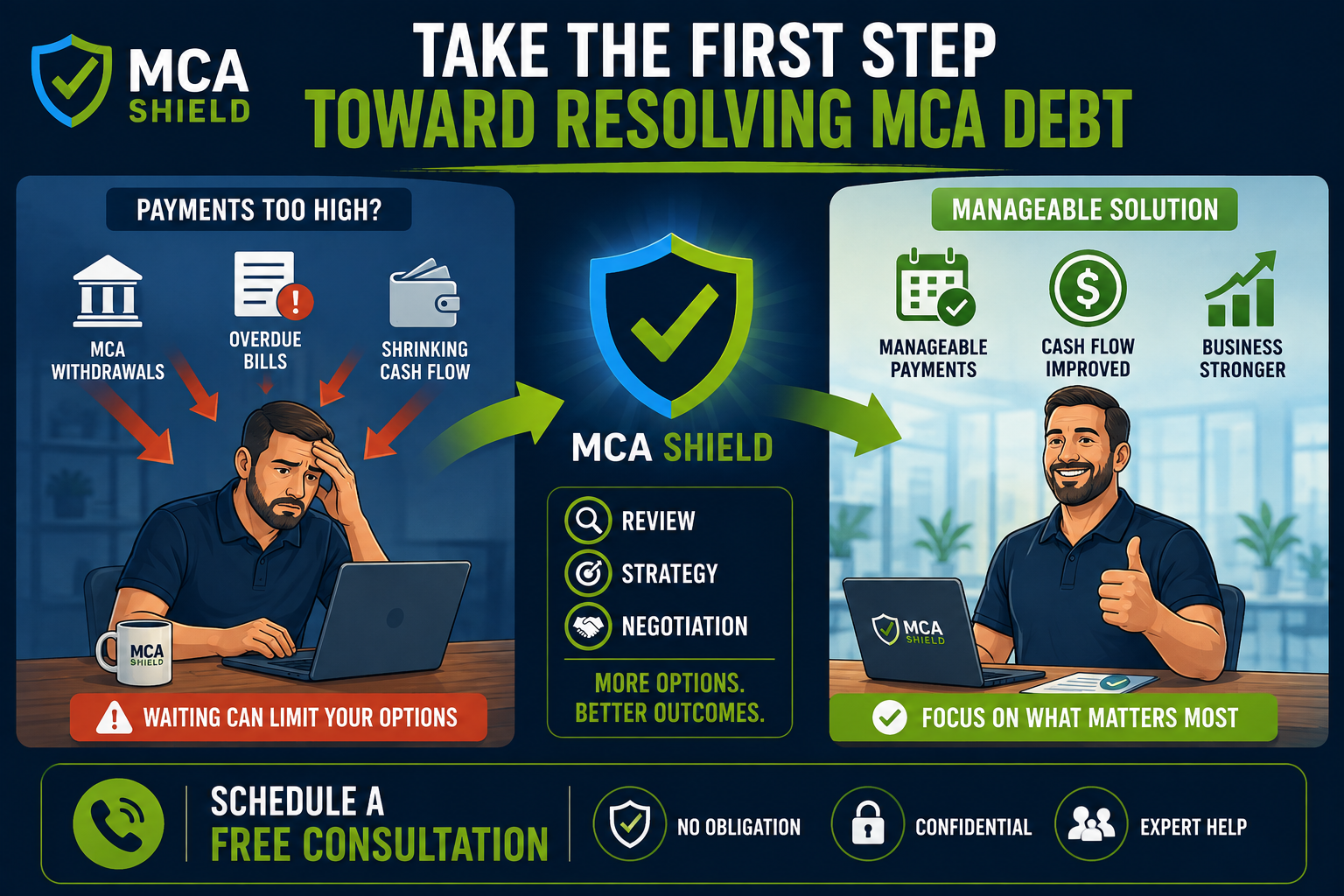
When merchant cash advance payments begin putting too much pressure on your business, waiting may make the situation harder to manage. Negotiating merchant cash advance debt may provide an opportunity to address existing obligations before cash flow problems become more severe.
The right approach depends on your MCA agreements, outstanding balances, current payments, and overall financial situation. Understanding those factors can help you determine which options may be available.
Why Acting Early May Give Your Business More Options
You do not have to wait until your business misses payments or defaults to explore MCA debt negotiation. Warning signs may appear much earlier.
If MCA withdrawals are making it difficult to cover payroll, rent, inventory, taxes, utilities, or vendors, it may be time to review your situation. The same applies if you are considering another MCA simply to keep up with existing payments.
Acting early gives you more time to understand your obligations and develop a realistic strategy. It may also allow you to explore reduced payments, modified repayment terms, or potential settlement options before financial pressure increases.
Most importantly, addressing the problem early can help you focus on the larger goal: protecting the cash flow your business needs to continue operating.
Schedule a Free Consultation With MCA Shield
If merchant cash advance payments are becoming difficult to manage, MCA Shield can review your situation and help you understand your options. We can evaluate your existing MCA obligations, payment structure, and current financial pressure.
From there, we can help determine whether MCA debt negotiation, modified payment terms, or a potential settlement strategy may be appropriate for your business.
Do not wait for MCA debt to overwhelm your working capital. Schedule a free consultation with MCA Shield today and take the first step toward a more manageable path forward.