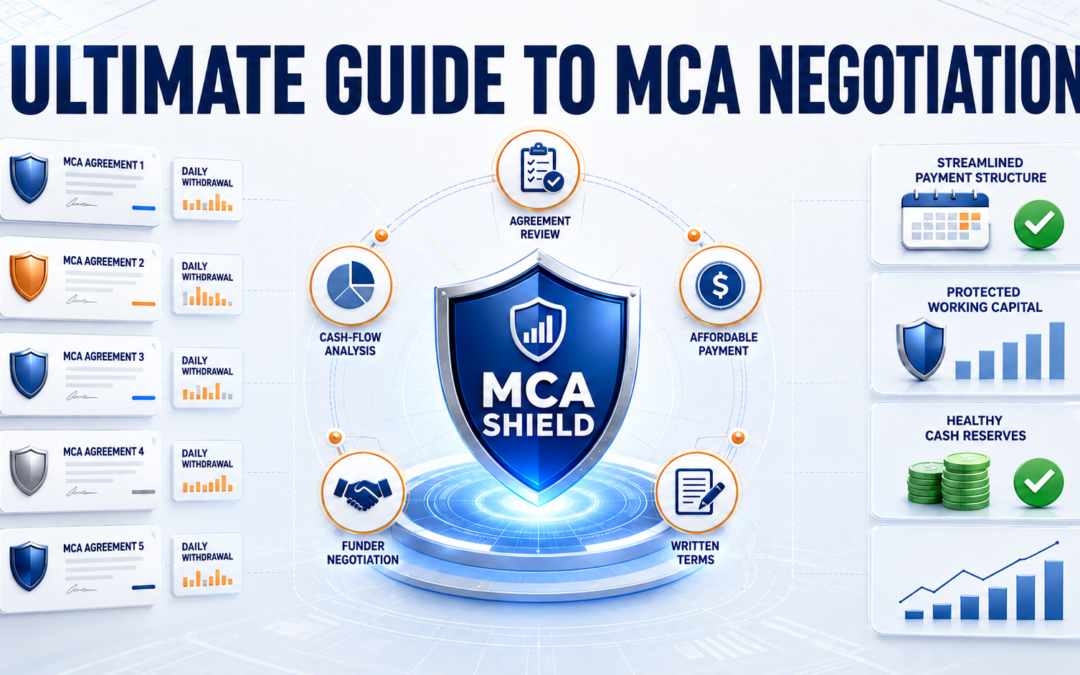
When merchant cash advance payments begin draining money needed for payroll, inventory, and daily expenses, continuing under the same payment structure can place the entire business at risk. This MCA negotiation guide explains how negotiation may help reduce payment pressure before cash flow becomes critical.
You will learn how MCA negotiation works, which terms may be changed, how to determine an affordable payment level, and why multiple advances require a coordinated strategy.
With the right approach, your business may be able to pursue more manageable payments, protect essential working capital, and regain control of its financial future.
Schedule Your Free Consultation
What MCA Negotiation Can—and Cannot—Change
MCA negotiation can help a business pursue payment terms that better reflect its current financial position. However, negotiation does not automatically cancel the agreement or eliminate the remaining obligation. The outcome depends on the funder, the agreement, the business’s cash flow, and the strength of the proposed solution.
Understanding these limits is an important part of any reliable MCA negotiation guide. Business owners need to know which changes may provide immediate relief and which require a separate settlement strategy.
How MCA Negotiation Works
MCA negotiation begins with a detailed review of the business’s current payment burden. This review should include the remaining purchased amount, withdrawal frequency, payment history, current revenue, operating expenses, and any other MCA obligations.
The goal is to determine what the business can realistically afford without sacrificing essential operations. That amount can then serve as the foundation for a proposed payment modification.
Depending on the circumstances, the negotiation may request:
- A lower daily or weekly payment
- A different withdrawal schedule
- A temporary payment reduction
- Additional time to satisfy the obligation
- A more manageable structured arrangement
The funder must review and accept the proposed changes. As a result, simply asking for a lower payment does not guarantee approval. A realistic proposal supported by accurate financial information may create a stronger basis for negotiation.
Once the parties reach an agreement, the business should receive the updated terms in writing. The written agreement should clearly explain the new payment amount, payment frequency, effective date, duration, and any conditions attached to the arrangement.
Payment Relief Versus Total Balance Reduction
One of the most important distinctions in MCA negotiation is the difference between reducing payment pressure and reducing the total amount owed.
Payment relief changes how the business satisfies the obligation. For example, a funder may agree to decrease a daily withdrawal, switch to weekly payments, or extend the payment period. These changes may improve immediate cash flow, but they do not necessarily reduce the remaining balance.
A lower payment may help the business:
- Keep more operating cash available
- Cover payroll and essential expenses
- Avoid taking another advance
- Continue serving customers
- Create a more predictable budget
A total balance reduction is different. It usually involves negotiating a settlement in which the funder agrees to accept less than the claimed remaining amount. Settlement may require a lump-sum payment or a structured payment arrangement, depending on the funder and the circumstances.
Therefore, business owners should not assume that a lower payment automatically means a lower total obligation. Before accepting new terms, confirm whether the agreement changes only the payment schedule or also changes the total amount required.
Why Every MCA Agreement Requires a Different Approach
No single MCA negotiation strategy works for every agreement. Each funder may use different contract terms, withdrawal methods, internal policies, and negotiation procedures. In addition, every business has its own revenue pattern, expenses, payment history, and level of financial pressure.
Several factors can influence the appropriate strategy:
- The remaining obligation
- The current daily or weekly withdrawal
- The business’s recent revenue
- Whether payments remain current
- Whether the account has entered default
- The number of active MCA agreements
- The amount of working capital available
- The funder’s willingness to modify the terms
For example, a seasonal business may need temporary relief until revenue increases. Another business may need a long-term payment reduction because its income has permanently changed. A company with several advances may require a coordinated strategy that examines the combined payment burden rather than addressing each MCA individually.
That is why effective MCA negotiation begins with the complete financial picture. The right strategy should address the specific agreement while protecting the business’s ability to cover payroll, operations, taxes, inventory, and other essential expenses.
Recognizing When Your Business Needs MCA Negotiation
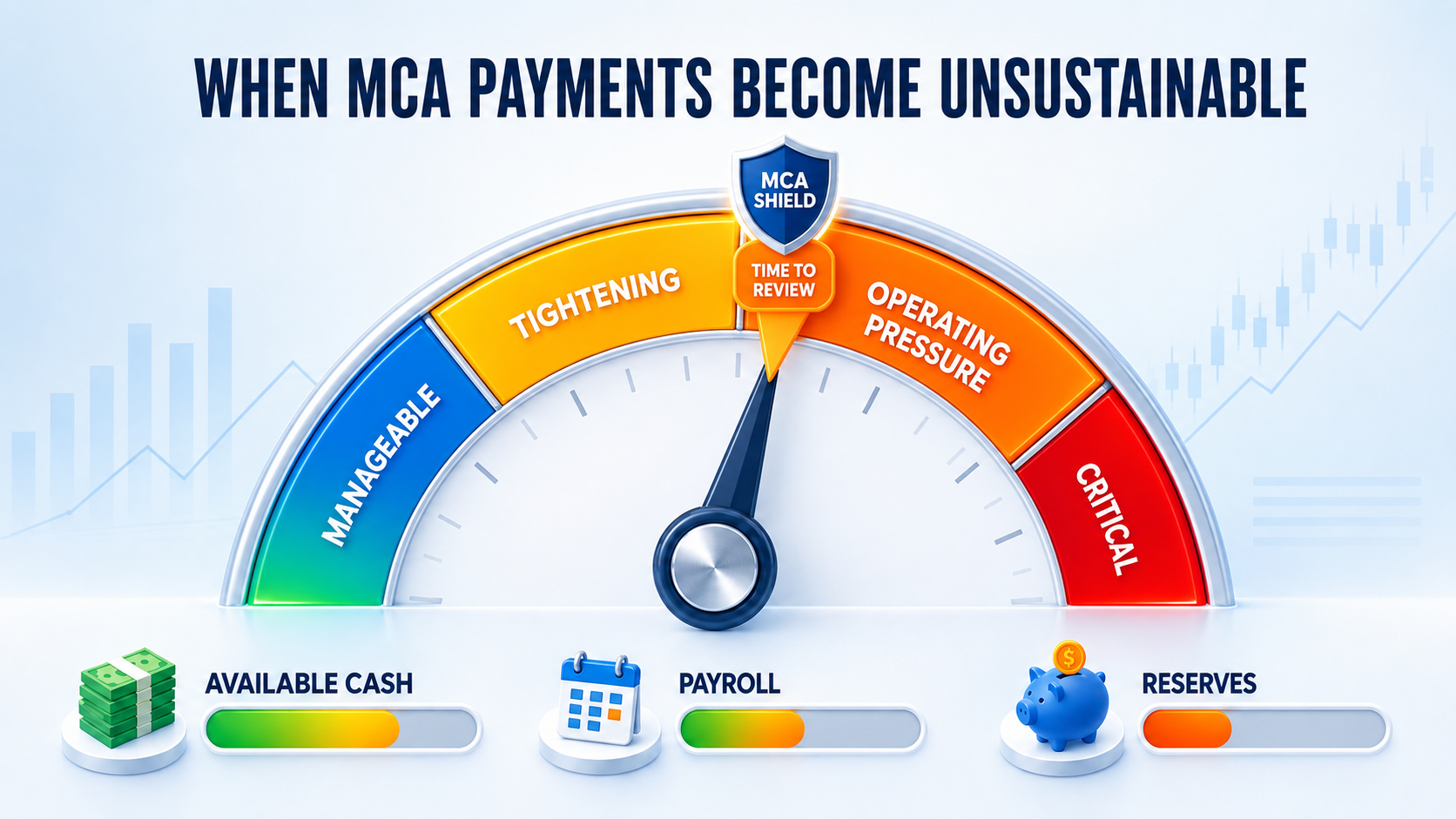
A business does not need to miss payments before considering MCA negotiation. In many cases, the earliest warning appears when the company can still make its withdrawals but has little money left for normal operations.
Recognizing that shift early can give the business more time to review its obligations and pursue a sustainable solution. Waiting until the bank account can no longer support the withdrawals may increase the pressure and reduce the time available to respond.
Early Signs of Unsustainable Payment Pressure
MCA payments become unsustainable when they repeatedly compete with the expenses required to keep the business open. The company may still generate revenue, but frequent withdrawals can prevent that revenue from supporting payroll, inventory, rent, taxes, equipment, and other essential needs.
Common warning signs include:
- Daily or weekly withdrawals consume a growing share of revenue
- Payroll becomes difficult to cover on time
- The business delays payments to suppliers or service providers
- Available cash disappears shortly after deposits arrive
- The owner uses personal funds to cover operating expenses
- The business falls behind on rent, taxes, utilities, or inventory
- Another MCA appears necessary just to maintain operations
- Several advances withdraw money from the same account
Another major warning sign is the loss of financial flexibility. If a slow week or unexpected expense could cause missed payments, the current structure may already be too aggressive.
An MCA negotiation guide can explain the available process, but the business must first recognize that continued withdrawals are creating a problem. Early action may help prevent a temporary cash-flow strain from developing into a larger financial crisis.
Why Negotiating Before Default May Preserve More Options
Negotiating before default may give the business more room to present its financial position and pursue changes before the situation becomes urgent. The company can review its revenue, expenses, and total MCA burden before returned payments or increased collection pressure complicate the situation.
At this stage, the business may have several advantages:
- A more consistent payment history
- Better access to recent financial records
- More time to calculate an affordable payment
- Greater ability to continue making modified payments
- More working capital available to support operations
Starting early also allows the business to build a proposal around actual cash flow. Instead of waiting until no money remains, the company can identify the payment level it can maintain while still covering essential expenses.
However, beginning a negotiation does not guarantee that a funder will modify the agreement. Each funder will evaluate the request according to the agreement, payment history, financial information, and proposed terms. Still, addressing the problem before default may create more opportunities than waiting until the business has no room left to adjust.
When Immediate Action Becomes Necessary
Some warning signs indicate that the business should review its MCA obligations immediately. These signs often appear when payment pressure begins threatening the company’s ability to operate.
Immediate action may be necessary when:
- The business cannot meet payroll
- MCA withdrawals cause repeated overdrafts
- Essential bills remain unpaid
- Suppliers place important accounts on hold
- Tax obligations begin falling behind
- One or more payments have already been missed
- The business receives collection notices or account warnings
- A new advance seems like the only way to cover existing MCA payments
Taking another MCA at this stage may provide temporary cash, but it can also add another withdrawal to an already strained account. The new payment may consume the additional funding quickly, leaving the business facing even greater pressure.
The first step should be to calculate the full payment burden across every MCA agreement. The business must also determine how much cash it needs for payroll, inventory, taxes, rent, and other operating expenses.
Once the numbers are clear, the company can evaluate whether MCA negotiation may create a more manageable payment structure. Acting promptly can help the business focus on a coordinated solution before daily withdrawals take control of every financial decision.
Building a Complete Picture of Your MCA Obligations
Effective MCA negotiation starts with accurate information. A business cannot determine what it can afford or which agreement needs attention first until it understands the full payment structure.
This review becomes especially important when several MCA companies withdraw money from the same bank account. Looking at each agreement individually can hide the true effect the combined payments place on working capital.
Review Every Agreement, Payment, and Remaining Balance
Begin by gathering every active MCA agreement and the most recent payment information from each funder. Do not rely on memory or review only the advance creating the most immediate concern.
For each MCA, record:
- The funder’s name
- The original funding amount
- The total purchased amount
- The current daily or weekly payment
- The payment frequency
- The estimated remaining amount
- The date payments began
- The amount paid to date
- Any missed or returned payments
- Any prior payment modifications
- The contact information for the funder or servicer
Compare the written terms with the withdrawals appearing in the business bank account. This step can help confirm how often each payment occurs and how much money each funder currently collects.
Also review any recent emails, notices, or modified payment arrangements. A temporary reduction may be close to expiration, or a missed payment may have changed the account’s status. These details can affect the timing and direction of the negotiation.
The goal is to create one accurate summary of every active MCA obligation. This summary becomes the financial foundation for the strategy that follows.
Calculate the Total Daily or Weekly Payment Burden
After reviewing each agreement, calculate how much all MCA payments remove from the business during a typical week or month. Focusing on one withdrawal at a time can make the payments appear more manageable than they are collectively.
For example, a company with three daily withdrawals of $250, $400, and $550 pays a combined $1,200 each business day. Over five business days, those payments remove approximately $6,000 from the account.
Next, compare the total MCA payments with the business’s average deposits. This calculation shows how much revenue remains after the withdrawals occur.
The review should answer several important questions:
- What percentage of incoming revenue goes toward MCA payments?
- How much money remains for payroll and operating expenses?
- Does the business depend on strong sales daily to avoid an overdraft?
- Can it manage a slow week or an unexpected expense?
- Are the payments preventing the company from purchasing inventory or completing customer work?
A clear MCA negotiation guide should focus on the combined burden because every withdrawal draws money from the same source. Even if each payment appears affordable on its own, the total can place severe pressure on the business.
Understanding the full payment burden also helps establish a realistic negotiation target. The proposed payment structure must leave enough cash available for essential operations rather than simply decreasing one withdrawal.
Identify the MCA Creating the Greatest Cash-Flow Pressure
The MCA with the largest payment may appear to create the greatest problem, but that is not always the case. Several factors can determine which agreement places the most pressure on cash flow.
Review each MCA based on:
- The size and frequency of its withdrawals
- The remaining amount
- The percentage of revenue it consumes
- Its payment status
- Any history of returned payments
- The funder’s recent communications
- The effect of its withdrawals on overdrafts and unpaid expenses
- Whether a temporary payment arrangement will end soon
One MCA may create daily overdrafts, while another may have entered default and generated collection pressure. A third may have a smaller payment but continue much longer than the others. Each situation may require a different priority.
The business should also consider how a proposed change to one agreement will affect the rest. If one funder accepts a reduced payment, the resulting cash-flow improvement should support the entire operating budget—not simply make room for another aggressive withdrawal.
Identifying the greatest source of pressure helps determine where negotiations may need to begin. However, the final strategy should still account for every obligation. The objective is to create a coordinated payment structure that the business can maintain across all MCA agreements while continuing to operate.
Determining What Your Business Can Realistically Afford
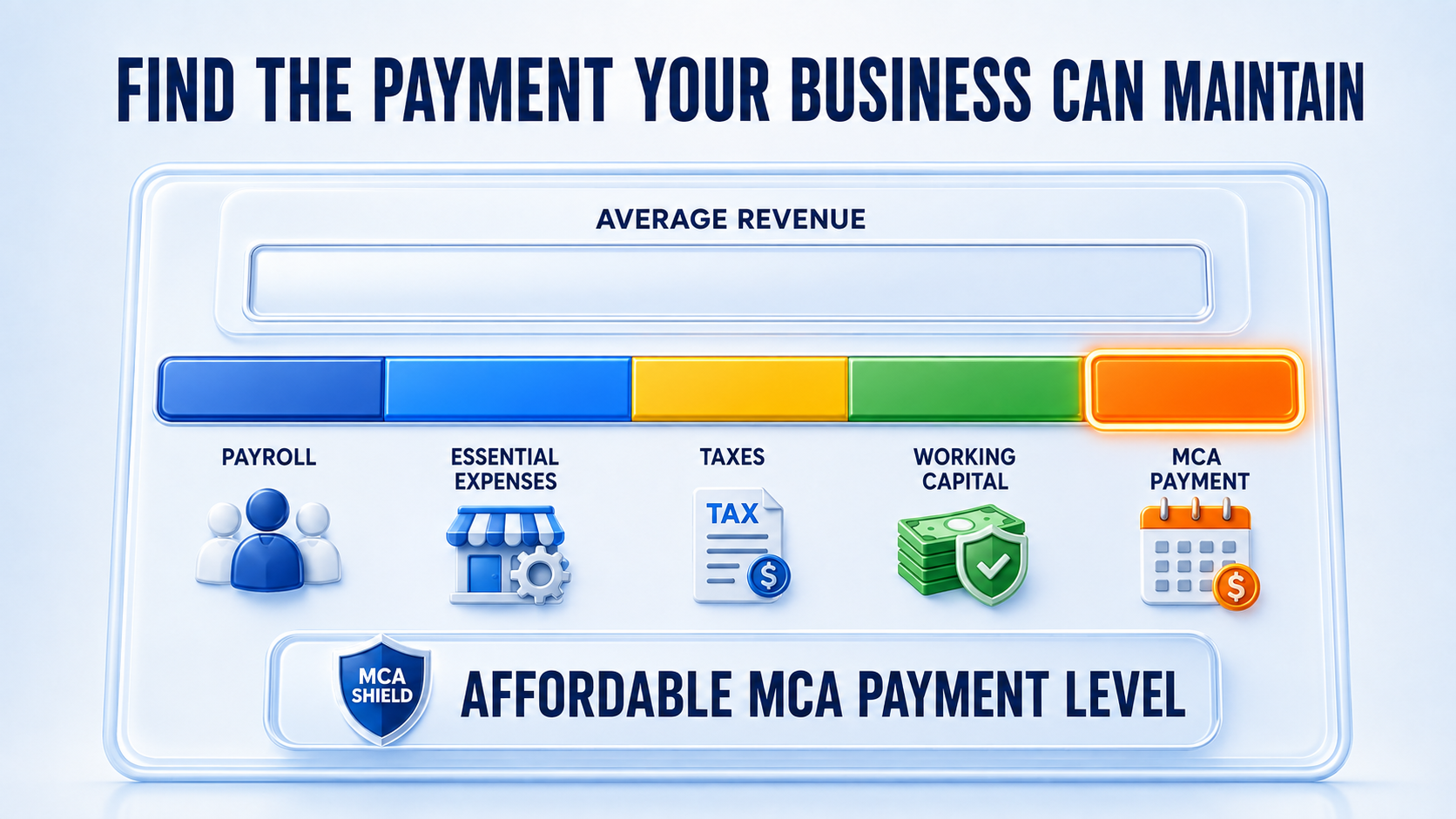
A successful MCA negotiation requires more than requesting a lower payment. The business must identify a payment level that it can maintain while continuing to cover the expenses that generate revenue.
The right number should reflect actual cash flow, not an optimistic sales forecast or the amount a funder wants to collect. A payment that still leaves the business unable to meet payroll or purchase essential inventory does not provide meaningful relief.
Protect Payroll and Essential Operating Expenses
Before calculating an affordable MCA payment, determine how much money the business needs to remain operational. These expenses should be considered carefully because the company cannot generate future revenue if it lacks the employees, materials, equipment, or services required to serve customers.
Essential expenses may include:
- Employee wages and payroll taxes
- Rent or mortgage payments
- Utilities and insurance
- Inventory and raw materials
- Equipment, fuel, and vehicle costs
- Business taxes
- Critical vendors and service providers
- Software, licensing, and professional fees
- A reasonable operating reserve
Review several months of bank statements, profit-and-loss reports, and payroll records to determine the typical cost of these obligations. The business should also account for seasonal changes, slow sales periods, and irregular expenses that do not appear every week.
Protecting essential expenses does not mean ignoring MCA obligations. Instead, it means creating a payment structure that allows the business to continue operating while addressing those obligations consistently. If MCA payments consume the money needed to produce goods or complete customer orders, the withdrawals may eventually weaken the revenue source that supports every payment.
Establish a Sustainable MCA Payment Level
Once the business understands its essential expenses, it can calculate the portion of revenue potentially available for MCA payments. A simple starting point is:
Average business deposits – essential operating expenses – necessary cash reserve = amount potentially available for MCA payments
This calculation should use conservative revenue figures. Basing the proposal on the company’s strongest month can produce a payment that fails as soon as sales return to normal or decline.
The business should consider:
- Average weekly and monthly deposits
- Predictable seasonal changes
- The timing of payroll and major bills
- The cost of completing scheduled customer work
- Existing payment commitments
- The possibility of slower-than-expected revenue
- The total burden across every active MCA
When a business has several advances, use one coordinated strategy to allocate the amount that is affordable to cover all obligations. Calculating each funder’s payment separately can create total withdrawals that exceed the company’s available cash.
A sustainable MCA payment should leave enough working capital for the business to operate between deposits. It should also remain manageable during an average week—not only when sales exceed expectations.
Avoid Proposing Payments the Business Cannot Maintain
Financial pressure can tempt a business owner to accept the first payment reduction offered. However, a lower payment is not necessarily an affordable payment.
For example, reducing a daily withdrawal from $1,000 to $750 may appear helpful. Yet the new amount will remain unsustainable if the business can afford only $400 per day after covering payroll and essential expenses.
Before making or accepting a proposal, ask:
- Can the business maintain this payment during a normal sales period?
- Will enough cash remain for payroll and operating expenses?
- Can the company handle a slow week without missing the payment?
- Does the proposal account for every MCA obligation?
- Will the payment force the business to delay taxes or vendor bills?
- Could the arrangement create pressure to obtain another advance?
An unrealistic proposal may provide short-term relief but fail before the business regains stability. Missed payments can also create additional pressure and make future discussions more difficult.
Therefore, the negotiation strategy should rely on accurate financial records and a defensible affordability calculation. It is better to propose a realistic payment from the beginning than to agree to terms the business already knows it cannot maintain.
This affordability review is one of the most important parts of an MCA negotiation guide because it connects the requested relief to the company’s actual ability to pay. The goal is not merely to reduce the withdrawal. The goal is to create a payment structure that supports continued operations and long-term financial recovery.
The MCA Negotiation Process From Review to Agreement
The MCA negotiation process should follow a clear sequence. First, the business reviews its complete financial position. Next, it develops an affordable proposal and presents that request to the funder. Finally, both parties document any approved changes in writing.
Following these steps can help the business avoid rushed decisions, unclear promises, and payment terms that fail to address the actual cash-flow problem.
Organize the Financial Information Supporting Your Request
A funder may want to understand why the current payment has become difficult and whether the business can maintain the proposed modification. Accurate financial information can help demonstrate both the need for relief and the company’s ability to follow a new arrangement.
Gather the following information before beginning the negotiation:
- Every active MCA agreement
- Recent business bank statements
- Current daily or weekly withdrawal amounts
- Payment histories and estimated remaining amounts
- Profit-and-loss reports
- Average monthly revenue
- Payroll records
- Essential operating expenses
- Recent returned payment notices
- Information about other MCA obligations
Organize the records so they present a clear financial picture. The business should be able to explain how much revenue it receives, how much the current MCA payments remove, and how much cash it needs to maintain normal operations.
Recent records usually provide a stronger foundation than general statements about financial hardship. Instead of saying that payments feel too high, the business can show that the withdrawals leave insufficient cash for payroll, inventory, rent, taxes, or customer orders.
This preparation also helps uncover missing information before negotiations begin. An unknown remaining amount, an overlooked withdrawal, or an expiring temporary arrangement could affect the proposed strategy.
Present a Realistic Payment Modification Proposal
The proposal should identify the requested payment change and explain reasons why the business can maintain it. A vague request for “more time” or “lower payments” gives the funder little information to evaluate.
A clear proposal may include:
- The requested daily or weekly payment
- The preferred payment frequency
- The proposed start date
- The requested duration
- A summary of the business’s current financial strain
- The calculation used to determine affordability
- A plan for maintaining the modified payments
For example, the business might request a change from daily withdrawals to a lower weekly payment. It could then show how the proposed amount fits within its average deposits after payroll and essential expenses.
The request should remain realistic. An offer that the business cannot maintain may lead to another failed arrangement. At the same time, a payment that remains too aggressive will not provide the relief to stabilize operations.
When a business has multiple advances, the proposal should reflect one coordinated budget for all MCA obligations. Offering each funder the maximum payment available can create a combined obligation that exceeds the company’s available cash.
A strong proposal connects the requested change to accurate financial information. This step makes the MCA negotiation guide practical: the business moves from recognizing the problem to presenting a specific and supportable solution.
Confirm Every Negotiated Term in Writing
A verbal conversation may help move the negotiation forward, but it should not serve as the final record of the agreement. Before relying on modified terms, request a written document that clearly explains every approved change.
The written agreement should identify:
- The new payment amount
- The payment frequency
- The date the modification begins
- The duration of the arrangement
- The method used to collect payments
- The treatment of any missed or returned payments
- Whether fees or additional charges apply
- The remaining amount, if stated
- Any conditions that could end the modification
- What happens after a temporary arrangement expires
Review the document carefully and compare it with the terms discussed during the negotiation. If the written version differs from the verbal explanation, request clarification before accepting it.
The business should also keep copies of emails, notices, payment confirmations, and the final agreement. These records can help track whether withdrawals match the negotiated structure.
Do not assume that a reduced payment changes the total obligation unless the written agreement says so. A payment modification may change only the amount or frequency of the withdrawals.
Clear written terms protect the integrity of the negotiation and give the business a reliable payment structure to follow. The negotiation is not complete until the company understands the final terms and has a written record of the agreement.
Which MCA Terms May Be Negotiated?
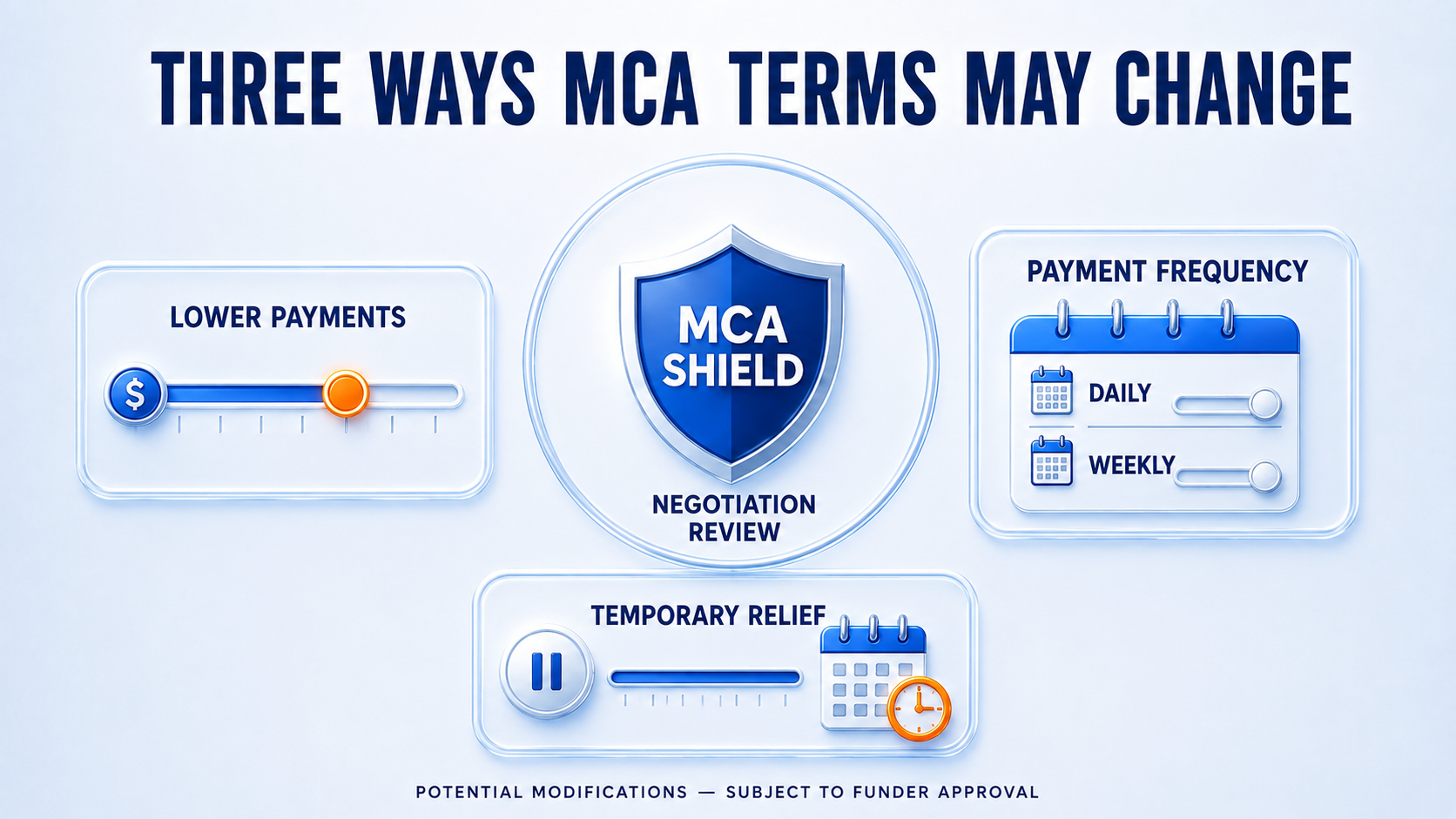
MCA negotiation may address several parts of the payment structure. The appropriate request depends on the agreement, the funder, the business’s payment history, and the financial problem that prompted the need for relief.
Some businesses need a long-term payment reduction, while others need a different withdrawal schedule or short-term relief. However, a funder does not have to approve every request. The proposed changes must provide meaningful cash-flow relief while remaining realistic for both parties.
Lower Daily or Weekly Payments
Reducing the payment amount is one of the most common goals of MCA negotiation. Frequent withdrawals can consume the cash needed for payroll, inventory, rent, taxes, and other operating expenses.
A lower payment may help the business:
- Retain more cash after each deposit
- Cover essential expenses on time
- Reduce the risk of overdrafts
- Avoid taking another advance
- Create a more predictable operating budget
- Continue making consistent payments
The requested amount should begin with an affordability review. The business should calculate its average revenue, essential expenses, existing obligations, and minimum working-capital needs before proposing a new payment.
For example, a daily payment may become unmanageable after revenue declines. Reducing that payment to an amount supported by current deposits could give the business enough room to maintain operations.
However, a lower daily or weekly payment does not automatically reduce the total obligation. The business may make smaller payments over a longer period unless the written agreement also changes the total amount required.
Changes to Payment Frequency or Withdrawal Structure
The timing of MCA withdrawals can create as much pressure as the payment amount. A business may generate enough monthly revenue to address the obligation but still struggle with automatic withdrawals that occur every business day.
In that situation, the negotiation may request:
- A change from daily to weekly payments
- Withdrawals on a specific day of the week
- A schedule that better matches customer payment cycles
- A fixed payment arrangement
- A different method for submitting payments
- Coordination with other active MCA obligations
A restaurant, for example, may receive most of its revenue over the weekend. A construction company may collect larger customer payments at specific project stages. A payment schedule that reflects the company’s actual deposit pattern may reduce the risk of low-balance days and returned withdrawals.
Changing the frequency does not always reduce the total amount collected during the month. Therefore, the business should calculate the full monthly effect before accepting a new schedule.
The goal is to create a structure that matches the company’s cash-flow pattern and leaves enough money available between payments. The written agreement should clearly identify the new amount, frequency, collection method, and effective date.
Temporary Relief During a Cash-Flow Disruption
Some businesses face a temporary disruption rather than a permanent revenue decline. Seasonal slowdowns, delayed customer payments, equipment problems, unexpected repairs, or the loss of a major contract can create short-term pressure.
A temporary modification may include:
- Reduced payments for a specific number of weeks
- A short pause in withdrawals
- Interest-only payments, if applicable to the arrangement
- Gradual payment increases as revenue recovers
- A review date for evaluating the company’s financial position
The request should explain the source of the disruption, the expected recovery period, and the amount the business can maintain during that time. Financial records can help demonstrate that the proposed arrangement reflects the company’s current position.
Temporary relief should also have a clear ending. Before accepting the modification, confirm what payment will resume, when it will begin, and whether the arrangement adds fees or changes any other terms.
A short-term reduction may provide valuable breathing room, but it will not solve a payment structure that remains unaffordable after the relief period ends. If the company expects the cash-flow problem to continue, it may need a longer-term modification.
A complete MCA negotiation guide should help the business distinguish between temporary relief and lasting payment changes. Choosing the appropriate request can prevent the company from accepting a short pause when it actually needs a sustainable long-term solution.
Negotiating Multiple MCA Agreements as One Cash-Flow Problem
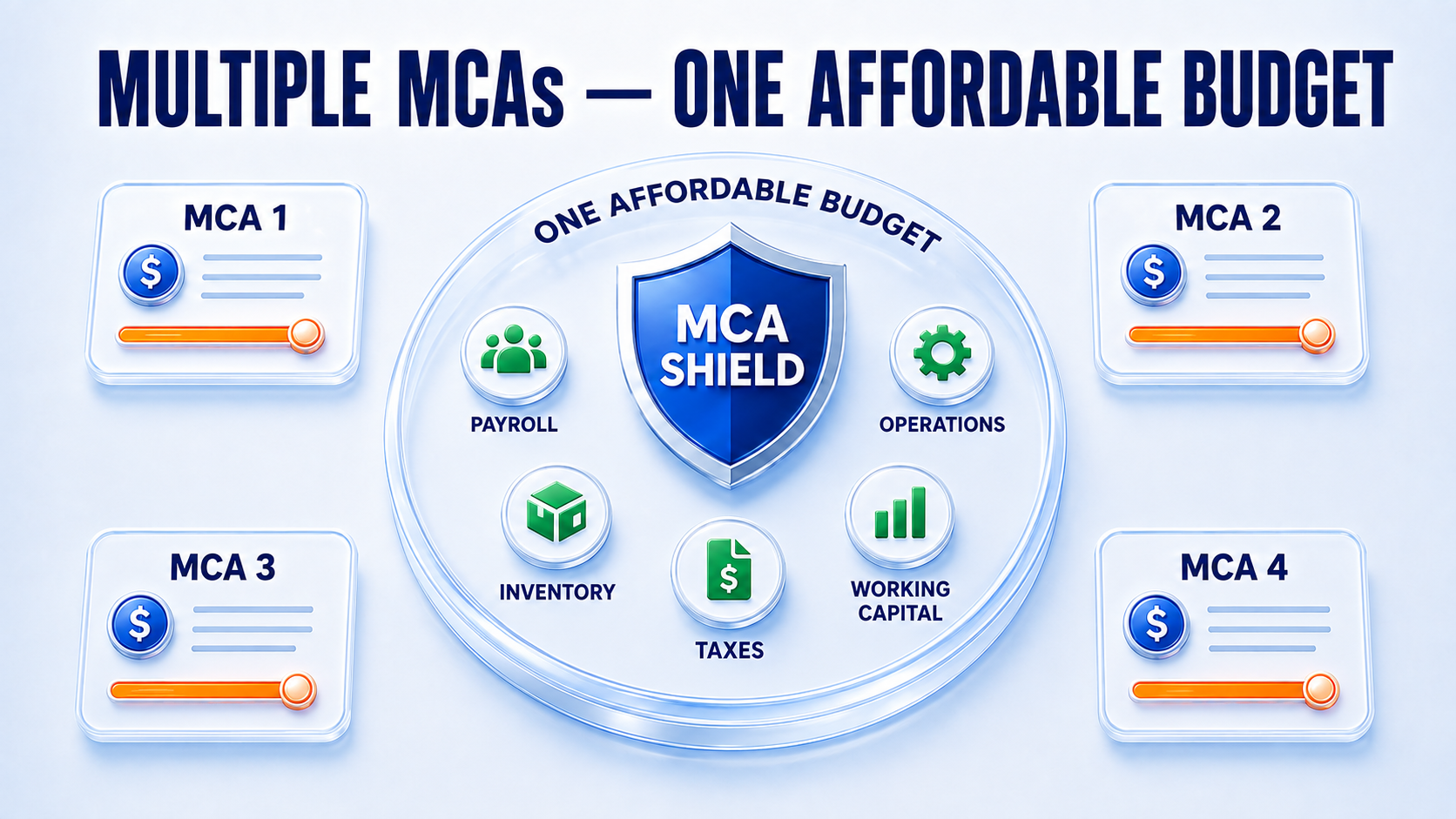
Each MCA agreement may involve a different funder, payment schedule, and remaining amount. However, every withdrawal affects the same business and reduces the cash available for the same operating expenses.
For that reason, a business with multiple advances needs more than several isolated negotiations. It needs one coordinated strategy that accounts for the total payment burden and the company’s ability to continue operating.
Why Separate Negotiations Can Create Conflicting Payments
Negotiating with one funder without considering the other obligations can produce a payment arrangement that appears affordable on its own but fails when combined with the remaining withdrawals.
For example, a business may determine that it can afford $4,000 per week for all MCA obligations. If it promises $2,500 to one funder and later offers $2,000 to another, the combined payments already exceed the available amount. Any additional MCA withdrawals would place the business even further beyond its budget.
Separate negotiations can also create conflicts involving:
- Payment amounts
- Withdrawal dates
- Temporary relief periods
- Required account balances
- Automatic payment methods
- Expiration dates for modified arrangements
One funder may schedule a weekly withdrawal on Monday, while another collects a large payment the following day. Even if the monthly total appears manageable, the timing could leave the account without enough money for payroll or inventory.
The business should evaluate every proposed arrangement based on its effect on the complete payment structure. A successful agreement with one funder should not make the remaining MCA payments impossible to maintain.
Decide Which MCA Agreements Require Attention First
A coordinated strategy does not always mean contacting every funder at the same moment. Some agreements may require attention sooner due to their payment size, account status, or effect on daily cash flow.
Consider the following factors when establishing priorities:
- The size of each daily or weekly payment
- The estimated remaining amount
- The number of payments still required
- The risk of repeated overdrafts
- Recent missed or returned payments
- Current collection communications
- The effect on payroll and essential expenses
- The expiration of any temporary payment arrangement
- The funder’s response to previous requests
The MCA with the largest remaining amount may not require the first discussion. A smaller obligation with an aggressive daily withdrawal could place greater pressure on the bank account. Likewise, an account facing immediate collection activity may require faster attention than an agreement that remains current.
Prioritizing one MCA does not mean ignoring the others. The business should continue to monitor every obligation and consider how one negotiation may influence the next.
This review helps the company focus its time and financial information where action may have the greatest immediate effect. It also prevents the loudest or most persistent funder from automatically controlling the entire strategy.
Coordinate Every Proposed Payment Around One Affordable Budget
Before making proposals, calculate the total amount the business can devote to all MCA payments after covering essential operating expenses. This figure should reflect average revenue, seasonal changes, payroll, taxes, inventory, rent, and necessary working capital.
The business can then allocate that amount among the active obligations. The allocation may consider:
- Each MCA’s current payment
- The estimated remaining amount
- The status of the agreement
- The length of the proposed arrangement
- The urgency of the financial pressure
- The business’s ability to maintain the combined payments
Suppose a company can reliably devote $800 per business day to all MCA obligations. Its proposals should keep the total daily burden at or below that amount. Promising $500 to one funder, $400 to another, and $300 to a third would create a $1,200 daily obligation that the business already knows it cannot sustain.
The budget should also leave a reasonable margin for slower sales and unexpected expenses. Using every available dollar for negotiated payments may recreate the same cash-flow pressure the business wanted to reduce.
A complete MCA negotiation guide must treat multiple agreements as one financial challenge. Although each funder will consider its own arrangement, the business needs a strategy that keeps the combined payment structure affordable.
The objective is not to secure the lowest possible payment from one funder. It is to create a coordinated structure that protects operations while addressing every MCA obligation responsibly.
MCA Negotiation Before and After Default
The timing of MCA negotiation can influence the available options, the urgency of the discussion, and the information a business needs to provide. Negotiating while payments remain current may allow more time to build a sustainable proposal. After default, the business may need to address collection activity while also pursuing modified terms.
Default does not make negotiation impossible. However, it can change the funder’s position and place additional pressure on the business.
Negotiating While Payments Are Still Current
A business does not need to wait for a missed payment before requesting relief. If current withdrawals have started interfering with payroll, inventory, taxes, or other essential expenses, the company may benefit from reviewing its options immediately.
Starting the discussion while payments remain current may offer several advantages:
- More time to organize financial records
- A consistent payment history
- Fewer returned withdrawals to address
- Less collection pressure
- More working capital available for operations
- Greater flexibility when evaluating possible terms
At this stage, the business can explain how its financial position has changed and present a payment proposal based on current revenue. Recent bank statements, payment records, and operating expenses can show why the existing payment has become difficult to maintain.
Early negotiation may also help the company avoid rushed decisions. Rather than accepting short-term terms without evaluating the complete financial impact, the business can calculate a sustainable payment that accounts for all active MCA agreements.
The funder does not have to approve a modification simply because the account remains current. Still, beginning the conversation before a missed payment may give the business more time to pursue a workable solution.
How Default Can Change the Negotiation Environment
Each MCA agreement defines default and explains the actions a funder may take after it occurs. A missed payment, returned withdrawal, blocked debit, closed account, or any event identified in the agreement may change the account’s status.
After default, the business may face:
- More frequent communication from the funder
- Demands for immediate payment
- Additional fees or charges permitted by the agreement
- Collection activity
- Less time to evaluate proposed terms
- Formal legal action in some situations
The funder may also request updated financial information or a larger payment before considering a modification. The business should review the agreement, recent notices, and complete payment history before responding.
Although the environment may become more urgent, the affordability calculation remains essential. Agreeing to an unrealistic payment under pressure can lead to another failed arrangement and further strain the business.
The proposal should still explain what the company can afford, why the current payment failed, and how the modified amount would support consistent payments. A well-organized request can help move the discussion away from short-term pressure and toward a practical payment structure.
Responding to Collection and Account Pressure
Collection communications can make business owners feel that they must respond immediately to every demand. Acting quickly matters, but the company should avoid making promises before reviewing its finances and understanding the requested terms.
Begin by gathering:
- The original MCA agreement
- Recent bank statements
- Payment records
- Emails and written notices
- Details of any previous modifications
- The names and contact information of the people communicating about the account
- Information about every other active MCA
Keep a written record of phone calls, payment requests, proposed arrangements, and account activity. Ask for important terms in writing, especially when a discussion involves a modified payment, temporary reduction, settlement amount, or deadline.
The business should also compare any proposed payment with its coordinated MCA budget. Collection pressure does not increase the amount the company can realistically afford.
Do not ignore formal notices or legal documents. If the business receives a lawsuit, court document, bank notice, or any formal demand it does not understand, it should seek guidance from a qualified attorney immediately.
A complete MCA negotiation guide should prepare business owners for discussions both before and after default. The strategy may change as pressure increases, but the central goal remains the same: pursue clear written terms that address the obligation without committing the business to another unsustainable payment structure.
Avoiding Mistakes That Can Weaken an MCA Negotiation
MCA negotiation requires accurate financial information, realistic payment expectations, and a coordinated strategy. A decision that appears helpful in the moment can weaken the business’s position or recreate the same payment pressure after a modification begins.
Avoiding common mistakes can help the company pursue terms that address the complete cash-flow problem rather than providing only temporary relief.
Taking Another Advance Before Reviewing Your Options
When cash becomes tight, another merchant cash advance may appear to provide the fastest solution. The new funding could cover payroll, replenish inventory, or prevent an immediate overdraft. However, it also introduces another payment that will reduce future revenue.
The business may use much of the new advance to cover:
- Existing MCA withdrawals
- Overdue operating expenses
- Negative bank balances
- Delayed payroll
- Supplier accounts
- Other short-term financial gaps
Once those expenses consume the funding, the company still has its original obligations plus the new withdrawal. This can make the total payment structure even more difficult to maintain.
Before accepting another advance, calculate its effect on daily, weekly, and monthly cash flow. Review the new payment alongside all current MCA payments and essential expenses.
The business should also examine available negotiation, restructuring, or settlement options before adding another obligation. New funding does not solve the underlying problem if the combined withdrawals remain unaffordable.
Accepting Verbal Promises or Unclear Terms
A phone conversation may help the parties discuss possible payment changes, but the business should not rely on an informal promise as the final agreement.
Verbal explanations can leave important questions unanswered:
- When does the new payment begin?
- How long will the modification last?
- Will the funder collect payments daily or weekly?
- Does the arrangement change the total amount required?
- Will fees or additional charges apply?
- What happens if a payment fails?
- What amount resumes after temporary relief ends?
Request written confirmation of the complete arrangement before relying on the modified terms. Then compare the document with the payment amount, schedule, and duration discussed during the negotiation.
The business should also review language that appears vague or conflicts with earlier communications. If a term remains unclear, request an explanation before accepting the agreement.
After the modification begins, monitor the bank account to confirm that withdrawals match the written schedule. Keep copies of the agreement, emails, payment records, and related notices.
Clear written terms help the business understand its responsibilities and reduce confusion after the negotiation ends.
Solving One MCA Payment While Ignoring the Rest
A reduced payment from one funder can provide immediate relief. However, the arrangement may fail to improve the company’s overall position if several other MCA withdrawals continue consuming the available cash.
For example, lowering one weekly payment by $1,000 will not stabilize the business if its other obligations exceed the remaining budget by $2,000. The company may still struggle with payroll, inventory, taxes, and operating expenses.
Before accepting a proposal from one funder, review how the new payment affects:
- The total daily or weekly MCA burden
- The payment schedule for other advances
- Available money for essential expenses
- The company’s minimum working-capital needs
- Upcoming payroll and tax deadlines
- The risk of another missed payment
Each negotiation should support one coordinated financial plan. The business should determine the total amount it can devote to MCA payments and ensure that the individual arrangements remain within that limit.
This approach becomes especially important when temporary modifications have different expiration dates. A payment structure that works today may become unaffordable when one or more withdrawals return to their previous amounts.
A reliable MCA negotiation guide should help the business evaluate the entire financial structure, not just the funder applying the most pressure. The strongest negotiation strategy creates terms that work together and leave the company with enough cash to continue operating.
Protect Your Business With a Long-Term MCA Negotiation Strategy
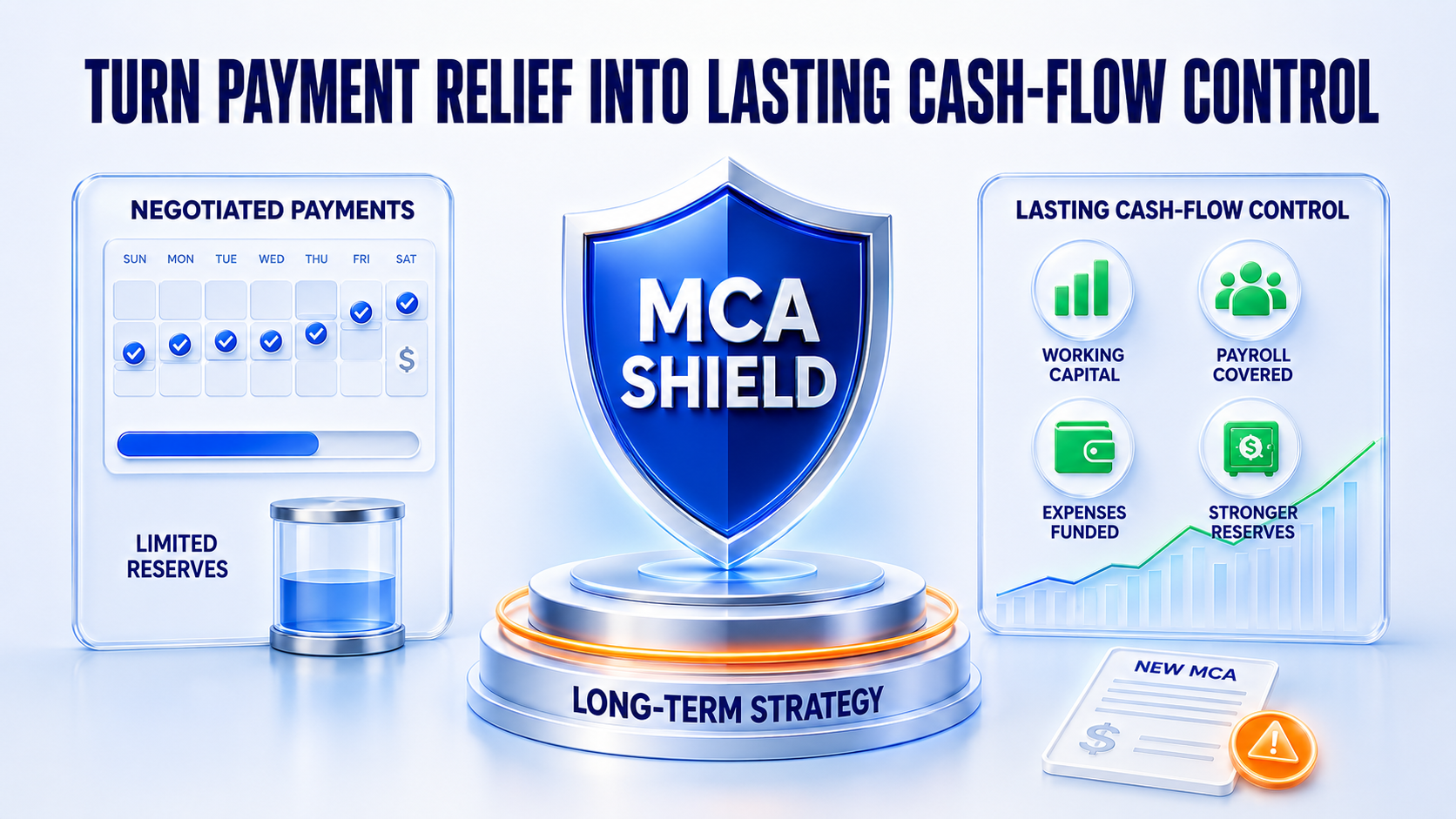
MCA negotiation should accomplish more than reducing the next withdrawal. A strong strategy should create enough financial room for the business to stabilize operations, rebuild working capital, and avoid returning to the same borrowing cycle.
Payment relief creates an opportunity. What the business does with that opportunity can determine whether the improvement lasts.
Rebuild Working Capital After Payment Relief
Lower or less frequent payments may leave more money available after customer deposits arrive. The business should direct part of that cash toward the expenses and reserves that support continued operations.
Priorities may include:
- Bringing payroll and essential bills current
- Replenishing critical inventory
- Paying important suppliers
- Addressing overdue taxes
- Completing profitable customer orders
- Repairing necessary equipment
- Establishing an operating reserve
The business does not need to rebuild everything at once. A practical recovery plan can establish small, consistent targets for restoring working capital.
For example, the company might set aside a specific percentage of weekly revenue until it has enough cash to cover payroll and essential expenses during a slow period. Even a modest reserve can reduce the risk that one delayed customer payment will disrupt the entire operation.
The company should also avoid treating newly available cash as excess money. That cash serves an important purpose: it helps the business operate without depending on another advance.
The true value of payment relief comes from using the additional financial room to strengthen the company’s foundation.
Monitor Cash Flow and Prevent Another MCA Cycle
A negotiated payment structure still requires regular monitoring. Revenue, expenses, and operating needs can change after the new arrangement begins.
Review the following information each week:
- Business deposits
- MCA withdrawals
- Payroll obligations
- Essential operating expenses
- Upcoming tax payments
- Supplier balances
- Available working capital
- Progress toward the cash-reserve goal
Compare the actual withdrawals with the written agreements. If a payment amount, frequency, or collection date does not match the negotiated terms, address the difference promptly.
The business should also watch for early warning signs of renewed pressure. Declining deposits, growing vendor balances, repeated overdrafts, and difficulty covering payroll may indicate that the current structure no longer matches the company’s financial position.
Most importantly, review the full cash-flow effect before accepting another MCA. New funding may address an immediate expense, but the additional withdrawal could undo the progress gained through negotiation.
A long-term plan should help the company rely more heavily on operating revenue and cash reserves. The objective is not only to complete the negotiated payments—it is to prevent the business from entering another cycle of advances and shrinking working capital.
Schedule a Free Consultation With MCA Shield
If daily or weekly MCA payments are limiting your ability to cover payroll, purchase inventory, or manage essential expenses, waiting may place even more pressure on your business.
MCA Shield can review your current payment structure, examine the combined effect of multiple advances, and help determine which negotiation options may fit your financial position. The review focuses on what your business can realistically afford while continuing to operate.
During your consultation, you can discuss:
- Your current MCA agreements
- Daily or weekly payment pressure
- Multiple MCA obligations
- Available working capital
- Missed or returned payments
- Potential negotiation strategies
This MCA negotiation guide can help you understand the process, but your business needs a strategy built around its specific agreements, revenue, and operating expenses.
Schedule a Free Consultation With MCA Shield today to review your MCA obligations and take the first step toward a more manageable payment structure.