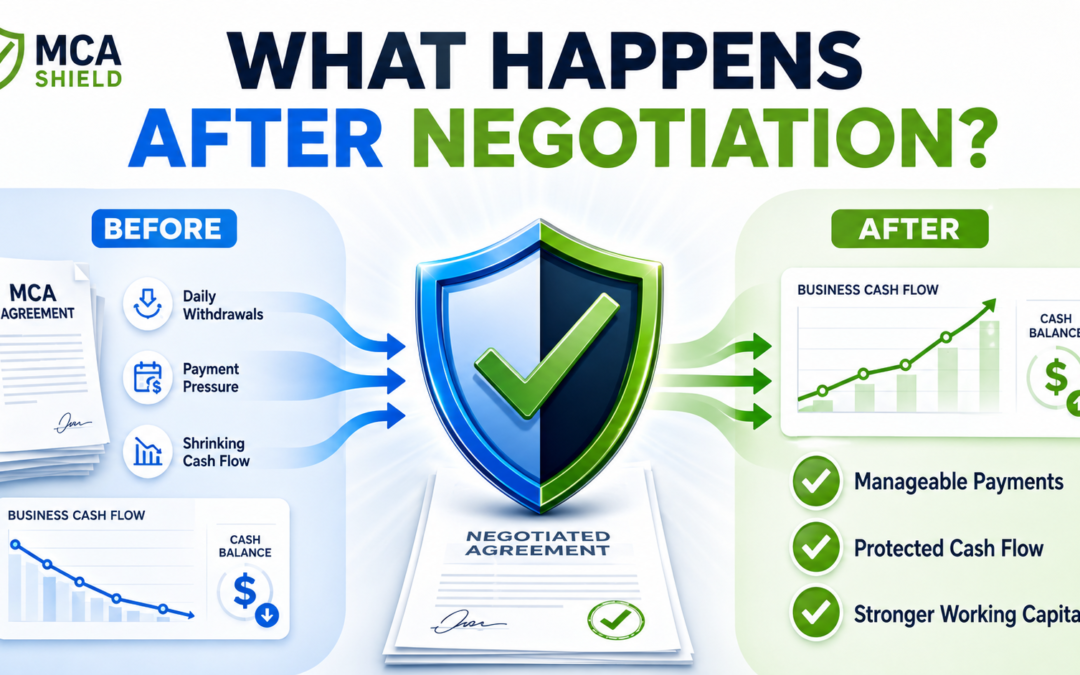
If you have reached an agreement with an MCA funder, you may be wondering what happens after MCA negotiation. Negotiating new terms can reduce immediate payment pressure, but the process does not end when an agreement is reached.
After negotiation, your business may need to adjust to new payment terms, different withdrawal amounts, or a revised payment schedule. It is also important to confirm that the negotiated terms are followed and that your cash flow begins moving in a healthier direction.
Understanding what comes next can help you protect working capital, stay current on the new agreement, and avoid returning to the same financial pressure. Here is what business owners should expect after MCA negotiation and how to manage the next stage successfully.
Schedule Your Free Consultation
What Happens After MCA Negotiation Is Complete?
Understanding what happens after MCA negotiation is important because reaching new terms is only the first step. Once the funder agrees to a revised arrangement, the business needs to understand exactly when the changes begin, how payments will be handled, and what obligations remain.
The new agreement may reduce immediate payment pressure, change the withdrawal schedule, or provide another way to make the obligation more manageable. However, the business should not assume that everything has changed simply because negotiations have ended.
Instead, the next step is to confirm the final terms and prepare for the new payment structure.
When the New Terms Take Effect
The negotiated terms should clearly state when the new payment amount or schedule begins. In some cases, the change may take effect with the next scheduled withdrawal. In others, the funder may provide a specific start date.
This detail matters because automatic withdrawals may already be scheduled. Therefore, business owners should continue watching their bank activity until they confirm that the new payment terms are being applied correctly.
For example, if the agreement reduces a daily withdrawal, verify that the new amount appears when expected. If the payment frequency changes, make sure the old withdrawal schedule has stopped.
Businesses should also plan their cash flow around the revised payment structure. A lower or more predictable payment may create additional room for payroll, inventory, taxes, rent, and other operating expenses.
However, that additional cash should be managed carefully. The goal after negotiation is not simply to spend more. It is to use the improved payment structure to stabilize the business and rebuild working capital.
What the Business Should Receive in Writing
One of the most important steps after MCA negotiation is making sure the final agreement is documented in writing.
The written terms should clearly explain what the business and the MCA funder agreed to. Depending on the arrangement, this may include:
- The new payment amount
- Payment frequency
- The date the revised terms begin
- Any changes to the remaining obligation
- Payment deadlines or requirements
- Any conditions connected to the agreement
Business owners should keep copies of the agreement, emails, payment confirmations, and other communication related to the negotiation.
Written documentation creates a clear record of the arrangement. It also makes it easier to compare future withdrawals or payment requests with the terms that were actually negotiated.
Most importantly, review the agreement before moving forward. If something in the written terms does not match what was discussed, it is better to address the issue before the new payment arrangement begins.
Once the terms are confirmed, the business can begin focusing on the next stage: managing the revised MCA payments while rebuilding healthier cash flow.
How Your MCA Payments May Change After Negotiation
One of the biggest questions business owners have is how their payments may change after an MCA agreement is renegotiated. In many cases, the goal of negotiation is to create a payment structure that is more realistic for the business’s current cash flow.
The exact outcome will depend on the funder, the agreement, and the financial condition of the business. However, negotiation may lead to lower payment amounts, a different payment schedule, or changes to how withdrawals are collected.
These changes can help reduce immediate pressure, but the business still needs to make sure the new arrangement fits within its operating budget.
Lower or More Manageable Payments
A negotiated agreement may reduce the amount being withdrawn from the business on a regular basis. This can make the MCA obligation easier to manage alongside payroll, rent, inventory, taxes, utilities, and other essential expenses.
Lower payments may also help preserve more working capital from each day or week of revenue. That can be especially important for businesses that were struggling to keep enough cash available for normal operations.
However, a lower payment does not always mean the total obligation has been reduced. In some cases, the business may simply be given more time to repay the remaining balance.
For that reason, business owners should look at the entire revised agreement instead of focusing only on the new payment amount.
The key question is whether the new payment fits into the company’s cash flow without creating another financial shortage. A successful arrangement should help the business meet the negotiated payment while still covering essential operating costs.
Changes to Payment Frequency or Withdrawal Structure
Negotiation may also change how often MCA payments are withdrawn.
For example, a business that was making daily ACH payments may negotiate a different withdrawal schedule. Depending on the agreement, payments could become less frequent or be structured in a way that better matches the company’s revenue cycle.
A change in payment frequency can make cash flow easier to manage because the business has more time between withdrawals to collect revenue and prepare for upcoming expenses.
The funder may also change the amount collected during each withdrawal or revise other parts of the payment structure. Whatever the arrangement, the new terms should be clearly documented before the revised schedule begins.
Once the changes take effect, business owners should monitor their bank account carefully. Confirm that the correct amount is being withdrawn and that payments occur on the agreed schedule.
Even small differences can affect working capital when a business is operating with limited cash reserves. Keeping a close watch on the new withdrawal structure can help identify problems early and protect the progress made through MCA negotiation.
What Happens to Daily ACH Withdrawals After Negotiation?
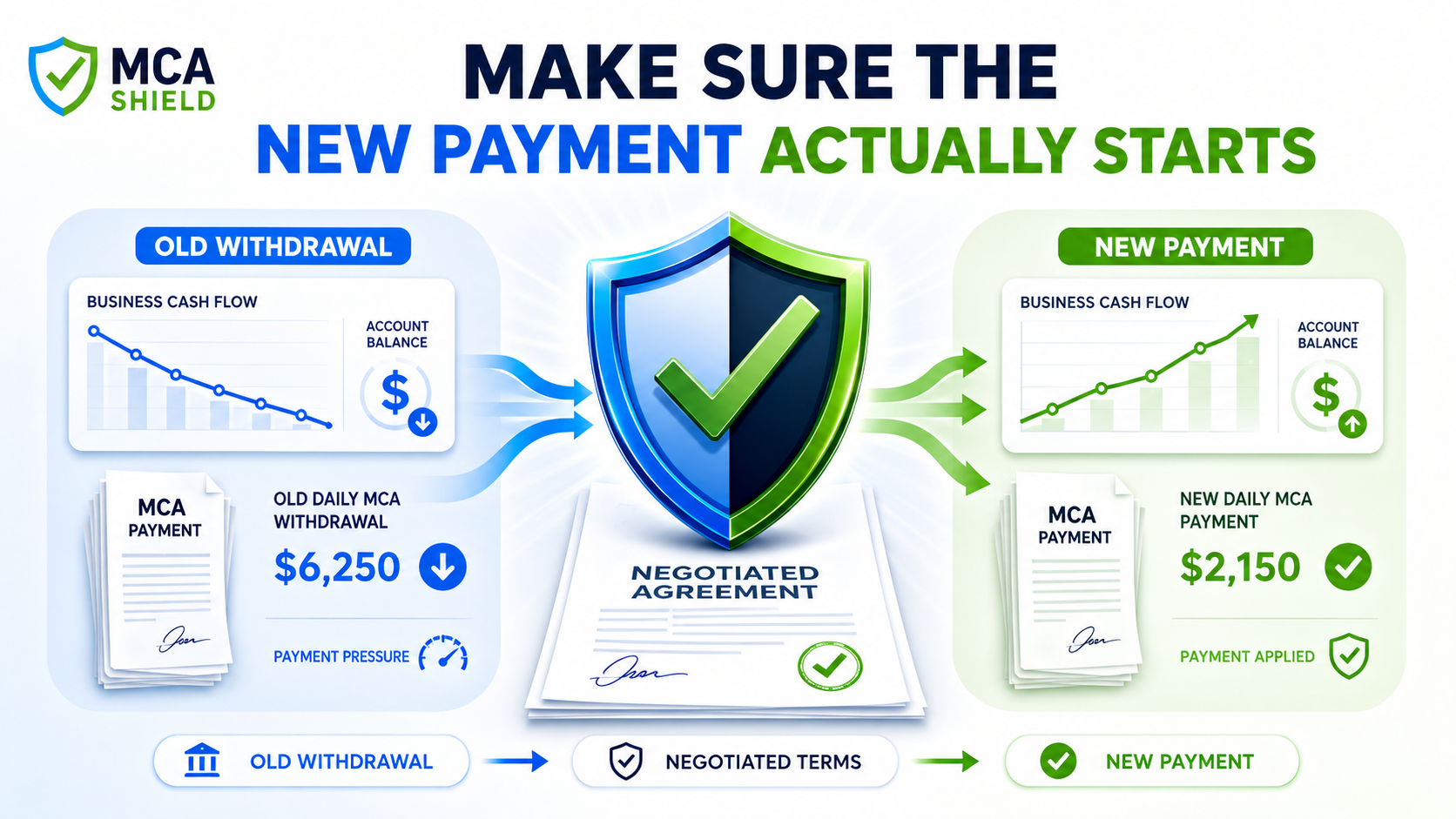
For many businesses, daily ACH withdrawals are one of the biggest sources of cash-flow pressure before an MCA negotiation takes place. When new terms are reached, the withdrawal amount, timing, or frequency may change.
The important thing is to make sure the old payment structure does not continue after the revised agreement begins.
Once the new terms take effect, business owners should compare each withdrawal with the negotiated agreement. This helps confirm that the funder is following the updated payment structure and that the business is not losing more cash than expected.
Confirming the New Withdrawal Amount
After negotiation, the business should know exactly how much will be withdrawn and when the change will begin.
If the previous ACH debit was reduced, review the first several withdrawals carefully. Make sure the amount matches the written agreement and begins on the correct date.
For example, if a daily withdrawal was lowered from one amount to another, the business should not assume the adjustment happened automatically. Confirm the change by reviewing actual bank activity.
It is also important to understand whether the payment amount will remain fixed or may change under certain conditions. The written agreement should explain how the revised payment structure works.
Keeping a simple record of withdrawals can also help. Track the date, amount, and funder connected to each debit. This can be especially useful when a business has more than one MCA obligation.
Careful monitoring helps ensure that the cash-flow relief created through negotiation is actually reflected in the business bank account.
Watching Your Bank Account for Incorrect Debits
Even after new terms are agreed upon, business owners should continue to watch their bank account closely.
An incorrect debit could include the old withdrawal amount, an unexpected payment, a duplicate debit, or a withdrawal on a date that does not match the revised schedule.
If something appears incorrect, compare the transaction with the written agreement and payment records. Then address the issue quickly with the appropriate funder or representative.
Do not let several unexpected withdrawals occur before reviewing the problem. When cash reserves are already tight, even one incorrect ACH debit can affect payroll, operating expenses, inventory, or other essential obligations.
Businesses should also keep copies of bank statements, payment confirmations, emails, and written communication related to the revised arrangement.
The goal after MCA negotiation is to create a more predictable payment structure and healthier cash flow. Monitoring ACH withdrawals helps protect that progress and allows the business to catch problems before they create additional financial pressure.
How Cash Flow Can Change After MCA Negotiation
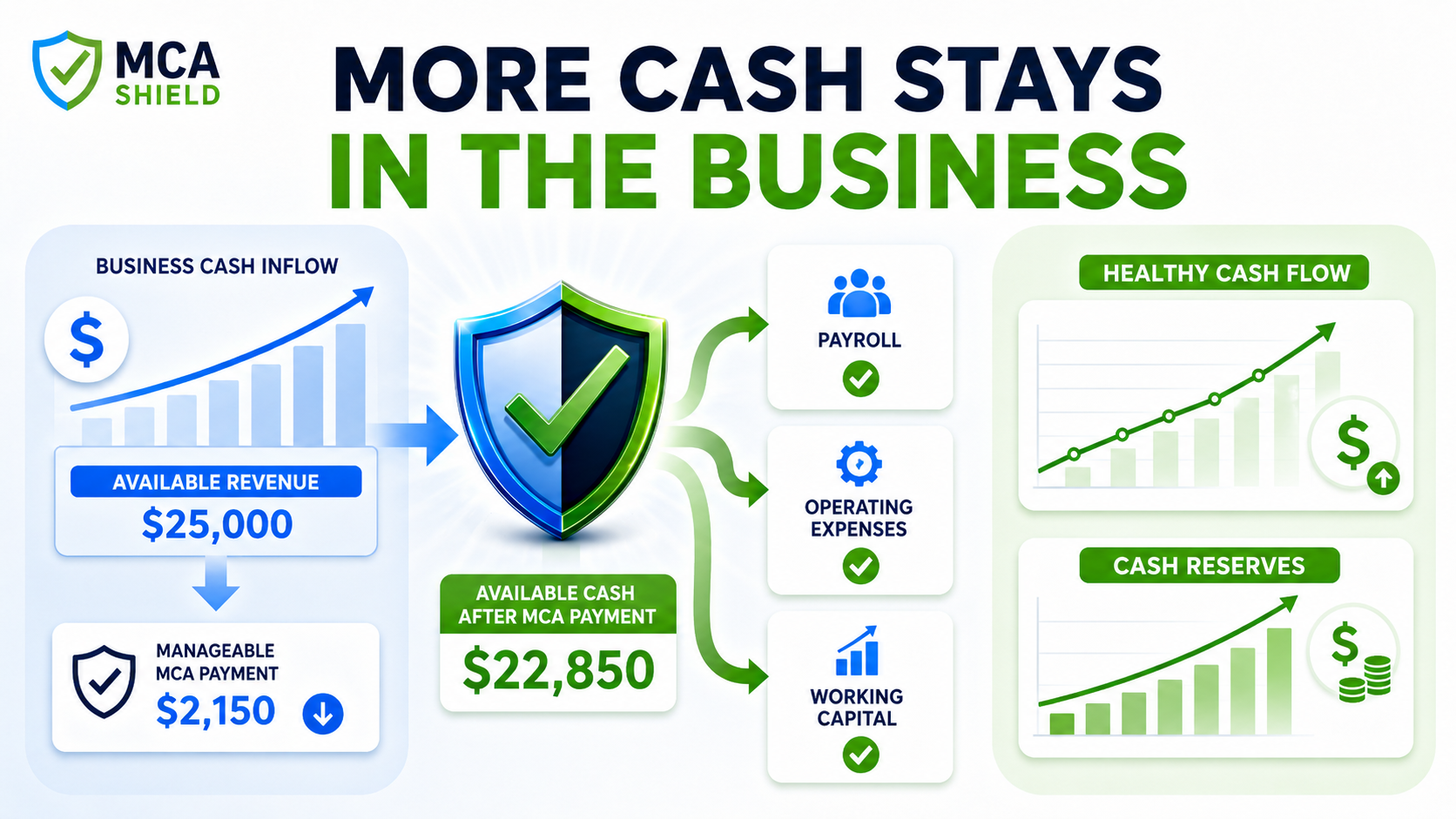
One of the most important changes a business may notice after MCA negotiation is an improvement in day-to-day cash flow. If payments are reduced or restructured, more revenue may remain available for normal business operations.
That does not mean the financial pressure disappears overnight. However, a more manageable payment structure can give the business an opportunity to stabilize expenses, rebuild working capital, and plan ahead more effectively.
The key is to use the improved cash flow carefully instead of allowing new expenses to consume it immediately.
Rebuilding Working Capital
Working capital helps a business cover its short-term operating needs. When MCA withdrawals take a large portion of daily or weekly revenue, that working capital can shrink quickly.
After MCA negotiation, a lower payment burden may allow the business to keep more cash available. Those funds can help support inventory, supplies, payroll, rent, utilities, taxes, and other necessary expenses.
Rebuilding working capital should usually happen gradually. Rather than treating the extra cash as available for new spending, the business can begin creating a stronger financial cushion.
Even a modest reserve can make a difference when revenue slows or an unexpected expense appears.
Business owners should also review their cash flow regularly. Tracking money coming in and going out can help show whether the negotiated payment structure is actually improving the company’s financial position.
The goal is to turn temporary payment relief into greater financial stability over time.
Prioritizing Payroll and Essential Operating Expenses
After MCA negotiation, the business should decide where available cash needs to go first.
For most companies, payroll and essential operating expenses should remain a priority. These costs keep the business functioning and help protect its ability to generate future revenue.
Important expenses may include:
- Employee payroll
- Rent or lease payments
- Utilities
- Inventory and supplies
- Taxes
- Insurance
- Essential vendor payments
A more manageable MCA payment can make it easier to cover these obligations without constantly shifting money from one expense to another.
However, the business should still avoid taking on unnecessary costs too quickly. Improving cash flow is most valuable when it creates room to meet current obligations and strengthen the business’s financial foundation.
By protecting working capital and prioritizing essential expenses, a business can make better use of the relief created through MCA negotiation and reduce the risk of falling back into the same cash-flow pressure.
What Happens When You Have Multiple MCAs After Negotiation?
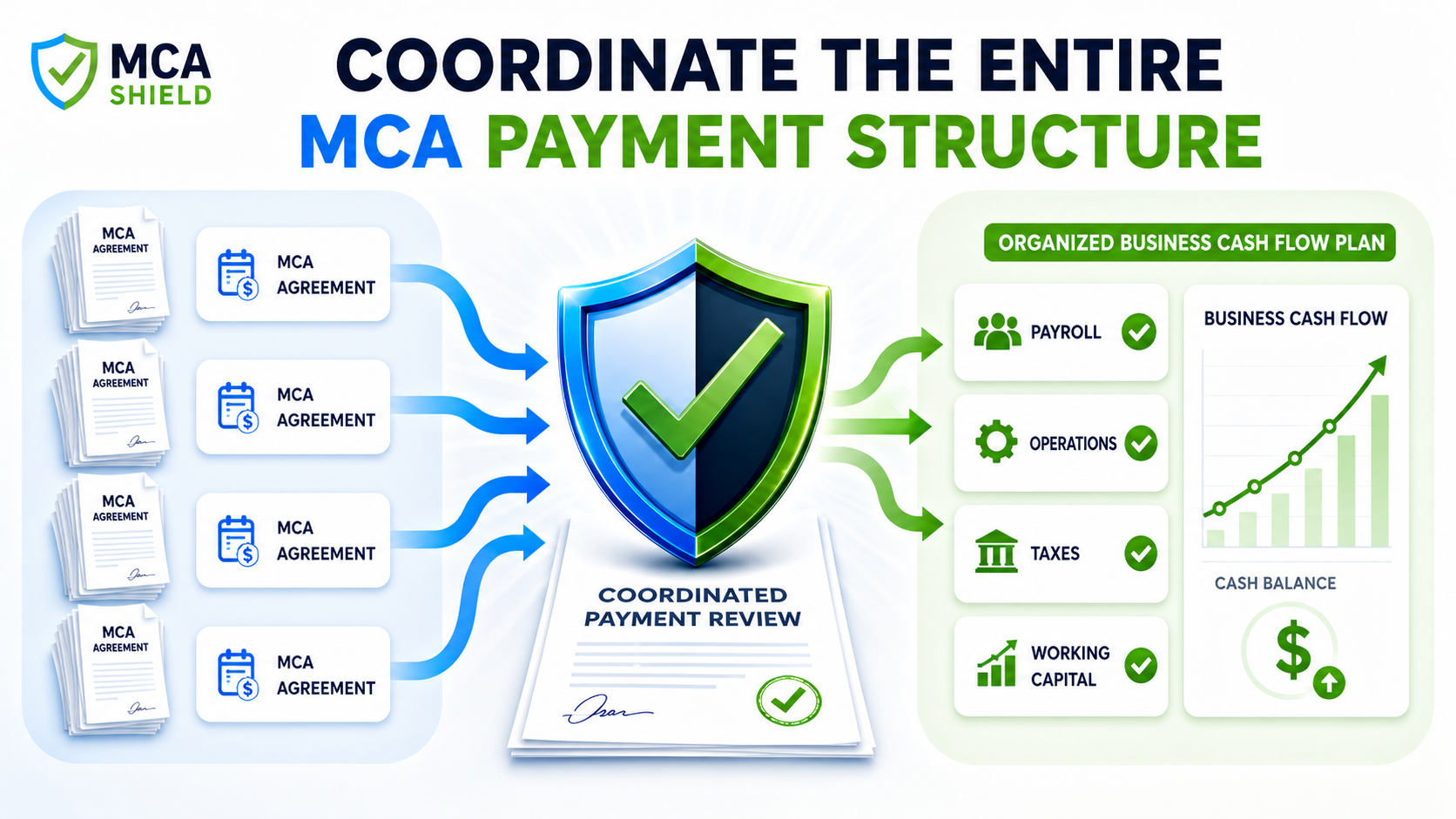
When a business has more than one merchant cash advance, the situation can remain complicated even after one agreement is negotiated. Each MCA may have its own payment amount, withdrawal schedule, remaining balance, and funder requirements.
That is why businesses with multiple advances need to look at the entire payment picture after negotiation.
A new agreement with one funder may create relief, but the business still has to make sure the combined payments remain manageable. The goal should be to create a structure that supports cash flow across all MCA obligations, not just one of them.
Coordinating Payments Across Multiple Funders
After MCA negotiation, business owners should review every active MCA payment together.
Start by identifying:
- How much each funder is withdrawing
- How often each payment is collected
- When each revised agreement begins
- The total amount leaving the business each week
- How much cash remains for essential expenses
This combined view is important because every payment comes from the same pool of business revenue.
For example, a reduced payment with one MCA company may create more breathing room. However, that improvement may be limited if two or three other funders are still making large withdrawals.
A coordinated approach helps the business understand its total MCA payment burden and determine whether the revised structure is actually sustainable.
It can also make cash-flow planning easier. When payment dates and amounts are clearly tracked, the business can better prepare for payroll, taxes, inventory, rent, and other operating costs.
Making Sure One Agreement Does Not Create Pressure Elsewhere
One of the biggest risks with multiple MCAs is solving one payment problem while creating another.
A negotiated agreement may seem affordable when viewed by itself. However, the business must consider how that payment fits with every other MCA obligation.
For example, agreeing to a payment that uses most of the available cash may leave too little for another funder or for essential business expenses. That can quickly create a new cycle of payment pressure.
Before accepting revised terms, the business should ask a broader question:
Can the company afford this payment along with every other MCA obligation and still operate normally?
That question is especially important when several funders are involved.
The strongest post-negotiation strategy is one that keeps the entire payment structure in balance. Businesses should continue monitoring total withdrawals, available working capital, and upcoming operating expenses as the new agreements take effect.
By coordinating payments across multiple funders, a business has a better chance of protecting the progress made through MCA negotiation and avoiding another cash-flow crisis.
What If an MCA Funder Does Not Follow the Negotiated Agreement?
After MCA negotiation, the business should expect the funder to follow the payment amount, schedule, and other terms that were agreed upon. If the actual withdrawals or payment demands do not match the written agreement, the issue should be reviewed quickly.
Problems can happen for different reasons. An old withdrawal schedule may remain active, a payment amount may not be updated correctly, or communication between the funder and payment processor may cause confusion.
Whatever the reason, the business should avoid ignoring the problem. Even a small mistake can create new pressure when cash flow is already tight.
Documenting Payments and Communication
Strong documentation is one of the best ways to protect the business after MCA negotiation.
Keep copies of:
- The final negotiated agreement
- Emails and written communication
- Bank statements
- ACH withdrawal records
- Payment confirmations
- Any notices from the MCA funder
It is also helpful to keep a simple record of when the business contacted the funder and what was discussed.
If a withdrawal does not match the revised agreement, compare the transaction with the written terms. Having clear records makes it easier to explain the issue and show exactly where the problem occurred.
Businesses with multiple MCAs should be especially careful about documentation. When several funders are withdrawing from the same account, accurate records can help identify which funder made each debit and whether the amount was correct.
Addressing Problems Before They Escalate
If the funder does not appear to be following the negotiated agreement, the business should address the issue as soon as possible.
Start by confirming the details. Review the written agreement, the payment schedule, and the bank transaction in question. Then contact the appropriate funder or representative and explain the difference clearly.
Whenever possible, keep important communication in writing. This creates a record of the issue and any response or correction that follows.
Do not wait until several incorrect withdrawals or missed payment expectations create a larger problem. Delays can affect payroll, working capital, vendor payments, and other operating expenses.
The business should also continue making any payments that are clearly required under the negotiated terms unless professional guidance says otherwise.
The goal after MCA negotiation is to maintain a clear and predictable payment arrangement. Careful documentation and quick communication can help resolve problems early and protect the financial progress the business has already made.
Mistakes to Avoid After Negotiating MCA Debt
Reaching new terms with an MCA funder can reduce immediate financial pressure. However, the decisions made afterward can determine whether that relief lasts.
After negotiating MCA debt, the business should avoid choices that could recreate the same cash-flow problems that led to negotiation in the first place.
The goal is to protect the new payment structure, rebuild financial stability, and give the business time to recover.
Taking Another Merchant Cash Advance Too Soon
One of the biggest mistakes after MCA negotiation is taking another merchant cash advance before the business has had time to stabilize.
A new advance may provide quick access to cash, but it also creates another payment obligation against future revenue. If the business is already making payments under a negotiated agreement, adding another MCA can quickly increase the total withdrawal burden.
The extra funding may appear to solve a short-term problem. However, the new payments could reduce the cash available for:
- Payroll
- Rent and utilities
- Inventory
- Taxes
- Vendor payments
- Existing MCA obligations
Before considering another advance, review whether the business can meet its current expenses without creating additional debt.
If cash flow is still tight, the better priority may be to rebuild working capital and strengthen cash reserves before taking on another major obligation.
Ignoring the Business’s New Cash-Flow Limits
Negotiation may lower payment pressure, but it does not automatically give the business unlimited room to spend.
The revised payment structure should be treated as an opportunity to understand the company’s real cash-flow limits.
Business owners should know how much revenue is coming in, how much is leaving, and how much needs to remain available for essential expenses. A new budget can help identify what the business can realistically afford each week or month.
This is especially important when revenue changes throughout the year.
If the business begins increasing expenses as soon as MCA payments become more manageable, the financial benefit of negotiation can disappear quickly.
Instead, use the improved cash flow to create more stability. Protect enough cash for operating expenses and begin building a reserve whenever possible.
A stronger financial cushion can make it easier to handle unexpected expenses without immediately searching for another source of high-cost funding.
Missing Payments Under the New Agreement
Once new terms are accepted, it is important to follow the negotiated payment schedule.
Missing payments can put the revised arrangement at risk and may lead to renewed collection activity or additional disputes with the funder. Depending on the agreement, missed payments may also affect the concessions that were negotiated.
Business owners should know:
- The exact payment amount
- The payment due dates
- How payments will be collected
- Which account will be debited
- What happens if a payment cannot be made
Keeping upcoming payments on a cash-flow calendar can help prevent surprises.
If the business expects that it may not be able to make a required payment, it is usually better to address the issue early rather than wait until the payment is missed.
After negotiating MCA debt, consistency matters. By avoiding new debt, respecting cash-flow limits, and staying current on the revised agreement, the business can give itself a better opportunity to build lasting financial stability.
How to Protect Your Business After MCA Negotiation
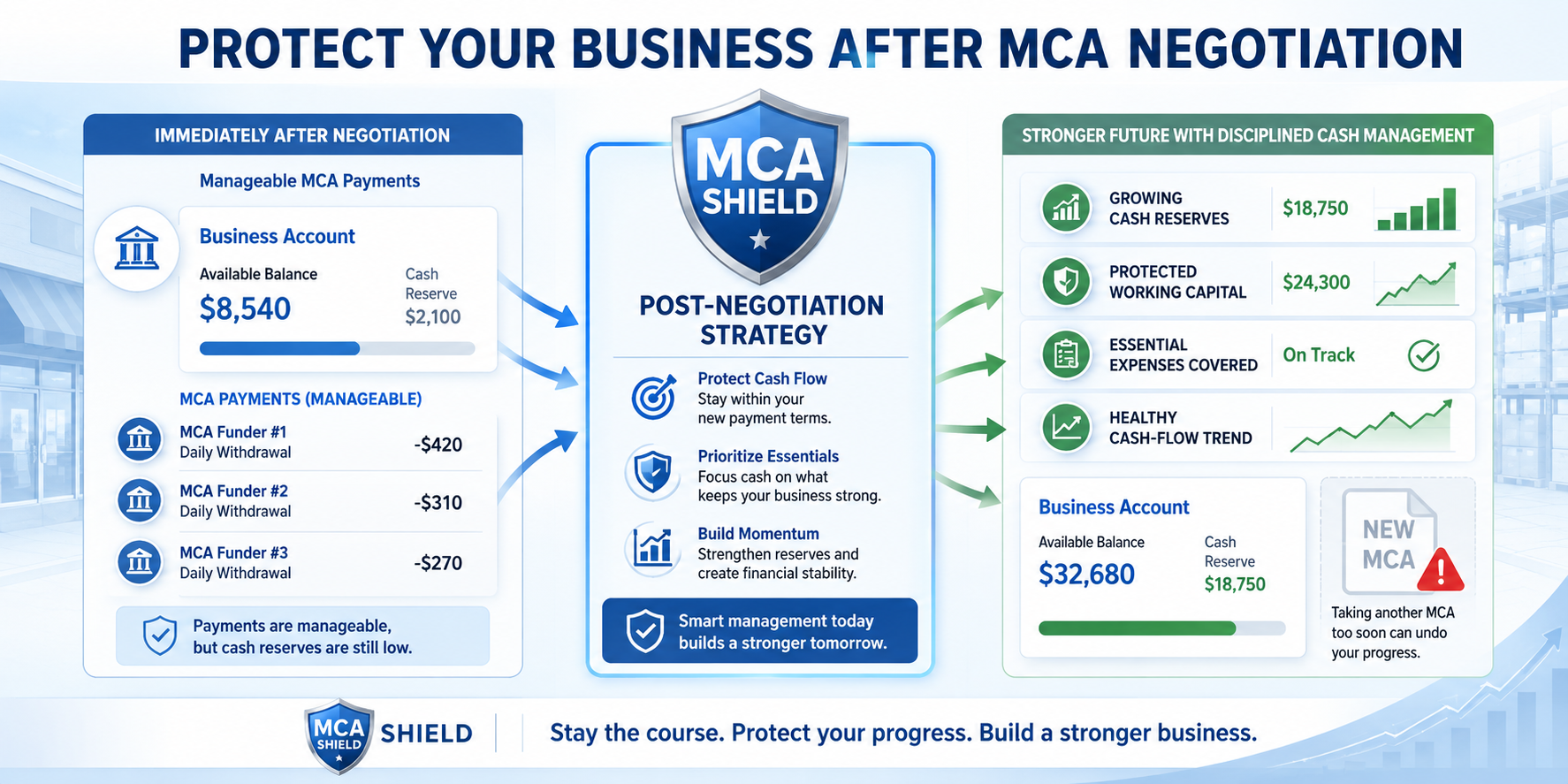
After MCA negotiation, the next priority is protecting the progress the business has made. A more manageable payment structure can create valuable breathing room, but that relief should be used carefully.
The strongest next step is to focus on stability, cash reserves, and long-term cash-flow planning. This can help reduce the risk of returning to the same financial pressure that existed before negotiation.
Build Cash Reserves Before Taking on New Obligations
If negotiation leaves more cash available each week or month, consider using part of that money to build a reserve.
Even a modest cash cushion can help the business handle:
- Unexpected repairs
- Seasonal revenue changes
- Slow-paying customers
- Inventory needs
- Payroll fluctuations
- Emergency operating expenses
Building reserves can also reduce the need to rely on another merchant cash advance when an unexpected expense appears.
The goal is not to keep unnecessary cash sitting idle. Instead, the business should create enough financial flexibility to absorb normal setbacks without immediately adding another payment obligation.
Before taking on new financing, review whether the business can comfortably afford the additional payment while still meeting the terms of the negotiated MCA agreement.
Review Your MCA Strategy as Cash Flow Improves
Cash flow can change over time, so the business should continue reviewing its MCA strategy after negotiation.
As revenue improves, look at the company’s remaining MCA obligations, payment amounts, operating expenses, and available working capital. This makes it easier to see whether the business is moving toward a stronger financial position.
If multiple MCAs are involved, review them together rather than one at a time. A payment that appears manageable on its own may still create pressure when combined with other obligations.
Regular reviews can also help the business decide where additional cash should go. Depending on the situation, the priority may be building reserves, paying essential expenses, reducing outstanding obligations, or strengthening working capital.
The important thing is to make decisions based on the entire cash-flow picture.
Get Help Before Payment Pressure Returns
Businesses do not need to wait for another financial crisis before reviewing their MCA situation.
Warning signs may include:
- Working capital beginning to shrink again
- Difficulty covering payroll or essential expenses
- Using one source of funding to cover another payment
- Falling behind with vendors or taxes
- Considering another MCA simply to maintain cash flow
- Concern about making payments under the negotiated agreement
Addressing these problems early can provide more options than waiting until the business is already missing payments.
If MCA obligations begin putting pressure on cash flow again, consider reviewing the situation with an experienced professional. A complete review can help identify what is creating the strain and whether additional negotiation, restructuring, or another strategy may be appropriate.
Protecting the business after MCA negotiation requires more than making the new payments. It means using the opportunity to rebuild cash reserves, strengthen working capital, and create a more sustainable financial structure.
If your business is still struggling with MCA payments, schedule a free consultation with MCA Shield to review your current obligations and explore possible options.