
ClickCease
Explore options for your business’s MCA payments.Call (918) 608-0117

Can You Restructure MCA Debt Before Defaulting?

Yes, MCA debt restructuring before default may be possible. In fact, you do not always have to miss payments before reviewing your options. If daily or weekly withdrawals are putting pressure on your cash flow, acting early may give your business more time to find a manageable solution.

Merchant cash advance payments can become difficult even when a business remains current. Revenue may decline, operating costs may rise, or several advances may withdraw payments at the same time. As a result, the business may struggle to cover payroll, taxes, inventory, and other essential expenses.

You should not have to wait for a complete financial crisis before asking for help. An early review can identify the payment pressure and determine whether restructuring may protect the cash your business needs to operate.

Why You Do Not Have to Wait for an MCA Default

Default is not the starting point for MCA debt restructuring. A business can seek help while it is still making payments but recognizes that the current schedule is becoming unsustainable.

Early warning signs may include:

  • Declining cash reserves
  • Frequent overdrafts or insufficient funds
  • Difficulty covering payroll or taxes
  • Delayed payments to vendors
  • Heavy daily or weekly ACH withdrawals
  • Using new financing to cover existing MCA payments

These problems often develop before the first missed payment. Therefore, waiting for a formal default may worsen the financial pressure.

A professional review can examine your MCA agreements, remaining balances, current withdrawals, business revenue, and essential expenses. This information helps determine whether the existing payment structure matches what the business can realistically afford.

How Early Restructuring Can Protect Your Business

The main purpose of restructuring is to create a payment arrangement that better reflects the company’s current financial position. Depending on the circumstances, this may involve seeking lower payments, a different payment frequency, or a longer repayment period.

A more manageable structure may help the business retain enough working capital to cover:

  • Employee payroll
  • Rent and utilities
  • Taxes and insurance
  • Inventory and supplies
  • Equipment and vehicle expenses
  • Other essential operating costs

However, a lower payment alone does not guarantee a successful outcome. The proposed structure must leave the business with enough cash to continue operating. It is also important to review the total cost, repayment period, fees, and agreement terms before accepting any arrangement.

Early action may also reduce the temptation to take another merchant cash advance. Adding new debt may provide short-term cash, but it can create another payment obligation and place even more pressure on future revenue.

Why Acting Before Missed Payments May Improve Your Options

A business that acts before missing payments may have more time to gather records, evaluate its finances, and develop a clear restructuring strategy. It may also avoid some of the complications that can follow default, such as collection demands, disrupted withdrawals, UCC enforcement, or possible legal action.

Waiting until cash flow reaches the breaking point can limit flexibility. By that stage, the business may already have depleted its reserves, delayed essential expenses, or taken additional financing.

MCA debt restructuring before default allows the business to address payment pressure while it may still have operating cash and negotiating flexibility. Although no specific result is guaranteed, acting early can provide a stronger position to review available options and protect the future of the business.

Schedule Your Free Consultation

What Does It Mean to Restructure MCA Debt?

To restructure MCA debt means changing the current payment arrangement to make it more manageable for the business. The goal is usually to reduce immediate payment pressure and protect the working capital needed for daily operations.

A restructuring strategy may consider the business’s revenue, essential expenses, current withdrawals, and total MCA obligations. It should also examine whether the business can continue making payments without falling behind on payroll, taxes, rent, inventory, or other necessary costs.

MCA debt restructuring before default may give a business more time to evaluate these factors. However, the exact options will depend on the MCA agreements, the funders involved, and the company’s financial condition.

How MCA Debt Restructuring May Change Your Payments

An MCA restructuring may change how much the business pays and how often payments occur. Depending on the circumstances and the funder’s cooperation, a proposed arrangement could include:

  • Lower daily or weekly payments
  • A different withdrawal frequency
  • A longer payment period
  • A temporary payment adjustment
  • A payment schedule based on current cash flow
  • A coordinated strategy for multiple MCA obligations

Reducing the payment amount may improve short-term cash flow. Still, a lower payment does not always reduce the total amount owed. Extending the payment period could keep the obligation active longer. Additional fees or costs may also apply.

Therefore, business owners should review the new payment amount, repayment period, total expected cost, and remaining working capital. A payment is only manageable if the business can make it while continuing to cover essential operating expenses.

Restructuring vs. Refinancing or Taking Another Advance

Restructuring focuses on changing the terms or payment structure of existing MCA obligations. Refinancing generally replaces existing obligations with new financing. Although both options may reduce immediate payments, they work differently.

A new financing arrangement may combine several payments into one. However, it can also create a new balance, new fees, and a longer repayment period. The business may receive temporary relief while paying more over time.

Taking another merchant cash advance is different from both restructuring and traditional refinancing. A new advance adds another obligation based on future business revenue. If the existing MCAs remain active, the business could face several withdrawals at once.

This practice is often called MCA stacking. It may provide quick capital, but it can increase the percentage of revenue committed to payments. Before accepting another advance, the business should compare its total cost and payment burden with available restructuring options.

The Difference Between Restructuring and Settlement

Restructuring and settlement are two separate forms of MCA relief. Restructuring usually seeks to make the payment arrangement more manageable while addressing the existing obligation. The business may continue paying under modified terms or a negotiated schedule.

A settlement typically involves negotiating to resolve the obligation for an agreed amount. It may become relevant when the business is experiencing severe financial hardship and cannot meet the current payment terms. Settlement can also involve different risks, documentation requirements, and potential legal or tax consequences.

The right approach depends on the business’s financial position. A company that still generates enough revenue to support modified payments may consider restructuring. A business facing deeper hardship may need to review settlement or other relief strategies.

Before choosing an option, examine the affordable payment level, total obligation, business cash flow, essential expenses, and potential consequences. The best solution should address the MCA pressure without creating another payment structure the business cannot sustain.

Warning Signs You May Need to Restructure MCA Debt

Business owner reviewing warning signs to restructure MCA debt before default, including daily withdrawals, shrinking cash reserves, and payroll pressure

MCA payments can become unmanageable before a business officially defaults. Recognizing the warning signs early may give you more time to evaluate your finances and consider MCA debt restructuring before default.

A temporary decline in revenue does not always mean the business is failing. However, cash shortages may indicate that the current payment structure no longer matches the company’s cash flow. If MCA withdrawals are interfering with essential expenses, it may be time to review your options.

Daily or Weekly Withdrawals Are Straining Cash Flow

Merchant cash advances often require automatic daily or weekly withdrawals. These payments may feel manageable when revenue is strong. However, they can quickly create problems when sales decline or operating costs increase.

Common warning signs include:

  • Frequent overdrafts or insufficient-funds fees
  • A declining bank balance after each withdrawal
  • Difficulty maintaining a reasonable cash reserve
  • Uncertainty about whether upcoming payments will clear
  • Several MCA funders withdrawing money from the same account
  • Less cash available for normal business operations

Repeated withdrawals can reduce working capital faster than the business can replace it. This problem becomes more serious when the payment amount does not adjust with changes in revenue.

A business should not measure affordability by whether it can make today’s withdrawal. It should determine whether it can continue making payments while covering its other financial responsibilities.

Payroll and Operating Expenses Are Becoming Difficult to Cover

Payroll, rent, taxes, utilities, insurance, inventory, and supplies keep a business operating. If MCA payments regularly compete with these expenses, the current payment arrangement may no longer be sustainable.

For example, a business owner may begin delaying vendor payments to make an MCA withdrawal. Another owner may use personal funds to cover payroll after automatic payments leave the company account. These actions may solve an immediate problem, but they do not correct the underlying cash-flow imbalance.

Other warning signs include:

  • Paying employees later than usual
  • Falling behind on rent, taxes, or insurance
  • Delaying equipment repairs or inventory purchases
  • Moving money between accounts to prevent overdrafts
  • Using personal credit to cover business expenses
  • Losing access to cash needed for growth

When essential expenses become difficult to cover, the business may need a more affordable payment structure. Restructuring MCA debt may help preserve the working capital needed for payroll and daily operations. Still, any proposed arrangement should match the company’s actual ability to pay.

You Are Considering Another MCA to Make Existing Payments

Considering another merchant cash advance to cover existing payments is one of the clearest warning signs of financial pressure. New funding may provide temporary relief. However, it also creates another obligation tied to future revenue.

If the existing advances remain active, the business may face multiple withdrawals at the same time. This is known as MCA stacking. It can leave even less money available for operating expenses and increase the risk of default.

Before accepting another advance, compare the following:

  • The new payment amount
  • The total cost of the advance
  • The percentage of revenue already committed
  • The effect on working capital
  • Whether the funds solve the problem or only postpone it

Using new MCA funding to pay existing MCA obligations can create a costly cycle. Reviewing restructuring options early may provide a more sustainable path than adding another layer of payment pressure.

Why Restructuring MCA Debt Before Default May Be Better

Before-and-after default comparison showing early MCA debt restructuring options versus collection notices, missed payments, and depleted cash reserves

Waiting until an MCA payment fails can create additional pressure for a business that is already struggling. By exploring MCA debt restructuring before default, a business may have more time to understand its finances and evaluate possible solutions.

Acting early does not guarantee that a funder will approve new terms. However, it may allow the business to address the problem before missed payments, collection activity, and operating shortages make the situation more complicated.

More Time to Review Your Financial Situation

A successful restructuring strategy should begin with a complete financial review. Business owners need to understand how much revenue comes in, how much goes toward MCA payments, and what remains for essential expenses.

An early review should examine:

  • Current MCA balances and payment amounts
  • Daily or weekly withdrawal schedules
  • Average monthly business revenue
  • Payroll, taxes, rent, and operating expenses
  • Available cash reserves
  • Other loans or financial obligations
  • The amount the business can realistically afford

Waiting until default may force the business to make quick decisions under pressure. In contrast, acting earlier provides more time to gather documents, confirm balances, and calculate an affordable payment.

The goal is not simply to secure a lower withdrawal. The new payment structure should leave enough money for the business to continue operating.

Fewer Collection and Legal Complications

Missing an MCA payment may trigger collection calls, default notices, additional fees, or other enforcement actions. The funder may also review any remedies included in the MCA agreement.

Depending on the contract and circumstances, default could lead to:

  • Increased collection activity
  • Demands for immediate payment
  • Attempts to enforce a personal guarantee
  • UCC-related collection actions
  • Lawsuits or other legal proceedings
  • Disruptions involving business receivables or accounts

Not every default produces the same outcome. The agreement, funder, business location, and payment history may all affect what happens next. Still, addressing payment pressure before default may help avoid some unnecessary complications.

Early action also gives the business time to review its MCA agreements and understand its obligations. If legal concerns exist, the owner may need guidance from a qualified attorney.

A Better Opportunity to Preserve Working Capital

Working capital is the money a business uses to cover its daily expenses. When MCA withdrawals consume too much capital, the company may struggle to fund payroll, inventory, rent, taxes, and other operating needs.

Restructuring before default may help the business protect cash reserves before they disappear. A more manageable payment arrangement could leave additional money for essential expenses.

However, the numbers must support the proposed structure. The business should calculate what remains after accounting for the new payment. If the payment still leaves too little operating cash, the restructuring may only delay the financial problem.

Preserving working capital can give the business room to operate, recover, and rebuild cash reserves. That is why early action may be more effective than waiting until the company reaches a financial breaking point.

How the MCA Debt Restructuring Process Works

MCA Shield process reviewing agreements and cash flow to calculate an affordable MCA debt restructuring payment

The MCA debt restructuring process begins with a detailed review of the business’s current obligations and financial condition. The goal is to understand the payment pressure, calculate what the company can afford, and pursue a more manageable arrangement.

Every situation is different. The available options may depend on the MCA agreements, remaining balances, payment history, funders involved, and current business revenue. However, most restructuring reviews follow three basic steps.

Review Your Agreements, Payments, and Remaining Balances

First, gather all documents connected to your merchant cash advances. A complete review helps identify the terms of each agreement and the total amount leaving the business account.

Important records may include:

  • Signed MCA agreements
  • Recent business bank statements
  • Current daily or weekly payment amounts
  • Payment histories
  • Remaining purchased amounts or balances
  • Renewal or modification agreements
  • Collection notices or funder communications
  • Information about UCC filings or personal guarantees

If the business has multiple MCAs, review each obligation separately. Then, calculate the combined withdrawal amount. The total payment burden matters more than looking at any single advance by itself.

This review can also identify important contract terms, such as reconciliation provisions or payment adjustment procedures. Because every agreement differs, business owners should avoid assuming that all MCA obligations work the same way.

Determine an Affordable Payment Based on Cash Flow

The next step is to calculate what the business can realistically afford. This amount should reflect actual revenue and essential operating costs—not an estimate based only on the current bank balance.

Start by reviewing average monthly revenue. Then, subtract necessary expenses such as:

  • Payroll and employee costs
  • Rent and utilities
  • Taxes and insurance
  • Inventory and supplies
  • Equipment and vehicle expenses
  • Other essential business obligations

The money remaining after these expenses helps show how much may be available for MCA payments. Seasonal revenue changes and unexpected expenses should also be considered.

An affordable payment should leave enough working capital for the business to continue operating. If the proposed payment still creates overdrafts or forces the owner to delay payroll, it is probably not sustainable.

Negotiate a More Manageable Repayment Structure

Once the financial review establishes an affordable payment range, the next step is to pursue a modified arrangement with the MCA funder or funders.

Depending on the circumstances, a proposed restructuring could involve:

  • Lower daily or weekly withdrawals
  • A different payment frequency
  • A longer payment period
  • Temporary payment adjustments
  • A schedule that better reflects current revenue
  • A coordinated plan involving multiple MCA obligations

The proposal should be supported by clear financial information. Bank statements, cash-flow records, payment histories, and operating expenses can help demonstrate why the current structure is creating hardship.

However, funders are not required to accept every restructuring proposal, and no specific outcome is guaranteed. Any new arrangement should be reviewed carefully before acceptance. Pay close attention to the payment amount, duration, fees, total cost, and consequences of another missed payment.

The right structure should do more than provide temporary relief. It should reduce immediate payment pressure while protecting the cash the business needs to remain open and operate.

What Documents Do You Need to Restructure MCA Debt?

Accurate records are essential when requesting MCA debt restructuring before default. These documents show how much the business owes, what it currently pays, and how the withdrawals affect cash flow.

A complete financial file also makes it easier to calculate an affordable payment. Missing or outdated information can delay the review and create an inaccurate picture of the business’s financial condition.

MCA Agreements and Recent Payment Records

Begin by gathering the signed agreement for every active merchant cash advance. If the business renewed, modified, or added an advance, include those documents as well.

Your MCA records should include:

  • Original MCA agreements
  • Renewal or modification agreements
  • Current daily or weekly withdrawal amounts
  • Recent payment histories
  • Remaining purchased amounts or payoff figures
  • Funder contact information
  • Collection notices or payment demands
  • Documents related to UCC filings or personal guarantees

Reviewing each agreement helps identify its payment terms, purchased amount, holdback percentage, reconciliation language, fees, and default provisions.

Businesses with multiple MCAs should organize each funder’s records separately. Then, calculate the total amount withdrawn across all agreements. The combined payment burden often provides the clearest picture of the company’s financial pressure.

Business Bank Statements and Revenue Information

Bank statements show how revenue enters the business and how MCA payments leave the account. Most reviews require several recent months of statements. Seasonal businesses may need a longer period to show normal revenue changes.

Revenue records may include:

  • Recent business bank statements
  • Merchant processing statements
  • Profit-and-loss statements
  • Accounts receivable reports
  • Sales reports or invoices
  • Revenue projections
  • Records of seasonal fluctuations

These documents can reveal declining deposits, repeated overdrafts, insufficient-funds fees, and shrinking cash reserves. They also help determine whether the current withdrawals remain affordable.

Provide complete statements whenever possible. Missing pages or unexplained transfers may make it harder to understand the company’s true cash flow.

Revenue alone does not determine affordability. The review must also consider how much money the business needs for payroll, taxes, and daily operations.

Payroll, Taxes, and Essential Operating Expenses

A restructuring proposal should reflect the company’s essential expenses. Otherwise, the new payment could still leave the business without enough working capital.

Gather records for expenses such as:

  • Employee payroll and payroll taxes
  • Rent or mortgage payments
  • Utilities and insurance
  • Federal, state, and local taxes
  • Inventory and supplies
  • Equipment or vehicle payments
  • Vendor obligations
  • Licensing and professional fees

Separate essential expenses from optional or temporary spending. This distinction helps establish how much cash the company must retain to remain operational.

For example, a restaurant needs money for food, labor, rent, and utilities. A construction company may need funds for materials, fuel, equipment, and subcontractors. An affordable MCA payment must leave enough money to cover the expenses that generate future revenue.

Organizing these documents before requesting help can create a faster and more accurate review. It allows the business to present a clear financial picture and pursue a payment structure based on real numbers—not guesswork.

Can You Restructure Multiple MCAs Before Default?

Yes, it may be possible to restructure multiple merchant cash advances before default. However, stacked MCAs create a more complicated financial situation because each advance has its own payment schedule, remaining balance, and agreement terms.

A business should review all active obligations together. Restructuring only one advance may provide limited relief if several other funders continue withdrawing money from the same account.

A coordinated MCA debt restructuring strategy should focus on the company’s total payment burden and available cash flow.

How Stacked MCA Payments Affect Available Cash

MCA stacking occurs when a business has multiple merchant cash advances at the same time. Each funder may collect daily or weekly payments from the company’s revenue.

One withdrawal may appear manageable on its own. However, several withdrawals can consume a large share of the cash entering the business account.

Stacked payments may cause:

  • Rapidly declining bank balances
  • Frequent overdrafts or insufficient-funds fees
  • Reduced cash available for payroll
  • Delayed payments to vendors
  • Difficulty covering taxes and rent
  • Dependence on new advances for operating money
  • Little or no cash available for emergencies

The timing of the withdrawals can also create problems. Several payments may leave the account before the business receives enough new revenue to cover operating expenses.

The true financial pressure comes from the combined effect of each MCA payment—not one agreement alone.

Why Multiple Advances Require a Coordinated Strategy

Restructuring multiple MCAs requires a complete view of the business’s obligations. If each advance is handled separately, one revised payment may conflict with the payment demands of another funder.

A coordinated strategy should identify:

  • Every active MCA funder
  • The payment amount for each advance
  • The remaining purchased amount or balance
  • The withdrawal frequency
  • Any missed or returned payments
  • Important contract and default provisions
  • The total amount deducted each day or week

The strategy should also prioritize the business’s essential expenses. Payroll, taxes, rent, inventory, and other operating costs must remain part of the calculation.

Depending on the circumstances, the business may seek adjusted payments across several obligations. However, each funder may respond differently. No single restructuring agreement automatically changes the requirements of the other MCA contracts.

Evaluating the Total Payment Burden Across All MCAs

Before proposing new terms, calculate the total amount the business pays toward every MCA. Then compare that figure with average revenue and essential operating expenses.

For example, suppose several MCA funders collectively withdraw $20,000 each month. The business should not evaluate a proposed reduction from one funder without calculating what it will still pay to the others.

A complete review should compare:

  • Average monthly revenue
  • Total monthly MCA withdrawals
  • Essential monthly operating expenses
  • Available working capital
  • Seasonal revenue changes
  • The payment amount the business can realistically afford

This analysis helps determine whether a proposed structure provides meaningful relief. A small reduction may not solve the problem if the remaining withdrawals continue to overwhelm cash flow.

Restructuring multiple MCAs before default should create an affordable overall payment structure. The goal is to reduce combined payment pressure while preserving enough working capital to keep the business operating.

Common Mistakes to Avoid When Restructuring MCA Debt

Restructuring can reduce immediate payment pressure, but the wrong arrangement may create new financial problems. Business owners should examine every proposal carefully and make decisions based on cash flow, total cost, and long-term affordability.

Avoiding common mistakes can make MCA debt restructuring before default more effective. The goal should be a sustainable payment structure—not temporary relief that leads to another crisis.

Waiting Until the Business Misses Payments

Many business owners wait until an MCA withdrawal fails before seeking help. However, financial warning signs often appear much earlier.

Declining cash reserves, overdrafts, delayed vendor payments, and payroll pressure may show that the current arrangement has become unsustainable. Waiting may leave the business with fewer resources and less time to evaluate its options.

Default may also trigger:

  • Collection calls and payment demands
  • Additional fees or charges
  • Enforcement actions allowed by the agreement
  • Claims involving personal guarantees
  • UCC-related collection activity
  • Possible lawsuits or other legal proceedings

The consequences will depend on the agreement and the circumstances. Still, acting before missed payments may help the business address the problem with fewer complications.

Early action also provides time to gather agreements, verify balances, review cash flow, and calculate an affordable payment.

Accepting New Funding Without Reviewing the Total Cost

A new merchant cash advance may appear to solve an immediate cash shortage. However, it can add another expensive obligation and commit more future revenue to payments.

Before accepting new funding, review:

  • The amount of cash the business will receive
  • The total purchased amount
  • The daily or weekly payment
  • The factor rate and additional fees
  • The expected payment period
  • The effect on available working capital
  • Whether existing MCA payments will remain active

A lower payment does not always mean a lower total cost. A longer repayment period may also keep the business under financial pressure for more time.

Using a new advance to make existing payments can lead to MCA stacking. This cycle may provide short-term relief while worsening the overall financial situation.

Never evaluate new funding by the payment amount alone. Compare the full cost and determine how much operating cash will remain after all obligations are paid.

Agreeing to Payments the Business Still Cannot Afford

A restructured payment must fit the company’s actual cash flow. Accepting a small reduction may not provide enough relief if the business still struggles to cover payroll, taxes, rent, and other essential expenses.

Before agreeing to new terms, calculate:

  • Average monthly revenue
  • Essential operating expenses
  • Total payments across all MCAs
  • Available cash reserves
  • Seasonal revenue changes
  • A realistic payment amount

Avoid relying on unusually strong sales months or optimistic revenue projections. The payment should remain manageable during normal and slower periods.

Business owners should also review the repayment length, fees, total cost, and consequences of another missed payment. An arrangement is not sustainable if it immediately pushes the business back toward overdrafts or additional borrowing.

The right restructuring plan should reduce payment pressure while leaving enough working capital for the business to continue operating.

Take Action Before MCA Payments Push Your Business Into Default

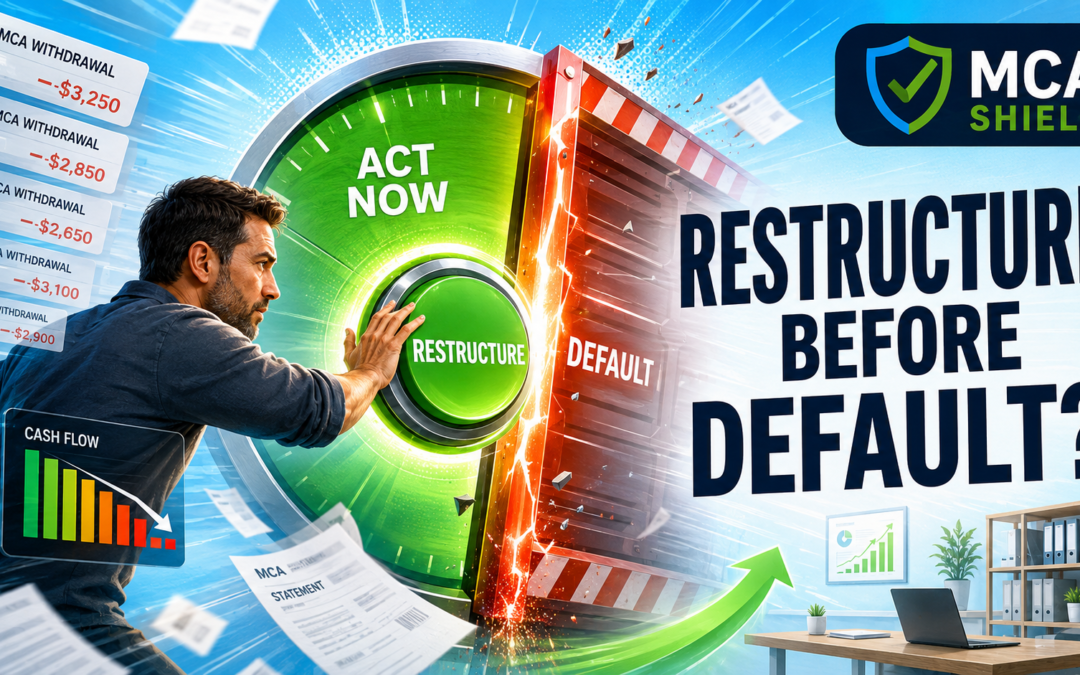
Business owner activating an MCA Shield restructuring strategy before the default barrier closes to protect payments, payroll, cash flow, and working capital

You do not have to wait for a failed withdrawal or formal default to address growing MCA payment pressure. If daily or weekly payments are reducing working capital, early action may help preserve more options for your business.

Starting the review now gives you time to understand your obligations, calculate an affordable payment, and explore possible solutions. Waiting until cash reserves disappear can make an already difficult situation more complicated.

Review Your MCA Obligations and Current Cash Flow

Begin by creating a complete list of every active merchant cash advance. Include the funder, current payment, payment frequency, remaining purchased amount, and important agreement terms.

Next, review the company’s recent financial activity. Compare average revenue with:

  • Total daily or weekly MCA withdrawals
  • Payroll and payroll taxes
  • Rent, utilities, and insurance
  • Inventory and supplies
  • Vendor obligations
  • Other essential operating expenses

This comparison shows how much working capital remains after the MCA payments leave the account. It can also reveal whether the current structure is sustainable.

Do not wait for the first missed payment to confirm that a problem exists. Frequent overdrafts, shrinking reserves, delayed expenses, and another MCA offer can all signal that action is needed.

Understand Your Restructuring Options

Depending on the business’s finances and the MCA agreements, restructuring may involve seeking lower payments, changing the withdrawal frequency, or extending the payment period. Businesses with several advances may need a coordinated strategy that considers every obligation together.

Before accepting any proposal, compare:

  • The new payment amount
  • The length of the payment period
  • The total expected cost
  • Any fees or additional terms
  • The effect on essential expenses
  • The working capital remaining after payment

A lower withdrawal may provide immediate breathing room. However, the arrangement must also support the company’s long-term ability to operate.

The right solution should reduce payment pressure without creating another unaffordable obligation. No result is guaranteed, but a careful review can help you make a more informed decision.

Schedule a Free Consultation With MCA Shield

If MCA withdrawals are making it difficult to cover payroll, taxes, vendors, or daily operating expenses, now may be the right time to review your situation.

MCA Shield can examine your agreements, payment history, current cash flow, and remaining obligations. This review can help identify whether MCA debt restructuring before default may be appropriate for your business.

Do not wait until missed payments, collection activity, or depleted cash reserves limit your options. Schedule a Free Consultation With MCA Shield today.

Schedule Your Free Consultation