
Can You Restructure MCA Debt Before Defaulting?
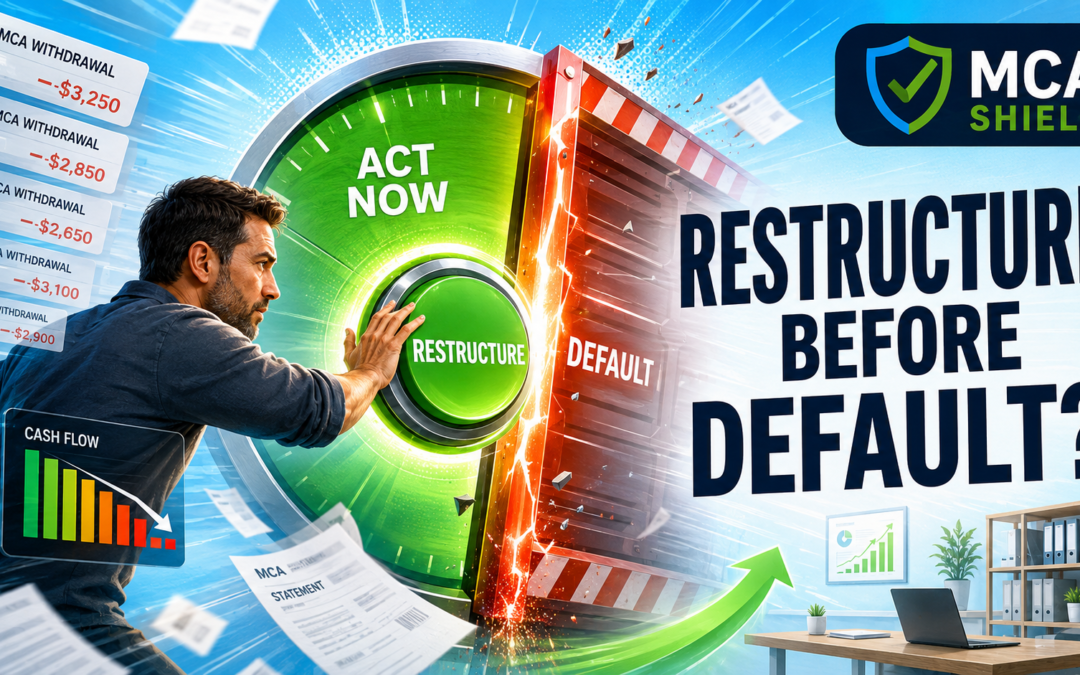
Yes, MCA debt restructuring before default may be possible. In fact, you do not always have to miss payments before reviewing your options. If daily or weekly withdrawals are putting pressure on your cash flow, acting early may give your business more time to find a manageable solution.
Merchant cash advance payments can become difficult even when a business remains current. Revenue may decline, operating costs may rise, or several advances may withdraw payments at the same time. As a result, the business may struggle to cover payroll, taxes, inventory, and other essential expenses.
You should not have to wait for a complete financial crisis before asking for help. An early review can identify the payment pressure and determine whether restructuring may protect the cash your business needs to operate.
Why You Do Not Have to Wait for an MCA Default
Default is not the starting point for MCA debt restructuring. A business can seek help while it is still making payments but recognizes that the current schedule is becoming unsustainable.
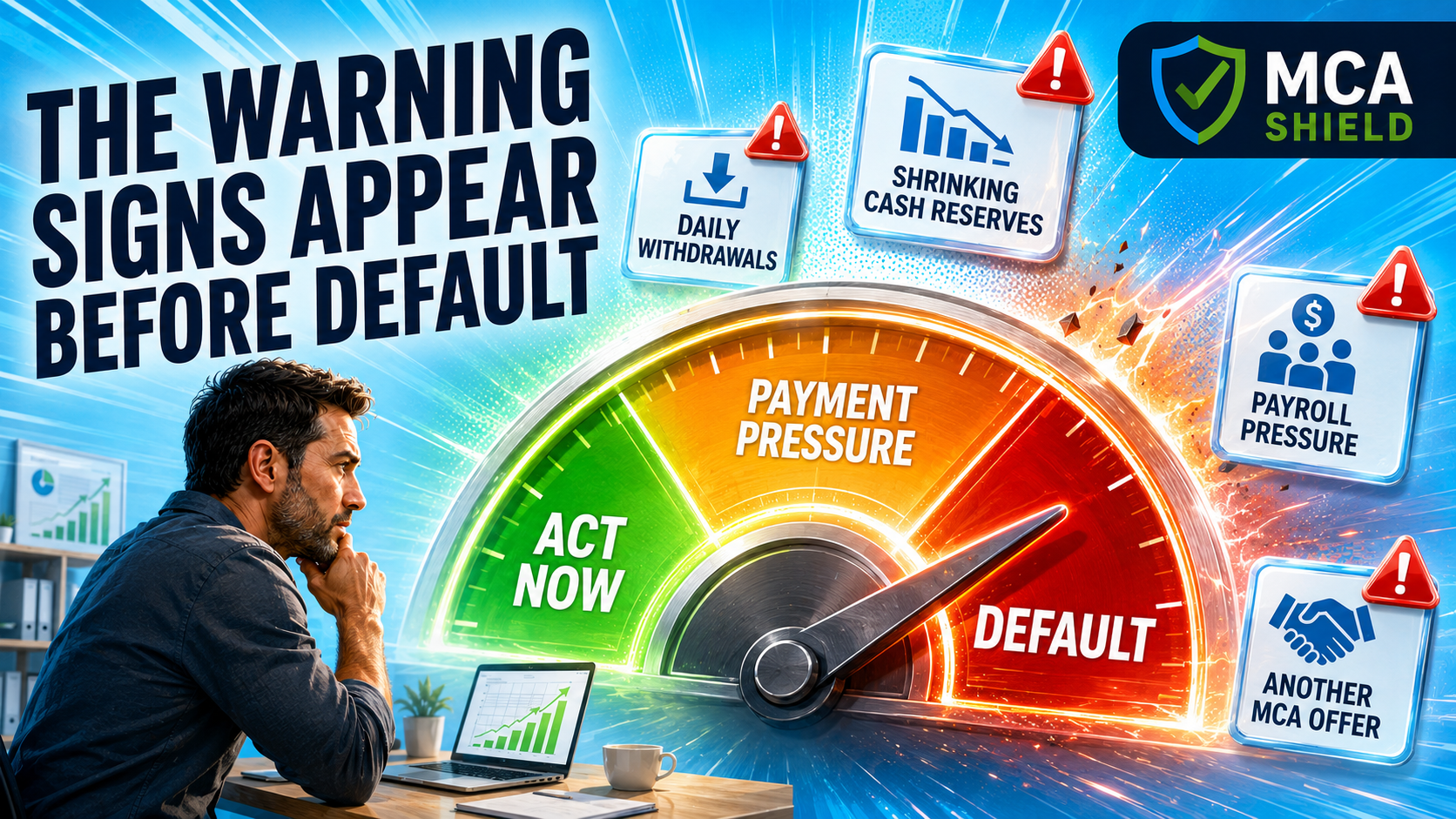
Early warning signs may include:
- Declining cash reserves
- Frequent overdrafts or insufficient funds
- Difficulty covering payroll or taxes
- Delayed payments to vendors
- Heavy daily or weekly ACH withdrawals
- Using new financing to cover existing MCA payments
These problems often develop before the first missed payment. Therefore, waiting for a formal default may worsen the financial pressure.
A professional review can examine your MCA agreements, remaining balances, current withdrawals, business revenue, and essential expenses. This information helps determine whether the existing payment structure matches what the business can realistically afford.
How Early Restructuring Can Protect Your Business
The main purpose of restructuring is to create a payment arrangement that better reflects the company’s current financial position. Depending on the circumstances, this may involve seeking lower payments, a different payment frequency, or a longer repayment period.
A more manageable structure may help the business retain enough working capital to cover:
- Employee payroll
- Rent and utilities
- Taxes and insurance
- Inventory and supplies
- Equipment and vehicle expenses
- Other essential operating costs
However, a lower payment alone does not guarantee a successful outcome. The proposed structure must leave the business with enough cash to continue operating. It is also important to review the total cost, repayment period, fees, and agreement terms before accepting any arrangement.
Early action may also reduce the temptation to take another merchant cash advance. Adding new debt may provide short-term cash, but it can create another payment obligation and place even more pressure on future revenue.
Why Acting Before Missed Payments May Improve Your Options
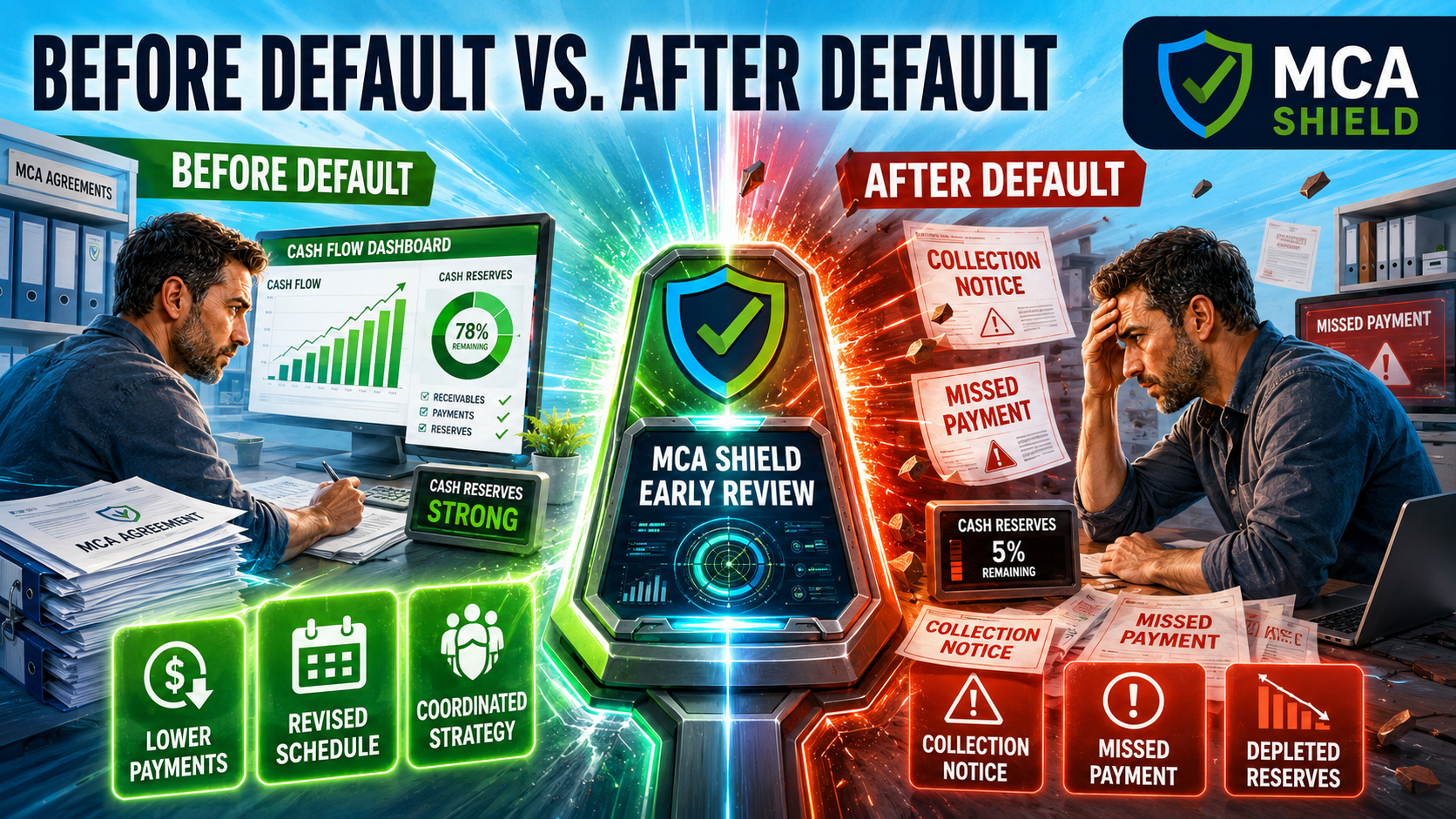
A business that acts before missing payments may have more time to gather records, evaluate its finances, and develop a clear restructuring strategy. It may also avoid some of the complications that can follow default, such as collection demands, disrupted withdrawals, UCC enforcement, or possible legal action.
Waiting until cash flow reaches the breaking point can limit flexibility. By that stage, the business may already have depleted its reserves, delayed essential expenses, or taken additional financing.
MCA debt restructuring before default allows the business to address payment pressure while it may still have operating cash and negotiating flexibility. Although no specific result is guaranteed, acting early can provide a stronger position to review available options and protect the future of the business.
Schedule Your Free Consultation
What Does It Mean to Restructure MCA Debt?
To restructure MCA debt means changing the current payment arrangement to make it more manageable for the business. The goal is usually to reduce immediate payment pressure and protect the working capital needed for daily operations.
A restructuring strategy may consider the business’s revenue, essential expenses, current withdrawals, and total MCA obligations. It should also examine whether the business can continue making payments without falling behind on payroll, taxes, rent, inventory, or other necessary costs.
MCA debt restructuring before default may give a business more time to evaluate these factors. However, the exact options will depend on the MCA agreements, the funders involved, and the company’s financial condition.
How MCA Debt Restructuring May Change Your Payments
An MCA restructuring may change how much the business pays and how often payments occur. Depending on the circumstances and the funder’s cooperation, a proposed arrangement could include:
- Lower daily or weekly payments
- A different withdrawal frequency
- A longer payment period
- A temporary payment adjustment
- A payment schedule based on current cash flow
- A coordinated strategy for multiple MCA obligations
Reducing the payment amount may improve short-term cash flow. Still, a lower payment does not always reduce the total amount owed. Extending the payment period could keep the obligation active longer. Additional fees or costs may also apply.
Therefore, business owners should review the new payment amount, repayment period, total expected cost, and remaining working capital. A payment is only manageable if the business can make it while continuing to cover essential operating expenses.
Restructuring vs. Refinancing or Taking Another Advance
Restructuring focuses on changing the terms or payment structure of existing MCA obligations. Refinancing generally replaces existing obligations with new financing. Although both options may reduce immediate payments, they work differently.
A new financing arrangement may combine several payments into one. However, it can also create a new balance, new fees, and a longer repayment period. The business may receive temporary relief while paying more over time.
Taking another merchant cash advance is different from both restructuring and traditional refinancing. A new advance adds another obligation based on future business revenue. If the existing MCAs remain active, the business could face several withdrawals at once.
This practice is often called MCA stacking. It may provide quick capital, but it can increase the percentage of revenue committed to payments. Before accepting another advance, the business should compare its total cost and payment burden with available restructuring options.
The Difference Between Restructuring and Settlement
Restructuring and settlement are two separate forms of MCA relief. Restructuring usually seeks to make the payment arrangement more manageable while addressing the existing obligation. The business may continue paying under modified terms or a negotiated schedule.
A settlement typically involves negotiating to resolve the obligation for an agreed amount. It may become relevant when the business is experiencing severe financial hardship and cannot meet the current payment terms. Settlement can also involve different risks, documentation requirements, and potential legal or tax consequences.
The right approach depends on the business’s financial position. A company that still generates enough revenue to support modified payments may consider restructuring. A business facing deeper hardship may need to review settlement or other relief strategies.
Before choosing an option, examine the affordable payment level, total obligation, business cash flow, essential expenses, and potential consequences. The best solution should address the MCA pressure without creating another payment structure the business cannot sustain.
Warning Signs You May Need to Restructure MCA Debt
Why Restructuring MCA Debt Before Default May Be Better
How the MCA Debt Restructuring Process Works
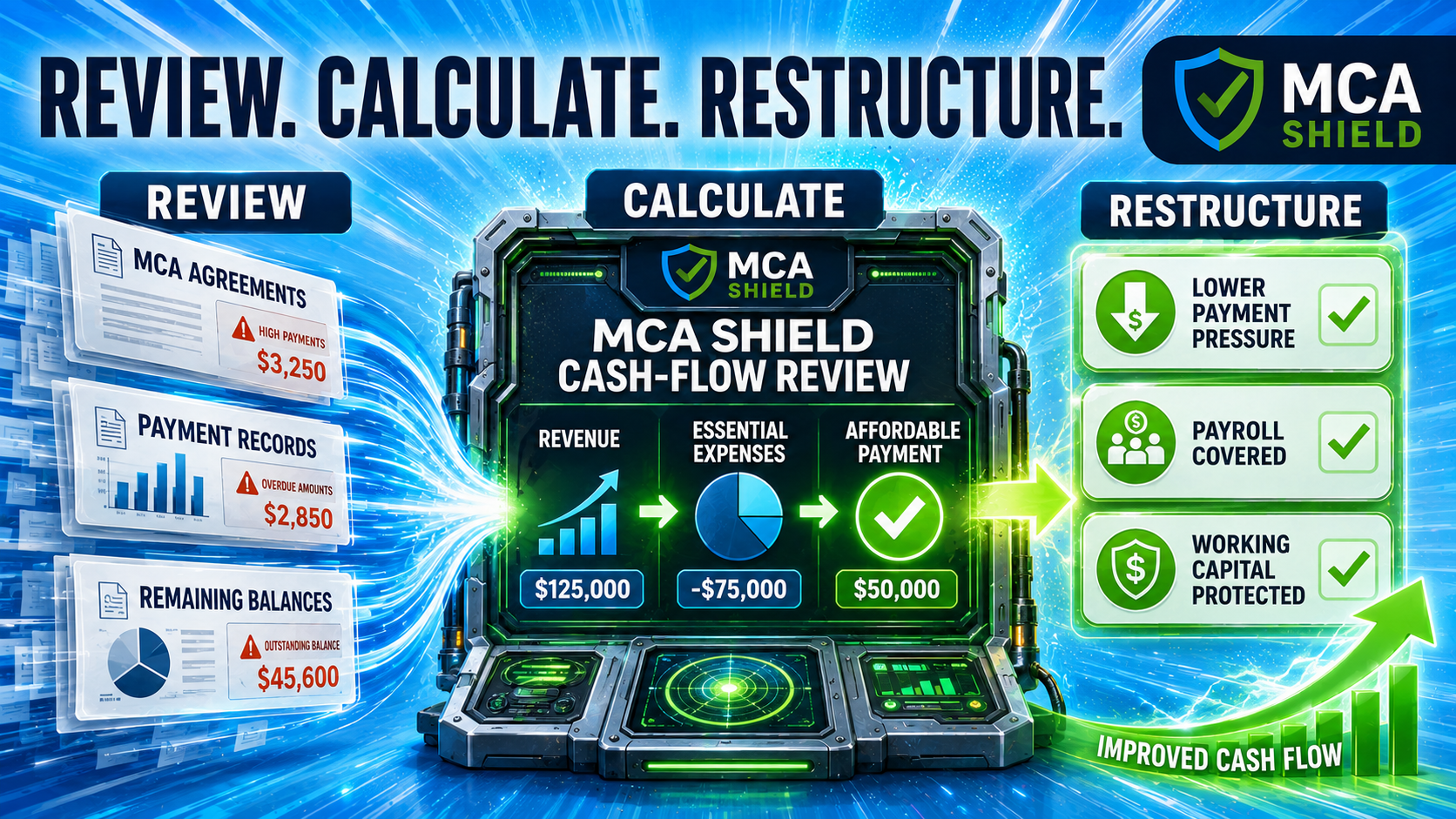
The MCA debt restructuring process begins with a detailed review of the business’s current obligations and financial condition. The goal is to understand the payment pressure, calculate what the company can afford, and pursue a more manageable arrangement.
Every situation is different. The available options may depend on the MCA agreements, remaining balances, payment history, funders involved, and current business revenue. However, most restructuring reviews follow three basic steps.
Review Your Agreements, Payments, and Remaining Balances
First, gather all documents connected to your merchant cash advances. A complete review helps identify the terms of each agreement and the total amount leaving the business account.
Important records may include:
- Signed MCA agreements
- Recent business bank statements
- Current daily or weekly payment amounts
- Payment histories
- Remaining purchased amounts or balances
- Renewal or modification agreements
- Collection notices or funder communications
- Information about UCC filings or personal guarantees
If the business has multiple MCAs, review each obligation separately. Then, calculate the combined withdrawal amount. The total payment burden matters more than looking at any single advance by itself.
This review can also identify important contract terms, such as reconciliation provisions or payment adjustment procedures. Because every agreement differs, business owners should avoid assuming that all MCA obligations work the same way.
Determine an Affordable Payment Based on Cash Flow
The next step is to calculate what the business can realistically afford. This amount should reflect actual revenue and essential operating costs—not an estimate based only on the current bank balance.
Start by reviewing average monthly revenue. Then, subtract necessary expenses such as:
- Payroll and employee costs
- Rent and utilities
- Taxes and insurance
- Inventory and supplies
- Equipment and vehicle expenses
- Other essential business obligations
The money remaining after these expenses helps show how much may be available for MCA payments. Seasonal revenue changes and unexpected expenses should also be considered.
An affordable payment should leave enough working capital for the business to continue operating. If the proposed payment still creates overdrafts or forces the owner to delay payroll, it is probably not sustainable.
Negotiate a More Manageable Repayment Structure
Once the financial review establishes an affordable payment range, the next step is to pursue a modified arrangement with the MCA funder or funders.
Depending on the circumstances, a proposed restructuring could involve:
- Lower daily or weekly withdrawals
- A different payment frequency
- A longer payment period
- Temporary payment adjustments
- A schedule that better reflects current revenue
- A coordinated plan involving multiple MCA obligations
The proposal should be supported by clear financial information. Bank statements, cash-flow records, payment histories, and operating expenses can help demonstrate why the current structure is creating hardship.
However, funders are not required to accept every restructuring proposal, and no specific outcome is guaranteed. Any new arrangement should be reviewed carefully before acceptance. Pay close attention to the payment amount, duration, fees, total cost, and consequences of another missed payment.
The right structure should do more than provide temporary relief. It should reduce immediate payment pressure while protecting the cash the business needs to remain open and operate.
What Documents Do You Need to Restructure MCA Debt?
Can You Restructure Multiple MCAs Before Default?
Common Mistakes to Avoid When Restructuring MCA Debt
Take Action Before MCA Payments Push Your Business Into Default
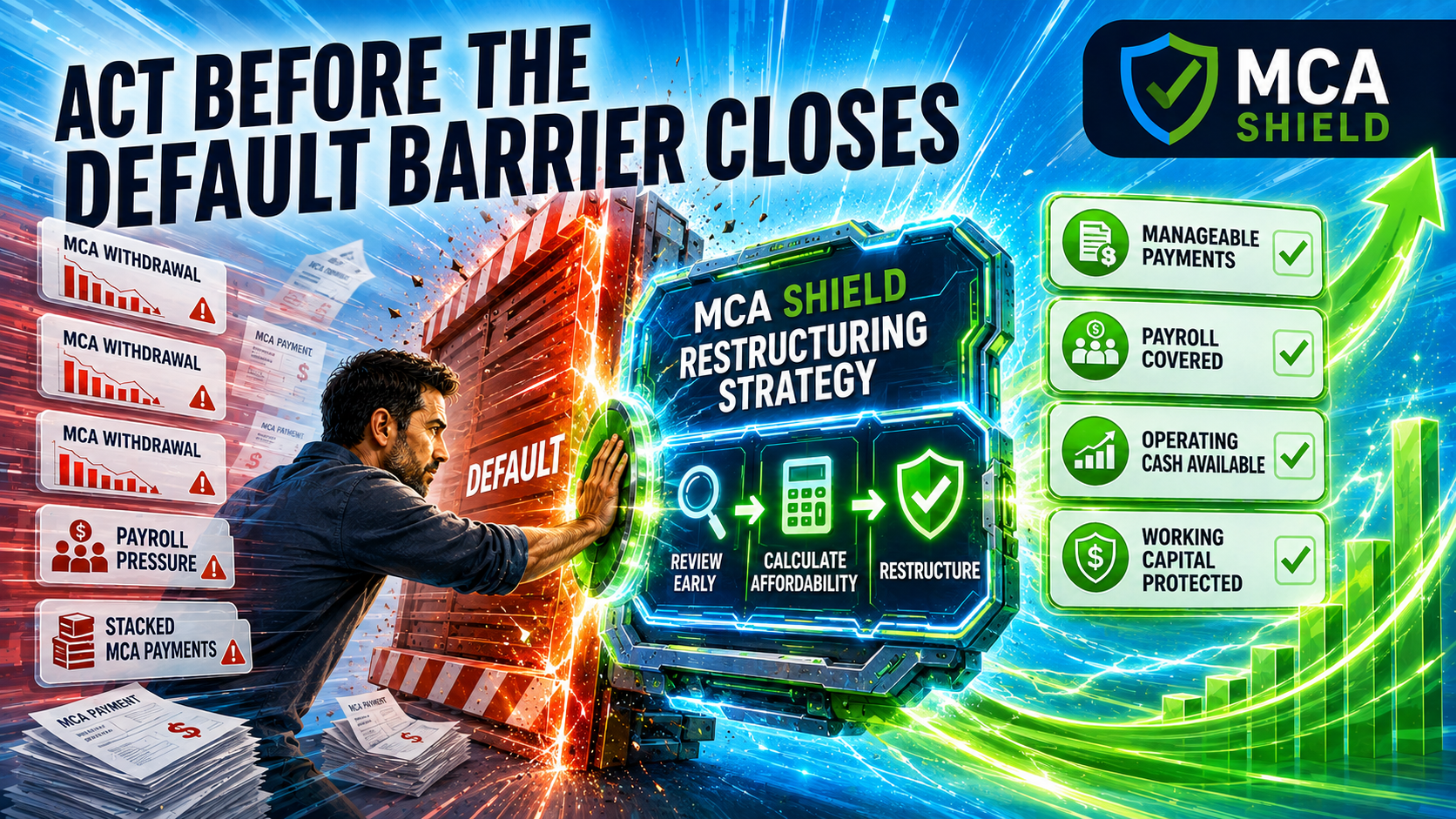
You do not have to wait for a failed withdrawal or formal default to address growing MCA payment pressure. If daily or weekly payments are reducing working capital, early action may help preserve more options for your business.
Starting the review now gives you time to understand your obligations, calculate an affordable payment, and explore possible solutions. Waiting until cash reserves disappear can make an already difficult situation more complicated.
Review Your MCA Obligations and Current Cash Flow
Begin by creating a complete list of every active merchant cash advance. Include the funder, current payment, payment frequency, remaining purchased amount, and important agreement terms.
Next, review the company’s recent financial activity. Compare average revenue with:
- Total daily or weekly MCA withdrawals
- Payroll and payroll taxes
- Rent, utilities, and insurance
- Inventory and supplies
- Vendor obligations
- Other essential operating expenses
This comparison shows how much working capital remains after the MCA payments leave the account. It can also reveal whether the current structure is sustainable.
Do not wait for the first missed payment to confirm that a problem exists. Frequent overdrafts, shrinking reserves, delayed expenses, and another MCA offer can all signal that action is needed.
Understand Your Restructuring Options
Depending on the business’s finances and the MCA agreements, restructuring may involve seeking lower payments, changing the withdrawal frequency, or extending the payment period. Businesses with several advances may need a coordinated strategy that considers every obligation together.
Before accepting any proposal, compare:
- The new payment amount
- The length of the payment period
- The total expected cost
- Any fees or additional terms
- The effect on essential expenses
- The working capital remaining after payment
A lower withdrawal may provide immediate breathing room. However, the arrangement must also support the company’s long-term ability to operate.
The right solution should reduce payment pressure without creating another unaffordable obligation. No result is guaranteed, but a careful review can help you make a more informed decision.
Schedule a Free Consultation With MCA Shield
If MCA withdrawals are making it difficult to cover payroll, taxes, vendors, or daily operating expenses, now may be the right time to review your situation.
MCA Shield can examine your agreements, payment history, current cash flow, and remaining obligations. This review can help identify whether MCA debt restructuring before default may be appropriate for your business.
Do not wait until missed payments, collection activity, or depleted cash reserves limit your options. Schedule a Free Consultation With MCA Shield today.