
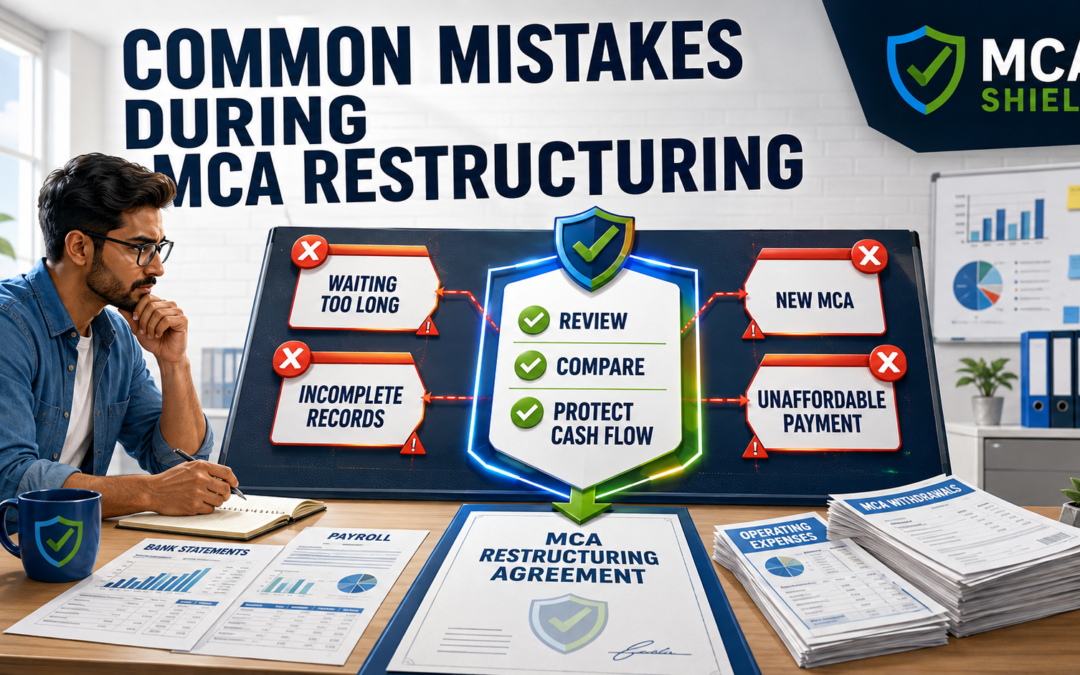
Common mistakes businesses make during MCA restructuring can increase financial pressure rather than providing meaningful relief. Waiting too long, submitting incomplete records, accepting an unaffordable payment, or taking another advance may weaken the entire restructuring plan. Understanding these risks can help you protect working capital, compare your options carefully, and choose terms your business can realistically manage.
Schedule Your Free Consultation
Why MCA Restructuring Mistakes Can Put Your Business at Greater Risk
MCA restructuring can reduce immediate payment pressure, but the process requires careful financial planning. A poorly structured agreement may temporarily reduce withdrawals while increasing the total cost or extending the business’s financial strain.
Common MCA restructuring mistakes can also affect payroll, taxes, inventory, vendor payments, and other essential expenses. Before accepting new terms, business owners should review the entire agreement and confirm that the payment fits their actual cash flow.
Restructuring Requires More Than Lowering the Immediate Payment
A lower daily or weekly payment may look like the most important goal. However, the payment amount represents only one part of an MCA restructuring agreement.
Business owners should also review the agreement length, total repayment amount, fees, withdrawal schedule, and default provisions. A lower payment may provide short-term breathing room, but a longer repayment period or additional fees could increase the total financial burden.
The new payment must also leave money available for normal operations. If the business cannot cover payroll, taxes, rent, inventory, and vendor expenses after each withdrawal, the restructuring plan may not be sustainable.
Poor Decisions Can Increase Long-Term Financial Pressure
Rushing into an agreement without reviewing every term can create new problems. For example, a business may accept a payment that works during a strong sales period but becomes unaffordable when revenue slows.
Incomplete financial records can also lead to inaccurate payment calculations. Likewise, taking another merchant cash advance during restructuring can add new withdrawals and restart the debt-stacking cycle.
An effective restructuring strategy should reflect the business’s complete financial position. That includes current revenue, seasonal changes, essential expenses, existing MCA obligations, and available working capital. Reviewing these factors before signing can help the business avoid exchanging one immediate problem for a larger long-term burden.
Waiting Too Long to Restructure MCA Debt

Providing Incomplete Financial Records or Overlooking MCA Agreement Terms
Accepting a Restructuring Payment Without Reviewing the Total Cost
A lower daily or weekly withdrawal may provide immediate relief, but it does not automatically make a restructuring agreement affordable. Business owners must look beyond the new payment amount and calculate the total cost of the proposed arrangement.
Fees, extended payment periods, and other contract terms can affect how much the business ultimately pays. Before accepting an offer, the owner should understand both the short-term cash-flow impact and the long-term financial obligation.
Compare Payments, Fees, and Agreement Lengths
Two restructuring offers may have similar payment amounts but very different total costs. One agreement might reduce withdrawals by extending the payment period. Another could include additional fees that increase the total repayment amount.
Business owners should compare:
- The daily or weekly payment
- The total amount owed under the new terms
- The length of the agreement
- Restructuring, administrative, or other fees
- The withdrawal frequency and payment method
- Default provisions and potential penalties
- Any early-payment or prepayment terms
This comparison helps reveal whether the agreement provides meaningful relief or spreads the same financial pressure over a longer period.
Confirm That the Payment Fits the Business’s Actual Cash Flow
An affordable restructuring payment should reflect the company’s real revenue and essential expenses. It should not rely on the business reaching an aggressive sales target every week.
Owners should calculate what remains after payroll, taxes, rent, inventory, utilities, insurance, and vendor payments. They should also consider seasonal changes and slower revenue periods.
A payment may appear manageable during a strong month but become difficult when sales decline. Therefore, the business needs the flexibility to continue operating without using credit cards or new advances to cover routine expenses.
Avoid Accepting the First Offer Without Reviewing Alternatives
Financial pressure can make the first restructuring offer feel like the fastest solution. However, accepting terms without reviewing the complete agreement may lock the business into another unsustainable payment structure.
Business owners should take time to confirm the balance, review all fees, compare available options, and ask questions about unclear provisions. Depending on the circumstances, possible alternatives may include different restructuring terms, negotiation, settlement, or a coordinated strategy for multiple MCAs.
No option guarantees a specific outcome. Still, reviewing the alternatives can help the business choose an approach that better supports its cash flow, working capital, and long-term operations.
Taking Another Merchant Cash Advance During Restructuring
Committing to Payments Without Protecting Essential Business Expenses
Assuming MCA Restructuring Will Fix Every Cash-Flow Problem
Frequently Asked Questions About Common MCA Restructuring Mistakes
Avoid Costly MCA Restructuring Mistakes Before Cash Flow Gets Worse
MCA restructuring can provide a business with an opportunity to reduce payment pressure, but the agreement must address the company’s complete financial position. Waiting too long, overlooking contract terms, accepting an unaffordable payment, or taking another advance can make the situation more difficult.
Business owners should act when the warning signs first appear. Early preparation creates more time to review the debt, calculate an affordable payment, and compare possible solutions before cash flow reaches a breaking point.
Organize Your Records and Review Every Obligation
Start by gathering recent bank statements, MCA agreements, payment histories, operating expenses, payroll records, and tax obligations. Include every active merchant cash advance and confirm the balance, payment schedule, fees, and key contract provisions for each one.
Next, calculate how much the business can pay after covering essential expenses. The proposed payment should leave enough working capital for employees, vendors, inventory, rent, and daily operations. It should also account for seasonal revenue changes and unexpected costs.
Complete records make it easier to identify the total MCA burden and avoid building a restructuring plan around incomplete information.
Schedule a Free Consultation With MCA Shield
You do not have to wait until payments are missed or collection pressure begins to review your options. If MCA withdrawals are affecting payroll, taxes, vendors, or operating cash, now may be the right time to examine your obligations.
MCA Shield can review your agreements, current payments, business revenue, and essential expenses. This complete financial review can help identify common MCA restructuring mistakes and determine which available options may fit your circumstances.
Schedule a Free Consultation With MCA Shield today. Taking action early may give your business more time to address payment pressure, protect working capital, and develop a more sustainable path forward.