
ClickCease
Explore options for your business’s MCA payments.Call (918) 608-0117

Common mistakes businesses make during MCA restructuring can increase financial pressure rather than providing meaningful relief. Waiting too long, submitting incomplete records, accepting an unaffordable payment, or taking another advance may weaken the entire restructuring plan. Understanding these risks can help you protect working capital, compare your options carefully, and choose terms your business can realistically manage.

Schedule Your Free Consultation

Why MCA Restructuring Mistakes Can Put Your Business at Greater Risk

MCA restructuring can reduce immediate payment pressure, but the process requires careful financial planning. A poorly structured agreement may temporarily reduce withdrawals while increasing the total cost or extending the business’s financial strain.

Common MCA restructuring mistakes can also affect payroll, taxes, inventory, vendor payments, and other essential expenses. Before accepting new terms, business owners should review the entire agreement and confirm that the payment fits their actual cash flow.

Restructuring Requires More Than Lowering the Immediate Payment

A lower daily or weekly payment may look like the most important goal. However, the payment amount represents only one part of an MCA restructuring agreement.

Business owners should also review the agreement length, total repayment amount, fees, withdrawal schedule, and default provisions. A lower payment may provide short-term breathing room, but a longer repayment period or additional fees could increase the total financial burden.

The new payment must also leave money available for normal operations. If the business cannot cover payroll, taxes, rent, inventory, and vendor expenses after each withdrawal, the restructuring plan may not be sustainable.

Poor Decisions Can Increase Long-Term Financial Pressure

Rushing into an agreement without reviewing every term can create new problems. For example, a business may accept a payment that works during a strong sales period but becomes unaffordable when revenue slows.

Incomplete financial records can also lead to inaccurate payment calculations. Likewise, taking another merchant cash advance during restructuring can add new withdrawals and restart the debt-stacking cycle.

An effective restructuring strategy should reflect the business’s complete financial position. That includes current revenue, seasonal changes, essential expenses, existing MCA obligations, and available working capital. Reviewing these factors before signing can help the business avoid exchanging one immediate problem for a larger long-term burden.

Waiting Too Long to Restructure MCA Debt

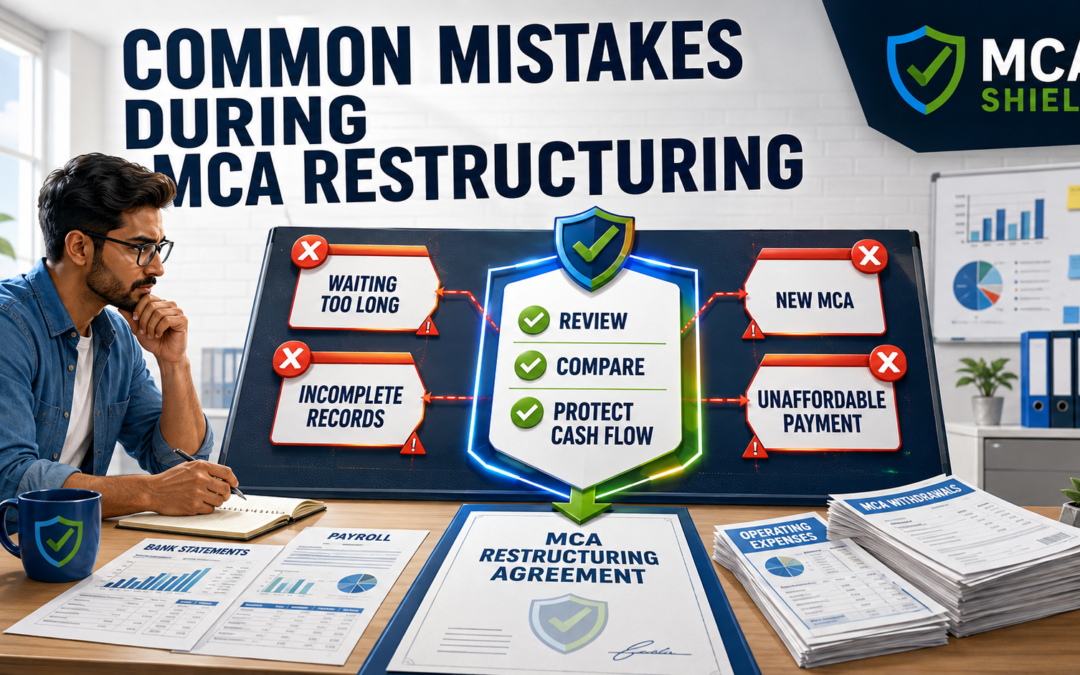
Business owner reviewing MCA restructuring warning signs before default with an MCA Shield early review protecting available options

Waiting until cash flow reaches a breaking point is one of the most damaging mistakes businesses make during MCA restructuring. Many owners postpone seeking help because they expect revenue to improve or believe they can manage the withdrawals for a little longer.

However, continued payment pressure can drain cash reserves and make it harder to negotiate affordable terms. Starting the review earlier gives the business more time to organize its records, evaluate its obligations, and determine what payment it can realistically support.

Early Warning Signs Business Owners Should Not Ignore

A business does not need to miss a payment before considering MCA debt restructuring. Financial warning signs often appear weeks or months before default.

These warning signs may include:

  • Frequent overdrafts or insufficient-funds notices
  • Difficulty covering payroll, taxes, rent, or inventory
  • Declining cash reserves despite steady revenue
  • Delayed payments to vendors or suppliers
  • Using credit cards or new financing to cover operating expenses
  • Multiple daily or weekly MCA withdrawals
  • Considering another MCA to make existing payments

Business owners should also pay attention when withdrawals consume an increasing share of weekly revenue. If essential expenses must wait until the next deposit arrives, the current payment structure may no longer fit the company’s cash flow.

Recognizing these problems early can create more time to examine restructuring options before the situation becomes urgent.

Default Can Limit Available Restructuring Options

Once a business misses payments or blocks scheduled withdrawals, the MCA provider may take actions allowed under the agreement. Depending on the contract and circumstances, these actions could include collection notices, default fees, UCC-related enforcement efforts, or legal demands.

Default can also make communication more difficult and increase the urgency of the restructuring process. Meanwhile, missed payments, bank account problems, and collection pressure may further disrupt daily operations.

Acting before default does not guarantee a specific restructuring outcome. However, it may give the business more time to provide accurate records, communicate with MCA providers, and compare possible payment arrangements. Early action can also help protect the working capital needed to keep employees paid and the business operating.

Providing Incomplete Financial Records or Overlooking MCA Agreement Terms
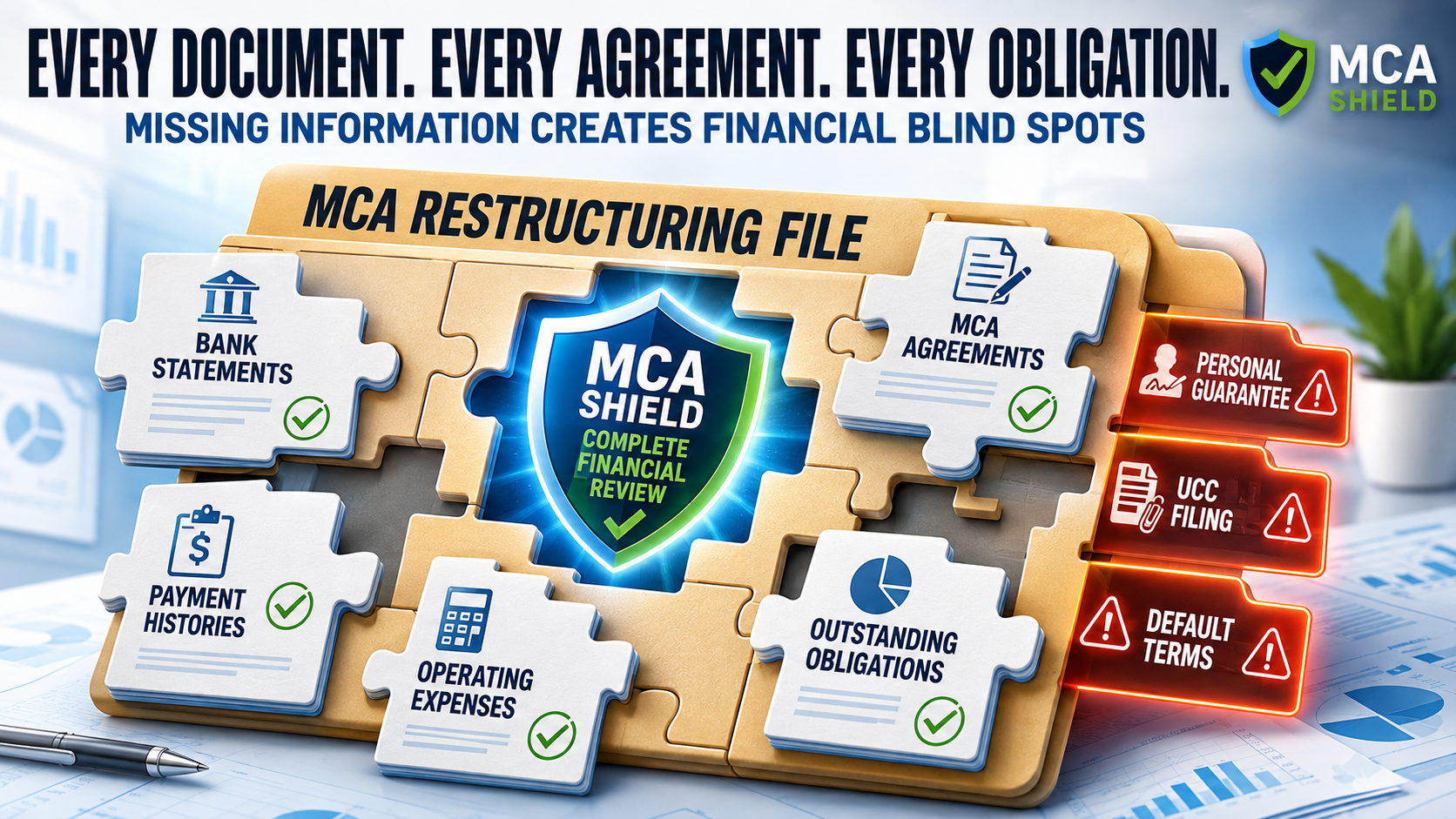
MCA restructuring document review showing bank statements, agreements, payment histories, expenses, outstanding obligations, and overlooked contract terms

An effective MCA restructuring review depends on complete financial records and a clear understanding of every agreement. Missing documents or inaccurate information can make the business appear stronger or weaker than it actually is. As a result, the proposed payment may not reflect what the company can afford.

Overlooking contract terms can create additional risk. Business owners need to understand their payment obligations, default provisions, personal guarantees, and any UCC filings connected to the debt. This information helps create a restructuring strategy based on the business’s complete financial position.

Gather Accurate Bank Statements and Cash-Flow Records

Bank statements show how revenue enters the business and how MCA withdrawals affect available cash. They also reveal overdrafts, returned payments, seasonal changes, and other patterns that may influence affordability.

A restructuring review may require several recent business bank statements. Business owners should also gather payment histories, profit-and-loss statements, accounts receivable records, payroll costs, tax obligations, and recurring operating expenses.

These documents help answer an important question: How much can the business pay while still covering essential expenses? Estimates alone may not provide an accurate answer. Current records make it easier to calculate a payment based on actual revenue and working capital.

Review Personal Guarantees, UCC Filings, and Default Provisions

Every MCA agreement should receive a careful review before the business accepts restructuring terms. Owners need to identify any personal guarantees and understand the obligations those provisions may create.

They should also review UCC filing language and determine whether a filing exists. A UCC filing may affect business assets or financial relationships, depending on the agreement and applicable circumstances.

Default provisions deserve equal attention. The contract may describe what can happen after a missed payment, blocked withdrawal, closed bank account, or other defined event. Understanding these terms helps the business avoid actions that could increase collection or legal pressure.

Disclose Every Outstanding MCA Obligation

Business owners should disclose every active merchant cash advance, even if one provider has not started collections or the remaining balance seems small. Overlooking an obligation can create an incomplete cash-flow calculation.

Each MCA may have a different balance, withdrawal schedule, factor rate, and set of contract terms. When several payments leave the same account, their combined impact matters more than any single withdrawal.

Complete disclosure allows the restructuring review to account for the business’s total MCA payment burden. It also reduces the risk of building a payment plan that looks affordable on paper but leaves too little cash for payroll, taxes, inventory, and daily operations.

Accepting a Restructuring Payment Without Reviewing the Total Cost

A lower daily or weekly withdrawal may provide immediate relief, but it does not automatically make a restructuring agreement affordable. Business owners must look beyond the new payment amount and calculate the total cost of the proposed arrangement.

Fees, extended payment periods, and other contract terms can affect how much the business ultimately pays. Before accepting an offer, the owner should understand both the short-term cash-flow impact and the long-term financial obligation.

Compare Payments, Fees, and Agreement Lengths

Two restructuring offers may have similar payment amounts but very different total costs. One agreement might reduce withdrawals by extending the payment period. Another could include additional fees that increase the total repayment amount.

Business owners should compare:

  • The daily or weekly payment
  • The total amount owed under the new terms
  • The length of the agreement
  • Restructuring, administrative, or other fees
  • The withdrawal frequency and payment method
  • Default provisions and potential penalties
  • Any early-payment or prepayment terms

This comparison helps reveal whether the agreement provides meaningful relief or spreads the same financial pressure over a longer period.

Confirm That the Payment Fits the Business’s Actual Cash Flow

An affordable restructuring payment should reflect the company’s real revenue and essential expenses. It should not rely on the business reaching an aggressive sales target every week.

Owners should calculate what remains after payroll, taxes, rent, inventory, utilities, insurance, and vendor payments. They should also consider seasonal changes and slower revenue periods.

A payment may appear manageable during a strong month but become difficult when sales decline. Therefore, the business needs the flexibility to continue operating without using credit cards or new advances to cover routine expenses.

Avoid Accepting the First Offer Without Reviewing Alternatives

Financial pressure can make the first restructuring offer feel like the fastest solution. However, accepting terms without reviewing the complete agreement may lock the business into another unsustainable payment structure.

Business owners should take time to confirm the balance, review all fees, compare available options, and ask questions about unclear provisions. Depending on the circumstances, possible alternatives may include different restructuring terms, negotiation, settlement, or a coordinated strategy for multiple MCAs.

No option guarantees a specific outcome. Still, reviewing the alternatives can help the business choose an approach that better supports its cash flow, working capital, and long-term operations.

Taking Another Merchant Cash Advance During Restructuring
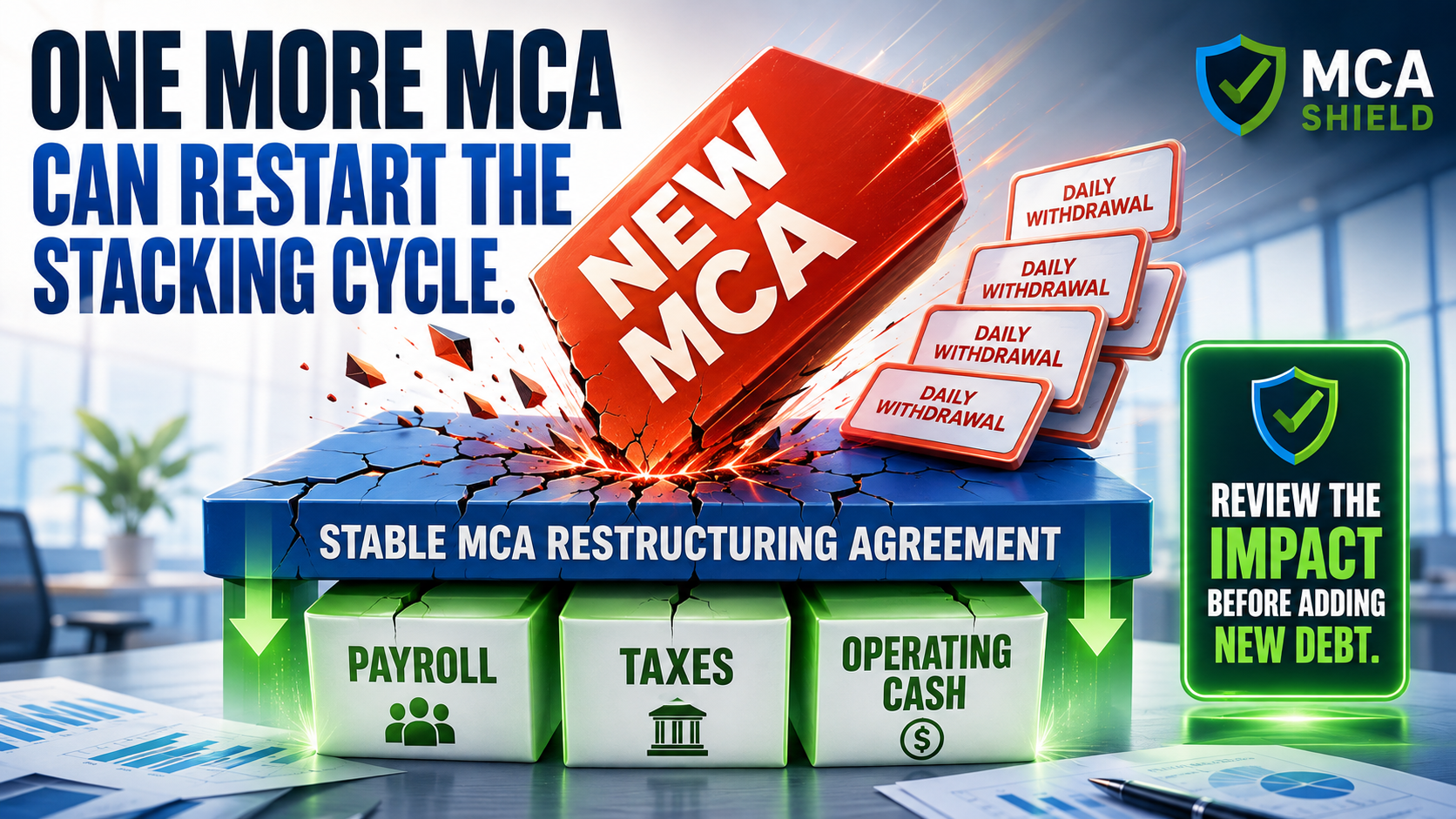
New merchant cash advance restarting the MCA stacking cycle and compressing payroll, taxes, and operating cash during restructuring

Taking another merchant cash advance during restructuring may provide temporary cash, but it can weaken the entire payment plan. The business adds a new withdrawal before resolving the financial pressure created by its existing obligations.

New MCA funding may also reduce the cash available for payroll, taxes, inventory, rent, and vendor payments. Before accepting another advance, business owners should determine whether it will solve the underlying problem or delay a larger cash-flow crisis.

New Funding Can Undermine the Restructuring Agreement

A restructuring payment is usually based on the business’s current revenue, expenses, and outstanding obligations. Adding another MCA changes that financial picture.

For example, a business may agree to a manageable restructuring payment and then accept new funding with daily withdrawals. The combined payments could exceed the amount the business can realistically support. As a result, the company may struggle to comply with the restructuring agreement while meeting the new MCA obligation.

Obtaining additional funding may also conflict with terms in an existing agreement. Some contracts contain provisions related to new debt, additional advances, bank account activity, or changes in payment priority. Owners should review every agreement carefully before making another financing decision.

If the business needs additional funds to cover regular operating expenses during restructuring, it may signal that the proposed payment plan is unsustainable.

Additional Debt Can Restart the MCA Stacking Cycle

MCA stacking occurs when a business takes multiple merchant cash advances before repaying its existing obligations. Each new advance adds another daily or weekly withdrawal, leaving less revenue available for operations.

The cycle often begins when an owner uses new funding to cover a temporary shortage. However, the additional withdrawal can create another gap. The business may then seek a third advance to cover payroll, vendor costs, or previous MCA payments.

This pattern can quickly erase the cash-flow relief created through restructuring. It may also increase the total debt burden and complicate future negotiations.

Before taking another merchant cash advance, the business should review why it needs the funding. A realistic cash-flow plan, adjusted expenses, improved receivables, or another suitable financing option may provide a more sustainable response. The goal of restructuring should be to reduce payment pressure—not rebuild the same debt structure that caused it.

Committing to Payments Without Protecting Essential Business Expenses

A restructuring payment is only affordable if the business can make it while continuing to operate. Accepting a payment that consumes money needed for payroll, taxes, rent, inventory, or vendors may replace one financial problem with another.

Before signing an agreement, business owners should calculate their essential expenses and determine how much cash remains after paying them. The restructuring plan should support the company’s operations instead of forcing the owner to choose between the agreement and basic business needs.

Account for Payroll, Taxes, Rent, and Vendor Costs

Revenue alone does not show what a business can afford to pay. Owners must subtract the expenses required to keep the company running.

These expenses may include:

  • Employee wages, payroll taxes, and benefits
  • Federal, state, and local tax obligations
  • Rent, utilities, and insurance
  • Inventory, supplies, and equipment costs
  • Vendor and subcontractor payments
  • Transportation, fuel, and delivery expenses
  • Software, licensing, and professional services

Some expenses remain consistent each month, while others change with sales volume or seasonal demand. The business should use current records instead of rough estimates when calculating an affordable restructuring payment.

Owners should also consider upcoming expenses that may not appear in an average week. Quarterly taxes, insurance renewals, equipment repairs, and seasonal inventory purchases can create significant cash demands.

Preserve Enough Working Capital to Continue Operating

Working capital allows a business to pay its short-term expenses and respond to unexpected costs. Without sufficient operating cash, even a profitable company may struggle between customer payments.

A restructuring agreement should leave room for normal revenue fluctuations. If every available dollar goes toward MCA payments, one slow week or delayed invoice could disrupt payroll and vendor relationships.

Business owners should review their lowest-revenue periods, not just their strongest months. Building the payment around conservative projections may reduce the risk of another cash shortage. Preserving a reasonable cash reserve can also help the company avoid relying on new high-cost financing.

Address Financial Problems Before Missing a Payment

Cash-flow problems can develop even after the business accepts restructuring terms. Revenue may decline, a major customer may pay late, or an unexpected expense may reduce available funds.

Ignoring the problem until a payment fails can increase financial and collection pressure. Instead, the business should monitor its account balance, cash-flow forecast, and upcoming expenses throughout the restructuring period.

If the company anticipates difficulty making a payment, it should communicate promptly with the appropriate parties and explain the change in circumstances. Early communication does not guarantee revised terms, but it may provide more time to review the situation before missed payments create additional complications.

Assuming MCA Restructuring Will Fix Every Cash-Flow Problem

MCA restructuring may reduce daily or weekly payment pressure, but it cannot correct every financial problem within a business. If declining revenue, high operating costs, slow receivables, or poor budgeting caused the original shortage, those problems may continue after the payment changes.

A sustainable restructuring strategy should address both the MCA obligations and the financial conditions that led the business to seek funding.  Otherwise, the business may experience another cash shortage and return to high-cost borrowing.

Identify What Caused the Business to Depend on MCA Funding

Business owners often take a merchant cash advance to solve an immediate problem. They may need to cover payroll, purchase inventory, repair equipment, pay taxes, or manage a seasonal revenue decline.

However, repeated MCA use may indicate a deeper cash-flow issue. Common causes include:

  • Customers paying invoices late
  • Operating expenses growing faster than revenue
  • Low profit margins or inaccurate pricing
  • Seasonal revenue changes
  • Unexpected tax or repair expenses
  • Poor inventory management
  • Rapid growth without enough working capital
  • Existing debt consuming too much monthly cash

Owners should review when each advance became necessary and how the funds were used. This analysis can help determine whether the original need was temporary or part of an ongoing financial pattern.

Build a Cash-Flow Plan That Reduces Future Borrowing

A cash-flow plan should show when money enters the business, when expenses become due, and how much cash remains after essential payments. It should also account for slower sales periods and delayed customer payments.

The plan may include steps such as improving invoice collection, adjusting prices, reducing unnecessary expenses, negotiating vendor terms, and setting aside money for taxes. The business may also need to create a cash reserve for repairs, seasonal costs, or unexpected revenue fluctuations.

Owners should update cash-flow projections regularly during restructuring. Comparing projected results with actual bank activity can reveal problems before they become emergencies.

The goal is not simply to complete the restructuring agreement. The business should also reduce the likelihood that it will need another merchant cash advance to cover routine operating expenses.

Consider Professional Guidance for Multiple or Complex MCAs

Restructuring becomes more difficult when a business has several active MCAs. Each agreement may contain different payment schedules, default terms, personal guarantees, UCC provisions, and collection rights.

A professional review can help organize the obligations and evaluate how the combined withdrawals affect cash flow. It may also help the owner understand available restructuring, negotiation, settlement, or coordinated payment options.

Professional guidance does not guarantee approval, lower payments, or a specific outcome. However, it can help business owners avoid overlooking important terms and accepting a strategy that addresses only one obligation while leaving the others unresolved.

MCA Shield can review the business’s agreements, current payments, financial records, and operating expenses. This comprehensive review can help determine which options may fit the company’s circumstances and long-term cash-flow needs.

Frequently Asked Questions About Common MCA Restructuring Mistakes

Understanding common MCA restructuring mistakes can help business owners avoid decisions that increase financial pressure. These answers address important questions about payments, financial records, and new funding.


💰 What Is the Biggest Mistake Businesses Make During MCA Restructuring?

Answer: One of the biggest mistakes is focusing only on obtaining a lower daily or weekly payment. A smaller withdrawal may provide immediate relief, but the agreement could include a longer payment period, added fees, or a higher total cost.

Business owners should review the entire agreement and confirm that the payment leaves enough money for payroll, taxes, rent, vendors, and other operating expenses.


📄 Can a Business Take New Funding During MCA Restructuring?

Answer: A business may be able to obtain new funding, but taking another merchant cash advance can undermine the restructuring plan. The additional withdrawal may reduce working capital and make the combined payments unaffordable.

New financing could also conflict with provisions in an existing MCA or restructuring agreement. Business owners should review every contract and calculate the complete cash-flow impact before accepting additional funding.


📊 How Can a Business Determine Whether a Restructuring Payment Is Affordable?

Answer: Start by reviewing actual revenue, bank activity, and essential operating expenses. Subtract payroll, taxes, rent, inventory, utilities, insurance, vendor costs, and other necessary payments from the company’s available cash.

The proposed payment should fit within the remaining amount while leaving room for slower revenue periods and unexpected expenses. Use conservative cash-flow projections rather than relying on the strongest sales months.


🗂️ What Financial Records Are Needed for an MCA Restructuring Review?

Answer: The business may need recent bank statements, MCA agreements, payment histories, profit-and-loss statements, accounts receivable records, payroll costs, tax obligations, and a list of recurring expenses.

Complete records help identify the total MCA payment burden and the amount the business may realistically afford. Every outstanding MCA should be disclosed, even if the remaining balance appears small.


⚠️ What Should a Business Do If It May Miss a Restructuring Payment?

Answer: The business should review its account balance, upcoming expenses, and expected revenue as soon as a problem appears. Waiting until a withdrawal fails may create additional fees, collection pressure, or other consequences described in the agreement.

Early communication does not guarantee revised terms. However, it may provide more time to explain the situation and review possible next steps before the payment is missed.

Avoid Costly MCA Restructuring Mistakes Before Cash Flow Gets Worse
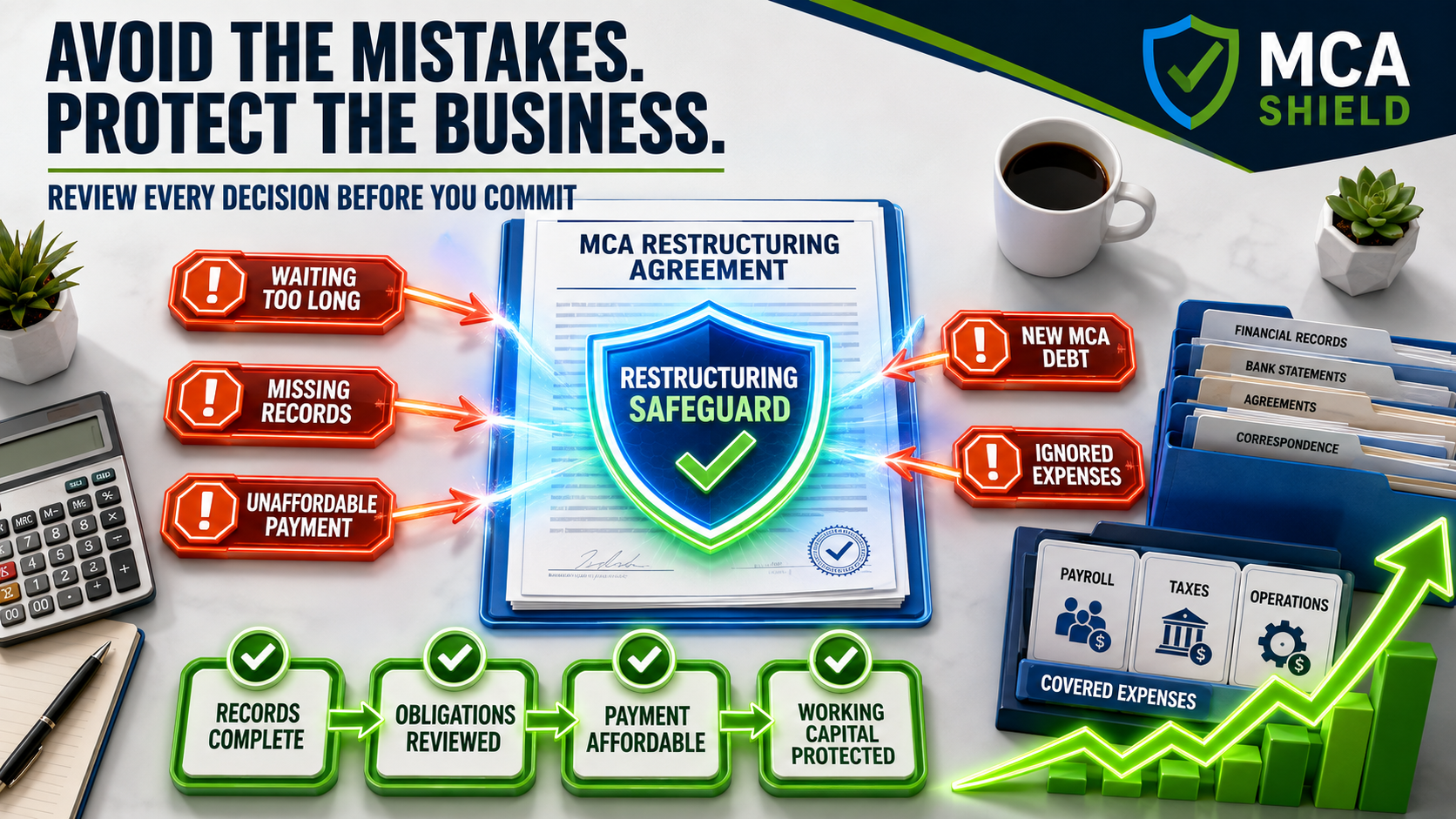
MCA Shield restructuring safeguard reviewing common mistakes, affordable payments, obligations, records, expenses, and protected working capital

MCA restructuring can provide a business with an opportunity to reduce payment pressure, but the agreement must address the company’s complete financial position. Waiting too long, overlooking contract terms, accepting an unaffordable payment, or taking another advance can make the situation more difficult.

Business owners should act when the warning signs first appear. Early preparation creates more time to review the debt, calculate an affordable payment, and compare possible solutions before cash flow reaches a breaking point.

Organize Your Records and Review Every Obligation

Start by gathering recent bank statements, MCA agreements, payment histories, operating expenses, payroll records, and tax obligations. Include every active merchant cash advance and confirm the balance, payment schedule, fees, and key contract provisions for each one.

Next, calculate how much the business can pay after covering essential expenses. The proposed payment should leave enough working capital for employees, vendors, inventory, rent, and daily operations. It should also account for seasonal revenue changes and unexpected costs.

Complete records make it easier to identify the total MCA burden and avoid building a restructuring plan around incomplete information.

Schedule a Free Consultation With MCA Shield

You do not have to wait until payments are missed or collection pressure begins to review your options. If MCA withdrawals are affecting payroll, taxes, vendors, or operating cash, now may be the right time to examine your obligations.

MCA Shield can review your agreements, current payments, business revenue, and essential expenses. This complete financial review can help identify common MCA restructuring mistakes and determine which available options may fit your circumstances.

Schedule a Free Consultation With MCA Shield today. Taking action early may give your business more time to address payment pressure, protect working capital, and develop a more sustainable path forward.

Schedule Your Free Consultation