

Business owners often have important questions about MCA debt restructuring, especially when daily withdrawals begin to affect payroll, vendors, and working capital. Understanding how the process works can help you evaluate your options before financial pressure becomes more difficult to manage.
These MCA debt restructuring FAQs explain payment changes, eligibility, timelines, stacked obligations, ACH withdrawals, UCC filings, business credit, and other common concerns. The answers can help you make informed decisions to protect your cash flow and move your business toward greater financial stability.
Schedule Your Free Consultation
What Is MCA Debt Restructuring and How Does It Work?
Who May Qualify for MCA Debt Restructuring?
A business may qualify for MCA debt restructuring when its current daily or weekly payments are no longer sustainable. However, the company must usually have enough ongoing revenue to support a modified payment plan.
Restructuring may be an option for businesses dealing with:
- Multiple or stacked MCA obligations
- Declining or inconsistent revenue
- Frequent overdrafts or returned payments
- Difficulty covering payroll and vendor expenses
- Daily withdrawals that consume too much operating cash
- Seasonal cash-flow changes
- An increased risk of default
Qualification is not based on any single factor. Each business has a different combination of revenue, expenses, MCA balances, and payment obligations. Therefore, a detailed financial review is necessary before determining which options may be available.
Can a Business Qualify Before Missing Payments?
Yes. A business may be able to pursue restructuring before missing an MCA payment. In fact, starting the review early may provide more time to evaluate the agreements and address payment pressure.
A business does not have to wait until its bank account is overdrawn or an MCA provider begins collection activity. Warning signs may appear much earlier. For example, the company may be transferring money between accounts, delaying vendor payments, reducing inventory purchases, or struggling to meet payroll.
Taking action before default may also show that the business wants to continue meeting its obligations under more realistic terms. However, approval depends on the MCA providers, the agreements, and the company’s financial condition. Restructuring is not guaranteed, even when the business has remained current.
The key is to identify the problem before daily withdrawals cause more serious financial damage.
What Financial Information Is Usually Reviewed?
A restructuring review usually examines the company’s complete MCA burden and its ability to maintain a revised payment plan. The business may need to provide:
- Current MCA agreements
- Recent business bank statements
- A list of MCA providers and remaining balances
- Daily or weekly withdrawal amounts
- Payment and transaction histories
- Recent revenue information
- Payroll, rent, inventory, and vendor costs
- Tax and insurance expenses
- Information about UCC filings or collection notices
This information helps show how much money enters the business and how much leaves through MCA withdrawals and essential expenses.
The review should also account for seasonal changes and unusual expenses. A payment that looks manageable during the company’s busiest month may become unaffordable when revenue slows.
Complete and accurate records make it easier to calculate an affordable payment range. They also help prevent the business from accepting a plan that creates the same cash-flow problem several weeks later.
Can MCA Debt Restructuring Lower Daily or Weekly Payments?

Yes, MCA debt restructuring may lower daily or weekly payments by modifying the existing payment schedule. The goal is to reduce the immediate pressure on the business while creating a payment plan it can realistically maintain.
For example, a business may have several MCA withdrawals leaving its bank account every business day. Even when sales remain steady, those payments can consume the money needed for payroll, rent, inventory, taxes, and vendor expenses.
A restructuring plan may seek to replace aggressive withdrawals with:
- Lower daily payments
- Reduced weekly payments
- A longer repayment schedule
- Temporary payment adjustments
- One organized strategy for multiple MCA obligations
However, results depend on the MCA agreements, provider cooperation, outstanding balances, and the business’s financial condition. Lower payments are not automatic or guaranteed.
How Are More Affordable Payments Determined?
More affordable payments should be based on the company’s actual cash flow, not an arbitrary amount. A careful review compares average revenue with essential operating expenses and existing MCA obligations.
The review may consider:
- Average monthly deposits
- Seasonal revenue changes
- Payroll and contractor expenses
- Rent, utilities, and insurance
- Inventory and material costs
- Taxes and vendor obligations
- Current daily or weekly MCA withdrawals
- The minimum working capital needed to operate
After reviewing these numbers, the business can estimate how much it may be able to pay without creating another cash-flow shortage.
The proposed amount must be realistic during both strong and slow revenue periods. A payment plan that only works during the company’s busiest month may quickly become unaffordable.
Extending the repayment period may reduce each withdrawal. However, it can also increase the timeframe the obligation remains active. Therefore, business owners should review the full proposed terms, not only the new payment amount.
Will Lower Payments Improve Business Cash Flow?
Lower payments can improve cash flow by allowing the business to keep more money in its operating account. This added breathing room may help the company cover essential expenses on time.
The business may have more cash available for:
- Employee payroll
- Inventory and supplies
- Rent and utilities
- Vendor payments
- Equipment repairs
- Taxes and insurance
- Emergency reserves
However, lower payments do not automatically solve every financial problem. The business still needs to monitor expenses, maintain accurate records, and avoid taking on additional obligations it cannot afford.
The strongest restructuring plans combine manageable payments with responsible cash-flow management. When the payment terms align with the company’s actual revenue, the business may be better positioned to stabilize operations and rebuild its working capital.
How Long Does MCA Debt Restructuring Take?
Can Multiple Merchant Cash Advances Be Restructured Together?
What Happens to ACH Withdrawals During MCA Restructuring?
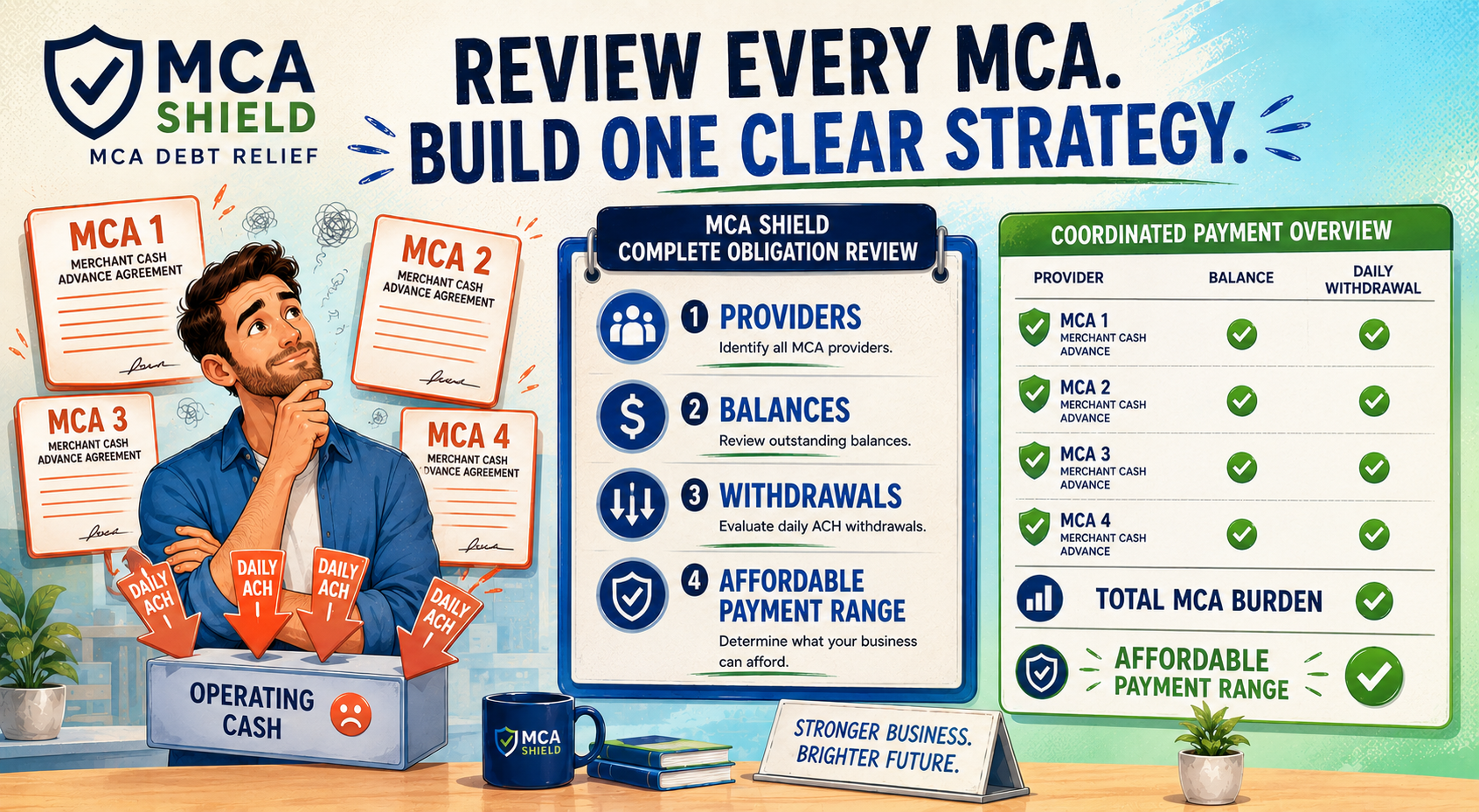
ACH withdrawals may continue during MCA debt restructuring until the provider approves and implements a different payment arrangement. Starting a restructuring review does not automatically pause or change the withdrawals authorized under the original agreement.
If a new arrangement is accepted, the MCA provider may reduce the withdrawal amount, change the payment frequency, or begin collecting payments through another approved method. The specific result depends on the agreement and the terms accepted by the provider.
The business should monitor its bank account closely throughout the process. Unexpected withdrawals can create overdrafts, returned payments, and additional pressure on the company’s operating cash.
Are Automatic Withdrawals Reduced Immediately or Stopped?
No. Automatic withdrawals are not usually reduced or stopped simply because a business requests restructuring. The existing payment schedule may remain active until the MCA provider confirms a change.
A business should not rely on a verbal conversation alone. Before adjusting its cash-flow plan, it should receive clear confirmation of:
- The new withdrawal amount
- Whether payments will remain daily or become weekly
- The date the revised payments will begin
- Which bank account will be used
- Whether the original ACH authorization remains active
- Any fees or consequences tied to the new arrangement
If multiple MCA providers are withdrawing from the same account, each provider may respond differently. One may agree to a lower payment while another continues to collect the original amount.
Therefore, the business must account for every active withdrawal. Otherwise, the remaining debits could leave the company without enough cash for payroll, rent, inventory, and other essential expenses.
What Should a Business Do About Its Operating Bank Account?
The business should continue monitoring its operating account and maintain accurate records of every MCA withdrawal. Daily account reviews can help identify duplicate debits, unexpected amounts, returned payments, and changes in withdrawal activity.
Business owners should also keep copies of:
- Bank statements
- ACH authorizations
- Payment confirmations
- Provider emails
- Modified payment agreements
- Notices of returned or rejected withdrawals
A business should not close its bank account, block withdrawals, or redirect revenue without first reviewing its MCA agreements and understanding the possible consequences. These actions could violate contract terms or trigger collection and legal activity.
Instead, the company should seek appropriate professional guidance before making major banking changes. It should also communicate with its bank and MCA providers when necessary.
The goal is to protect essential operating cash while following any confirmed restructuring arrangement. Careful account management can help the business avoid unnecessary disruptions and maintain enough working capital to continue operating.
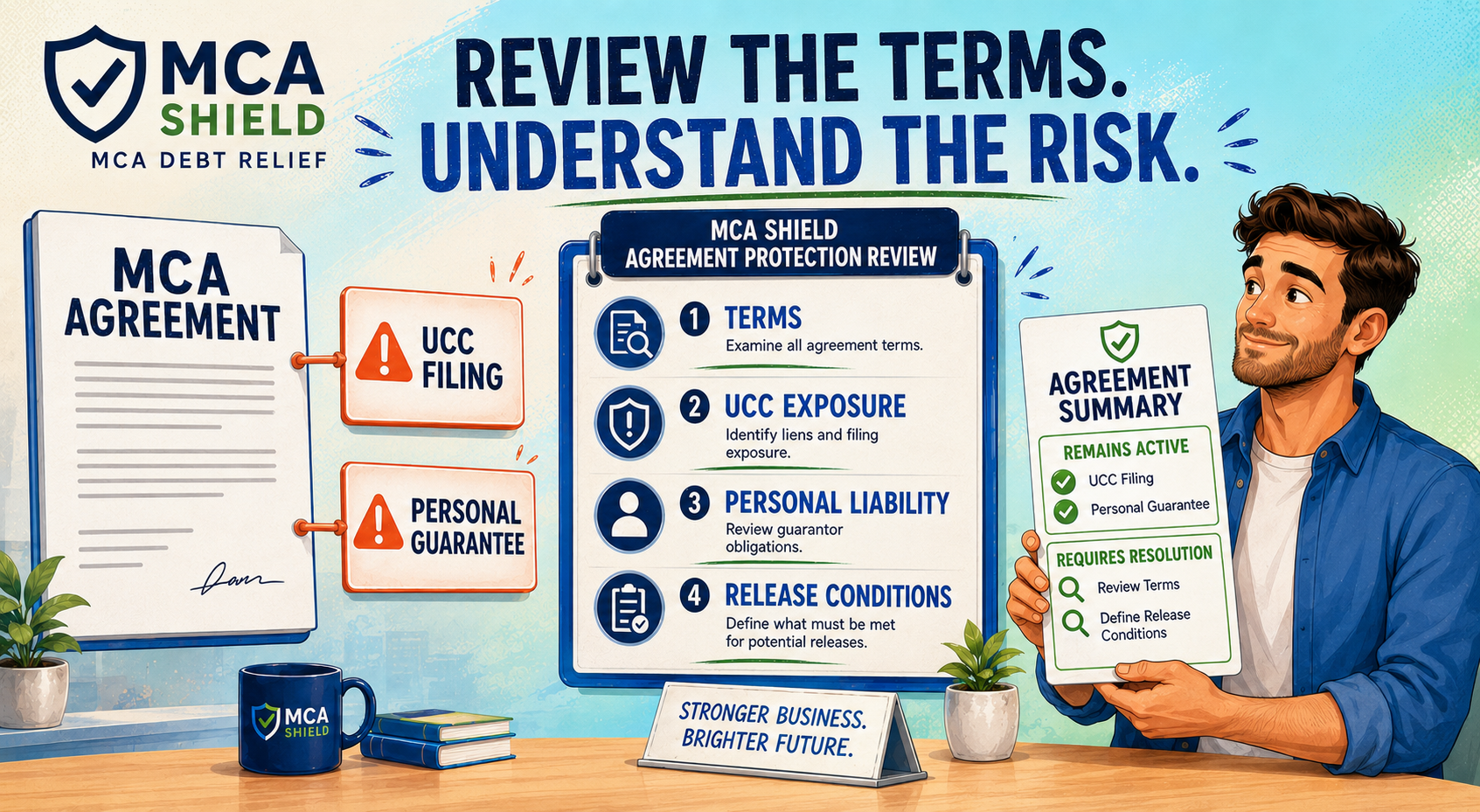
How Are UCC Filings and Personal Guarantees Handled?
Does MCA Debt Restructuring Affect Business Credit or Legal Risk?
Can a Business Continue Operating While Restructuring MCA Debt?
How Do You Choose an MCA Debt Restructuring Company?