
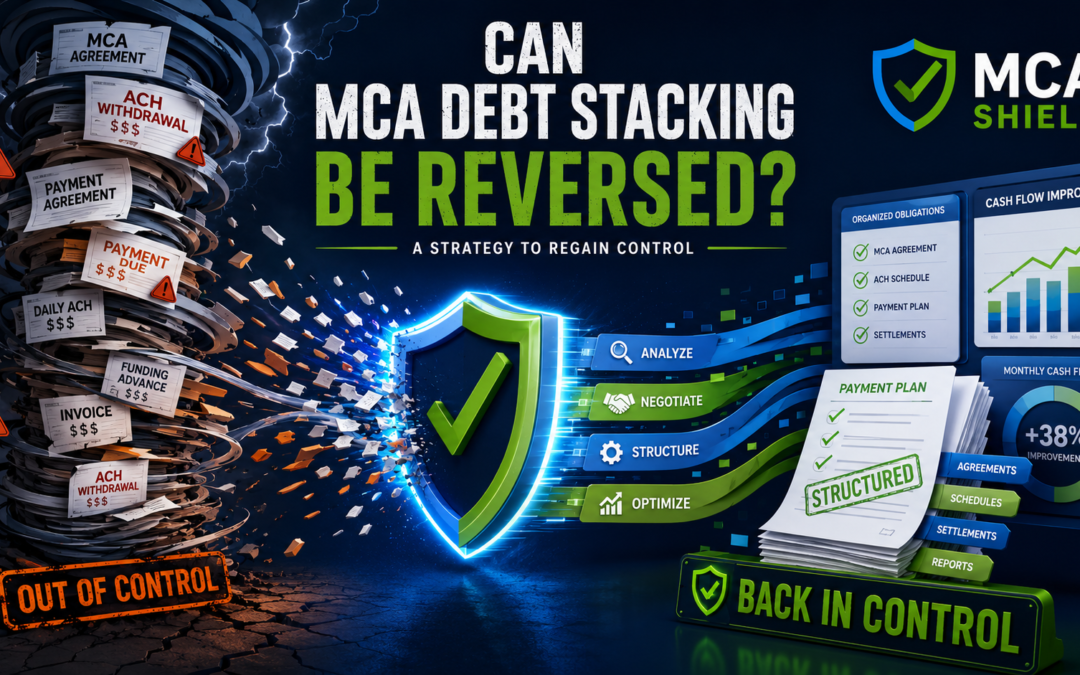
MCA debt stacking can quickly place a business under serious financial pressure. When several merchant cash advances pull money from the same revenue stream, daily or weekly withdrawals can leave less cash available for payroll, inventory, rent, and other essential expenses.
The good news is that stacked MCA debt may be addressed through settlement, restructuring, or a coordinated negotiation strategy. The right approach can help reduce payment pressure, organize multiple obligations, and create a more manageable path forward.
If your business is struggling with multiple MCA payments, acting early may give you more options. In this guide, we explain whether MCA debt stacking can be reversed, how the process may work, and what steps can help your business regain control of its cash flow.
Schedule Your Free Consultation
What Does It Mean to Reverse MCA Debt Stacking?
Reversing MCA debt stacking does not mean making existing merchant cash advances disappear. Instead, it means taking steps to address multiple MCA obligations and reduce the financial pressure they place on the business.
A successful strategy may involve negotiating, settling, or restructuring stacked MCA debt. The goal is to create a payment structure that better matches the business’s current cash flow.
How MCA Stacking Creates Multiple Payment Obligations
MCA stacking happens when a business takes out more than one merchant cash advance at the same time. Each MCA may come with its own daily or weekly withdrawal.
For example, one funder may withdraw money every business day. A second and third funder may also pull payments from the same operating account. As a result, several MCA payments can compete for the same business revenue.
The problem often becomes worse when a business takes another MCA to cover payments on an existing advance. This can increase the total number of withdrawals and create an ongoing MCA stacking cycle.
Why Stacked MCA Payments Become Difficult to Manage
Multiple withdrawals can quickly reduce the cash available for everyday operations. Even a business with steady sales may struggle when stacked MCA payments consume a large portion of incoming revenue.
This pressure can make it harder to cover:
- Payroll and employee expenses
- Rent, utilities, and insurance
- Inventory and supplies
- Taxes and vendor payments
- Other essential operating costs
As working capital falls, the business may start using credit or additional funding to cover basic expenses. That can make the financial situation even more difficult to manage.
What Reversing MCA Debt Stacking Actually Means
To reverse MCA debt stacking, a business must address the existing obligations instead of continuing to add new ones. Depending on the circumstances, this may involve negotiating with multiple MCA funders and exploring settlement or restructuring options.
The objective is to reduce payment pressure and create a more sustainable overall repayment structure. This may help the business keep more revenue available for operations while working toward resolving its MCA obligations.
In some situations, several MCA accounts may need to be addressed together. A coordinated MCA debt resolution strategy can help determine which obligations require immediate attention and how each one fits into the larger financial picture.
Ultimately, reversing MCA stacking is about breaking the cycle of repeated advances and regaining control of business cash flow.
Can Stacked MCA Debt Be Settled or Restructured?
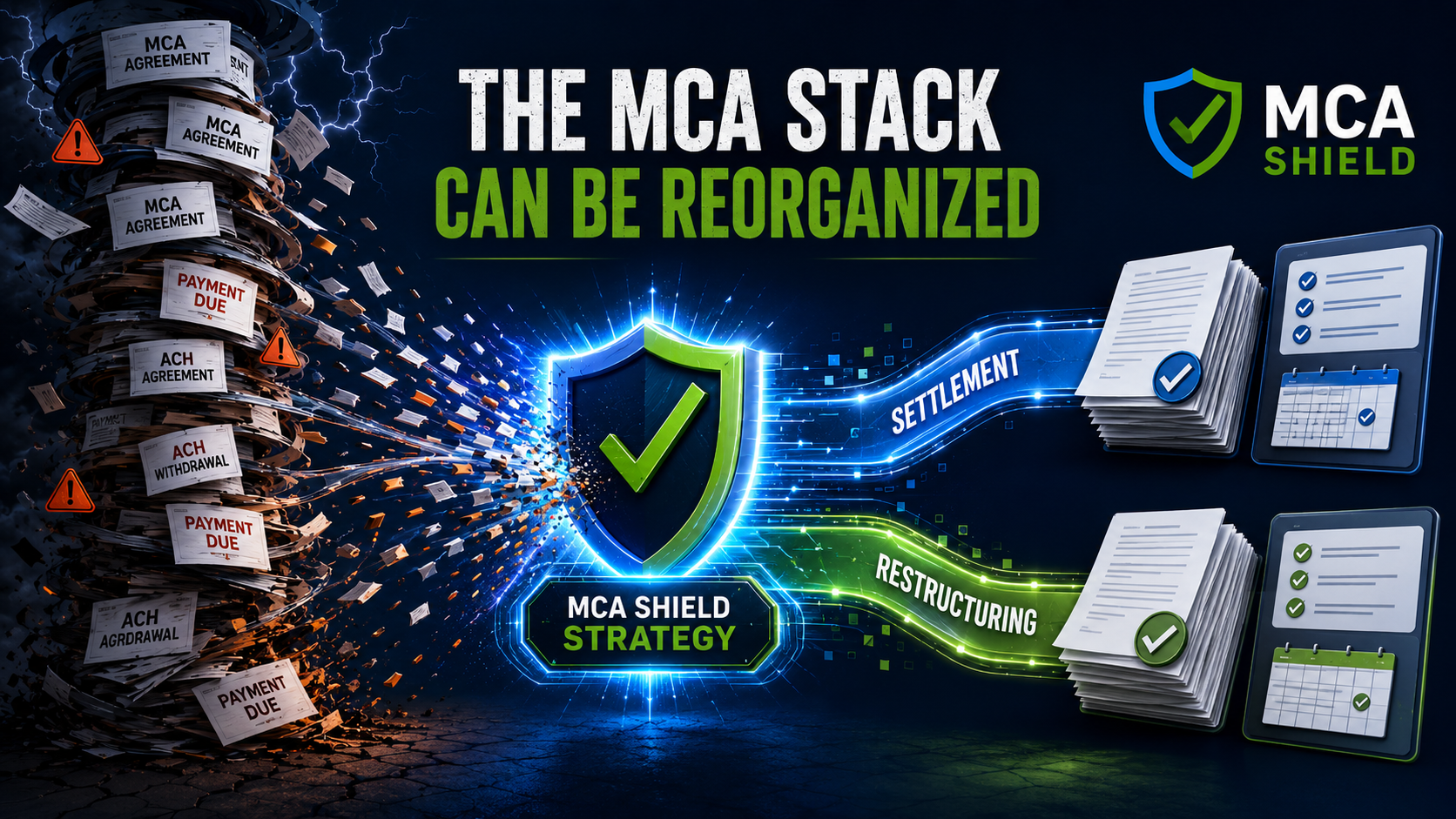
In many situations, stacked MCA debt may be addressed through settlement, restructuring, or negotiated payment changes. The right approach depends on the business’s cash flow, the number of MCA obligations, the balances owed, and how each funder responds.
The goal is usually to reduce immediate payment pressure and create a more sustainable way to resolve the existing MCA debt. Rather than adding another advance, the business can focus on the obligations it already has.
Negotiating Existing MCA Obligations
When a business has several merchant cash advances, each MCA may need to be reviewed separately. Terms, balances, withdrawal schedules, and funder policies can vary.
A negotiation strategy may focus on changing payment terms, reducing balances through settlement, or modifying the repayment structure. In some cases, multiple MCA funders may be approached as part of one coordinated strategy.
This can help the business understand which obligations create the most pressure and which ones should receive immediate attention.
Reducing Daily or Weekly Payment Pressure
Daily and weekly withdrawals are often one of the biggest problems with MCA debt stacking. When several funders withdraw money from the same operating account, working capital can disappear quickly.
A negotiated arrangement may help lower or modify scheduled payments, depending on the funder and the circumstances. Reducing this pressure can leave more cash available for payroll, inventory, rent, taxes, and other essential expenses.
Even a smaller payment adjustment can make a meaningful difference when several MCA withdrawals are occurring at the same time.
Creating a More Manageable Repayment Structure
The objective of restructuring or settling stacked MCA debt is not simply to move payments around. It is to create a plan that the business has a better chance of maintaining.
A more manageable structure may involve lower payments, modified withdrawal schedules, negotiated settlement amounts, or coordinated resolutions with multiple funders.
The best outcome is one that helps the business address existing MCA obligations without continuing the stacking cycle. By bringing payments more closely in line with available cash flow, the business may have a better opportunity to stabilize operations and regain financial control.
How MCA Debt Settlement Can Help Reverse Stacking
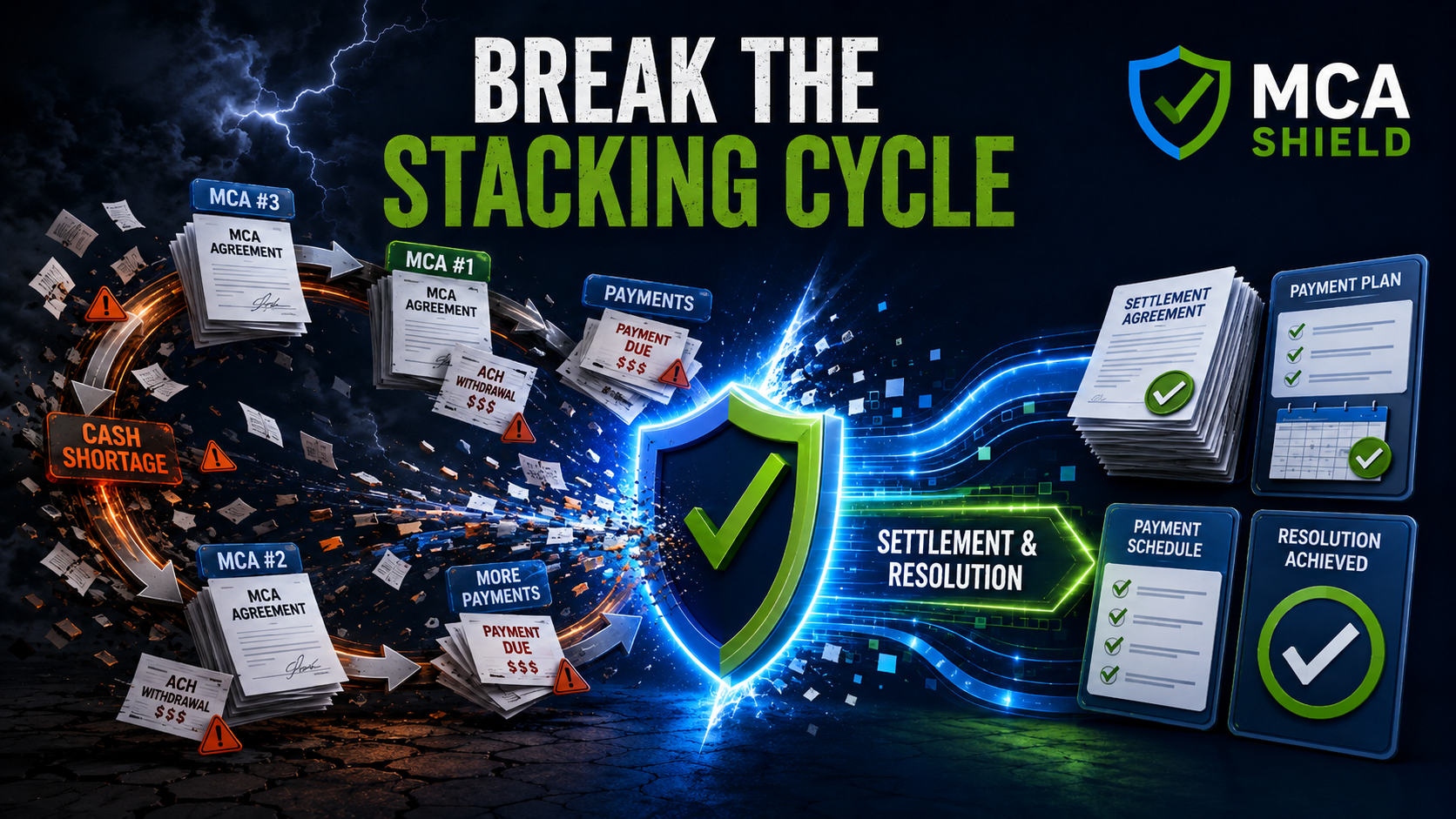
MCA debt settlement can be one way to address the financial pressure created by multiple merchant cash advances. Instead of continuing to add new funding, settlement focuses on resolving the existing stacked MCA debt.
The process may involve negotiations with one or more funders to reach modified repayment terms or settlement arrangements. When successful, this can help a business reduce payment pressure, simplify its obligations, and improve available cash flow.
Working With Multiple MCA Funders
A business with stacked MCA debt may owe money to several funders at the same time. Each MCA can have a different balance, payment schedule, and collection status.
Because of these differences, multiple MCA obligations often require a coordinated approach. Some accounts may need immediate attention, while others may offer more flexibility.
Reviewing all obligations together can help identify which MCA payments are creating the greatest cash flow strain. It also makes it easier to develop a strategy that considers the business’s total MCA debt, rather than treating every advance as an isolated problem.
Negotiating Balances and Payment Terms
Depending on the circumstances, MCA settlement negotiations may focus on reducing the amount required to resolve an obligation, changing payment terms, or creating a different repayment arrangement.
The outcome can vary by funder. Settlement is not guaranteed, and every business situation is different. However, negotiations may create an opportunity to replace an unaffordable payment structure with something more manageable.
For a business facing several MCA withdrawals, even changes to individual obligations may help reduce the combined pressure on working capital.
The main goal is to bring MCA payments closer to what the business can realistically afford while continuing to cover essential operating expenses.
Addressing Existing Debt Instead of Adding Another MCA
When MCA payments become difficult to manage, taking another advance can seem like a quick solution. However, new funding also creates another repayment obligation.
This can make MCA debt stacking even more difficult to reverse. A new advance may temporarily provide cash, but additional daily or weekly withdrawals can place even more pressure on future revenue.
MCA debt settlement takes a different approach. Instead of adding another obligation, the business focuses on resolving the debt it already has.
Breaking this pattern can be an important step toward reversing MCA stacking. By addressing existing obligations and avoiding unnecessary new advances, a business may be able to stabilize cash flow and begin rebuilding its financial position.
Can Multiple MCA Payments Be Reduced at the Same Time?
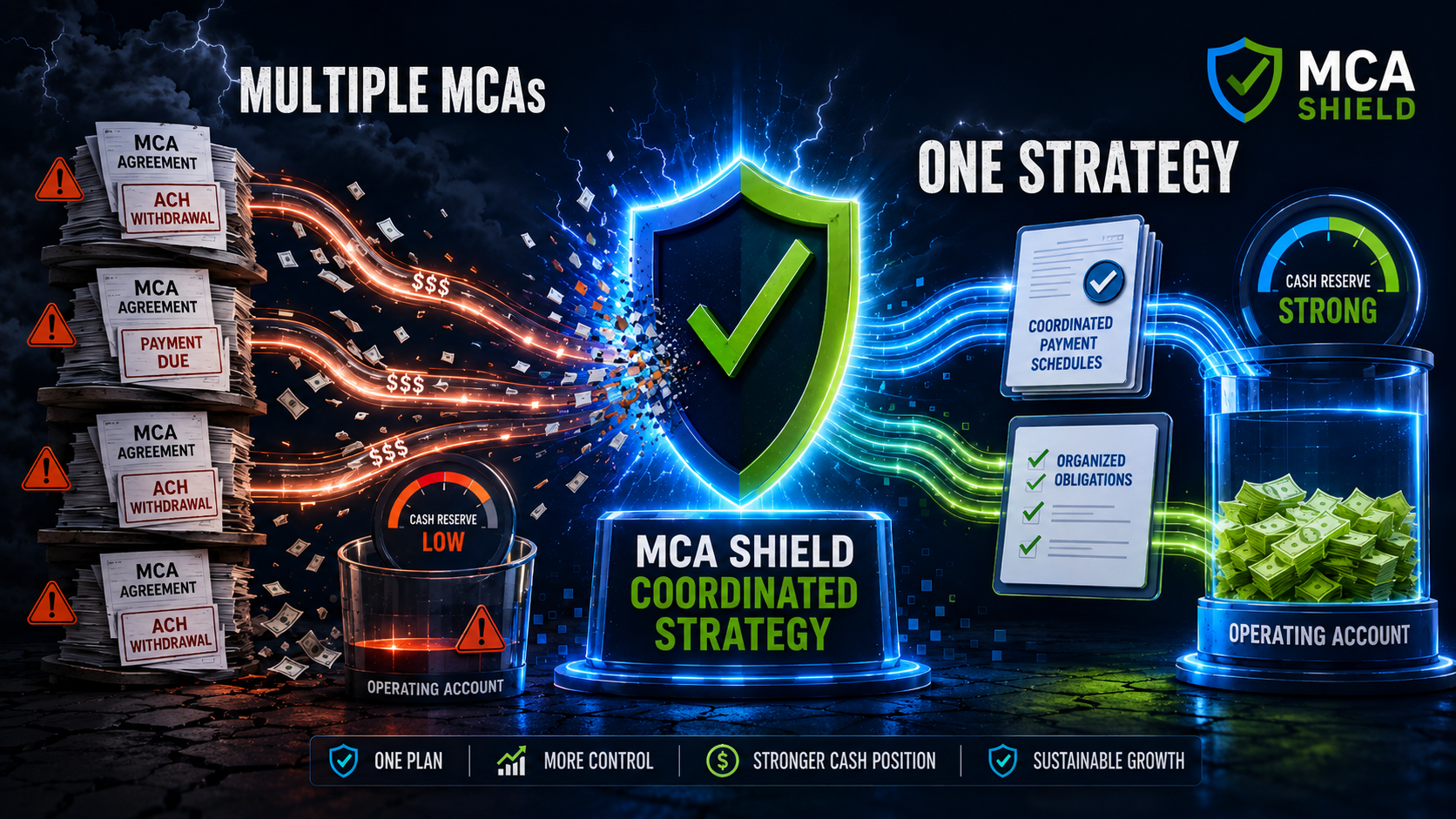
When a business has several merchant cash advances, it may be possible to address multiple MCA payments through a coordinated negotiation strategy. Each funder may have different terms, balances, and payment schedules. For that reason, the process usually requires more than simply requesting the same payment reduction from every funder.
The goal is to look at the entire MCA debt stacking situation and determine how the combined payments affect cash flow. From there, the business can work toward a more manageable overall structure.
Coordinating Negotiations With Multiple Funders
Every MCA funder operates differently. One may be willing to discuss modified payments, while another may require a different approach. This makes coordination especially important when several MCA withdrawals are hitting the same business account.
A coordinated strategy considers all outstanding MCA obligations at the same time. This can help prevent one negotiation from creating additional pressure elsewhere.
The process may include reviewing balances, payment frequency, remaining terms, and the financial condition of the business. With a clear picture of the entire stack, negotiations can focus on reducing the combined strain created by multiple MCA payments.
Prioritizing the Most Difficult MCA Obligations
Not every MCA creates the same level of financial pressure. Some may have larger withdrawals, shorter repayment periods, or more aggressive collection activity.
For this reason, businesses may need to prioritize the MCA obligations causing the greatest cash flow problems. Addressing the most difficult accounts first can create breathing room while other obligations are being reviewed.
Factors that may influence priority include:
- Size and frequency of withdrawals
- Outstanding MCA balance
- Current account or collection status
- Impact on available working capital
- Funder willingness to negotiate
Prioritizing does not mean ignoring other obligations. Instead, it helps create an organized strategy for dealing with several funders without losing sight of the business’s overall financial position.
Improving the Overall Payment Structure
Reducing one MCA payment can help, but the larger objective is to improve the combined payment structure across all stacked MCAs.
Depending on the circumstances, negotiated arrangements may include lower payments, modified withdrawal schedules, settlements, or other repayment changes. The outcome will depend on each funder and the business’s financial situation.
A better overall structure can leave more revenue available for payroll, inventory, rent, taxes, and other operating costs. It may also reduce the pressure to take another merchant cash advance simply to keep up with existing payments.
Ultimately, addressing several obligations together can help a business reverse the MCA stacking cycle and regain greater control over its cash flow.
How Reversing MCA Stacking Can Improve Business Cash Flow
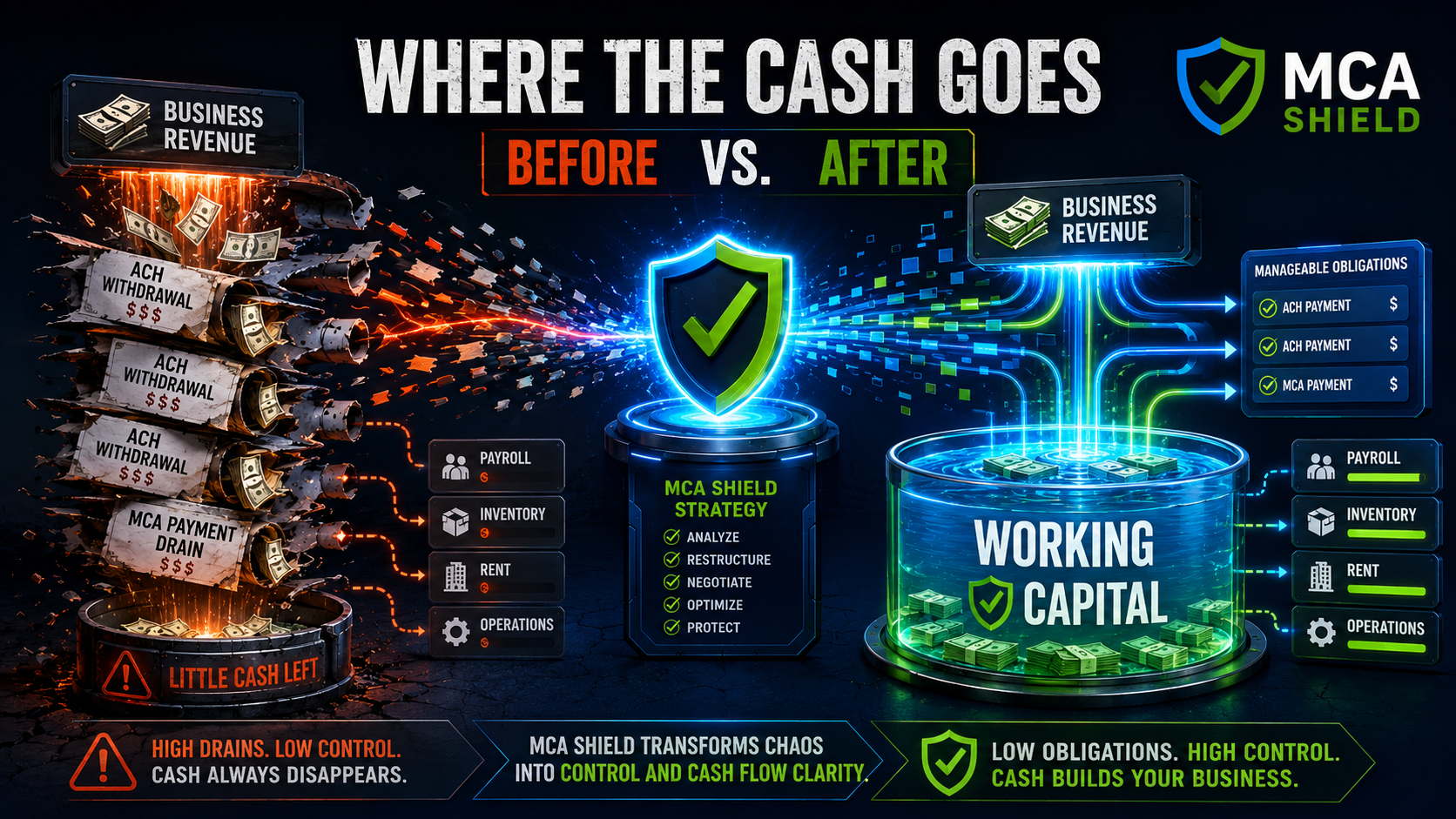
One of the biggest benefits of addressing MCA debt stacking is the potential to improve business cash flow. When multiple daily or weekly withdrawals are reduced, modified, or resolved, more money may remain available for normal operations.
Better cash flow can give a business more flexibility. It may also make it easier to cover essential expenses without depending on another merchant cash advance.
Keeping More Revenue Available for Operations
Stacked MCA payments can consume a large share of incoming revenue. When several funders withdraw money from the same account, the business may have less cash available to operate.
Reversing MCA stacking can help by reducing the amount of revenue tied up in multiple MCA payments. Depending on the negotiated outcome, this may leave more working capital available for daily business needs.
That extra cash can be used for inventory, equipment, marketing, vendor payments, and other expenses that support continued operations.
Making Payroll and Essential Expenses Easier to Cover
Payroll, rent, utilities, insurance, taxes, and supplies must still be paid even when MCA withdrawals are high. If too much revenue goes toward stacked MCA obligations, these expenses can become difficult to manage.
A more sustainable payment structure may help the business protect the cash needed for essential operating expenses. This can reduce financial pressure and make weekly cash flow easier to plan.
For many businesses, the ability to cover payroll and core expenses consistently can be an important step toward restoring stability.
Reducing the Need for Additional MCA Funding
One of the most damaging parts of MCA debt stacking can be the pressure to take another advance simply to cover existing obligations.
If payment pressure is reduced, the business may be less likely to rely on new MCA funding to make old MCA payments. This can help break the stacking cycle.
Instead of continually adding new obligations, the business can focus on resolving existing MCA debt and rebuilding working capital.
Over time, improving available cash flow can help create a stronger financial foundation and give the business more control over future funding decisions.
When Should You Take Action on Stacked MCA Debt?
The best time to address stacked MCA debt is often before the financial pressure becomes unmanageable. Waiting too long can reduce flexibility and make it harder to keep up with normal business expenses.
If multiple MCA withdrawals are affecting working capital, it may be time to review the situation. Acting early can give a business more time to explore settlement, restructuring, or other MCA debt resolution options.
MCA Withdrawals Are Consuming Too Much Revenue
A major warning sign is when daily or weekly MCA withdrawals take a large share of incoming revenue. The business may still be generating sales, but too much of that money leaves the account before it can be used for operations.
When MCA payments consume too much business revenue, cash flow can tighten quickly. This can make even routine expenses harder to manage.
If several funders are withdrawing money at the same time, the combined impact can be especially severe. That may signal that the current payment structure is no longer sustainable.
Operating Expenses Are Becoming Difficult to Cover
Another warning sign is when the business begins struggling to pay normal operating expenses.
This may include:
- Payroll
- Rent and utilities
- Inventory and supplies
- Taxes
- Insurance
- Vendor payments
When essential expenses start competing with stacked MCA payments, the business may be entering a dangerous cash flow cycle.
At that point, addressing the existing obligations may be more effective than continuing to manage them one payment at a time. A coordinated strategy can help focus on reducing payment pressure while protecting the cash needed to operate.
You Are Considering Another MCA to Make Existing Payments
One of the clearest warning signs is considering another merchant cash advance simply to keep up with current MCA payments.
New funding may provide short-term cash, but it also creates another repayment obligation. That can make MCA debt stacking even worse.
Using one MCA to help pay another can lead to more withdrawals, less working capital, and greater dependence on future funding.
Instead of adding another advance, it may be time to explore ways to address the existing stacked MCA debt directly. Settlement, restructuring, or coordinated negotiations may provide a better path toward breaking the cycle and regaining control of business cash flow.
Frequently Asked Questions About Reversing MCA Debt Stacking
Businesses dealing with MCA debt stacking often want to know whether the situation can be reversed and how long the process may take. While every business and MCA agreement is different, settlement or restructuring may provide options for addressing multiple obligations.
Here are answers to some of the most common questions about reversing stacked MCA debt.
Can You Get Out of Stacked MCA Debt?
Yes, businesses may have options for getting out of stacked MCA debt. The right approach depends on the number of MCAs, the balances owed, current cash flow, and each funder’s willingness to negotiate.
Possible strategies may include MCA settlement, restructuring, modified payment arrangements, or coordinated negotiations with multiple funders. The objective is to address existing obligations while reducing the pressure they place on the business.
Getting out of an MCA stack does not usually happen overnight. However, developing a strategy early may help the business stop adding new advances and begin working toward a more manageable financial position.
Can Multiple MCAs Be Settled at the Same Time?
It may be possible to negotiate multiple MCA settlements during the same period. However, each funder typically has its own agreement, policies, and negotiation process.
For this reason, multiple MCAs should be viewed as part of one larger financial picture. A coordinated strategy can help determine which obligations require immediate attention and how each negotiation affects overall cash flow.
The goal is not simply to settle one MCA while the remaining withdrawals continue creating the same problem. Instead, the business should work toward an overall MCA debt resolution strategy that addresses the full stack.
How Long Does It Take to Resolve Stacked MCA Debt?
There is no single timeline for resolving stacked MCA debt. The process can vary depending on the number of funders, outstanding balances, account status, financial hardship, and how quickly agreements can be reached.
Some MCA obligations may move toward resolution faster than others. Businesses with several funders may require more time because each account may need to be negotiated separately.
Acting early and having accurate financial information available can help keep the process organized. Most importantly, businesses should focus on reaching realistic agreements that support long-term cash flow, rather than rushing into arrangements they may struggle to maintain.
Take Control of Stacked MCA Debt Before It Gets Worse
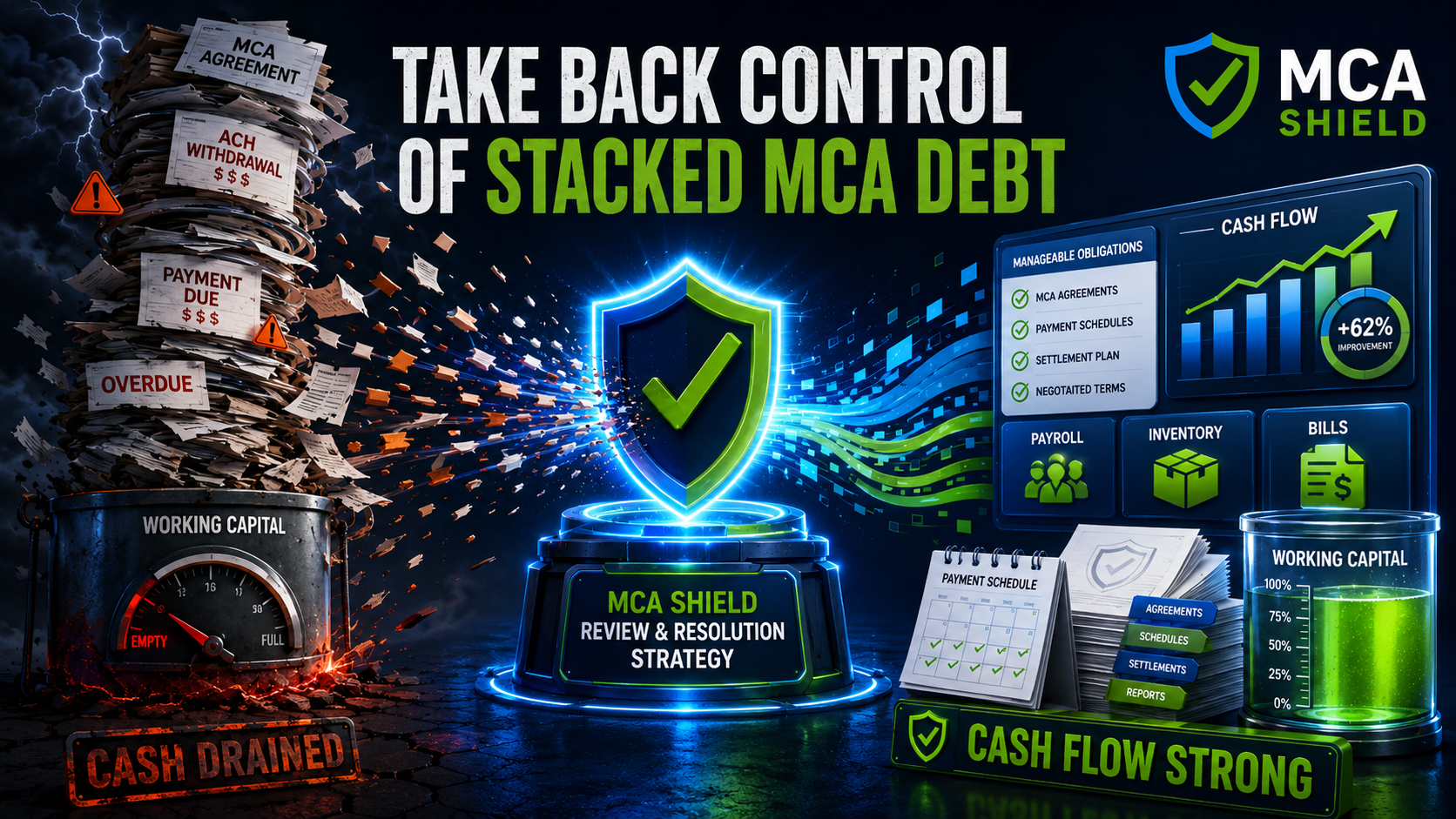
Stacked MCA debt can become harder to manage the longer it continues. Multiple daily or weekly withdrawals can reduce working capital, create pressure on essential expenses, and make it difficult to plan ahead.
If your business is struggling with MCA debt stacking, waiting for the situation to improve on its own may not be the best strategy. Reviewing your options now may help you identify a more manageable way to address existing obligations and protect business cash flow.
Why Acting Early May Give Your Business More Options
The earlier you address stacked MCA payments, the more time you may have to evaluate possible solutions. This can include MCA settlement, restructuring, or coordinated negotiations with multiple funders.
Acting early may also help your business avoid taking another merchant cash advance simply to keep up with current payments. Adding new debt can increase withdrawal pressure and make the MCA stacking cycle even more difficult to reverse.
By reviewing the full financial picture before cash flow reaches a critical point, you may be able to develop a strategy that focuses on reducing payment pressure, protecting working capital, and resolving existing MCA debt.
Schedule a Free Consultation With MCA Shield
If stacked MCA payments are making it difficult to run your business, MCA Shield can review your situation and help you understand your available options.
Every business is different. Your MCA balances, payment schedules, funders, and current cash flow can all affect which strategy makes the most sense.
Schedule a free consultation with MCA Shield to discuss your stacked MCA debt and learn whether settlement, restructuring, or another coordinated strategy may help your business move forward.
The sooner you understand your options, the sooner you can begin working toward greater control over your MCA obligations and business cash flow.