
ClickCease
Explore options for your business’s MCA payments.Call (918) 608-0117

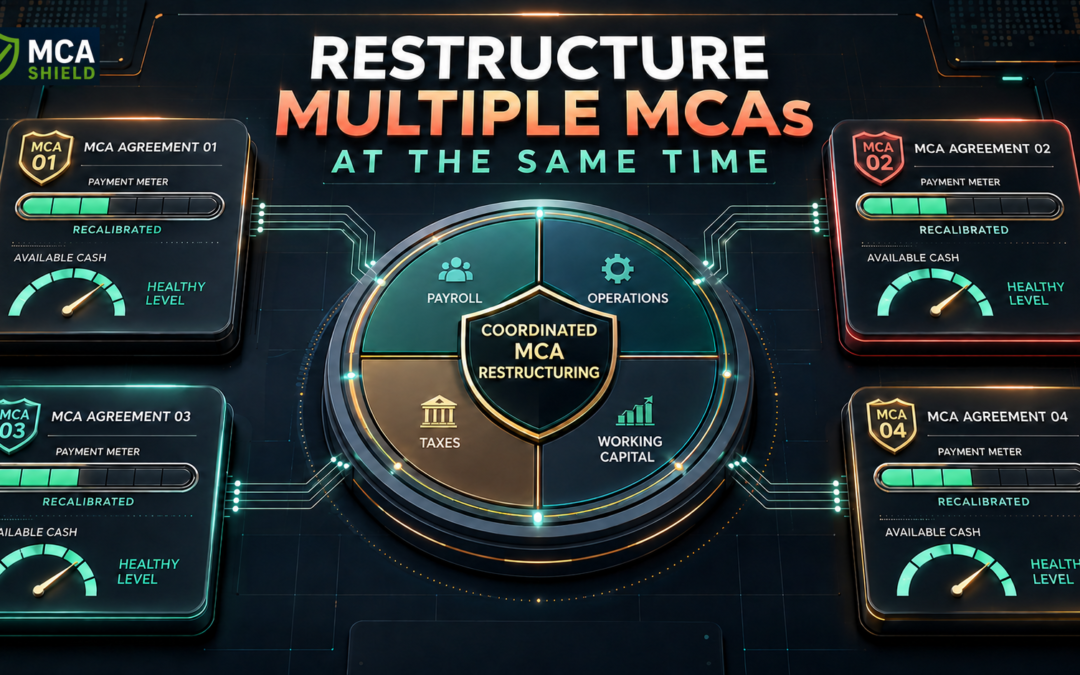
Managing several merchant cash advances at once can place intense pressure on a business. Daily or weekly withdrawals may reduce working capital, disrupt payroll, and make essential operating expenses harder to cover. Fortunately, it may be possible to restructure multiple merchant cash advances with one coordinated strategy.

However, each MCA agreement has different terms, balances, payment schedules, and funder requirements. Therefore, successful restructuring requires a complete review of every obligation. The goal is to create a total payment structure the business can realistically afford.

This guide explains how coordinated MCA restructuring works, which payment terms may change, and how to protect cash flow, payroll, operations, and working capital throughout the process.

Schedule Your Free Consultation

The Short Answer: Multiple MCAs Can Be Restructured Together

Yes, a business may be able to restructure multiple merchant cash advances at the same time. However, this does not mean every funder will accept identical terms or combine the agreements into one obligation. Instead, the business develops a coordinated strategy that addresses all MCA payments within one affordable operating budget.

The goal is to reduce the combined pressure on cash flow. Depending on the agreements and funders involved, restructuring may lower daily or weekly withdrawals, extend payment schedules, or change payment frequency. However, the proposed terms must also give the business enough flexibility to cover payroll, taxes, inventory, operating expenses, and working capital.

Coordinated Restructuring Addresses the Total Payment Burden

When a business has several MCAs, reviewing each payment individually can yield an incomplete solution. A reduced payment with one funder may provide little relief if the remaining withdrawals continue to drain the business bank account.

Therefore, coordinated restructuring begins by calculating the total daily or weekly MCA payment burden. This review should include every outstanding balance, scheduled withdrawal, payment frequency, and remaining obligation. It should also compare the combined payments with the company’s current revenue and essential expenses.

Once the business identifies an affordable total payment amount, that budget can guide negotiations with each funder. Every proposed payment must fit within the same financial plan. This coordinated approach helps prevent one restructured agreement from consuming the cash needed for another agreement or for essential business costs.

Most importantly, the strategy should create meaningful cash-flow relief. A payment arrangement may look better on paper, but it will not solve the problem if the combined withdrawals still exceed what the business can afford.

Each MCA Agreement Still Requires Individual Review

Although multiple MCAs can be addressed through one coordinated strategy, each agreement remains separate. Every funder may have different contract terms, outstanding balances, payment histories, and restructuring requirements.

For that reason, each agreement requires a careful review. The business should confirm the current balance, withdrawal amount, payment schedule, reconciliation provisions, added fees, and any terms that could affect negotiations. It should also verify whether the account is current, behind on payments, or already in default.

In addition, funders may respond differently to the same financial hardship. One may agree to lower withdrawals, while another may offer a longer schedule or request additional financial records. A third funder may reject the first proposal and require further negotiation.

A strong restructuring plan accounts for these differences while keeping all payments within a single affordable cash-flow budget. The agreements remain separate, but the financial strategy connects them.

Why Multiple MCA Payments Must Be Treated as One Cash-Flow Problem
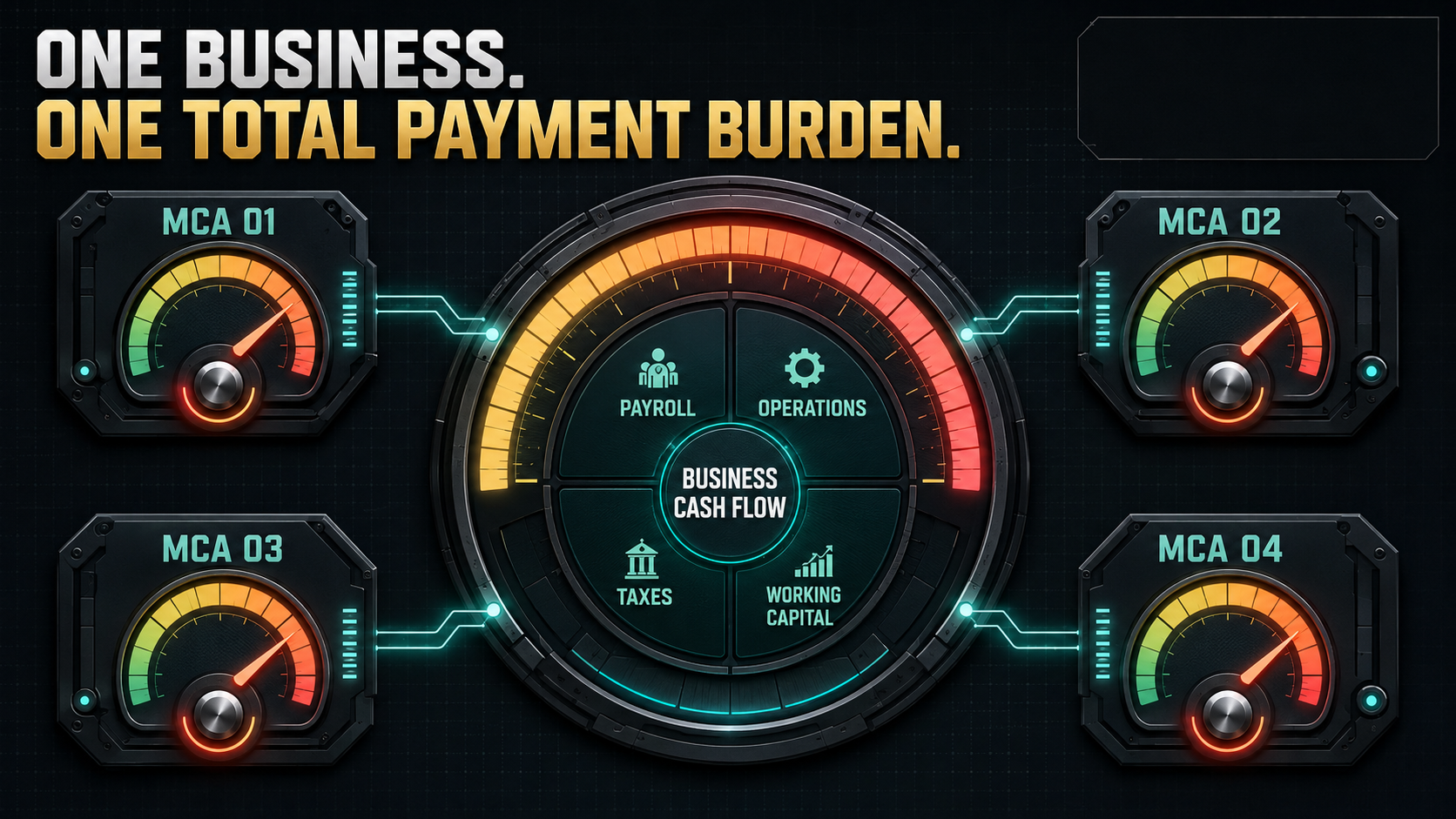
Four MCA withdrawal controls pressing against one business cash flow gauge protecting payroll operations taxes and working capital

Each merchant cash advance may have a separate agreement, funder, balance, and payment schedule. However, every withdrawal comes from the same business cash flow. Therefore, multiple MCA payments must be evaluated as one combined financial burden.

Reviewing each payment separately can make the obligations appear more manageable than they are. For example, one daily withdrawal may seem affordable on its own. However, three or four withdrawals taken from the same bank account can quickly reduce the cash available for essential expenses.

Before a business tries to restructure multiple merchant cash advances, it must understand how the combined payments affect its entire operating budget. This creates a clear starting point for determining what the business can realistically afford.

Calculate the Combined Daily or Weekly Withdrawals

Start by listing every active MCA agreement and its scheduled withdrawal. Include the payment amount, payment frequency, outstanding balance, and expected payment date for each obligation.

Next, calculate the total amount withdrawn each day or week. A business with four daily MCA payments of $250, $300, $400, and $550 is not managing four small payments. It is losing $1,500 every business day before paying employees, vendors, taxes, or operating costs.

The calculation should also account for withdrawals scheduled on different days. Weekly payments, daily ACH withdrawals, and percentage-based debits may affect the bank account at different times. As a result, the business should review both the total payment burden and the timing of each withdrawal.

This combined number provides a more accurate picture of the financial pressure. This total also shows whether current revenue covers obligations and prevents cash shortages from returning.

Protect Payroll, Operations, Taxes, and Working Capital

MCA restructuring should do more than reduce one payment. The new structure should protect the cash required to keep the business operating.

First, the business must identify its essential expenses. These may include payroll, rent, utilities, inventory, materials, insurance, vendor payments, and taxes. The company must fund these obligations before assigning the remaining cash to restructured MCA payments.

Working capital also requires protection. A business needs cash available to handle normal revenue changes, unexpected repairs, delayed customer payments, and seasonal expenses. Without that financial cushion, even a lower MCA payment may leave the company vulnerable to another shortfall.

An affordable restructuring plan considers the full operating budget. It does not simply divide available cash among the funders. Instead, it determines how much the business can pay after protecting essential expenses and maintaining enough working capital to continue operating.

By treating every MCA as part of one cash-flow problem, the business can pursue a coordinated payment structure that supports both its obligations and its long-term stability.

How Restructuring Multiple Merchant Cash Advances Works
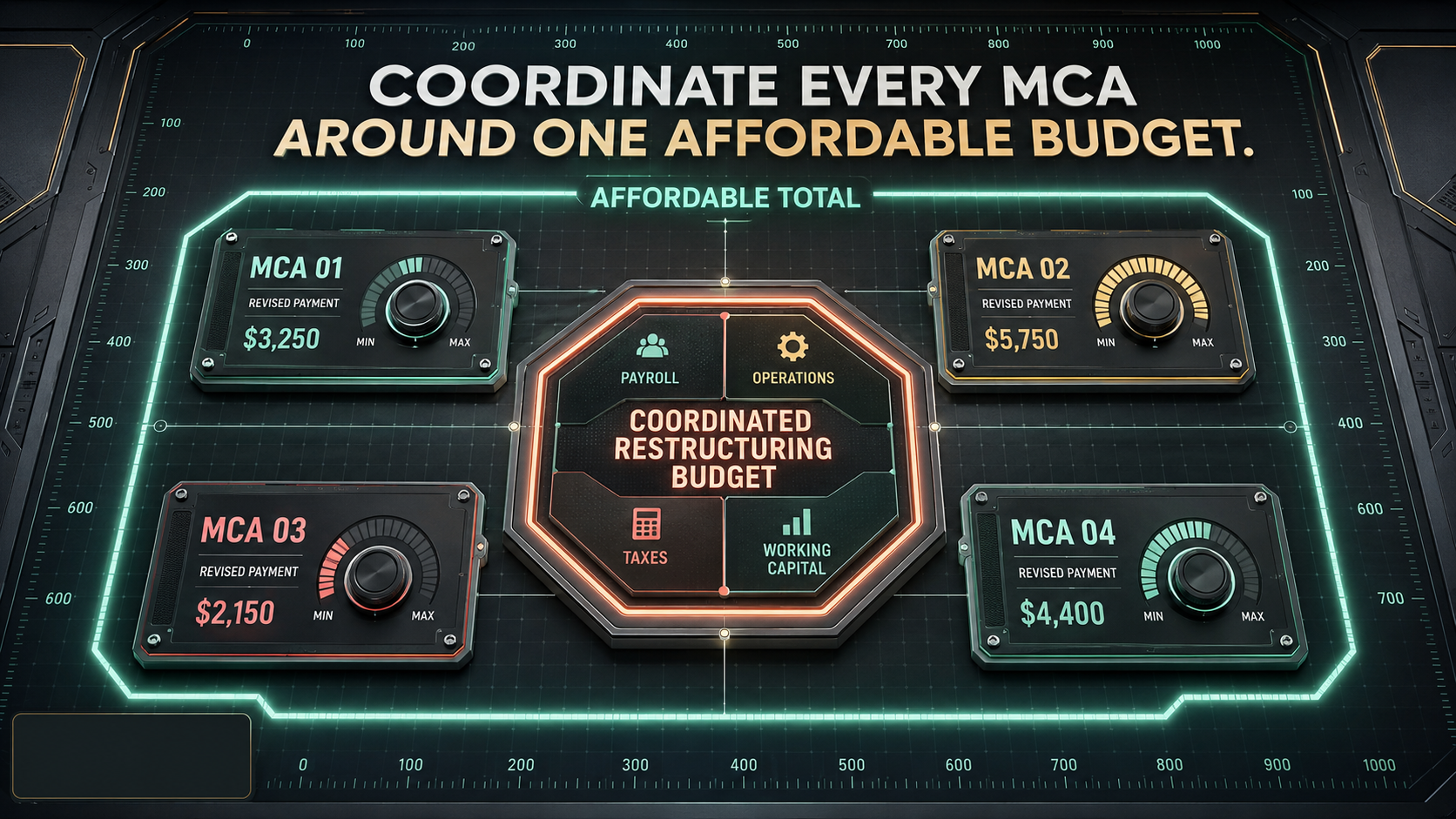
Four MCA agreements coordinated around one affordable restructuring budget with revised payment settings

Restructuring several MCAs requires more than negotiating a lower payment with one funder. The business must review every obligation, calculate an affordable total payment, and coordinate the proposed terms across all agreements.

The process to restructure multiple merchant cash advances begins with a complete financial review. This review connects each MCA payment to the company’s current revenue, essential expenses, and working-capital needs. It then provides the numbers required to build a realistic restructuring strategy.

Review Every MCA Agreement and Outstanding Balance

First, gather all MCA agreements, recent bank statements, payment records, and funder communication. The business needs accurate information before it can evaluate the total payment burden.

Review the original advance amount, purchased amount, current balance, withdrawal amount, payment frequency, and remaining payment schedule for each MCA. Also check for added fees, reconciliation provisions, default terms, and restrictions that could affect negotiations.

Next, compare the agreement balance with the payment history. This step confirms how much the business has already paid and how much remains. It can also uncover incorrect balances, unexpected withdrawals, or fees that require further explanation.

The review should include every MCA, even if one payment seems small. A single agreement may not appear harmful on its own. However, its withdrawal can still affect the total amount available for payroll, operations, and other obligations.

Determine One Affordable Payment Budget

After reviewing the agreements, calculate how much the business can realistically pay toward all MCA obligations. Start with the company’s current revenue rather than older projections or unusually strong sales months.

Then, subtract essential expenses such as payroll, rent, inventory, utilities, insurance, taxes, and critical vendor payments. The business should also reserve a reasonable amount of working capital for revenue fluctuations and unexpected costs.

The remaining amount helps establish the total payment capacity. However, the business should not automatically offer every available dollar to the funders. A payment plan that removes all financial flexibility may lead to another cash shortage.

Instead, create one affordable MCA payment budget for all agreements. Every proposed payment must fit within that combined limit. This prevents one funder from receiving terms that leave too little cash for the remaining obligations.

A clear budget also strengthens the restructuring proposal. It shows why the current payments no longer work and what payment level the business can maintain.

Negotiate Coordinated Terms With Each MCA Funder

Once the business establishes an affordable budget, negotiations can begin with each MCA funder. The proposed terms may include lower daily or weekly withdrawals, a longer payment schedule, a different payment frequency, or temporary payment relief.

Each negotiation remains separate because every funder controls its own agreement. However, the overall strategy must stay coordinated. A proposed payment with one funder should not interfere with arrangements involving the others.

Funders may request bank statements, revenue reports, payment histories, or an explanation of the financial hardship. Accurate records can demonstrate the current cash-flow problem and explain why a revised payment structure offers a more sustainable path.

Not every funder will accept the same terms. One may lower the withdrawal, while another may extend the schedule. Therefore, the business may need to adjust individual proposals while keeping the combined payment total within the approved budget.

Coordinated negotiations aim to produce a complete payment structure that the business can manage. The process does not simply reduce individual withdrawals. It aligns every MCA obligation with the company’s actual cash-flow capacity.

Which MCA Payment Terms Can Be Restructured?

MCA restructuring may change several parts of the payment arrangement. The available options depend on the agreement, the funder, the payment history, and the business’s current financial condition.

When a business needs to restructure multiple merchant cash advances, each proposed change should fit within one coordinated cash-flow budget. Lower payments may provide immediate relief. However, the business must also review the payment schedule, frequency, added fees, and total financial impact.

Lower Daily or Weekly Withdrawals

Reducing the withdrawal amount is often the primary goal of MCA restructuring. Large daily or weekly payments can drain the business bank account before the company covers payroll, taxes, inventory, and operating expenses.

A lower withdrawal allows the business to keep more cash available between revenue deposits. This can reduce payment pressure and make ordinary expenses easier to manage.

However, the new amount must reflect the company’s actual payment capacity. A small reduction may not provide enough relief if the combined MCA payments still consume too much revenue. Therefore, the business should compare the proposed withdrawal with all other MCA payments and essential expenses.

The business should also confirm whether the lower payment adjusts the remaining balance, adds fees, or extends the agreement. A reduced withdrawal can improve short-term cash flow, but the complete financial impact still matters.

Longer Payment Schedules

A funder may agree to spread the remaining obligation across a longer payment period. This can reduce the amount withdrawn each day or week and provide the business more time to meet the obligation.

A longer schedule may help a company recover from a temporary revenue decline, seasonal slowdown, unexpected expense, or loss of a major customer. It can also provide time to rebuild working capital and stabilize operations.

Still, the business must review the total cost of the extended schedule. Added fees or other charges may increase the overall amount paid. As a result, a lower payment does not always mean a better financial outcome.

Before accepting new terms, confirm the payment amount, schedule, effective date, remaining balance, and total obligation in writing. These details help the business understand both the immediate relief and the long-term cost.

More Manageable Payment Frequencies

Some MCA agreements require automatic withdrawals every business day. Multiple daily debits can make bank-account management difficult, especially when customer deposits vary throughout the week.

Changing from daily withdrawals to weekly payments may give the business more time to collect revenue and plan for upcoming expenses. A predictable schedule can also make it easier to coordinate several MCA obligations.

However, changing the frequency alone may not reduce the total payment burden. For example, five smaller daily withdrawals and one large weekly withdrawal could remove the same amount of cash. The business must compare the total weekly payment, not only the number of withdrawals.

The best payment frequency matches the company’s revenue cycle. A restaurant with daily sales may have different needs than a contractor waiting for large customer payments. Therefore, the restructured schedule should reflect when the business receives revenue and when it must pay essential expenses.

What Makes Restructuring Multiple MCAs More Complicated?

Restructuring one merchant cash advance already requires careful financial planning. Managing several agreements adds more balances, payment schedules, funder policies, and withdrawal dates to the process.

A business may want to restructure multiple merchant cash advances with a consolidated strategy. However, each MCA remains a separate obligation. The business must coordinate each negotiation while keeping the combined payments within one affordable budget.

Different Funders May Have Different Requirements

Every MCA funder may follow a different process when reviewing a restructuring request. One funder may request bank statements and revenue reports. Another may want a written hardship explanation, payment history, or updated business budget.

Funders may also offer different forms of relief. One may lower the daily withdrawal, while another may extend the payment schedule. A third funder may change the payment frequency or offer temporary relief.

These differences can make it difficult to create one uniform arrangement. The business may need to negotiate separate terms while protecting the same total payment budget.

Communication also matters. Each funder should receive accurate and consistent financial information. Conflicting revenue figures, balances, or payment proposals can slow the process and weaken the restructuring strategy.

Conflicting Withdrawal Dates Can Disrupt Cash Flow

Multiple MCA payments may be withdrawn from the business bank account on different days. Some funders withdraw money every business day, while others collect payments weekly. These overlapping schedules can make cash flow difficult to predict.

For example, several withdrawals may occur before payroll or a major vendor payment. Even if the weekly MCA total appears affordable, the timing of those debits can leave the account without enough cash on a critical day.

Therefore, a coordinated restructuring plan must review both the payment amounts and withdrawal dates. The schedule should align as closely as possible with customer deposits, payroll cycles, tax deadlines, and essential operating expenses.

A lower total payment may still cause problems when several large debits occur at once. Careful timing can help the business avoid sudden account shortages and maintain more consistent operating cash.

One Agreement Can Affect the Entire Restructuring Strategy

A change involving one MCA can influence every other agreement. If one funder receives a payment higher than budgeted, the business may lack cash for the remaining payments and essential expenses.

In addition, one funder may accept new terms while another rejects the initial proposal. The business may then need to adjust the overall plan without exceeding its affordable payment limit.

New fees, unexpected withdrawals, or changes to an outstanding balance can also affect the combined strategy. For that reason, the business should evaluate every proposed agreement before accepting it.

The goal is not to secure relief from only one MCA. Instead, the business needs a coordinated payment structure that works across all obligations. Every agreement should fit within the same operating budget and improve the company’s overall cash-flow position.

How to Calculate an Affordable Payment Across Multiple MCAs

Cash-flow calculation showing current revenue essential expenses working capital reserve and an affordable total payment across multiple MCAs

An affordable payment should accurately reflect the amount a business can afford consistently without sacrificing essential expenses or draining its working capital. The calculation must include each MCA obligation within the total payment burden.

Before attempting to restructure multiple merchant cash advances, the business should develop a realistic cash-flow budget. This budget should use current financial information rather than optimistic sales projections. It should also account for normal revenue changes and unexpected costs.

Start With Current Business Revenue

Begin by reviewing recent bank deposits, sales reports, accounts receivable, and monthly financial statements. Focus on the revenue the business currently receives, not the income it earned during a stronger period.

Many businesses experience weekly or seasonal changes. Therefore, one profitable week may not provide an accurate basis for a long-term payment arrangement. Reviewing several recent months can reveal the company’s typical revenue level.

The calculation should also consider the timing of revenue. A business that receives large customer payments twice a month may struggle with daily MCA withdrawals, even if its monthly income appears sufficient.

Use a conservative revenue estimate when building the payment budget. This approach reduces the risk of accepting terms that only work during the company’s strongest sales periods.

Subtract Essential Operating Expenses

Next, subtract the expenses required to operate the business. These costs may include payroll, rent, utilities, inventory, materials, insurance, taxes, transportation, and critical vendor payments.

The business should also include expenses that do not occur every week. Quarterly taxes, annual insurance premiums, equipment maintenance, and license renewals can still affect available cash. Setting aside money for these costs creates a more accurate budget.

Do not treat essential operating expenses as optional simply to make a proposed MCA payment appear affordable. A payment plan will not work if the company must delay payroll, fall behind on taxes, or stop purchasing the materials needed to serve customers.

After subtracting necessary expenses, the remaining amount shows the cash available for MCA payments, reserves, and other obligations.

Preserve Enough Cash to Keep the Business Running

The business should not commit every remaining dollar to MCA payments. It needs a working-capital cushion for delayed customer payments, slower sales, urgent repairs, inventory needs, and other unexpected costs.

For example, a business may have $12,000 remaining after its monthly operating expenses. However, committing the full $12,000 to MCA payments would leave no flexibility. A lower payment budget may offer greater stability and reduce the chance of another cash shortage.

The company should determine the minimum cash reserve required to operate safely. It can then subtract that amount from the remaining cash to estimate its affordable total MCA payment.

Every restructured agreement must fit within that total. If the business can afford $7,000 per month across all MCAs, the combined proposals should not exceed that limit.

An affordable payment structure protects daily operations while allowing the business to meet its revised obligations. It also provides room to rebuild working capital and move toward stronger long-term cash-flow control.

Restructuring Multiple MCAs vs. Consolidating Them
MCA restructuring adjusts multiple existing agreements while consolidation replaces them with new financing and added cost risk

Restructuring and consolidation can both reduce the pressure induced by several MCA payments. However, they use different methods and may produce different financial outcomes.

When a business needs to restructure multiple merchant cash advances, it negotiates changes to the existing agreements. Consolidation usually involves new financing that pays off or replaces the current obligations. Before choosing either strategy, the business should compare the payment amount, total cost, repayment period, and effect on working capital.

Restructuring Changes Existing Payment Terms

MCA restructuring focuses on changing the terms of the current obligations. The business or its representative negotiates directly with each funder to obtain a payment structure that matches present cash flow.

Possible changes may include lower daily or weekly withdrawals, longer payment schedules, different payment frequencies, or temporary payment relief. Each funder decides whether to accept the proposed terms.

Restructuring does not automatically combine several MCAs into one agreement. The obligations usually remain separate. However, a coordinated strategy can align the revised payments with one affordable business budget.

This option may work well when the business cannot qualify for affordable new financing or wants to avoid adding another obligation. Still, the company must review every restructuring agreement for added fees, extended costs, and new requirements.

Consolidation Uses New Financing to Replace Obligations

MCA consolidation generally uses new financing to pay off multiple existing obligations. The business then makes payments under the new agreement instead of continuing several separate withdrawals.

A well-structured consolidation may simplify payment management and reduce the amount withdrawn each day or week. It may also replace several payment schedules with one predictable obligation.

However, consolidation does not automatically improve the company’s financial position. The new financing may include origination fees, a longer repayment period, a higher total cost, or additional funding that increases the debt burden.

Some products promoted as consolidation may function like another merchant cash advance. If the new agreement adds a large payment without fully replacing the original MCAs, the business could face even greater cash-flow pressure.

Therefore, the company should confirm which obligations the new financing will pay, when those balances will close, and whether any original withdrawals will continue.

Compare Payment Relief, Total Cost, and Financial Risk

The lowest proposed payment does not always provide the best solution. A smaller withdrawal may offer immediate relief, but a longer schedule or added fees could increase the total amount paid.

Start by comparing the current combined MCA payments with the proposed restructuring or consolidation payment. Then review the total repayment amount, agreement length, fees, payment frequency, and remaining working capital under each option.

The business should also evaluate financial risk. Restructuring may require several separate negotiations, and each funder may offer different terms. Consolidation may simplify the obligations, but it can create new risks if the financing costs too much or uses another high-frequency payment structure.

The right option should reduce payment pressure without weakening the business over time. Whether the company chooses restructuring or consolidation, the final arrangement must protect essential expenses and provide a realistic path toward stronger cash flow.

Mistakes to Avoid When Restructuring Multiple Merchant Cash Advances

A coordinated strategy can help a business restructure multiple merchant cash advances more effectively. However, several common mistakes can reduce the relief, increase financial pressure, or create another cash-flow problem.

R

Negotiating Each MCA Without a Coordinated Budget

Negotiating each MCA separately can produce payment terms that do not work together. One funder may accept a lower withdrawal, while another agreement consumes the remaining available cash.

Before negotiations begin, calculate the total amount the business can afford across every MCA. Then assign each proposed payment within that limit.

Every agreement should fit the same operating budget. This approach protects payroll, taxes, essential expenses, and working capital while preventing one negotiation from weakening the entire restructuring strategy.

R

Accepting Payments the Business Still Cannot Afford

A lower payment does not always provide meaningful relief. The revised amount may still exceed the company’s actual payment capacity after adding the other MCA obligations.

Compare every proposed payment with current revenue, essential operating expenses, and working-capital needs. Then calculate the combined daily, weekly, and monthly burden.

Do not accept terms based only on the size of the reduction. The new structure must work during normal and slower revenue periods. Otherwise, the business may quickly face another cash shortage.

R

Taking Another MCA During the Restructuring Process

A new MCA may provide immediate cash, but it can interfere with the restructuring process. Another daily or weekly withdrawal may increase the payment burden and reduce the relief gained through negotiations.

New funding can also change the company’s financial records while funders review its hardship and payment capacity. This may make a coordinated plan more difficult to complete.

Before accepting another advance, review all existing obligations and available relief options. Adding another payment should not replace the work required to correct the underlying cash-flow problem.

When Should You Restructure Multiple Merchant Cash Advances?

A business should explore restructuring before MCA payments cause a severe cash-flow crisis. Waiting until the company misses payroll, falls behind on taxes, or defaults on several obligations may reduce the available options.

The right time to restructure multiple merchant cash advances often arrives when combined withdrawals begin to interfere with normal operations. Several warning signs can indicate that the current payment structure no longer fits the company’s financial condition.

MCA Payments Are Threatening Essential Expenses

MCA payments may have become unsustainable when the business struggles to cover payroll, rent, utilities, inventory, taxes, or critical vendor bills. These expenses keep the company operating and should not compete with oversized daily or weekly withdrawals.

The business may also begin delaying purchases, postponing maintenance, or paying bills later than usual. Although the company may remain current on its MCAs, the payment schedule could still weaken daily operations.

Review the total MCA withdrawal burden as soon as essential expenses become harder to manage. Early action may provide more time to evaluate the agreements, document the cash-flow problem, and pursue coordinated terms with each funder.

Working Capital and Cash Reserves Keep Declining

Declining working capital can signal that MCA payments are removing cash faster than the business can rebuild it. The bank account may recover after customer deposits but fall again if several withdrawals occur.

Cash reserves may also shrink each month, even when sales remain steady. This pattern suggests that the company’s current payment structure no longer matches its revenue and operating costs.

Without adequate working capital, the business may struggle to purchase inventory, accept new projects, repair equipment, or handle slower sales periods. Eventually, one unexpected expense can trigger a serious cash shortage.

A restructuring review should measure current revenue, essential expenses, total MCA payments, and available cash reserves. These numbers can help establish a payment budget that protects ongoing operations.

The Business Is Considering Another MCA to Cover Shortfalls

The need for another MCA often signals a deeper cash-flow problem. New funding may temporarily cover payroll, bills, or an account shortage. However, another withdrawal can increase the combined payment burden.

Using a new MCA to manage existing MCA payments can also continue the stacking cycle. The business receives short-term cash but commits more future revenue to daily or weekly withdrawals.

Before signing another agreement, review every current obligation and calculate the total amount leaving the business account. Then compare the cost of new funding with available restructuring, settlement, or other relief options.

A new advance should not disguise an unaffordable payment structure. If the business needs additional MCA funding to manage existing obligations, it may be time to pursue a coordinated restructuring strategy before the financial pressure grows.

Take Action Before Multiple MCA Payments Limit Your Options
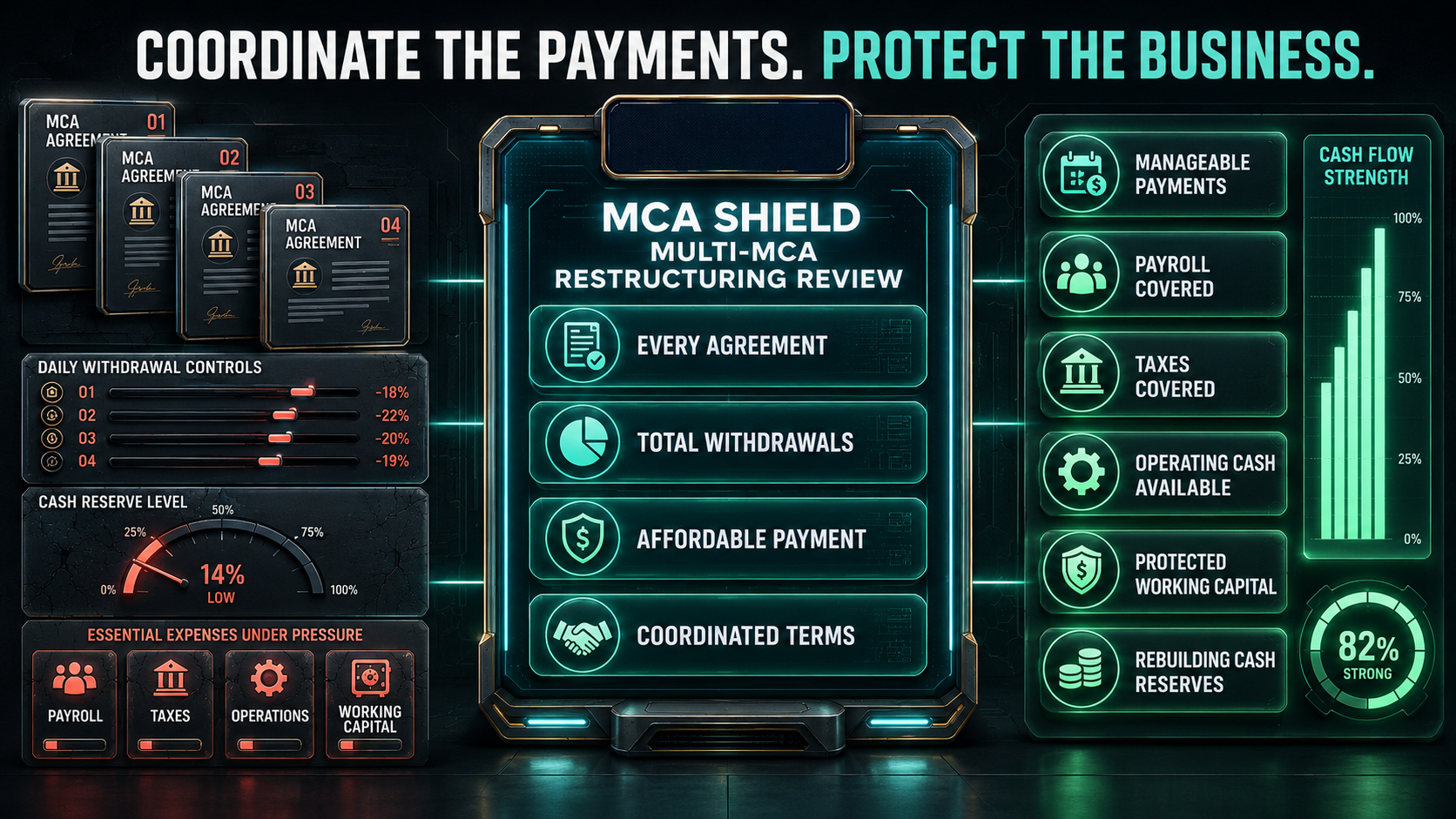
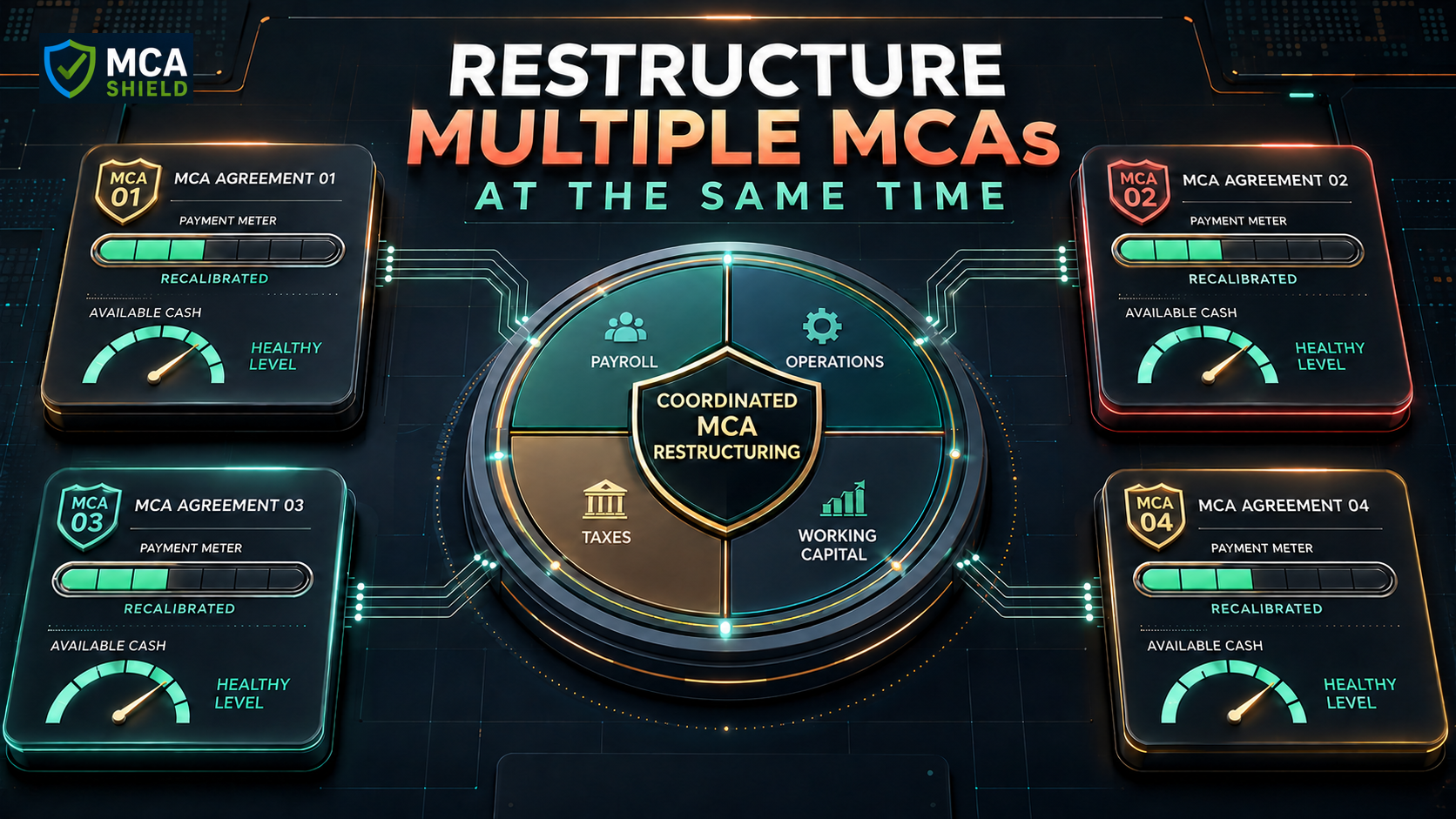
Multiple MCA payments coordinated through an MCA Shield restructuring review to protect payroll taxes working capital and business cash flow

Multiple daily or weekly withdrawals can quickly weaken cash flow, reduce working capital, and make essential expenses harder to manage. The longer the payment pressure continues, the more difficult it may become to stabilize the business.

Acting early gives you more time to review every agreement, calculate the total withdrawal burden, and identify an affordable payment level. It can also help you avoid taking another high-cost advance to cover a temporary cash shortage.

If you need to restructure multiple merchant cash advances, start with a comprehensive review of your current obligations. The right strategy should address every MCA within one realistic business budget.

Schedule a Free Consultation With MCA Shield

MCA Shield can review your agreements, outstanding balances, payment schedules, and current cash-flow pressure. The consultation can help identify whether restructuring or another relief strategy may benefit your business.

During the review, MCA Shield can help you understand:

  • Your total daily or weekly MCA payments
  • The cash available after essential operating expenses
  • A realistic and affordable payment level
  • Potential options for coordinating several MCA obligations
  • The next steps for protecting working capital and business operations

You do not have to wait until MCA payments threaten payroll, taxes, inventory, or critical vendor bills. Schedule a Free Consultation With MCA Shield to review your options and begin building a more manageable cash-flow strategy.

Schedule Your Free Consultation