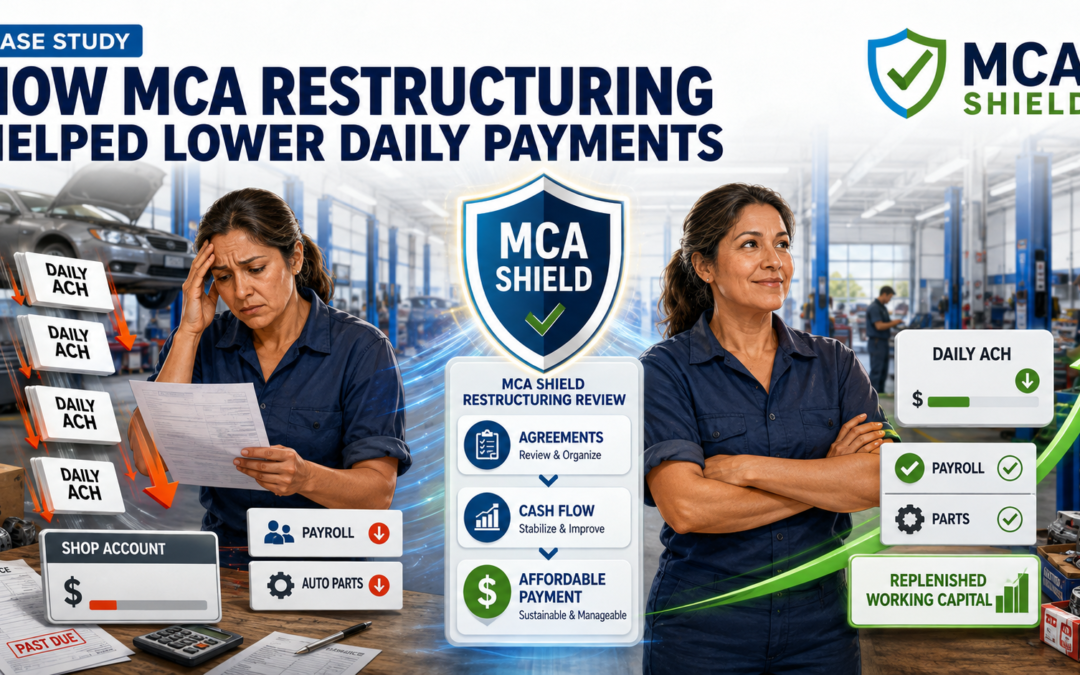
Daily merchant cash advance withdrawals can create serious pressure, even when a business continues generating strong sales. In this MCA restructuring case study, an independent auto repair shop faced growing difficulty covering payroll, ordering parts, and maintaining enough working capital to operate.
The owner had used multiple merchant cash advances to purchase equipment, repair the building, and manage a temporary slowdown. However, repeated withdrawals soon began draining the business account faster than the shop could rebuild its reserves.
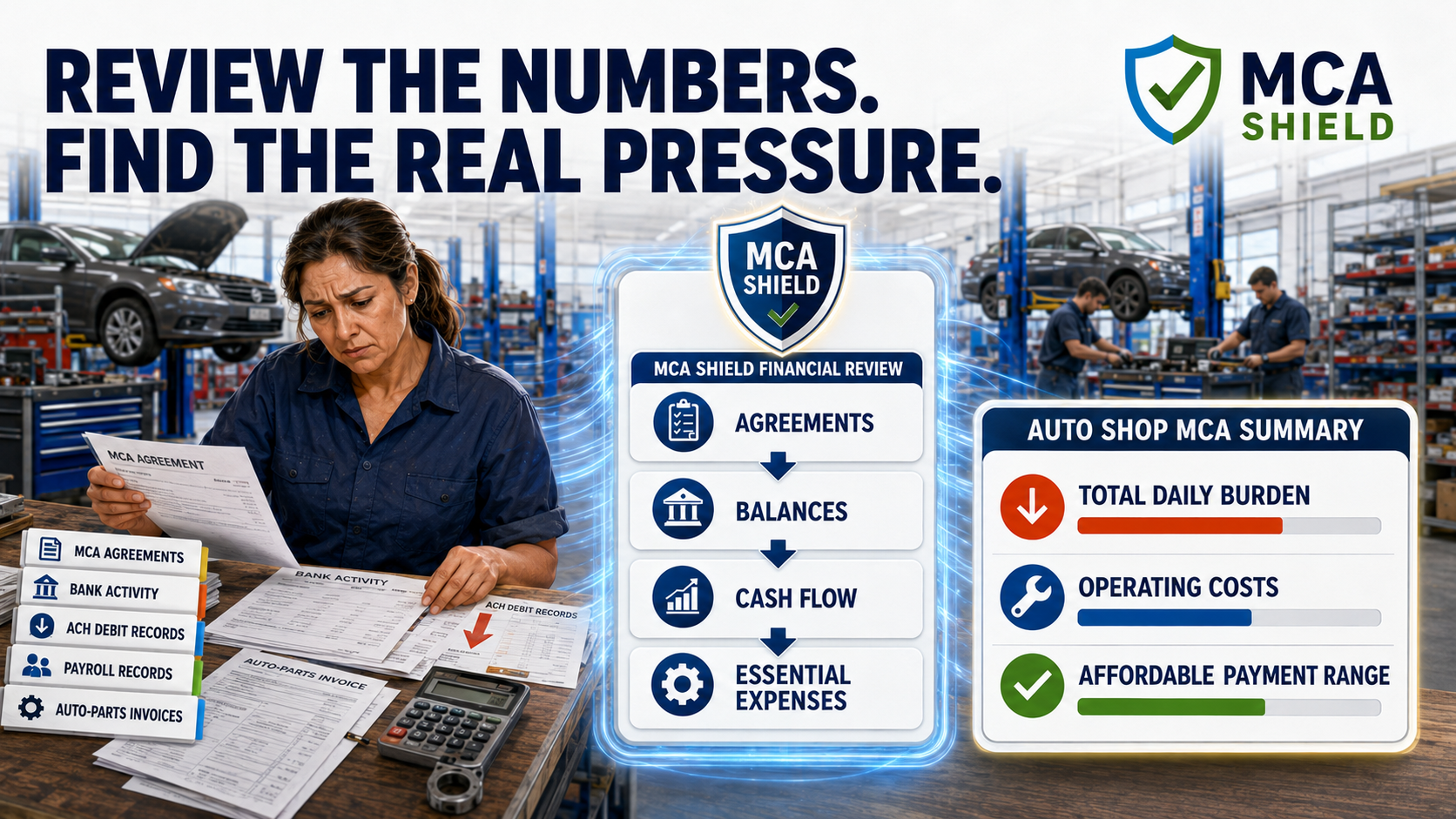
This case study explains how MCA Shield reviewed the shop’s agreements, cash flow, and essential expenses to pursue a more manageable payment structure—and how lower daily payments helped the owner regain control of the business.
Schedule Your Free Consultation
An Auto Repair Shop Struggled With Growing MCA Payments
The auto repair shop had a steady customer base, experienced mechanics, and consistent demand. However, the business also faced high operating costs. Payroll, replacement parts, equipment maintenance, insurance, utilities, and building expenses required a constant supply of working capital.
Although the shop continued generating revenue, unexpected expenses created a financial gap. The owner needed immediate funding to keep repairs moving and avoid disrupting daily operations.
Why the Business Owner Used Merchant Cash Advances
The owner initially used a merchant cash advance to purchase updated diagnostic equipment and complete an unexpected building repair. The fast approval process provided access to money without the lengthy requirements associated with many traditional business loans.
Later, a temporary slowdown made it harder to cover payroll and order essential parts. The owner accepted another advance to keep the repair bays operating and prevent customer delays.
At first, the additional funding appeared to solve the immediate problem. The shop could pay its mechanics, purchase parts, and continue accepting new repair jobs. However, each advance introduced another repayment obligation.
Before long, the business had multiple MCA payments withdrawing money from the same operating account. The shop was still busy, but more of its daily revenue went toward MCA payments before the owner could use it for essential expenses.
How Multiple Daily Withdrawals Began Draining the Business Account
The withdrawals occurred automatically, regardless of when customers paid their repair bills or how much the shop earned that day. On slower days, the MCA payments consumed a much larger portion of the available balance.
As a result, the owner struggled to maintain enough money for payroll, parts orders, utilities, and routine operating expenses. Even a small delay in customer payments could leave the account dangerously low.
The situation created a difficult cycle. When the shop needed parts to complete a repair, the owner sometimes had to wait for additional customer payments to arrive. Those delays slowed repair turnaround times and postponed incoming revenue. Meanwhile, the daily MCA withdrawals continued.
Eventually, the owner realized that strong sales alone would not solve the problem. The shop needed a payment structure that reflected its actual cash flow and left enough working capital to operate.
Daily MCA Payments Put the Entire Repair Shop Under Pressure

The Warning Signs the Business Owner Could No Longer Ignore
The Auto Shop Owner Sought Help Before Reaching Default
For several weeks, the owner managed the payment pressure by carefully timing deposits, postponing purchases, and monitoring the bank account throughout the day. However, these short-term adjustments did not address the underlying problem.
The daily MCA withdrawals continued reducing the cash available for essential expenses. Eventually, the warning signs became too serious to dismiss.
Declining Cash Reserves and Frequent Overdraft Concerns
The shop once maintained a cash reserve for unexpected repairs, equipment issues, and slower business periods. As the MCA withdrawals increased, that reserve gradually disappeared.
Money that would normally remain available for emergencies went toward daily payments. As a result, even a routine expense could place the business account under pressure.
The owner began checking the account before approving parts orders or paying vendor invoices. She also had to track the exact timing of customer deposits and automatic withdrawals. A late payment, returned check, or slower sales day could bring the balance dangerously close to an overdraft.
The shop had not stopped generating revenue. However, too little money remained after the daily MCA withdrawals cleared. This created constant uncertainty and made it difficult to plan beyond the next few days.
The declining reserves also left the business vulnerable. An equipment breakdown, payroll increase, or unexpected building expense could create another financial emergency with no cushion available.
Delayed Purchases Began Affecting Repair Turnaround Times
The cash-flow pressure soon began affecting daily operations. The shop needed parts to complete customer repairs, but vendors often required payment when ordering.
When the account balance was too low, the owner had to delay purchases until additional customer payments arrived. Mechanics sometimes diagnosed vehicles and prepared them for repair but could not finish the work without the required components.
These delays created several problems. Vehicles remained in repair bays longer, fewer new jobs could enter the shop, and customers had to wait for completion dates. Delayed repairs also meant delayed final payments, which placed even more pressure on cash flow.
In some cases, the owner chose less efficient ordering methods or paid higher rush-delivery costs to recover lost time. Those added expenses further reduced the money available for normal operations.
At that point, the problem was no longer limited to the business account. The MCA payment pressure was interfering with productivity, customer service, and the shop’s ability to generate revenue. The owner knew the business needed a more sustainable solution.
How MCA Shield Evaluated the Auto Shop’s MCA Debt