
ClickCease
Explore options for your business’s MCA payments.Call (918) 608-0117

Daily merchant cash advance withdrawals can leave a business with too little money for payroll, vendors, inventory, and other essential expenses. Even when revenue remains steady, frequent payments may create ongoing cash-flow shortages.

Understanding the connection between lower daily payments and business cash flow can help owners evaluate their financial position more clearly. A reduced payment may preserve more working capital throughout the week and make operating expenses easier to cover.

However, lowering a payment should be based on the business’s actual revenue, expenses, remaining MCA balances, and available cash. The right strategy can help create a more manageable payment structure while protecting the money needed to keep the business running.

Schedule Your Free Consultation

How Do Daily MCA Payments Affect Business Cash Flow?

Merchant cash advances are often repaid through automatic withdrawals from a business bank account. These payments may occur every business day, regardless of the company’s immediate expenses.

When withdrawals consume too much revenue, the business may struggle to cover payroll, inventory, rent, taxes, and vendor invoices. Understanding the connection between lower daily payments and business cash flow can help an owner identify whether the current repayment structure is sustainable.

Frequent Withdrawals Reduce Available Working Capital

Working capital supports the company’s regular operations. It pays for employee wages, supplies, equipment repairs, marketing, and other essential costs.

Daily MCA withdrawals remove money shortly after customer deposits reach the account. As a result, the business has less cash to meet upcoming obligations. A company may generate strong sales but still experience a shortage because a large portion of each deposit goes directly to MCA payments.

Limited working capital can lead to overdrafts, delayed vendor payments, missed opportunities, and dependence on additional financing. These problems may become more serious when the business has multiple MCA agreements withdrawing funds simultaneously.

Fixed Payments Can Conflict With Fluctuating Revenue

Many businesses experience changes in revenue throughout the week, month, or year. However, a fixed daily payment usually continues at the same amount during slower periods.

This mismatch can create significant cash-flow strain. A payment that was affordable during a strong sales period may become difficult to maintain when revenue declines. Seasonal businesses and companies with unpredictable customer payments may face an even greater challenge.

A payment structure that reflects the company’s current finances may create more room for essential expenses. Before pursuing a change, the business should review its revenue, operating costs, MCA balances, and current withdrawals to determine what it can realistically afford.

What Changes When Daily MCA Payments Are Lowered?
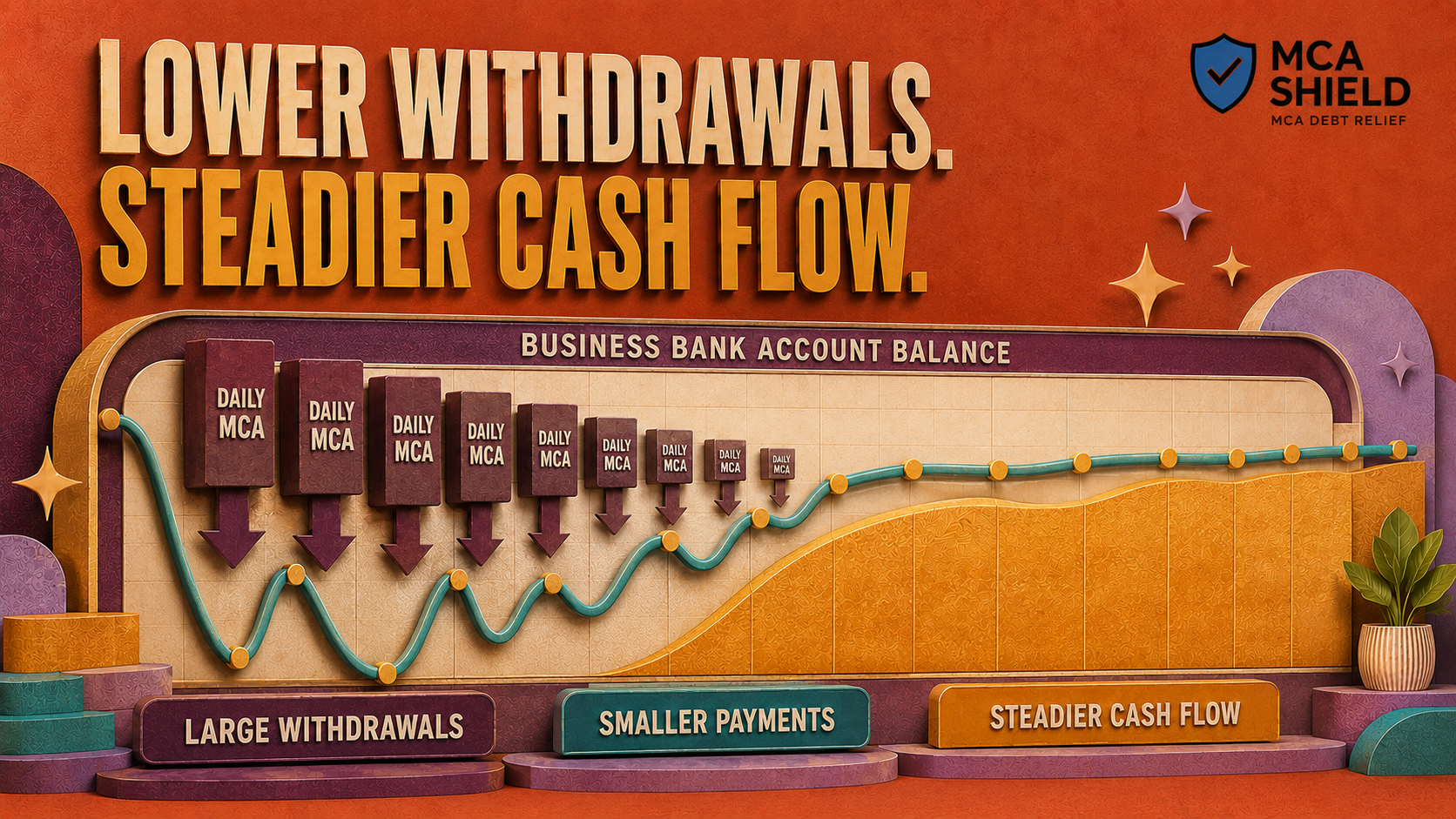
Lower MCA withdrawals creating steadier business cash flow and more operating cash

Lowering daily MCA payments can change how money moves through a business bank account. Smaller withdrawals may allow the company to retain more revenue after each deposit. This can create additional room for essential expenses and reduce short-term cash-flow strain.

However, a lower payment does not automatically solve every financial problem. The new amount must reflect the company’s revenue, operating costs, remaining MCA balances, and other obligations. A realistic payment structure can improve daily cash-flow control without placing the business under the same financial strain.

More Cash Remains Available Between Deposits

Customer payments do not always reach a business account on a predictable schedule. Meanwhile, payroll, vendor invoices, taxes, rent, and utilities still have firm due dates.

When MCA withdrawals are reduced, the business may retain more cash between customer deposits. That money can help cover payroll, inventory, vendor payments, and operating expenses without relying as heavily on credit cards or additional financing.

The connection between lower daily payments and business cash flow becomes especially important during slower sales periods. Preserving more revenue after each withdrawal can give the company additional time to collect receivables and prepare for upcoming expenses.

Bank Account Volatility May Begin to Stabilize

Large daily withdrawals can cause a business bank balance to rise after a deposit and fall again almost immediately. This constant movement makes it difficult to predict how much money the company will have from one day to the next.

Smaller withdrawals may reduce these sharp balance changes. As the account becomes more stable, the owner may find it easier to plan expenses, avoid overdrafts, and maintain a reasonable operating reserve.

Improved stability can also help the business make better financial decisions. Instead of reacting to each withdrawal, the owner can focus on cash-flow planning, expense management, and long-term recovery.

How Can Lower Daily Payments Help Protect Payroll?
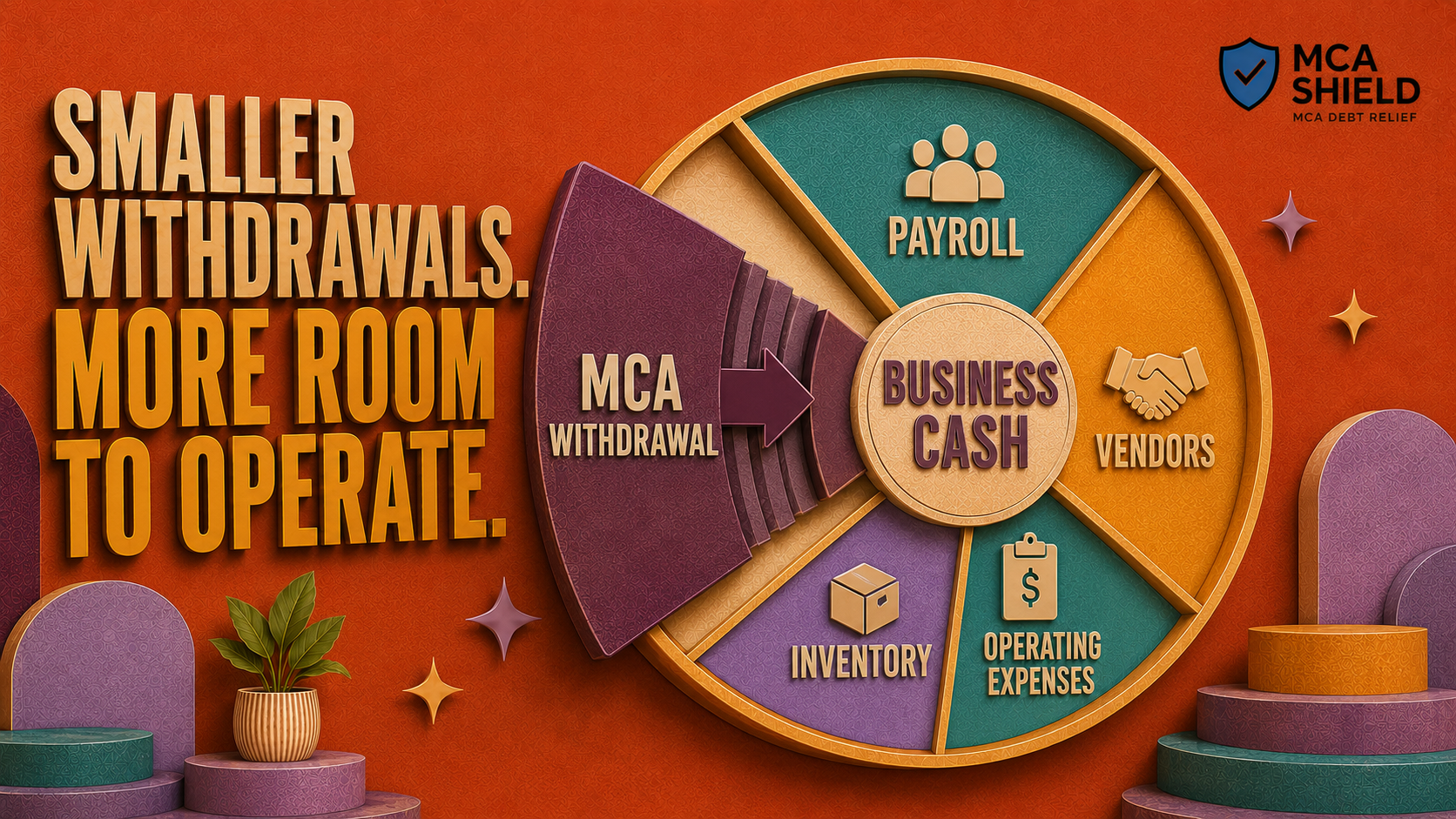
Smaller MCA withdrawals creating room for payroll, vendors, inventory, and essential operating expenses

Payroll is one of the most important expenses a business must cover. Employees depend on consistent wages, while the company depends on its workforce to continue serving customers and generating revenue.

Large daily MCA withdrawals can remove a significant portion of each deposit before payroll is processed. Lower payments may help the business retain more cash for employee wages and other employment costs.

Preserve the Cash Needed for Employee Wages

A business may receive customer deposits throughout the week, but automatic MCA withdrawals often occur every business day. If those withdrawals are too high, the company may struggle to set aside the money needed for its next payroll.

Reducing the daily payment can help preserve funds for wages, payroll taxes, benefits, and insurance costs. This can make it easier to plan around payroll deadlines instead of reacting to a low bank balance at the last minute.

However, the revised payment must reflect the company’s complete financial position. Revenue, operating expenses, current MCA balances, and payroll obligations should all be reviewed before determining an affordable amount.

Reduce the Risk of Payroll Shortfalls

A payroll shortfall can force a business owner to delay other bills, use personal funds, borrow more money, or reduce employee hours. These decisions can disrupt operations and place additional strain on the company.

Lower daily withdrawals may reduce this risk by allowing the business to build a more predictable cash balance before payday. The owner may also gain more time to collect receivables and prepare for upcoming labor costs.

The relationship between lower daily payments and business cash flow is especially important for companies with large workforces or uneven revenue. A sustainable payment structure can help protect payroll while supporting the business’s continued operation.

Can Lower MCA Payments Improve Vendor Relationships?

Reliable vendors help a business maintain inventory, complete projects, and serve customers without unnecessary delays. When daily MCA withdrawals consume too much revenue, the company may struggle to pay supplier invoices on time.

Lower MCA payments may help the business retain more cash for vendor obligations. Consistent payments can strengthen supplier relationships and make daily operations more predictable.

Keep Essential Supplier Accounts Current

Vendors often establish payment terms based on a company’s history and reliability. Repeated late payments may cause suppliers to shorten those terms, require deposits, place accounts on hold, or request payment before delivery.

Reducing daily MCA withdrawals can give the business more flexibility when supplier invoices become due. The company may find it easier to pay for materials, inventory, equipment, and essential services while meeting its other financial obligations.

Keeping vendor accounts current can also protect access to favorable pricing and payment terms. These benefits may support healthier cash flow over time.

Avoid Disruptions Caused by Delayed Payments

Delayed vendor payments can affect more than one invoice. A supplier may postpone a delivery, stop a shipment, or suspend service until the account is paid. These interruptions can prevent the business from completing work and generating revenue.

Lower payments may help reduce this risk by preserving funds for critical suppliers. The business can purchase necessary materials, restock inventory, and continue serving customers without avoidable delays.

The connection between lower daily payments and business cash flow becomes especially important when vendor relationships directly support revenue. A payment structure based on the company’s actual finances can help protect those relationships and maintain steady operations.

How Do Smaller Withdrawals Support Daily Business Operations?

A business needs steady access to cash to keep its doors open and serve customers. However, large MCA withdrawals can remove money before the company pays its regular operating expenses.

Smaller withdrawals may help the business retain more revenue for daily operations. This added flexibility can make it easier to plan expenses and respond to unexpected costs.

Cover Rent, Utilities, Inventory, and Other Expenses

Every business has essential expenses that continue regardless of its MCA payment obligations. These may include rent, utilities, insurance, software, fuel, equipment maintenance, inventory, and professional services.

When MCA withdrawals consume too much of each deposit, the business may be forced to choose which expenses to pay first. This can result in late fees, service interruptions, inventory shortages, or delayed repairs.

Lower payments may preserve more cash for rent, utilities, inventory, and essential operating costs. Meeting these obligations on time can help the company maintain consistent service and avoid disruptions that could reduce revenue.

Reduce Dependence on Credit and Emergency Funding

A cash-flow shortage may cause a business owner to use credit cards, personal funds, short-term loans, or another MCA to cover basic expenses. Although new funding may solve an immediate problem, it can also add another payment and increase the company’s total financial burden.

Smaller withdrawals may reduce the need for emergency financing by giving the business more control over its existing revenue. The company may also gain time to collect outstanding invoices, reduce unnecessary expenses, and rebuild an operating reserve.

The connection between lower daily payments and business cash flow is especially important when a company is trying to stop relying on new debt. A sustainable payment structure can help the business cover daily costs using the revenue it already generates.

Can Lower Daily Payments Create Room for Business Growth?

High daily MCA withdrawals can force a business to focus only on immediate expenses. Even when new opportunities arise, the company may lack the working capital needed to pursue them.

Lower daily payments may create more financial flexibility. Once essential expenses are covered, the business may be able to direct a portion of its revenue into projects that support long-term growth and stability.

Reinvest Cash in Marketing, Equipment, and Inventory

Growth often requires a business to invest before it receives a financial return. Marketing campaigns, equipment upgrades, additional inventory, employee training, and technology improvements can all require upfront spending.

Large MCA withdrawals may prevent the company from making these investments. Reducing the payment may retain more cash for marketing, equipment, inventory, and other revenue-producing needs.

Every investment should still be evaluated carefully. The business must first protect payroll, vendor payments, taxes, and other essential expenses. After those obligations are covered, the owner can consider how to use remaining cash to improve operations or attract new customers.

Respond to New Opportunities Without Adding More Debt

A business opportunity may require quick access to cash. The company may need to purchase discounted inventory, accept a larger project, repair essential equipment, or hire additional employees.

Without sufficient working capital, the owner may turn to credit cards, short-term loans, or another MCA. New financing can provide immediate funds, but it may also add another payment and increase the company’s total financial burden.

The connection between lower daily payments and business cash flow can become especially valuable when a company is trying to grow without borrowing again. A sustainable payment structure may help the business fund opportunities with its own revenue while avoiding another cycle of debt.

What Are the Best Ways to Lower Daily MCA Payments?
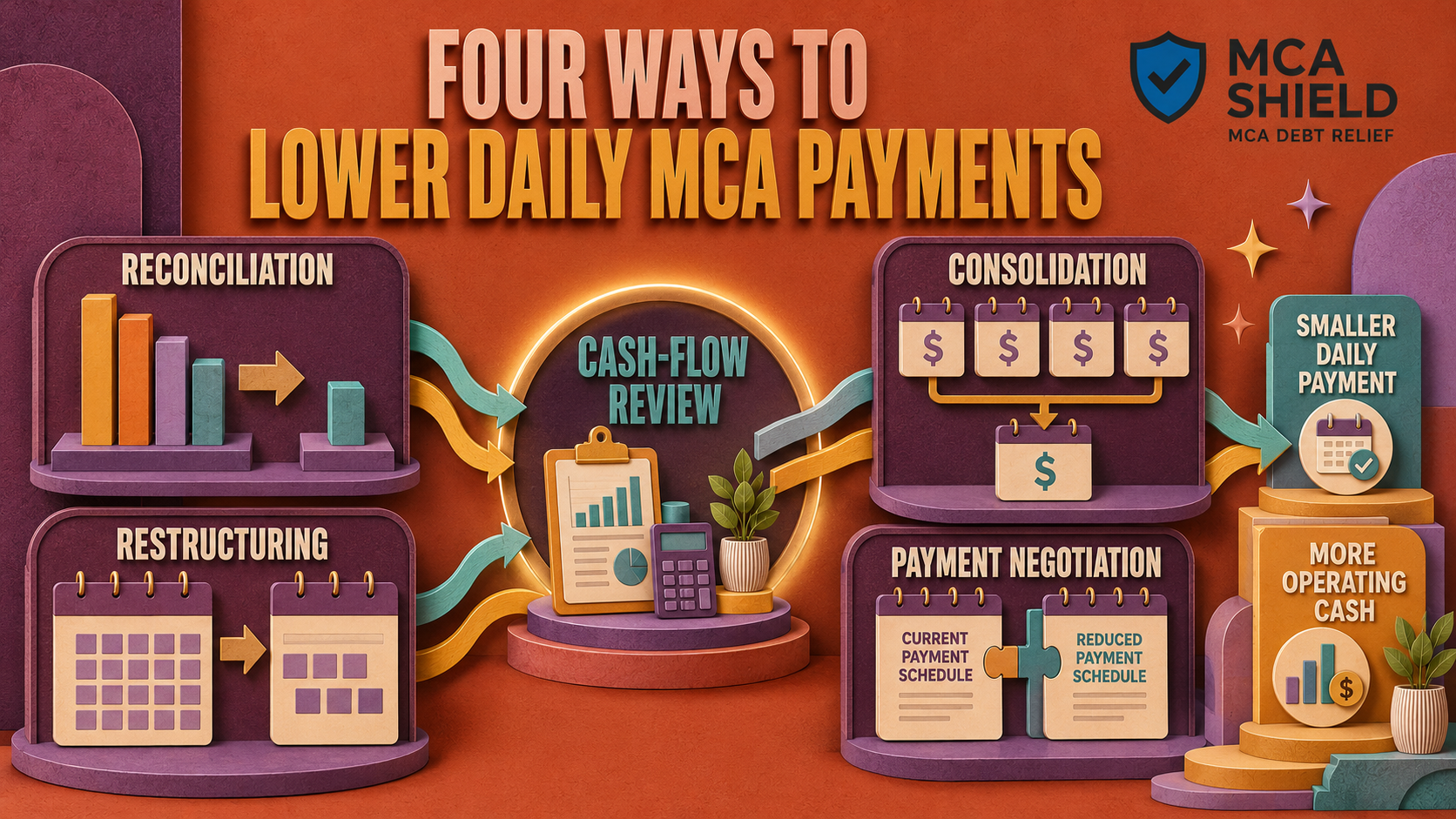
Four ways to lower daily MCA payments through reconciliation, restructuring, consolidation, and payment negotiation

The best strategy depends on the MCA agreements, remaining balances, current withdrawals, revenue, and operating expenses. A business should review the complete financial picture before changing payments or accepting new financing.

Possible options may include reconciliation, restructuring, consolidation, or direct negotiation. Each approach has different requirements, costs, and risks.

Request Reconciliation Based on Actual Revenue

Some MCA agreements include a reconciliation provision. This clause may allow the payment amount to be reviewed when actual revenue differs from the amount used to calculate the original withdrawals.

The business may need to submit bank statements, processing records, or revenue reports to request an adjustment. The funder will then review the information and determine whether the current payment reflects the agreed percentage of receivables.

Reconciliation is not included in every agreement, and the process can vary by funder. Therefore, the business should review the contract carefully and follow its written requirements.

Restructure or Consolidate Existing MCA Balances

Restructuring may adjust the payment schedule for one or more existing MCA balances. The goal is to create a payment structure that better reflects the company’s current cash flow.

Consolidation may replace several withdrawals with one new payment. This can simplify repayment and may lower the amount withdrawn each day or week. However, consolidation can also extend the repayment period, increase the total cost, or add new financing requirements.

Before choosing either option, the business should compare the new payment, total repayment, fees, term, and contract conditions. A lower payment should support cash flow without creating a larger long-term problem.

Negotiate a More Affordable Payment Schedule

A business may also try to negotiate reduced withdrawals or a different payment frequency with its MCA funder. For example, daily payments might be lowered or changed to a weekly schedule when appropriate.

A strong proposal should include accurate financial records that clearly demonstrate the business’s current cash-flow position. The business should calculate how much it can realistically afford after covering payroll, vendors, taxes, rent, and other essential expenses.

Any revised arrangement should be confirmed in writing before the business changes its payment activity. A clear agreement can help prevent misunderstandings about the payment amount, withdrawal schedule, remaining balance, and repayment terms.

How Do You Calculate a Daily Payment the Business Can Afford?

An affordable MCA payment should reflect the amount of cash the business can commit without disrupting essential operations. The calculation must consider more than gross revenue. It should account for operating costs, revenue timing, current MCA obligations, and unexpected expenses.

The goal is to identify a payment the business can maintain during both strong and slower periods. A payment based only on recent high-revenue days may quickly become unsustainable.

Review Revenue, MCA Balances, and Essential Expenses

Begin by reviewing several months of business bank statements and revenue records. This provides a clearer picture of average deposits, seasonal changes, and slower sales periods.

Next, confirm the remaining balance and current withdrawal for every MCA agreement. If the business has several advances, calculate the combined amount withdrawn each day or week.

The business should then list its essential expenses, including:

  • Payroll and payroll taxes
  • Rent and utilities
  • Vendor and inventory costs
  • Insurance and taxes
  • Equipment, fuel, and transportation
  • Other expenses required to maintain operations

Subtracting these costs from collected revenue can help determine how much cash may be directed toward MCA payments. The calculation should use realistic figures rather than projected sales that have not yet occurred.

Protect a Minimum Operating-Cash Reserve

A business should not commit every dollar remaining after paying its regular expenses. Unexpected repairs, delayed customer payments, slower sales, or inventory needs can create new cash-flow problems.

Setting a minimum operating-cash reserve can help the company respond to these costs without relying on another loan or MCA. The appropriate reserve will depend on the business’s industry, revenue pattern, payroll schedule, and operating risks.

After essential expenses and the reserve are accounted for, the remaining amount can help establish a realistic payment budget. That budget can then be divided by the number of withdrawal days in the payment period.

This approach connects lower daily payments and business cash flow to the company’s actual financial capacity. It also helps preserve the cash needed to keep the business operating while MCA balances are being repaid.

Lower Daily Payments Before Cash-Flow Problems Get Worse
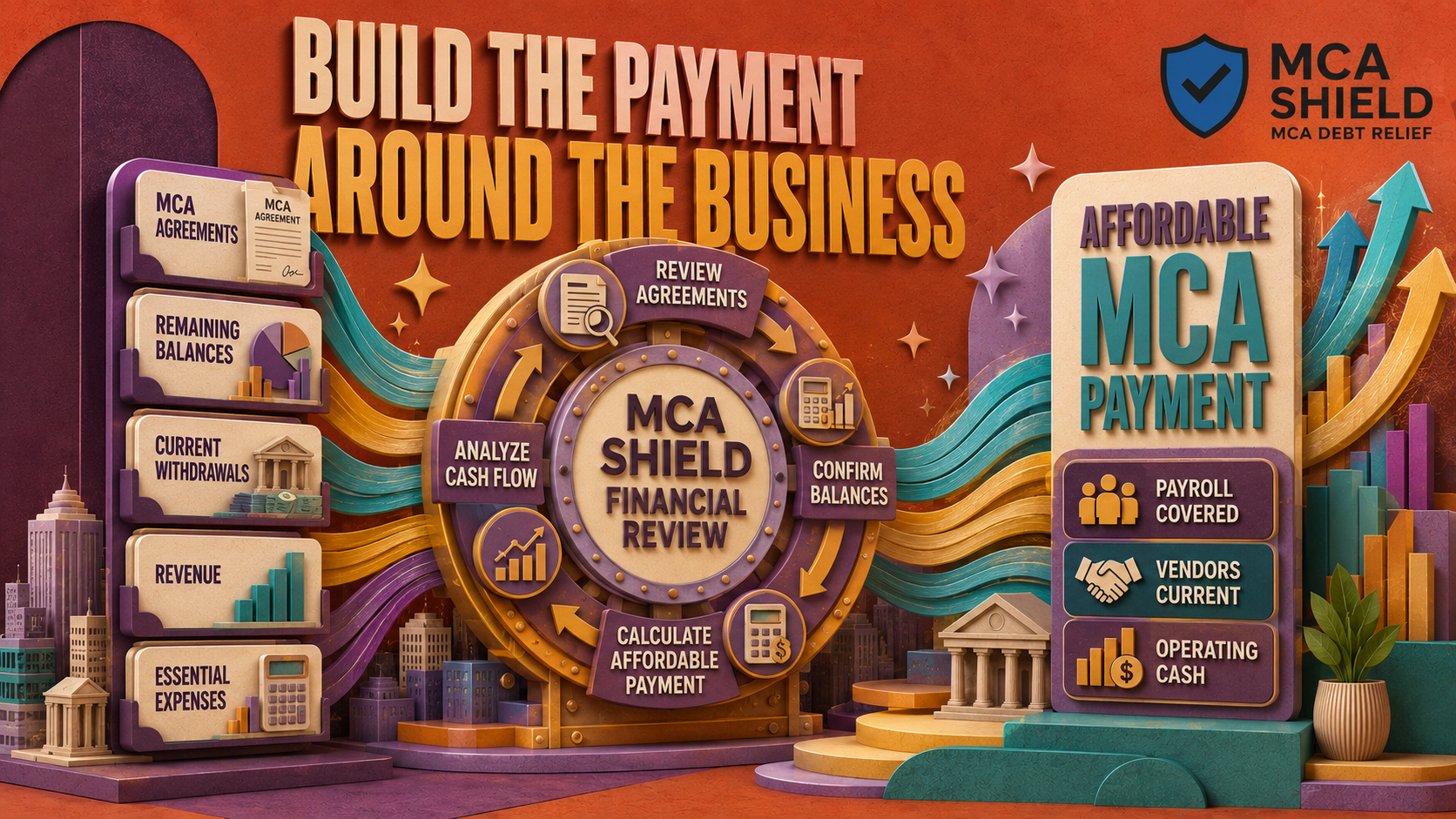
Complete MCA financial review creating an affordable payment strategy that supports payroll, vendors, and operating cash

Daily MCA withdrawals can become harder to manage as revenue changes and essential expenses increase. Waiting too long may lead to overdrafts, delayed payroll, unpaid vendors, or dependence on additional financing.

Taking action early gives the business more time to review its finances and evaluate realistic payment options. The goal is to create a repayment structure that supports the business while addressing its MCA obligations.

Review Every MCA Agreement and Current Withdrawal

Begin by gathering each MCA agreement, recent bank statement, payment history, and balance statement. Confirm the remaining balance, current withdrawal, payment frequency, and contract terms for each advance.

If the business has stacked MCAs, calculate the combined amount withdrawn each day or week. This review can reveal how much revenue is being directed toward MCA payments and how much remains for operations.

The agreements should also be checked for reconciliation provisions, UCC filings, personal guarantees, default terms, and other conditions that could affect the company’s options.

Build a Payment Strategy Around the Business

A payment strategy should begin with the company’s actual finances. Review collected revenue, payroll, vendor costs, taxes, rent, utilities, inventory, and other essential expenses.

Next, determine how much the business can realistically commit while maintaining a minimum operating-cash reserve. This calculation can help determine whether reconciliation, restructuring, consolidation, negotiation, or settlement may be appropriate.

The connection between lower daily payments and business cash flow depends on choosing a payment the company can maintain. Any new arrangement should also be reviewed carefully and confirmed in writing.

Schedule a Free Consultation With MCA Shield

MCA Shield can review your agreements, balances, withdrawals, revenue, and essential expenses. This comprehensive financial review can help identify the level of payment the business may be able to sustain.

During a free consultation with MCA Shield, you can discuss the cash-flow problems affecting your company and compare potential relief strategies. Recommendations should reflect your specific agreements and financial position.

Do not wait until daily withdrawals threaten payroll, vendor relationships, or continued operations. Schedule a free consultation with MCA Shield to begin building a payment strategy around your business.

Schedule Your Free Consultation