
The MCA debt restructuring process can help business owners address merchant cash advance payments that have become difficult to manage. Instead of allowing daily or weekly withdrawals to continue draining available cash, restructuring focuses on developing a more sustainable payment arrangement.
However, successful restructuring requires more than simply asking an MCA funder for lower payments. The business must review its agreements, analyze its cash flow, determine an affordable payment level, and negotiate terms that protect essential operations.
This guide explains how MCA debt restructuring works step by step, from reviewing the original agreements to confirming the new payment structure. It also shows how the right strategy may help protect payroll, operating expenses, and working capital.
Schedule Your Free Consultation
How MCA Debt Restructuring Works
The MCA debt restructuring process focuses on changing an unaffordable payment structure into one the business can realistically manage. It does not simply make the obligation disappear. Instead, restructuring reviews the current agreement, the remaining balance, and the company’s available cash flow.
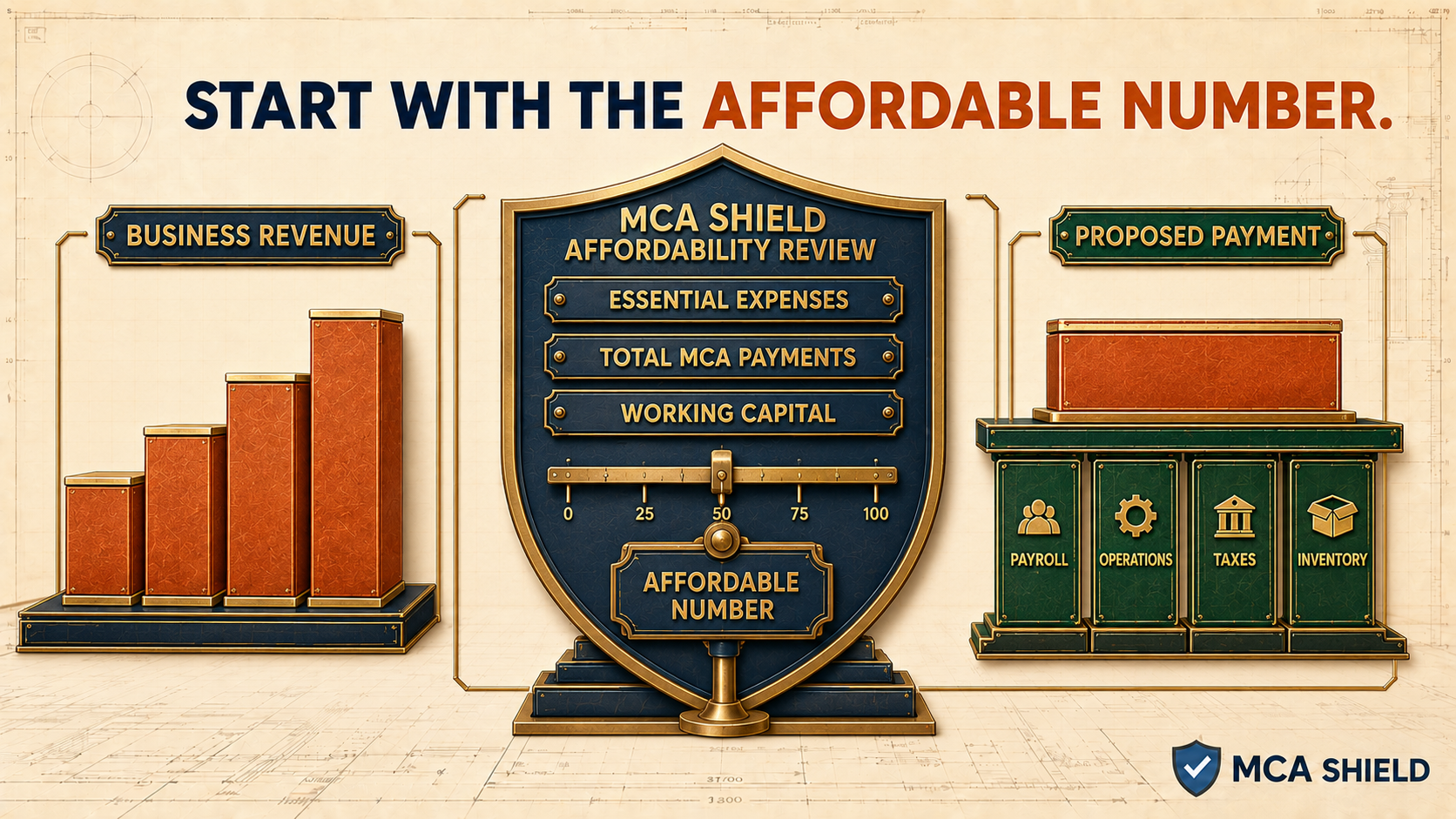
First, the business must calculate how much it can afford after covering essential expenses. These expenses may include payroll, rent, inventory, taxes, utilities, and operating costs. Next, the business or its representative can present a restructuring proposal to the MCA funder.
The goal is to reach revised terms that allow the business to continue operating while making payments toward the obligation. However, the exact outcome depends on the agreement, the funder, and the business’s financial condition.
What MCA Debt Restructuring Can Change
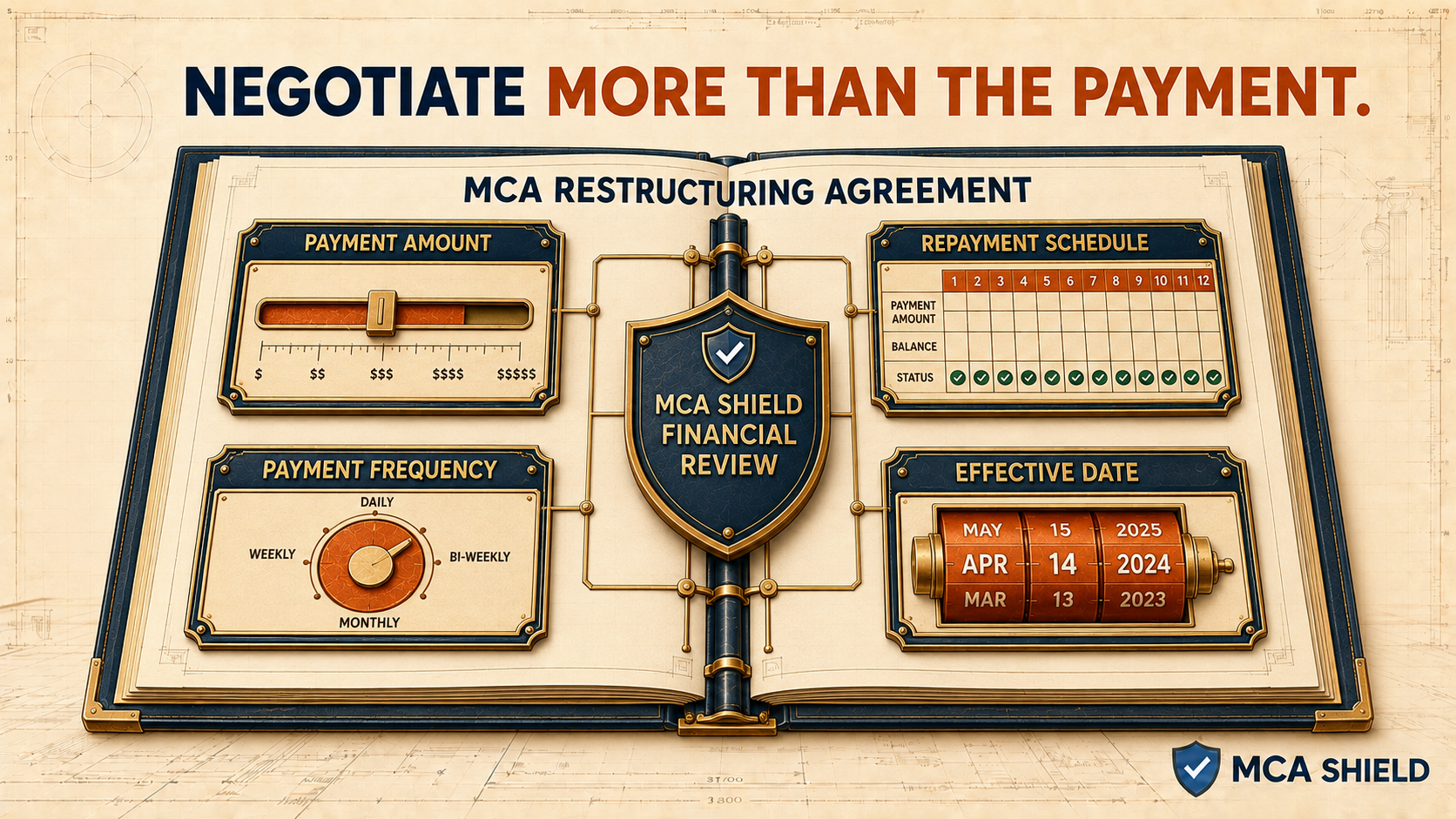
MCA debt restructuring may change how and when the business makes its payments. For example, a funder may agree to reduce the amount withdrawn from the business account each day or week.
Depending on the circumstances, restructuring may change:
- The daily or weekly payment amount
- The frequency of the withdrawals
- The expected repayment schedule
- The length of time allowed to complete payments
- The method used to collect payments
- How missed or past-due payments will be handled
- Certain fees or default-related charges
- Communication or reporting requirements
A lower payment can give the business more room to cover essential expenses. However, the new amount must reflect the company’s actual financial capacity. A payment that looks affordable on paper may still create problems if it leaves too little cash for payroll or operations.
For that reason, the proposal should account for the entire business budget. It should also leave sufficient working capital to handle normal revenue fluctuations and unexpected expenses.
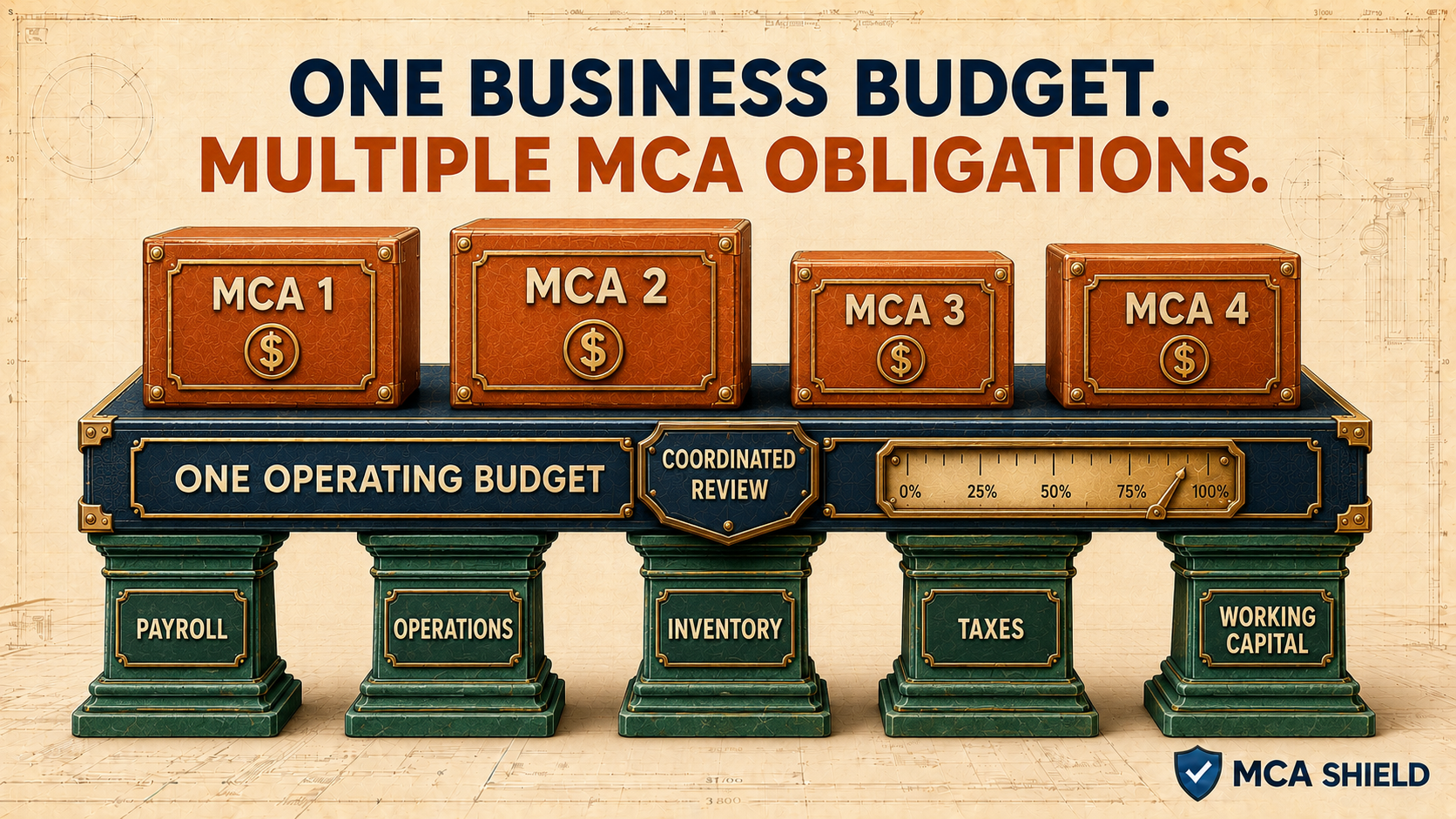
When a business has several merchant cash advances, the strategy becomes more complex. Each withdrawal affects the same pool of revenue. Therefore, restructuring one MCA without reviewing the others may not provide enough relief.
A coordinated strategy considers the total MCA payment burden, not just one agreement. This approach can help the business pursue terms that work together instead of solving one payment problem while making another worse.
What Restructuring Does Not Automatically Eliminate
Although restructuring may improve the payment terms, it does not automatically erase the MCA obligation. In most cases, the business must continue making payments under the revised arrangement.
MCA debt restructuring does not automatically:
- Eliminate the remaining balance
- Reduce the total amount owed
- Remove every fee or added charge
- Cancel a personal guarantee
- Resolve obligations with other MCA funders
- End an existing default
- Stop collection activity or legal action
- Remove liens or other contractual protections
- Repair damage to the business’s cash flow immediately
The business should never assume that a verbal discussion has changed the original agreement. Instead, it should request written confirmation of every revised term before relying on a new payment structure.
The written agreement should clearly state the new payment amount, withdrawal frequency, effective date, and repayment expectations. It should also explain how the funder will treat missed payments, fees, and any existing default.
After accepting the restructuring terms, the business should monitor its bank account closely. If the original withdrawal continues, the business must address the issue quickly. Keeping copies of emails, payment records, and written agreements can help prevent confusion.
Ultimately, the MCA debt restructuring process changes how the obligation is paid. It does not guarantee that every balance, fee, or contractual responsibility will disappear. A careful review helps the business understand exactly what will change—and what will remain in place.
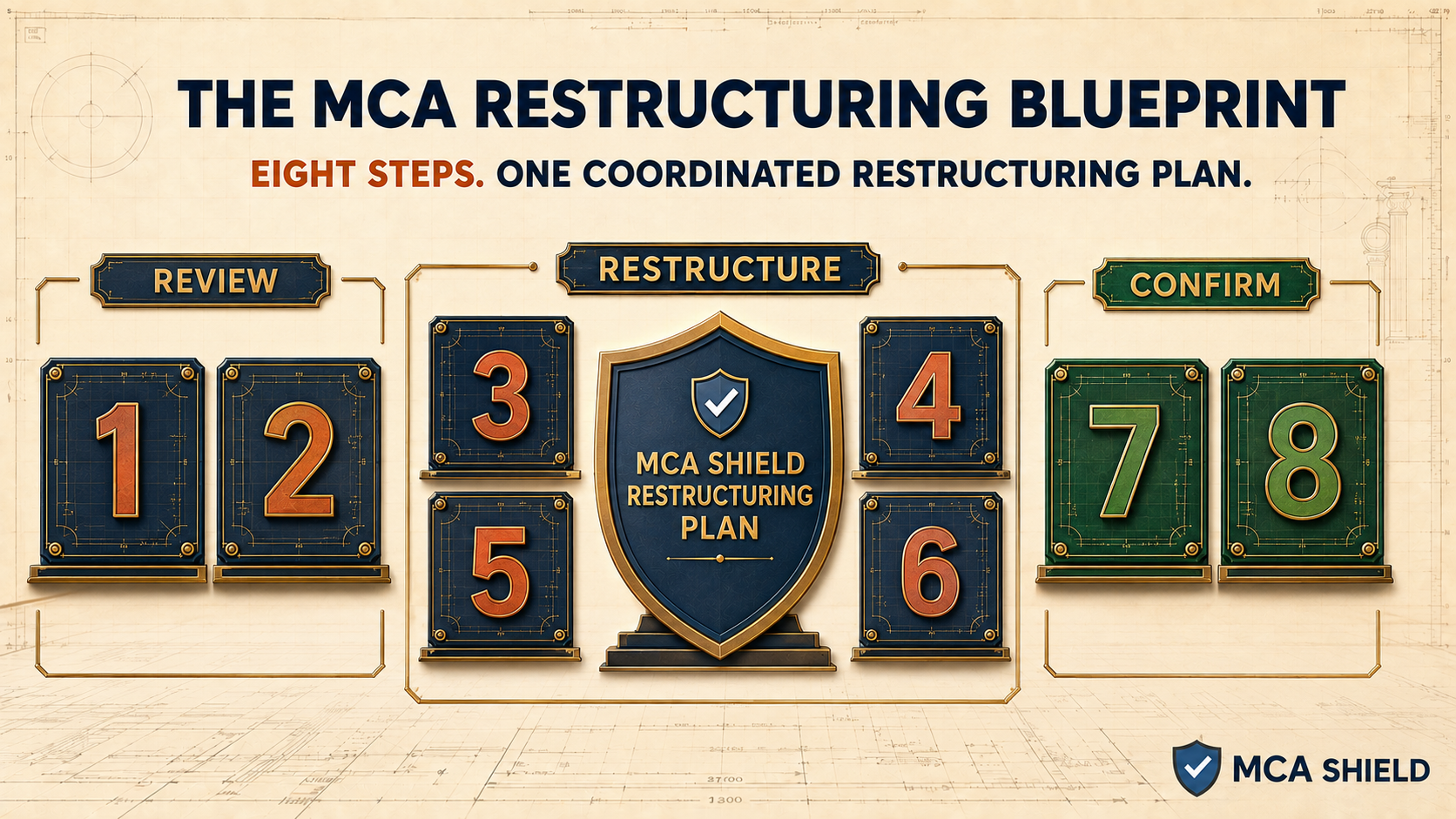
✓ Step 1: Review Every Merchant Cash Advance Agreement
✓ Step 2: Analyze the Business’s Current Cash Flow
After reviewing every MCA agreement, the next step is to examine the business’s actual cash flow. The goal is to determine how much money comes in, where it goes, and how much remains after covering essential expenses.
The MCA debt restructuring process must rely on accurate financial information. If the proposed payment is too high, the business may continue struggling even after restructuring. However, an amount that does not reflect the company’s revenue may be difficult to support during negotiations.
A thorough cash-flow analysis helps establish a payment amount that the business can realistically maintain.
Calculate the Total MCA Payment Burden
Start by calculating how much the business pays toward all merchant cash advances. Include every daily, weekly, or irregular withdrawal.
Record the following information for each MCA:
- Current withdrawal amount
- Payment frequency
- Average weekly payment
- Estimated monthly payment
- Remaining balance
- Failed-withdrawal or insufficient-funds fees
- Other charges connected to the agreement
Next, combine the payments from every MCA to determine the total payment burden. Do not evaluate each advance separately because all withdrawals affect the same business revenue.
For example, a business may have three MCA payments that appear manageable individually. However, those payments may consume a large portion of the company’s monthly deposits when combined.
Calculate the total payments over several periods:
- Daily payment burden
- Weekly payment burden
- Estimated monthly payment burden
- Percentage of average business revenue used for MCA payments
Review at least three months of bank statements when possible. If revenue changes throughout the year, examine a longer period. This provides a more accurate picture than using one unusually strong or weak month.
Also look for days when several withdrawals occur at once. Multiple payments hitting the account on the same day can create immediate pressure, even when the business earns enough revenue over the entire month.
Separate Essential Expenses From Available Cash
Next, identify the expenses the business must pay to remain open. These costs should not compete with MCA withdrawals for the same limited cash.
Essential business expenses may include:
- Payroll and employee-related costs
- Rent or mortgage payments
- Inventory and materials
- Utilities
- Insurance
- Taxes
- Equipment expenses
- Transportation and fuel
- Vendor payments
- Necessary marketing expenses
- Professional or licensing fees
Separate these expenses from costs that the business can temporarily reduce, delay, or eliminate. This distinction helps reveal the minimum amount needed to continue operating.
Then compare the essential expenses with the business’s average deposits. The money remaining after those costs represents the starting point for evaluating an affordable MCA payment.
However, the business should not commit every remaining dollar to the restructured payment. Revenue may decline, customers may pay late, or an unexpected expense may arise. Therefore, the budget should also protect a reasonable amount of working capital and emergency cash.
Without that cushion, even a small disruption could cause the business to miss the new payment.
Determine How Much the Business Can Realistically Afford
Once the numbers are organized, calculate the payment amount the business can maintain without sacrificing essential operations.
Begin with the company’s average available cash after paying necessary expenses. Then account for slower revenue periods, seasonal changes, and unexpected costs.
A realistic payment should allow the business to:
- Cover payroll on time
- Pay essential vendors
- Purchase inventory or materials
- Meet tax and insurance obligations
- Maintain necessary operating cash
- Build or preserve a modest cash reserve
- Continue making the restructured MCA payment
Avoid basing the proposal on the company’s strongest revenue month. Instead, use a conservative average that reflects normal and slower periods. A sustainable amount is more valuable than an aggressive payment the business may not be able to maintain.
The business should also consider whether its revenue arrives evenly. A company may generate enough monthly revenue but still experience short-term shortages. In that situation, a weekly payment may work better than a daily withdrawal. In other cases, a reduced daily amount may provide enough relief.
The objective is not simply to request the lowest possible payment. The objective is to identify a realistic and sustainable payment level that protects the business while addressing the MCA obligation.
Once that amount is clear, the business can use the financial analysis to build a restructuring proposal supported by actual numbers.
✓ Step 3: Build a Realistic MCA Restructuring Proposal
After calculating an affordable payment amount, the business can use those numbers to create a formal restructuring proposal. The proposal should clearly explain the current financial problem, the requested changes in payment structure, and why the new arrangement is more sustainable.
A strong proposal does not rely on a general statement that the business cannot afford its payments. Instead, it uses bank deposits, operating expenses, MCA withdrawals, and available cash to support the request.
The proposal should include:
- The current daily or weekly MCA payment
- The remaining balance
- The business’s average monthly revenue
- The total payment burden from all MCAs
- Essential operating expenses
- The payment amount the business can afford
- The requested payment frequency
- The proposed effective date
- A brief explanation of the financial hardship
The goal is to present a plan that allows the business to continue operating while making consistent payments toward the obligation.
Request Lower Daily or Weekly Payments
Reducing the withdrawal amount is often a primary goal of the MCA debt restructuring process. Daily or weekly payments may have been manageable when revenue was stronger. However, a decline in sales or an increase in expenses can quickly make the original amount unaffordable.
The proposal should request a specific payment rather than simply asking the funder to “lower the withdrawals.” A clear amount gives the funder something concrete to evaluate.
For example, the proposal should identify:
- The current withdrawal amount
- The requested withdrawal amount
- How often the new payment should occur
- The date the revised payment should begin
- The financial information supporting the request
The requested amount should reflect the cash-flow analysis completed in Step 2. It must leave enough money for essential expenses while remaining realistic for the business.
Payment frequency can also matter. A reduced daily withdrawal may work for a business with steady deposits. In contrast, a weekly payment may better suit a company with uneven revenue.
The proposal should explain why the requested structure encompasses how the business receives income. This connection can make the request more practical and easier to understand.
Consider a Longer Repayment Schedule
Lower payments may require a longer period to satisfy the remaining obligation. Extending the schedule can spread payments across more weeks or months, which may reduce the immediate pressure on cash flow.
However, a longer schedule does not automatically reduce the total amount the business must pay. It could also affect fees, default charges, or other obligations. Therefore, the business should review the full financial impact before accepting an extension.
The proposal should address:
- The requested payment amount
- The estimated length of the revised schedule
- The remaining balance used in the calculation
- Any fees connected to the extended arrangement
- Whether the funder will continue adding charges
- The consequences of missing a restructured payment
A longer schedule should create meaningful relief, not simply postpone the same cash-flow problem. If the new arrangement leaves the business with no room for normal operating costs, it is not sustainable.
Before agreeing to the revised schedule, request a written explanation of how the funder will apply each payment. The business should understand the new payment amount, duration, total obligation, and effective date.
Protect Enough Working Capital to Continue Operating
A restructuring proposal must protect the money the business needs to function. Without enough working capital, the company may struggle to pay employees, purchase inventory, complete customer orders, or cover unexpected expenses.
Do not calculate the proposed MCA payment by committing every dollar left after regular bills. The business also needs a reasonable buffer for changing revenue and unplanned costs.
The proposal should leave enough cash available to cover:
- Payroll
- Inventory and materials
- Rent and utilities
- Taxes and insurance
- Essential vendor payments
- Equipment or transportation costs
- Seasonal revenue changes
- Unexpected operating expenses
Working capital also allows the business to generate future revenue. For example, a contractor may need materials to complete a project, while a restaurant must purchase food before serving customers. If MCA payments consume that cash, the business may lose the ability to earn the revenue needed to make future payments.
Therefore, the proposal should balance two priorities: addressing the MCA obligation and preserving enough cash to continue operating.
A realistic restructuring proposal does not promise more than the business can deliver. Instead, it creates a manageable payment structure supported by actual financial information. Once the proposal is complete, the business can present its financial situation and requested terms to the MCA funder.
✓ Step 4: Present the Business’s Financial Situation to the MCA Funder
Once the restructuring proposal is complete, the business must present it to the MCA funder. The request should clearly explain the problem, provide financial support, and identify the exact payment change being requested.
A strong presentation focuses on facts instead of emotion. The business should show how the current withdrawals affect its cash flow and why a revised structure offers a more sustainable solution.
The request should remain clear, organized, and consistent. Conflicting information or unsupported numbers may make the proposal harder to evaluate.
Explain the Cause of the Cash-Flow Hardship
Begin with a brief explanation of what caused the current financial pressure. The goal is to help the funder understand why the original payment structure no longer works.
Common causes of cash-flow hardship may include:
- A temporary decline in revenue
- Seasonal changes in sales
- The loss of a major customer
- Delayed customer payments
- Higher payroll or inventory costs
- Emergency equipment repairs
- Unexpected tax or insurance expenses
- Several MCA withdrawals affecting the same account
- A major project delay or cancellation
Keep the explanation direct and specific. For example, saying that “business is slow” provides very little useful information. Instead, explain when revenue changed, how much it declined, and which expenses the business must continue paying.
The business should also describe how the current withdrawals affect daily operations. This may include difficulty covering payroll, inventory, rent, vendor payments, or taxes.
However, the explanation should remain accurate. Do not exaggerate the hardship, hide other MCA obligations, or provide misleading information. A factual presentation creates a stronger foundation for the restructuring request.
If the hardship is temporary, explain when the business expects conditions to improve. If the problem reflects a long-term change, show how the company plans to adjust its expenses and payment structure.
Provide Financial Records That Support the Request
The funder may want to review financial records before considering revised terms. These documents help verify the revenue, expenses, withdrawals, and available cash described in the proposal.
Depending on the situation, the business may provide:
- Recent business bank statements
- Merchant-processing statements
- Profit-and-loss statements
- Cash-flow reports
- Accounts receivable reports
- Payroll records
- Tax payment obligations
- Vendor invoices
- Records of other MCA withdrawals
- A current list of business expenses
Provide documents that directly support the request. Avoid sending a large collection of unorganized records without explaining what they show.
For example, highlight the total monthly MCA withdrawals on the bank statements. Then connect those payments to the cash-flow analysis and proposed payment amount.
The information in each document should also match the proposal. If the stated revenue, expenses, or MCA payments differ from the records, clearly explain the reason.
Before sending financial documents, confirm which records the funder requires and how they should be submitted. Keep copies of everything provided, along with emails and other communications about the request.
Organized records can help the funder see that the proposal comes from a careful financial review rather than an arbitrary payment request.
Show Why the Proposed Payment Is Sustainable
The final part of the presentation should explain why the proposed payment can succeed over time. A lower payment alone does not solve the problem if the business still lacks enough money to operate.
Show how the proposed amount fits within the company’s actual budget. The presentation should connect:
- Average business deposits
- Essential operating expenses
- Total MCA obligations
- Available working capital
- The proposed daily or weekly payment
- A reasonable cash-flow reserve
A simple before-and-after comparison can make the request easier to understand. Show how much cash remains under the current payment structure and how much would remain after the requested adjustment.
The revised amount should allow the business to cover essential costs while making consistent MCA payments. It should also account for slower sales periods and unexpected expenses.
Avoid building the proposal around the company’s strongest month. Instead, use a conservative revenue average that reflects normal business activity. This approach reduces the risk of agreeing to another payment that becomes unaffordable.
The business should also explain any actions it has taken to improve cash flow. These actions might include reducing unnecessary expenses, changing inventory levels, collecting overdue invoices, or adjusting staffing schedules.
Ultimately, the MCA debt restructuring process works best when the proposed payment reflects documented financial capacity. A clear explanation, supporting records, and a sustainable payment plan provide the funder with a complete request to review.
✓ Step 5: Negotiate the New MCA Payment Terms
After the funder reviews the proposal, the negotiation stage begins. The funder may accept the request, reject it, or present different terms.
The business should evaluate every response against the cash-flow analysis completed earlier. A reduced payment may sound helpful, but it must leave enough cash for essential operations. Otherwise, the new arrangement could create the same financial pressure within a few weeks.
The goal is to reach clear, affordable, and sustainable payment terms without agreeing to more than the business can realistically pay.
Which Restructuring Terms May Be Negotiated?
The terms available for negotiation depend on the MCA agreement, the funder, and the business’s financial condition. Therefore, the business should not assume that every funder will offer the same options.
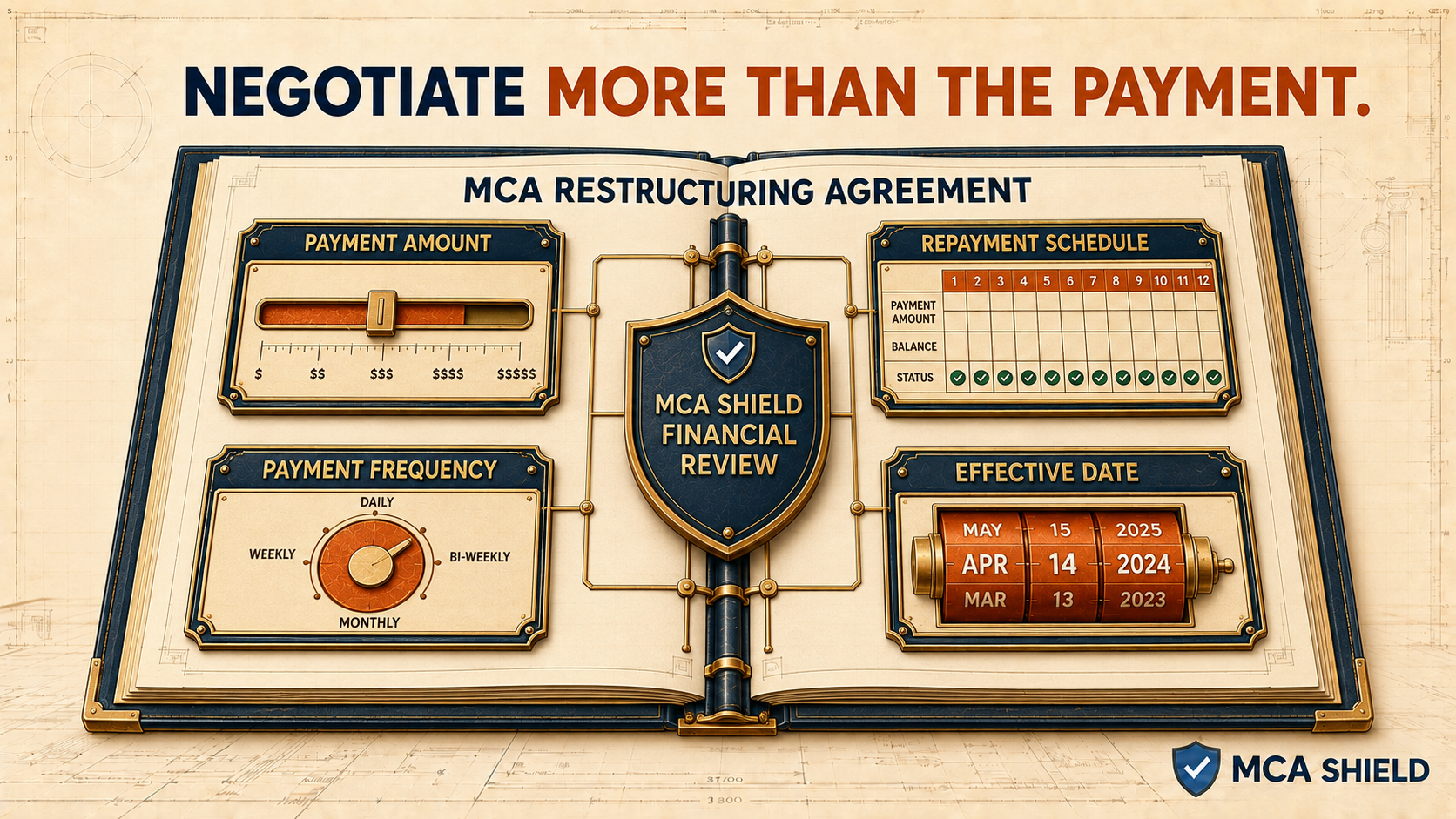
Possible restructuring terms may include:
- A lower daily or weekly payment
- A different payment frequency
- A longer payment schedule
- A temporary payment reduction
- A short payment pause
- A new date for withdrawals to begin
- Treatment of missed or returned payments
- Certain fees or default-related charges
- The method used to collect payments
- Financial reporting requirements
- Terms for returning to the original payment amount
The business should request specific changes and explain why each one is necessary. For example, a company with uneven deposits may request weekly payments instead of daily withdrawals. Another business may need a temporary reduction while waiting for customer invoices to be paid.
However, changing one term can affect another. A lower payment may extend the schedule, and a longer schedule could affect the total obligation. Therefore, the business must review the full proposal instead of focusing only on the new withdrawal amount.
Before accepting revised terms, confirm the:
- New payment amount
- Payment frequency
- Effective date
- Expected payment duration
- Remaining balance
- Added or removed fees
- Consequences of a missed payment
- Conditions that could cancel the arrangement
Every accepted change should appear in writing. A verbal conversation alone may not provide enough protection if the original withdrawals continue or a disagreement develops later.
How Funders Evaluate a Restructuring Request
MCA funders may consider several factors when reviewing a restructuring proposal. Their main concern often involves whether the business can maintain the revised payment arrangement.
A funder may review:
- Recent business bank deposits
- Current daily or weekly withdrawals
- The remaining MCA balance
- The business’s payment history
- Returned or missed payments
- Other merchant cash advance obligations
- Essential operating expenses
- The reason for the financial hardship
- The requested payment amount
- The likelihood that the business will remain open
Consistent financial records can make the request easier to evaluate. If the bank statements support the revenue and expense figures in the proposal, the funder can see how the business calculated the requested payment.
The funder may also compare the proposed amount with recent deposits. A request that appears disconnected from the company’s revenue may receive more resistance.
In addition, timing can influence the review. A business that begins the MCA debt restructuring process before repeated failed withdrawals may have more room to discuss options. Waiting until the cash-flow problem becomes severe may make the situation more complicated.
However, no business should accept an unaffordable payment to secure approval. The revised amount must still protect payroll, operations, and enough working capital to generate future revenue.
What Happens if the First Proposal Is Rejected?
A rejected proposal does not always end the discussion. The funder may reject the requested amount but remain willing to consider a different structure.
First, ask why the proposal was declined. The answer may reveal that the funder needs additional financial records, a different payment frequency, or a higher payment amount.
Next, compare any counteroffer to the business’s cash-flow analysis. Determine whether the counteroffer allows the company to cover:
- Payroll
- Rent and utilities
- Inventory or materials
- Taxes and insurance
- Essential vendor payments
- Necessary operating costs
- A reasonable cash reserve
Do not increase the proposed payment to reach an agreement. If the business cannot maintain the amount, the new arrangement may fail, creating additional consequences.
Instead, consider whether another part of the proposal can change. For example, the business may offer a slightly higher payment in exchange for weekly withdrawals, a longer schedule, or different treatment of missed-payment fees.
If the parties continue negotiating, keep detailed records of every proposal and counterproposal. Confirm which terms remain under discussion and which terms the funder has accepted.
The business should also avoid assuming that negotiations have changed the original agreement. Until the funder confirms the revised terms in writing, the existing payment obligations may remain in effect.
If negotiations become confusing or the business faces default, collection activity, or legal pressure, professional guidance may help clarify the available options.
A successful negotiation should produce more than temporary relief. It should create a payment structure the business can maintain while continuing to operate.
✓ Step 6: Coordinate Restructuring When the Business Has Multiple MCAs
✓ Step 7: Review the Restructuring Agreement Before Accepting It
✓ Step 8: Confirm That the New Payment Structure Has Taken Effect
What Happens After MCA Debt Restructuring?
Take Action Before MCA Payments Limit Your Restructuring Options
Daily or weekly MCA payments can quickly place pressure on payroll, inventory, taxes, and essential operating expenses. Waiting until repeated withdrawals drain the business account may make the situation more difficult to address.
Early action gives the business time to review every agreement, calculate the total payment burden, and determine what it can realistically afford. It also allows the business to build a restructuring proposal supported by accurate financial records.
Consider taking action if MCA payments are:
- Consuming a growing share of business revenue
- Making payroll or vendor payments difficult
- Causing repeated bank-account shortages
- Competing with taxes and essential expenses
- Forcing the business to delay inventory purchases
- Creating pressure to take another MCA
- Preventing the business from rebuilding working capital
The MCA debt restructuring process should focus on more than obtaining a temporary payment reduction. The revised structure must protect enough cash for the business to continue operating while addressing its MCA obligations.
If your business is struggling with one or more merchant cash advances, MCA Shield can review your current payments, cash flow, and available restructuring options. A coordinated strategy may help reduce immediate payment pressure and create a more manageable path forward.
Schedule a Free Consultation With MCA Shield to discuss your MCA obligations and take the first step toward regaining control of your business cash flow.