
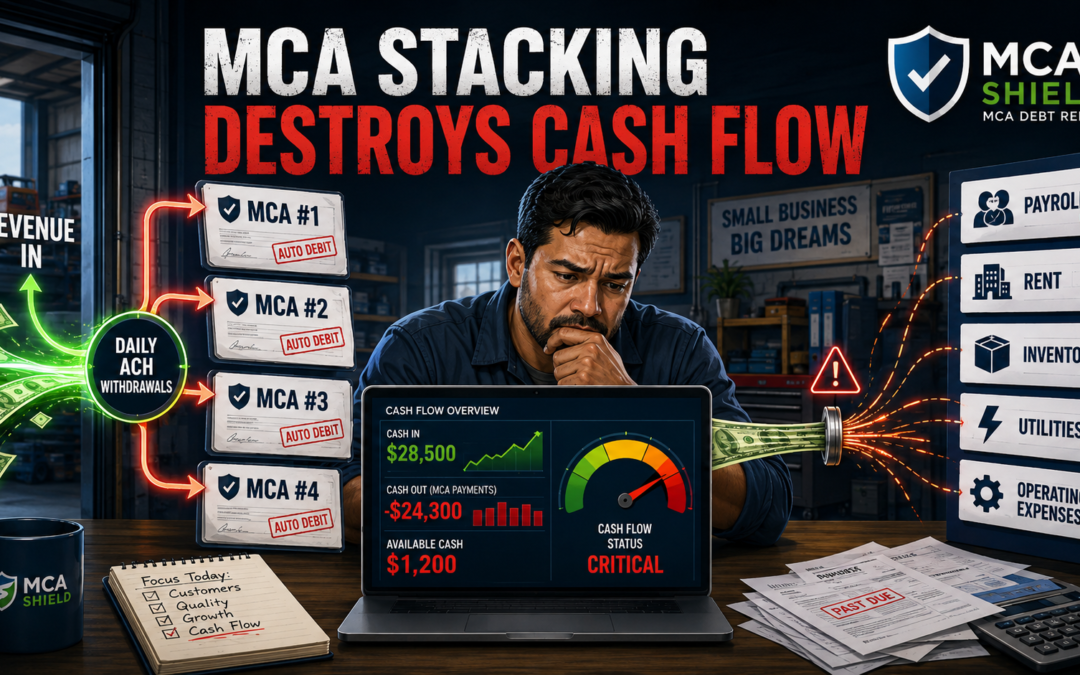
MCA loan stacking can create serious cash flow problems for a business over a very short time. When several merchant cash advances pull daily or weekly payments from the same revenue stream, less money remains for payroll, rent, inventory, utilities, and other operating expenses.
At first, taking another MCA may seem like a way to cover a temporary cash shortage. However, each additional advance can add another withdrawal, leaving the business even more dependent on future funding.
Understanding how MCA loan stacking destroys business cash flow can help business owners recognize the warning signs early and explore ways to regain control before the payment burden becomes unmanageable.
Schedule Your Free Consultation
What Is MCA Loan Stacking and How Does It Work?
MCA loan stacking happens when a business takes out multiple merchant cash advances before paying off existing ones. Each new advance creates another repayment obligation, often with daily or weekly withdrawals from the same business revenue.
A single MCA may already place pressure on working capital. When several advances are stacked together, those withdrawals can quickly consume a much larger share of incoming cash. This leaves less money available for payroll, rent, inventory, taxes, utilities, and other essential expenses.
The problem is not simply the number of MCA agreements. It is the combined effect those payments can have on the business’s ability to maintain healthy cash flow.
Why Businesses Take Out Multiple MCA Loans
Businesses often turn to another MCA because they need access to cash quickly. A company may face an unexpected expense, a seasonal slowdown, equipment repairs, inventory needs, or a temporary gap between revenue and operating costs.
In other cases, the first MCA payment may already be creating a cash shortage. The owner then takes another advance to cover expenses or keep up with existing obligations.
That can create a dangerous cycle. New funding may provide short-term relief, but it also introduces another repayment. If the underlying cash flow problem remains, the business may soon need additional funding again.
How Stacked MCA Payments Add Up Quickly
Each MCA typically has its own repayment schedule. When several advances are active at once, multiple withdrawals may hit the business account every day or week.
For example, one MCA payment may seem manageable alone. However, adding a second, third, or fourth withdrawal can significantly increase the total amount leaving the account.
As more revenue is directed toward MCA payments, less working capital remains available to operate the business. This can force owners to delay bills, reduce inventory purchases, postpone expenses, or rely on additional borrowing.
Over time, stacked MCA payments can turn a temporary cash flow problem into a much larger financial burden.
How MCA Loan Stacking Destroys Business Cash Flow
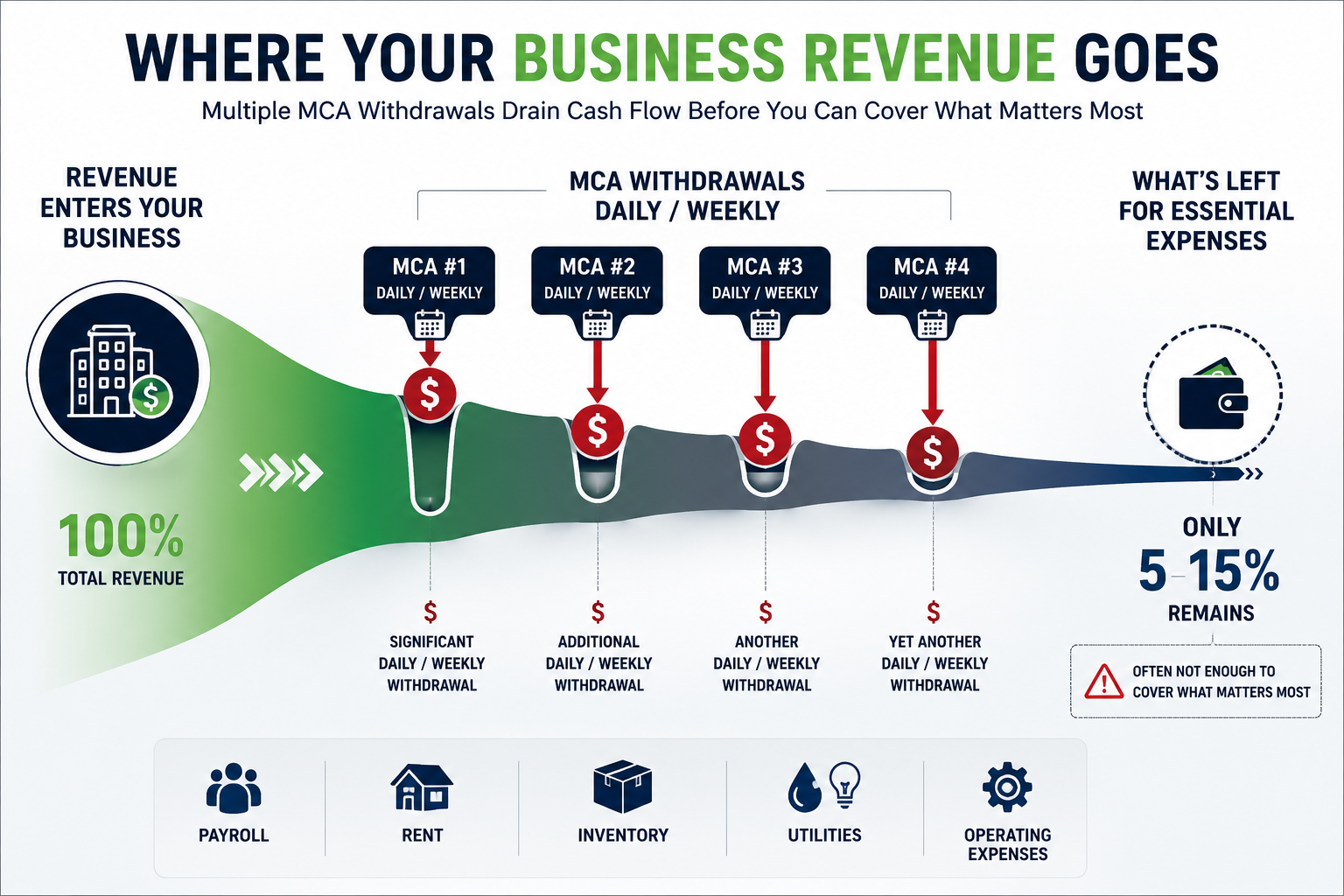
MCA loan stacking can damage business cash flow even when sales remain steady. The problem comes from having several merchant cash advance payments pulling from the same revenue at the same time.
As more money leaves the business account, less working capital remains available for daily operations. Over time, stacked payments can create a growing gap between the cash coming in and the cash the business needs to operate.
Daily and Weekly Withdrawals Drain Working Capital
Merchant cash advances often require daily or weekly withdrawals from a business bank account. When several MCAs are active, those withdrawals can quickly consume a large share of incoming revenue.
Each payment reduces the amount of cash available for normal business needs. Instead of building reserves or preparing for upcoming expenses, the business may find itself operating with less money every day.
This constant drain on working capital can make even routine expenses harder to manage.
Less Cash Remains for Payroll and Operating Expenses
Businesses still need to pay payroll, rent, inventory, utilities, taxes, insurance, and vendors regardless of how much is being withdrawn for MCA payments.
When stacked MCA payments take priority, owners may have to delay bills, reduce inventory purchases, postpone repairs, or move money between accounts just to keep operations running.
The result is a business that may still generate revenue but has far less usable cash available to cover essential expenses.
Revenue Growth May Not Keep Up With MCA Payments
Some business owners expect future sales growth to offset the cost of taking another merchant cash advance. However, revenue may not increase fast enough to keep pace with multiple repayment obligations.
Even when sales improve, much of that additional revenue may immediately go toward stacked MCA payments. The business may work harder and generate more income without seeing a meaningful improvement in available cash.
When payments grow faster than operating cash flow, MCA loan stacking can prevent the business from benefiting from its own revenue growth.
The Cash Flow Cycle Created by Stacked MCA Loans
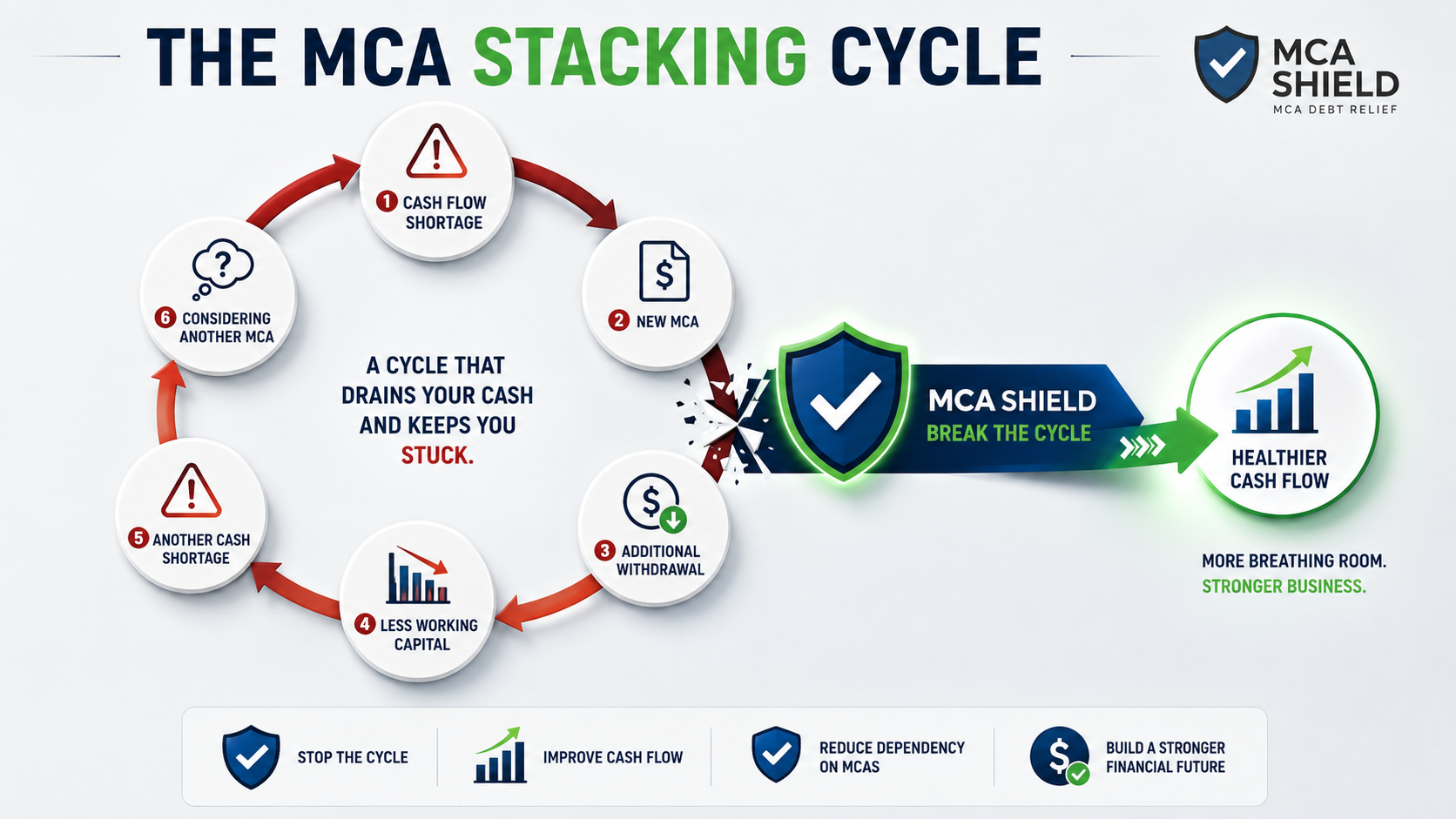
Stacked merchant cash advances can create a cycle that becomes harder to escape over time. As more daily or weekly MCA payments are withdrawn from the business account, less cash remains available for normal operations.
When that shortage grows, some business owners turn to another MCA for quick funding. The new advance may provide temporary relief, but it also adds another repayment obligation to the same cash flow.
Using New MCA Funding to Cover Existing Payments
One of the clearest warning signs of MCA loan stacking is using new funding to cover existing MCA payments or basic operating expenses.
A new advance may help the business catch up on payroll, rent, vendor payments, or other bills. However, part of that new money may also be used to absorb the pressure created by earlier MCA withdrawals.
This can create a short-term improvement without solving the underlying problem. Once the new funding is spent, the business is left with another MCA payment competing for the same revenue.
Why Each Additional MCA Can Make the Problem Worse
Every additional merchant cash advance can increase the amount of money leaving the business account each day or week.
A second or third MCA may seem manageable when viewed by itself. Combined with existing obligations, however, the total payment burden can become much harder to support.
More revenue goes toward repayments, while less cash remains for inventory, payroll, taxes, rent, and other essential expenses. That can increase the likelihood that the business will need even more outside funding.
How Businesses Become Trapped in the MCA Stacking Cycle
The MCA stacking cycle often follows a repeating pattern: cash flow becomes tight, the business takes another advance, payments increase, and available cash becomes even tighter.
As this pattern continues, the company may become increasingly dependent on new funding to maintain normal operations.
Eventually, new MCA funding may no longer offer meaningful relief because too much of the business’s revenue is already committed to existing payments.
Breaking this cycle usually requires addressing current obligations rather than adding new ones.
Warning Signs MCA Stacking Is Hurting Your Business
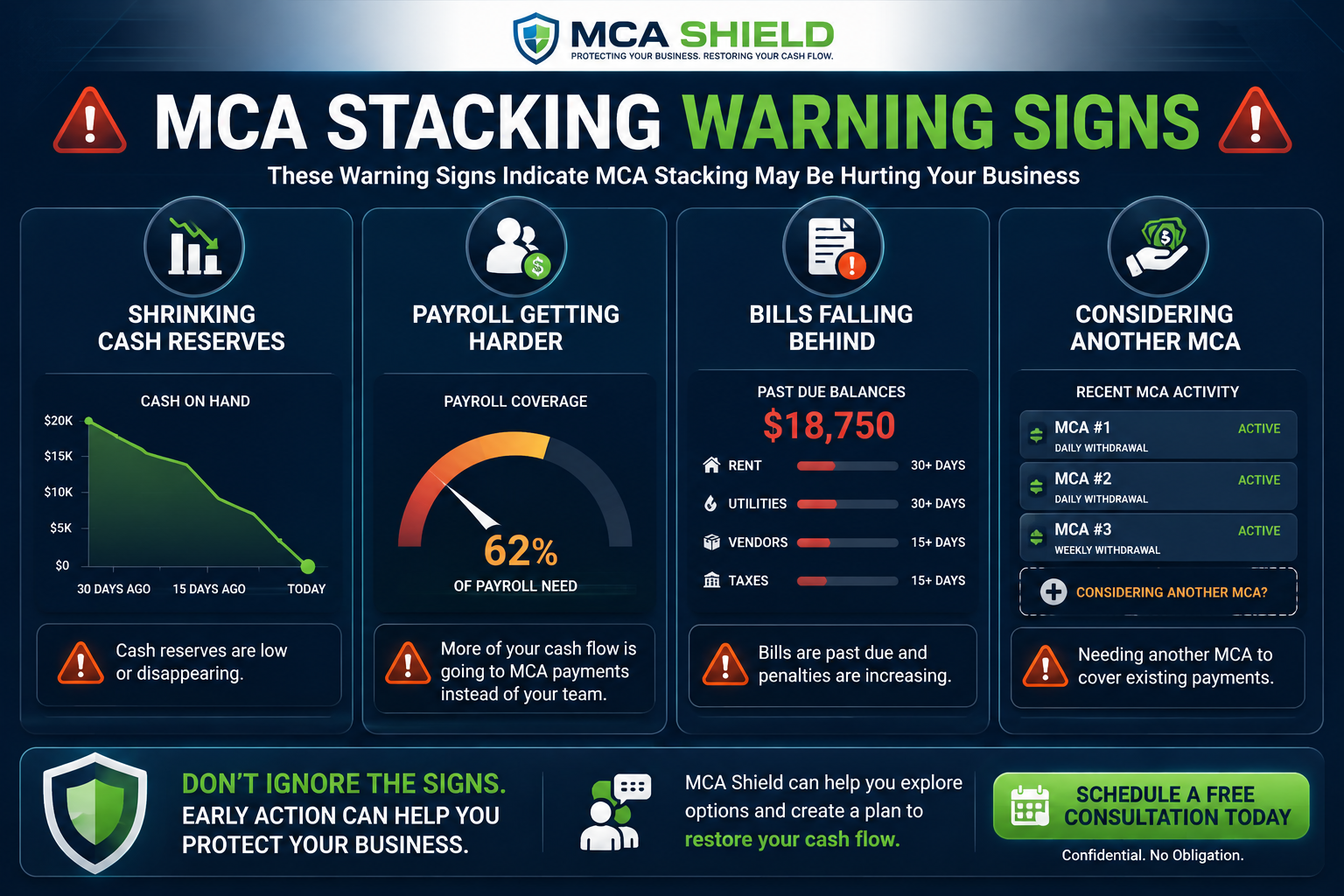
The effects of MCA loan stacking often appear before a business reaches a serious financial crisis. Recognizing the warning signs early can give owners more time to evaluate their options and protect available cash flow.
If daily operations are becoming harder to manage despite steady revenue, stacked MCA payments may be consuming too much of the business’s available cash flow.
Cash Reserves Keep Shrinking
A healthy business needs enough cash on hand to handle routine expenses and unexpected costs. When cash reserves continue to decline, it may indicate that MCA withdrawals are consuming too much working capital.
The business may still generate revenue, but little money remains after payments are deducted. Over time, this can leave the company with almost no financial cushion for emergencies, repairs, slow sales periods, or other unexpected expenses.
Bills and Payroll Become Harder to Cover
Another warning sign is struggling to cover previously manageable expenses. Payroll, rent, utilities, inventory, taxes, and vendor payments may become increasingly difficult to pay on time.
Owners may begin delaying certain bills or carefully timing payments around bank deposits. When normal operating expenses become difficult to manage, stacked MCA obligations may be placing too much pressure on cash flow.
You Are Considering Another MCA Just to Stay Current
Considering another merchant cash advance to keep up with existing payments is one of the strongest warning signs of an MCA stacking problem.
New funding may temporarily provide additional cash, but it also creates another repayment obligation. If the business needs a new advance to cover existing MCA payments or essential operating expenses, the underlying cash flow problem is likely becoming worse.
At this point, adding another MCA may deepen the payment burden rather than solving it. Exploring ways to address the existing obligations may provide a more sustainable path forward.
What Happens When MCA Payments Consume Too Much Revenue?
When MCA payments consume too much business revenue, the effects can spread quickly across daily operations. Even a company with consistent sales may struggle if too much incoming cash is committed to merchant cash advance payments.
As available cash shrinks, business owners may have difficulty meeting routine obligations, maintaining vendor relationships, and keeping operations running smoothly.
Missed Operating Expenses and Vendor Payments
One of the first problems may be falling behind on normal business expenses. Rent, utilities, inventory, taxes, insurance, and vendor invoices can become harder to pay on time.
Late payments may disrupt important supplier relationships or limit access to inventory and services the business needs. In some cases, owners may have to choose which expenses to prioritize simply because there is not enough available cash to cover everything.
Increased Risk of MCA Default
When the business cannot maintain the required payment schedule, the risk of MCA default can increase.
A missed or returned ACH withdrawal may lead to additional collection pressure, communication from the funder, or other consequences based on the terms of the agreement.
Multiple stacked MCAs can make this risk even greater because several payment obligations may compete for the same limited cash flow. Once payments become difficult to maintain, acting early may provide more options than waiting until the situation becomes critical.
Growing Pressure on Daily Business Operations
Cash flow problems do not remain limited to the bank account. They can begin affecting nearly every part of the business.
Owners may reduce inventory orders, delay equipment repairs, postpone hiring, cut expenses, or spend more time managing payment problems instead of focusing on customers and growth.
When MCA payments consistently consume the cash needed for normal operations, the business may lose the flexibility it needs to respond to opportunities or unexpected expenses. Addressing the payment burden before that pressure becomes unmanageable can help protect the company’s ability to operate.
Can Multiple MCA Loans Be Restructured or Settled?
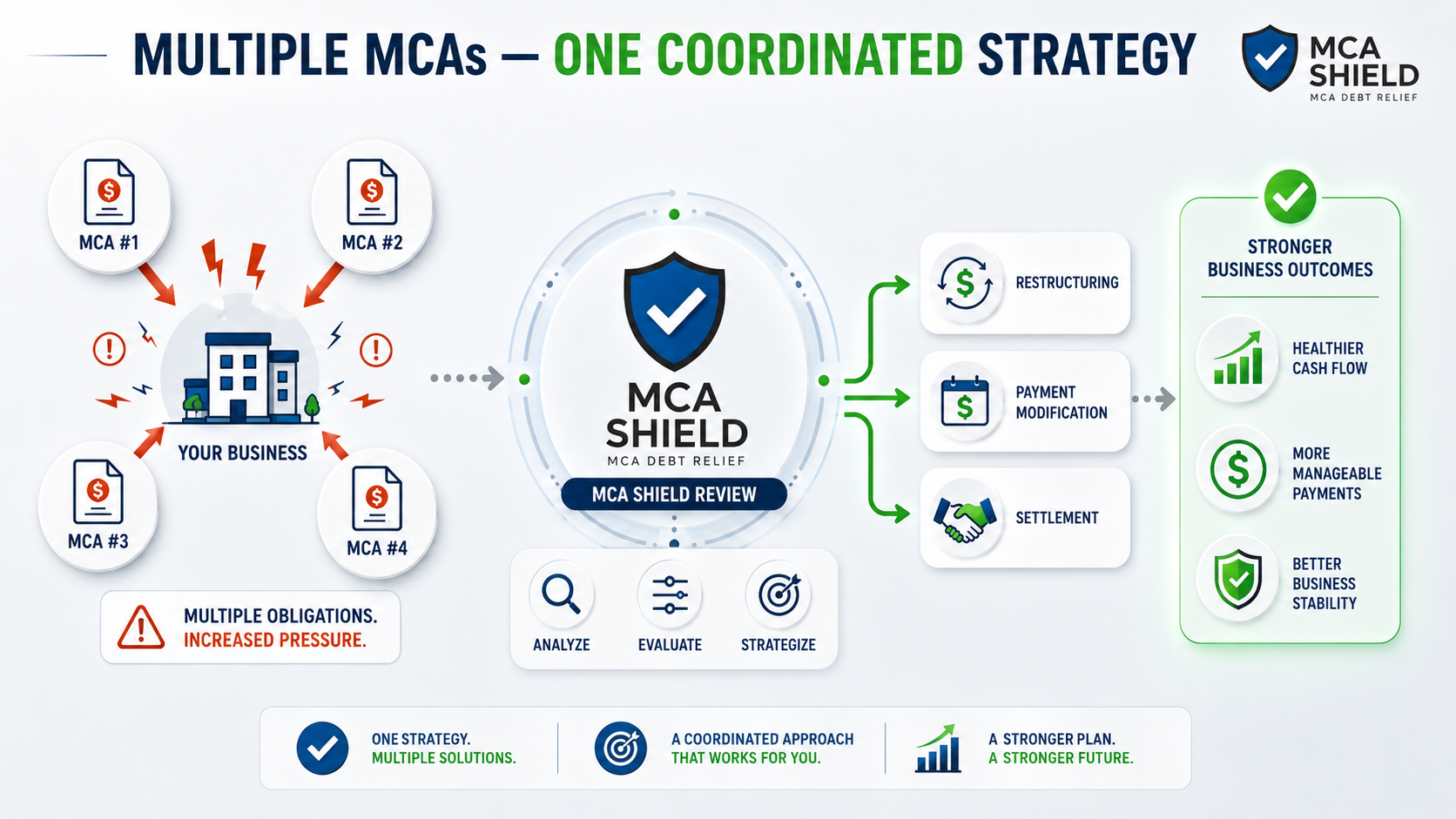
When several merchant cash advances are placing heavy pressure on business cash flow, owners may explore ways to modify or resolve their existing MCA obligations rather than adding another advance.
Possible approaches may include restructuring payment terms, negotiating modified payment arrangements, or pursuing settlement. The right approach depends on the MCA agreements, the business’s financial condition, and the willingness of individual funders to negotiate. Merchant cash advances commonly involve repayment through frequent withdrawals, which can intensify cash-flow pressure when several obligations overlap.
MCA Restructuring and Payment Modification
MCA restructuring generally focuses on changing how an existing obligation is repaid rather than eliminating it.
Depending on the circumstances, a business may seek a lower payment, a different withdrawal schedule, or another modification that reduces immediate pressure on working capital. Any change depends on the agreement and whether the MCA funder is willing to accept revised terms.
The goal is to create a payment structure that gives the business more room to cover payroll, inventory, rent, and other essential expenses while continuing to address the MCA obligation.
MCA Settlement as a Possible Resolution Strategy
MCA settlement may be another option when the existing payment structure has become difficult to maintain.
Settlement generally involves negotiating with a funder to resolve the outstanding obligation through revised terms. Depending on the circumstances, that could involve changes to the amount required, the payment schedule, or both.
However, MCA settlement is not guaranteed. Each funder, agreement, and business situation is different. Business owners should carefully review any proposed settlement terms before agreeing to a new arrangement.
Coordinating Multiple MCA Obligations
Managing several MCAs individually can become complicated because each funder may have its own balance, payment schedule, and agreement terms.
A coordinated strategy evaluates all MCA obligations together instead of treating each payment as a separate cash-flow problem. This can help identify which obligations are creating the greatest pressure and which may be candidates for restructuring, settlement, or another resolution approach.
For businesses dealing with MCA stacking, the objective is not simply to reduce one payment. It is to create a more manageable overall payment structure that protects operating cash flow and helps the business regain financial stability.
Why Taking Another MCA Usually Does Not Fix the Problem
Frequently Asked Questions About MCA Renewal Alternatives
Some businesses can address minor cash flow challenges on their own. However, when MCA obligations begin affecting daily operations, professional guidance may help business owners better understand their options and develop a strategy for moving forward.
Seeking assistance early often provides more flexibility than waiting until the situation becomes a financial emergency.
How Many MCA Loans Can a Business Have at Once?
There is no universal limit on the number of merchant cash advances a business can have. However, each additional MCA can increase the amount of revenue committed to daily or weekly payments, which may place greater pressure on cash flow.
Can Stacked MCA Loans Be Negotiated?
Yes, depending on the circumstances. Businesses may be able to pursue payment modifications, restructuring, settlement, or other negotiated arrangements. Results depend on the agreements, financial situation, and individual funders.
Can MCA Stacking Cause a Business to Fail?
MCA stacking can significantly increase financial pressure. When multiple withdrawals consume too much revenue, the business may struggle to cover payroll, rent, inventory, taxes, and other essential expenses.
What Happens If I Cannot Make My MCA Payments?
Missed or returned payments may lead to collection activity, additional fees, or other actions permitted in the MCA agreement. Addressing payment problems early may provide more options than waiting until several obligations become unmanageable.
Should I Take Another MCA to Pay Off Existing MCAs?
Another MCA may provide short-term cash, but it can also increase the total repayment burden. If the business is already struggling with stacked payments, adding another obligation may place even more pressure on available cash flow.
Can Multiple MCA Payments Be Reduced?
In some cases, businesses may be able to negotiate lower payments, modified schedules, restructuring, or settlement arrangements. The available options depend on the specific agreements, funders, and financial condition of the business.
Take Action Before MCA Stacking Destroys Your Cash Flow
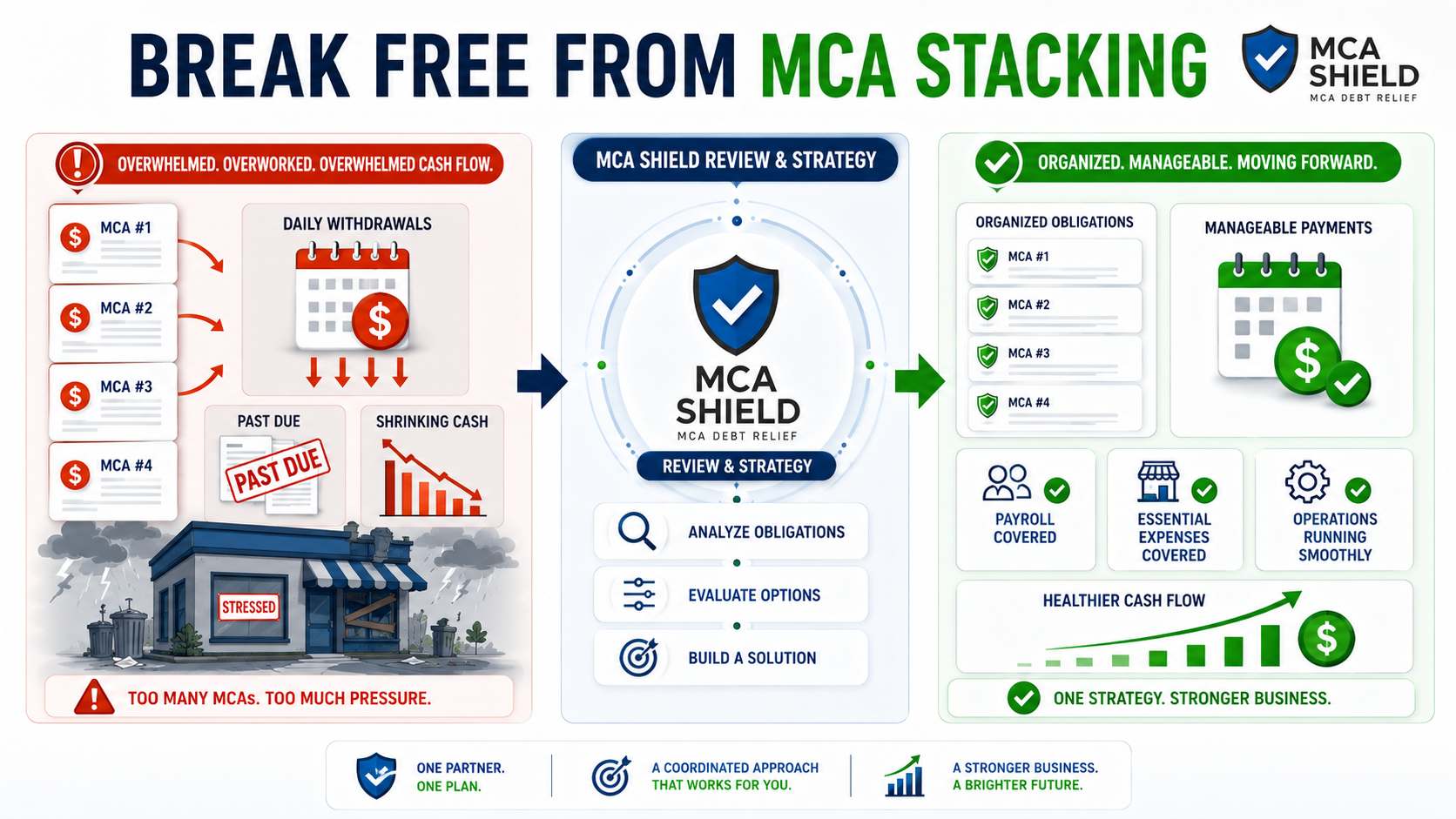
When multiple merchant cash advances are draining working capital, waiting too long can make the situation harder to manage. MCA stacking can place increasing pressure on payroll, vendors, operating expenses, and the cash needed to keep the business moving forward.
Addressing the problem early can help business owners understand their obligations, evaluate possible solutions, and avoid relying on another advance simply to cover existing payments.
Why Acting Early May Give Your Business More Options
The sooner a business recognizes that stacked MCA payments are becoming unsustainable, the more time it may have to review its financial position and consider possible strategies.
Early action can make it easier to analyze MCA agreements, evaluate cash flow, identify the most urgent obligations, and explore restructuring or settlement options before the payment burden becomes even more severe.
Waiting until cash reserves are depleted or several payments have been missed may limit flexibility and increase financial pressure.
Schedule a Free Consultation With MCA Shield
If stacked MCA payments are consuming too much of your business revenue, MCA Shield can review your situation and help you understand possible resolution strategies.
Our team can evaluate your MCA agreements, payment structure, and current cash flow to identify options that may help reduce financial pressure and create a more manageable path forward.
Schedule a free consultation with MCA Shield today to learn what options are available for your business.