When merchant cash advance withdrawals begin draining too much of your revenue, you may need to decide between reducing the payments and negotiating a settlement. Both strategies can provide relief, but they work differently and may carry different costs, risks, and long-term consequences.
Understanding lowering MCA payments vs. settling debt can help you choose an option that fits your cash flow while protecting payroll, vendors, and essential operating expenses.
Schedule Your Free Consultation
What Is the Difference Between Lowering MCA Payments and Settling Your Debt?
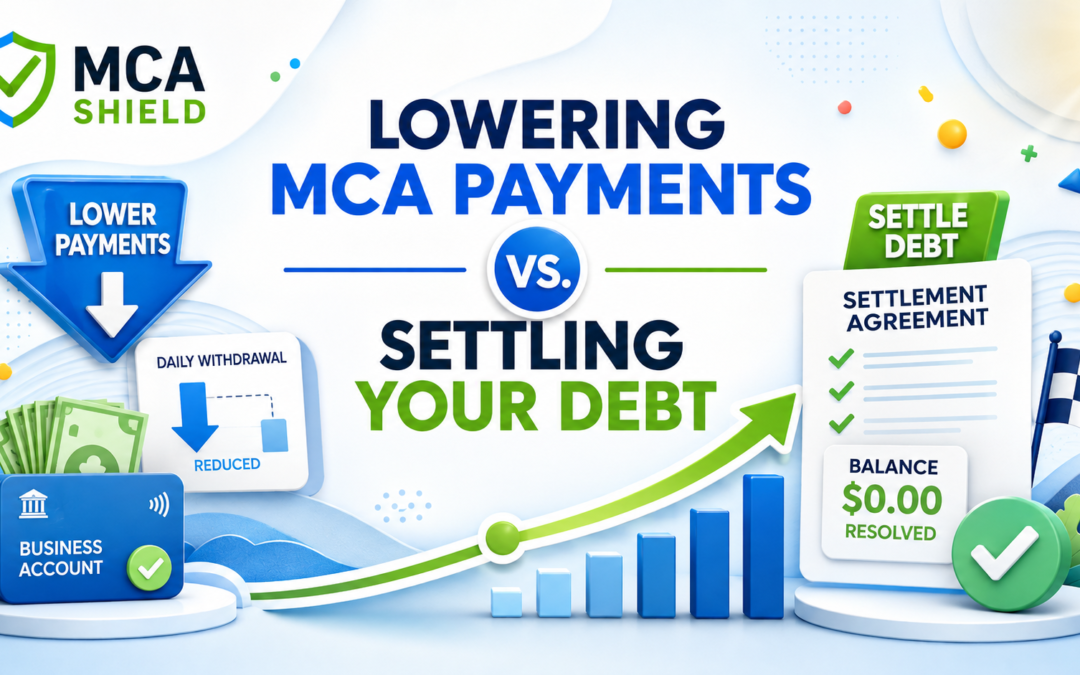
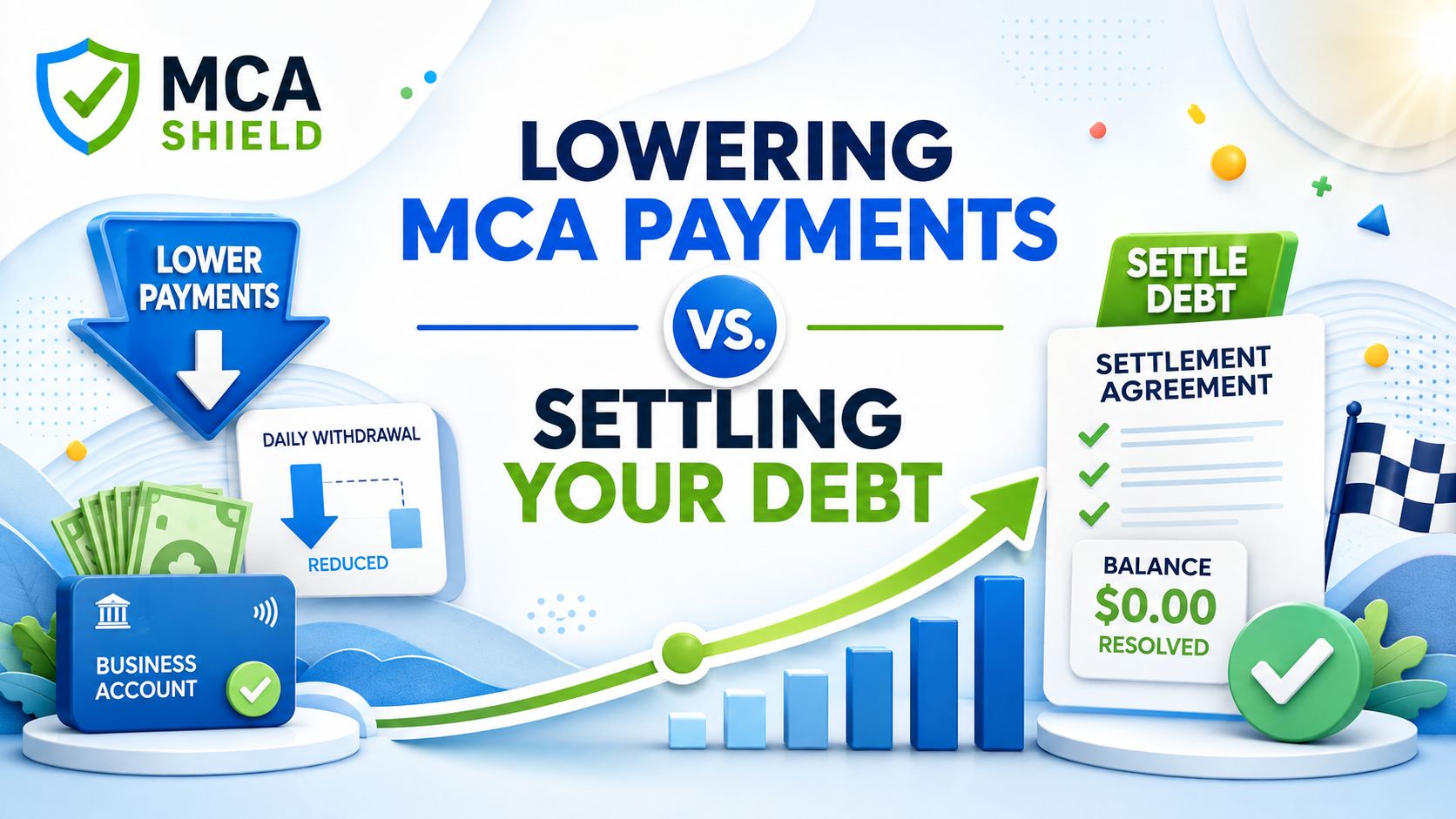
The main difference between lowering MCA payments vs. settling debt is what happens to the remaining obligation. Lowering payments changes how the balance is repaid. Settlement seeks to resolve the obligation for an amount accepted through negotiation.
Both strategies may reduce immediate cash-flow strain. However, they can differ in total cost, repayment length, qualification requirements, and potential risks. The right option depends on the business’s revenue, expenses, remaining MCA balance, and ability to continue making payments.
Lowering Payments Changes the Payment Structure
Lowering MCA payments generally means changing the daily or weekly withdrawal amount while continuing to repay the obligation. The goal is to create a payment structure the business can afford without sacrificing payroll, vendor payments, rent, or other essential expenses.
Depending on the agreement and financial circumstances, payments may be lowered through:
- Reconciliation based on actual revenue
- Restructuring the withdrawal schedule
- Consolidating multiple MCA payments
- Negotiating a temporary payment reduction
A lower payment can provide immediate breathing room. However, extending the repayment period may affect the total amount paid. Business owners should review the new payment terms, repayment period, fees, and written terms before accepting any arrangement.
Settlement Seeks to Resolve the Debt for a Negotiated Amount
MCA debt settlement focuses on negotiating an amount that the MCA company agrees to accept to resolve the outstanding obligation. The agreed amount may be paid as a lump sum or through a structured payment plan, depending on the negotiations.
Settlement may be considered when the business cannot sustain the existing withdrawals or a longer repayment plan. However, it may also involve collection activity, default concerns, legal risks, UCC filings, personal guarantees, credit consequences, or possible tax considerations.
Before making a settlement payment, the business should obtain clear written terms explaining the negotiated amount, payment deadline, and what will happen after the agreement is completed. The document should also address the remaining balance and any applicable releases or filings. This helps confirm that the payment will resolve the obligation as intended.
How Can MCA Payments Be Lowered?
There are several ways to lower MCA payments, but the right strategy depends on the agreement, current revenue, remaining balance, and the business’s overall financial condition. The goal should be to reduce daily or weekly withdrawals to a level that protects payroll, vendors, rent, and other essential operating expenses.
Before choosing an option, calculate what the business can realistically afford. A smaller payment may improve immediate cash flow, but repayment length, fees, and total cost must also be reviewed.
Reconciliation Based on Actual Revenue
Many merchant cash advance agreements include a reconciliation provision that connects payments to a percentage of actual receivables. If business revenue has declined, the current withdrawal may no longer reflect the amount the business originally agreed to remit.
The business may be able to request a reconciliation by submitting bank statements, processing reports, or other financial records. If approved, the MCA company may reduce the withdrawal based on the business’s recent sales.
Reconciliation is not the same as settlement. It generally changes the payment amount without reducing the underlying obligation. Business owners should follow the agreement’s reconciliation procedures and keep copies of all documents and communications.
Restructuring Daily or Weekly Withdrawals
MCA restructuring involves negotiating changes to the existing payment schedule. This may reduce the withdrawal amount, extend the repayment period, or replace frequent withdrawals with a more manageable schedule.
A restructuring proposal should be based on the company’s actual cash flow. The business should calculate how much remains after paying essential expenses and avoid agreeing to a payment that will create the same problem again.
Any approved restructuring terms should be confirmed in writing. The agreement should clearly identify the new payment amount, withdrawal frequency, repayment period, fees, and consequences of a missed payment.
Consolidating Multiple MCA Payments
Businesses with multiple merchant cash advances may consider MCA consolidation. This strategy combines multiple withdrawals into one payment structure, potentially reducing the total amount deducted from the business account each day or week.
Consolidation can simplify cash-flow management and create more room for operating expenses. However, a lower payment does not automatically mean a lower total cost. Extending repayment or accepting new financing may increase the amount paid over time.
Before consolidating, compare the new payment with the business’s available cash flow. Review the total repayment amount, fees, term length, and whether the existing MCA obligations will be paid off completely. The new arrangement should improve the company’s financial position, not add another unaffordable obligation.
How Does MCA Debt Settlement Work?
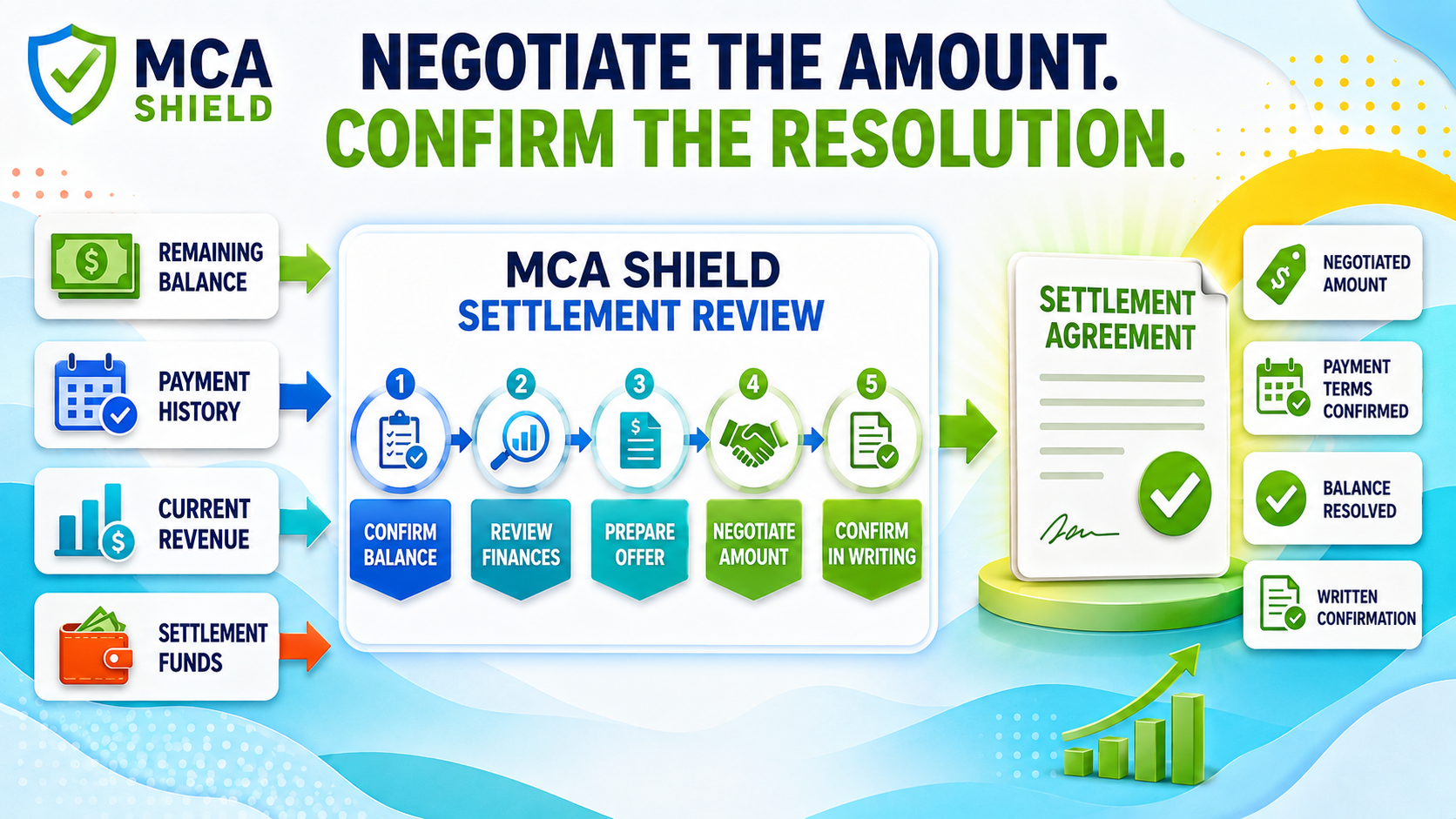
MCA debt settlement is the process of negotiating with an MCA company to resolve an outstanding obligation. The funder may agree to accept a reduced payoff or a structured payment arrangement. However, approval is not guaranteed, and the outcome depends on the agreement and the business’s financial condition.
How Does MCA Debt Settlement Work?
MCA debt settlement is the process of negotiating with an MCA company to resolve an outstanding obligation. The funder may agree to accept a reduced payoff or a structured payment arrangement. However, approval is not guaranteed, and the outcome depends on the agreement and the business’s financial condition.
Reviewing the Remaining Balance and Business Finances
The process usually begins with a complete review of the MCA obligation. This includes confirming the remaining balance, payment history, current withdrawals, fees, and agreement terms. Any differences between the funder’s records and the business’s records should be identified before negotiations begin.
The business must also review its revenue, payroll, vendor costs, rent, taxes, and other operating expenses. This financial analysis helps determine how much money is available for a settlement without creating another cash-flow crisis.
A realistic proposal should be based on verified financial information. Offering more than the business can afford may lead to a failed settlement agreement and further collection activity.
Negotiating a Reduced Payoff or Payment Arrangement
Once the financial review is complete, a settlement proposal can be presented to the MCA company. The request may involve a reduced lump-sum payoff or a negotiated amount paid through scheduled installments.
The MCA company may consider several factors, including:
- The unpaid balance
- The business’s recent revenue
- Its payment history
- Whether the business remains open
- Available funds
- The likelihood of collecting the full amount
A lower settlement amount is never automatic. The funder may accept the proposal, reject it, or make a counteroffer. Every counteroffer should be reviewed to confirm that the business can meet the payment amount and deadline.
Confirming the Settlement Terms in Writing
The business should receive a written settlement agreement before sending payment. Verbal promises may not clearly establish the final amount or explain what happens after the payment is completed.
The written agreement should identify the accepted settlement amount, payment schedule, due dates, and consequences of a missed payment. It should also explain whether the remaining balance will be considered resolved once all required payments are made.
When applicable, the agreement should address UCC filings, personal guarantees, collection activity, and releases. Keeping the final agreement and proof of every payment can help the business verify that it fulfilled the negotiated terms.
The process usually begins with a complete review of the MCA obligation. This includes confirming the remaining balance, payment history, current withdrawals, fees, and agreement terms. Any differences between the funder’s records and the business’s records should be identified before negotiations begin.
The business must also review its revenue, payroll, vendor costs, rent, taxes, and other operating expenses. This financial analysis helps determine how much money is available for a settlement without creating another cash-flow crisis.
A realistic proposal should be based on verified financial information. Offering more than the business can afford may lead to a failed settlement agreement and further collection activity.
Negotiating a Reduced Payoff or Payment Arrangement
Once the financial review is complete, a settlement proposal can be presented to the MCA company. The request may involve a reduced lump-sum payoff or a negotiated amount paid through scheduled installments.
The MCA company may consider several factors, including:
- The unpaid balance
- The business’s recent revenue
- Its payment history
- Whether the business remains open
- Available funds
- The likelihood of collecting the full amount
A lower settlement amount is never automatic. The funder may accept the proposal, reject it, or make a counteroffer. Every counteroffer should be reviewed to confirm that the business can meet the payment amount and deadline.
Confirming the Settlement Terms in Writing
The business should receive a written settlement agreement before sending payment. Verbal promises may not clearly establish the final amount or explain what happens after the payment is completed.
The written agreement should identify the accepted settlement amount, payment schedule, due dates, and consequences of a missed payment. It should also explain whether the remaining balance will be considered resolved once all required payments are made.
When applicable, the agreement should address UCC filings, personal guarantees, collection activity, and releases. Keeping the final agreement and proof of every payment can help the business verify that it fulfilled the negotiated terms.
Which Option Provides Faster Cash-Flow Relief?
The fastest form of cash-flow relief depends on the business’s finances and the MCA company’s willingness to negotiate. Lowering MCA payments may provide quicker relief when the funder agrees to reduce daily or weekly withdrawals. Settlement may resolve the obligation sooner when the business has funds available for a negotiated payoff.
Speed is important, but it should not be the only factor. The business must also consider the total repayment, new payment terms, settlement requirements, and potential legal or financial risks.
Comparing the Immediate Payment Reduction
A payment modification can create immediate relief by reducing the amount withdrawn from the business account. This may leave more money available for essential expenses each day or week. However, the obligation remains active, and a longer repayment period may increase the time needed to complete it.
A settlement can provide substantial relief if the MCA company accepts a reduced lump-sum payment. Once the required payment is made and the settlement terms are fulfilled, the obligation may be considered resolved. However, the business must first have sufficient money to fund the settlement.
If a lump-sum payment is not possible, the MCA company may offer a structured settlement plan. This can reduce the payment burden, but relief may take longer because the negotiated balance is paid over time.
Protecting Payroll, Vendors, and Operating Expenses
The best option should leave the business with enough working capital to cover payroll, vendors, rent, utilities, taxes, and inventory. A strategy that reduces MCA payments but still consumes most of the business’s revenue may not provide meaningful relief.
Before accepting new terms, compare the proposed payment with expected revenue and essential expenses. The business should also consider seasonal changes, unexpected costs, and slower sales periods.
Protecting operating cash can help the business avoid overdrafts, delayed payroll, unpaid vendor invoices, and additional borrowing. The goal is not simply to obtain a lower payment. It is to create a structure that allows the business to continue operating.
Determining What the Business Can Realistically Afford
An affordable payment should be based on actual cash flow, not the amount the business hopes to earn. Start by reviewing recent bank statements, revenue reports, MCA withdrawals, payroll obligations, vendor costs, and other necessary expenses.
The remaining cash can help establish a realistic payment budget. This amount should provide room for ordinary fluctuations without placing the business at immediate risk.
If the business can maintain a reduced payment, restructuring or reconciliation may provide practical relief. If it cannot support a long-term payment plan but has access to settlement funds, a negotiated resolution may be more appropriate. In either case, the final terms should be confirmed in writing before payments are modified.
Which Option Could Cost Less Overall?
What Are the Risks of Lowering MCA Payments vs. Settling Your Debt?
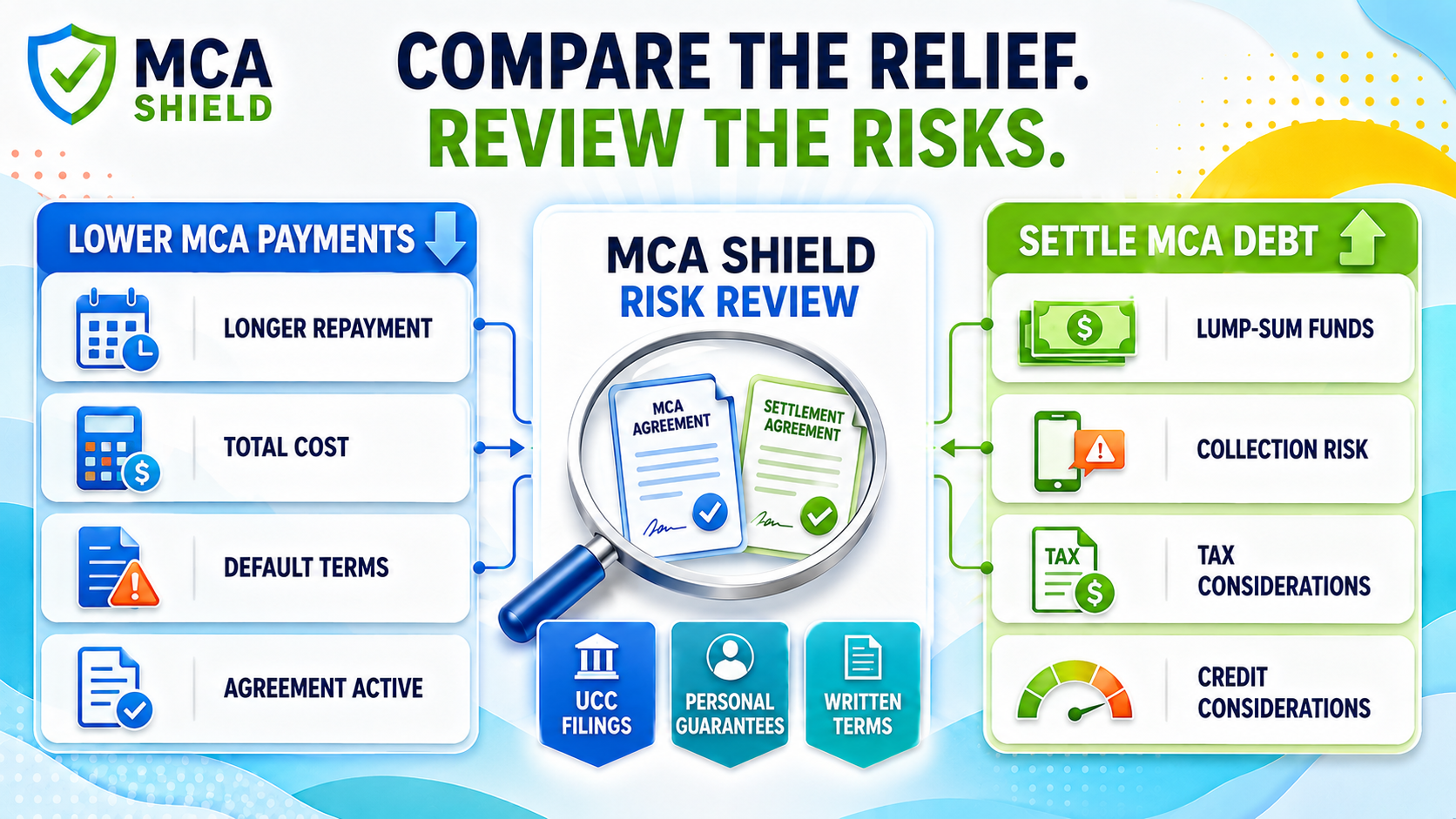
Both options can provide relief, but neither is risk-free. The potential consequences depend on the MCA agreement, payment history, business finances, and actions taken during negotiations.
Business owners should understand the risks before changing payments, stopping withdrawals, or sending settlement funds. A written agreement is essential because negotiations alone may not prevent collection or legal action.
Default, Collection, and Legal Escalation Risks
Requesting a lower payment does not automatically change the original MCA agreement. Until the funder approves new terms, the existing payment schedule may remain in effect.
Reducing, blocking, or stopping withdrawals without written approval could trigger a default under the agreement. Depending on the contract and applicable law, the MCA company may pursue collection activity, additional fees, arbitration, or litigation.
Settlement negotiations can involve similar risks. A funder may continue collection efforts while reviewing a proposal unless it agrees to pause them. If the business misses a payment under a completed settlement agreement, the original balance or other penalties may become due. The default terms should be reviewed before the agreement is signed.
UCC Filings and Personal Guarantees
An MCA company may have filed a UCC financing statement connected to the business’s receivables or other assets. Lowering payments or negotiating a settlement does not automatically terminate that filing.
The final agreement should explain when the funder will release or terminate its UCC filing. Business owners should also confirm whether any notices sent to customers, payment processors, or banks will be withdrawn after the agreed terms are completed.
A personal guarantee may allow the MCA company to pursue the guarantor under certain conditions stated in the agreement. The exact risk depends on the guarantee’s language and the circumstances surrounding the default. When settlement is chosen, the written terms should clearly state whether the personal guarantor will be released after payment.
Tax and Credit Considerations After Settlement
If part of an obligation is forgiven, the canceled amount may create a potential tax consequence. The treatment depends on how the transaction is classified, the business structure, and applicable tax rules. A qualified tax professional can determine whether any forgiven amount must be reported as income.
Settlement may also affect the business’s ability to obtain financing. The effect depends on whether the MCA company reports payment activity, whether collection accounts or judgments appear, and whether personal credit was connected to the agreement.
These consequences are not identical in every case. Before accepting a settlement, the business should review the tax, credit, and legal effects alongside the immediate payment relief. This provides a clearer picture of the strategy’s short-term benefits and long-term risks.
When Is Lowering MCA Payments the Better Option?
When Is Settling MCA Debt the Better Option?
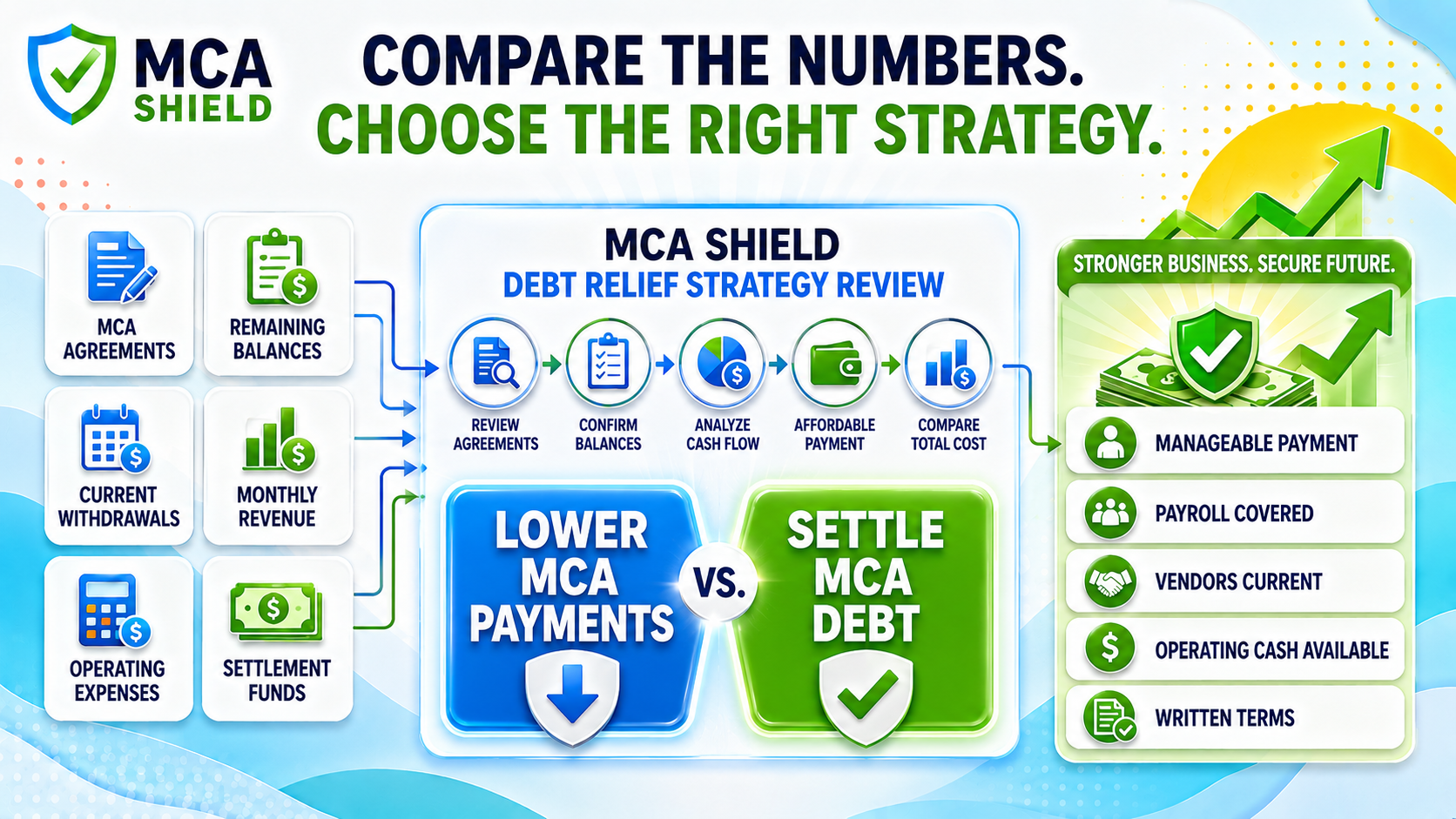
How Do You Choose the Right MCA Debt Relief Strategy?