Schedule Your Free Consultation
What Are MCA Withdrawals Doing to Your Business Cash Flow?
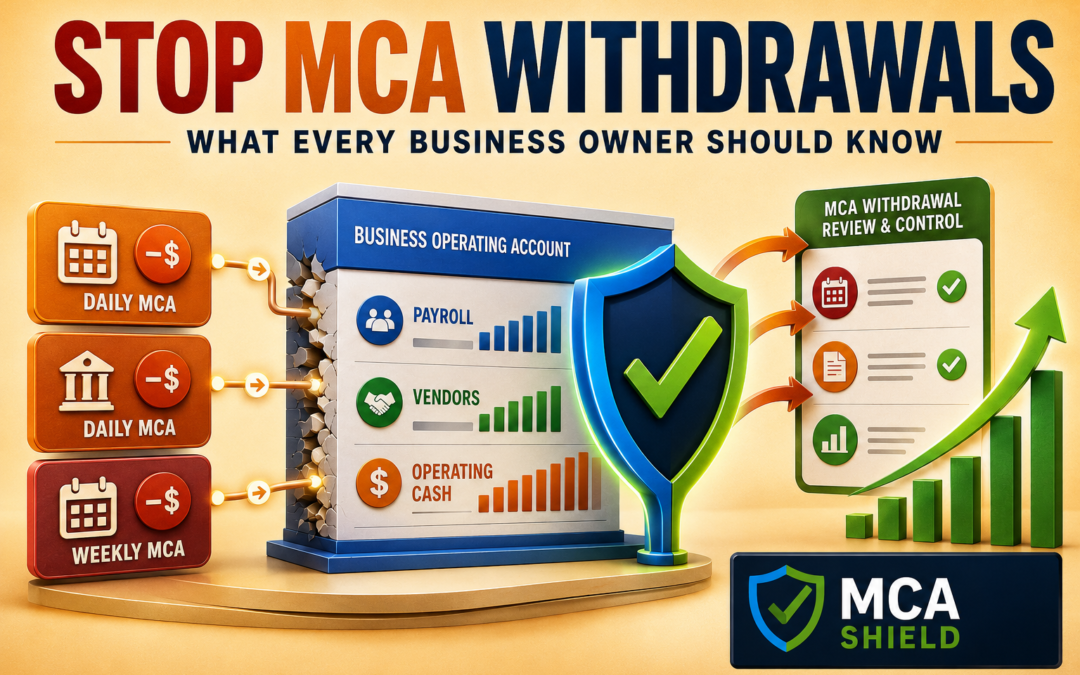
MCA withdrawals can affect much more than the balance in a business bank account. When daily or weekly payments consume too much revenue, the business may struggle to cover the expenses that keep it operating. Payroll, vendor invoices, rent, taxes, inventory, insurance, and emergency costs must all compete with automatic withdrawals.
Because MCA payments are usually collected frequently, cash can leave the account before the owner has time to allocate it toward essential expenses. A business may appear profitable on paper while still experiencing serious cash-flow shortages between customer payments.
How Daily and Weekly Debits Reduce Available Operating Cash
Daily and weekly MCA debits reduce the amount of working capital available to run the business. Every withdrawal decreases the cash available to purchase materials, replenish inventory, pay employees, maintain equipment, or accept new projects.
The effect can become especially difficult when customer revenue arrives irregularly. A contractor may wait weeks for an invoice to be paid, while a restaurant or retail business may experience substantial changes in sales throughout the month. MCA withdrawals may continue on schedule even when deposits temporarily decline.
Frequent debits can also make account balances harder to predict. Business owners may believe enough money is available for payroll or a vendor payment, only to discover that one or more MCA withdrawals have already reduced the balance. This can lead to overdrafts, returned payments, delayed expenses, and additional bank fees.
When several advances are active at once, the combined withdrawals can take a substantial portion of each deposit. The business may then depend on future revenue simply to cover current obligations, leaving little room for growth or unexpected costs.
Why the Withdrawal Burden Can Grow Without Warning
The withdrawal burden may increase when revenue slows, operating expenses rise, or the business takes another advance. Even if the scheduled MCA payment remains unchanged, it represents a larger share of cash flow when fewer deposits are entering the account.
Renewals can add another layer of strain. A business may accept new funding to cover payroll, inventory, or an existing MCA payment, only to create an additional withdrawal. What appears to be short-term relief can result in more money leaving the account each day or week.
Seasonal changes, delayed customer payments, equipment repairs, increased material costs, and unexpected tax obligations can also make previously manageable withdrawals unaffordable. Because these changes may occur gradually, the business owner might not recognize the severity of the problem until payments begin failing.
Regularly comparing total MCA withdrawals against actual revenue and essential operating expenses can expose the problem earlier. If the business no longer has sufficient cash to meet basic obligations after the debits clear, it may be time to review how to stop MCA withdrawals, lower the payment burden, or pursue another relief strategy.
Can You Legally Stop MCA Withdrawals From Your Bank Account?
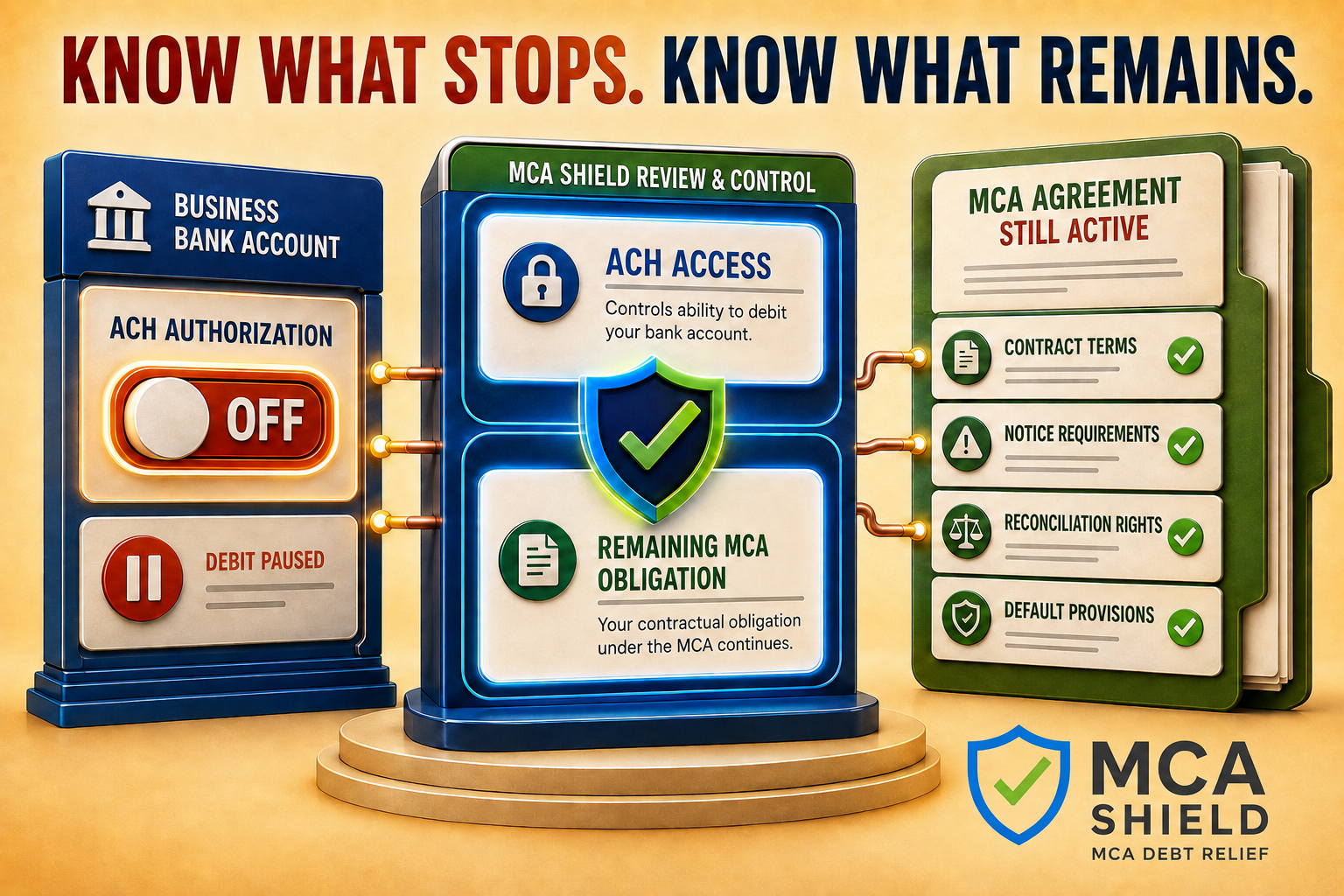
A business may have the option to ask its bank to block an ACH debit or revoke authorization for future withdrawals. However, stopping access to the bank account does not necessarily eliminate the payment obligation. Whether a business can stop MCA withdrawals without violating its agreement depends on the contract, the circumstances, and applicable law.
Before taking action, the business owner should review the agreement and seek qualified guidance when legal consequences are possible. Blocking withdrawals without a broader strategy could trigger default provisions, collection activity, or other enforcement measures.
Revoking ACH Authorization Does Not Cancel the MCA Agreement
ACH authorization and the underlying MCA agreement are separate matters. Revoking authorization may prevent the funder from automatically withdrawing funds, but it does not cancel the remaining purchased amount, resolve the balance, or terminate the contract.
The funder may treat blocked or returned withdrawals as a default, particularly if the business does not provide notice or follow the agreement’s required procedures. Possible responses may include repeated debit attempts, default fees, collection calls, demands for payment, or legal action.
Business owners should avoid assuming that closing an account or issuing a stop-payment order resolves the MCA. These actions may temporarily interrupt the debits while leaving the contractual dispute unresolved. A coordinated approach may involve reviewing the agreement, documenting the financial hardship, calculating an affordable payment, and communicating with the funder about revised terms.
Contract Terms That May Control Your Next Move
Every MCA agreement should be reviewed individually before changing or stopping payments. The contract may include provisions addressing ACH authorization, reconciliation, default, notice requirements, bank-account changes, UCC filings, personal guarantees, and remedies available to the funder.
A reconciliation provision may allow the payment amount to be adjusted when actual revenue declines, but the business may need to submit bank statements or follow a specific request process. Missing a deadline or failing to provide the required documentation could delay or weaken the request.
The agreement may also prohibit diverting deposits, changing accounts without notice, or interfering with scheduled withdrawals. If a personal guarantee or UCC filing is involved, stopping the ACH debits could create risks beyond the operating account.
Understanding these terms helps the business determine whether to request reconciliation, negotiate reduced withdrawals, restructure the obligation, or consider another relief option. Because contract rights and legal remedies vary, an attorney should review the situation when litigation, frozen funds, or enforcement against personally guaranteed assets is a concern.
What Happens After You Block or Revoke MCA ACH Withdrawals?
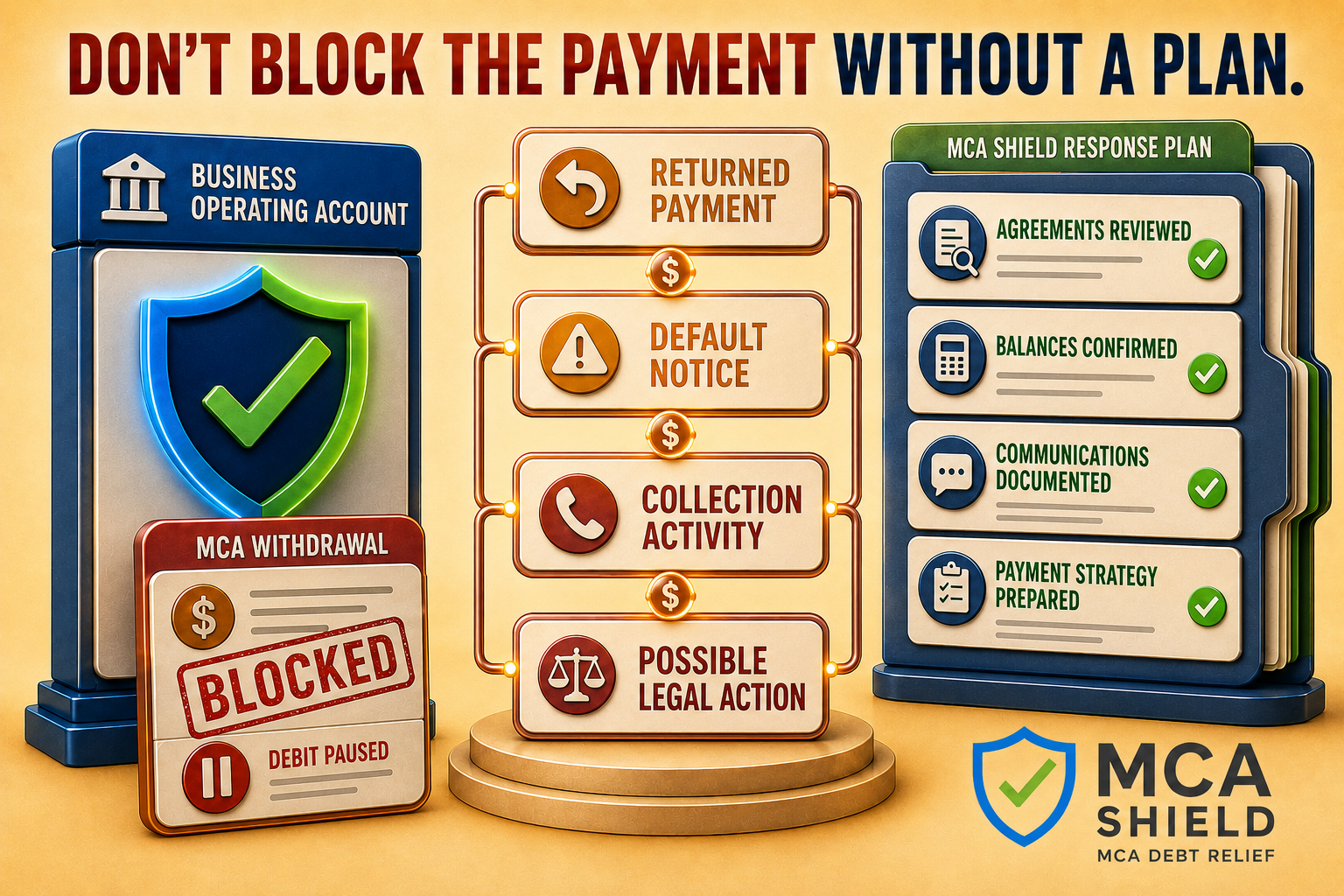
Blocking an ACH debit may provide immediate relief for a strained bank account, but it can also begin a new stage of the MCA dispute. The funder may contact the business, attempt additional withdrawals, issue a default notice, or demand that the missed payment be resolved.
What happens next depends on the agreement, the reason payments stopped, the business’s communication with the funder, and applicable law. Business owners should understand the possible consequences before taking action and prepare a plan for addressing the remaining obligation.
NSF Fees, Default Notices, and Collection Activity
If an MCA debit is returned due to insufficient funds, the bank may charge an NSF or overdraft fee. The MCA funder may also assess returned-payment or default fees as permitted by the agreement.
Repeated debit attempts can create additional problems. Each attempt may reduce the available balance, generate another fee, or cause payroll and vendor payments to be returned. Monitoring the account closely becomes especially important when several funders are attempting withdrawals.
The funder may also send a default notice or transfer the account to an internal or third-party collection department. Collection activity can include frequent calls, emails, written demands, and requests for updated financial information. Keeping organized records of every withdrawal attempt and communication can help the business understand what is being claimed and how the matter is escalating.
Lawsuits and Other Possible Legal Consequences
A funder may pursue legal remedies after MCA withdrawals stop, particularly when it believes the business has violated the agreement. Depending on the contract and circumstances, this could include filing a lawsuit, attempting to enforce a personal guarantee, or pursuing rights associated with a UCC filing.
The funder may also contact payment processors, customers, or account debtors if the agreement authorizes certain collection measures. These actions can affect more than the bank balance by disrupting incoming revenue and important business relationships.
Not every missed payment results in a lawsuit, and a funder’s available remedies are not identical in every case. The agreement, governing law, transaction structure, and actions taken by both parties can influence the outcome. A business facing threatened litigation, frozen funds, or enforcement against personal assets should consult a qualified attorney promptly.
Why an Unplanned Payment Block Can Increase Business Risk
Trying to stop MCA withdrawals without reviewing the agreement or preparing for the response may leave the business exposed. Although the immediate debit may be interrupted, the remaining balance and contractual dispute still need to be addressed.
An unplanned block can also weaken cash-flow stability if the business is not prepared for repeated withdrawal attempts, collection pressure, account restrictions, or legal expenses. Closing an account or moving deposits may create additional concerns when the agreement contains notice requirements or restrictions on changing bank accounts.
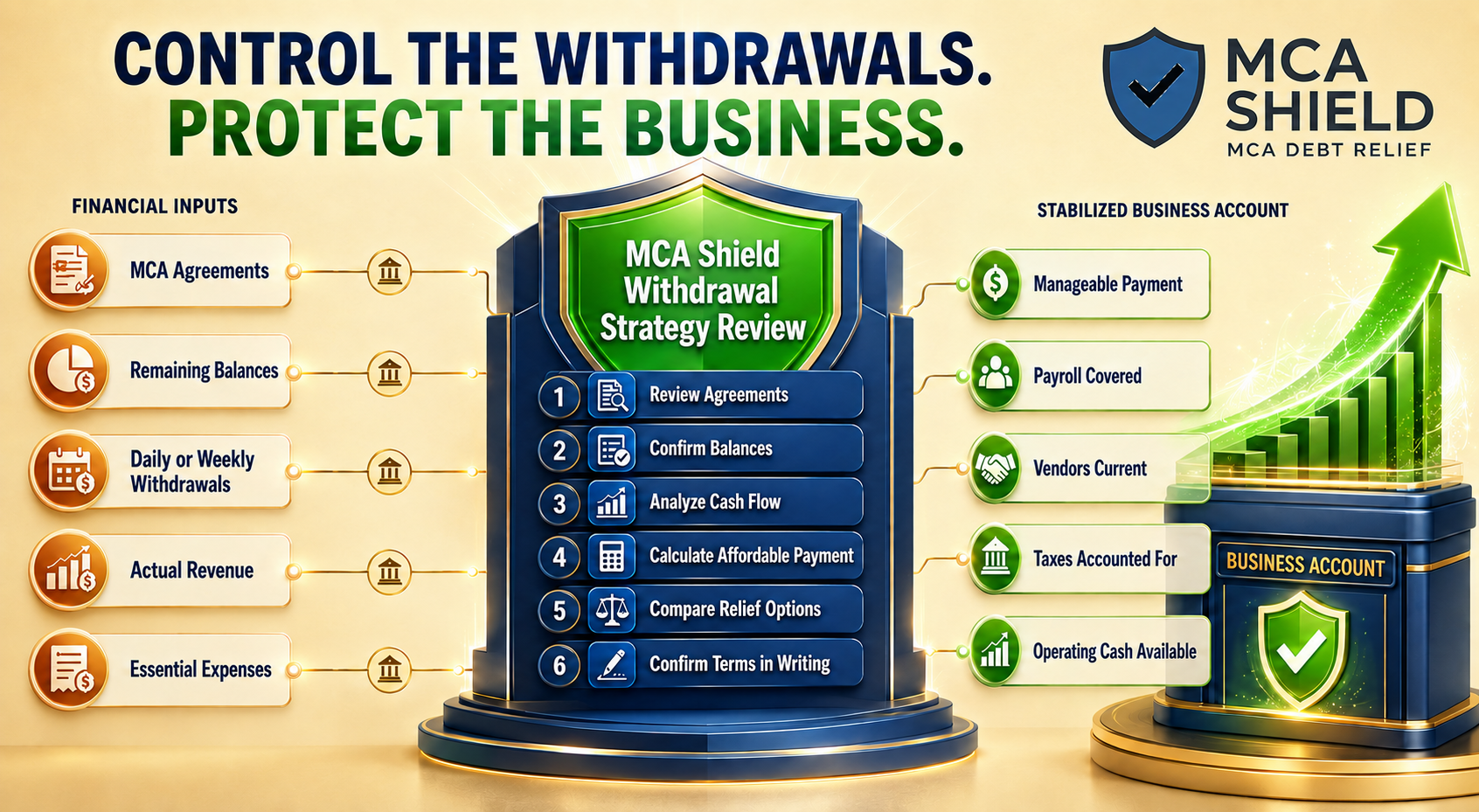
A stronger approach begins with gathering the agreements, verifying balances, reviewing recent bank activity, and calculating what the business can realistically afford. The owner can then evaluate reconciliation, reduced withdrawals, restructuring, consolidation, settlement, or legal representation based on the full financial and contractual picture.
What Should You Review Before Trying to Stop MCA Payments?
Before attempting to stop MCA payments, business owners need a complete picture of what is owed, how payments are collected, and what could happen if withdrawals are interrupted. Acting without this information may provide temporary cash-flow relief while creating larger contractual or legal problems.
The review should cover every active MCA, not only the funder creating the most immediate pressure. Multiple agreements can contain different payment requirements, default provisions, and enforcement rights.
MCA Agreements, Remaining Balances, and Payment Schedules
Start by gathering each MCA agreement, amendment, renewal document, payment history, and recent balance statement. Confirm the original purchase price, purchased amount, amount already collected, estimated remaining balance, and current daily or weekly withdrawal.
Do not rely entirely on the amount displayed in an online portal or quoted during a collection call. Request a current payoff or balance statement from each funder and compare it with the withdrawals shown on the business bank statements.
Create a list that identifies:
-
Every active MCA funder
-
The remaining balance claimed
-
The current withdrawal amount
-
The withdrawal frequency
-
The estimated completion date
-
Any returned-payment or default fees
-
The bank account or processor connected to the payments
This information reveals the business’s total MCA burden and helps determine how much revenue remains after all withdrawals are completed.
Reconciliation and Notice Requirements
Review each agreement for a reconciliation provision. Because many MCA payments are based on a percentage of receivables, the agreement may contain a process for adjusting withdrawals when actual revenue is lower than originally estimated.
The business may need to submit recent bank statements, merchant-processing reports, revenue records, or a written request. The contract may also establish deadlines, delivery methods, and other conditions that must be followed. A reconciliation request can be delayed or denied if the required information is incomplete.
Notice provisions are equally important. The agreement may specify how the business must report financial hardship, request a payment adjustment, dispute a balance, or notify the funder of changes to its bank account. Following the required process can help create a written record showing that the owner attempted to address the problem.
Personal Guarantees, UCC Filings, and Default Provisions
A personal guarantee may allow the funder to pursue the guarantor under certain circumstances described in the agreement. Business owners should determine who signed the guarantee, which obligations it covers, and what events could trigger it.
A UCC filing may give the funder a claimed security interest in certain business assets or receivables. Review what collateral is described and whether the filing could affect bank accounts, payment processors, customers, or future financing.
The default section may explain what happens after missed or blocked withdrawals. It can address default fees, accelerated payment demands, collection costs, legal expenses, account-debit attempts, and other remedies claimed by the funder.
Reviewing these provisions does not automatically determine whether every term is valid or enforceable. When the business faces a lawsuit, threatened asset collection, or personal-guarantee enforcement, a qualified attorney can evaluate the agreement and explain the available legal options. This review allows the owner to decide whether to request reconciliation, negotiate reduced payments, pursue restructuring, or consider another strategy before trying to stop MCA payments.
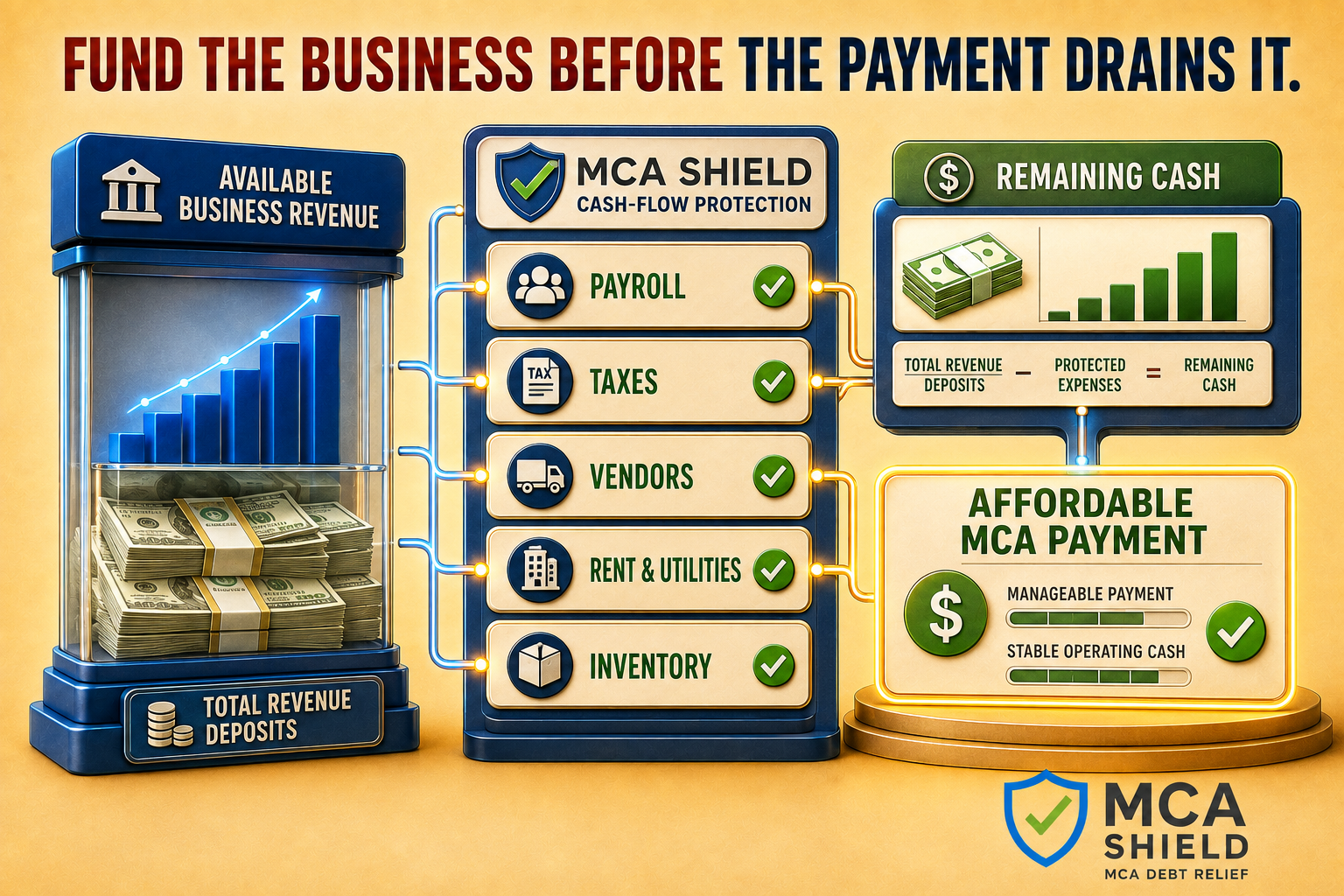
How Can You Protect Payroll and Essential Business Expenses?
Can MCA Withdrawals Be Reduced Without Stopping Them Completely?
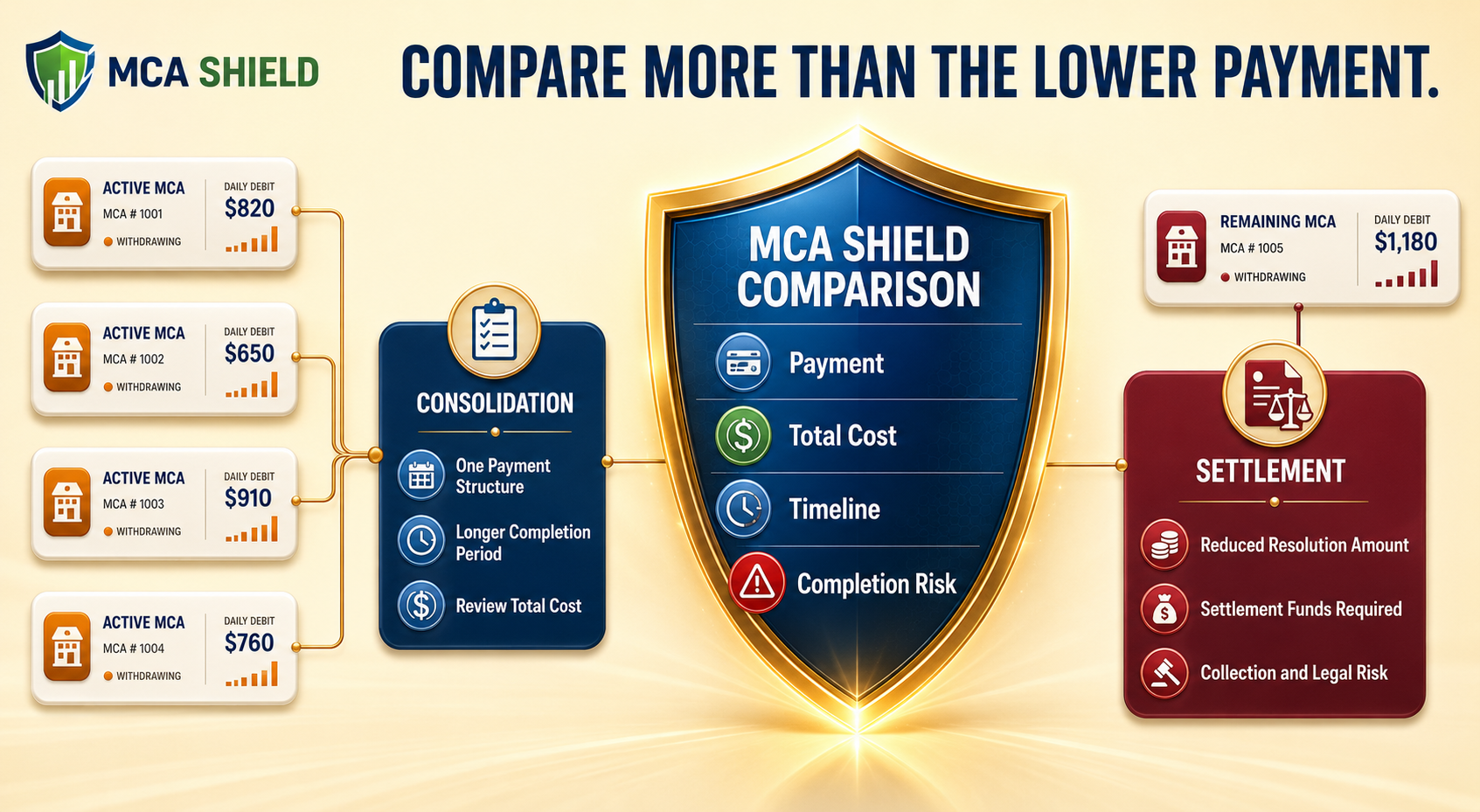
When Should You Consider MCA Consolidation or Settlement?
What Records Should You Gather Before Contacting MCA Funders?
Stop MCA Withdrawals Before They Drain the Business