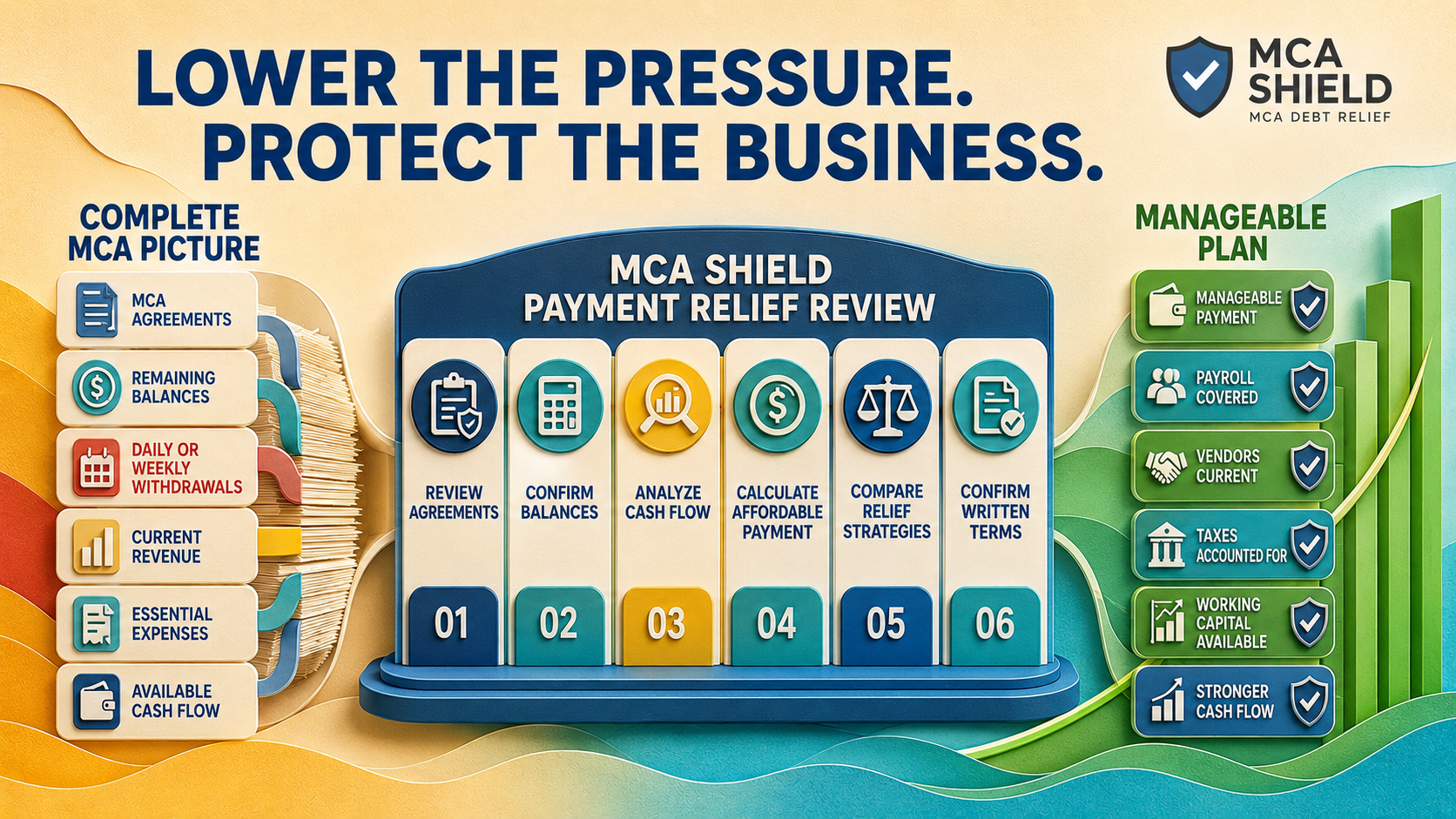
Lowering MCA payments and stopping withdrawals can provide critical breathing room when daily or weekly deductions begin draining your business account. However, changing those payments without reviewing your agreements, balances, cash flow, and potential risks could create additional financial or legal pressure.
This ultimate guide explains how to evaluate your current MCA obligations, calculate a payment your business can realistically afford, and compare strategies such as reconciliation, negotiation, restructuring, consolidation, and settlement. The goal is to protect payroll, vendors, taxes, working capital, and essential operations while building a more manageable path forward.
Schedule Your Free Consultation
Why MCA Payments and Withdrawals Become Difficult to Manage
What Is the Difference Between Lowering MCA Payments and Stopping Withdrawals?
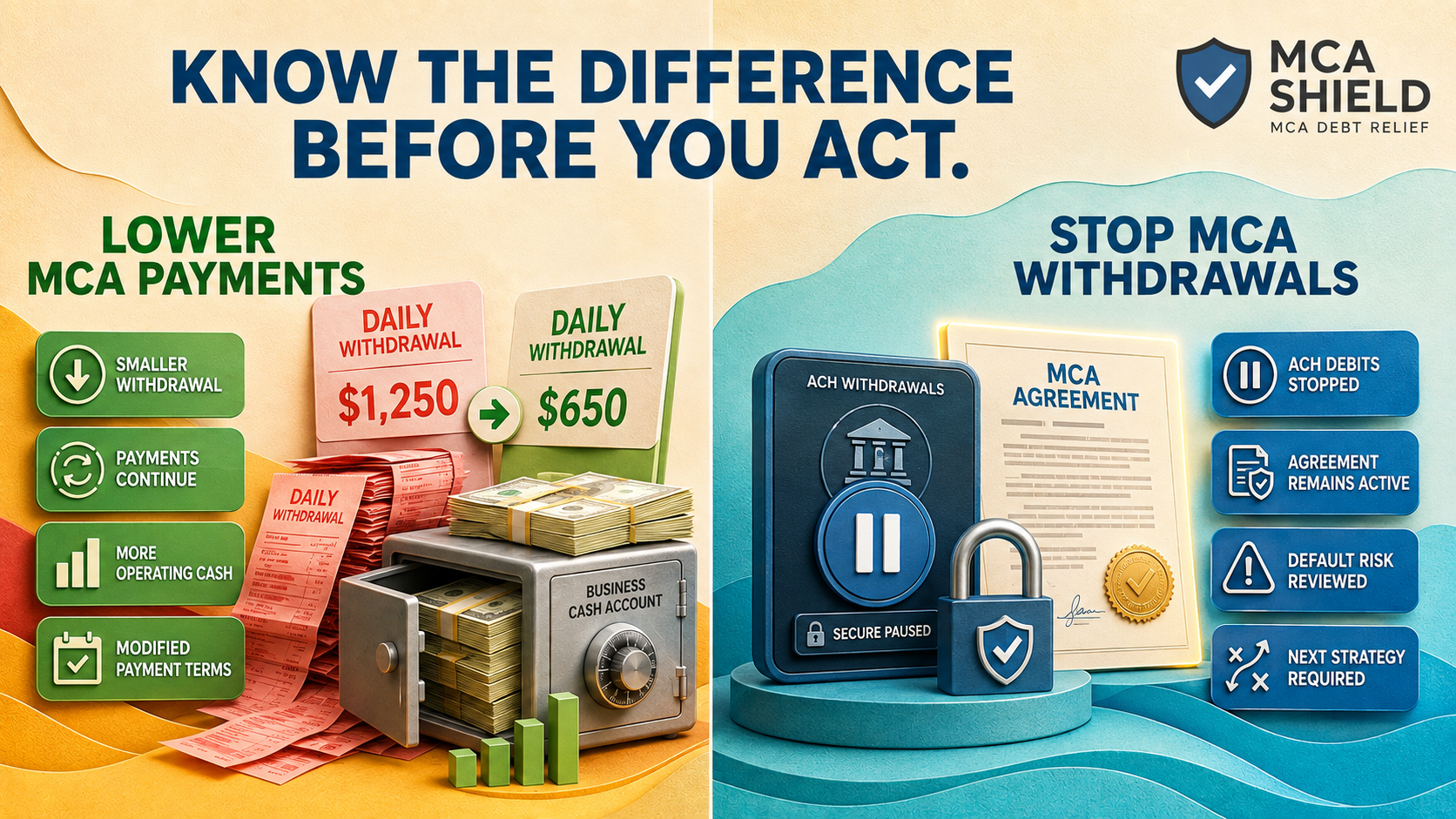
Lowering MCA payments and stopping withdrawals are two different actions. Lowering payments changes the amount deducted from the business bank account. Stopping withdrawals prevents the provider from collecting payments through the existing ACH authorization.
Both options can create immediate cash-flow relief. However, they may have very different consequences under the MCA agreement. Before taking either action, the business should review its contracts, remaining balances, current withdrawals, revenue, and essential expenses.
Lowering the Amount Withdrawn From Your Account
Lowering an MCA payment allows withdrawals to continue at a more manageable amount. The objective is to reduce payment pressure while keeping the business operating and addressing the remaining balance.
Depending on the agreement and the provider, a payment reduction may be pursued through:
- Reconciliation based on actual receivables
- A temporary payment adjustment
- A modified daily or weekly withdrawal
- MCA debt restructuring
- Consolidation of multiple obligations
- Direct negotiation with the provider
The appropriate approach depends on the business’s financial condition and the terms of each agreement. Some contracts contain reconciliation provisions that may permit payment adjustments when actual revenue differs from earlier projections. Other situations may require a negotiated modification.
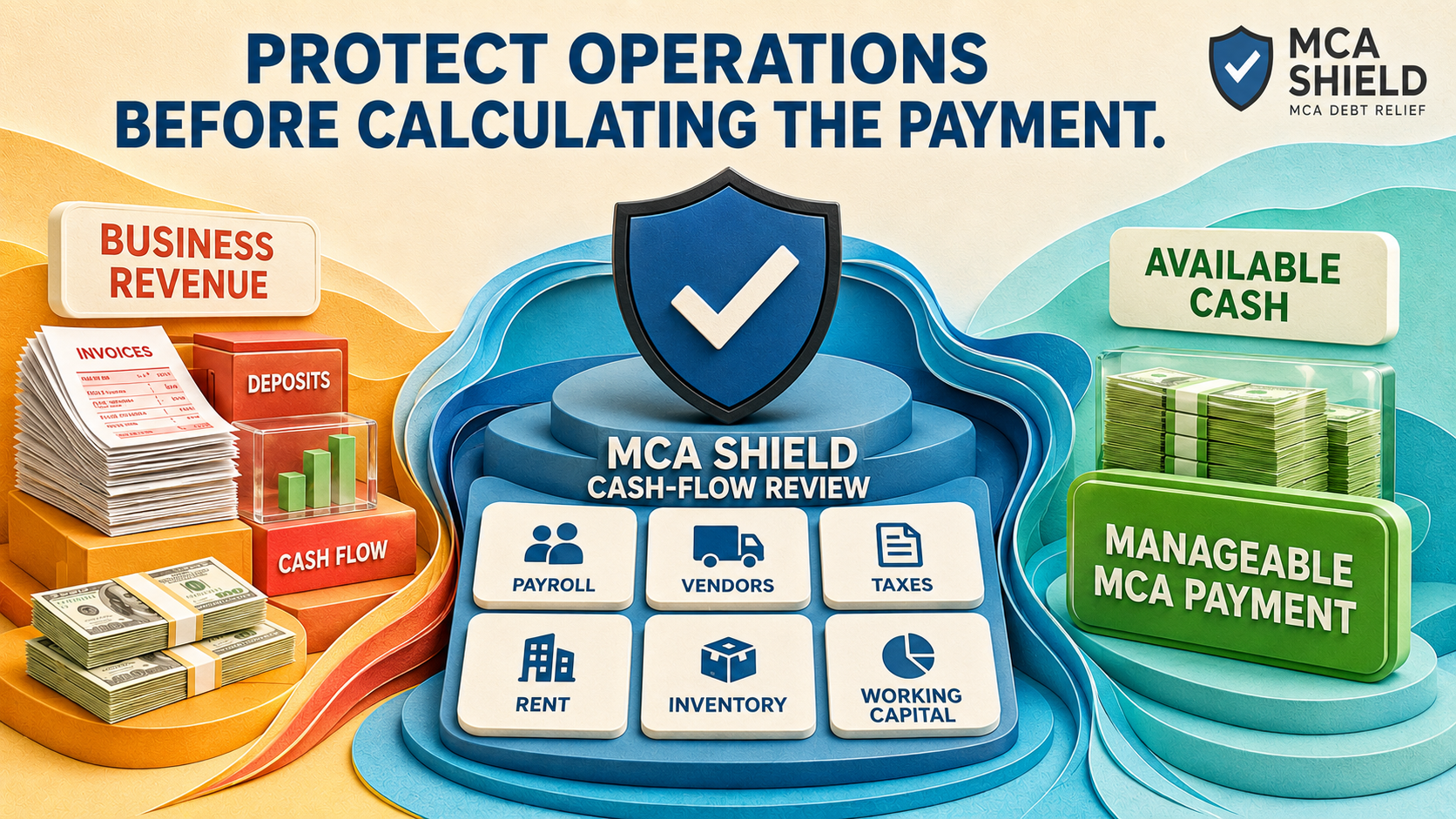
A reduced payment should be based on the company’s current cash flow, not simply the lowest amount a provider will accept. The business must still have enough cash to cover payroll, vendors, taxes, rent, inventory, and other essential expenses.
Any approved change should be confirmed in writing. The document should clearly identify the payment amount, withdrawal schedule, effective date, duration, fees, and effect on the remaining balance.
Temporarily or Permanently Stopping ACH Withdrawals
Stopping ACH withdrawals prevents automatic MCA debits from continuing to pull from the current bank account. A business might consider this step when deductions are causing repeated overdrafts, threatening payroll, or leaving no money for essential operations.
Possible actions may include:
- Revoking ACH authorization
- Asking the bank to block a specific originator
- Placing stop-payment instructions on future debits
- Closing or changing the operating account
These actions may stop or interrupt the movement of money. However, stopping an ACH withdrawal does not eliminate the MCA agreement or erase the remaining balance.
The provider may respond with collection calls, default notices, additional fees, UCC-related actions, or legal claims, depending on the contract and applicable law. Changing bank accounts without understanding the agreement can also increase the risk of escalation.
For that reason, stopping withdrawals should be part of a broader strategy. The business should understand what happens next, how essential expenses will be protected, and what payment proposal or relief option it can realistically complete.
How Each Option Can Affect Your MCA Agreement
A payment reduction generally attempts to preserve repayment while changing the amount or schedule. When properly negotiated and documented, it may help the business avoid missed withdrawals and continue making progress toward the remaining balance.
Stopping withdrawals is more disruptive. Even if the ACH authorization is revoked, the underlying agreement may remain active. The provider may consider the interrupted payments a default and pursue remedies described in the contract.
Before choosing either option, review the agreement for:
- Reconciliation rights
- ACH authorization terms
- Default provisions
- Collection costs and additional fees
- UCC filings
- Personal guarantees
- Confessions of judgment, if applicable
- Dispute-resolution and governing-law provisions
The best decision depends on more than whether the bank can stop a withdrawal. It requires comparing cash-flow relief, contractual risk, total repayment cost, and the business’s ability to complete the proposed plan.
Lowering the payment may be appropriate when the business can continue paying a reduced amount. Stopping withdrawals may be considered when the current deductions threaten immediate operations. In either situation, a comprehensive review can help the business choose a strategy that protects cash flow without ignoring the obligations that may remain.
Review Your MCA Agreements Before Changing Any Payments
Before lowering payments, blocking withdrawals, or changing bank accounts, review every MCA agreement connected to the business. The contract explains how payments are collected, whether adjustments are available, and what may happen if a withdrawal is interrupted.
This review should include all active and recently modified agreements, especially when the business has multiple MCAs. Looking at only one account may hide the full payment burden or overlook terms that could affect the relief strategy.
Confirm Remaining Balances, Payment Terms, and Withdrawal Schedules
Begin by creating a complete list of the business’s MCA obligations. Do not rely only on the original funding amount because payments, renewals, fees, and adjustments may have changed the current balance.
For each agreement, document:
- The MCA provider
- The original purchase price
- The total purchased amount
- The estimated remaining balance
- The daily or weekly withdrawal
- The scheduled payment frequency
- The date funding began
- Any renewal or modification
- Fees that may apply
- The bank account used for withdrawals
Compare this information with recent bank statements and payment records. Confirm that the amounts withdrawn match the expected schedule and investigate any unfamiliar deductions.
Next, calculate the combined weekly and monthly payment burden. A single payment may appear manageable alone, but several withdrawals can consume too much of the business’s revenue when combined.
Understanding the complete balance and withdrawal schedule makes it easier to calculate what the business can realistically afford.
Identify Reconciliation and Payment Adjustment Provisions
Some MCA agreements include a reconciliation provision. This clause may allow the payment amount to be reviewed when actual receivables differ from the revenue used to establish the original withdrawal.
A reconciliation request is not always automatic. The business may need to submit specific financial records, follow a stated procedure, or make the request within a certain period.
Review the agreement for details such as:
- How reconciliation must be requested
- Which financial documents are required
- How quickly the provider must respond
- Whether payments continue during the review
- How often another adjustment can be requested
- Whether the payment can increase when revenue improves
The business may need to provide bank statements, payment-processing reports, accounts-receivable records, profit-and-loss statements, or other evidence of fluctuating revenue.
Also look for provisions addressing temporary payment reductions or modified withdrawal schedules. A contractual adjustment may offer a path to lower payments without completely stopping ACH withdrawals.
Any approved change should be documented in writing. The written modification should specify the new payment amount, withdrawal frequency, effective date, duration, and effect on the remaining balance.
Review Default Terms, UCC Filings, and Personal Guarantees
Before interrupting payments, determine what the agreement defines as a default. Default provisions may address missed payments, blocked ACH withdrawals, closed bank accounts, inaccurate financial information, or changes to payment-processing arrangements.
The agreement may allow the provider to respond by:
- Declaring the remaining amount immediately due
- Charging additional fees
- Increasing collection activity
- Contacting customers or payment processors
- Enforcing rights connected to a UCC filing
- Pursuing the personal guarantor
- Starting legal action
A UCC filing may give the provider a claimed security interest in certain business assets or receivables. Its specific effect depends on the agreement, the filed financing statement, competing liens, and applicable law.
A personal guarantee may expose the guarantor to additional risk if the provider alleges that a triggering event or default has occurred. The scope of that risk depends on the language of the guarantee.
These terms should not be treated as routine fine print. If the agreement contains complicated enforcement provisions, a confession of judgment, or an active legal dispute, consider having a qualified attorney review the documents.
A complete contract review helps the business understand both its available options and potential risks. It also creates a stronger foundation for negotiating lower MCA payments, controlled withdrawals, and written terms the business can realistically complete.
Calculate the MCA Payment Your Business Can Actually Afford
How Can You Lower Daily or Weekly MCA Payments?
Can You Legally Stop MCA Withdrawals From Your Bank Account?
What Happens After You Stop MCA Withdrawals?
When Should MCA Settlement Be Considered?
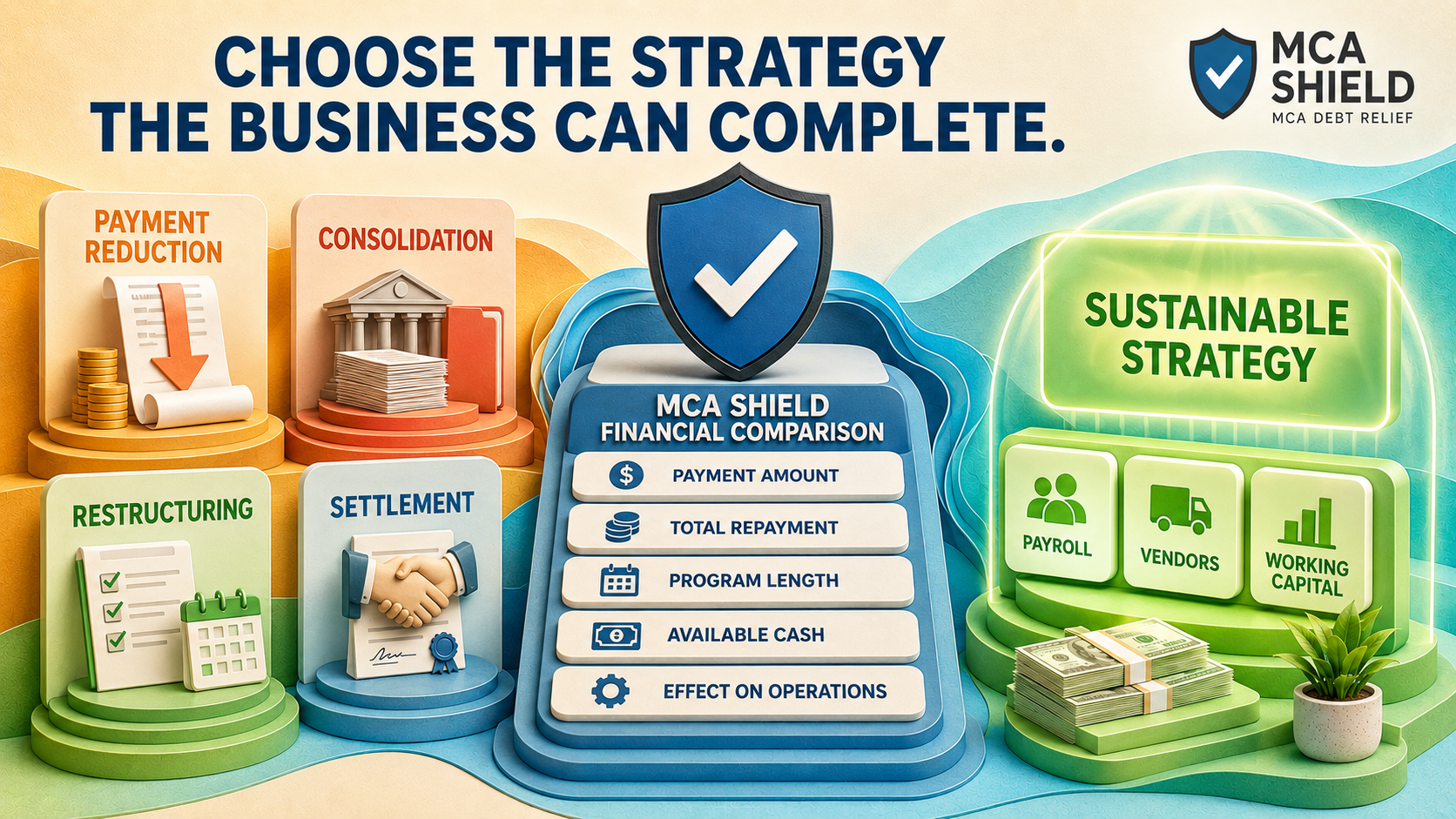
How to Choose the Right MCA Payment Relief Strategy
Take Control of MCA Payments Before Cash Flow Gets Worse