
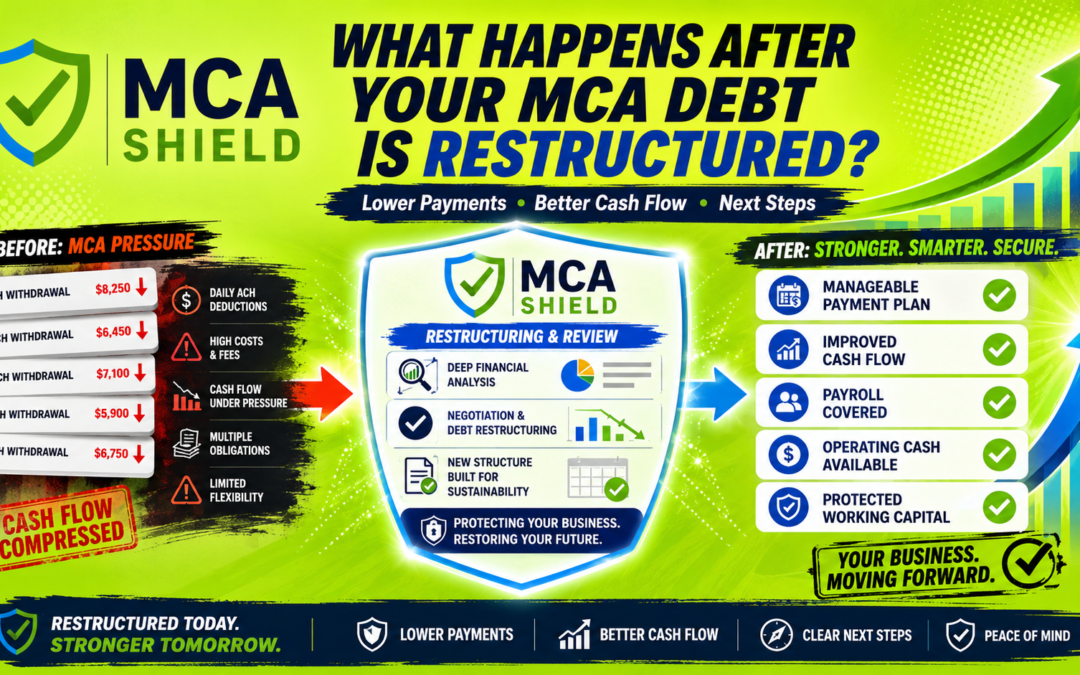
What happens after MCA debt restructuring can be just as important as the restructuring process itself. Once new terms are in place, your business may have lower payment pressure, improved cash flow, and more room to cover essential expenses. However, the next steps still matter.
Understanding your new payment structure, cash-flow responsibilities, and financial priorities can help you avoid falling back into the same cycle. In this guide, we explain what to expect after restructuring and how to use the opportunity to build a stronger, more stable financial future.
Schedule Your Free Consultation
What Changes After Your MCA Debt Is Restructured?
Once MCA debt restructuring is complete, your business enters a new phase. The goal is usually to replace an unsustainable payment structure with terms that better match your current cash flow.
However, restructuring does not mean the debt disappears. Your business still has obligations to meet. The difference is that the payment structure may now be more manageable and predictable.
Understanding what changes after MCA debt restructuring can help you protect working capital and avoid new financial pressure.
Your Original MCA Payment Structure May Be Modified
Before restructuring, your business may have been dealing with large daily or weekly ACH withdrawals. Those payments can quickly reduce the cash available for payroll, vendors, taxes, and other operating expenses.
A restructuring agreement may change how those obligations are handled. Depending on the terms, the new arrangement could include:
- Lower payment amounts
- A different payment schedule
- Modified repayment terms
- A longer repayment period
- A more coordinated payment structure
The exact changes depend on the agreement and the MCA companies involved.
That is why business owners should carefully review every restructuring document. Make sure you understand how much you owe, when payments are due, and how payments will be collected.
Daily or Weekly Payment Pressure May Decrease
One of the main goals of restructuring is often to reduce the amount of cash leaving the business each day or week.
For example, several large MCA withdrawals can place constant pressure on the operating account. Even a profitable business can struggle when too much revenue is removed before essential expenses are paid.
If restructuring lowers those withdrawals, the business may have more money available for:
- Payroll
- Rent and utilities
- Inventory
- Taxes
- Vendor payments
- Marketing
- Emergency expenses
- Working capital
This additional breathing room can make day-to-day operations easier to manage.
However, lower payments should not automatically become an excuse to increase spending. Instead, businesses should use the improved cash flow to rebuild financial stability and strengthen cash reserves.
Your New Terms Become the Financial Priority
After restructuring, the new payment terms should become part of your regular financial planning.
Missing payments under a restructured agreement may create new problems. Therefore, businesses should know exactly when each payment is due and make sure enough cash is available.
Create a budget that includes the restructured MCA payment as a fixed obligation. Then compare that payment against expected revenue and essential operating costs.
It is also important to monitor your bank account closely. Confirm that withdrawals match the terms of the new agreement.
Most importantly, avoid taking on another expensive MCA simply because cash flow has temporarily improved. Adding new debt can quickly undo the progress restructuring created.
The period after MCA debt restructuring should be used to stabilize the business, protect working capital, and create a healthier financial foundation.
How Your MCA Payments Work After Restructuring
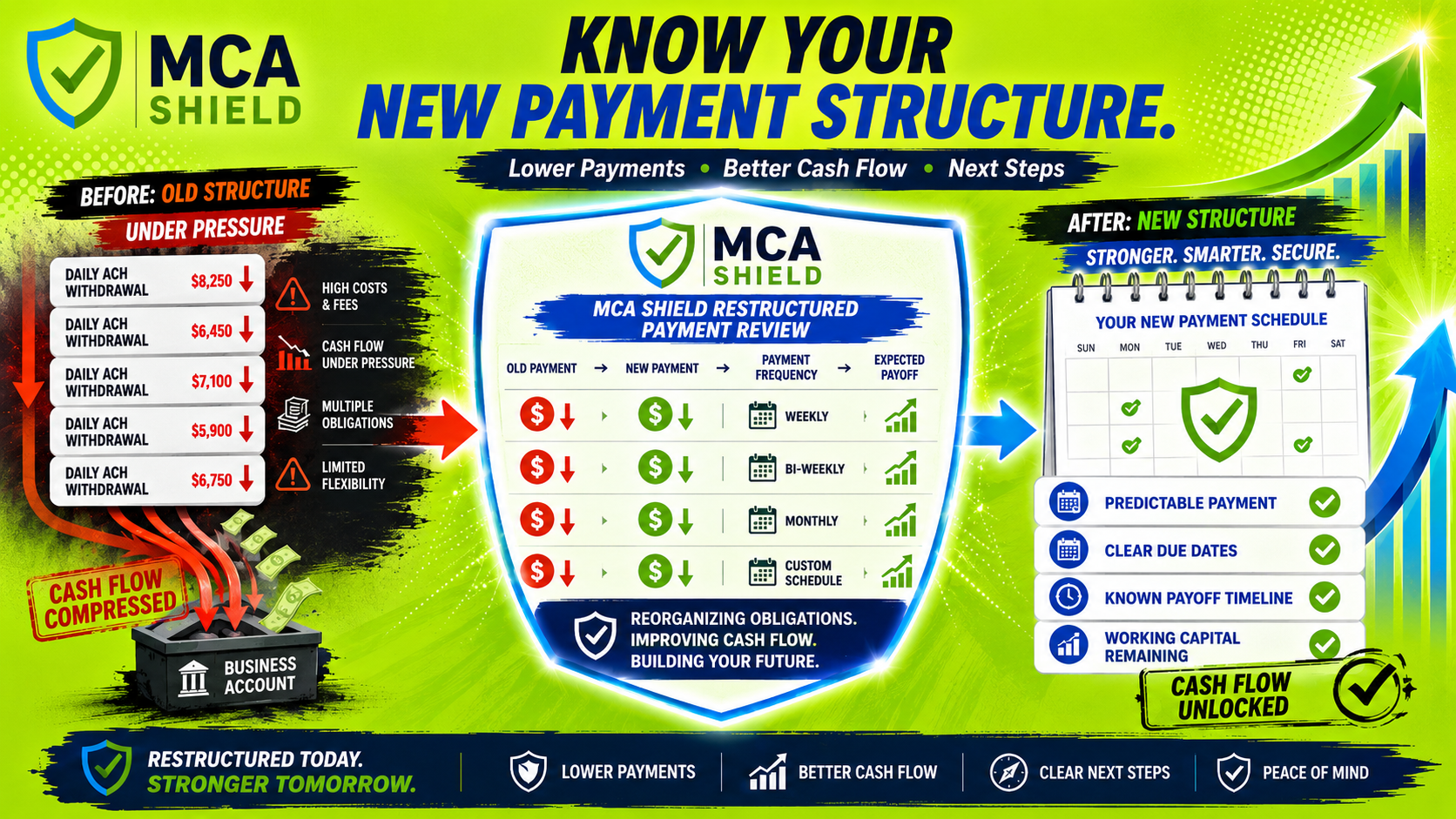
After MCA debt restructuring, your payment obligations may look different from the original agreements. The amount, frequency, and collection method may all change depending on the restructuring terms.
Knowing exactly how the new payment structure works is essential. It can help you avoid missed payments, protect cash flow, and plan business expenses more accurately.
Understand Your New Payment Amount and Schedule
Start by confirming the exact amount your business is expected to pay under the restructured agreement.
Your payments may still be made daily or weekly. However, the amount may be reduced to better match your available cash flow. In some cases, the payment schedule itself may also change.
Make sure you clearly understand:
- The amount of each payment
- How often payments are due
- The date the new schedule begins
- Whether payment amounts can change
- What happens if a payment is missed
Do not rely only on what was discussed during negotiations. Review the final agreement and keep a copy with your business records.
A clear payment schedule also makes budgeting easier. When you know exactly what will leave the account, you can better plan for payroll, taxes, vendors, rent, and other operating expenses.
Know How Long the Restructured Payments Will Continue
Lower payments can provide immediate relief, but they may also extend the amount of time required to resolve the obligation.
That does not necessarily make the restructuring unfavorable. A longer payment period may be worthwhile if it creates a payment your business can realistically afford.
Still, you should understand the full timeline.
Review the agreement to determine the expected payoff date, remaining balance, and total number of payments. If several MCA obligations were restructured, track each one separately.
This can help you see when individual obligations are expected to end and when more cash may become available.
Most importantly, look beyond the size of the payment. A successful restructuring should consider both short-term affordability and the overall financial impact on your business.
Confirm How Payments Will Be Collected
You should also know exactly how each restructured payment will leave your account.
Many MCA payments are collected through automatic ACH withdrawals. Others may use a different payment arrangement after restructuring.
Before the first payment is due, confirm:
- Which bank account will be used
- Who is authorized to withdraw funds
- The amount and frequency of each withdrawal
- When the first payment will occur
- How payment changes or problems should be reported
Then, monitor the account regularly.
If a withdrawal does not match the restructured agreement, address the issue as soon as possible. Keeping accurate bank records and payment confirmations can also help if a dispute arises.
The goal after restructuring is not simply to make smaller payments. It is to create a predictable payment structure that your business can manage while maintaining enough working capital to operate.
What Happens to Your Business Cash Flow After MCA Restructuring?
One of the biggest potential benefits of MCA debt restructuring is improved cash flow. If your new payment structure reduces the amount leaving your account each day or week, your business may have more money available for normal operations.
That extra breathing room can be valuable. However, it is important to use it wisely.
The goal should be to create more stable cash flow, protect working capital, and reduce the risk of falling back into expensive MCA debt.
Lower Payments May Free Up Working Capital
Before restructuring, large MCA withdrawals may have consumed a significant portion of your daily revenue.
When payments are reduced, more cash may remain in the business. That money becomes available for working capital, which helps keep day-to-day operations moving.
For example, improved cash flow may help your business pay for:
- Inventory
- Supplies
- Equipment
- Utilities
- Marketing
- Repairs
- Vendor invoices
- Unexpected expenses
This can reduce the constant pressure of deciding which bills must wait until more money comes in.
However, the amount of relief will depend on your new payment terms and current revenue. That is why it is important to compare your restructured payments against actual monthly operating expenses.
Payroll and Operating Expenses May Become Easier to Manage
Heavy MCA payments can force businesses to choose between debt payments and essential expenses.
Payroll is often one of the first areas to feel that pressure. Rent, taxes, insurance, vendors, and utilities can also become difficult to manage when frequent withdrawals reduce the available balance.
After MCA restructuring, lower payment pressure may make those expenses easier to plan for.
Instead of reacting to your bank balance every day, you may be able to create a more predictable budget. This can help you reserve enough money for payroll, taxes, operating costs, and other essential obligations.
Better predictability can also help reduce overdrafts, returned payments, and last-minute borrowing.
The goal is not simply to have more money sitting in the account. It is to make sure the business has enough cash available to operate without constant financial disruption.
Use the Additional Cash Flow Carefully
Improved cash flow can create an important opportunity, but it should not be treated as extra spending money.
Start by identifying the areas that need the most attention. Your first priorities may include catching up on overdue expenses, rebuilding reserves, or creating a larger cash cushion.
Consider using the additional cash flow to:
- Rebuild emergency reserves
- Catch up on essential business expenses
- Pay taxes and vendors on time
- Strengthen working capital
- Reduce reliance on short-term financing
- Prepare for seasonal revenue changes
It is also important to avoid taking another MCA simply because your bank balance improves.
A new advance could add another withdrawal and increase financial pressure again. In some cases, it can restart the same MCA stacking cycle that restructuring was intended to correct.
Instead, use the period after MCA debt restructuring to strengthen your business finances. Protecting the cash you regain can help create a more sustainable path forward and reduce the chance of returning to the same debt problems.
What Happens to Your Original MCA Agreements After Restructuring?
After MCA debt restructuring, your original agreements do not simply disappear. Instead, some terms may be changed, replaced, or addressed through a new restructuring arrangement.
That is why it is important to understand exactly what happened to each obligation. Clear records can help you avoid confusion, duplicate payments, or unexpected collection activity later.
Review Which Agreements Were Changed
If your business had more than one merchant cash advance, each agreement may have been handled differently during restructuring.
Some obligations may have received new payment terms, while others may still remain under their original structure. In some cases, several payments may be coordinated into a more manageable plan.
Review each agreement and identify:
- Which MCA obligations were restructured
- Which payment amounts changed
- Whether payment frequency changed
- Whether any balances were adjusted
- Whether any original terms still remain in effect
Do not assume that every MCA was handled the same way.
A clear review can help you understand your remaining obligations and new payment responsibilities after restructuring.
Keep Copies of Every New or Modified Agreement
Good recordkeeping is especially important after MCA restructuring.
Keep copies of all original agreements, modified terms, payment schedules, correspondence, and restructuring documents. Store them in one secure location so they are easy to access if questions come up later.
Your records should clearly show:
- The new payment amount
- The payment schedule
- The remaining balance
- The expected payoff timeline
- Any changes to collection terms
- Any written confirmation of modified obligations
It is also a good idea to save bank statements and payment confirmations.
These documents can help you verify that withdrawals match the agreed terms and provide a clear payment history if a dispute occurs.
Confirm the Status of Each MCA Obligation
Once restructuring is in place, confirm the current status of every MCA account.
You should know whether each obligation is active, modified, resolved, or still being negotiated. This becomes even more important if your business previously had multiple stacked advances.
Create a simple list of every MCA provider and track the remaining balance, payment amount, payment frequency, and expected completion date.
Then review the list regularly.
If an obligation has been fully satisfied, request written confirmation whenever possible. Keep that documentation with your permanent business records.
Careful tracking helps ensure that after MCA debt restructuring, your business knows exactly what it still owes and when each obligation is expected to end.
Can MCA Companies Continue Collection Activity After Restructuring?
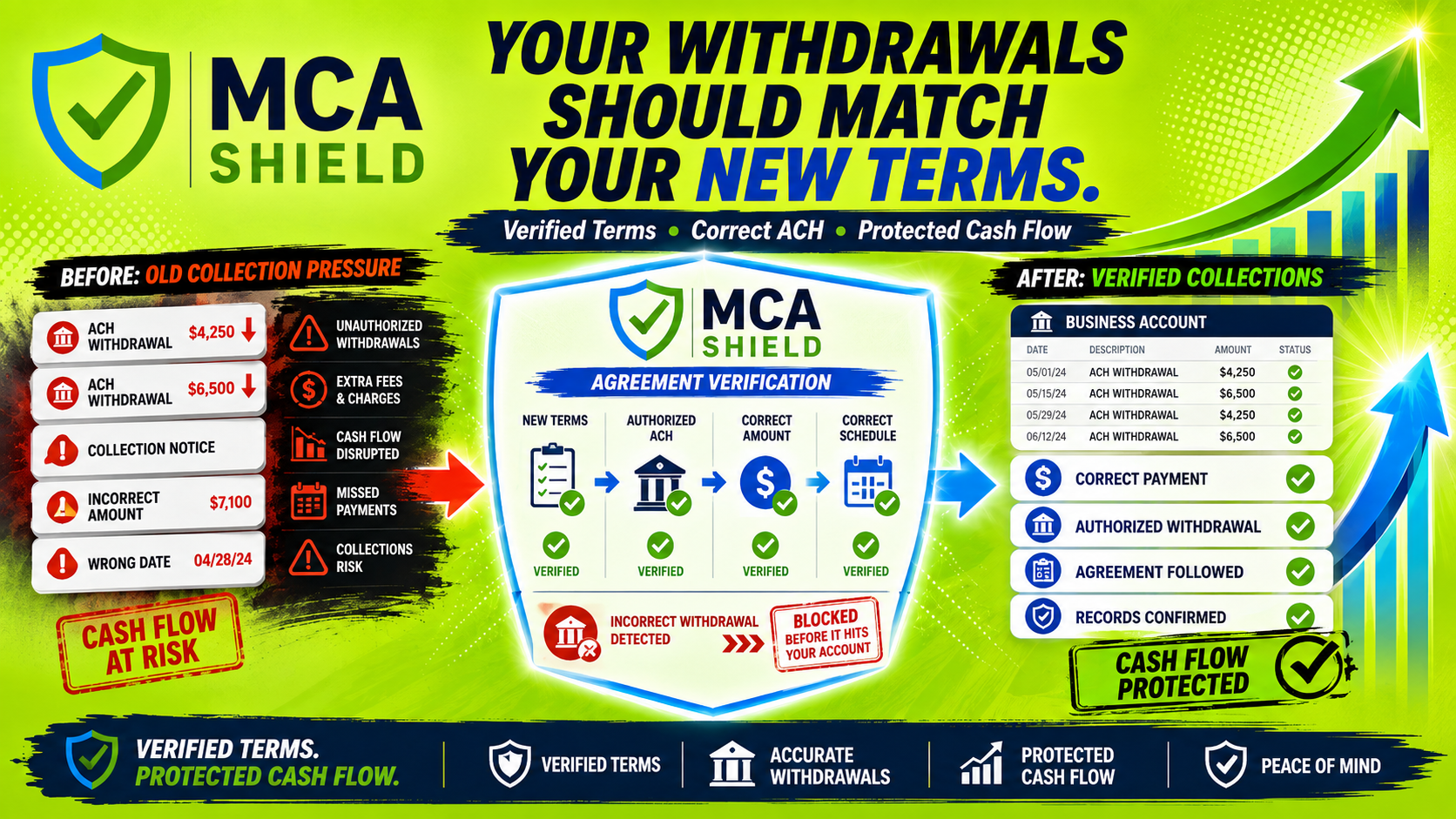
After MCA debt restructuring, collection activity may continue because the underlying obligation usually still exists. However, payments and collection efforts should reflect the terms of the new or modified agreement.
This is why business owners should monitor their accounts closely. If collection activity does not match the restructuring terms, the issue should be addressed quickly.
Collection Activity Should Follow the New Agreement
Once new terms are finalized, payments should generally follow the restructured payment amount, schedule, and collection method stated in the agreement.
For example, if your previous MCA required a larger daily withdrawal but the restructuring changed that amount, future payments should reflect the updated terms.
Review the agreement carefully and confirm:
- The new payment amount
- The payment frequency
- The authorized collection method
- The date the new terms begin
- Any conditions that could change the payment schedule
Keep written documentation of any modifications.
If multiple MCA obligations were restructured, review each one separately. Different providers may have different terms, payment dates, or collection arrangements.
Watch for Unauthorized or Incorrect ACH Withdrawals
Many MCA companies collect payments through automatic ACH withdrawals. After restructuring, it is important to make sure those withdrawals match your new agreement.
Check your business bank account regularly for:
- Withdrawals that are larger than expected
- Duplicate ACH payments
- Withdrawals on incorrect dates
- Payments from an MCA that should no longer be collecting
- Amounts that do not match your restructured terms
Even a small payment error can place added pressure on cash flow, especially when the business is still recovering.
Maintain copies of bank statements and payment confirmations. Good records can make it easier to identify discrepancies and explain what occurred.
Address Payment Disputes or Collection Problems Quickly
Do not ignore a payment or collection issue because you expect it to correct itself.
If an MCA withdrawal or collection attempt appears inconsistent with your restructuring agreement, document the problem immediately. Then contact the appropriate party involved in the restructuring process.
Keep records of emails, letters, payment histories, bank statements, and any other communication related to the dispute.
If the situation involves complicated contract terms, aggressive collection activity, or possible legal action, consider speaking with a qualified attorney who understands MCA agreements and business debt.
The period after MCA debt restructuring should provide more financial predictability, not new uncertainty. Closely monitoring collection activity can help protect your cash flow and make sure your business stays aligned with the new payment structure.
How to Rebuild Financial Stability After MCA Debt Restructuring
After MCA debt restructuring, the next goal should be financial stability. Lower payment pressure can create more room in the budget, but long-term improvement depends on how that extra cash is managed.
Use this period to strengthen the business, rebuild reserves, and avoid returning to the same debt cycle.
Rebuild Your Business Cash Reserves
One of the first priorities should be rebuilding business cash reserves.
When MCA payments become too aggressive, many businesses drain savings just to keep up with payroll, vendors, and daily expenses. After restructuring, even a small improvement in cash flow can help restore that cushion.
Set aside a portion of available cash whenever possible. Over time, those reserves can help cover:
- Unexpected expenses
- Seasonal revenue drops
- Equipment repairs
- Payroll shortfalls
- Emergency operating costs
A stronger cash reserve can also reduce the need for another high-cost financing option.
The goal is to create a financial buffer that gives your business more control when revenue changes unexpectedly.
Create a More Sustainable Operating Budget
A new payment structure should be reflected in your operating budget.
Start with your expected monthly revenue. Then subtract essential expenses such as payroll, rent, taxes, utilities, inventory, insurance, and vendor payments.
Next, include your restructured MCA payment as a regular obligation.
This can help you see how much cash is truly available after all necessary expenses are covered.
A sustainable budget should leave room for:
- Working capital
- Emergency reserves
- Seasonal changes
- Planned business expenses
- Future growth
Avoid building a budget that depends on unusually strong sales every month. A more conservative plan can make it easier to handle slower periods without relying on additional debt.
Monitor Cash Flow Against Your New Payment Structure
Your financial plan should not remain static after restructuring.
Track your actual revenue, expenses, and MCA payments each week or month. Then compare those numbers with the budget you created.
Pay attention to warning signs such as:
- Declining account balances
- Rising operating expenses
- Late vendor payments
- Payroll pressure
- Frequent overdrafts
- Less working capital than expected
These problems may indicate that the new payment structure is still putting too much pressure on the business.
Regular cash-flow reviews can help you catch problems early instead of waiting until the business is under severe financial stress.
Ultimately, rebuilding stability after MCA debt restructuring requires more than lower payments. It requires consistent budgeting, stronger cash reserves, and careful monitoring of the cash your business needs to operate.
Should You Take Another Merchant Cash Advance After Restructuring?
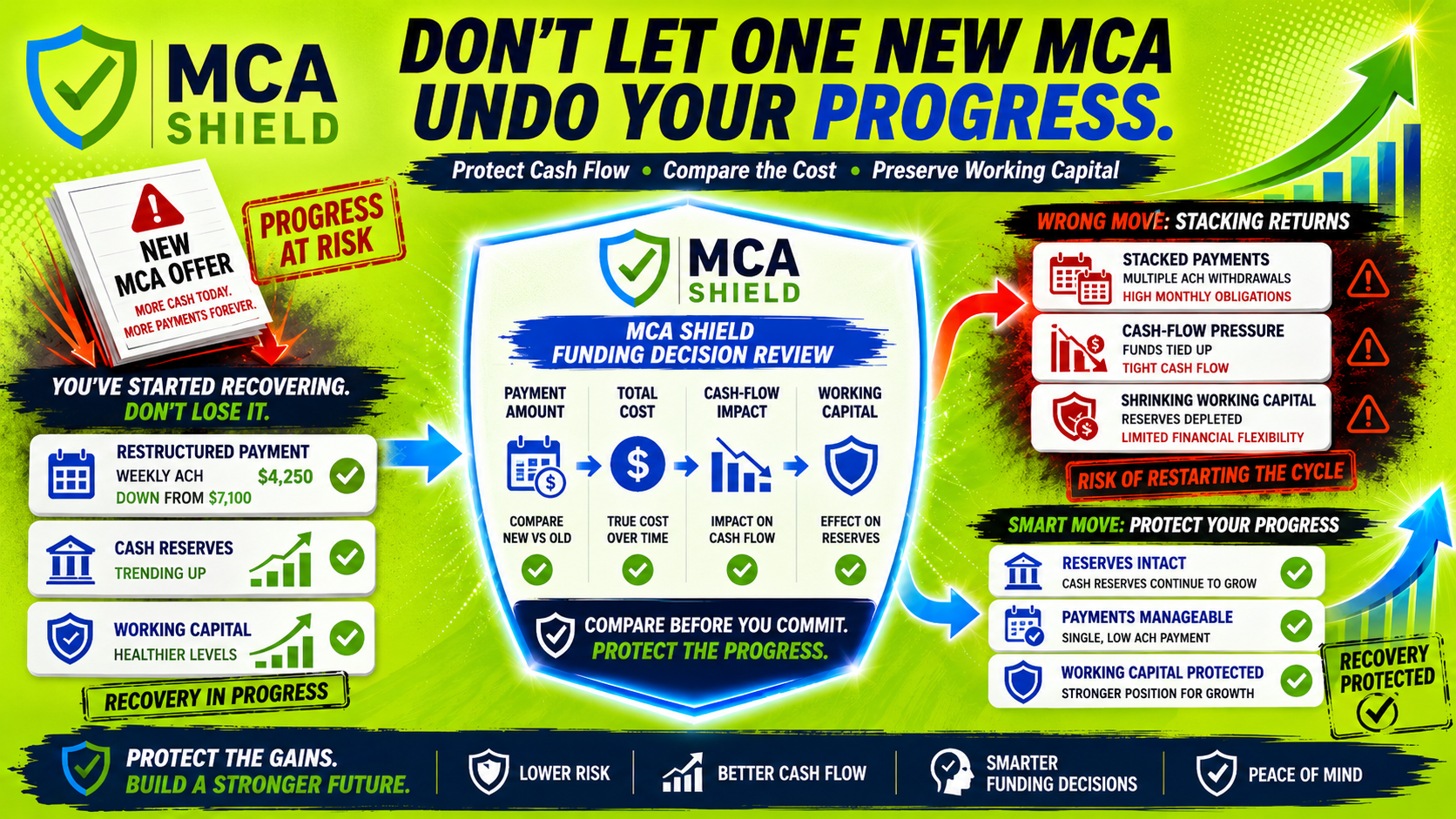
Taking another merchant cash advance after MCA debt restructuring can be risky. Restructuring is usually designed to reduce payment pressure and give the business more control over its cash flow.
Adding a new MCA too quickly can reverse that progress.
Before accepting new financing, look closely at the payment amount, total cost, and effect on your working capital.
Why New MCA Debt Can Restart the Stacking Cycle
A new MCA may seem like a quick way to cover a temporary cash shortage. However, it can also add another daily or weekly withdrawal to your bank account.
If your business already has restructured payments, the new obligation may create another layer of financial pressure.
This can restart the MCA stacking cycle:
- One MCA creates cash-flow pressure
- A second advance is used to cover the shortage
- More withdrawals reduce available cash
- Another advance is needed to keep operating
- Working capital continues to shrink
Eventually, several payments may compete with payroll, taxes, vendors, and other essential expenses.
The goal after restructuring should be to move away from this cycle, not return to it.
Compare Other Funding Options Before Borrowing Again
If your business needs capital, do not automatically assume another MCA is the only option.
Depending on your financial position, you may be able to explore alternatives such as a business line of credit, term loan, equipment financing, invoice financing, or other lower-cost funding options.
Compare more than the amount of money being offered.
Look at:
- Total repayment cost
- Payment frequency
- Repayment period
- Fees
- Prepayment terms
- Impact on monthly cash flow
Also consider whether the financing solves the underlying problem.
Borrowing to fund profitable growth can be very different from borrowing simply to cover an ongoing operating shortage. If the business regularly needs new financing to make payroll or pay existing debt, the cash-flow problem may need to be addressed first.
Make Sure Any New Payment Fits Your Cash Flow
Before taking on new debt, determine whether the business can comfortably afford the payment.
Start with your average revenue. Then subtract your restructured MCA payments and essential operating expenses.
The remaining cash should be enough to support normal operations, unexpected costs, and a reasonable financial cushion.
Do not base affordability on your best sales month. Instead, review several months of revenue and consider slower periods or seasonal changes.
A payment that only works when revenue is unusually high may create problems later.
Most importantly, protect the progress you have made after MCA debt restructuring. Any new financing should support the business without placing payroll, operating expenses, or working capital back under unnecessary pressure.
How to Protect Your Business After MCA Debt Restructuring
Completing MCA debt restructuring can give your business valuable financial breathing room. However, protecting that progress requires discipline after the new terms take effect.
The goal is to avoid the conditions that created cash-flow pressure in the first place. Staying current on payments, watching your finances, and reacting early to problems can help your business build a more stable financial future.
Make Every Restructured Payment on Time
Once your new payment structure begins, make those payments a priority.
Missing a payment could create additional fees, collection activity, or other problems depending on the terms of your agreement. Therefore, make sure you know the payment amount, due date, and withdrawal schedule.
Keep enough money in the designated account before each payment is due. If payments are collected automatically, review your bank account regularly to confirm that the correct amount was withdrawn.
It can also help to maintain a payment calendar that tracks:
- Payment dates
- Payment amounts
- Remaining balances
- Expected payoff dates
- Payment confirmations
Good records make it easier to track your progress and identify problems quickly.
If you believe you may have trouble making an upcoming payment, do not wait until it is missed. Addressing the situation early may give you more time to evaluate your options.
Review Your Cash Flow Before Problems Return
Improved cash flow after restructuring should not be taken for granted.
Review your business finances regularly to make sure revenue can still support MCA payments, payroll, taxes, vendors, and normal operating expenses.
A weekly or monthly cash-flow review can help you compare the money coming into the business with the money going out.
Pay particular attention to changes in:
- Revenue
- Operating expenses
- Account balances
- Accounts receivable
- Available working capital
- Upcoming financial obligations
Look beyond your current bank balance. A business may have enough cash today but still face a shortage when payroll, taxes, rent, and debt payments come due.
Regular monitoring gives you time to adjust spending before a temporary problem becomes a serious cash-flow crisis.
Address Financial Warning Signs Early
Many financial problems develop gradually. Recognizing the warning signs early can help you protect the progress made through MCA debt restructuring.
Watch for signs such as:
- Repeated overdrafts
- Declining cash reserves
- Difficulty making payroll
- Late vendor or tax payments
- Increasing reliance on credit
- Using new debt to cover existing obligations
- Considering another MCA just to maintain operations
One warning sign does not always mean the business is in serious trouble. However, several problems occurring at the same time may signal that cash flow is becoming strained again.
Review your expenses, revenue, payment obligations, and working capital as soon as those signs appear. Early action generally provides more options than waiting until payments are already being missed.
The strongest protection after MCA debt restructuring is continued financial awareness. By staying current on payments, monitoring cash flow, and responding quickly to warning signs, your business has a better chance to protect working capital and long-term stability.
Build a Stronger Financial Future After MCA Debt Restructuring
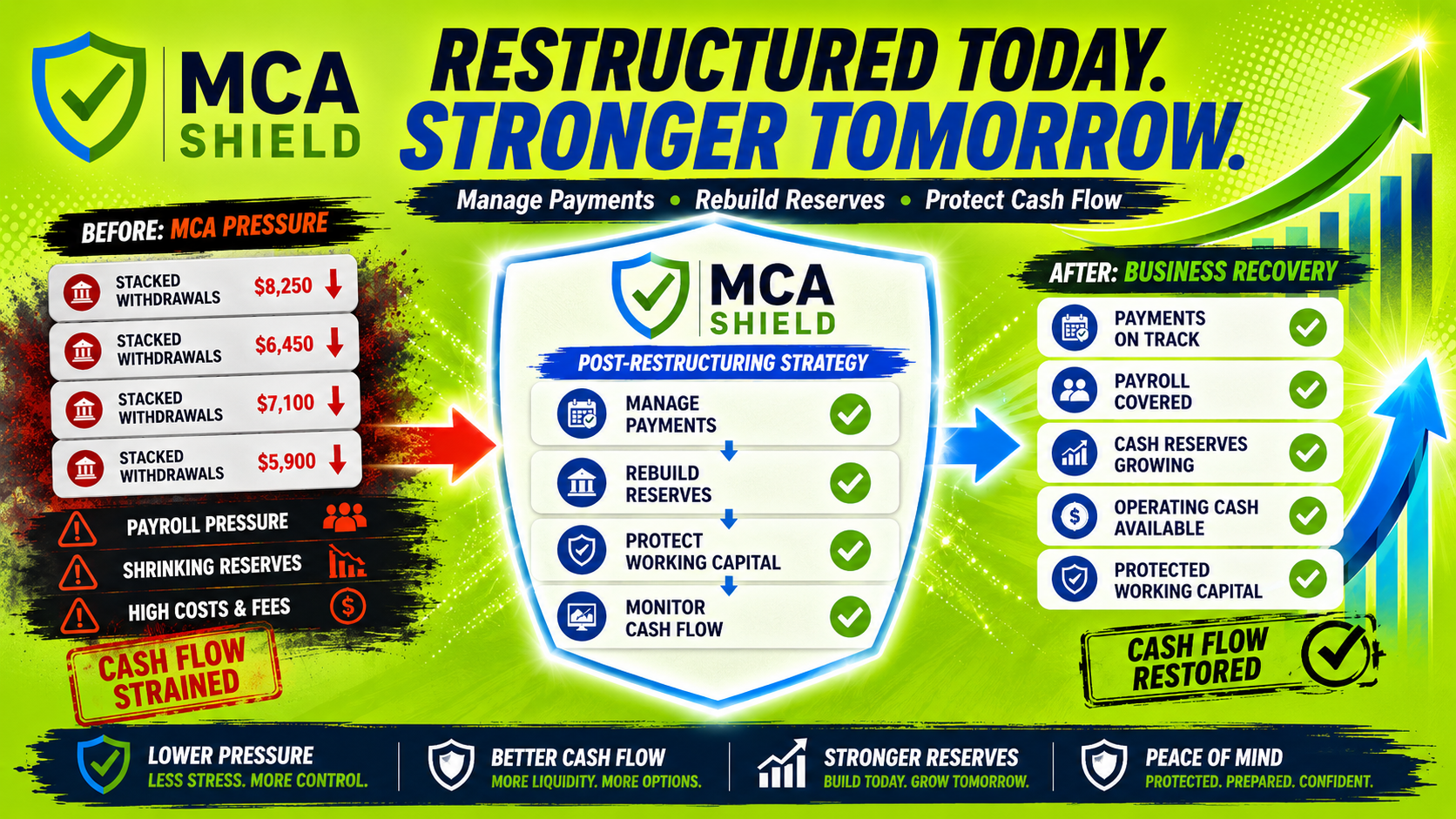
The period after MCA debt restructuring can be an important opportunity to rebuild. Lower payment pressure may give your business more room to manage expenses, protect cash flow, and plan ahead.
However, restructuring is only part of the process. Long-term improvement also depends on how you manage the business once the new payment structure is in place.
Use Restructuring as an Opportunity to Reset
Treat restructuring as a financial reset.
Review the decisions that contributed to the original cash-flow pressure. This may include taking on too much short-term financing, allowing expenses to grow too quickly, or borrowing again before previous obligations were under control.
Then, create better financial habits going forward.
Focus on:
- Maintaining a realistic operating budget
- Tracking revenue and expenses regularly
- Rebuilding cash reserves
- Reducing unnecessary costs
- Avoiding new high-cost debt
- Planning for seasonal or unexpected expenses
The goal is not simply to complete the restructured payments. It is to make the business less dependent on expensive financing in the future.
Protect Working Capital as the Business Recovers
Working capital is the money your business needs to keep operating.
After restructuring, protect the cash that becomes available instead of immediately committing it to new expenses or debt.
Make sure the business has enough money to cover:
- Payroll
- Taxes
- Rent
- Vendors
- Inventory
- Utilities
- Insurance
- Unexpected operating expenses
Whenever possible, build a financial cushion before making major purchases or taking on new obligations.
It is also important to continue monitoring your restructured payments against revenue. If cash flow begins tightening again, identify the cause early.
Protecting working capital can help your business remain stable while it moves through the recovery process.
Schedule a Free Consultation With MCA Shield
If you are still dealing with merchant cash advance payments or are unsure what comes next, MCA Shield can review your situation and help you understand your options.
Every business has a different combination of revenue, MCA obligations, operating expenses, and available working capital. A closer review can help determine whether your current payment structure is sustainable and what steps may be available.
Schedule a Free Consultation With MCA Shield to review your MCA debt, payment pressure, and cash-flow situation.
Taking action early can help you make more informed decisions and work toward a stronger financial future after MCA debt restructuring.